There’s a lot of potential in improving thermals in War Thunder, but the current idea of “Reworked Thermal Resolutions” oversimplifies the problem and doesn’t cover how thermal imaging works in reality. Pixel count does not define thermal performance, and treating it like that creates issues while still being unrealistic.
I also want to point out that this is a heavy subject and I cannot explain the basics of thermal imaging in this forum post since it would be wayyy too long and I’ve already spent hours on it. With that being said:
A proper thermal rework should be divided into two main categories:
1. Imager Specific Factors
These are properties of the thermal sight itself and should vary by vehicle and system.
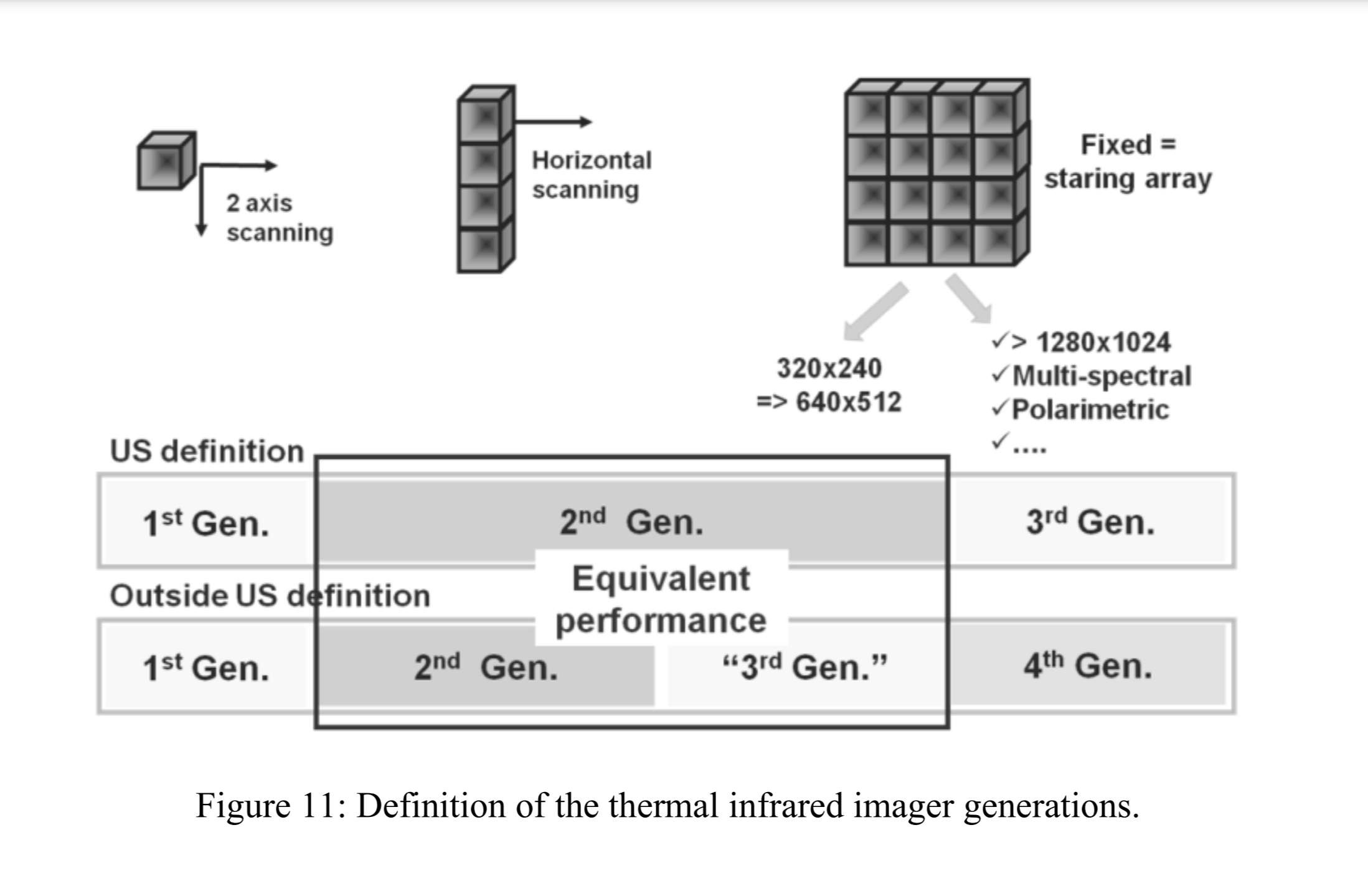
Notes on Thermal Imager Generations
There are no exact definitions of thermal generations, but they are usually described like this:
- 1st-generation thermal imagers are single (or very few) element detectors, usually with a two-dimensional mechanical scanner to generate a two-dimensional image.
- 2nd-generation systems typically use a linear detector array, scanning in one direction (horizontal or vertical).
- 3rd-gen imagers are staring arrays, usually with a 2x2 micro-scanner to increase the resolution without increasing the number of elements.
Some companies claim to have developed 4th-gen detectors, but I have yet to see a definition of that (the detectors are structurally similar to 3rd-gen detectors, just better performance afaik).
Same Generation ≠ Same Image Quality
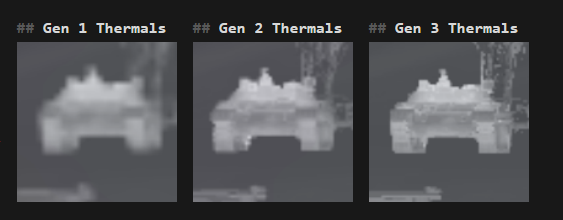
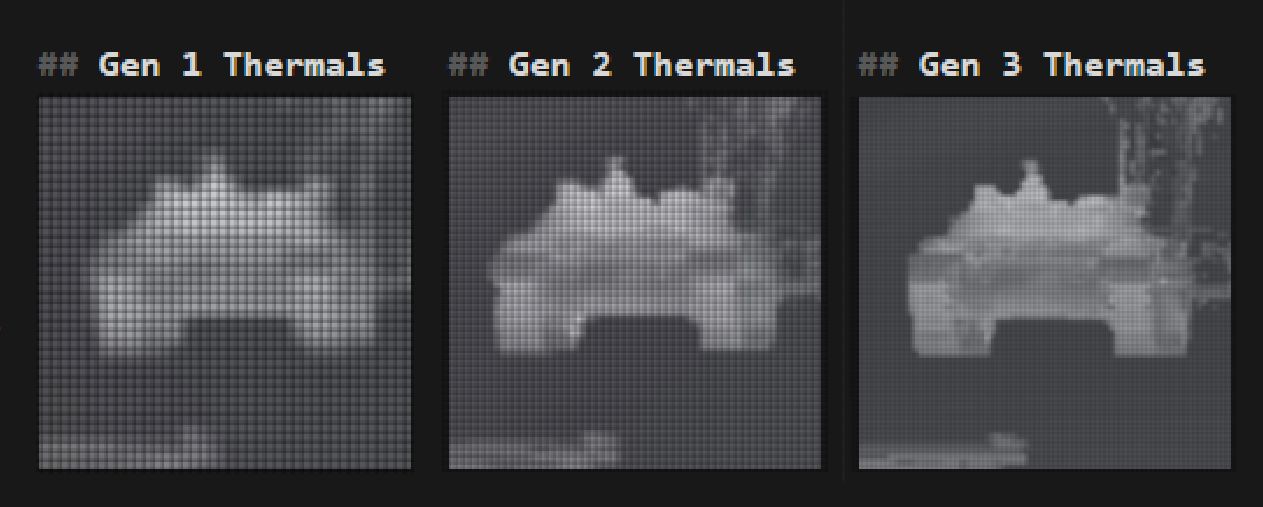
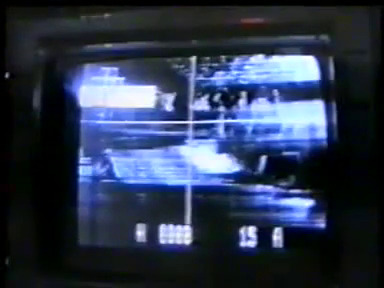
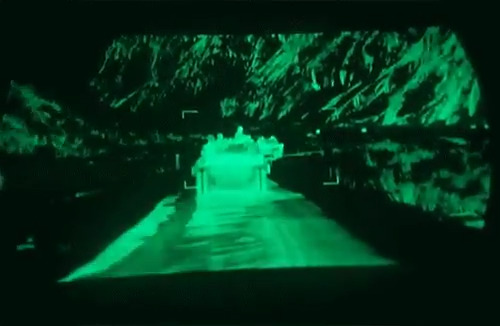
The generations DO NOT define the resolution nor the quality of the final image. Measuring the performance of a thermal imager by the detector generation is ridiculous. Here are images from two different 1st-generation thermal imagers (with the same thermal resolution/performance in-game).
I found this quote on a forum while researching:
I had opportunity to talk to ex-Soviet/Russian tanker… …his description of Agava-2 was “when you look in it, it is hard to understand if it is broken or should work like that”.
That cannot be said about other 1st-gen systems like WBG-X, which further proves my point that generation is not equal to image quality, and it shouldn’t be that way in War Thunder. Thermals should vary within generations.
A Simple Way to Define Thermal Performance
Thermal imaging performance should not be purely balanced by generation or by resolution. In the real world, sensors are evaluated using the Johnson Criteria, which relates sensor resolution to how much “usable information” an image can provide.
The Johnson Criteria defines how many pixels across a target are needed to:
- Detect that something is present (D)
- Recognise its general shape or type (R)
- Identify fine details (I)
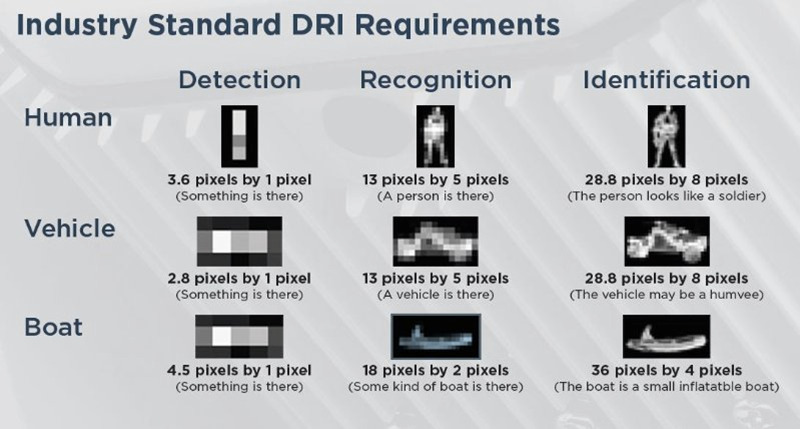
War Thunder doesn’t have formal detection or identification mechanics; the player interprets the image. However, the sensor still determines what information is realistically visible. The Johnson Criteria provides a baseline to set realistic thermal clarity, and shows why some older or lower-resolution thermals can look better than newer ones.
Of course, resolution is still a factor to consider and implement, as it defines the “upper limit” of detail, but contrast (ΔT), noise, optics, and processing determine what the player can actually see. Using the Johnson Criteria as an internal reference would be a simple way to summarise the factors and base thermal performance in reality, instead of incorrectly assuming that generation defines resolution and performance.
Real-world examples
2nd-gen
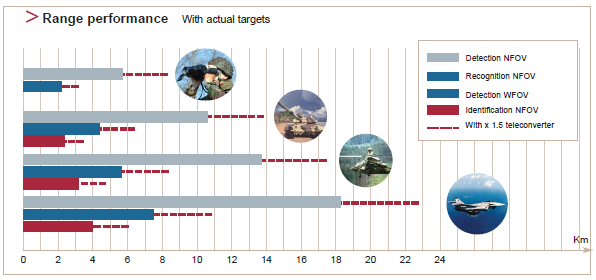
Catherine-FC (used on e.g. most recent Russian AFVs)
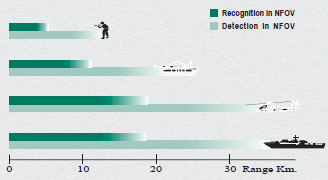
TADES (allegedly used on Merkava Mk. 4)
3rd-gen
Catherine-XP (used on e.g. ItO 90M and CV9035DK/NL)
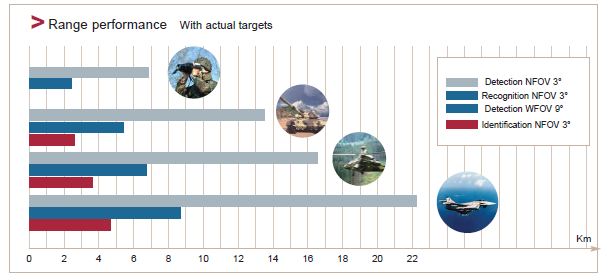
SATIS GS (used on the EBRC Jaguar)
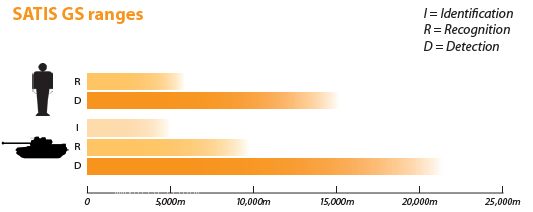
Notice the difference in D/R/I ranges in the same generations.
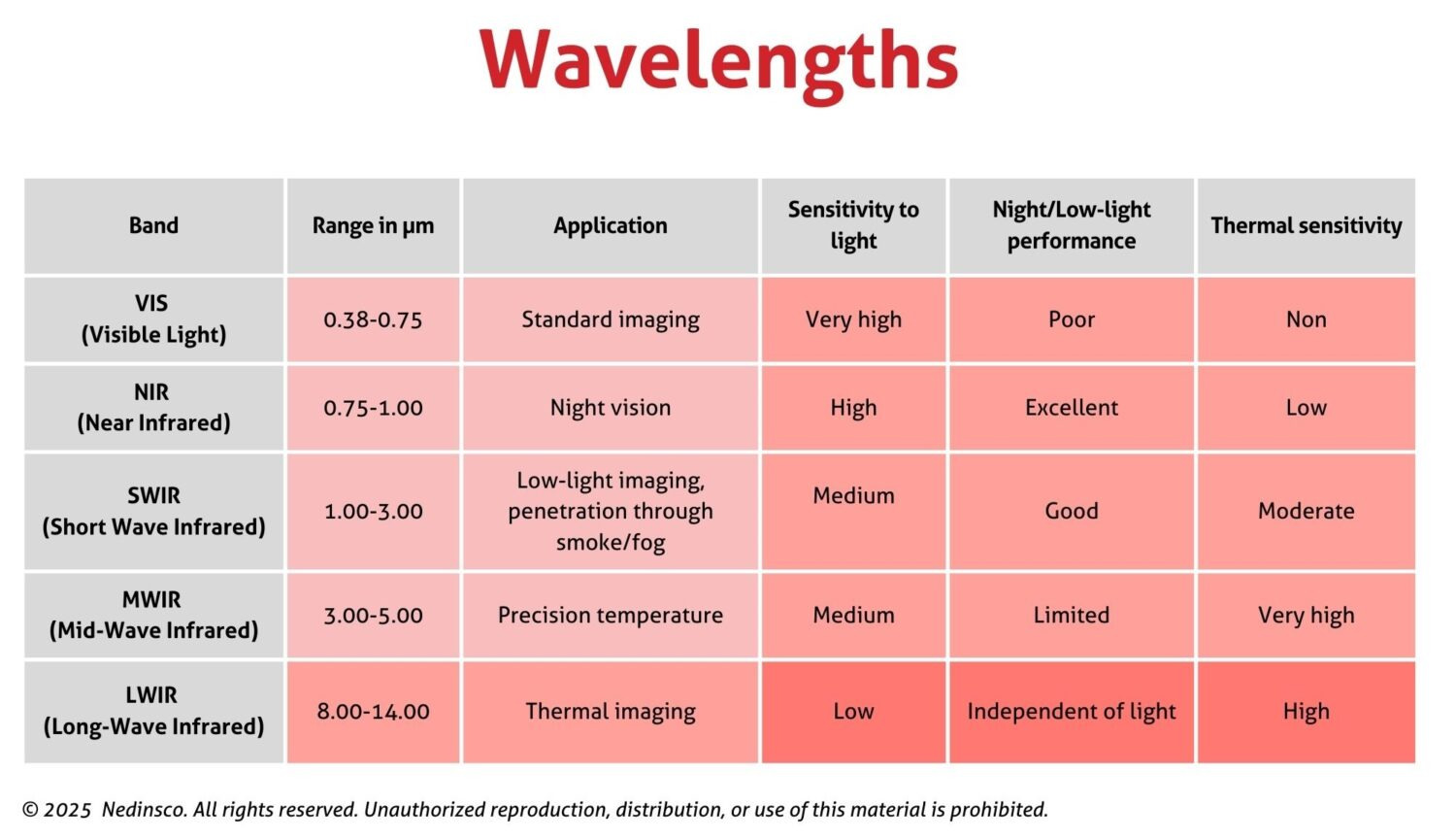
Different Wavelengths
I do not believe this fits the game as it would require a lot of effort and most likely eat performance since you basically have to render multiple different “worlds” simultaneously.
2. Exterior / Environmental Factors
These are shared battlefield conditions affecting all thermals equally.
What Is Actually Visible Through a Thermal Imager?
Thermals do not detect “heat”; they detect heat differences (ΔT). The usefulness of a thermal image is therefore entirely dependent on how different objects heat up and cool down over some period of time.
Material Heating and Cooling Behaviour
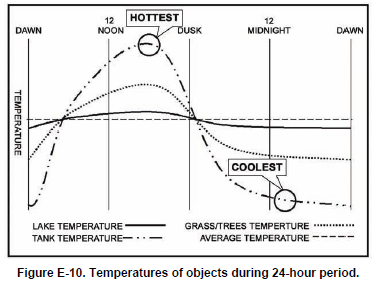
Different materials store and release heat at different rates:
- Man-made objects (vehicles, buildings, roads) absorb and release heat quickly
- Vegetation, soil, and water heat and cool much more slowly
- Vehicles generate localised hot spots from engines, exhausts, tracks, and friction
This causes vehicles to stand out during periods of high thermal contrast, such as midday or shortly after movement.
Time of Day Effects
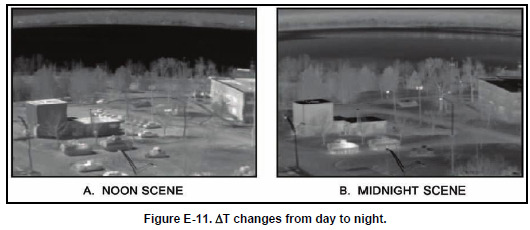
Thermal contrast changes predictably over the day. During midday, man-made objects are significantly warmer than vegetation, producing strong contrast. During the night, vehicles cool faster than vegetation, while recently active vehicles remain visible due to heat gained from friction, etc. During dawn and dusk, object temperatures meet, forming what we call Thermal or Infrared Crossover. Vegetation, terrain, and vehicles can appear nearly identical.
This is an important, well-documented limitation of thermal imaging and is independent of sensor generation or resolution.
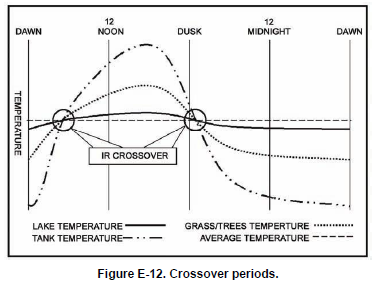
A high-resolution thermal provides little advantage when ΔT is low; older or lower-resolution systems can perform very well under high-contrast conditions, and player-perceived thermal performance can vary dramatically without changing the sensor.
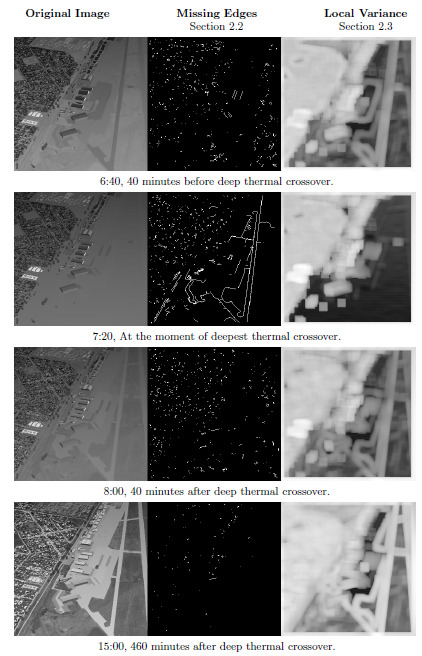
Why This Matters
These effects are key principles of thermal imaging. Modelling these effects would make thermals actually realistic, which they should be in a game where they are a very important aspect of gameplay and AFV performance, and because bullet ballistics vary depending on temperature and altitude, I feel these effects should be implemented as well.
This would add much-needed depth and authenticity while keeping gameplay intuitive.
What Gaijin Should Do
Instead of a resolution-only rework, I propose these changes/features:
Imager-Side
- Remove dependence on alleged generations
- Introduce sensor quality based on the Johnson Criteria
Environment-Side
- Implement ΔT-based contrast
- Make the environment thermally dynamic (time of day effects)
Conclusion
Thermal imagers are incredibly complex and their complete performance can’t be defined by their resolution. This is a relatively simple way of making them a lot more realistic and authentic. Sorry for the ultra-long message, but there are so many parts I didn’t even include.
Please update your suggestion (or remove it and I will make a new one based on this message).