- Yes, I like it! (I will write a comment)
- No No, I disagree with this (I will write a comment)
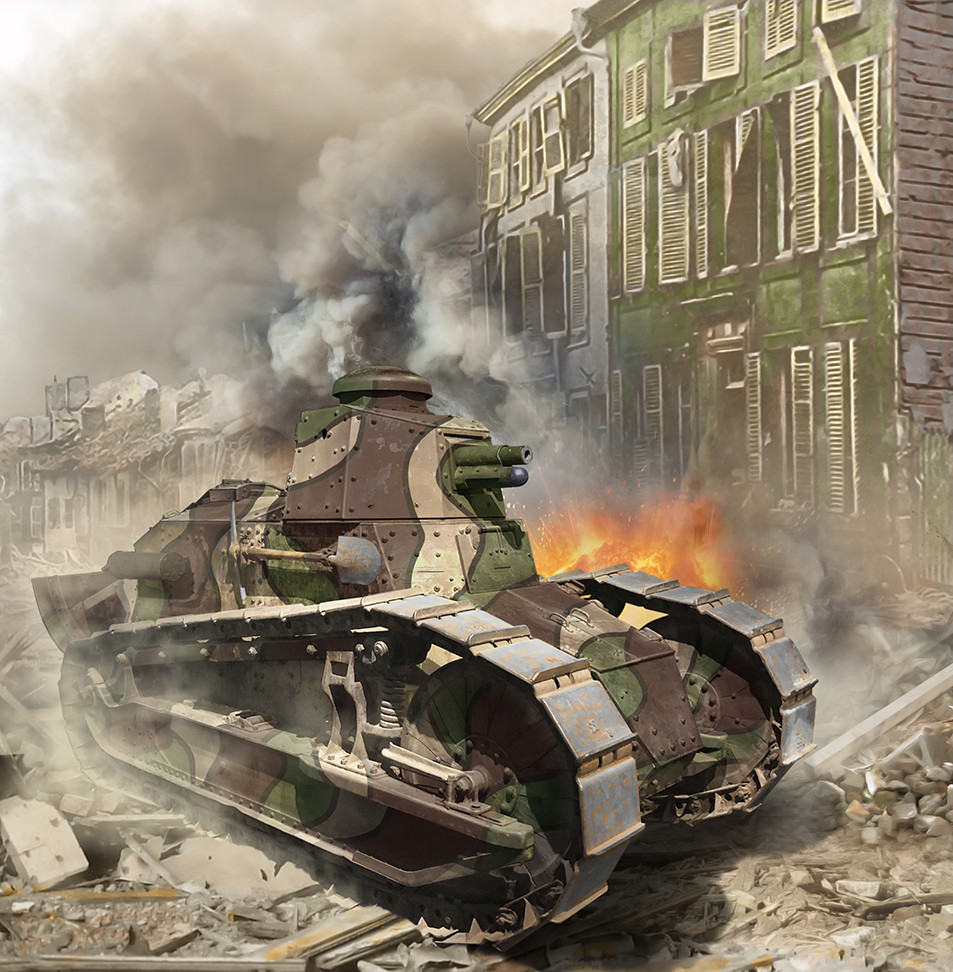
Char leger Renault FT modele 1917 (abbreviated as “Renault FT”) (France) “The grandfather of modern tanks”
Hello Everyone!
I love World War I tanks.
In April 2025, an event dedicated to the battles of World War I was held.
During the event, each player had the opportunity to try out the first tanks.
Unfortunately, not everyone got to try out a number of iconic machines—the Mark, Saint-Chamond, and A7V.
Another one of the most important tanks of that era was also forgotten—the Renault FT.
This inspired me to write an article about this legendary tank, which has its place in the game.
P.S. I am Russian, English is not my language, I use a translator.
I hope you enjoy my article, I am ready for discussion!
1. History of creation.
Inspired by the British’s first use of the Mark I tank (Big Willie) in the Battle of the Somme on September 15, 1916, the French decided to create their own tank, suitable for supporting infantry and breaking through fortifications. Then, in 1916-1917, intensive development of original tank models began.
Upon returning from a business trip to England, the already well-known Colonel Jean-Baptiste Étienne, a former “artillery genius,” proposed his concept of a light tank: a rotating turret and a rear-mounted engine. At that time, such a tank model seemed original and unusual.
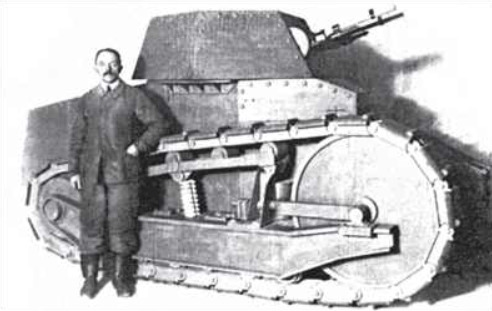
Jean-Baptiste Étienne with his wooden prototype of the Renault tank, 1916.
He understood that the Saint-Chamond and Schneider tanks under development served as a kind of “battering ram” and were limited in their use on the battlefield.
After making a wooden model, he approached the large arms manufacturer Schneider. But he was refused, as the company was already busy developing its own CA-1 model.
It is important to understand that at that time, there was a strong lobby in the French military committee promoting the idea of a “land cruiser,” which was essentially a tractor with a mounted gun and armored plating. This was facilitated by the abundance of American Holt tractors imported into France
It later became clear that the Saint-Chamond (which we saw in the game) and Schneider models were too bulky and, due to their large size, vulnerable to artillery and had poor mobility and firing angles (for example, to attach the Saint-Chamond, the hull had to be turned).
In addition, during wartime, an economical option was needed. Heavy tanks often broke down and were abandoned by their own crews, so the prospect of creating a light tank with a simple design was becoming increasingly apparent.
Due to Schneider’s refusal to develop a new tank, Étienne turned to Louis Renault. Despite his initial refusal (the company had no experience in tank construction), Renault agreed to implement the project.
After lengthy bureaucratic negotiations with manufacturers and committees, the first batch of tanks, named Renault FT, was ordered.
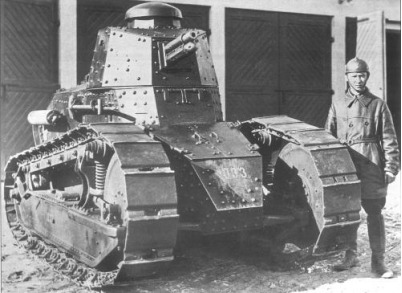
Serial model of the Renault FT tank with an angular turret
The FT had many advantages at the time: a 360-degree rotating turret (providing good visibility), a light and quick-reloading gun, and a repairable design.
Between 1917 and 1918, approximately 3,000 units were produced. After Renault, the companies Berliet, Schneider, and Delon Belleville joined in the production of tanks.
Thus, after overcoming many bureaucratic obstacles, a tank was born that set the standard for global tank construction for many years to come.
ARTICLES IN RUSSIAN
https://sibirajak.livejournal.com/27142.html
«Рено» FT-17: родоначальник классики
2. Application (WW1, interwar period, WW2, and other conflicts).
The tank made its debut on May 29, 1918, near the Rech forest, when French troops used them to break through German defenses and hold back the advancing forces for a long time.
After the end of World War I, European and Asian countries began to purchase or produce their own versions of tanks. Among them were Russia (early USSR), Italy, Poland, the Czech Republic, Belgium, Turkey, Czechoslovakia, Yugoslavia, Denmark, Greece, Sweden (later modifications), Finland, and some units were delivered to Brazil.
In the 1920s, France transferred 120 Renault tanks (72 cannon and 48 machine gun).
With their help, the 1st Polish Tank Army was formed. In the 1930s, some of the tanks were modernized: they received a running gear from Vickers and a new name, “Renault wz.1932.”
Even in the 1930s and early 1940s, Renault tanks remained in service.
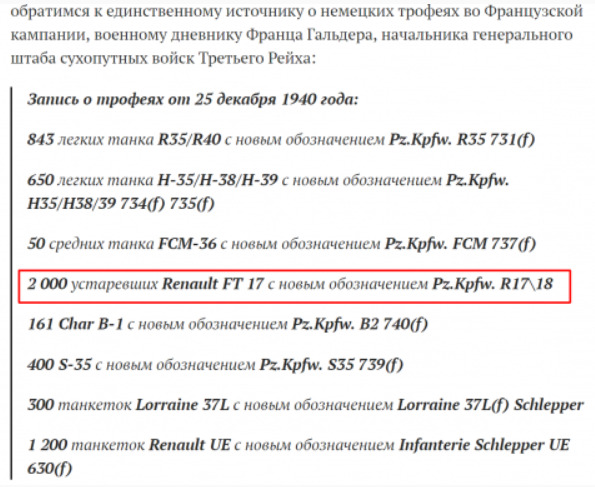
For example, during the invasion of France in 1940, Germany captured about 2,000 vehicles (according to the diary of Franz Halder, Chief of the General Staff of the Third Reich, dated December 25, 1940). The captured tanks were often used by Renault.
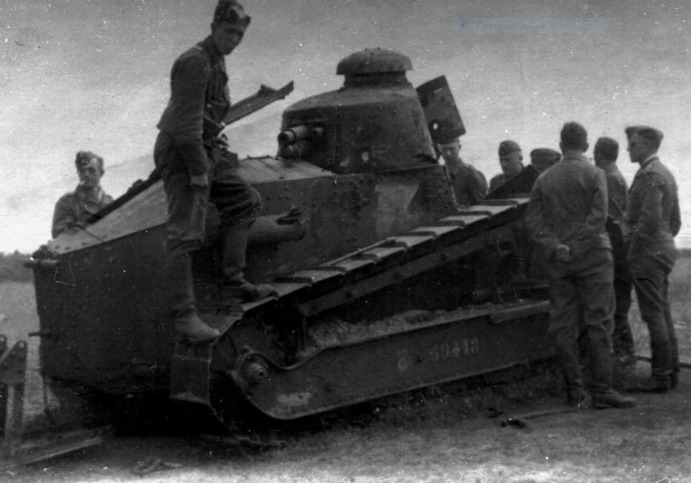
Germans inspect an abandoned French tank. Baryatinsky, M. “Tanks of France, 1920-1940s” (Bronekollektsiya, 2009, No. 6). Moscow: Modelist-Konstruktor, 2009.
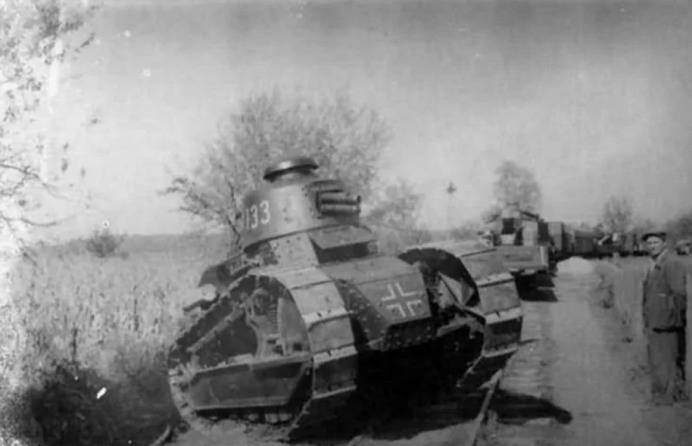
Trophy German Renault, France, 1944
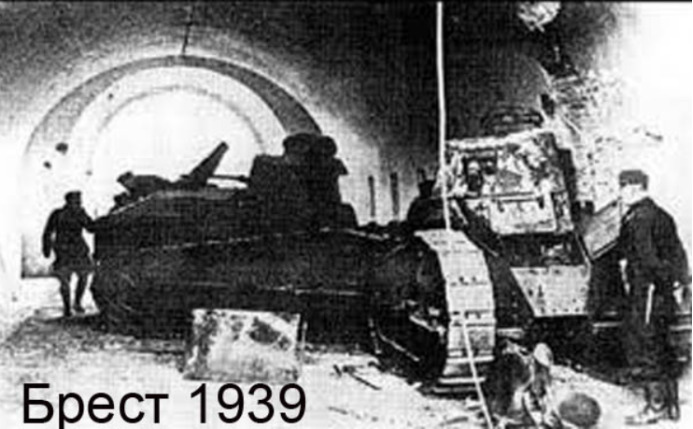
Germans inspect a destroyed Polish tank. Presumably, Brest, 1939.
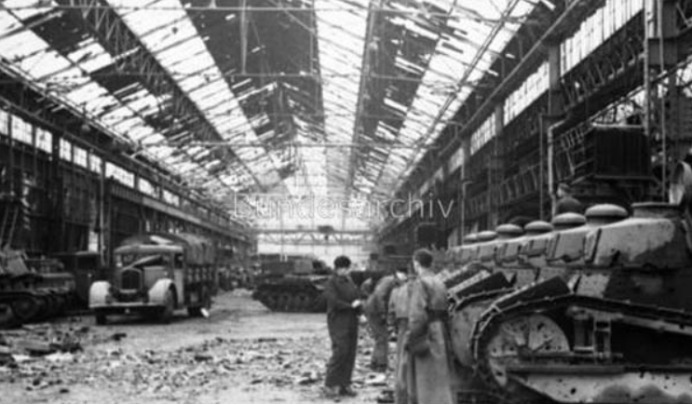
Czech tank factory, 1941. The image shows machine gun tanks. Until 1924, Czechoslovakia had seven tanks of both types (machine gun and cannon).
During the Finnish War (Winter War) (1939-1940), the Finnish army made limited use of the Renault tanks, which were obsolete at the time. More often than not, they were converted into fixed firing points.
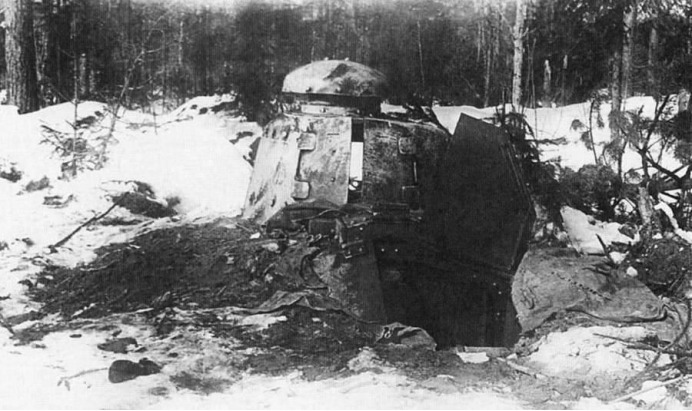
A Finnish Renault tank destroyed by Soviet troops. The tank was buried and turned into a firing point. Russian-Finnish War (1939-1940)
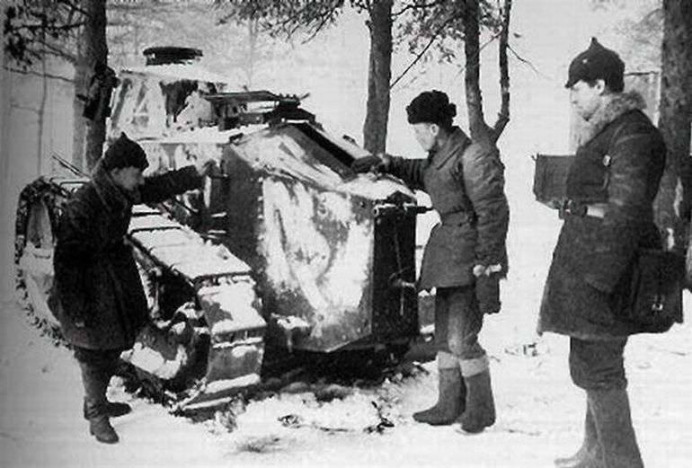
Soviet soldiers inspect an abandoned Renault. Russo-Finnish War (1939-1940)
Renault tanks first appeared in Yugoslavia in the 1920s. The early tanks were designated “M-17”, after which, in the 1930s, tanks with a new ‘Kegres’ chassis began to be supplied, designated “M26/27”. By 1940, Yugoslavia had 48 vehicles in service.
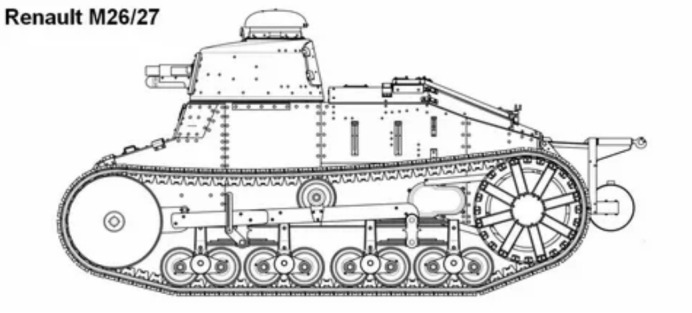
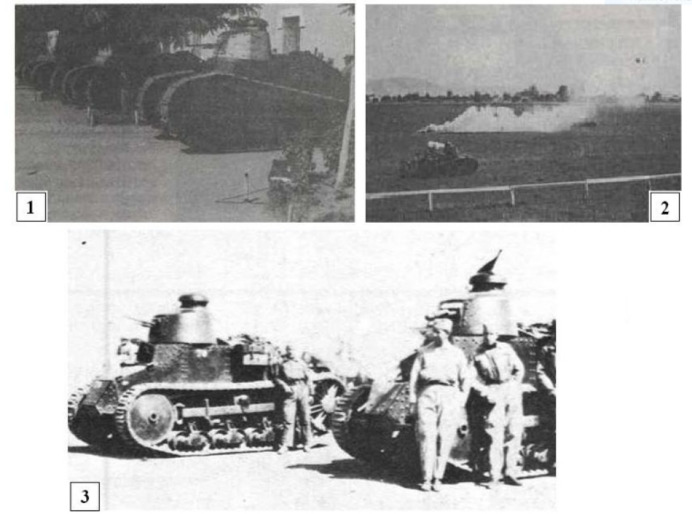
FT tanks of the Yugoslav Army (1920-1930s). Pictures 1-2: M-17 with original running gear; picture 3: later models M26/27 tanks with machine guns and cannons.
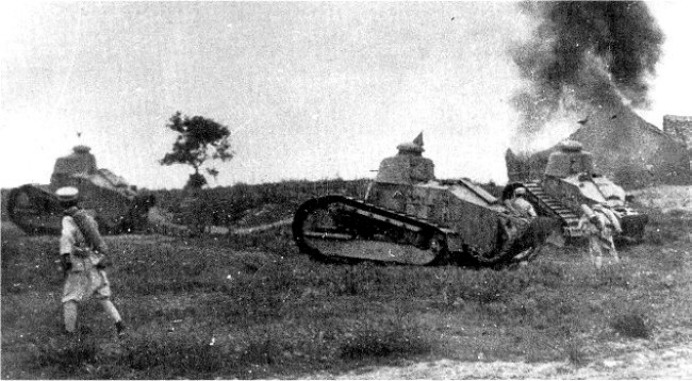
Tank support for Chinese infantry (1920s)
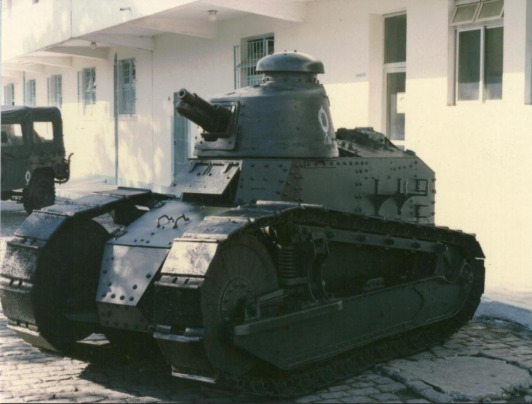
One of the rare specimens in the Brazilian Museum
FT tanks were widely used in French colonies.
The last battle in its history was the 1945 battle for the Hanoi fortress. Four tanks from the 9th Colonial Infantry Regiment repelled the Japanese attack.
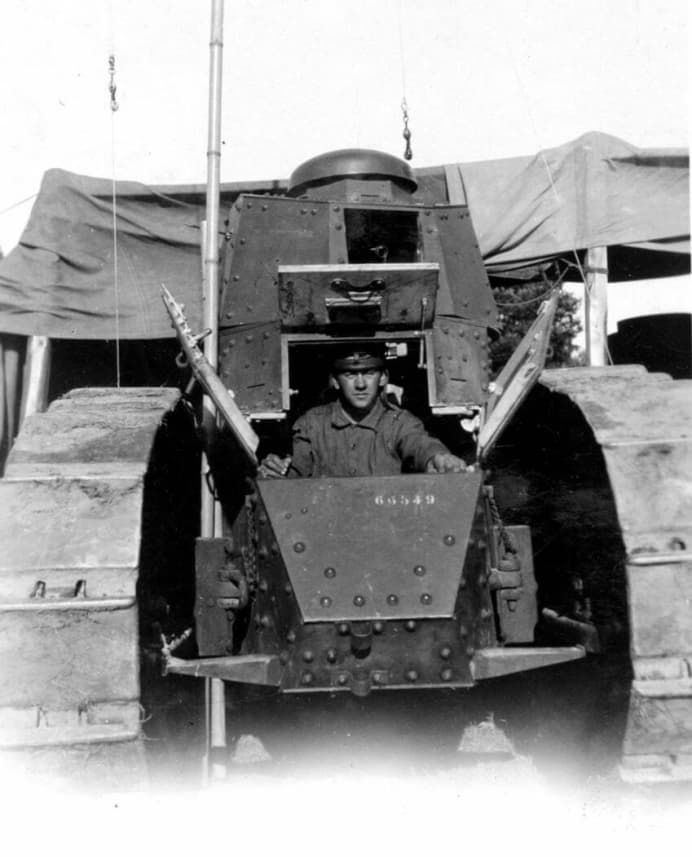
Renault belonging to the 9th Colonial Infantry Regiment of France, Vietnam, Hanoi, 1945
ARTICLES IN RUSSIAN
Трофейные бельгийские, британские и французские противотанковые орудия в ВС Германии во Вторую мировую
https://samlib.ru/c/chekmarew_w_a/1939f17.shtml?ysclid=mmc0uo1pgv99464263
Шкондини-Дуюновский Аристах Владиленович. Renault Ft-17 лучший танк первой мировой
https://sibirajak.livejournal.com/27142.html
Персональный сайт - Танки Renault FT в Югославии.
https://military.wikireading.ru/15691
Два танковых боя Советско-Финской войны 1939-40 гг.
http://www.vojska.net/
https://waralbum.ru/112571/
https://armor.photos/Tanks/WWI/ft17/ft17.php
Notícias del Ejército de Brasil| Página 71 | Zona Militar
3. Specifications
- Armor protection and survivability
Armor protection (front/sides/rear)
- Hull (16/6/6 mm)
- Turrets
Priority! Berliet-Girod model 1918 late (cast) (16/22/22 mm)
Early 8-sided (riveted) (16/16/16 mm) - Bottom (6 mm)
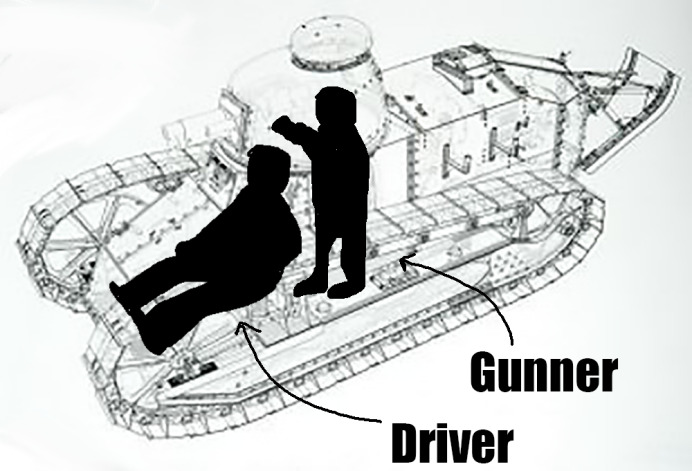
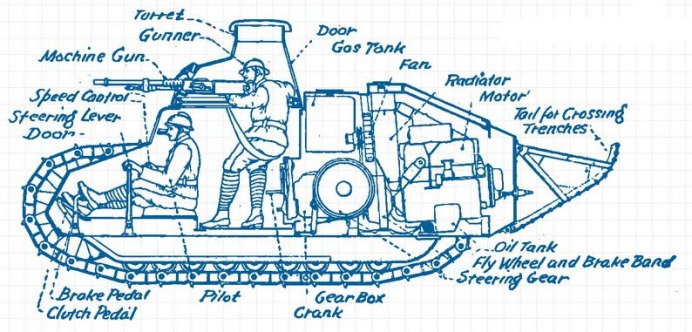
- Crew - 2 people
- Driver-mechanic
- Gunner (and loader)
- Mobility
- Engine: Renault 18CV 4-cylinder
- Suspension: locked, on leaf springs
- Specific power:
- Maximum speed:
(forward/reverse)
forward AB/RB (25/20 km/h)
reverse AB/RB (5/3 km/h) - Engine power: 39 hp
- Weight: 6.7 tons
Renault 18CV engine
- Armament
- Gun: 37 mm SA18 L/21 gun (mounted on FCM.36)
- Ammunition: 237
- Reload time: 3 seconds
- Elevation: -20…+35
- Aiming speed:
Horizontal: 30 degrees/s
Vertical: 6 degrees/s - Shells:
High-explosive: Mle 1916
Armor-piercing: Mle 1937
- Tank dimensions:
- Height: 2.14 m
- Length: 5.0 m (4.1 m without tail)
- Width: 1.74 m
- Ground clearance: 0.41 m
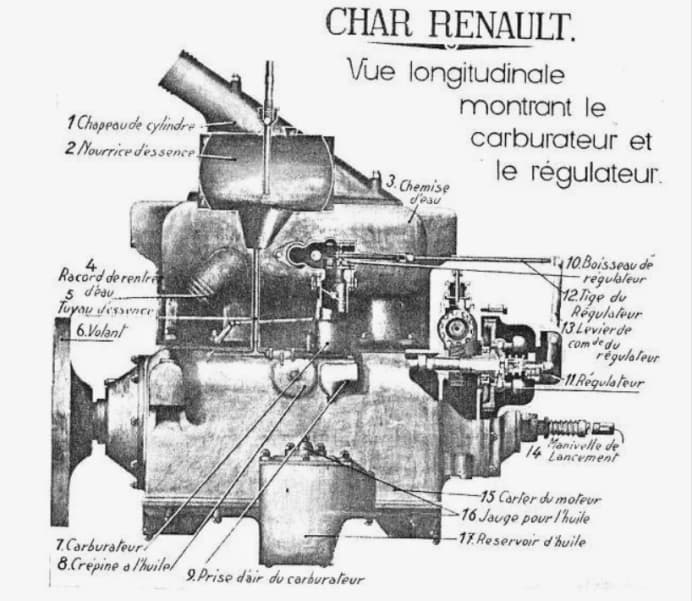
4-cylinder Renault 18CV engine
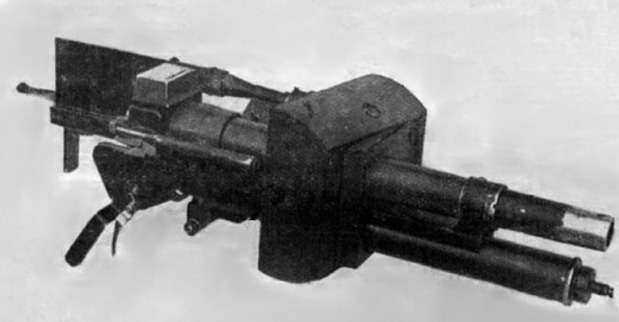
37 mm Puteau SA18 L/21 cannon (with armor shield).
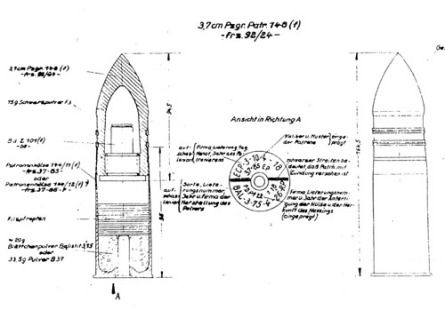
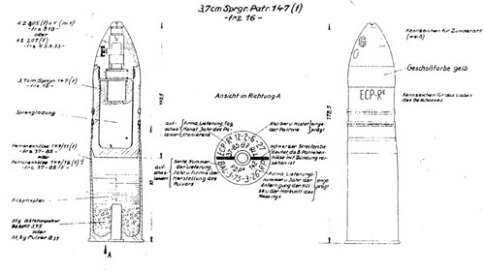
The original Mle 1892 armor-piercing shell and the Mle 1916 high-explosive fragmentation shell. These were fired from a 37 mm Renault cannon. They were gradually replaced by more modern variations, such as the Mle 1937.
ARTICLES IN RUSSIAN
ВО ВТОРОЙ ВОЙНЕ МИРОВОЙ. Танк № 1 «Рено ФТ-17». Первый, легендарный
https://big-andrew.nethouse.ru/articles/tag/FT-17 (Самые подробные характеристики)
https://armor.photos/Tanks/WWI/reno/asia/
https://forum.guns.ru/forummessage/42/315208.html
Рено FT-17 — Википедия
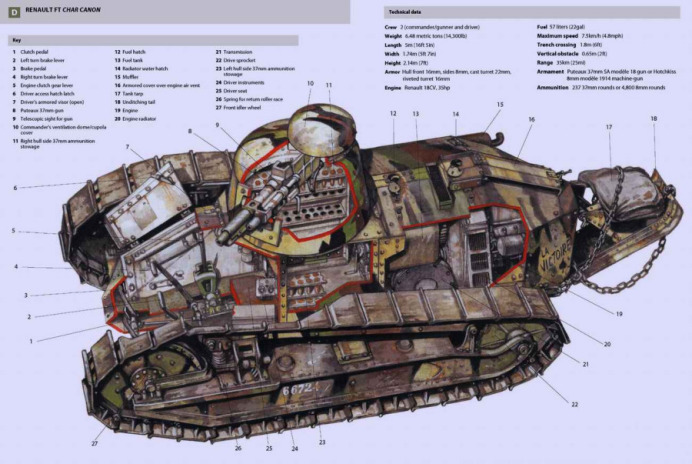
4. Internal structure: modules and crew.
Drawn by hand, not the best quality:-)
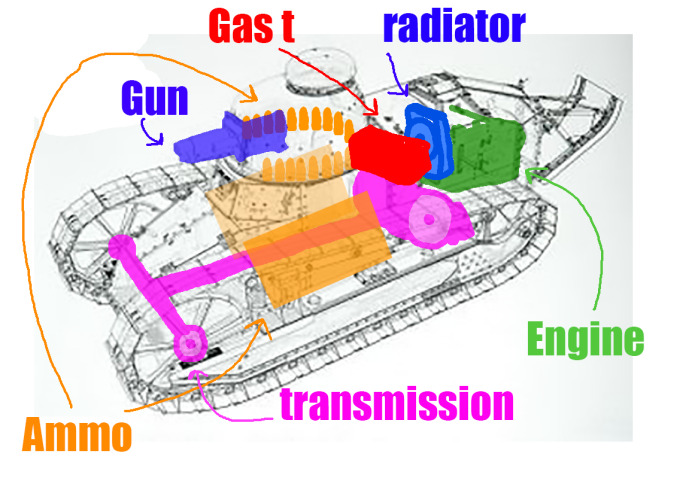
Better drawings
Replace the machine gun to cannon.
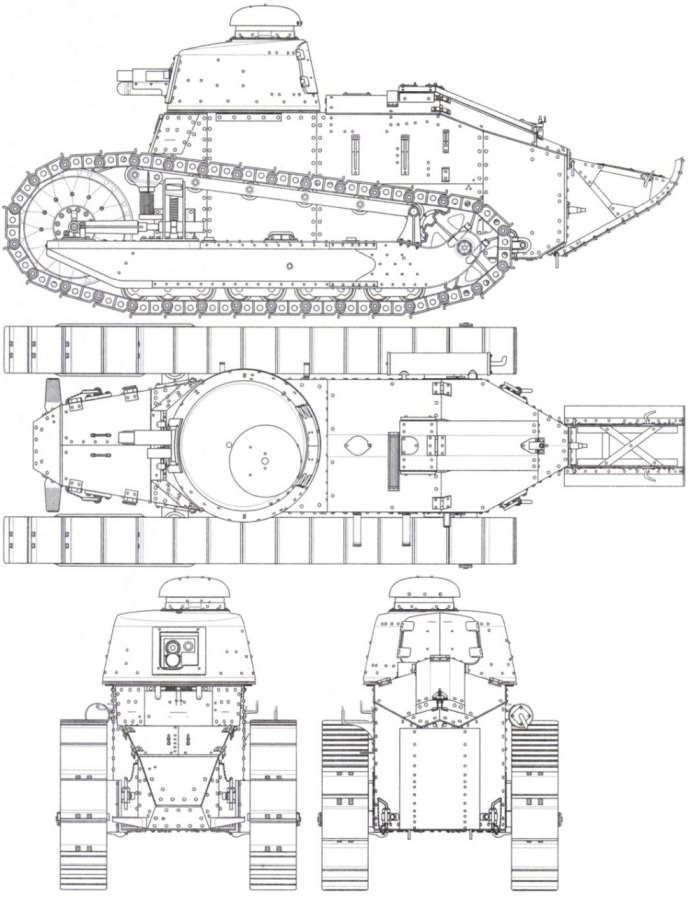
5. Tank drawing
Drawing of a tank with dimensions and different types of turrets
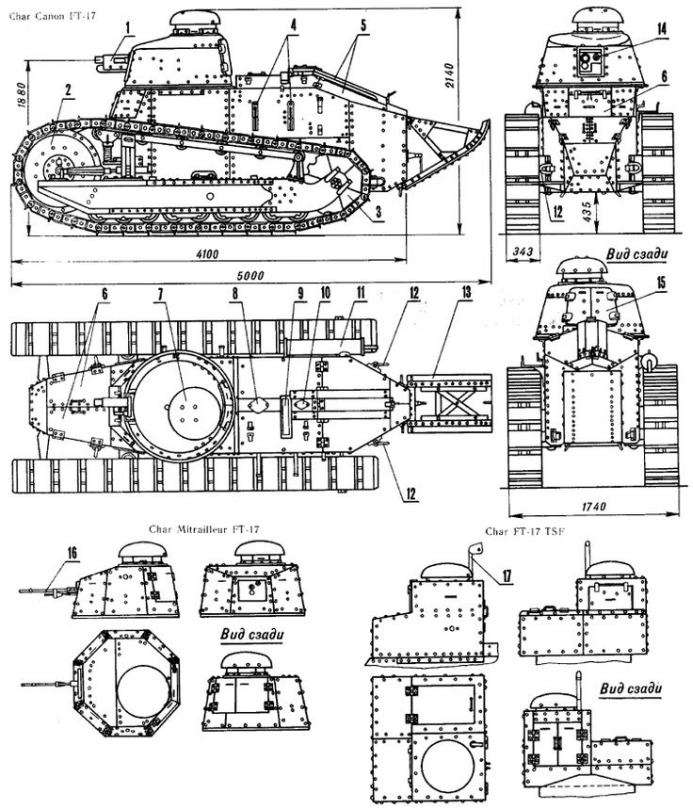
Best quality
6. BR and economics
- Battle rating: The Renault FT will have a BR 1.0.
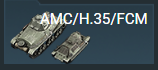
The Renault FT tank will be located in the French research tree in a separate upper left slot of rank 1, “AMC/H.35/FCM.” Place it between the H.35 and FCM.36. This is done so as not to interfere with the main research tree.

OR
Premium tank with a combat rating of 1.0 for 50 gold eagles
- Conditions for obtaining: (research a Tier 2 French vehicle or research 6
- Economy: free (or for a small amount of silver)
I also suggest NOT making it a special offer (for GJN) so that everyone, even beginners, can try out this unique tank and experience a World War I tank. Even those who missed the event in April 2025 can do so at any time.
7. Countries-operators
For now, I think I’ll stick with France so as not to overload the topic and break the rules.
If you like the topic, the following operators are possible
- France (original model with cast turret)
- Germany (“Pz.Kpfw. 17R 730” or “18R 730 O” (with a cast turret))
- USSR/Italy? (“M-17”, subnation of Yugoslavia, cast turret)
- Japan (“Ko-Gata Sen-Sha”)
- China ((maybe?)), cast turret)
- Sweden (subnation of Finland, cast turret)
8. Why is it needed in the game?
In general, I really liked the bold move to test the concept of an early tank in the Great War mode.
However, there is a downside.
I don’t really like that all of this was limited to a single event and released on April 1, which is a joke.
The Renault tank is a symbol dedicated not only to the world’s first successful tank, but also to the vehicle that the heroes of World War I fought in.
Just as the T-34 occupies a special place in Russian culture, so does the Renault FT, but on a larger, more comprehensive scale.
Therefore, this legendary symbolic tank will occupy a special place in the game and will look great alongside the Char 2C and other interwar projects, such as the Independent.
10. Useful
A brief history of tanks from Tanksmuseum
https://www.youtube.com/watch?v=tb6OYZERMh4
High-quality 3D animation of a tank with a description of its technical characteristics
https://www.youtube.com/watch?v=_pmYNXiAao0
11. Miscellaneous and not included
- The designation FT-17/18 is often encountered. When writing an article about the tank, I decided not to use numerical designations, as the only difference is in the turrets (17-riveted, 18-cast).
- The cast turret is often referred to as “Berlie” in honor of the manufacturer.
- In the late 1920s, Sweden and Japan predominantly used tanks based on late NC models with Kegres running gear, but early models remained in service.
- By the end of the war, the Renault FT-BS support tank was produced based on the FT, equipped with a 75 mm high-explosive gun and a fixed turret. About 40 were produced, which were used in the colonies and also in the defense of France in 1940. Among the captured Renault tanks was the BS-75.
- There was also a modification called the Carro d’assalto Fiat 3000 mod.21 IIa serie (based on the Fiat 3000, an Italian clone of the FT). This model was equipped with twin machine guns. It is likely that this vehicle was used as an anti-aircraft gun (but this is not certain).
Thank you for reading!