The M1 Abrams tank features powerful passive composite frontal armor, providing comprehensive protection against both kinetic and shaped-charge threats. The first M1 Abrams (1980) has a 663 mm thick frontal turret (62 mm outer steel plate, 500 mm composite armor, and 101 mm rear steel plate). The hull is protected by a 563 mm thick hull (equally thick rear and outer plates, plus a 400 mm composite armor hull).
On subsequent modifications, starting with the IPM1 (1984) and ending with the M1A2 SEPv2 (2008), the thickness of the frontal armor of the turret is (62 - 700 - 101) 863 mm, and the hull (62-500-101) 663 mm.
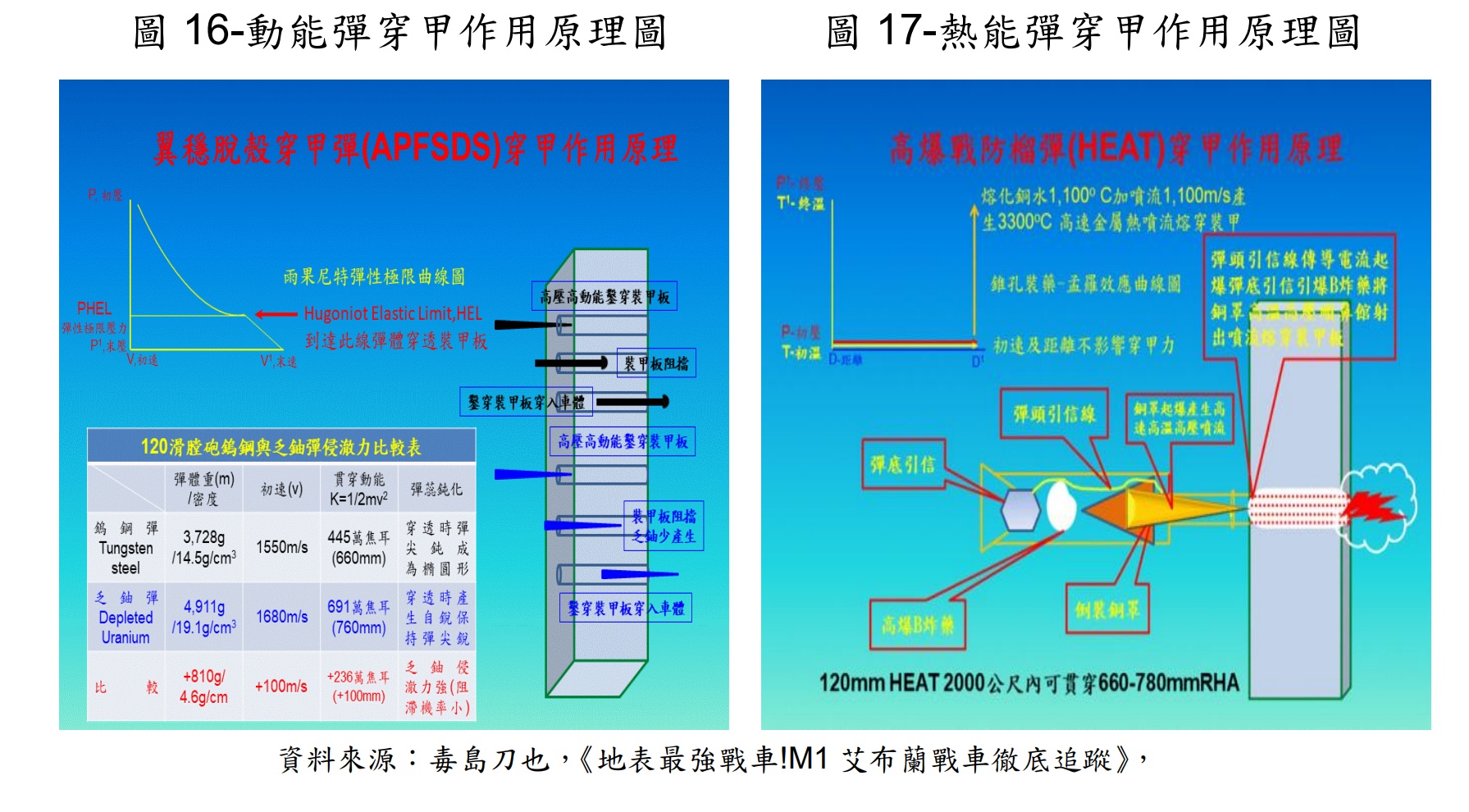
This PDF is Issue No. 40 of Taiwan’s National Defense and Security Weekly, published by the Institute for National Defense and Security Research on 29 March 2019. It contains an article titled “The Strategic Significance of the M1A2 Main Battle Tank Procurement,” discussing Taiwan’s planned acquisition of the M1A2 Abrams.
The article states that the M1A2C is the renamed M1A2 SEPv3 and describes it as an upgraded version with new armor, improved situational awareness, programmable ammunition support, CREW counter-IED equipment, upgraded power components, and an auxiliary power unit.
It also states that, according to public data, the M1A2 SEPv2 frontal armor provides approximately 960 mm of protection against kinetic-energy rounds and up to 1620 mm against chemical-energy warheads such as HEAT rounds and anti-tank missiles. However, the article uses the general term “frontal armor” and does not specify whether these values apply to the turret, hull, or the frontal arc as a whole.
Also I found a Chinese Sina military article from 2004 that reproduces estimated Abrams armor protection values, including 560–590 mm RHAe KE / 510–1050 mm CE for the glacis and 580–650 mm RHAe KE / 800–970 mm CE for the lower front hull. However, these values appear to come from the older “Tank Protection Levels” internet table, which was later also reproduced on SinoDefence and Armorsite/Fprado. Therefore, this should be treated as an old secondary open-source estimate, not as an official Chinese technical report. 美军陆战核心:M1“艾布拉姆斯”坦克大传(组图)_新浪军事_新浪网
Although US tanks suffered direct hits from numerous Iraqi T-72 and T-72M tanks, enemy warheads simply could not penetrate the M1A1’s armor. The model equipped with this armor is called the M1A1 HA (HA being an abbreviation for heavy armor), offering the equivalent protection of 600mm of armor against fin-stabilized discarding sabot (APFSDS) rounds and 1300mm of armor against chemical energy projectiles (including shaped charge projectiles and anti-tank missiles).
The armor protection of the M1A1 Abrams currently in service is much stronger than that of the original M1A1HA model used in the first Gulf War in 1991.
So, since the development team already had access to this information, why didn’t they use it right when the test server first launched, instead of waiting until the test server was about to close and after getting flooded with negative player feedback, before finally releasing a dev log saying they would adopt it? Isn’t that strange?
If you’re so strict about vehicle data in the game, then why do you suddenly become so indifferent when it comes to Russian vehicles?
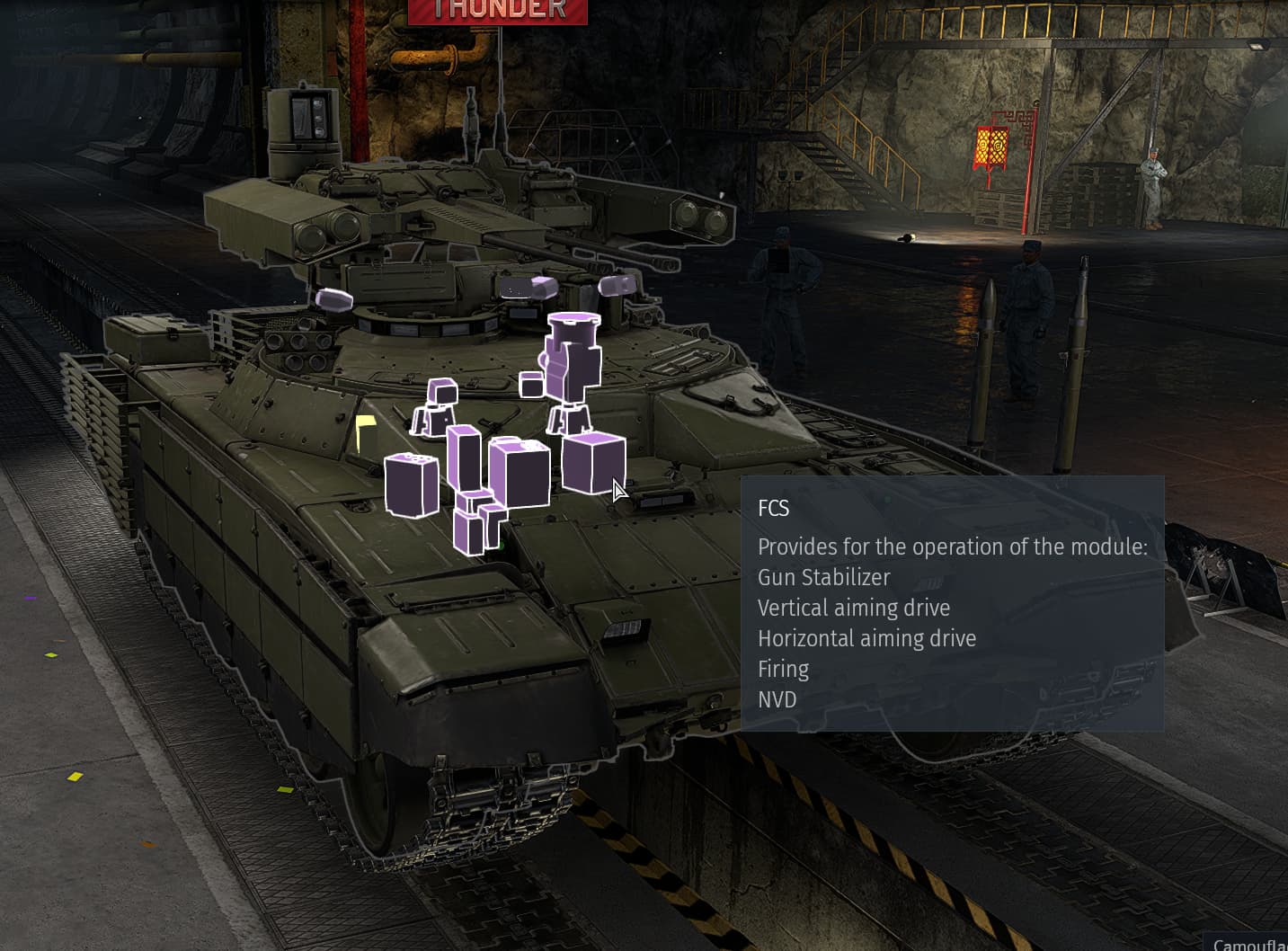
Keep in mind that right now, Russian vehicles are the only ones in the entire game that lack fire control systems and electronic equipment—anyone who didn’t know better would think Russian tanks are powered by warp energy
at least the cancer that is the BMPT has it, to be fair that thing is such a laser beam anyways that even without it your losing a barrel or getting lol penned as an Abrams, glad that’s getting fixed completely next update
nah i think most new releases (last 3 updates) that have completely new models not based off another already in game have detailed models including, fcs so it likely would have been there on release similar to things like the stingray, m10booker, and the NASAMS 3 launcher
This is NOT where this is sourced from. The original Document has no name but would be named either, “Future Concept- M1A3” or “Armor Improvements M1AX.”
Not only did you not properly source the image you provided, sourcing it to some random load distribution document it never came from, you failed to credit the original uploader.
It comes from an Archive and @kreyton_m1e1 on twitter scanned and shared it, you should probably credit him or remove it and it’s erroneous source claim you made.
Of course its not from the twitter post, it is heavily cropped. It’s from an upload to twitter dating back to early 2025 or from one of his reddit posts.
Sorry, but there was a post further up showing that there were mission packages that pushed the tanks weight up to 90 tons.
A mission package may not mean a permanent fixture of equipment, but it sure does mean that it’ll be operating in the field for days or weeks with logistics support.
And if it’s expected to be an option in a combat deployment, since you know the US military planners aren’t idiots, they’ll knoe there’s the possibility of combat scenarios where the vehicle will be unable to quickly access a seevice depot.
So your whole argument undoes itself since you aren’t driving the tank out for 20 minutes and then going back to the depot bro.
Your argument is emotionally driven. Again, army mission planners fully expect and plan for the potential of unplanned extended combat deployments where supply lines and services can and will be disrupted meaning the tank has to be able to endure the useage of its mission packages weight.
Also stop arguing. Just stop. The logic that the army has talked about AND implemented based on paperwork and tanker testimony shows the armor HAS been upgraded.
The issue should be an increase of GBR being raised and abrams moving up.