which it will at some point in some usecases, at this point in stockpile depth is too important of a factor to throw away a perfectly capable missile just because a way better alternative came into town, its simply not worth the scaling down needed in the short term when they can coexist in different roles.
2 Likes
Idk what you’re on, but they are VISIBLY fairly bigger on AIM-260
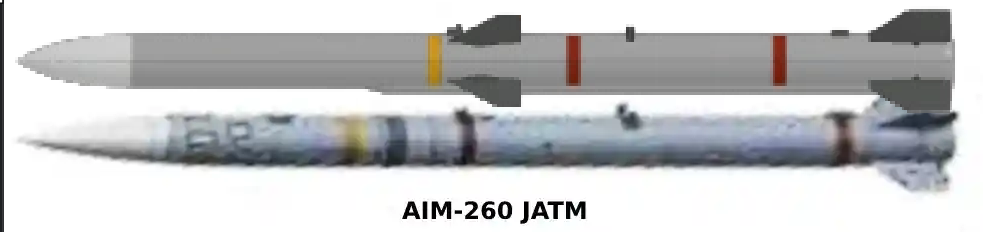
didnt even need to do this stanky comparison in paint, but…
2 Likes
AIM-120 was supposed to fully replace the AIM-7 but sparrows were still used for some time
technically it still is as the RIM-7 Sea sparrow, just not on aircraft
which is how its going to be with aim120 just even more widespread
Should also somehow put aim174b in this topic coz idk they seem very similar

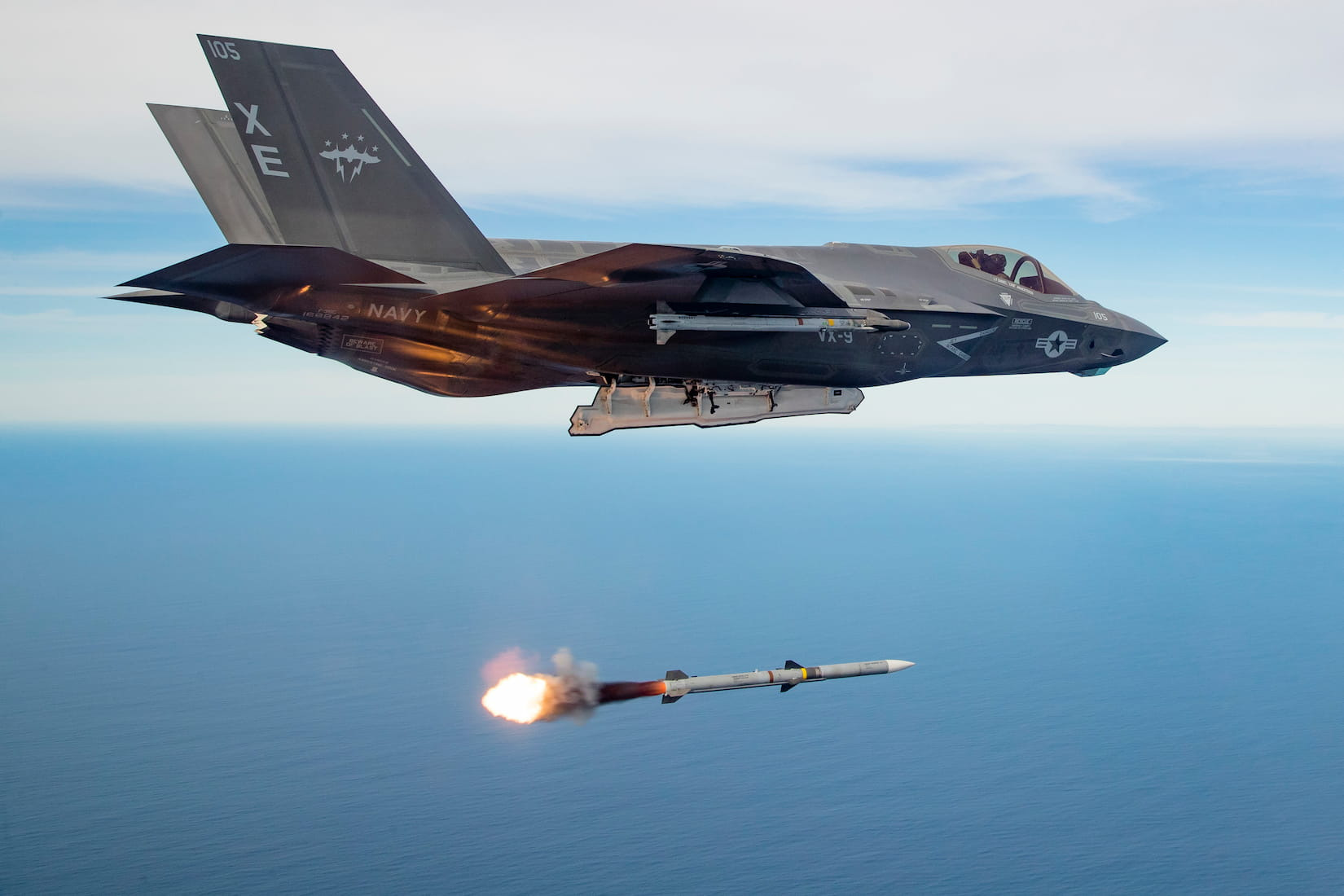
The current gen 120s do not retain two brown bands nor does the 260, nor do they indicate length of the booster, the forward band on the 260 is also grey not brown. They also have varied in placement on most US missiles, for instance, some D-3s have the band further up, while the C-7 above has it back towards the aft fins, and some C-7 pictures can be found with the band in the same place as the D-3 being fired here.
The Sparrow did not receive any additional upgrades once the AIM-120A entered service(unlike what is occurring with the 120 vs 260 mentioned prior), the AIM-7P, the final aircraft sparrow variant began deliveries in 1987, the first AIM-120As began delivery in 1991, no future aircraft models were developed after the AIM-7P. The hand me down Block I and II refits that did occur were due to the now canceled F-14D refits that were canceled in 1991, missiles were being produced and delivered in the block II configuration by 1989, but were not put into service due to the above situation until 1993.
TLDR, the last sparrow upgrade thats not a surface launched make was finished for testing 2 years before the 120 because of the events surrounding the tomcat. Still a chance they exist in the inventory too as they got shelved rather quickly once the 120 was procured en-mass, or they got re-manufactured into RIM-7s.
Your point here in these last 2 paragraphs is…? You just agreed that the AIM-7P was made a few years before the AIM-120A entered service, and the exact same is happening again; we currently have AIM-120D/D-3 series missiles in active service, and the D-3 is meant to be the last upgrade until the AIM-260 enters service. It is set out and seems to be following the exact same trajectory that the AIM-7P to AIM-120A replacement did
3 Likes
One missile is being sustained and remains a component of the inventory while another was supplanted and was shelved beyond surplus once it’s replacement entered full rate production.
Good job missing the fact that the D-3 is not the last upgrade, with a upgrade occurring alongside the 260’s introduction along with the missile not being supplanted from service or production like the 7P.
Its obviously not but go off.
Not sure if you know about this but the AIM-7R was a proposed program that was actually put some research into and was even flight tested but was turned down (In 1996!) so as to move onto AIM-120s. Arguably, this track is still following too; I feel that the DoD will end up deciding to keep the 120D series in storage for necessary needs but phase them out in replacing them with the AIM-260, considering they fulfill the same roles.
The only reason I could see the AIM-120 remaining in service is with some sort of massive change to the airframe, such as even something like the addition of perhaps a ramjet to produce a meteor equivalent. I would not know anyways, but from my perspective it seems as if the AIM-120 is in it’s last stages of it’s lifecycle as the AIM-260 prepares to replace it.
2 Likes
foreign cooperation, stockpiles, and sustaining older aircraft or aircraft that may not be getting the 260
x-bow design change review for MK-104 has just been completed as of January 2026, it is unlikely that such version have reached IOC, let alone full scale production. The latest MK-104 Motor Upgrade that likely reached production is a contract awarded in April 2006 and first delivery scheduled for March 2008.About 18 years ago. We also don’t know if such upgrade only related to production methods or performance
1 Like
PAC-2 GEM+ is 900 kg while AIM-120 is 153 kg, so PAC-2 is like 600% the weight of AIM-120.
A much closer comparison would be AIM-7 and AIM-120. AIM-7 is 231 kg whereas AIM-120 is 152 kg, so AIM-7 is about 50% heavier than AIM-120, yet no one have doubt that AIM-120 can reach AIM-7 range, if not better. If we compare AIM-174 and AIM-424, AIM-174 is 830 kg, AIM-424 is 680 kg, so AIM-174 is only 22% heavier than AIM-424. They both have similar diameter but AIM-424 has much smaller wing, which should lead to lower drag.
Anyway, highly loaded grain allegedly can improve range by 50%

1 Like
I think it is extremely unlikely that AIM-120D-3 and AIM-260 have the same motors, given that AIM-120 is made by Raytheon while AIM-260 made by Lockheed Martin. They made by two different company, likely using different sensor, processor, warhead. Like the only thing similar between them is probably the launcher
3 Likes
The navy is always the spearhead in an hypothetical china conflict so it makes sense for them to have this kind of capability first.
A while ago I made a 3D model of AIM-260A using the render that was released a year or two ago as a reference, and assuming it has the same dimensions of AMRAAM the motor section measures to be approximately 81.5 inches long, going by the seam linebetween the brown and gray bands. For reference, AMRAAM’s motor section is 74.4 inches long on all variants (except maybe 120D-3, but I can’t say for sure for it specifically).


So even if it uses the exact same propellant composition and grain as AMRAAM it still has a physically larger motor, likely thanks to more compact electronics and perhaps a shorter warhead.
4 Likes
the aim120’s motor was limited due to the mid body servo motors. without these the room for propellant increases greatly the bands are likely slightly misleading as all the electronics are further forward of the yellow band or maybe this grey one is some sort of additional fuel marked for dual pulse purposes. even on the c-5 vs A there isnt a difference in band location despite known additional fuel
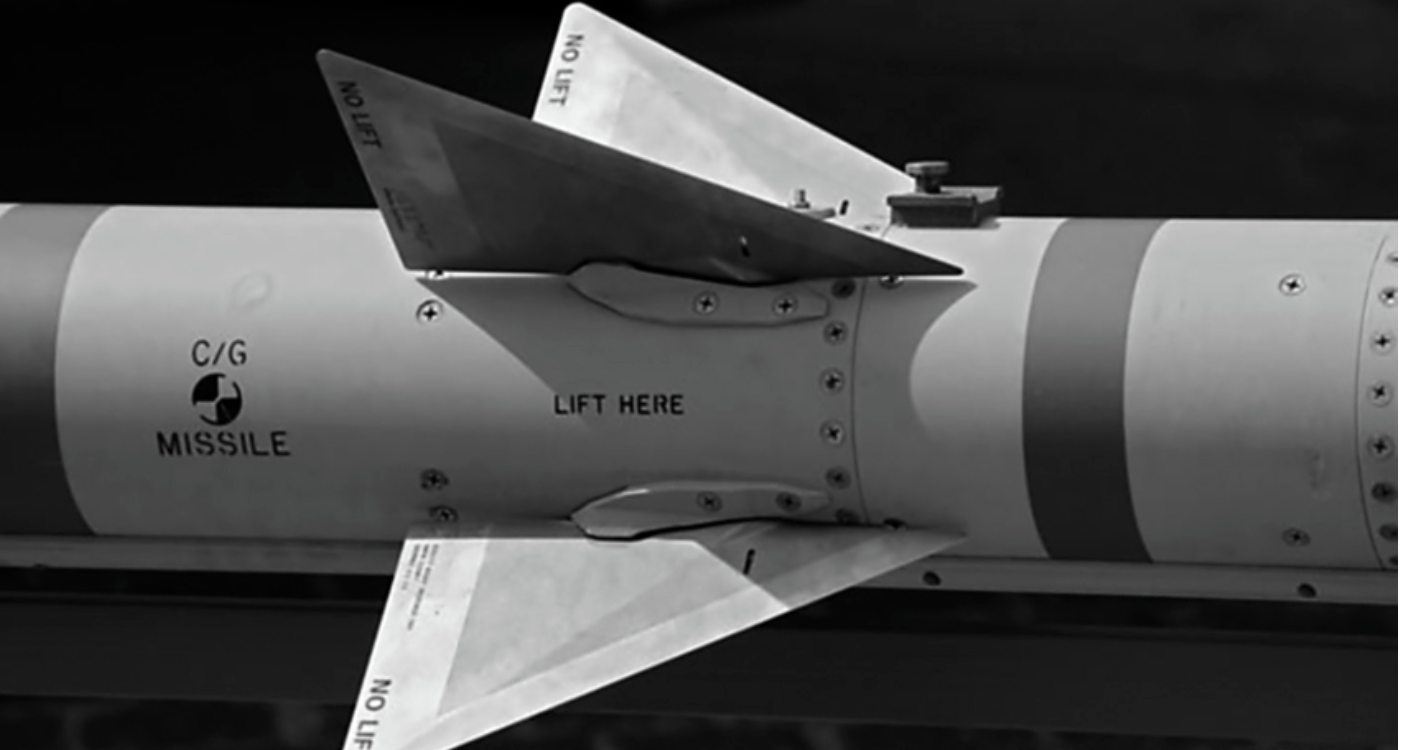
The body fins weren’t what limited the motor length, it was the warhead and guidance section, that’s the why the US needed resorted to a completely new design instead of just adding a dual pulse motor to the AIM-120.
The consensus about the AIM-260 is that it has a longer throttleable or multi pulse motor (therefore the rest of the missile is also lighter), a smaller warhead and a guidance system that acts at the same time as the fuze. Also from a congress release it is confirmed to have a jam resistant gps guidance too. There should be more details soon since the USAF has been buying them at least since 2024.
According to a chinese paper the motor is around 45% longer than on the AIM-120D, the AIM-120D has 51kg of fuel and the PL-15 60kg according to the gamefiles so the AIM-260 would have more fuel than the PL-15 while being overall lighter than the AIM-120.
Is there anything about an AESA seeker?