- Yes
- No (Explain why)
Suggestion No.93
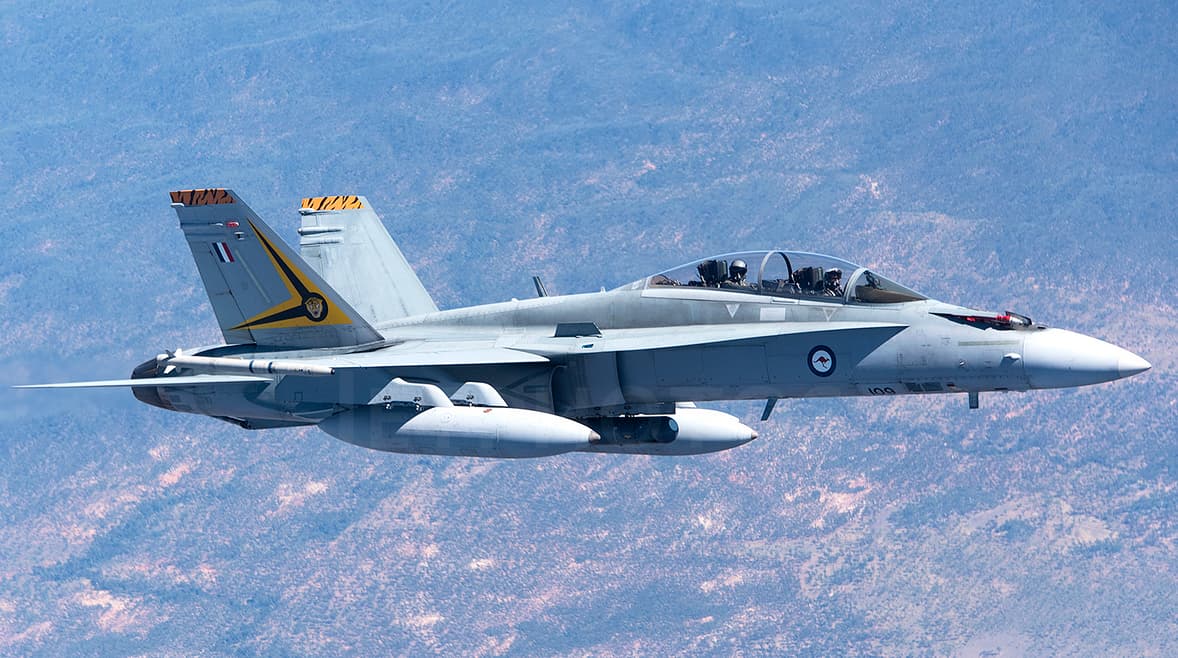
G’day lads. I want to suggest the Aussie F/A-18B Hornet Upgrade Program, which not only has the same weapons as the Hornet A, but also Python 4’s, ASRAAMs and other advanced weapons :)
Description:
Spoiler
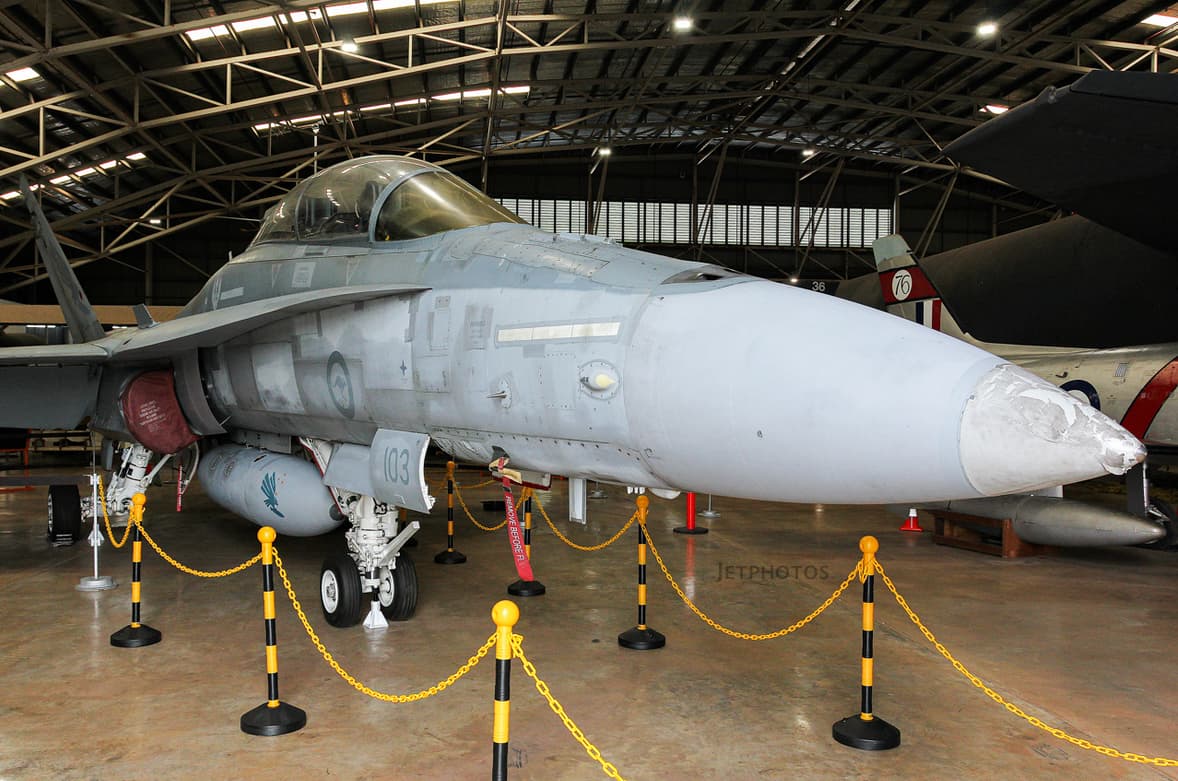
The RAAF F/A-18B Hornet is a twin-seat multirole fighter aircraft that served the RAAF with it’s air combat capability from the mid 80s until its retirement in 2021. Made by McDonnell Douglas (later Boeing), the F/A-18B was mostly used for training and operational conversion, but retained full combat functionality like on it’s A variant. The Hornet was made to be allowed for both air to air and air to ground missions. The second seat was typically occupied by an instructor or weapons systems officer. The aircraft was upgraded under the HUG program, which gave it a more powerful radar and was compatible with a wide range of more capable weapons, including missiles and guided bombs (of course). Throughout its service, the F/A-18B participated in a lot of exercises and deployments, including combat operations in the Middle East. It replaced the Mirage III and was eventually succeeded by the F-35A Lightning II.
History:
Spoiler
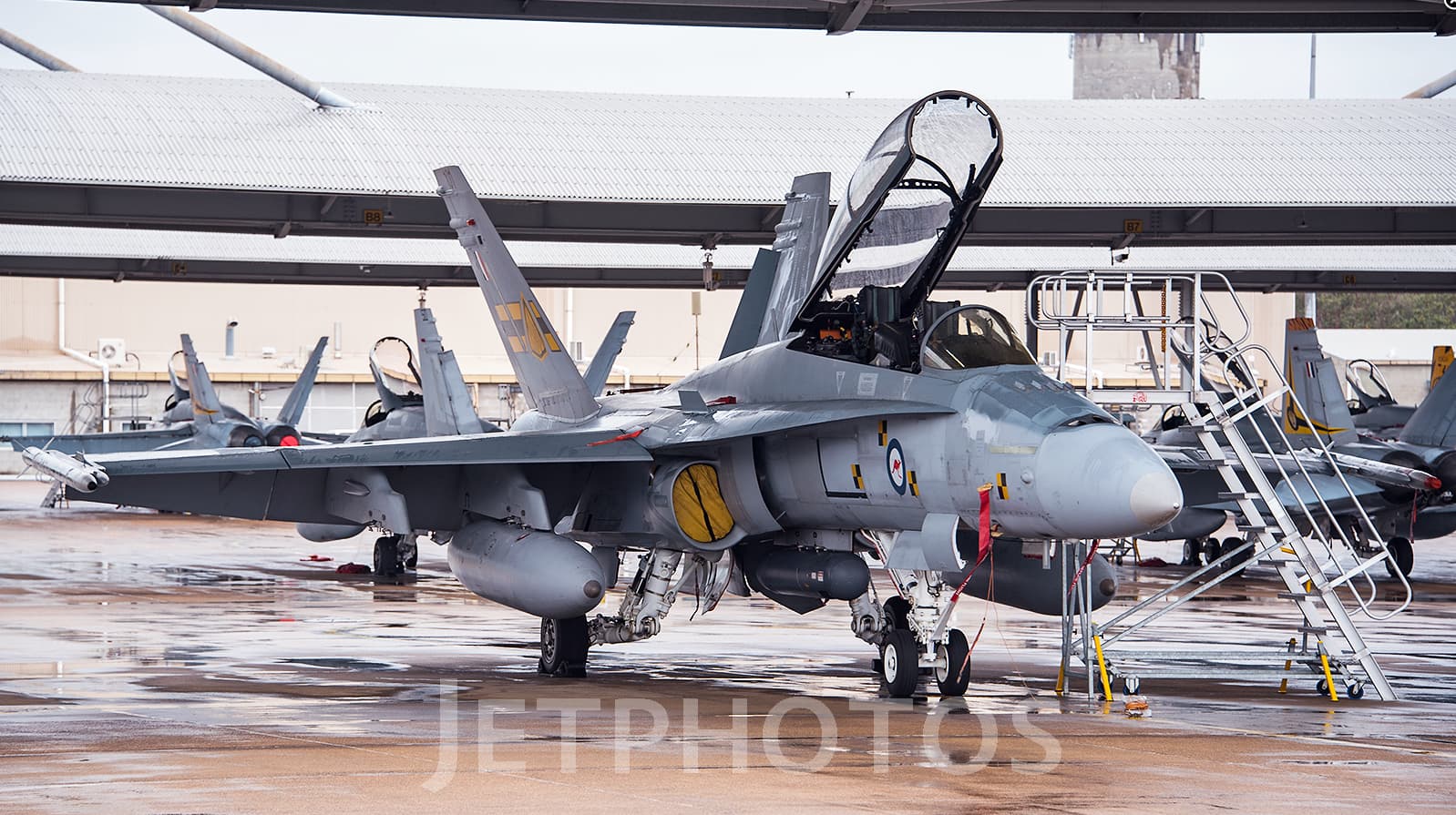
Australia’s F/A-18B Hornets were introduced as part of a broader modernization effort to replace the aging Mirage III fleet. Australia needed something new as early as 1972, and by 1979, the shortlist had been narrowed to the General Dynamics F-16 and the McDonnell Douglas F/A-18. After extensive evaluation by a team of operational, technical, and industrial experts, the F/A-18 was selected on 20 October 1981 for its superior all-weather avionics and twin-engine reliability.
The F/A-18 was derived from the Northrop YF-17, adapted by McDonnell Douglas into a multi-role fighter for the U.S. Navy. Australia ordered 75 Hornets: 57 single-seat F/A-18As (A21-1 to A21-57) and 18 twin-seat F/A-18Bs (A21-101 to A21-118). The first RAAF Hornet, A21-101, was unveiled in St. Louis in October 1984 and ferried to Australia in a record-breaking trans Pacific flight in May 1985. The first operational unit, No. 3 Squadron, received its aircraft in August 1986. The final dual-seat Hornet, A21-118, was delivered in December 1988, and the last single-seat Hornet, A21-57, arrived in May 1990.
The F/A-18B variant was primarily used for operational conversion training at No. 2 Operational Conversion Unit (2OCU), though it retained full combat capability. Each frontline squadron operated one or two dual-seaters, and one was assigned to the Aircraft Research and Development Unit (ARDU). The Hornets were based at RAAF Base Williamtown and RAAF Base Tindal, and participated in major multinational exercises including Red Flag, Pitch Black, Bersama Lima, and Bersama Shield.
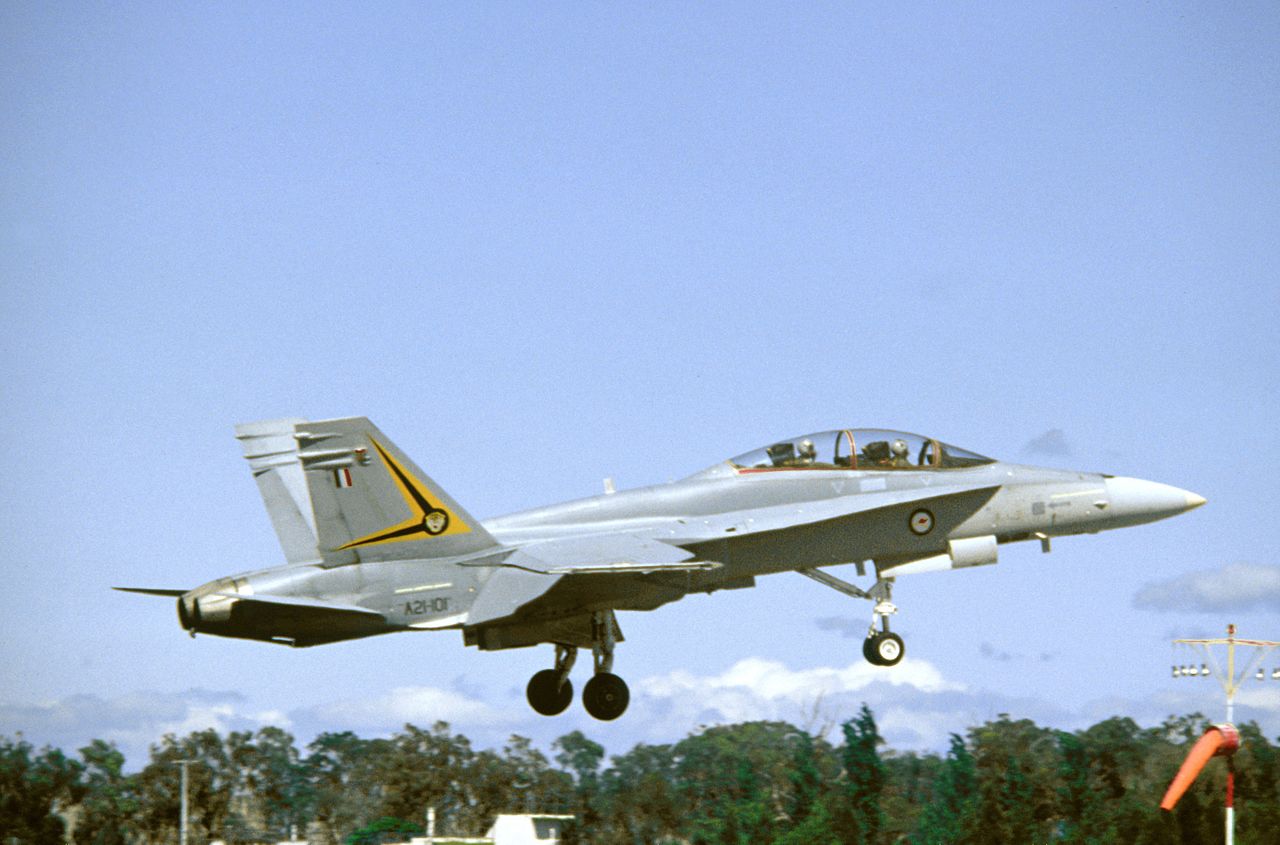
To extend the fleet’s operational life, the RAAF launched the Hornet Upgrade Program (HUG) under project AIR 5376. Beginning in 1999, HUG modernized avionics, radar systems, and mission computers, and addressed structural fatigue through center barrel replacements. The upgrades enabled compatibility with advanced weapons such as the AIM-120 AMRAAM, ASRAAM and JDAMs, and many other new features too. The Python 4 was a competitor with the ASRAAM, and was tested on the F/A-18B during 1997, but failed.

Originally scheduled for retirement between 2010 and 2015, the Hornets’ withdrawal was delayed due to adjustments in the F-35A Lightning II acquisition timeline. Government decisions in 2006, 2009, and 2012 extended the fleet’s service life to better align with U.S. production schedules. The final farewell ceremony for the Classic Hornets took place on 29 November 2021 at RAAF Base Williamtown, attended by Defence Minister Peter Dutton, Air Marshal Mel Hupfeld, and other dignitaries. The last squadron to transition was No. 75 Squadron at RAAF Base Tindal.
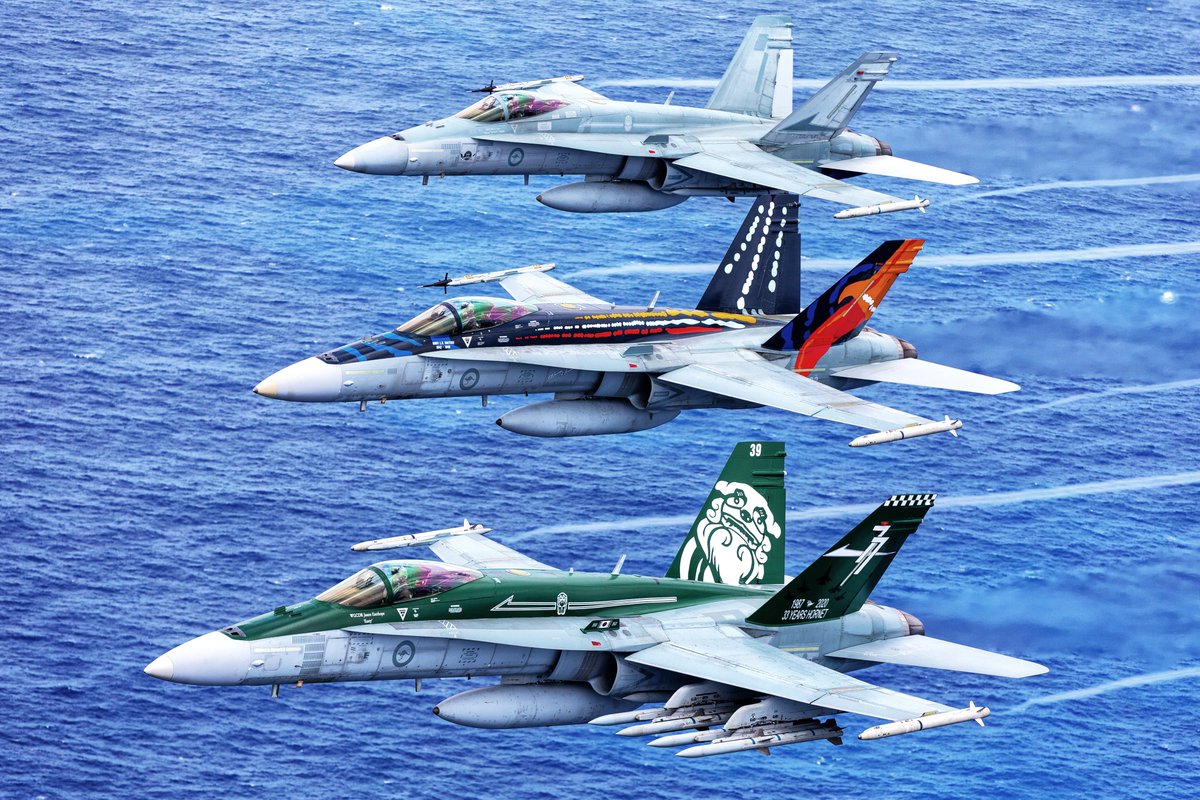
Some Hornets were sold to Canada to supplement its own fleet, while others were offered to private contractors. A proposed sale to Air USA was ultimately cancelled, resulting in many airframes being scrapped. A few aircraft were preserved in museums and heritage collections.
Armaments:
Spoiler
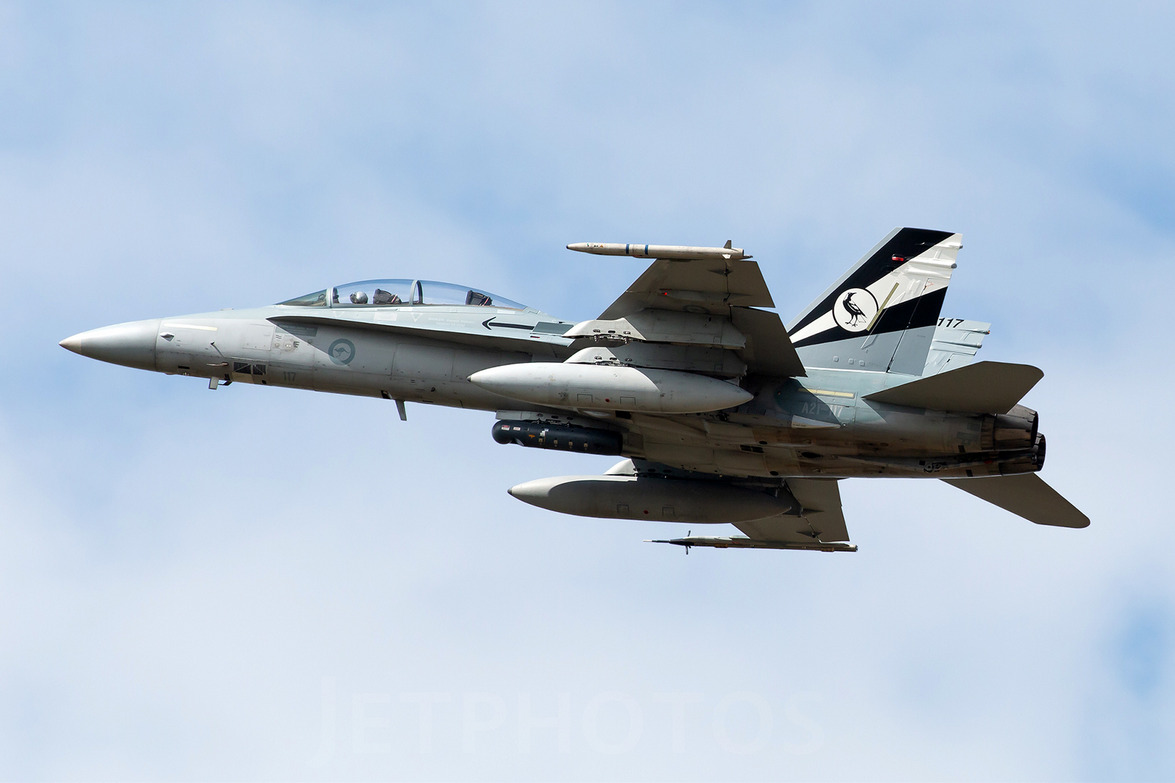
1 20mm M61A1 with around 578 rounds
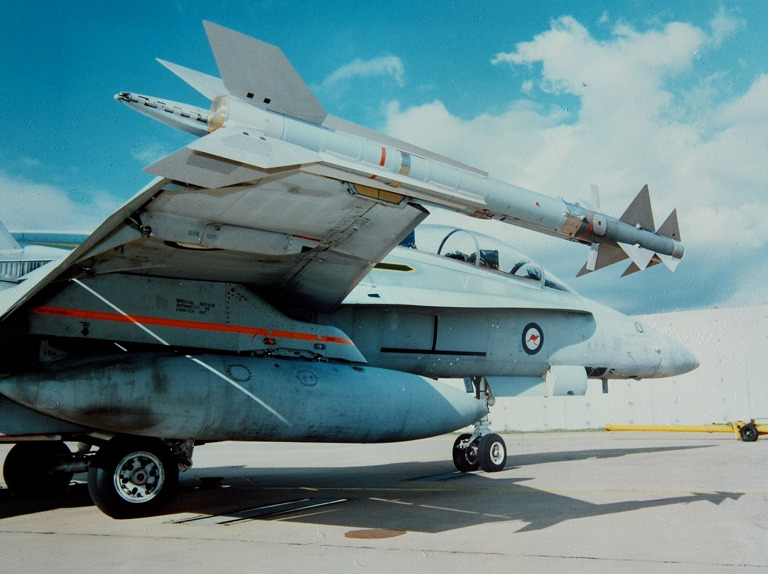
ASRAAM
Python 4 (Would recommend to come with them. Up to 6 can be carried, as the Spanish Hornets could be seen also having 6 of them during tests)
Aim-120 (B) AMRAAM
Paveway II series
JDAM
Dumb bombs like the Mk.80
Litening ( AN/AAQ-28) pod
ATFLIR pod
AGM-158 JASSM
Harpoon
Fuel tanks (1200L, etc.)
AN/APG-73 radar
AN/ALR-67 RWR
HMD
Specifications:
Spoiler
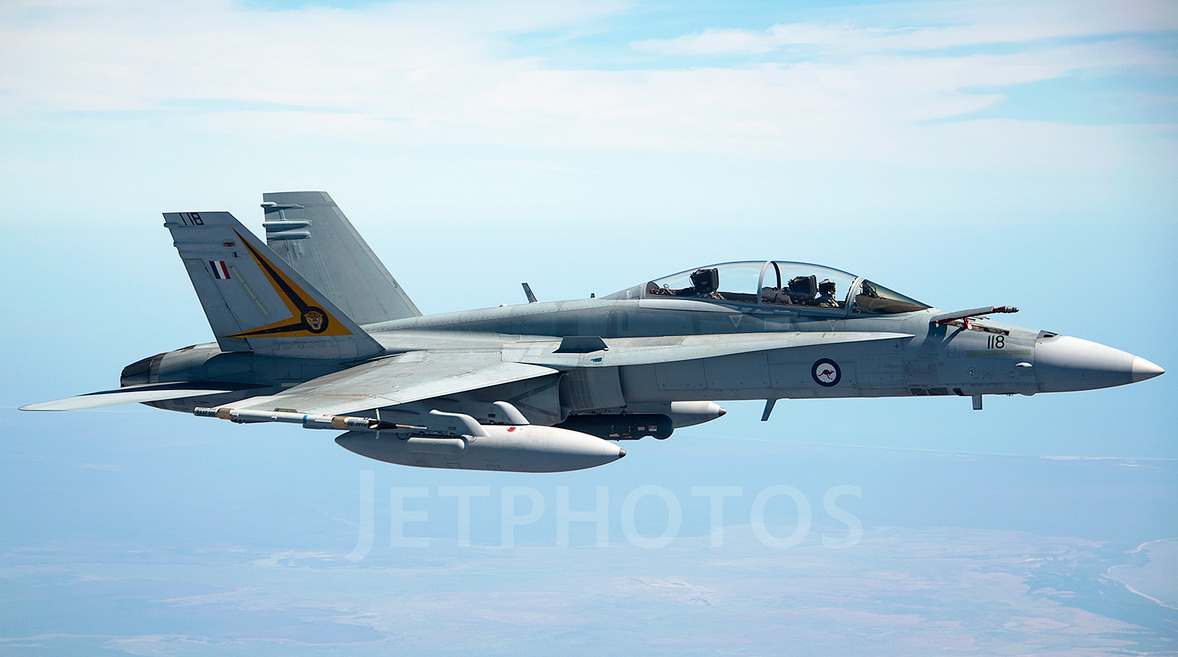
The F/A-18B has a length of 17.07m, a wingspan of 11.43m and a height of 4.67. It weights around 11204kg when empty, and with MTOW around 23389kg. It is powered by 2 F404-GE-400 engines, which provide a thrust of 4808kg when dry and 7257kg with afterburner. This gives it a max speed of 1915km/h.
Sources:
Spoiler
McDonnell Douglas F/A-18 Hornet in Australian service - Wikipedia
McDonnell Douglas F/A-18 Hornet - Wikipedia
Classic Hornet Retires to Perth - Australian Air Power Today
RAAF tests Rafael Python 4 | News | Flight Global
Fourth Generation AAMs - The Rafael Python 4
AIRFIGHTERS.COM - McDonnell Douglas F/A-18B Hornet Data
McDonnell Douglas Hornet [A21] | Australian Military Aviation History
https://www.jetphotos.com/photo/10017327
https://www.jetphotos.com/photo/10486508
Thanks a lot for reading! If you have any extra information, then feel free to share them in the replies! As always, have a good day :)