- Yes - In the Tech Tree.
- Yes - Event/BP.
- Yes - Premium.
- No - I would not like to see the Wackett Warrigal II in game.
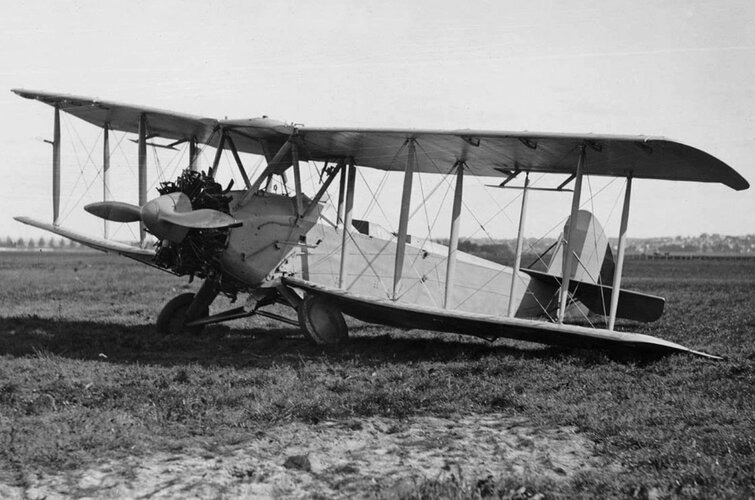
The sole Warrigal II after a hard landing at Mascot Airport (1930)
Description:
By the late 1920s, Australia sought out a replacement for their aging Avro 504K advanced trainer and DH.9 army co-operation aircraft. In response to this tender, Sir Lawrence Wackett, then in charge of the RAAF experimental Section Randwick, designed an all metal biplane aircraft, fitted with two seats, bomb racks, and an Armstrong Siddeley Lynx engine producing 200hp (150kW).
A single example was produced, first flying on the 4th of December 1928, being built at a cost of £10,573. This airframe would suffer a heavy landing in September 1929, and was written off due to cost and lack of spares. The Warrigal I was the first all metal aircraft to be built in Australia. Reports on the Warrigal I by test pilots were poor, notably the odd spin characteristics led to several near crashes. The RAAF purchased the Westland Wapiti as its new advanced trainer instead of the Warrigal I.
However, Wackett was not discouraged by this failure, and continued work on an improved design, the Wackett Warrigal II. This was to be a change of pace compared to the Warrigal I, instead of being a training aircraft, it would be an army co-operation vehicle, but would also be fitted with provisions for conversion to a fighter if the need arose.
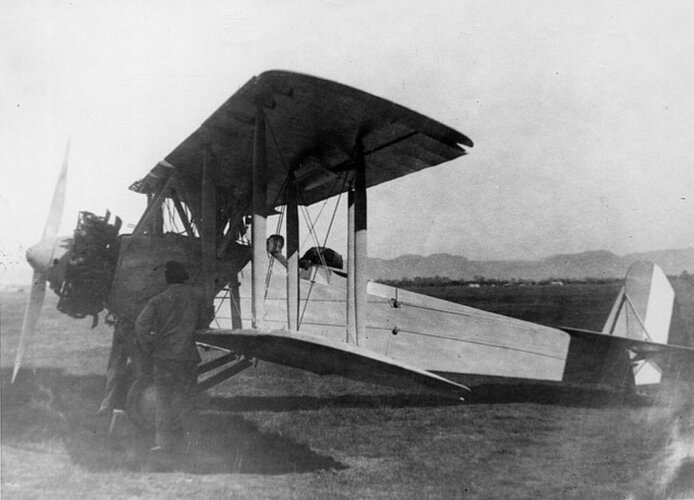
Warrigal II, probably when she was assembled in 1930. This photo is often confused for a Warrigal I, however the new tail design and shorter nose can be clearly seen.
History:
Moving back to the drawings of the Warrigal I, Wackett aimed to improve the base failings of the airframe in RAAF tests, with changes to the vertical stabilizer among smaller changes. The largest improvement was the removal of the 200hp Lynx engine, replaced by a 420hp Jaguar IVA. Due to the larger size and weight of the new engine, the nose was shortened as to keep the center of gravity in check. The bomb racks and nose machine gun was kept, however the observers scarff ring and associated Lewis MG were not.
Once the plans were complete, work was started on the new airframe before the plans themselves were submitted to the Air Board in August 1929. This led to questions by the Auditor General, Sir John Salmond, who already questioned the RAAF Experimental Section’s cost to benefit in a report. However, it was seen as a waste of material and money to shut down the Section when a new type would be available in a few weeks, with the Air Board deciding to only close down the section at Randwick upon completion of the Warrigal II. Thus approval for the construction of the type had been given, albeit only when it was a few weeks away from completion. Costs for the airframe are unknown, however the Jaguar engine cost £1,800 alone.
Wackett himself was not impressed with this report, stating that Salmond was “as an agent of British aircraft manufacturing interests, who was keen to ensure that Australia continued to buy the RAAF’s
needs from the old country.”
The RAAF Experimental Section was shut down on the 30th of March 1930, and the airframe was moved to RAAF Richmond for final assembly. Now completed, the Warrigal II would be first flown by Flying Officer R.H.Simms on the 7th of July 1930, passing control of the airframe to No.1 Flight Training School (1 FTS) on the 12th of September 1930.
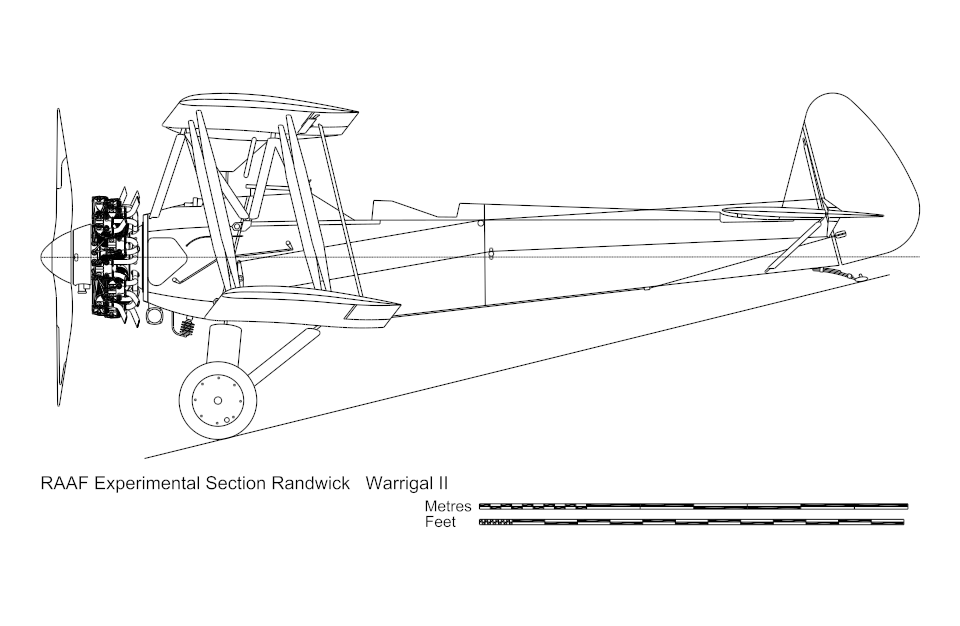
Line drawing of the Warrigal II aircraft based on original RAAF plans.
The first flight tests took place in September 1931. This would continue to the 6th of October 1930, when the airframe would sustain major damage due to an undercarriage collapse on a hard landing at Mascort Airport, Sydney. Repairs were made, and it was made ready for service trials. This included ‘full load’ tests, filling the Warrigal with the maximum load it was expected to carry in service in fuel and bombs. It was found that performance suffered greatly under these conditions, being unstable, heavy on the controls, and that rudder control was poor.
During an inspection after these trials, it was found that the joint between the front and rear sections of the fuselage had failed and opened up. Repairs started immediately, completing after six months sometime in February 1932.
Further problems with the undercarriage were encountered, and so it was decided that the airframe should be fitted with the floats specifically designed for the Warrigal, and seaplane trails commence. This was a success for the type, performing better than the Moth Seaplanes currently in service with the RAAF at the rough seas around Port Phillip Bay.
However by March 1933, Wing Cmdr De La Rue recommended the disposal of the Warrigal II, arguing that the aircraft was performing so far below the Wapaiti or any other new types, that further development or operation was uneconomical.
As an experimental machine, the sole Warrigal II could not be sold to a civilian operator, instead it would be moved to the Melbourne Technical College, albeit with the engine and any spares being sold through the contract board. Both the Jaguar IV engine and the Lynx engine of the Warrigal I, which had been in storage since 1930, were sold to New England Aviation LTD for £350.
It is unknown what happened to the airframe after this point, however it was probably scrapped.
| Dimensions: | ||||||
|---|---|---|---|---|---|---|
| ----------------------------------------------------------------------------------------------------------------------------------------- | ||||||
| Length: 26ft 11in (8.2m) | ||||||
| Height: 9ft 11in (3m) | ||||||
| Wing Span: 37ft 3in (11.3m) | ||||||
| Wing Area: 377 sqft (35 sqm) | ||||||
| Weight (Dry): 2,414lb (1,095kg) | ||||||
| Weight (Gross): 3,647lb (1,659kg) | ||||||
| Crew: 1 pilot, can be fitted with seat for observer. | ||||||
| Landing Gear: Can be fitted with wheels for land bases, or floats for naval operations | ||||||
| ----------------------------------------------------------------------------------------------------------------------------------------- | ||||||
| Engine Performance: | ||||||
| Engine: 1x Armstrong Siddeley Jaguar IVA @ 420hp (313.2kW) | ||||||
| Prop: wooden, 2-blade, fixed pitch | ||||||
| ----------------------------------------------------------------------------------------------------------------------------------------- | ||||||
| Aerial Performance: | ||||||
| Climb Rate (clean): unknown | ||||||
| Maximum Speed (sea level) : 120mph (193kph) | ||||||
| Maximum Speed (8,000ft, 2,438m) : 96mph (155kph) | ||||||
| Endurance: 3hrs of flying | ||||||
| Ceiling: ~ 10,000ft | ||||||
| ----------------------------------------------------------------------------------------------------------------------------------------- | ||||||
| Armament: | ||||||
| Guns: 1x1 .303 Vickers firing forward w/ 600 rounds. | ||||||
| Bombs: 4x 20lb bombs or 1x 112lb bomb |
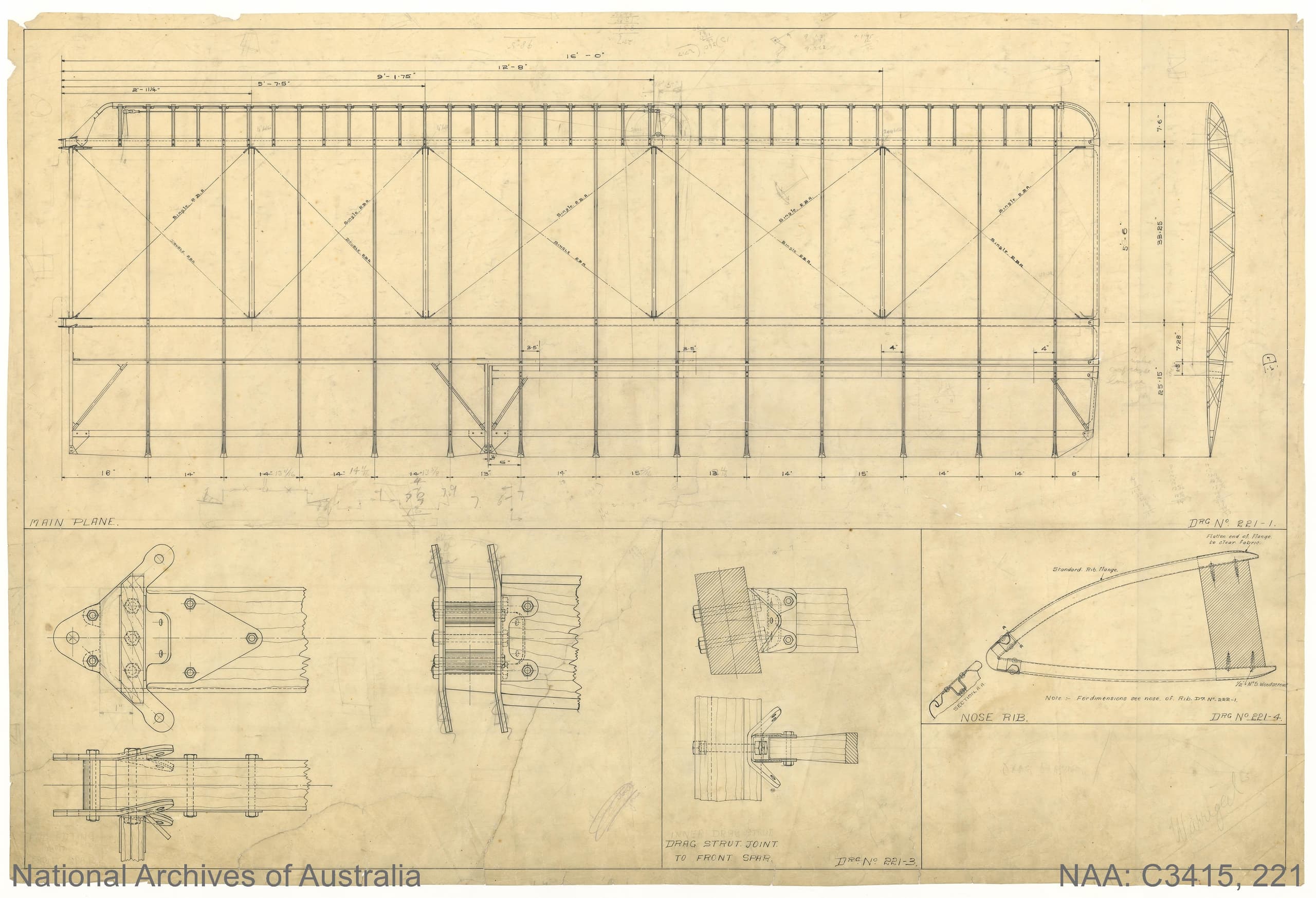
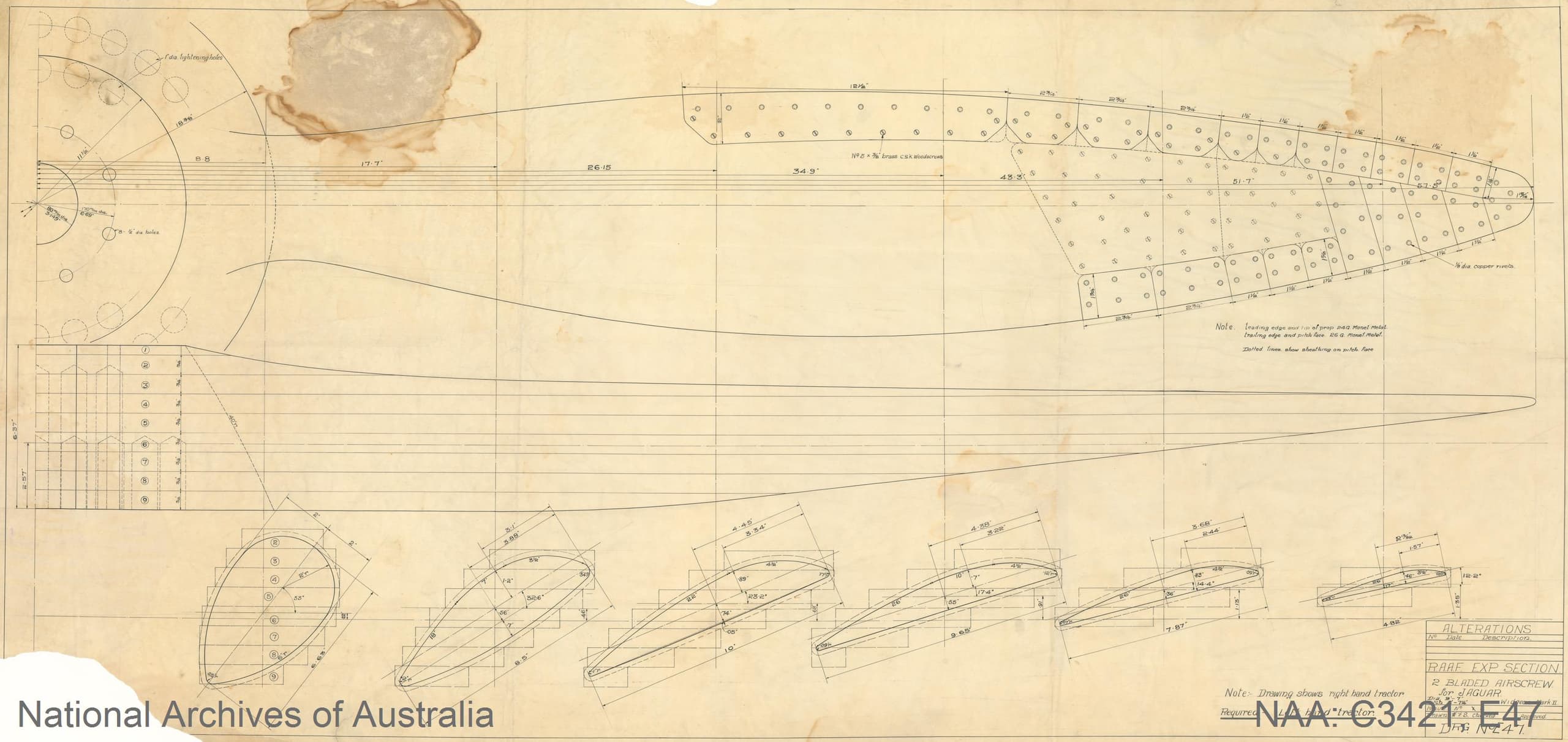
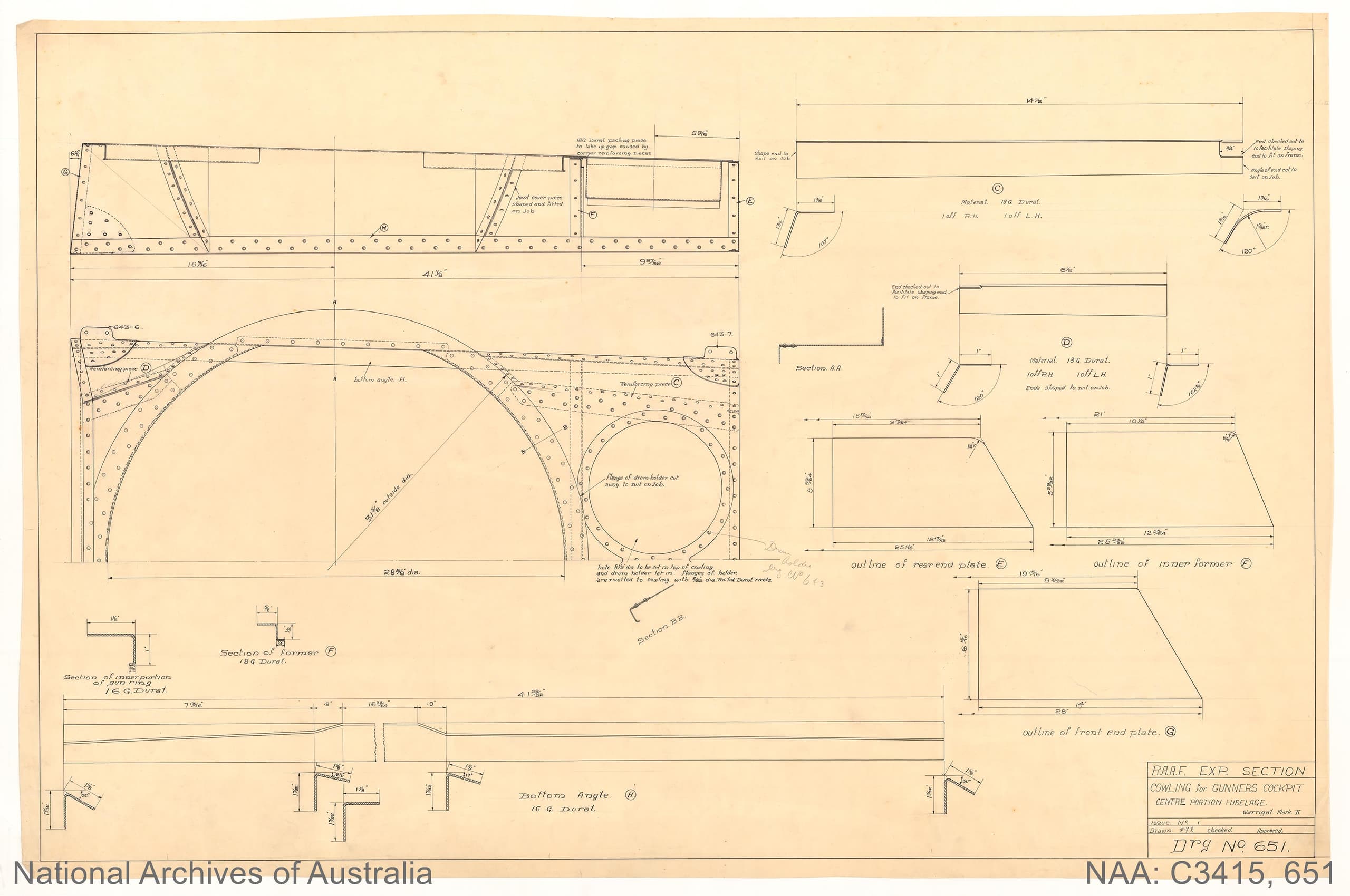
Various plans
Sources:
C.Clark, (1991) The Third Brother: The Royal Australian Air Force 1921-39 (p.267-272)
NAA: A14487, 9/AB/1566 ID: 24131704. Disposal of Warrigal II aircraft
NAA: A14487, 7/AB/970 ID: 23930030. Purchase of Jaguar engine for Warrigal aircraft.
The Brisbane Courier Wed 30th July 1930, p.14. ENGINE STALLS, FORCED LANDING AT MASCOT.
ADF Serials - Warrigal
https://aeropedia.com.au/content/wackett-warrigal-ii/
https://www.secretprojects.co.uk/threads/wackett-warrigal-ii-fighter-project.6247/
Wackett Warrigal - Wikipedia