- Yes
- No
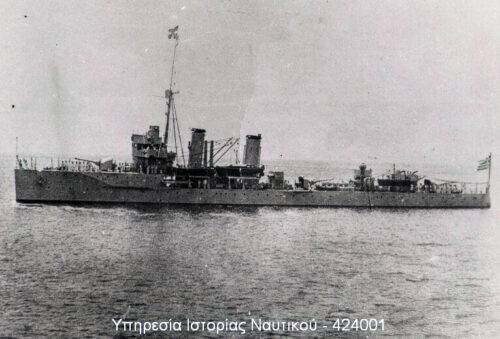
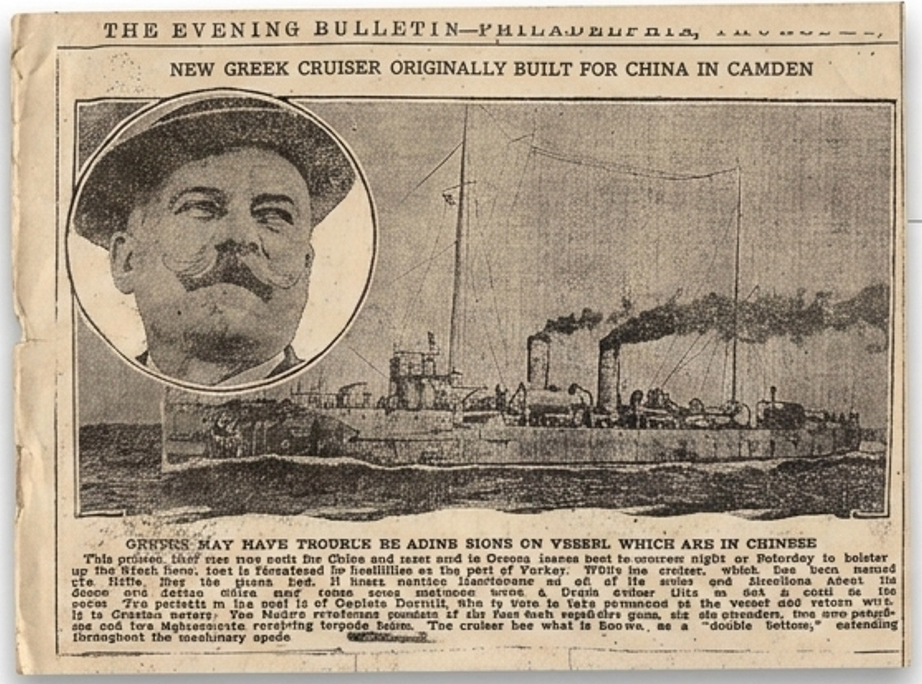
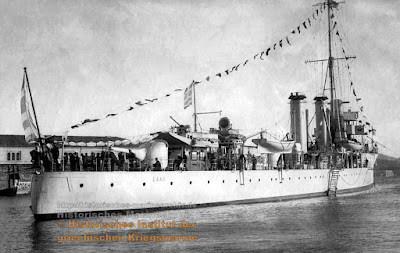
R.H.N. Elli was a Greek cruiser, originally built in Camden, New Jersey for China as the Fei Hung (“Flying Swan”) and purchased by Greece in 1914.
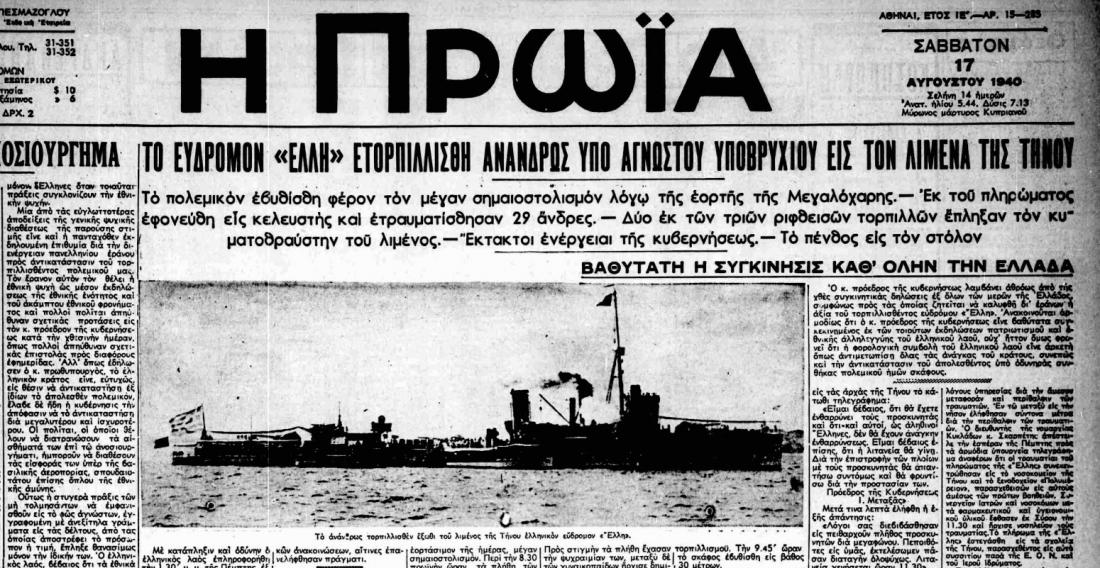
She served through World War I and the Asia Minor campaign before being torpedoed and sunk by an Italian submarine on 15 August 1940 while anchored at Tinos during one of the most religious celebrations in the Orthodox Church —an attack that became a powerful symbol of Greek resolve just before the country’s entry into World War II—.
History of Elli
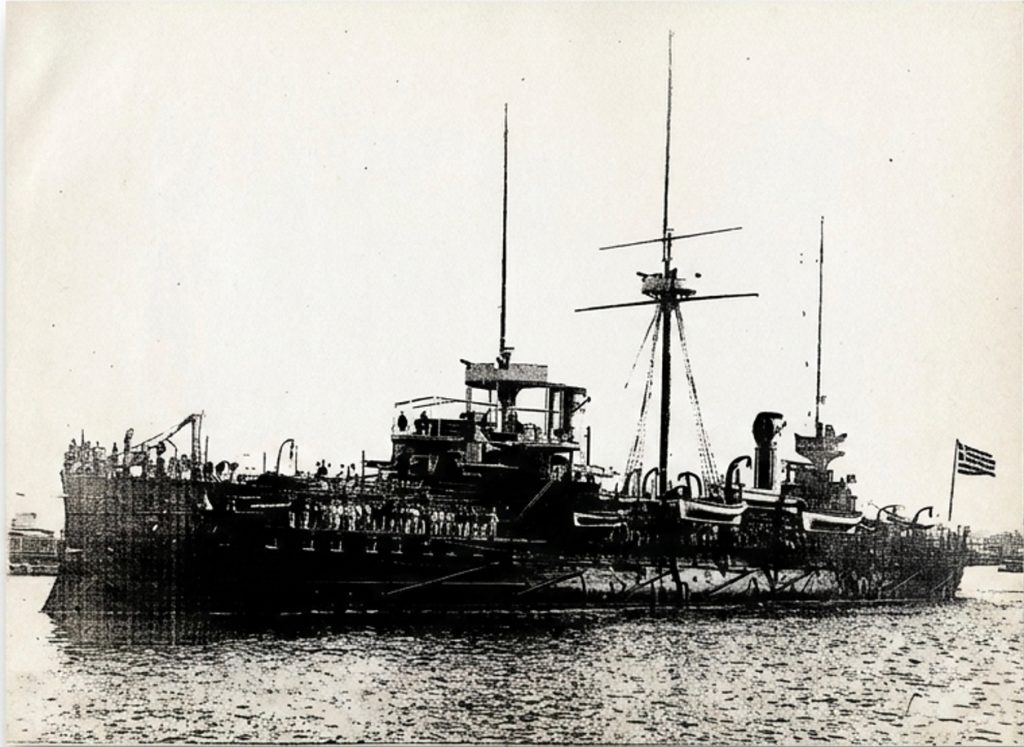
R.H.N. Elli was a cruiser of the Royal Hellenic Navy whose story begins far from Greek waters. Originally ordered by the Qing Dynasty of China as the Fei Hung (“Flying Swan”), she was one of the Chao Ho-class cruisers laid down in 1911 at the New York Shipbuilding Corporation yard in Camden, New Jersey. Launched in 1912 and completed in late 1913, the ship was left without a buyer when the Chinese revolution toppled the dynasty and the new republican government cancelled the contract. Greece, eager to strengthen its fleet after the Balkan Wars, purchased her in 1914 and renamed her Elli in honour of the decisive Naval Battle of Elli (December 1912), in which the Greek navy had forced the Ottoman fleet back into the Dardanelles.
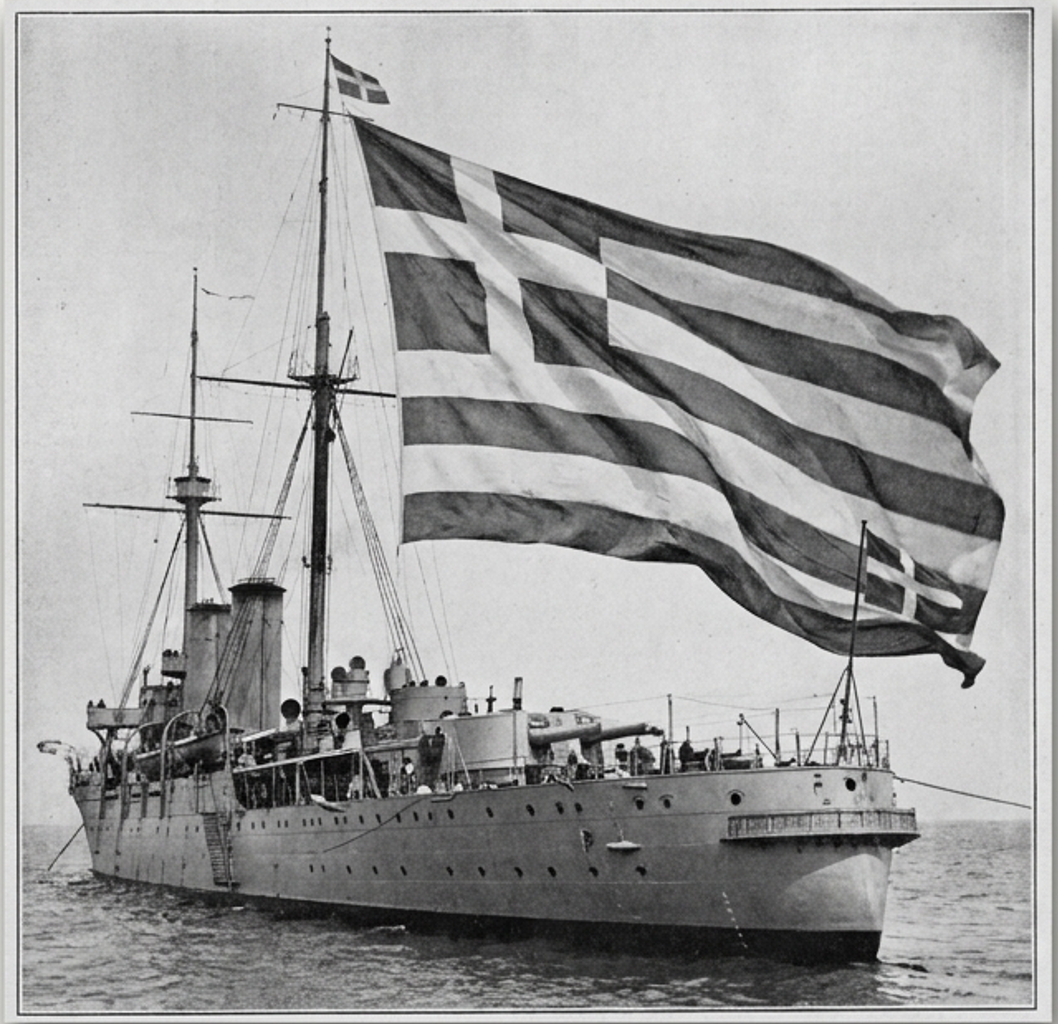
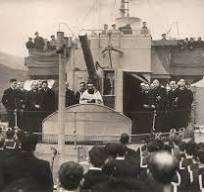
Under the command of Captain Alexandros Douroutis, a Greek crew took delivery in the United States. Finding every sign and label still written in Chinese, they prepared the vessel for her Atlantic crossing. Before departure, the Greek-American community of the region presented the captain with a silken Greek flag in a moving ceremony, seeing the ship as a symbol of the homeland’s rebirth. Once in Greek service, Elli took part in the First World War and later in the Asia Minor Campaign (1919–1922). During the chaotic evacuation of Smyrna in September 1922, the future King Paul of Greece served aboard her as a young sub-lieutenant. In the mid-to-late 1920s the cruiser underwent a major refit in France that converted her into a cruiser-minelayer, improving her armament and giving her the ability to carry naval mines.
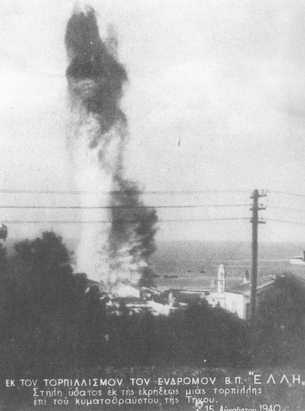
Her most famous and tragic moment came on the morning of 15 August 1940. While Greece was still neutral, Elli lay at anchor in the harbour of the island of Tinos to take part in the great religious celebrations of the Feast of the Dormition of the Virgin Mary. At 08:25 the Italian submarine Delfino fired three torpedoes at her. One struck the engine room and oil tanks; the ship caught fire and sank within roughly an hour despite the crew’s efforts to save her. Nine petty officers and sailors were killed and twenty-four wounded. The attack, carried out in peacetime against a vessel participating in a religious festival, shocked Greece and became a powerful national symbol of Italian aggression. It helped harden public resolve in the months leading up to Italy’s formal invasion on 28 October 1940—and the identity of the submarine remained a secret even if they found the Italian torpedoes so they can keep the peace.
After the war Italy transferred the light cruiser Eugenio di Savoia to Greece as partial reparations; she was commissioned in 1951 under the name Elli and served as flagship for a time before being decommissioned in the 1960s and scrapped in 1973. The name continues today with HS Elli (F-450), the lead ship of the Hellenic Navy’s Elli-class frigates, ensuring that the memory of the original cruiser remains part of the fleet’s living tradition.
Specifications
Dimensions
- Length: 98 m (321 ft 6 in)
- Beam: 12 m (39 ft 4 in)
- Draft: 4.3 m (14 ft 1 in)
Displacement
- Standard: 2,115 long tons (2,149 t)
- Full load: 2,600 long tons (2,642 t)
Propulsion
- 3 Parsons steam turbines
- 3 Thornycroft water-tube boilers
- 3 shafts
- Power: approx. 7,500–8,640 hp
- Speed: 26 knots (48 km/h) when new; reduced to about 18–20.5 knots by 1940
- Range: roughly 4,500–7,000 nautical miles at economical speed (depending on fuel load)
Crew
- 238 officers and men
Armament
After Major Modernization (1925–1929 in France)
Converted into a cruiser-minelayer. All original armament was replaced and the ship was extensively rebuilt:
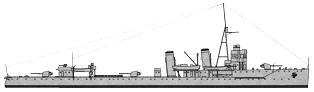
in the 30’s
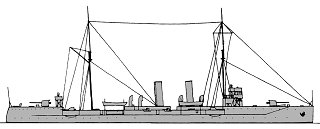
in the 10’s
- 3 × 152 mm /50 Armstrong guns (single mounts) – one mounted lower aft after the poop was cut down
- 2 × 76 mm /40 Armstrong guns
- 2 × 57 mm /40 Hotchkiss anti-aircraft guns
- 2 × 450 mm torpedo tubes
- Mine rails for up to 110 naval mines
Further Changes in the 1930s
- The two 57 mm AA guns were removed
- Replaced by 2 × 40 mm /39 (2-pounder) QF Mk II anti-aircraft guns
- As build 1914
- 1925 modernization
- 1930s Modification
- I voted No
Photos

Sources
Spoiler
- ELLI light cruiser (1914)
- https://ww2db.com/ship_spec.php?ship_id=811
- https://www.thenationalherald.com/the-greek-ship-elli-from-camden-to-the-soul-of-greece/
- Naval Analyses: WARSHIPS OF THE PAST: Elli cruiser of the Royal Hellenic Navy
- C3. The torpedoing of the light cruiser "ELLI" August 15,1940 The R.H.N. on War Footing - ΝΑΥΑΡΧΟΣ ΓΡΗΓΟΡΙΟΣ ΜΕΖΕΒΙΡΗΣ
- Greek cruiser Elli (1912) - Wikipedia
- http://www.greece.org/poseidon/work/museums/hmm/elli.html
- Σαν σήμερα, ο τορπιλισμός του καταδρομικού «Έλλη» στην Τήνο