- Yes
- No
PZL W-3U Salamander (PZL W-3U Salamandra)
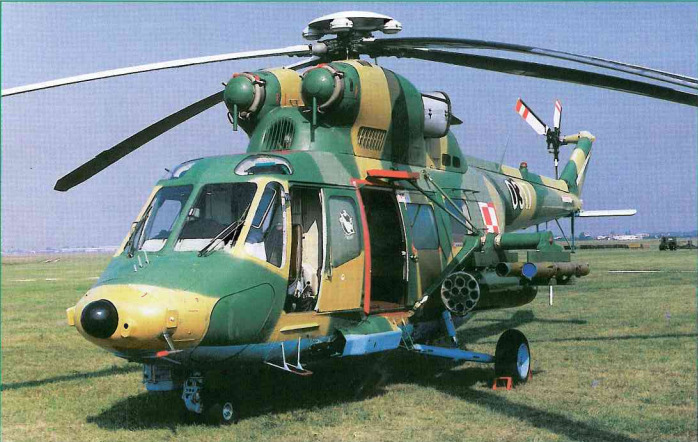
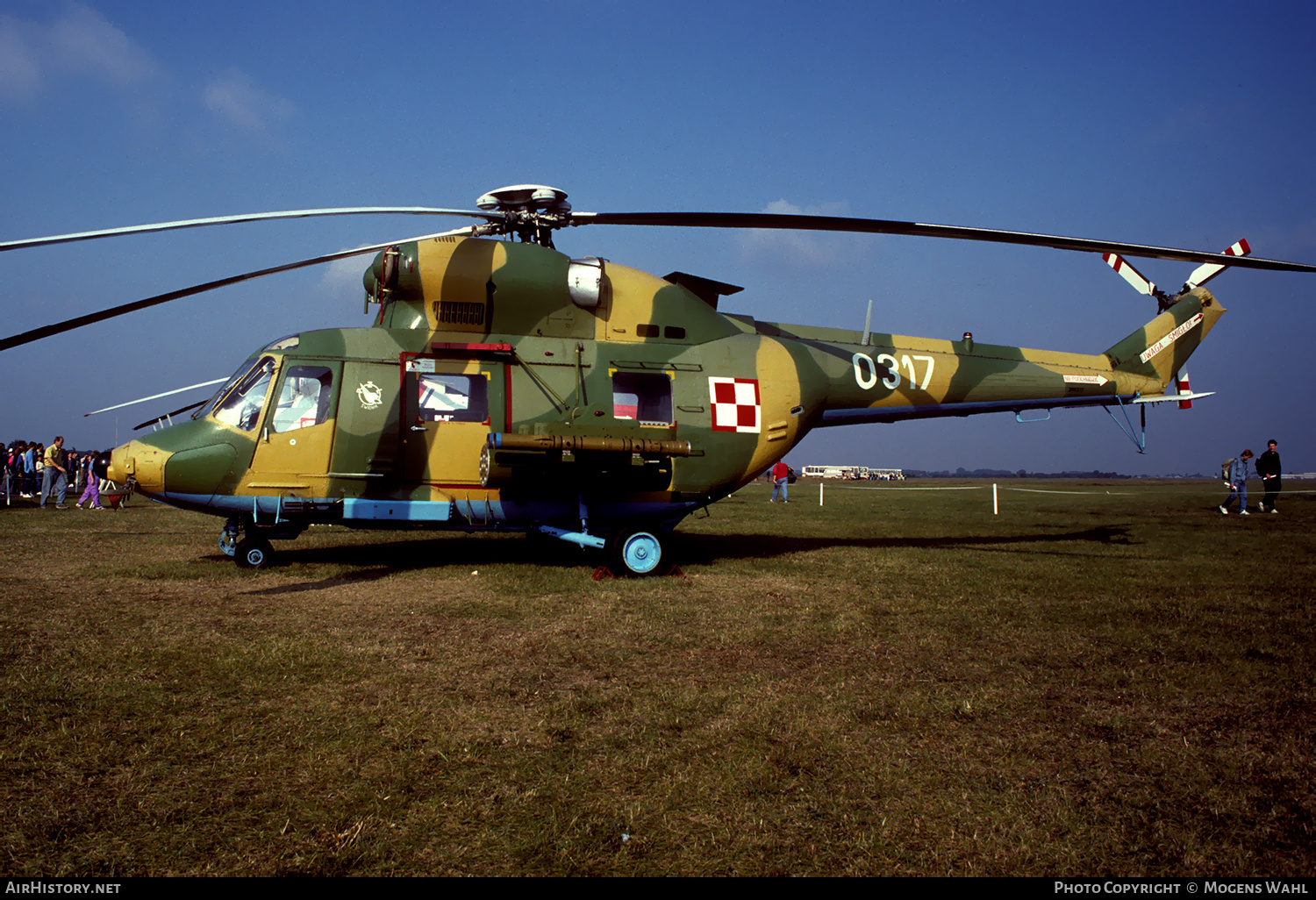
The PZL W-3U Salamandra, or officially the PZL W-3U-1 Aligator-Salamandra, is a Polish prototype attack helicopter, developed based on the PZL W-3 Sokół helicopter. In 1990, one prototype was built, which in mid-1992 was sold to Burma as the PZL W-3UT transport helicopter.
History
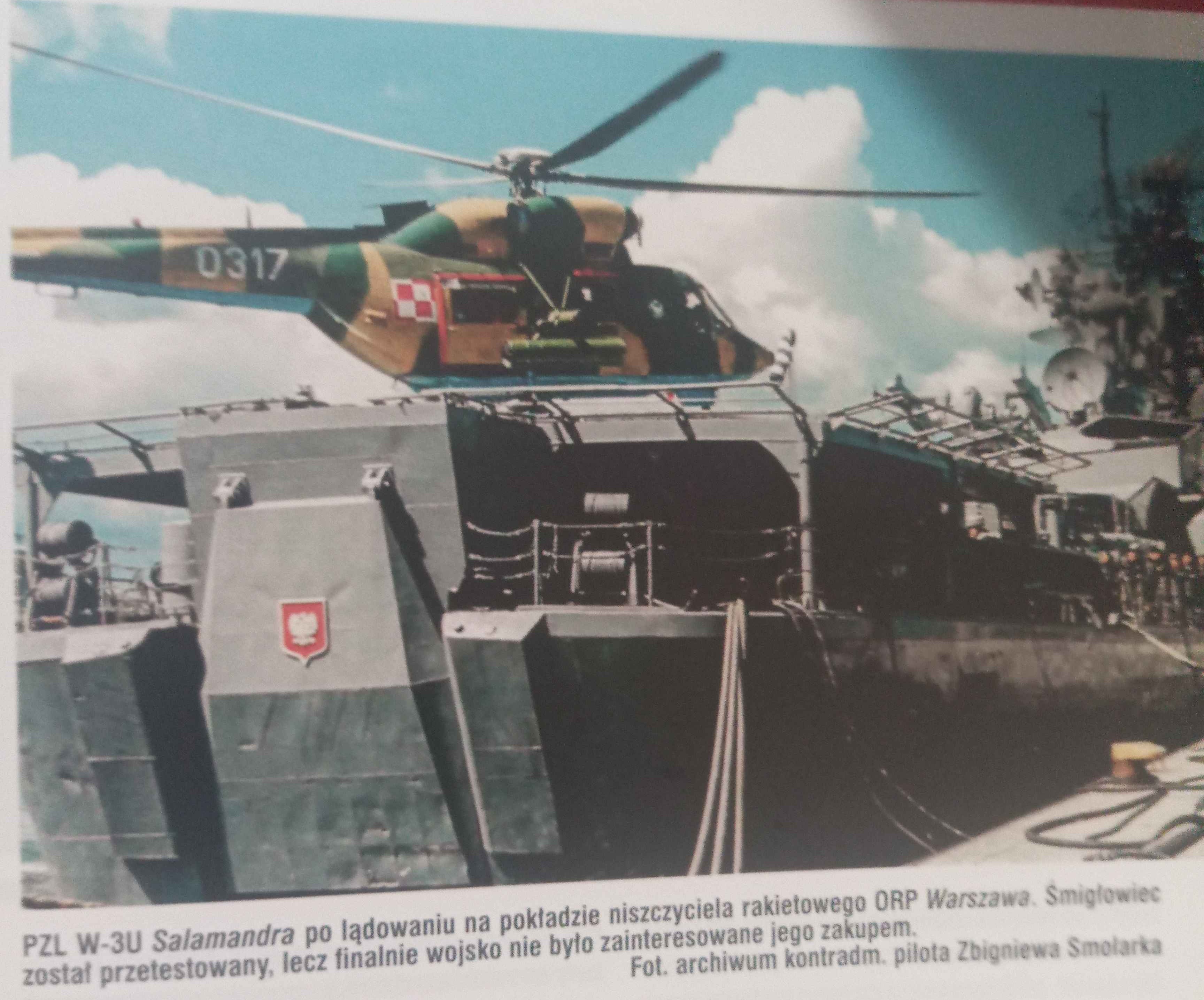
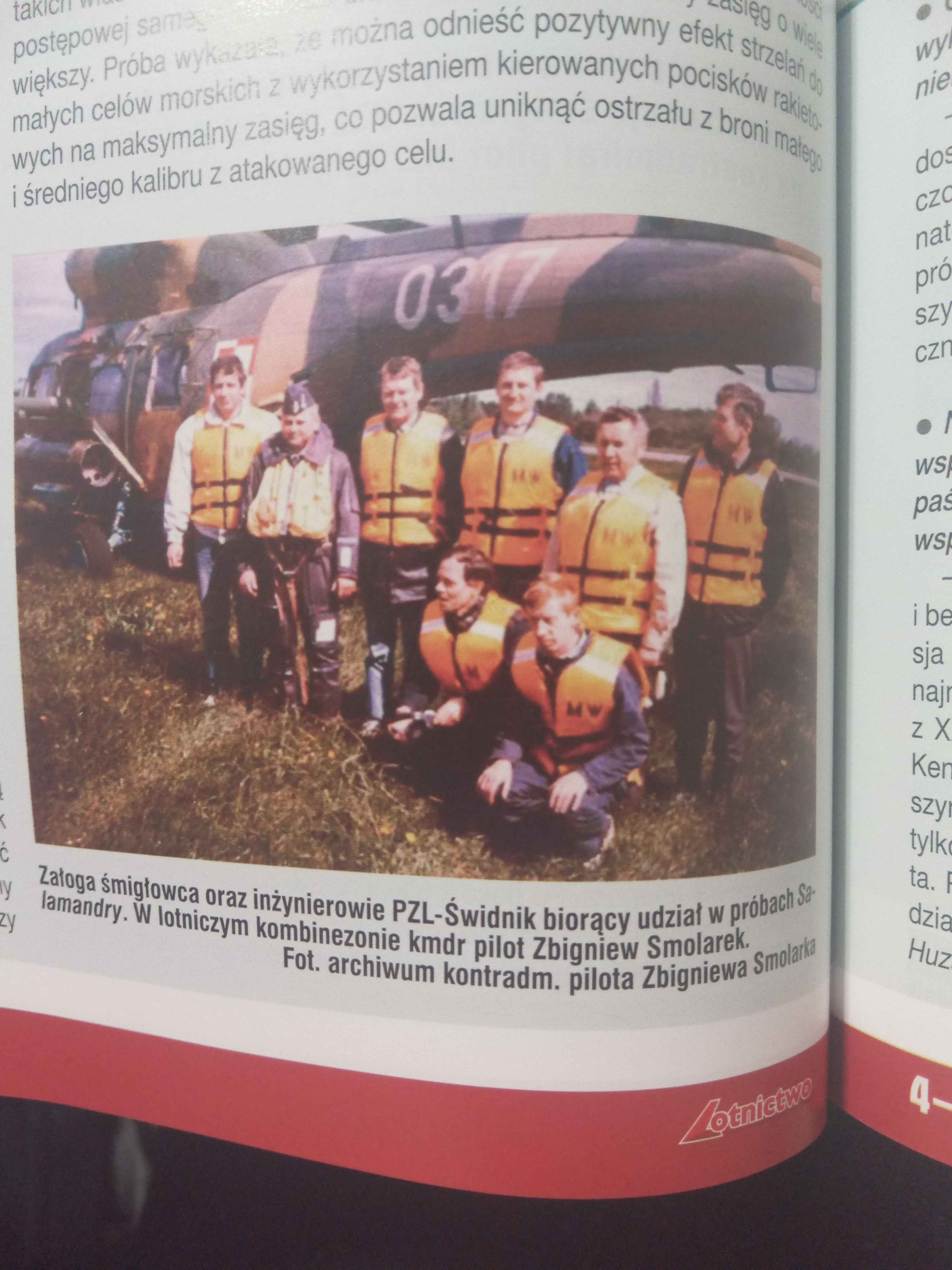
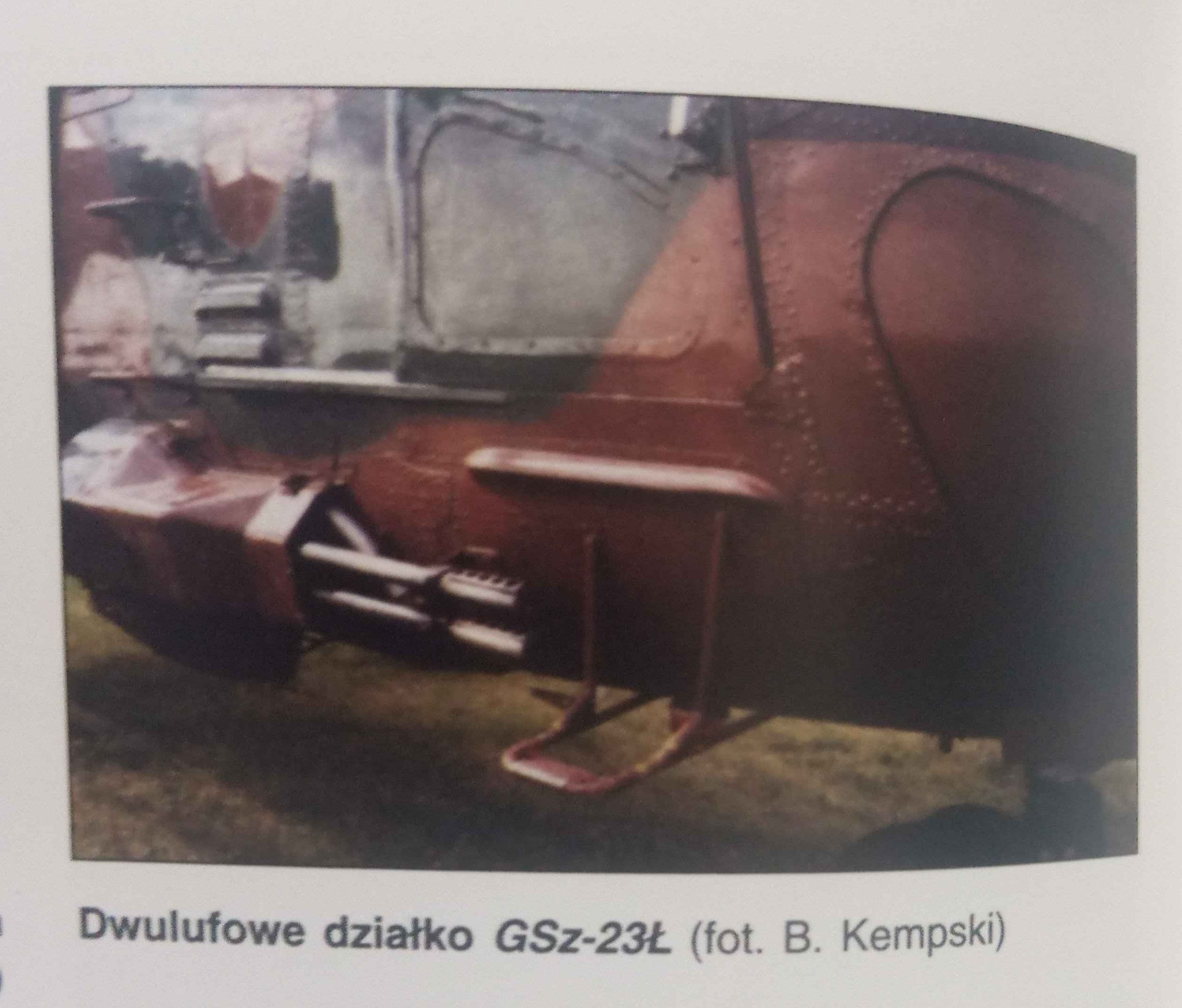
In the mid-1980s, work on military variants of the PZL W-3 Sokół helicopter began in the Polish People’s Army (LWP). It was planned that W-3 helicopters would replace the aging Mil Mi-2 helicopters in the LWP. At that time, the creation of specialized versions of the PZL W-3 helicopter was planned, including a transport version (the future W-3T) and an armed version (the future W-3U). In 1988, the Polish People’s Army, together with the Russians, began work on a new combat helicopter, which was intended to be based on the PZL W-3 helicopter, to replace the combat versions of the Mil Mi-2 helicopter (Mi-2 URN ‘Żmija,’ Mi-2 URP ‘Salamandra,’ Mi-2 URP-G ‘Gniewosz’) and to have integrated armament with the Mil Mi-24W helicopter (the Polish designation for the Mil Mi-24V). The first project was the W-3U Viper (Żmija) helicopter, but it was abandoned. Instead, the variant designated as W-3U Salamandra was chosen. During the design work and prototype construction, in 1989, the political system in Poland changed from communist to democratic. At that time, the Polish People’s Army (LWP) was transformed into the Polish Army (WP), but there is no information on whether this affected the work on the W-3U Salamandra helicopter. To convert the W-3 Sokół helicopter into the armed W-3U Salamandra, engineers from the PZL Mielec plant decided to install a 23 mm GSz-23Ł cannon on the left side of the fuselage (later moved to the right side of the fuselage). On the right side of the fuselage, a targeting head for guided missiles 9M114 Szturm-W and 9M14M Malutka was installed. The fuselage was reinforced to allow installation of pylons for suspended armament. Initially, the tail pylon was equipped with half-apex flares and ASO-2W anti-radar chaff dispensers (which were later moved to the sides of the rear fuselage behind the transport cabin doors). The prototype PZL W-3U was completed in the winter of 1990, and its first flight took place on March 17, 1990. In the summer of 1991, field tests of the W-3U Salamandra helicopter began at the Air Forces’ training ground in Nadarzyce and the Navy’s training ground in Strzepcz. The helicopter’s pilots were Colonel Pilot Leon Naumowicz and Rear Admiral Pilot Engineer Zbigniew Smolarek. The first combat tests involved testing the GSz-23Ł 23mm gun during day and night firing. The gun proved to be accurate and effective, but due to a design flaw, during one of the tests, the helicopter’s nose was fired upon. This led to a redesign of the helicopter’s nose and moving the gun mount from the left to the right side of the helicopter. Subsequently, tests were conducted on the operation of unguided S-5 57mm rockets and S-8 80mm rockets, which were successful. Afterward, tests began using the 9M114 Shturm-W guided missiles. They were first tested on a land proving ground, where the results were satisfactory. Later, at the suggestion of the helicopter crew, the 9M114 missiles were tested against naval targets. For this purpose, four drop tanks from Lim fighters (the Polish license version of the Mig-15/17 fighters) were used. Since the test was not strictly related to the Polish army, the helicopter crew only had one 9M114 missile at their disposal, which managed to hit a target from a distance of up to 7,200 m, exceeding the missile’s range specified by the manufacturer (5,000 m). Despite this success, after the tests using guided missiles, it was found that the helicopter’s skin had wrinkled due to the heat generated during the firing of the guided missiles. Therefore, after testing on the prototype W-3U Salamandra, a few improvements were implemented (relocation of the gun, relocation of the countermeasure launcher, reinforcement of the fuselage, modification of cockpit equipment). Unfortunately for the PZL W-3U Salamandra, the first half of the 1990s saw an economic crisis in Poland, and the military lacked funding and interest in a new combat helicopter. In 1992, the PZL Świdnik plant decided to convert the W-3U into a transport helicopter under the designation W-3UT and include it in a fleet of 10 PZL W-3T transport helicopters sold to Burma. The helicopter left Poland in mid-1992. Unfortunately, the fate of the PZL W-3U Salamandra is unknown. Experience gained during the development of the W-3U led to the development of the prototype W-3K Kentron and W-3WB Huzar, as well as the production W-3W (WA) Sokół.




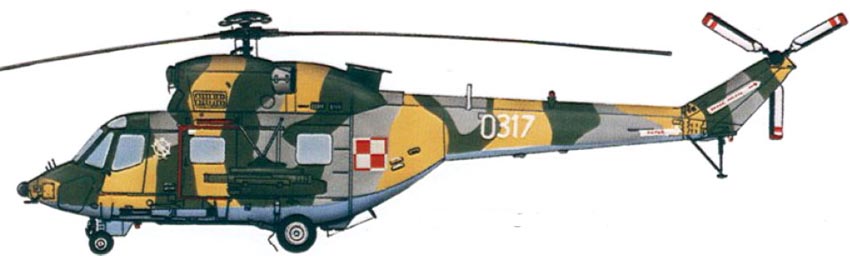
Art of the PZL W-3U Salamander
Construction description
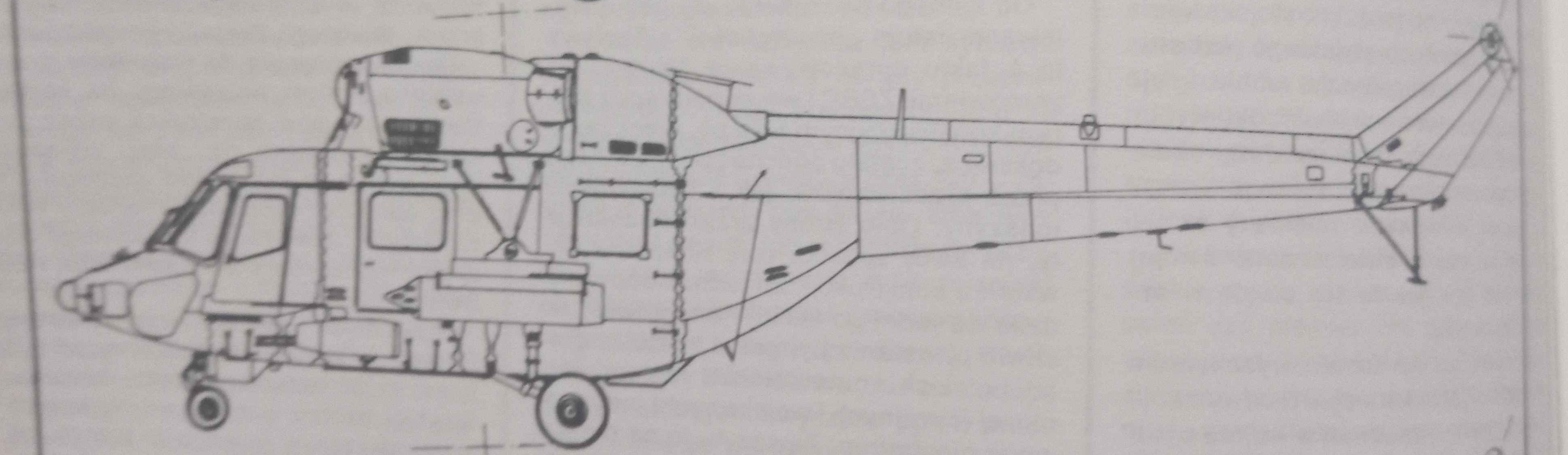
The PZL W-3U Salamandra is a multi-purpose helicopter with a conventional semi-monocoque design in a single-rotor layout with a tail rotor. The helicopter’s skin is made of duralumin sheets, reinforced in key areas. The crew consists of pilot and shooter in the cockpit and a troop complement of up to eight people. The PZL W-3U Salamandra is powered by two PZL-10W turboshaft engines with a take-off power of 662 kW (900 hp). The main rotor is four-bladed with a diameter of 15.70 m and is made of glass-epoxy composite. The three-blade tail rotor, mounted on the left side of the tail boom, is also made of composite and has a diameter of 3.03 m. The PZL W-3U Salamandra helicopter features a fixed tricycle landing gear.
Armament and equipment
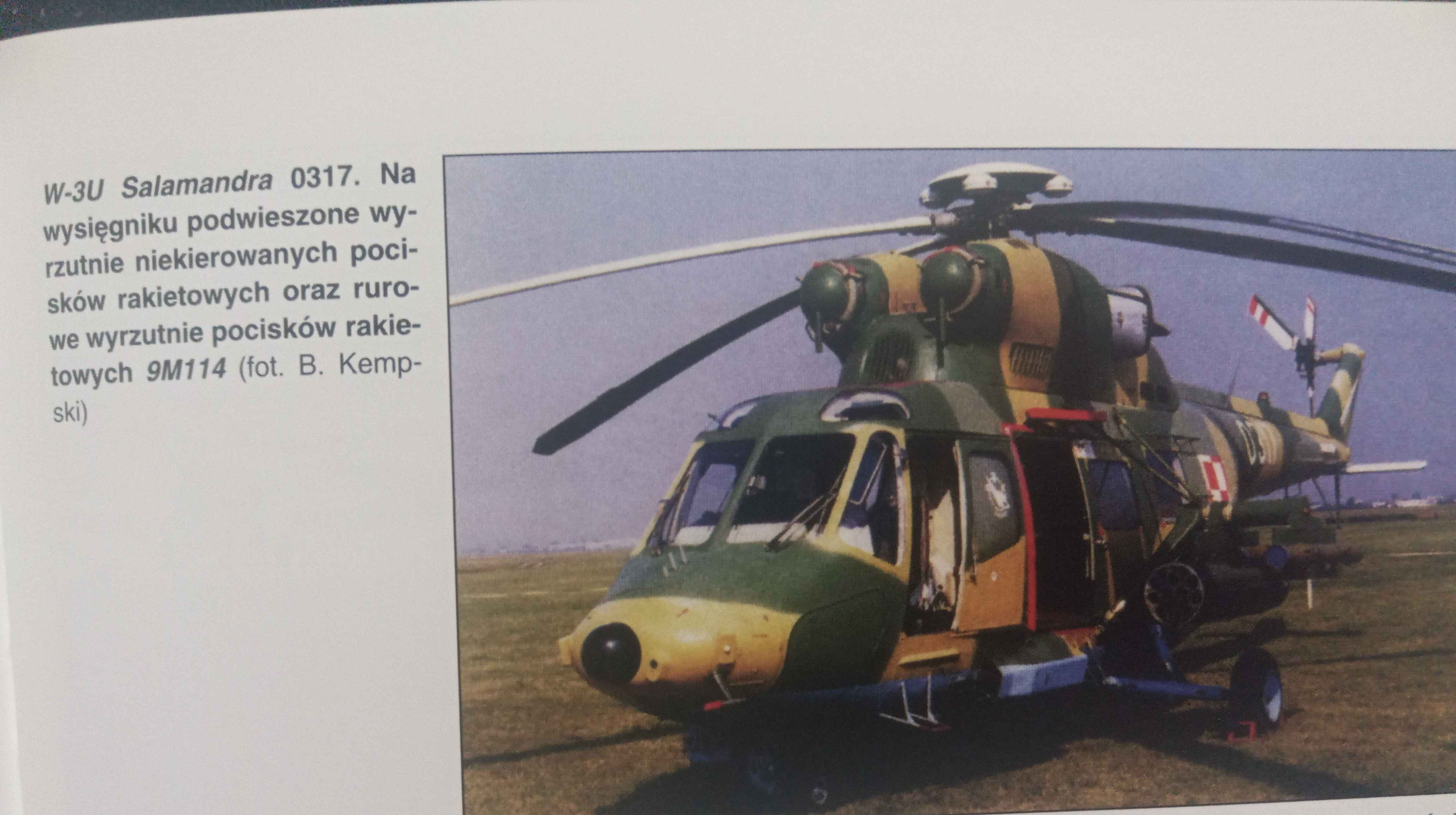
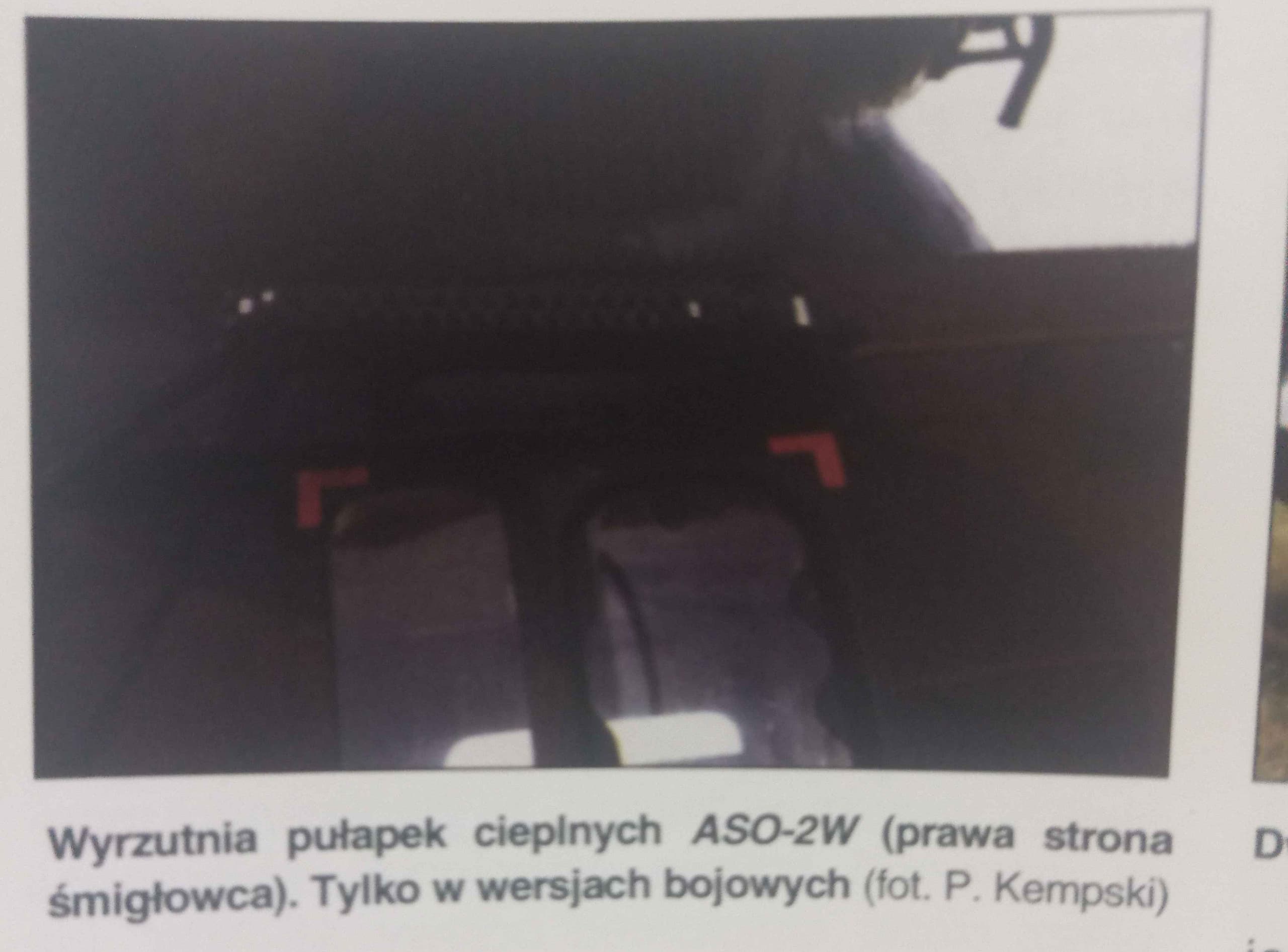
The PZL W-3U Salamander helicopter was integrated with the armament of the Mil Mi-24W(V) attack helicopter. The integration included mounting on the lower right part of the guidance head for 9M114 Shturm-W and 9M14M Malutka anti-tank guided missiles. Additionally, a Raduga-S fire control station and an SPO-15 radar warning device were installed. Initially on the lower left part of the fuselage, and later on the right, a fixed 23mm GSz-23Ł cannon was installed, with a supply of 250 rounds. In the transport and assault cabin, two 7.62mm PKL machine guns can be installed in the side windows of the assault doors. Behind the assault doors, next to the engine mounts on both sides of the fuselage, two ASO-2W dispensers were installed, each capable of carrying 32 infrared flares PRI-26 or radar countermeasure dipoles PPR-26. In the early version of the W-3U, ASO-2W pods were installed in the lower part of the tail boom. Behind the parachute doors, there are mounts with four weapon pylons (two pylons on each side). Up to 500 kg of armament can be installed on the inner pylons, and up to 250 kg on the outer pylons. Armament for destroying armored targets includes 9M114 Shturm-W guided missiles (a maximum of 8 missiles on all pylons) and 9M14M Malutka missiles (a maximum of 6 missiles on the outer pylons). Armament for destroying aerial targets includes 9M32ML Strela-2M missiles used in the Gad-S system (a maximum of four missiles on the outer pylons). Unguided armament includes MARS-2M rocket launchers with 57mm S-5 rockets (16 rockets per launcher) and B-8-10 rocket launchers with 80mm S-8 rockets (10 rockets per launcher). These launchers can be installed on all weapon pylons. On the pylons with armament, there is also the possibility of installing ZR-8 small-caliber bomb launchers (each with 15 small-caliber bombs) and the Platan aerial mining system (each with 6 packages of 6 or 9 mines). The PZL W-3U Salamandra helicopter was likely integrated with other armaments used in Mil Mi-24W(V) helicopters. The pilot can operate the unguided weapons and the 23 mm cannon, while the guided weapons are controlled by the weapons operator sitting next to the pilot.

General characteristics
- Crew: 2 (pilot and gunners) + 8 soldiers
- Length: 14,21 m
- Length including the rotor: 18,79 mm
- Height: 4,2 m
- Hull width: 1,75 m
- Main rotor diameter: 15,70 m
- Tail rotor diameter: 3,03 m
- Empty weight: 3850 kg
- Gross weight: 6400 kg
- Maximum Take-off Weight: ?
- Powerplant: 2 × PZL-10W turboshaft engines with a take-off power of 662 kW (900 hp), each
Performance
- Maximum speed: 260 km/h
- Cruising speed: 235 km/h (?)
- Range: 734 km
- Maximum Range: 1152 km
- Service ceiling: 4520 m
- Climb Rate: 8,5 m/s
- Rate of climb: ?
Armament
- Guns:
- 1 x Fixed 23mm GSz-23L cannon on the right side of the fuselage (250 rounds supply)
- 2 x Movable 7.62mm PKL machine guns in the windows of the assault doors
- 4 x Fixed 23mm GSz-23L cannon on pylons (?)
- Bombs
- 4 x ZR-8 pods with 15 small-caliber bombs on pylons (maximum 60 bombs)
- 4 x 250 kg bombs on pylons (?)
- 2 x 500 kg bombs on pylons (?)
- Guided missiles
- 4 × Double 9M114 Shturm-W rocket launchers on pylons (maximum 8 rockets)
- 2 x Triple 9M14M Malutka rocket launchers on the outer pylons (maximum 6 rockets)
- 4 x Triple 9M14M Malutka rocket launchers on the pylons (maximum 12 rockets) (?)
- Unguided rockets
- 4 × Sixteen-barrel MARS-M rocket launchers with 57mm S-5 on pylons (maximum 64 rockets)
- 4 x Ten-barrel B-8-10 rocket launchers with 80mm S-8 rockets on pylons (maximum 40 rockets)
- Anti-aircraft missiles
- 2 × Double rocket launchers of the Gad-S system with 9M32ML Strela-2M anti-aircraft missiles on the outer pylons (up to 4 missiles)
- Mines
- 4 x Platan mining system with 6 packages of 6 or 9 mines (a maximum of 144 or 216 mines)
Equipment
- Raduga-S fire control station
- SPO-15 radar warning device
- ASO-2W cassettes with jamming devices (32 jamming devices per cassette)
- PRI-26 infrared flares
- PPR-26 radar countermeasure dipoles
Summary
The PZL W-3U Salamander helicopter is a very interesting vehicle for Poland in War Thunder (once it is added, of course). This helicopter is well-armed (64 unguided rockets or 8 guided missiles and a 23 mm cannon), allowing it to act as a hunter of tanks and aircraft. Thanks to integration with the armament of the Mil Mi-24W(V) helicopter, the W-3U can wreak havoc and be resistant to enemy attacks thanks to the SPO-15 warning system and the ASO-2W dispenser with a supply of 64 countermeasures. This helicopter would be a great introduction to the better-armed PZL W-3K and W-3WB helicopters or could serve as a good premium helicopter. I encourage you to discuss in the comments and to share your own knowledge on this subject.
Finally, I apologize for the linguistic and logical errors because unfortunately English is not my main language and I had to use google translator.
Internet sources
PZL W-3 Sokół – Wikipedia, wolna encyklopedia
samolotypolskie.pl - PZL W-3 “Sokół”
W-3 Sokół. Polskie ambicje w trudnych czasach | Konflikty.pl
PZL W-3 Sokół - Wikipedia
Уголок неба ¦ PZL W-3W/U Sokół/Anakonda
Book sources
- Typy broni i uzbrojenia nr.208 - Śmigłowiec wielozadaniowy PZL W-3 Sokół (Types of Weapons and Armament No. 208 - PZL W-3 Sokół Multi-Purpose Helicopter)
- Nowa Technika Wojskowa Nr. 9/93 (New Military Technology No. 9/93), page 15-19
- Areoplan Nr 5-6/04
- Lotnictwo Wojskowe numer 4-5/2020 (Military Aviation No. 4-5/2020) , page 34-45