Would you like to see this vehicle in-game?
- Yes
- no
0
voters

 PZL-Mielec Lim-6bis

Note: This suggestion is primarily for the Lim-6bis in Indonesian Service
The Polish suggestion can be found here: PZL-Mielec Lim-6bis - Polish Fighter-turned-Attacker
Hello everyone! Today I would like to suggest the Indonesian-operated Polish Lim-6bis.
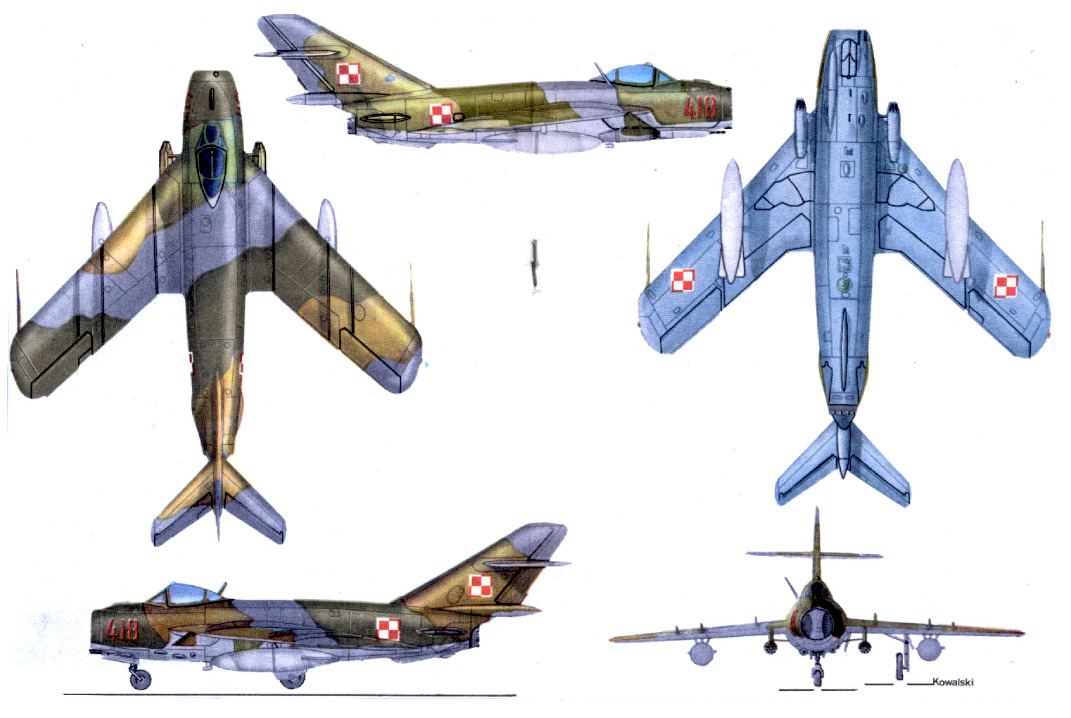
The Lim-6bis is a specialized Polish Fighter-Attack aircraft derived from the Lim-5, which is a Polish License-made MiG-17F. The aircraft featured a distinct integrated braking parachute for short runway operations as well as an additional hardpoint mounted near the fuselage for more ground attack options. The aircraft capable of equipping mars-2 rocket pods as well as standard dumb bombs. The vehicle is armed with a single 37mm and two 23mm cannons as well as being powered by the Lis-5 Turbojet engine (License Klimov VK-1F).
For its in-game performance, it would be extremely similar to other afterburning MiG-17Fs which we have in the game, but with the addition of an extra hardpoint under the fuselage and a brake parachute for faster landings. As such it can be put at around Rank VI with a BR of ~8.7 - 9.0, considering it’s not a massive upgrade compared to its contemporaries
How to differentiate it compared to other license-made MiG-17s in AURI's inventory
Indonesia operated 3 different MiG-17 variants.
- The Afterburning MiG-17Fs in the form of the Polish Lim-5 & Chinese Shenyang Type 56
- The Interceptor (MiG-17PF) in the form of the Lim-5P
- As well as the Polish ground striker variant of the MiG-17, the Lim-6Bis.
They were all classified as purely MiG-17 in service, as such to differentiate it we must look at the air frame themselves.
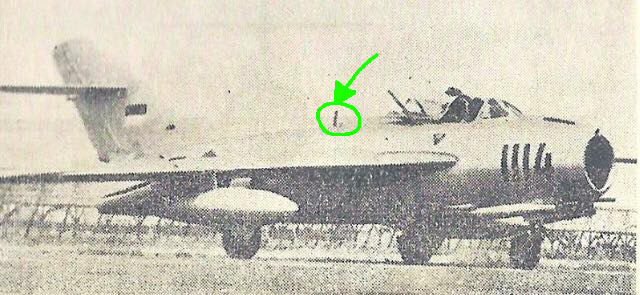
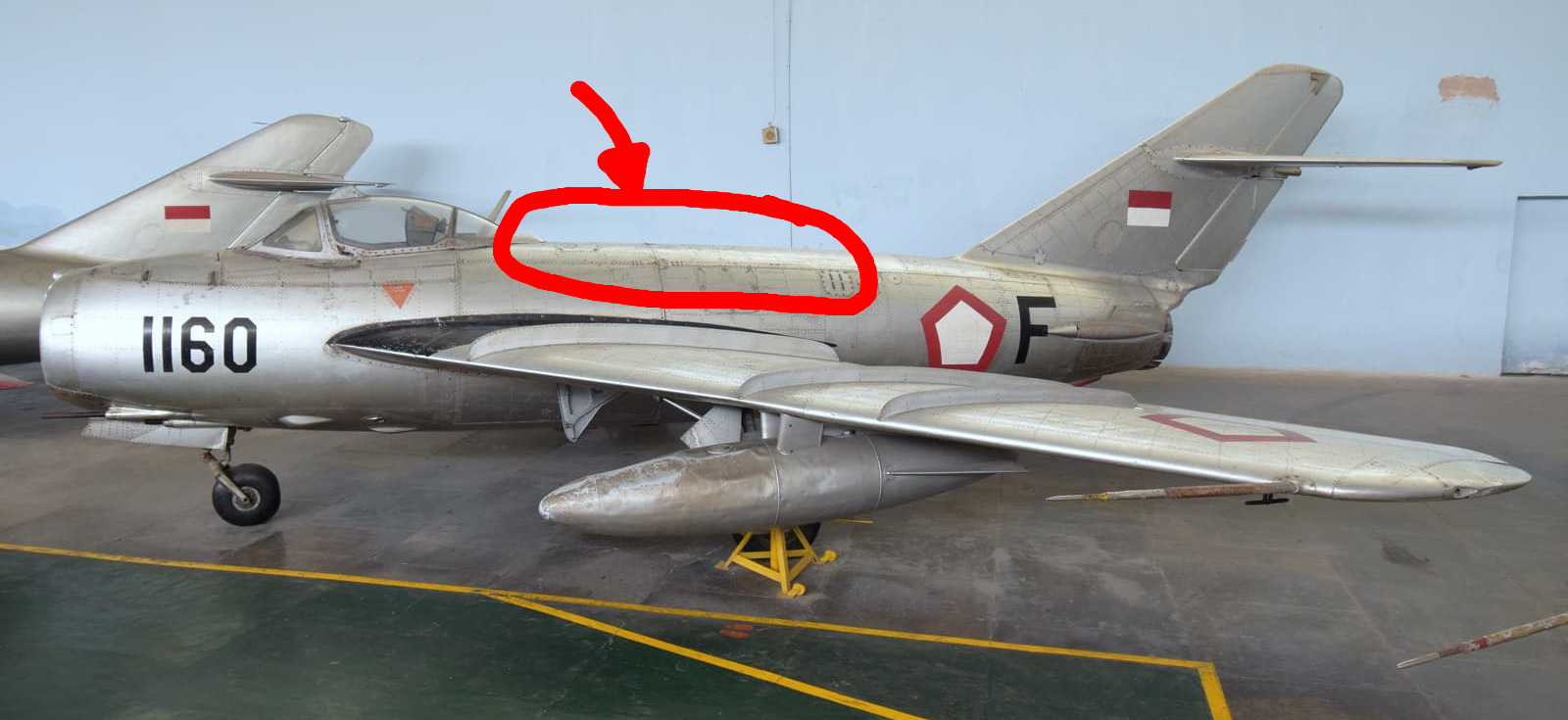
- For the ground striker variant, it can be identified by a lack of radar as well as a brake parachute situated between the vertical stabilizer and engines. Lim-6bis can be seen on the left, and a standard Lim-5 can be seen on the right.
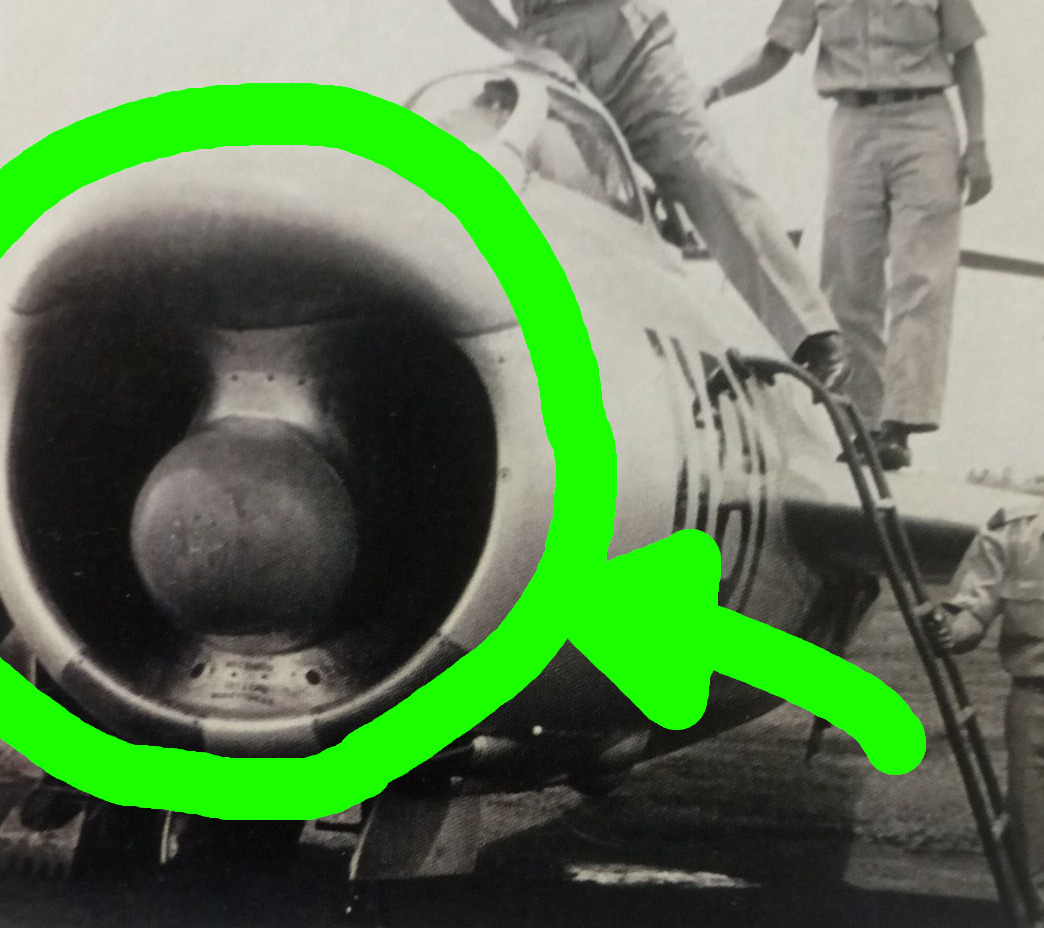
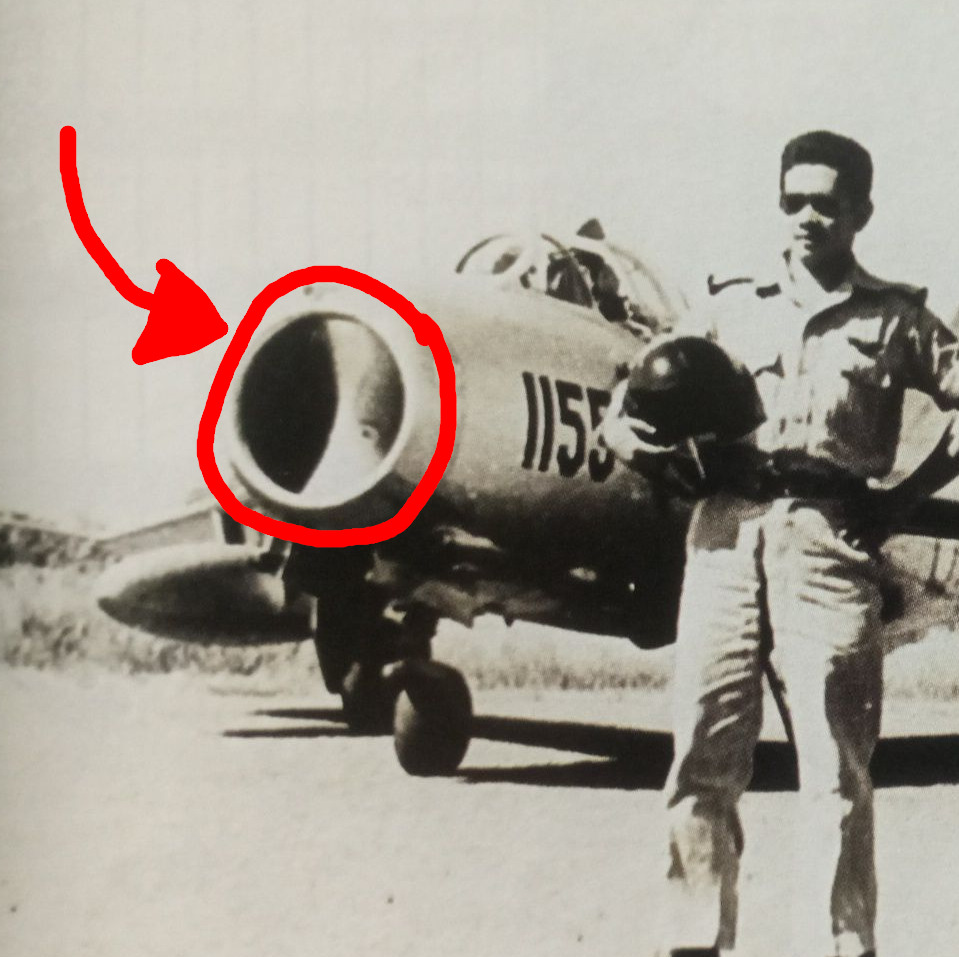
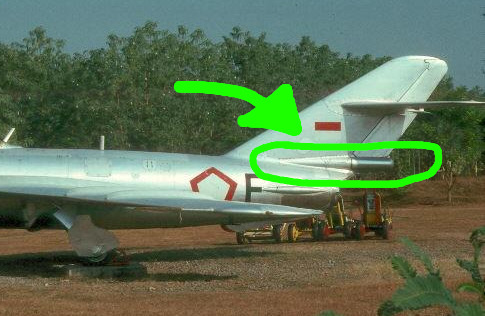
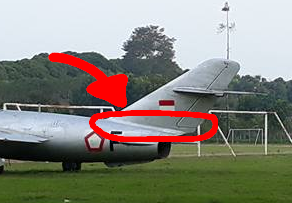
This suggestion is primarily made to complement the already suggested Indonesian Aviation Sub-tree as well as the Expanded List of Indonesian Air vehicles
A. Background
Details
The story of the Polish-made MiGs began in the early 50s when Poland sought to produce the MiG-15 under license. This would result in the Lim-1 followed by the improved Lim-2 (MiG-15bis). These aircraft would serve as the backbone of the Polish Air Force.
The First Polish-made Jet Fighter, the Lim-1 (License-made MiG-15)
By 1956, production had shifted to the Lim-5, a licensed version of the afterburning MiG-17F. While it was a decent fighter, the Polish Military identified a need for a more specialized close-in support aircraft capable of operating from rough airfields. This leads into the “CM” program. They tested many innovations such as a doubled nose wheel for softer ground, braking parachute, and capabilities of using RATO.
These experiments would eventually lead into the Lim-5M, which featured a unique “fairing tanks” at the wing roots to house the double wheels as well as extra fuel. However the Lim-5M suffered from aerodynamic & handling issues. As such a further development was attempted, which resulted in the Lim-6. This version added “blown flaps”, but the system still proved unreliable and even caused dangerous trim changes during flight.
Ultimately, the designers found success by going away from the over-engineered features, such as abandoning the doubled wheels and blown flaps, but keeping the brake parachute & additional hardpoints. The variant is called the Lim-6bis. It was reliable & effective for its role, which resulted in the older Lim-5 airframes to also receive this new standard.
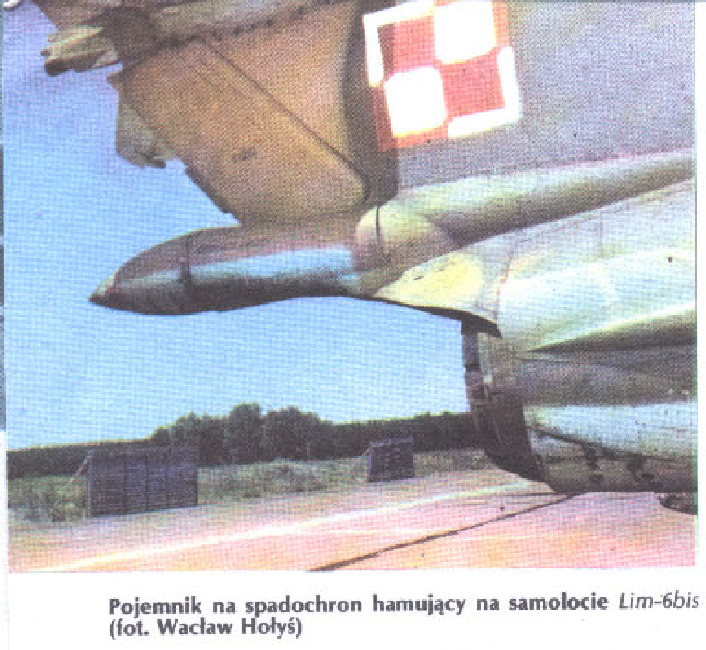
The Lim-6bis is a specialized Fighter-Attack aircraft. It can be differentiated with the standard Lim-5 by several key differences, namely the addition of an SH-19 braking parachute situated at the base of the vertical stabilizer. This system allows the aircraft to land with a significantly shorter runways by deploying a 12 m^2 canopy when touching down. The aircraft also has a single-nosewheel landing gear configuration after the failed double wheel experiments of the previous models were removed. The aircraft is powered by the Lis-5 Turbojet engine, which is a license-made variant of the Klimov VK-1F.
Another change is in regards to the aircraft’s hardpoint, since it obtained two more near the fuselage. These pylons were added to be able to carry Mars-2 rocket pods, with each pod capable of holding 16 unguided S-5 rockets. In terms of armaments, it retain the single 37mm N-37D cannon and the two NR-23 cannons. These weapons were managed by the pilot using a modified ASP-4NM (Krokus) Gyro Sight. While originally designed to work with the SRD-1M radar rangefinder, many of these attack versions had the radar removed, requiring the pilot to input the range manually.

Polish Lim-6bis
In mid-1958, Indonesia began buying soviet jets in order to bolster the Indonesian Air Force, which jet fighters/trainer at the time only consists of the De Havilland Vampire. These purchases consists of the MiG-series of jets, namely the MiG-15UTIs, MiG-17, MiG-19, & MiG-21s. The purchase was helped by the Egyptian Government under President Gamal Abdel Nasser. Indonesia sent pilots & technicians over to the Soviet Union, Czechoslovakia, Poland and India to prepare them for the inbound MiGs.
The aircrafts eventually participated in numerous combat missions, mainly to fight against domestic separatists as well as larger-scale operations such as the preparations for Operation Trikora. The aircrafts were also used during the Malay Confrontation in 1964.

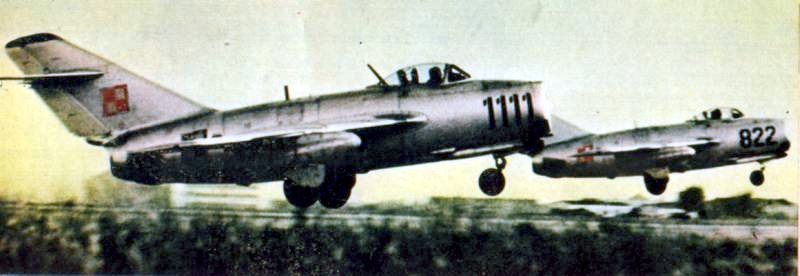
Indonesian MiG-17s take-off in formation
Its unclear exactly when the lim-6bis arrived in Indonesia, it could’ve came as a part of the first batch of Lim-5/5Ps which was bought directly from Poland. The earliest year that the vehicle was spotted in was 1964. In which the aircraft was quoted to have been in “derelict condition”. The final sighting of the aircraft in-service was in 1970, when it unfortunately crashed in-flight during a training for a combined ABRI (Indonesian Armed Forces) exercise in Pekanbaru.
What we do know about the Aircraft was that it had been part of the 14th Air Squadron (since the jet was spotted in derelict condition in Madiun, where 14th AirSqd is based) as well as being flown by pilots of the 11th Air Squadron, with Flight Major Suganda, the former Commander of the 11th Air Squadron piloting the lim-6bis when it crashed during the preparation for the ABRI exercise in 1970.
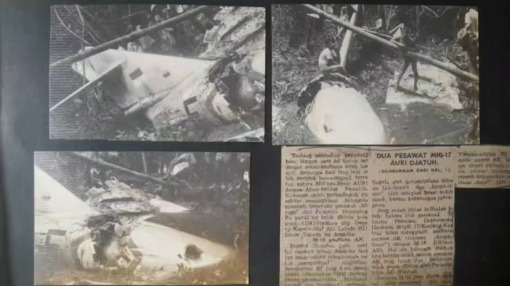
Images of the crashed Lim-6bis from 1970. The distinct brake parachute can be seen in the top left image
The crash took place during the early reign of the New Order Regime. Soon after that, as a part of a switch in doctrine, a majority of the Eastern-originated aircraft were decommissioned and grounded. The 11th Air Squadron was also liquidated in 1974 and was not reactivated until the 80s, as such its unexplained what happened to the rest of the Airframes, with them completely disappearing from photographs or records.
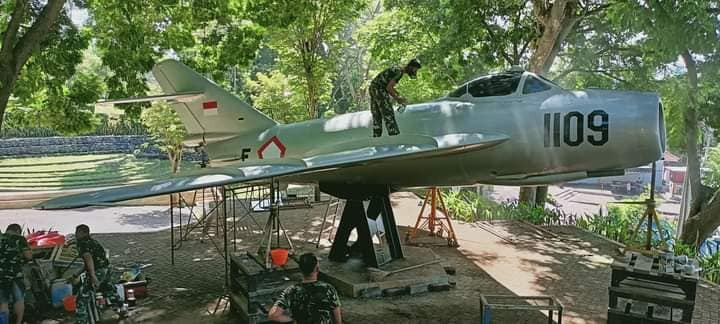
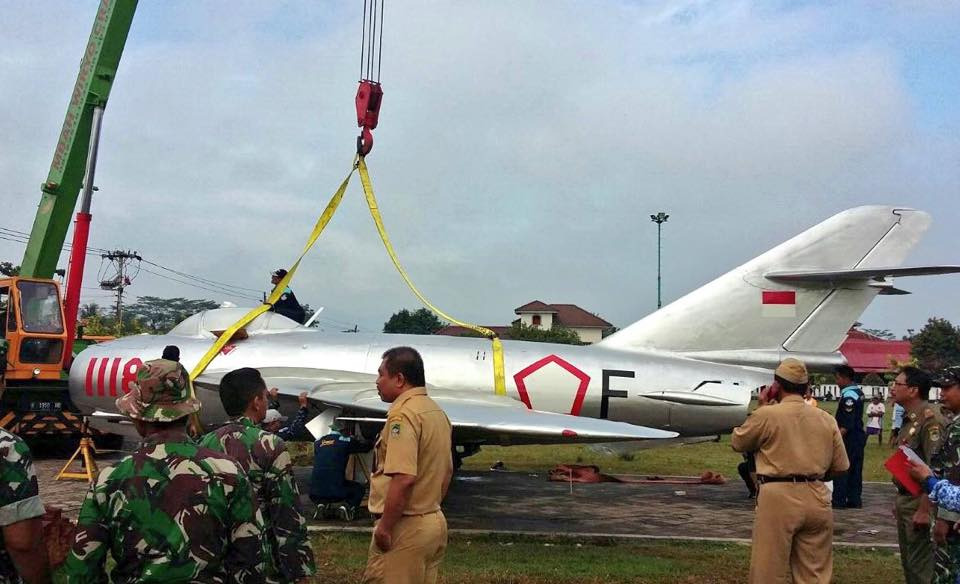
Eventually the Lim-6bis was spotted in the late 90s being used as gate guardians or display pieces for the Air Force. Three Airframes are currently known to be used as static display. One being placed in the Town Square of Banyumas, another at the Selokambang Natural Lake Pool in East Java, Finally the one in the picture below at the front gate of the TNI-AU Complex in Surabaya
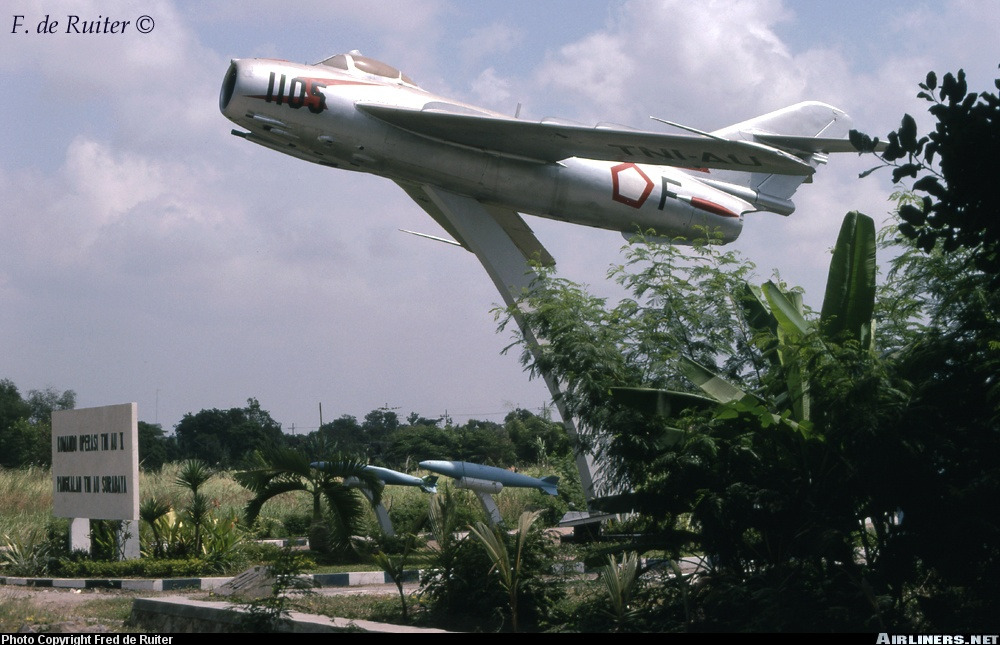
Lim-6bis as a gate guardian of the TNI-AU complex in Juanda street, Surabaya
B. Specifications
Details

GENERAL SPECIFICATIONS
- Weight
- Empty : 4,335 kg
- take-off : 5,550 kg
- Maximum : 6,500 kg
- Wing Span : 9.63 m
- Wing Area : 22.59 m^2
- Height : 3.8 m
- Length : 11.1 m
- Crew : 1
- Engine: Lis-5 Afterburning turbojet engine (License-made Klimov VK-1F)
- Weight: 4,271 kg
- Max Speed : 1,150 km/h
ARMAMENT
- Primary Guns
- 1x 37mm N-37D Cannon
- 2x 23mm NR-23 Cannons
- 780 kg max of suspended ordinance on 4x pylons
- 2x Mars-2 rocket pods on inner pylons
- 16x S-5 rockets per pod
- (S-5/S-5M/S-5K)
- 16x S-5 rockets per pod
- drop tanks
- 2x 50kg, 100kg or 250kg bombs on outer pylons
- Inner pylons can carry bombs but only up to 140kg of load
- 2x Mars-2 rocket pods on inner pylons
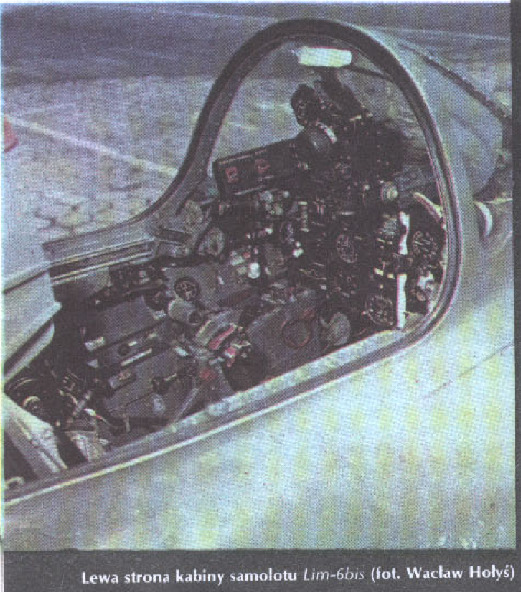
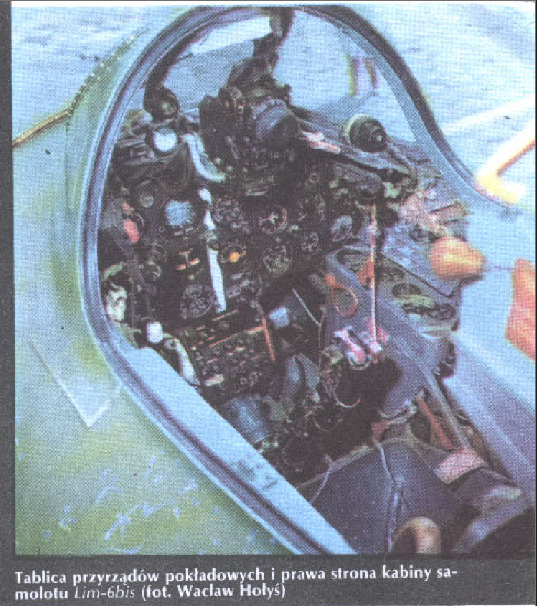
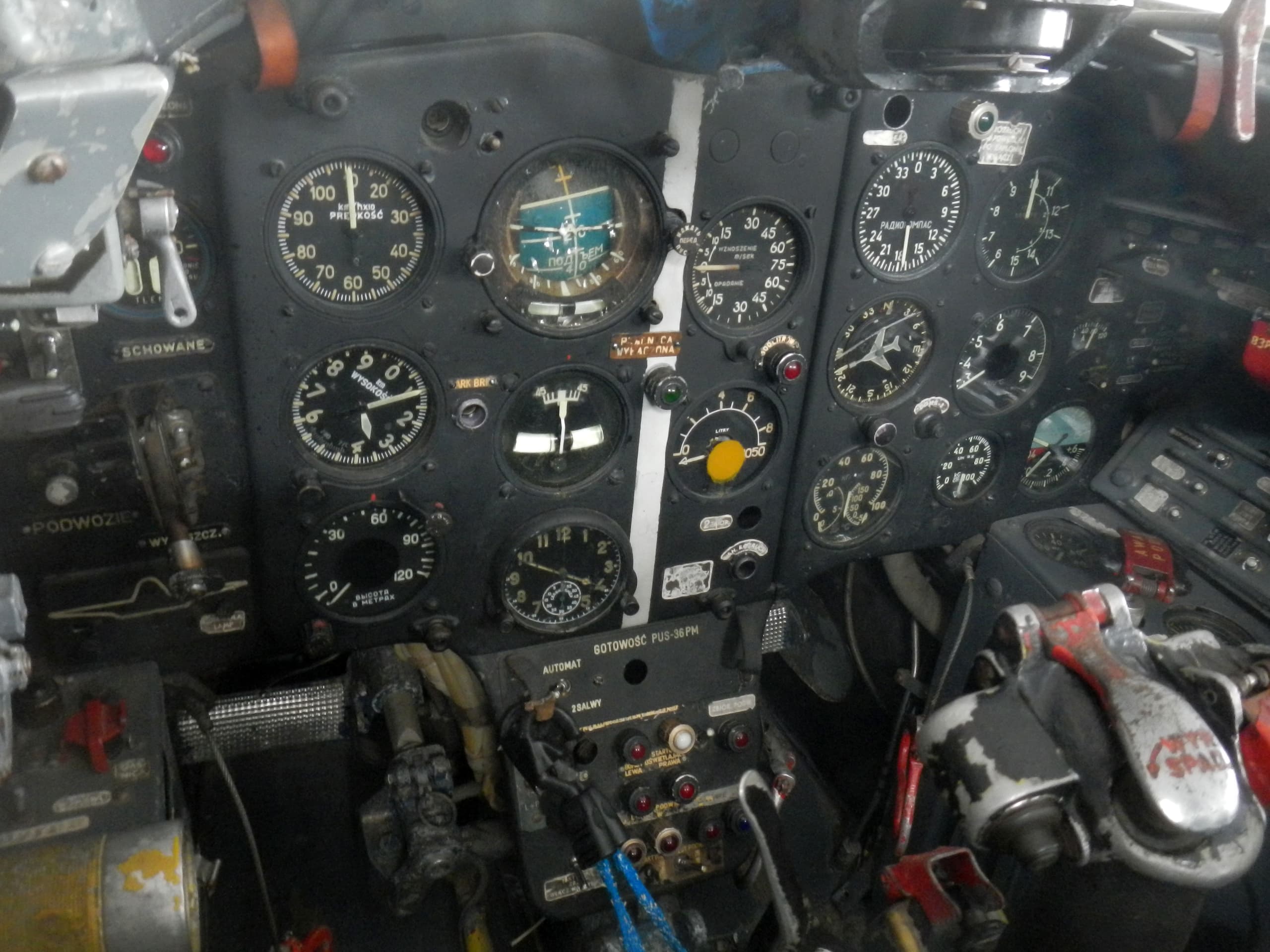
C. More Images
Details
VIDEOS
Video of the Lim-6bis being turned into a display piece
https://www.youtube.com/watch?v=pRjjhAQvyZc
IMAGES
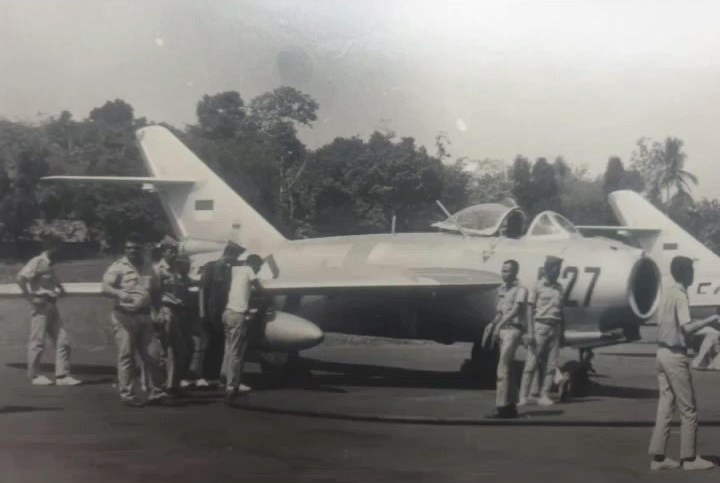
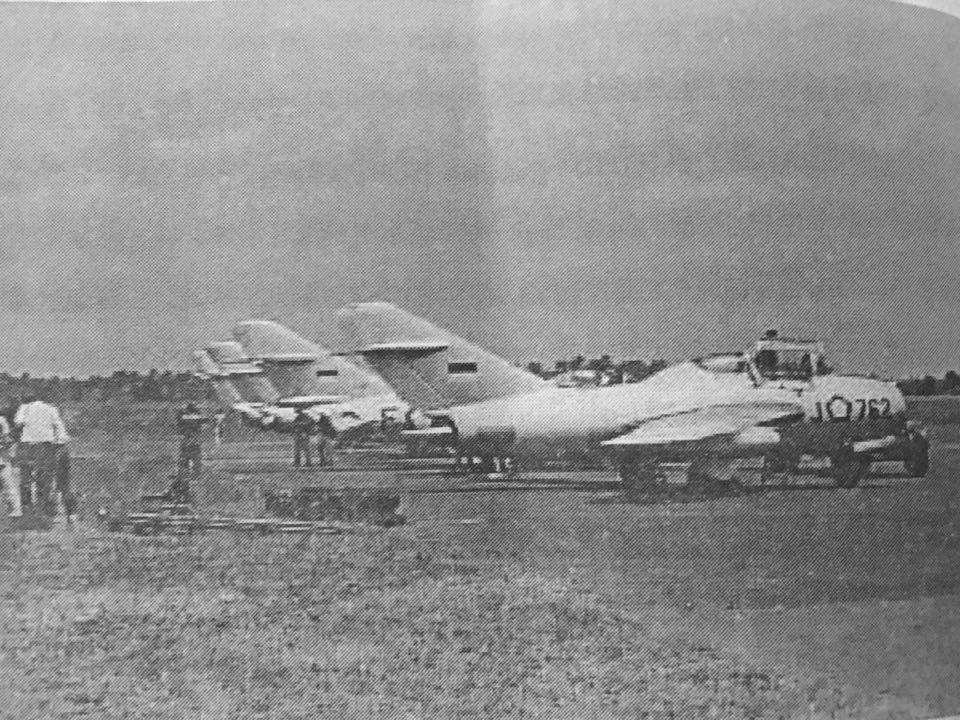
Lim-6bis behind a CS-102 (Czech License-made MiG-15UTI)
F-1127, this Lim-6bis would eventually crash in late 1970
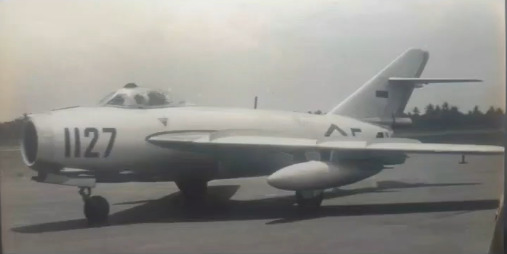
Image of the Lim-6bis Brake Parachute
Lim-6bis as a display piece in Abdulrachman Saleh AFB. This airframe would eventually be transferred to Banyumas Town Square.
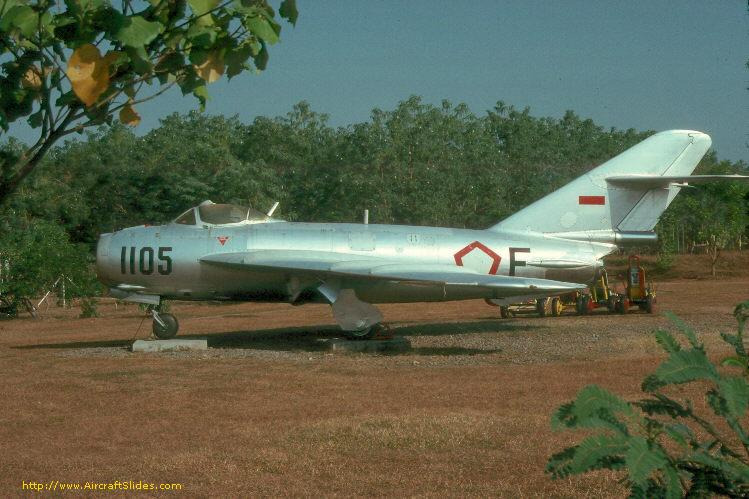
Lim-6bis as a display piece in Selokambang Natural Pool and Lake in Sumberseko, East Java.
Lim-6bis before being mounted to a pedestal in Banyumas Town Square.
D. Sources
Details
- Butowski, P., & Holyś, W. (1987). Samolot myśliwsko-szturmowy Lim-6bis (Typy Broni i Uzbrojenia No. 117). Wydawnictwo Ministerstwa Obrony Narodowej.
- https://mapsairmuseum.org/wp-content/uploads/2024/02/Lim-6bis.pdf
- samolotypolskie.pl - Lim-5 / PZL Lim-6
- Stowarzyszenie Przyjaciół Lotniska Wojskowego Świdwin - PZL Lim-6
- AIRPLANE SCALE MODELKIT: MIKOYAN GUREVICH MIG-17
- WSK-Mielec Lim-6bis : WSK-Mielec / PZL Mielec
- PZL-Mielec Lim-6 - Wikipedia
- Jejak Pesawat Militer MIG-17 AURI, dari Operasi Trikora hingga Peristiwa di Istana Negara
- Skadron Udara 11 - Wikipedia bahasa Indonesia, ensiklopedia bebas
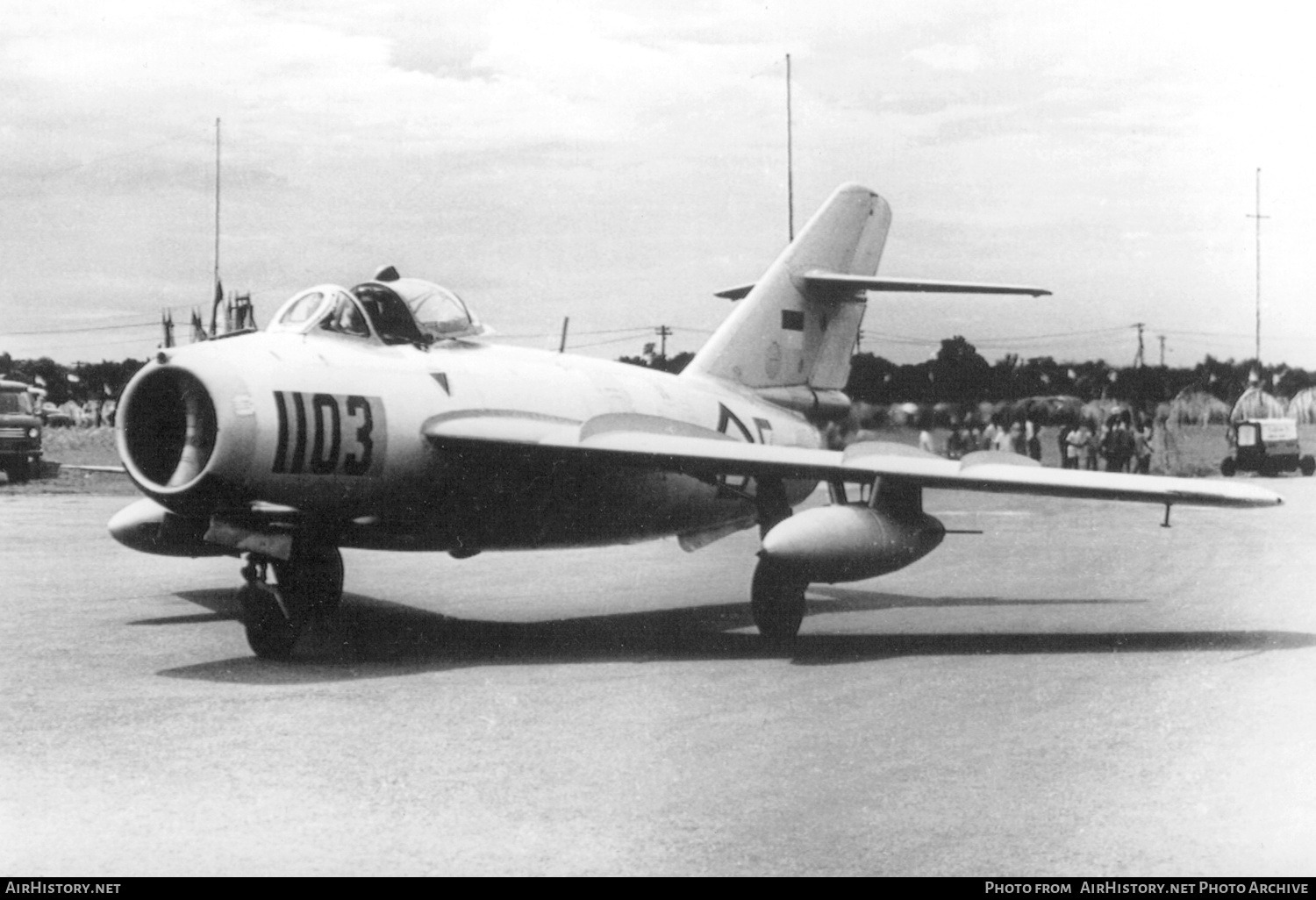
- https://www.airhistory.net/photo/413035/F-1103
Image Source(s):
Thank you for reading! Any suggestions or corrections would be highly appreciated!Additionally, you can check out more Indonesian suggestions below!