Maximum overload went from 22 to 25Gs. Also, the AIM 9B comment was sarcasm. But to be honest, 25Gs is barely anything, especially with a missile that slow. Oh no, whatever will I do? Oh yeah, turn slightly to the right while chaffing and the missile will slowly go past me.
1 Like
Nope, it went from 17g to 22g on the aim 54A/B and from 17g to 25g on the aim 54C/C+.
1 Like
My apologies, I misinterpreted your pictures, that one is on me.
Please tell me its real
I mean it is on the dev so it could change, the new g load does seem to be implemented, that being said some of the changes are just on the statcard it is not hitting mach 5.7 any time soon
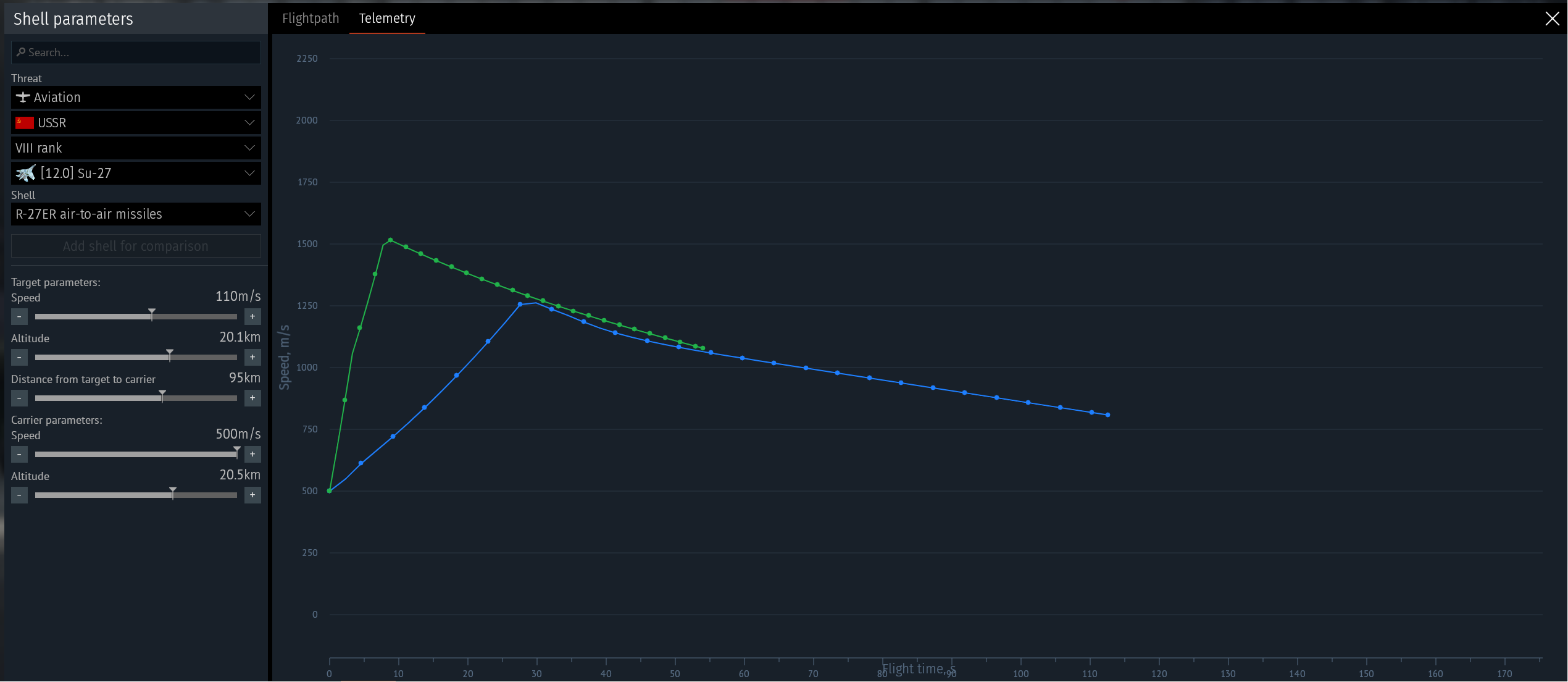
1 Like
Any changes to its acceleration?

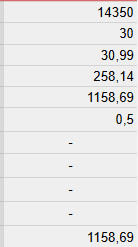
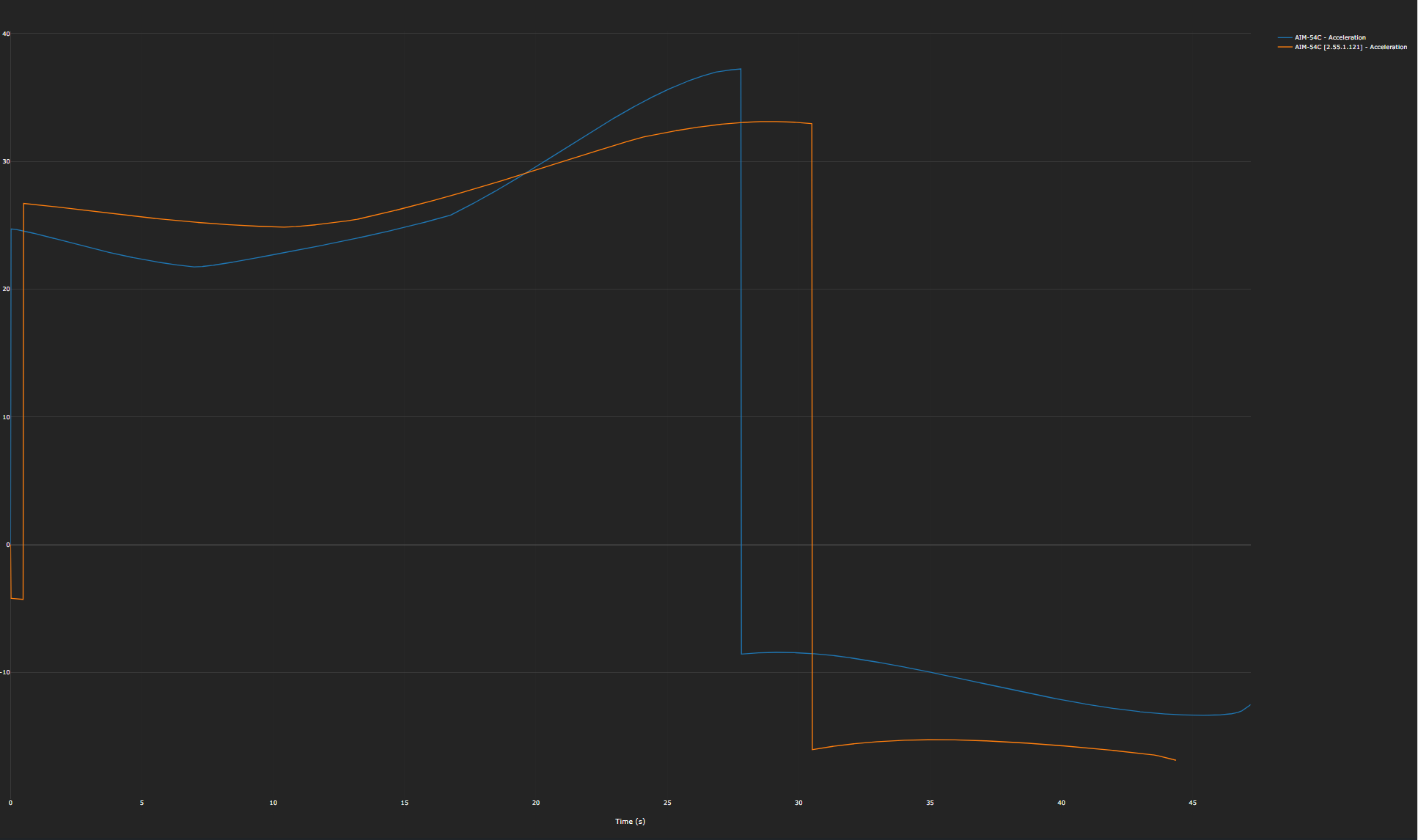
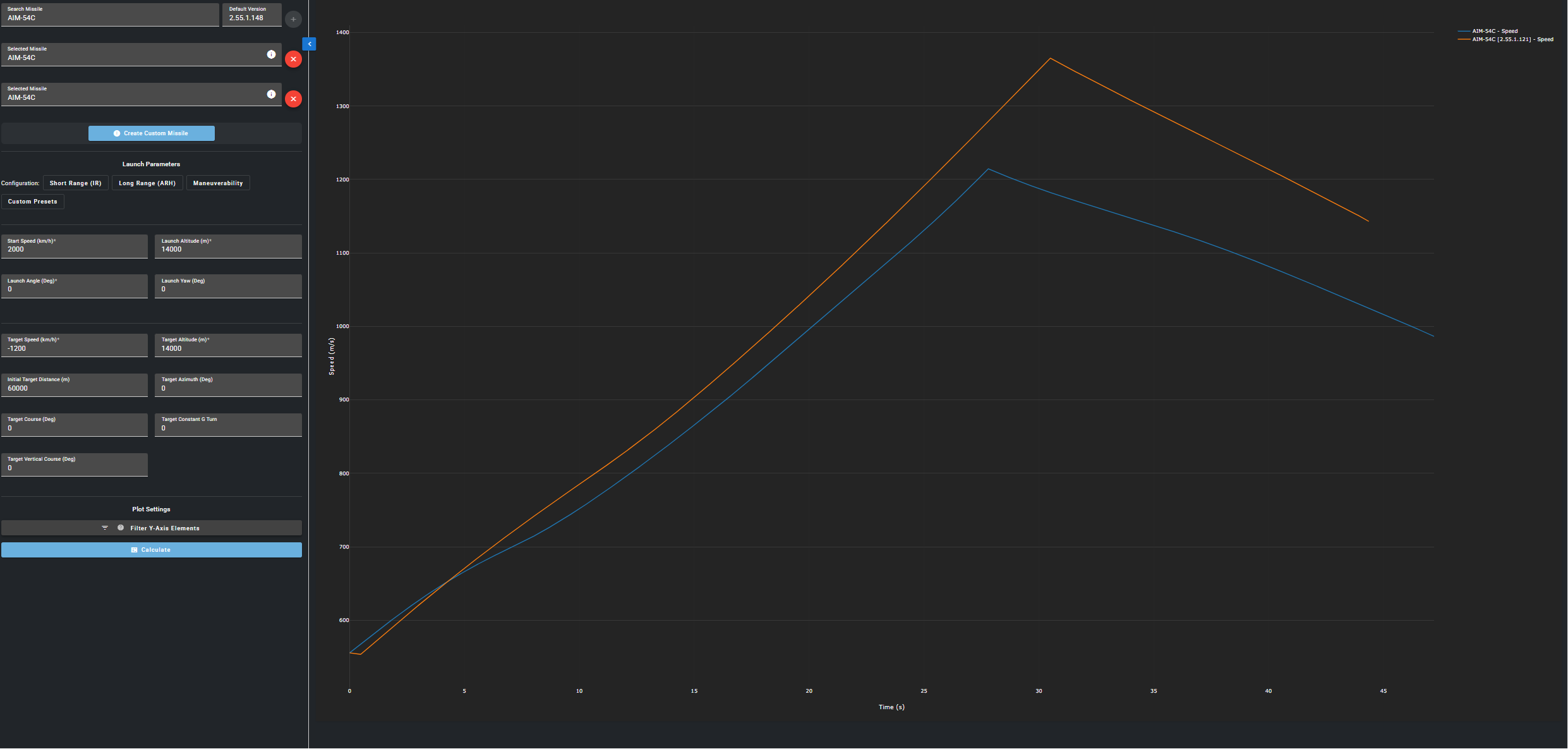
1 Like
From what I’m seeing in the stat cars AIM-54A is now heavier than it was 443kg → 446kg and is unified in weight with AIM-54C. So AIM-54A is actually a bit slower to accelerate now I think
1 Like
Currently on the dev both a and c have identical acceleration, before the A had an slight advantage over the c due to being lighterr

1 Like
Yeah thats what I mean. A is just a tiny bit slower to accelerate now compared to live client.
im starting to think we would never see a 7P on any other plane besides the F/A-18 platform
They want to gate-keep it with that plane
2 Likes
Top priority is to implement AIM-7M (H-Build) and AIM-7P Block 1 on the F-14D by any necessary means.
4 Likes
Meanwhile the USSR equivalent (27ER/R) is on several planes in the game that have never been able to carry them. The bias is strong with this.
5 Likes
The AIM 54+ ECCM guiding system was closer to AIM 120 B than to AIM 120A. As AIM 120 became software-programmable since 120 B.
The AIM 120 B was based on AIM 54C+ ECCM, which was based on AIM 120A, which was based on 54C.
1 Like
No, the timeline is as follows:
| Date | Program | Event |
|---|---|---|
| 1960 | AIM-54A Phoenix | Concept outlines |
| December 1962 | AIM-54A Phoenix | Development contract awarded to Hughes, initiate development |
| 1965 | AIM-54A Phoenix | Flight testing begins |
| May 1966 | AIM-54A Phoenix | First guided flight |
| September 1966 | AIM-54A Phoenix | First successful intercept |
| September 1969 | AIM-54A Phoenix | Simultaneous attack capability demonstrated |
| December 1970 | AIM-54A Phoenix | Production contract award |
| December 1971 | AIM-54A Phoenix | First production contract |
| February 1972 | AIM-54A Phoenix | First delivery pilot production missile |
| March 1973 | AIM-54A Phoenix | First delivery of full production missile |
| December 1973 | AIM-54A Phoenix | Fleet introduction on F-14A, IOC |
| October 1975 | AIM-120A AMRAAM | Tactical working group convened by USDR&E to study AF and Navy requirements for air-to-air weapons and JSOR issued for advanced air-to-air missile |
| July 1976 | AIM-120A AMRAAM | Congress directs development of new missile |
| October 1976 | AIM-54C Improved Phoenix | Improvement program begins, full development go-ahead |
| October 1976 | AIM-120A AMRAAM | Five contractors receive contracts and undertake concept definition studies |
| February 1978 | AIM-54C Improved Phoenix | Hughes begins development, receives $41 million contract on Improved Phoenix |
| August 1978 | AIM-120A AMRAAM | RFP for validation phase |
| September 1978 | AIM-120A AMRAAM | Design definition contracts |
| November 1978 | AIM-120A AMRAAM | DSARC I conducted |
| January 1979 | AIM-120A AMRAAM | MENS approval authorizes program to proceed into validation phase |
| February 1979 | AIM-120A AMRAAM | Contract awarded for validation phase to include ten prototype missiles each from Hughes and Raytheon |
| July 1979 | AIM-54C Improved Phoenix | First engineering development firing |
| August 1979 | AIM-54C Improved Phoenix | Engineering development model deliveries begun |
| November 1979 | AIM-120A AMRAAM | Test program initiated |
| June 1980 | AIM-120A AMRAAM | First flights of the competing prototypes |
| October 1980 | AIM-54C Improved Phoenix | Pilot production decision |
| November 1980 | AIM-120A AMRAAM | Flight testing begins |
| December 1980 | AIM-54C Improved Phoenix | Complete engineering development |
| April 1981 | AIM-120A AMRAAM | Determinations and Findings submitted |
| October 1981 | AIM-54C Improved Phoenix | First production delivery (pilot) |
| December 1981 | AIM-120A AMRAAM | FSD contract awarded to Hughes |
| September 1982 | AIM-120A AMRAAM | DSARC II, continue FSD |
| October 1982 | AIM-54C Improved Phoenix | Hughes makes first production model delivery |
| November 1982 | AIM-120A AMRAAM | SecDef Memorandum |
| January 1983 | AIM-54C Improved Phoenix | Full production approved |
| January 1984 | AIM-54C Improved Phoenix | IOC |
| March 1984 | AIM-120A AMRAAM | FSD flight tests start |
| 15 May 1984 | AIM-54C Improved Phoenix | Navy decision to second source |
| June 1984 | AIM-54C Improved Phoenix | Quality control problems detected at Hughes |
| June 1984 | AIM-120A AMRAAM | First production option expected to be exercised |
| 22 June 1984 | AIM-54C Improved Phoenix | Navy stops accepting deliveries |
| August 1984 | AIM-54C Improved Phoenix | Navy stops progress payments to Hughes |
| 23 November 1984 | AIM-54C Improved Phoenix | QC plan accepted, payments resume |
| December 1984 | AIM-120A AMRAAM | First flight production version, unguided missile |
| February 1985 | AIM-54C Improved Phoenix | Deliveries resume |
| August 1985 | AIM-120A AMRAAM | Second guided flight |
| April 1986 | AIM-54C Improved Phoenix | AIM-54C+ deliveries begin |
| 5 June 1986 | AIM-54C Improved Phoenix | Raytheon selected as second source |
| 1987 | AIM-120A AMRAAM | First production delivery planned |
Of course, since this timeline is based on data from 1987, it does not mention that the delivery of the AIM-120A was delayed until 1991.
4 Likes
planes are only op if they are at the wrong br/top tier, but we shouldn’t have top tier premiums, right?.. right?..
1 Like
premiums shouldve ended at 9.7 br for planes and the just remove the one rank above rule
1 Like
Quick reminder for people to not post Export-restricted or Classified documents under any circumstances.
Then the following happened:
1985
The AIM-54C was deployed to the fleet.
June – AIM-54C ECCM/Sealed Missile TECHEVAL completed. First AIM-54C+s delivered to Navy.
1986
March – AIM-54C+ began production and delivery.
December – AIM-54C reaches Initial Operational Capability.
1987
March 18 – The first missile launch of an AIM-54A Phoenix by a Naval Air Reserve squadron, VF-301, took place at the Pacific Missile Test Range, Point Mugu, CA.
August – AIM-54C+ full-scale development.
1988
July – AIM-54C ECCM/Sealed variant reached IOC; entered service. AIM-54C missiles with improved ECCM are known in the U.S. Navy as AIM-54C ECCM/Sealed.
1989
June 6 – First Raytheon-built AIM-54C flight test conducted.
1990
August 14 – AIM-54C+ High Power Phoenix first flight test of fully upgraded missile scored a direct hit on a QF-4 drone, demonstrating unprecedented multi-shot launch and leave capabilities.
AIM-54C ECCM/Sealed testing started in 1990 and some missiles were retrofitted with modification kits as the AIM-54C Plus upgrade.
(https://www.navair.navy.mil/node/12701)
There seem to be 4 versions of AIM-54 C: “AIM-54 C, AIM-54C+, AIM-54C+ (1990 retrofitted), AIM-54 C+ High Power Phoenix”.
The AIM-54C+ ECCM I was referring to is the AIM-54C+ (1990 retrofitted) and AIM-54 C+ High Power Phoenix", which development started in August 1987, the same year the AIM-120A AMRAAM’s first production was planned.
What I am saying about AIM 120 B was based on the fact that AIM 54C+ ECCM is based on the following sources:
- The designation of Guidance Sections of the three missiles is as follows:
AIM-54C: WGU-11/B
AIM-120A: WGU-16/B
AIM-54C(the last version): WGU-17/B
AIM-120B: WGU-41/B
2.1 “The AIM-120A is the first generation AMRAM, and they don’t have any program memory, so they’re less capable than the B and C versions that can be reprogrammed” (https://www.edwards.af.mil/News/AFMC-News/Article/155152/robins-begins-aim-120-missile-rocket-motor-transfer-to-improve-launch-capability/)
2.2 The AIM-120B, which was first delivered in late 1994, had a new WGU-41/B guidance section. It had software in reprogrammable EPROM modules, a new digital processor and other electronics updates.(https://www.designation-systems.net/dusrm/m-120.html)
3.1 “AIM-54C was the second production version, incorporating 5 major improvements: digital rather than analog circuitry so that the missile can be programmed for target discrimination in stream raids, improved beam (crossing-target) capability, and improved capabilities to engage an opening target from its rear quarter; better resistance to ECM, greater range and altitude; greater maneuverability, and a fuze (target-detecting device) better adapted to detonating on small targets or very low alti-tude targets found in clutter such as chaff. Deliveries began in 1981, and the last of 330 were delivered in September 1986. Deliveries of AIM-54C Plus began in March 1986. This last version incorporates internal heaters.”
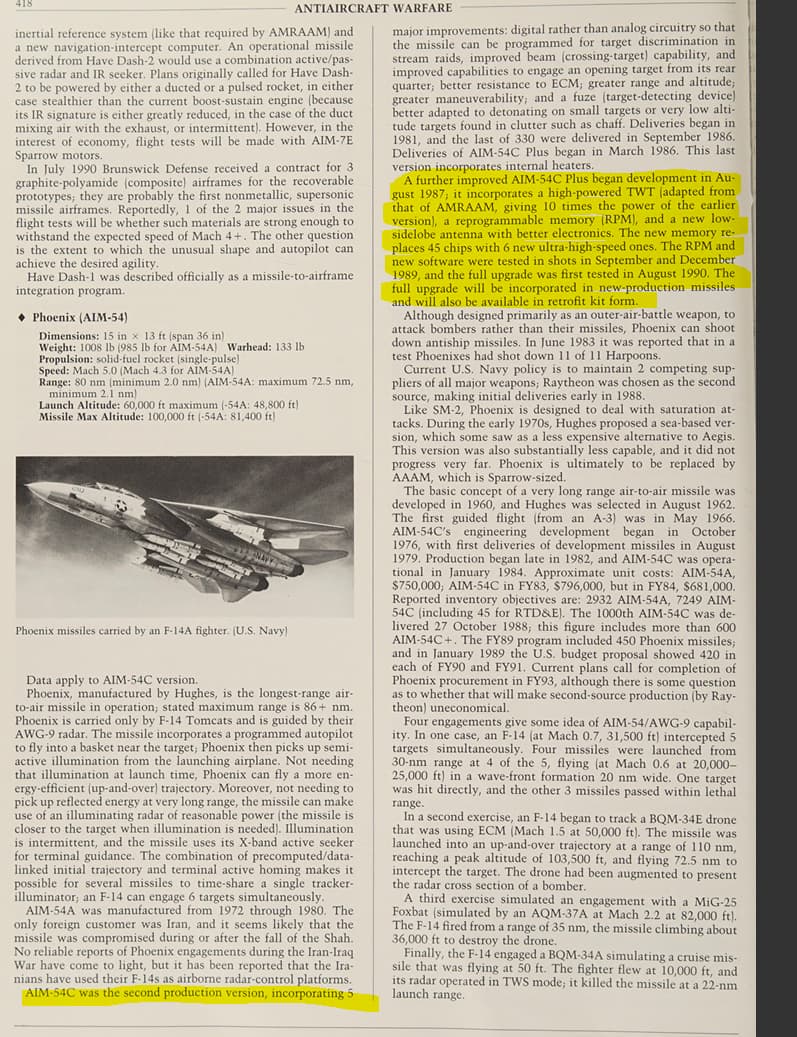
3.2
AIM-54C (should be AIM-54C+ 1990 retrofitted )
Last production model. Analog electronics replaced by Reprogrammable Memory (RPM) digital processor, yielding faster target discrimination, longer range, increased altitude, improved beam attack capability, better ECM resistance, and greater reliability. (https://www.navair.navy.mil/node/12701)
AIM-54C+ High Power Phoenix
Improved variant developed by Hughes for F-14D. Contains internal heaters, which eliminates need for temperature conditioning liquid, high-power Traveling Wave Tube (TWT) transmitter adapted from the AIM-120 AMRAAM, and low-sidelobe antenna. Latest version of RPM substitutes 6 ultra-high-speed computer chips for 45 of earlier, less-capable chips. Full-scale development began in August 1987. First test flight of fully upgraded missile on 14 August 1990 scored a direct hit on a QF-4 drone. (https://www.navair.navy.mil/node/12701)
1 Like