- Yes
- No
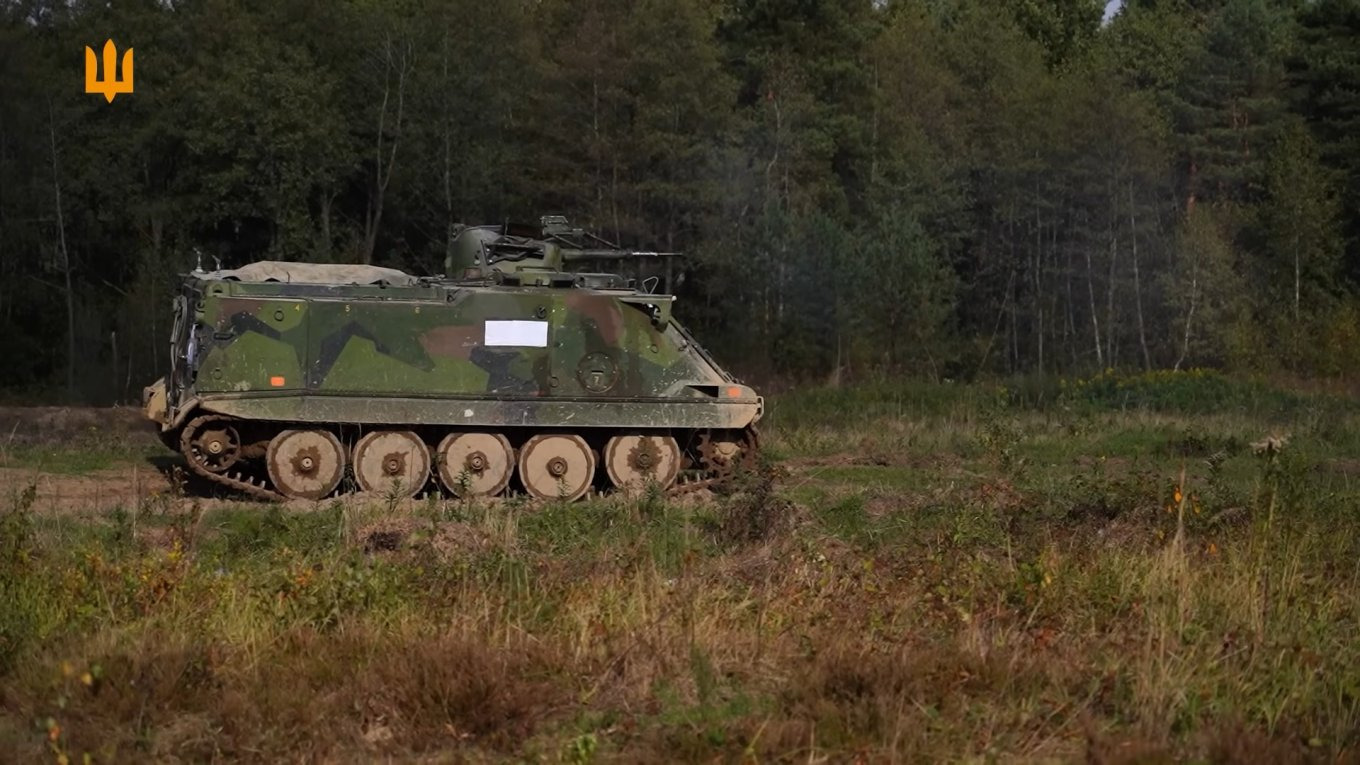
 Pansarbandvagn 302A REMO
Introduction
The Pansarbandvagn 302 (Pbv 302) is an APC designed by Hägglunds & Söner to replace the Pansarbandvagn 301 (Pbv 301). Development began in 1961 with two prototypes completed by Hägglunds, numbered 925 and 926. No. 925 would come out victorious under the trails after a revised turret was mounted to it. Production would subsequently begin in 1966 and continue to 1971. A total of 644 Pbv 302 would be produced across all variants; 647 would be produced if prototypes are included. In the 90’s when production of the Strf 90 began, Pbv 302s started to be taken out of service and subsequently scrapped. In 2014, the total decommissioning of all remaining Pbv 302 would begin, with the C model serving until 2018. A total of 239 Pbv 302 across all models would be put into storage as reserve.
The Russo-Ukrainian war began in 2022. Initially, the Ukrainian army had a large fleet of its own AFVs, but as the war has dragged on, the number of vehicles has dwindled. As a result, other nations have sent surplus vehicles to aid Ukraine, Sweden being one of them. It would be reported on the 31st of October in 2024 that Ukraine had received all Pbv 302s the Swedish army had in storage. One of the variants that has been sent is the Pbv 302A that has undergone REMO.
History
In the early 60’s production began on the Pbv 301, which was a stopgap solution while a new armored troop carrier would be selected. Meanwhile, many different options were looked at to be the new armored troop carrier for the Swedish army’s mechanised brigades. Options stood between Austria, Canada, France, the Soviet Union, West Germany, the UK, and the USA. Landsverk and Hägglunds & Söner would also be tasked with coming up with their own variants. Landsverk would provide one alternative, while Hägglunds offered two different options; the contract for production of two prototype vehicles would ultimately go to Hägglunds, but the American M113 was an alternative as well. The two prototypes from Hägglunds would be numbered No. 925 and No. 926, and competed against one M113 that was acquired. After testing, prototype No. 925 came out on top, and after a revised turret was fitted and some other minor adjustments to the superstructure, serial production would begin in 1966 and continue to 1971, with 644 production vehicles completed. These would receive the designation Pansarbandvagn 302 (abbreviated Pbv 302). There would be two separate upgrades to the Pbv 302, which meant there were three variants of the vehicle: an inner liner (spall liner) and ceramic applique armor were added to some of the Pbv 302, and these would be designated Pbv 302B, and the stock ones became Pbv 302A. 50 Pbv 302b would in 1993 also be fitted with an inner liner and the ceramic applique armor kit, but also get additional headlights, a new turbo, climate control, as well as improved suspension, which included a new roadwheel design. Because of these modifications to the B variant, these would be redesignated as Pbv 302C. The 50 Pbv 302Cs would then be sent down to the Balkans and used under peacekeeping in Kosovo, hence the KFOR marking on these vehicles. But the Pbv 302A would go through RE-Modernization (REMO), where some shortcomings of the vehicle were fixed. The smoke launchers, for example, were moved onto the turret, which houses the 20mm autocannon. Ergonomics in the vehicle were improved, such as a new driver seat and the internal layout of the turret, which would be changed. The old external ring sight would be replaced as well. Because of the change in the internal layout of the turret, a 30-round magazine was now possible.
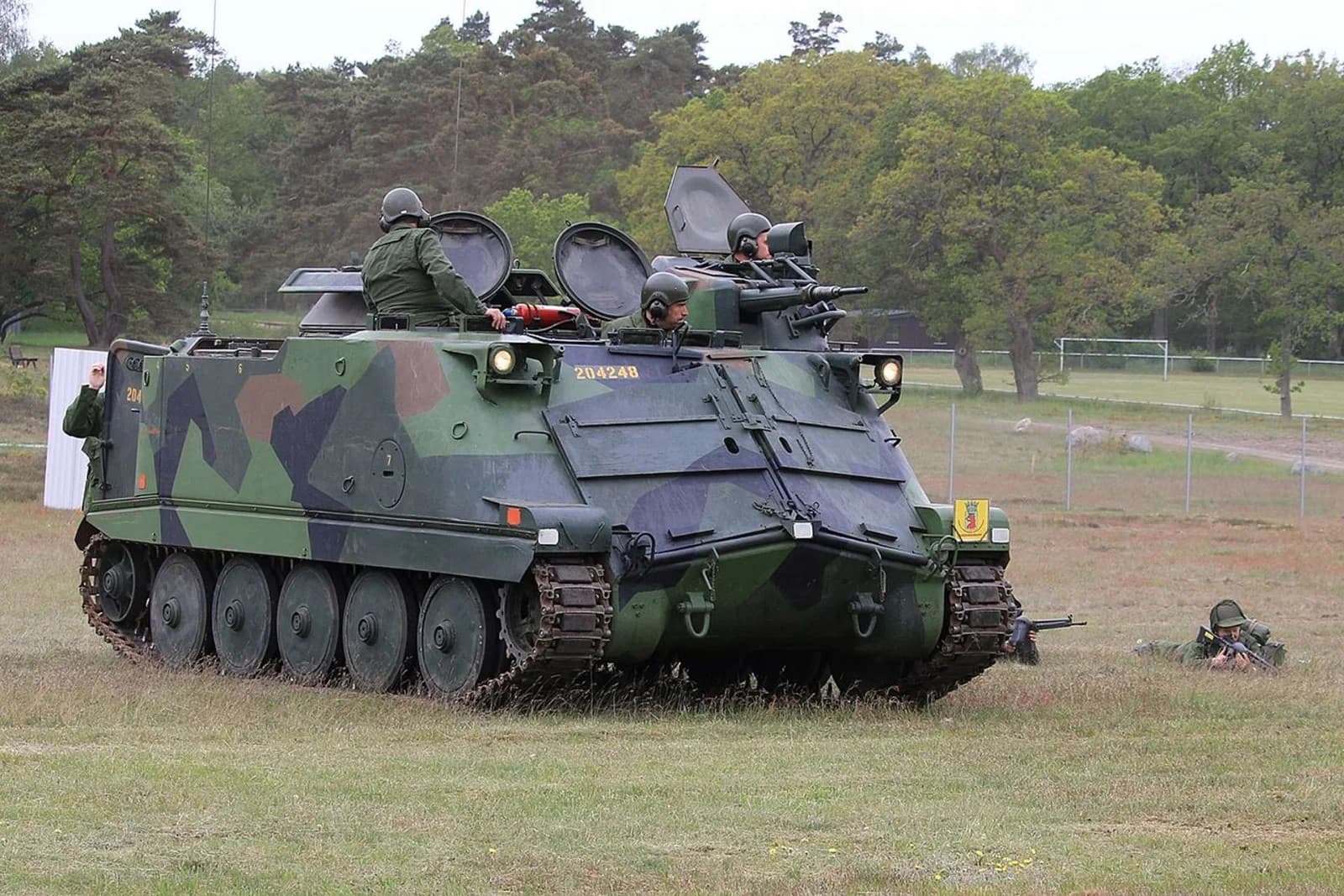
In the 1990s, many of the Pbv 302s were taken out of service as the Strf 90 platform was to replace them. They would subsequently be scrapped as the army saw no need in keeping them in storage; a bit over half of the fleet of Pbv 302 would be scrapped. In 2014, the remaining Pbv 302s in active service would be retired, with the last ones being withdrawn from active service in 2018. A grand total of 239 Pbv 302 still remained and was put into storage instead of being scrapped. They would sit in storage for 10 years until 2024, when the decision was made to send the entire fleet of remaining Pbv 302s to Ukraine as an aid package due to the ongoing war. Initially, the expectations for the vehicles were very high and remained so while Ukrainian soldiers trained with the vehicles. But when it was time to use them in combat, it was catastrophic. Complaints about the reliability were a hot topic, as well as the level of armor the vehicle had. Something needed to be changed, and that was how the vehicles were used. The Ukrainians pushed the Pbv 302 to the frontline, where they did not fare any better. With the experience gained from this, the vehicles would be moved back from the front line and used as APCs to move troops around who are not in an active combat zone. They have also been used to transport the wounded. It has been reported that almost 40 Pbv 302s have been lost so far in the war, the majority of these losses were from the early deployment of the Pbv 302 to the frontline.
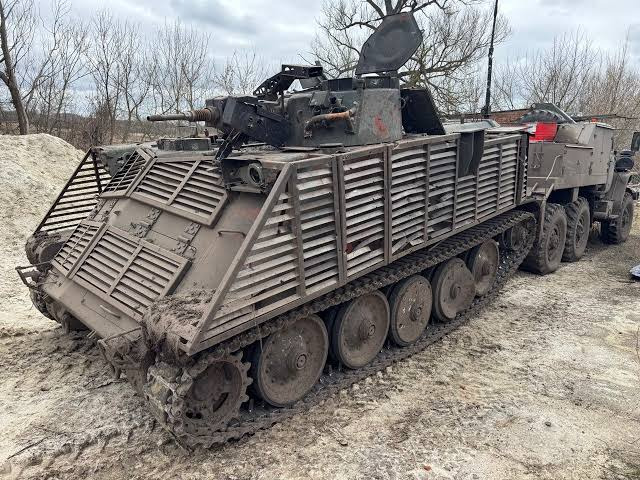
Atleast one Pbv 302A REMO has been captured by the Russians and has subsequently been displayed in Moscow.
Improvements have also been made to the vehicles when it comes to protection, as some have received improvised slate armor, and in some cases, this has been combined with anti-drone netting. Ironically, while Hägglunds built two prototypes there, they featured rubber side skirts, which carried over to the pre-production batch, but it was noted that these did not last very long when going through rough terrain, so for the production series, the side skirts were redesigned in metal this time, but in a lot of cases, even these were not mounted to the vehicles. Since Ukraine got the Pbv 302, they have added rubber to the side skirts, presumably to prevent drones, RPGs, or likewise, from damaging the running gear severely. Even tho the Pbv 302 is a flawed vehicle in the age of modern combat, it has still proven itself to be a worthy vehicle for the Ukrainian army. It has gained back some of the respect that it lost at the initial deployment by being excellent at the role the Ukrainian army now uses it in.
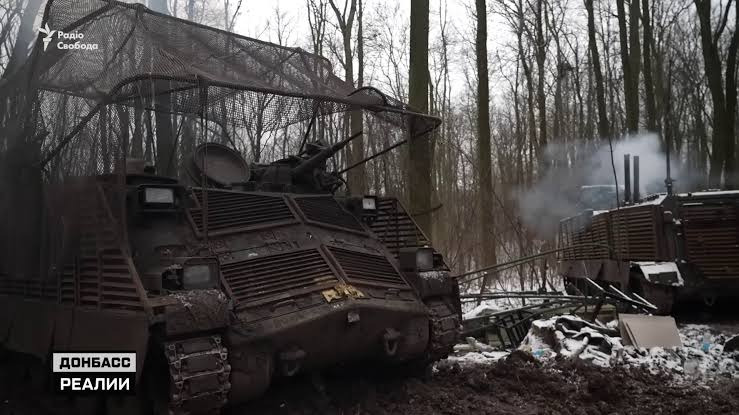
A Pbv 302C to the left and presumably a Pbv 302A REMO to the right.
Specifications
Protection
Chassis
- Front: 25 mm
- Sides: 10 mm
- Rear: 5 mm
- Some have been seen with:
- Improvised slate armor
- Spaced rubber side skirts
- Anti-drone netting
- Some have been seen with:
Turret
- Front: 23 mm
- Sides: 20 mm
- Rear: 20 mm
Armaments
Main armament
- 20 mm akan m/47D
- Horizontal guidance: ±180°
- Traverse rate: 1st speed: 4°/rev, 2nd speed: 12°/rev
- Vertical guidance: +50° / -10°
- Amount of rounds: 5 × 30-round magazines in the turret + 5 × 30-round magazines in the hull
- sgr m/47 (HE)
- slsgr m/71 (HEI-T)
- slpprj m/68 (HVAP-T)
- slhpbrgr m/47 (SAPHEI-T)
- slhpbrgr m/95 (SAPHEI-T)
- Horizontal guidance: ±180°
Secondary armaments
- 6 × smoke grenade launchers
- 3 launchers are located on each side of the turret
- 2 × 71 mm Lyran illumination mortar
Crew
- Commander / Gunner
- Periscopic sight
- Magnification: 4.0× to 8.0×
- NVD
- Periscopic sight
- Driver
- NVD
Mobility
Engine
- Volvo-PENTA THD 100 B
- 270 hp @ 2200 rpm
Transmission
- Volvo-PENTA R-60
- Has both high and low range
- Gears forward: 8
- Gears backward: 2
- Has both high and low range
Speed
- Forward: 65 km/h
- Forward while swimming: 7,2 km/h
- Backward: 11 km/h
- Backwards while swimming: Unknown
Weight
- 14 tons
Power-to-Weight
270 hp ÷ 14 tons ≈ 19,28
Dimensions
- Lenght: 5350 mm
- Width: 2860 mm
- Height: 2500 mm
Sources
KAF Maj 1968. Pansarbandvagn 302A MT. Mtrlugrp Tp Stridsfordon, Förrådsbeteckning M5370-302011
Jane’s Armour and Artillery 1979-80
https://www.army-technology.com/news/swedens-upgraded-pbv-302-to-strengthen-ukraine/?cf-view
https://cornucopia.se/2025/03/uppdateras-pbv-302-uppskattad-i-ukraina-mycket-laga-forluster-toppmote-i-london-idag-mycket-svara-ryska-bakre-forluster/
Swedish PBV 302 in Ukrainian Army: As Simple As an Armored Cross-Country Beast Can Get | Defense Express
What Kind of Vehicle is Pbv 302, Which Are Transferred by Sweden to Ukraine, How Many of Them Are Available | Defense Express
Pbv 302
Pansarbandvagn 302 – Wikipedia
Pbv 302 (fordonsfamilj) | SPHF
Pbv 302, artikelserie i Pansar, del 2 | SPHF
Pansarbandvagn 302 - Wikipedia
Pbv 302 (BILL) | War Thunder Wiki
PBV Pansarbandvagn 302
Overview of Pbv 302 Armored Vehicles as Sweden Transfers Entire Fleet to Ukraine
Pansarbandvagn 302 (PBV 302) - Pebban | SoldF
Hispano-Suiza HS 404 – Wikipedia
Sweden will transfer old Pbv 302 armored personnel carriers to Ukraine