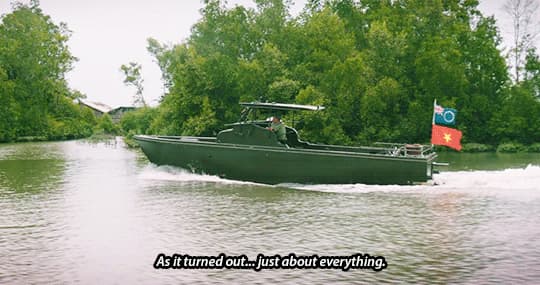
During Vietnam the US Navy operated in the Mekong river delta to interdict and stop north Vietnamese and Vietcong supplies from getting into South Vietnam, in order to do this they needed a fast and maneuverable boat that had a low draft.
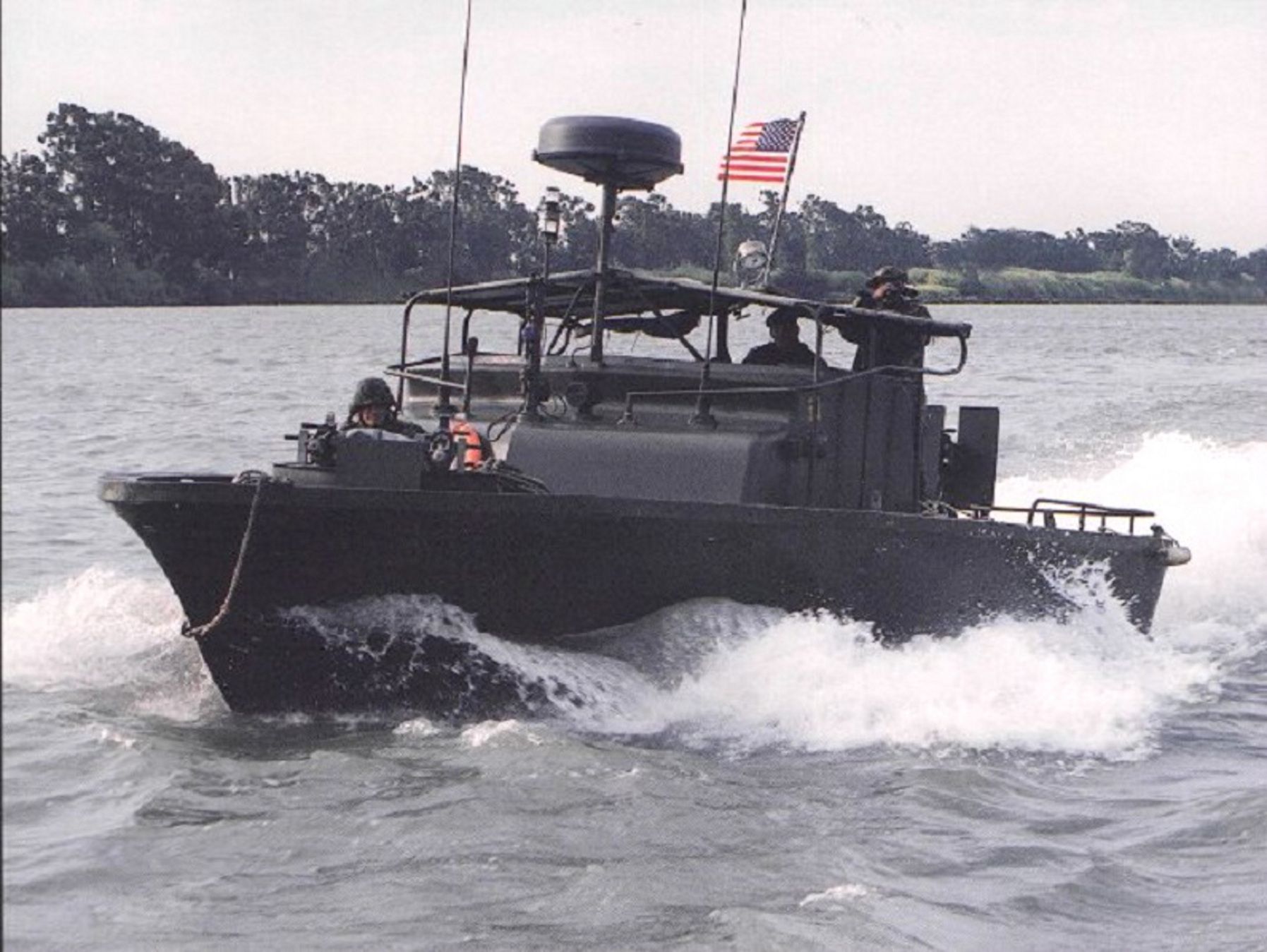
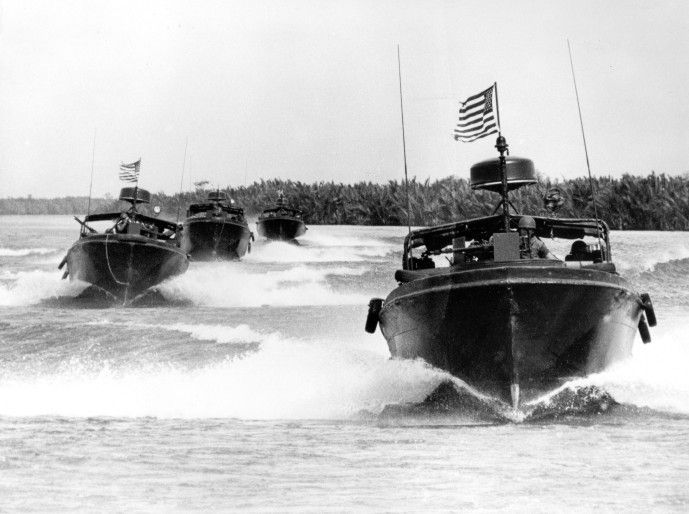
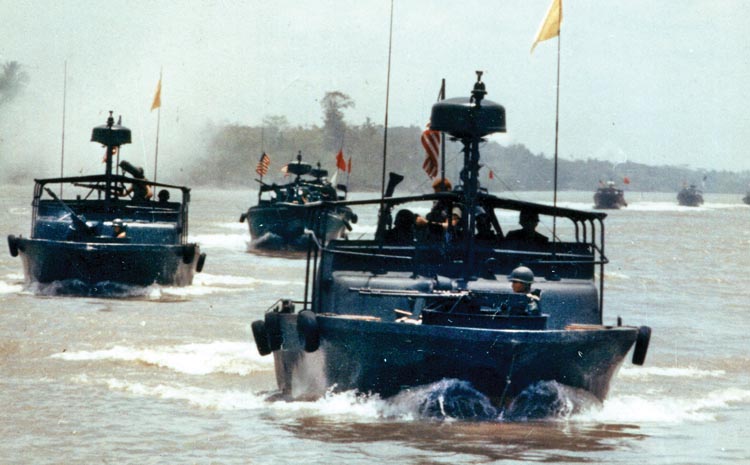
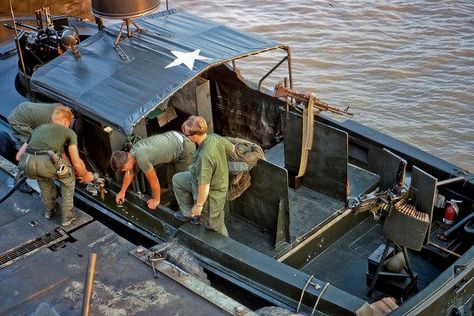
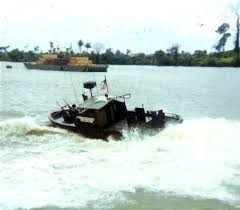
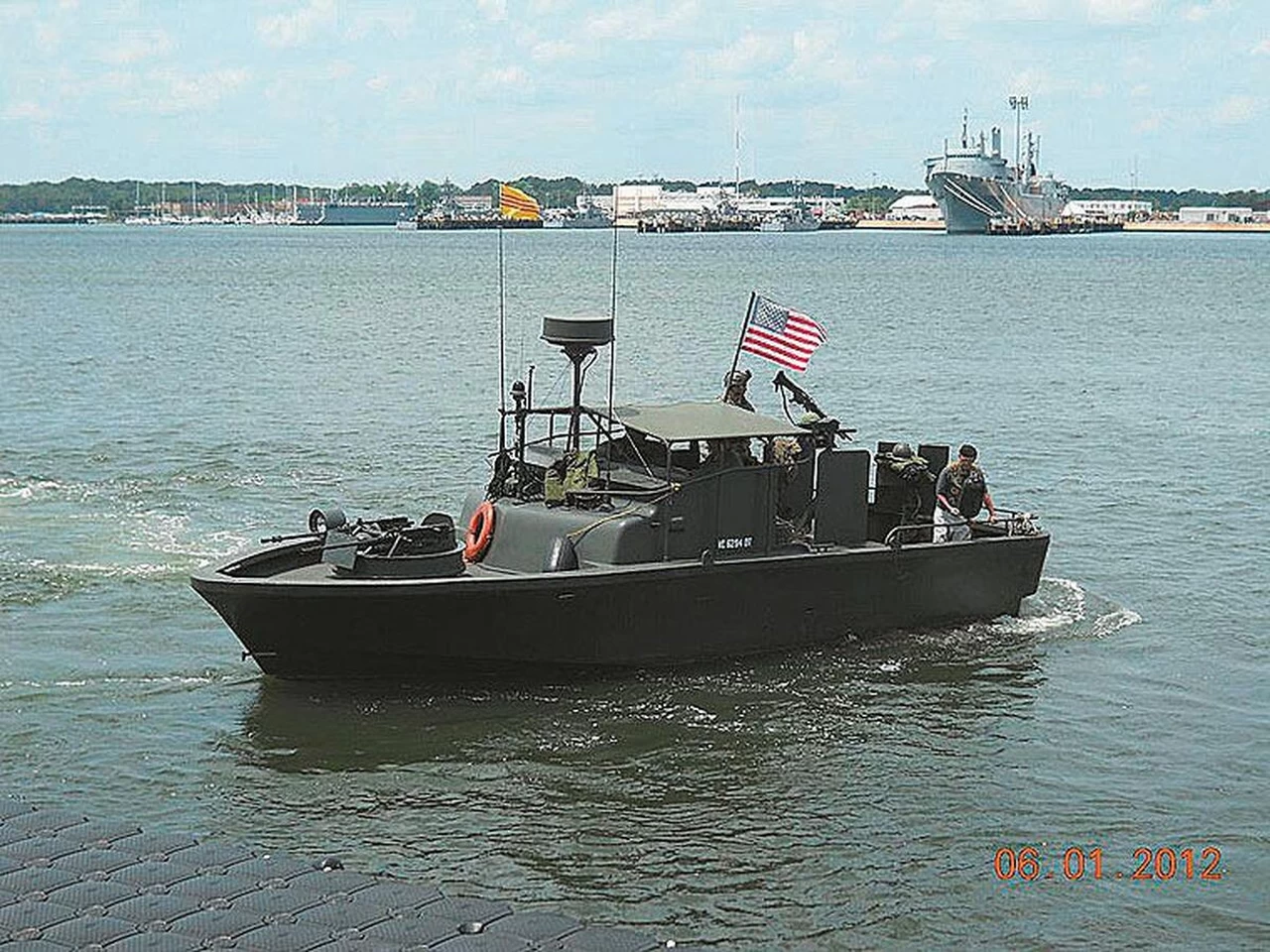
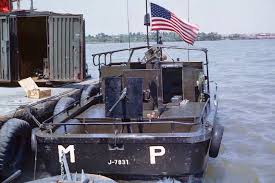
The PBR 31 (Patrol Boat, River), nicknamed the “Pibber,” was developed by the U.S. Navy in 1965 to counter the growing flow of enemy supplies through the inland waterways of South Vietnam. The Navy needed a boat that could navigate shallow, debris filled rivers while possessing enough speed and firepower to outrun or overwhelm ambush squads. To meet this immediate requirement, they adapted a commercial 31-foot fiberglass pleasure craft designed by Hatteras Yachts. The resulting initial variant, the Mk 1, featured a fiberglass-reinforced plastic hull and a water-jet propulsion system that eliminated traditional propellers and rudders, allowing the boat to operate safely in weed-infested and extremely shallow waters.
While the Mk 1 successfully proved the riverine warfare concept, it suffered from several mechanical and structural flaws under combat conditions. The original hull was prone to fouling from river debris, the water-jet pumps frequently jammed, and the low gunwales made the deck constantly wet while offering very little protection to the crew. These operational lessons directly informed the development of the PBR 31 Mk II, which entered service in 1967. The Mk II was a larger, more refined evolution designed to fix the shortcomings of its predecessor and handle the increasingly violent clashes along the Mekong Delta.
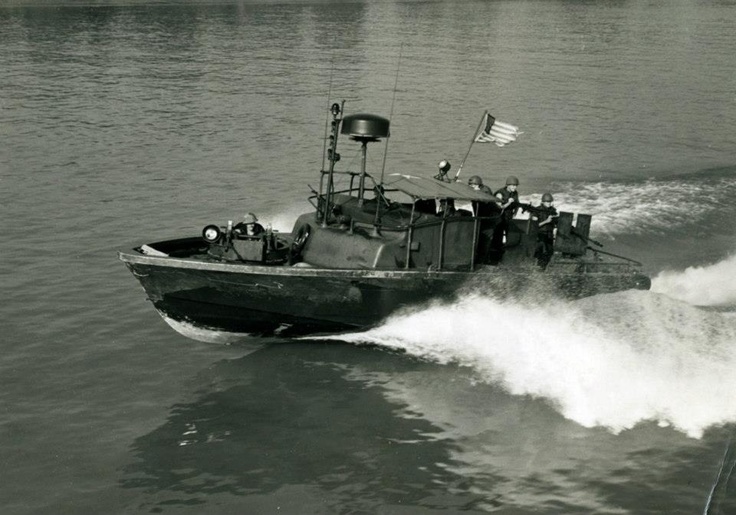
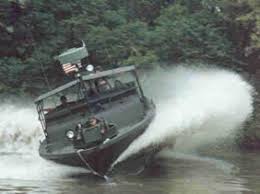
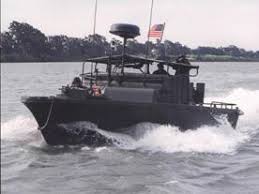
The structural changes on the Mk II significantly improved the boat’s handling and durability. It was lengthened to 32 feet, and its beam was widened by nearly a foot to provide a more stable firing platform and extra internal space for ammunition storage. To protect against floating logs and enemy fire, aluminum gunwales were added to wrap around the fiberglass hull. Furthermore, the water-jet propulsion units were upgraded to cleaner, more efficient Jacuzzi Brothers pumps powered by twin Detroit Diesel 6V53N engines, which enabled the craft to reach nearly 29 knots despite its increased weight.
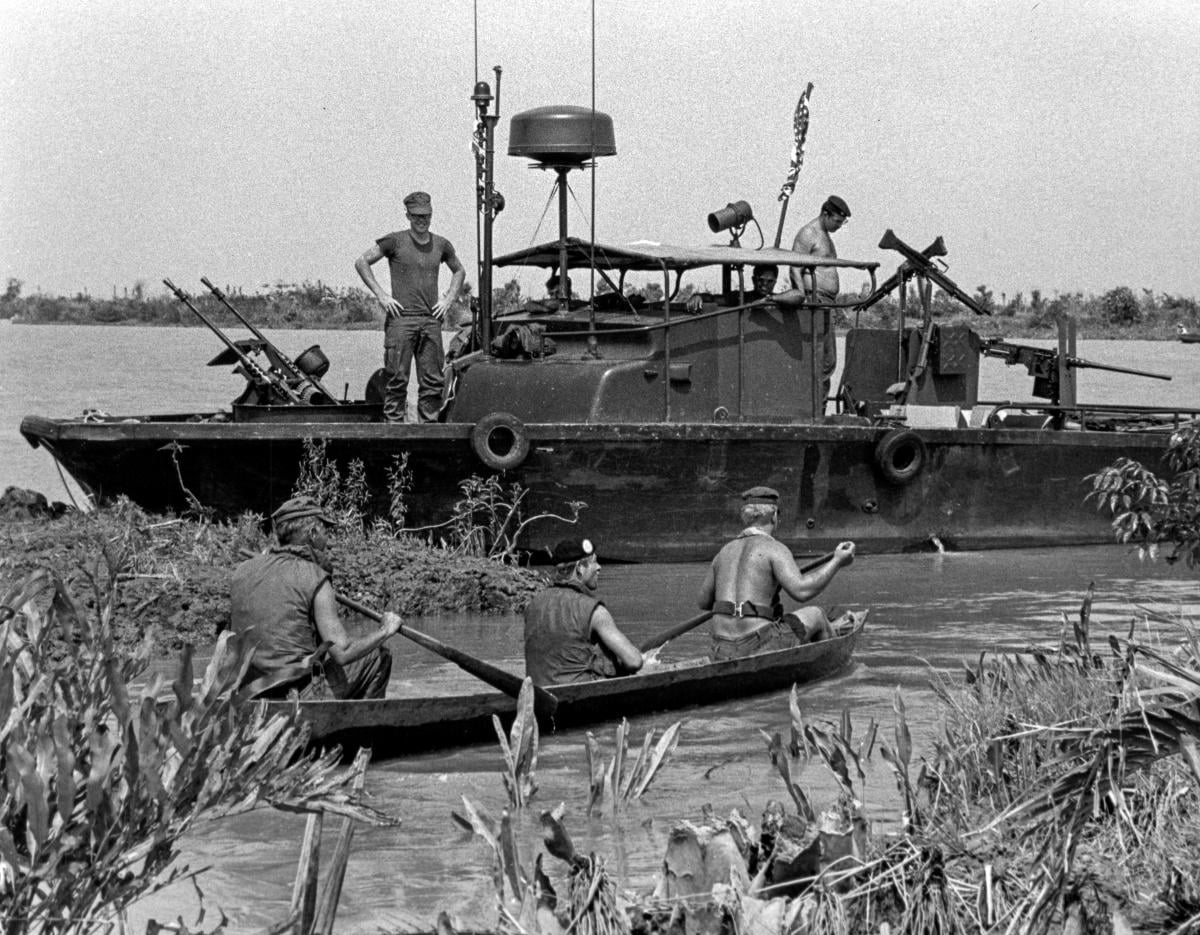
Firepower on the Mk II was heavy for its size and highly adaptable to handle sudden, close-range firefights. The standard layout featured a forward-rotating tub equipped with a twin .50-caliber machine gun mount, providing devastating suppressive fire against shore-side ambushes. The stern was armed with a single .50 caliber machine gun or a combination mount with a M200 40mm automatic grenade launcher, Amidships, crews typically positioned flexible 7.62mm M60 machine guns on the port and starboard rails, giving the four-man crew a complete 360-degree field of fire.
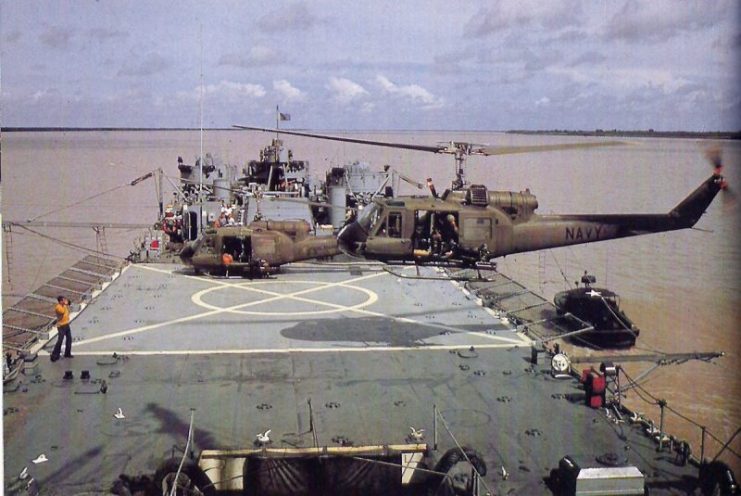
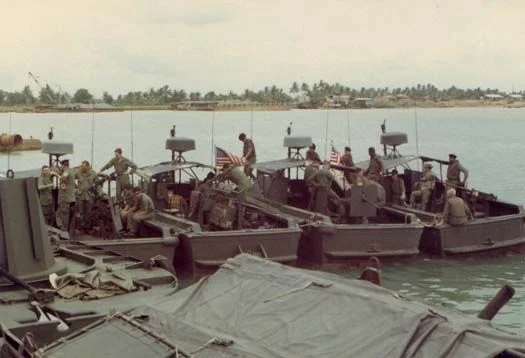
The operational history of the Mk II was defined by Task Force 116, code-named Operation Game Warden, which aimed to disrupt Viet Cong supply lines and tax collection points. Operating in two-boat patrols, the PBRs often conducted stop-and-search missions of local sampans and barges, often in total darkness. The boats utilized a Raytheon surface-search radar mounted on a small mast over the canopy to track river traffic through fog and nighttime gloom. Because of their high speed, Mk II crews could rapidly accelerate, turn, or slow down to evade enemy rocket-propelled grenades.
By the time the United States began withdrawing its force, control of the PBR fleet was systematically transferred to the Republic of Vietnam Navy. The ruggedness and simplicity of the Mk II design allowed it to continue fighting long after American crews departed, racking up years of intense combat before the fall of Saigon. Beyond its extensive combat record, the PBR Mk II earned an indelible place in military history as a symbol of the “Brown Water Navy,” showing how a modified civilian design could be turned into a highly effective riverine warship.
As of today there are several surviving PBR’s and several replicas, however there are none in active service. The PBR was retired from service completely in 1995 ending its nearly 30 year history.
INFO
Measurements:
Length: 31ft 11.5in
Beam: 11ft 7.5in
Draft: 2ft 2in (when fully loaded)
Displacement: 16,000 lbs
Mobility
Top speed: 32 Mph
Propulsion: 2x Detroit deseil 6V35N 216hp@ 2800 rpm
Propellers: None (2x Water pump jet)
Weaponry
Fore: 1x twin .50 M2HB ammo: unknown (crew decided)
Mid ship: 2x M60D ammo: unknown (crew decided)
MID ship 1x M60D ammo: unknown (crew decided)/ 40mm Grenade launcher ammo: ammo unknown (crew decided)
Aft: 1x .50 M2HB ammo: unknown (crew decided)
Armor
Hull: fiberglass
Armor: ceramic armor (front gunner) , steel plates (bridge), ballistic liners (various), amounts unknown.
Sections: 1 (would need to be increased due to gameplay restrictions)
Crew: 4-5 (flak vest and helmets add a small amount of additional protection from fragmentation)
Sources
Please note that I was unable to find any official primary source information for this vessel, most of my information comes from secondary sources and official history. If anyone does, for any reason, happen to have reliable primary documentation that is declassified and available for public release, please feel free to share them.
https://www.history.navy.mil/content/dam/nhhc/research/publications/publication-508-pdf/WITS_508.pdf
https://www.history.navy.mil/content/dam/nhhc/research/publications/publication-508-pdf/978-0-945274-74-2.pdf
PBR
https://www.history.navy.mil/content/history/museums/nmusn/explore/photography/ships-us/ships-usn-p/patrol-boat-riverine-pbr.html
- Yes
- No