- Yes - In the Tech Tree.
- Yes - Event/BP.
- Yes - Premium.
- No - I would not like to see the NZLAV in game.
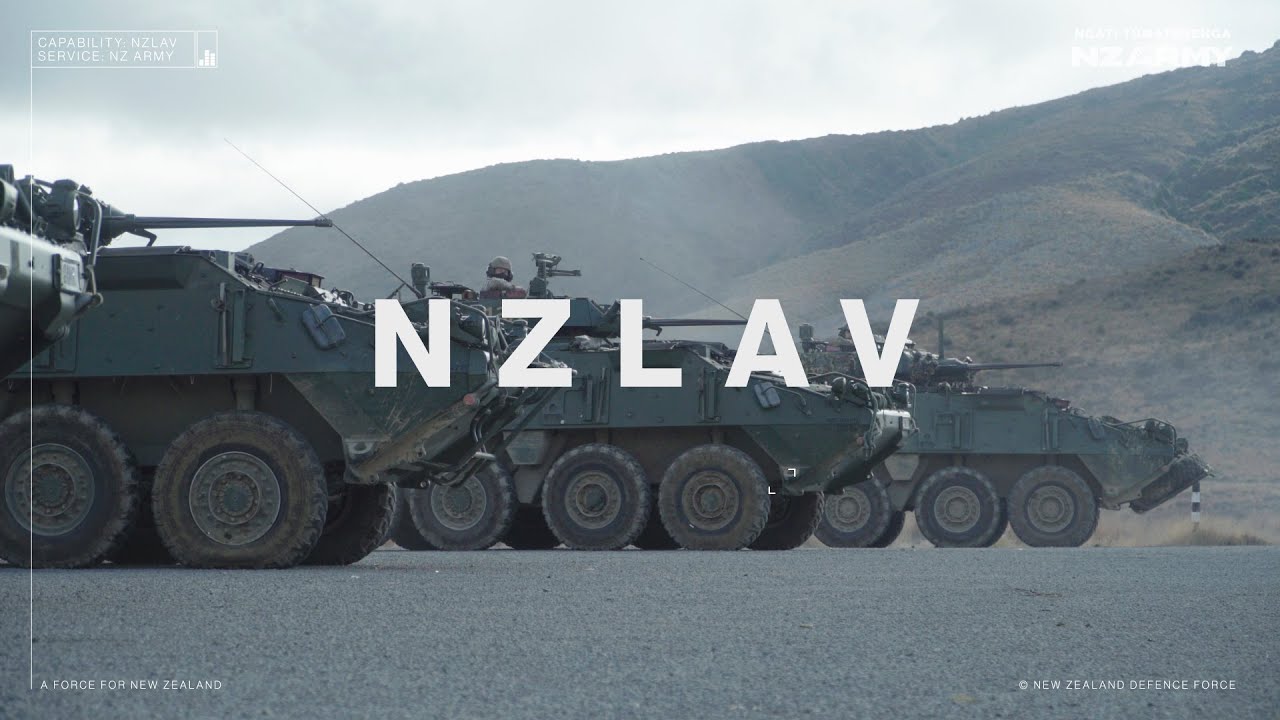
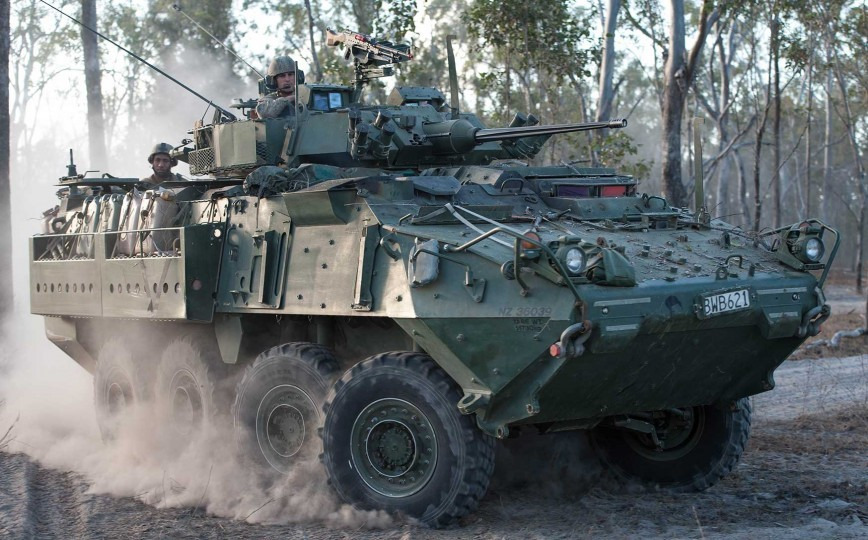
NZLAV firing it’s 25mm bushmaster at the Waiouru Army Camp, 2023

Description:
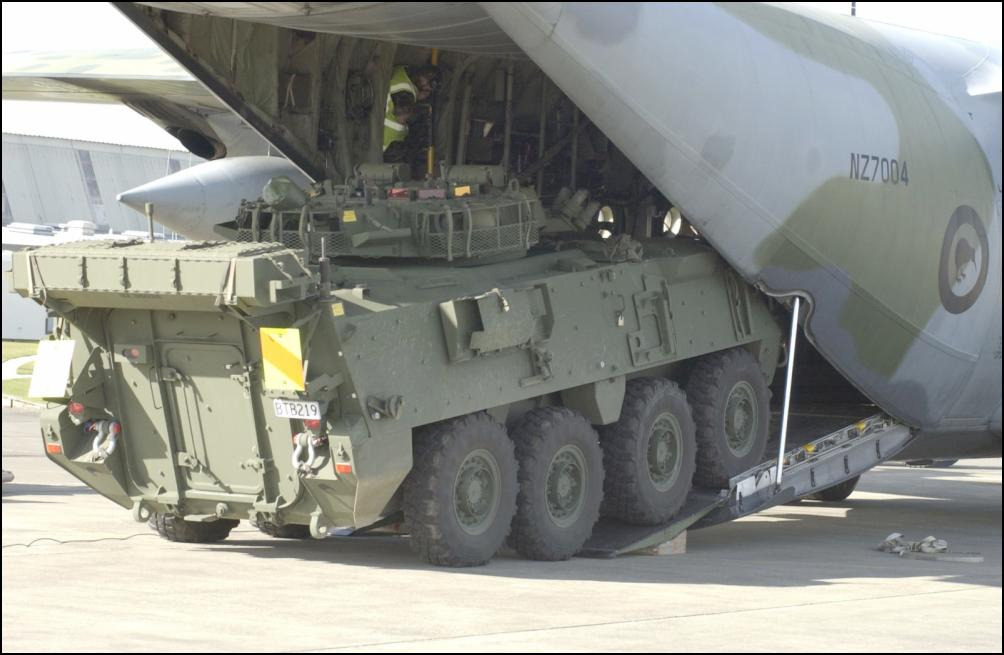
With New Zealand’s ageing fleets of M113 armoured personal carriers, and FV 101 Scorpions needing replacement, the New Zealand government set out a requirement for a universal replacement, allowing for one vehicle to fill both the personal and Fire Support Vehicle (FSV) role, while keeping the ability for transport via C-130s. This would take place under the 1997 Defence White paper.
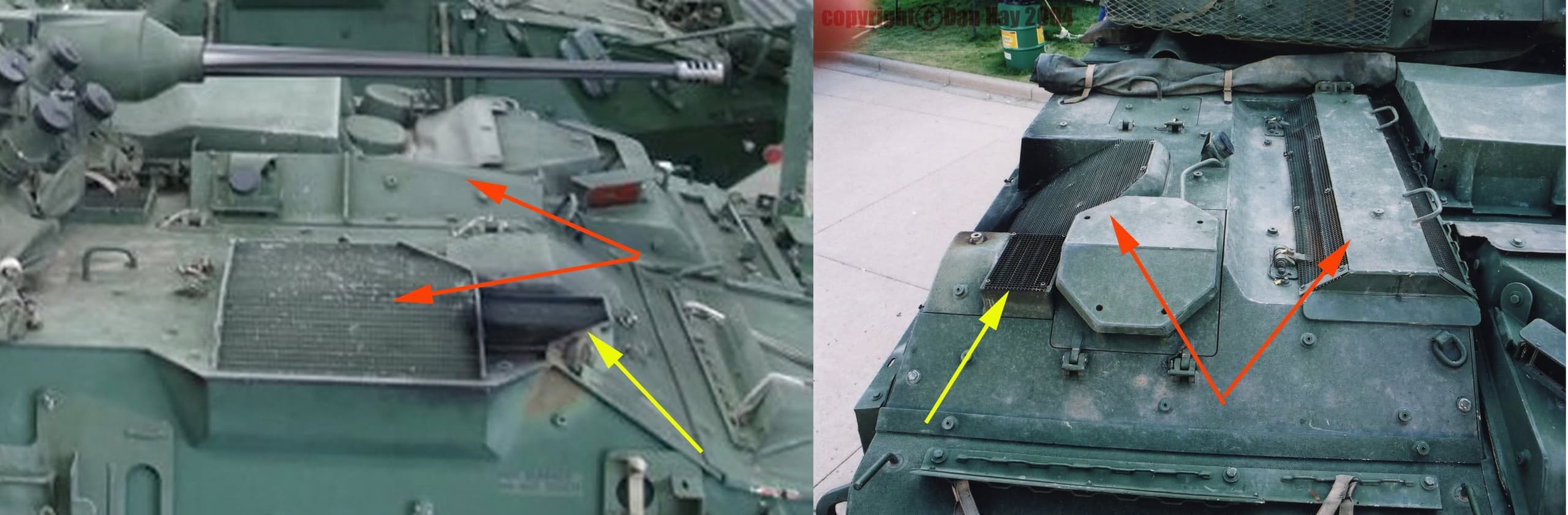
For this role the Canadian built LAV III would be chosen, beating its only competitor, the 6x6 Fuchs. The base LAV III design would be slightly modified to better suit the needs of the New Zealand Army, mostly in the air intake and engine exhaust area. To signify this change, the New Zealand vehicles were designated NZLAV (New Zealand Light Armoured Vehicle.)
NZLAV is on the left, LAV III is on the right. Red arrows are the cooling intake/exhaust, yellow arrows are the engine exhaust.
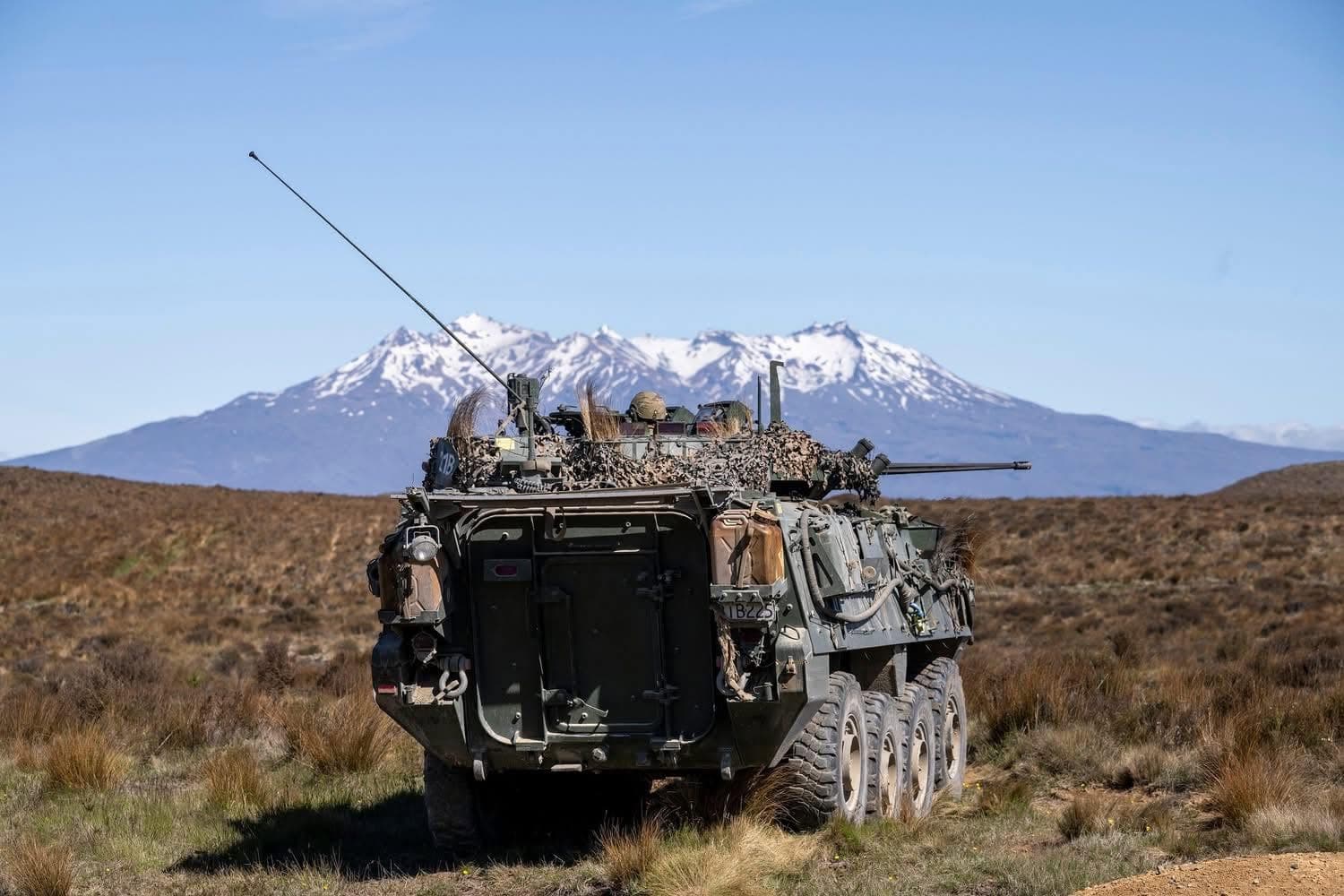
NZLAV during exercises at the Waiouru Army Camp, 2025
History:
When the LAV III had finally won the NZA contract in February 1999, General Dynamics offered the NZA two options for the fleet, a) 24 FSVs (vehicles fitted with the 25mm turret), and 78 IMVs (no turret, allowing for 10 troops to be carried.), and b) 26 FSVs, and 126 IMVs. Option a) allowed for a single battalion of the type to be formed, while b) allowed for two.
However, when these tenders were evaluated, it was found that the turretless IMVs were more expensive than the FVS, as major re-engineering work had to be done to the type if it were to be manufactured without the turret in place.
As now all vehicles would be FSVs, only 105 were needed, It should be noted that the combined number of M113s and Scorpions was 104, so an equivalent number of NZLAVs was decided on. This however severely increased the cost of the project beyond the projected $212m NZD, and thus the government was advised that they had two options, 1) purchase 35 NZLAVs, as to fit the old budget, 2) purchase 50 NZLAVs, with the option to purchase 50 more later. Due to protests from the NZA these would be changed to 1) buy 105 NZLAVs, 2) buy 55 NZLAVs, and purchase 55 later, or 3) buy 75 NZLAVs, then buy 30 later.
105 total NZLAVs would be purchased in 2001, 102 of these would be the Fire Support Vehicle spec, which was promptly re-labeled to the Infantry Mobility vehicle (IMV). A dozer blade may also be fitted to these vehicles, making them a Light Obstacle Blade Vehicle (LOB), the NZA currently has only 8 extra blades in inventory, limiting their fitting. Three recovery vehicles (LAV-R) were also purchased, which was the standard NZLAV, but fitted with a dozer, TR200 winch, and earth anchor. One vehicle remained in Canada for testing purposes.
The NZ treasury explained why they wanted 105 vehicles as;
“The number of vehicles is predicated on being able to deploy and sustain a three-company battalion group in a theatre of operations for up to 12 months duration. If 105 vehicles were purchased, then (the) NZDF would be able to deploy one three-company battalion offshore for six months, while a further similar battalion remains under training in New Zealand. Having a second battalion under training in New Zealand means that a fully trained equivalent unit can replace the Army battalion that is deployed offshore. This involves a significant deepening of the Army’s current capability. In order to fully achieve the Government’s policy as outlined in the Purchase Agreement of maintaining one battalion overseas and to sustain it for a year, 105 vehicles are required.”
These vehicles would be built in Canada by General Dynamics Land Systems-Canada (GDLS-C), for a cost of $653 million NZD for all of the vehicles, spares, and initial training. The delivery of the NZLAV would officially take place on the 24th of October 2003 at the Waiouru Army Camp.
NZLAV procurement timeline prior to final delivery.

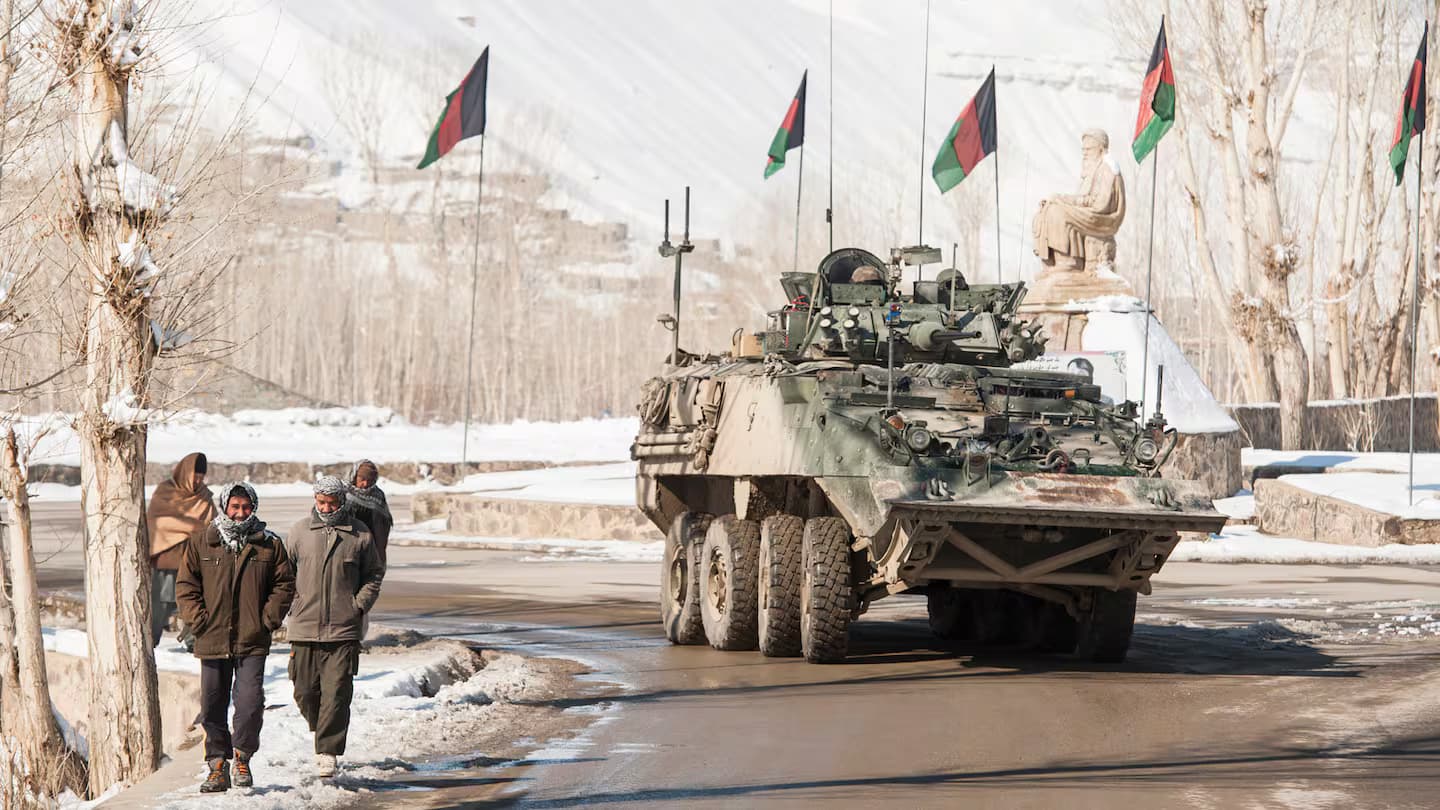
NZLAV traveling to a range with dozer and add-on armour fitted, Bamian, Afghanistan, ~2011
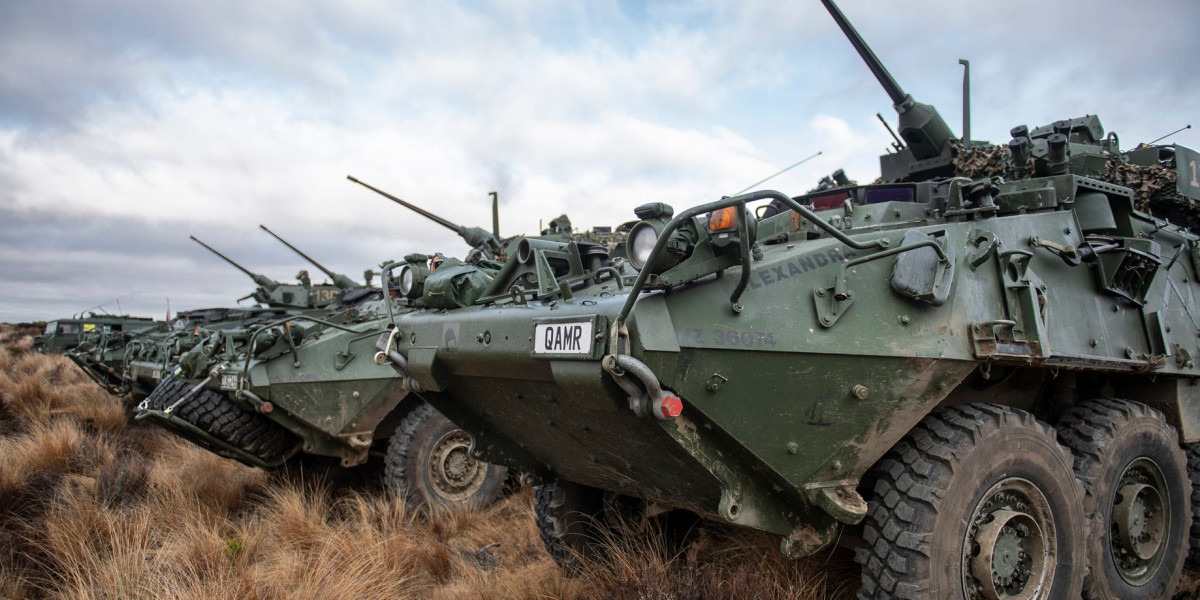
Once delivered, they would equip the Queen Alexandria’s Mounted Rifles (QAMR) of the Royal New Zealand Armoured Corps, including the Regimental Headquarters (RHQ), New Zealand Scottish regiment (NZ Scots), Wellington East Coast (WEC), the Waikato Mounted RIfles (WMR). The NZLAV would operate alongside the Pinzgauer 4x4, which was acting as the Light Operational Vehicle (LOV), which was later replaced by the Bushmaster 5.5.
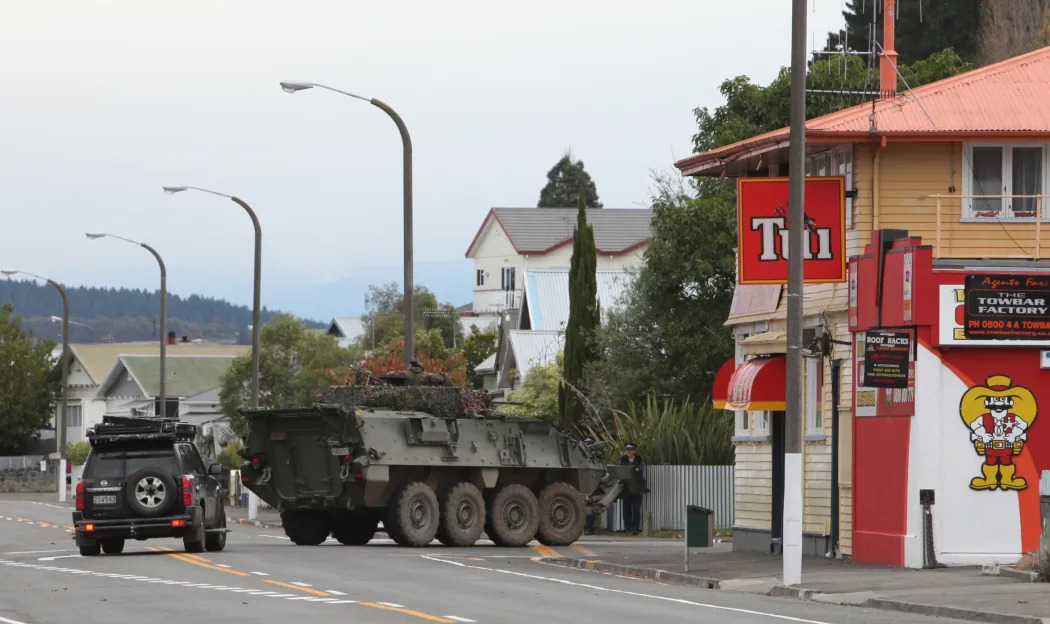
They would mostly operate inside of New Zealand, occasionally visiting Australia for exercises. While in New Zealand, they would act as to support humanitarian missions when needed, being deployed to assist police during the 2009 Napier Shootings, the 2011 Christchurch earthquakes, and the 2016 Kawerau shootings.
In November 2009, three NZLAVs were deployed to Afghanistan as to assist NZSAS operations in that region. To better prepare them, they were up-armoured against IED attacks, with both physical armour plate and EW equipment. By 2011 they were no longer needed due to reduced NZSAS numbers, and were moved to Bamian, as to assist the provincial reconstruction team there. They would be joined here by a further five examples. One of these would be damaged beyond repair by an IED attack, but the rest survived to be returned to NZ as working vehicles in November 2013.
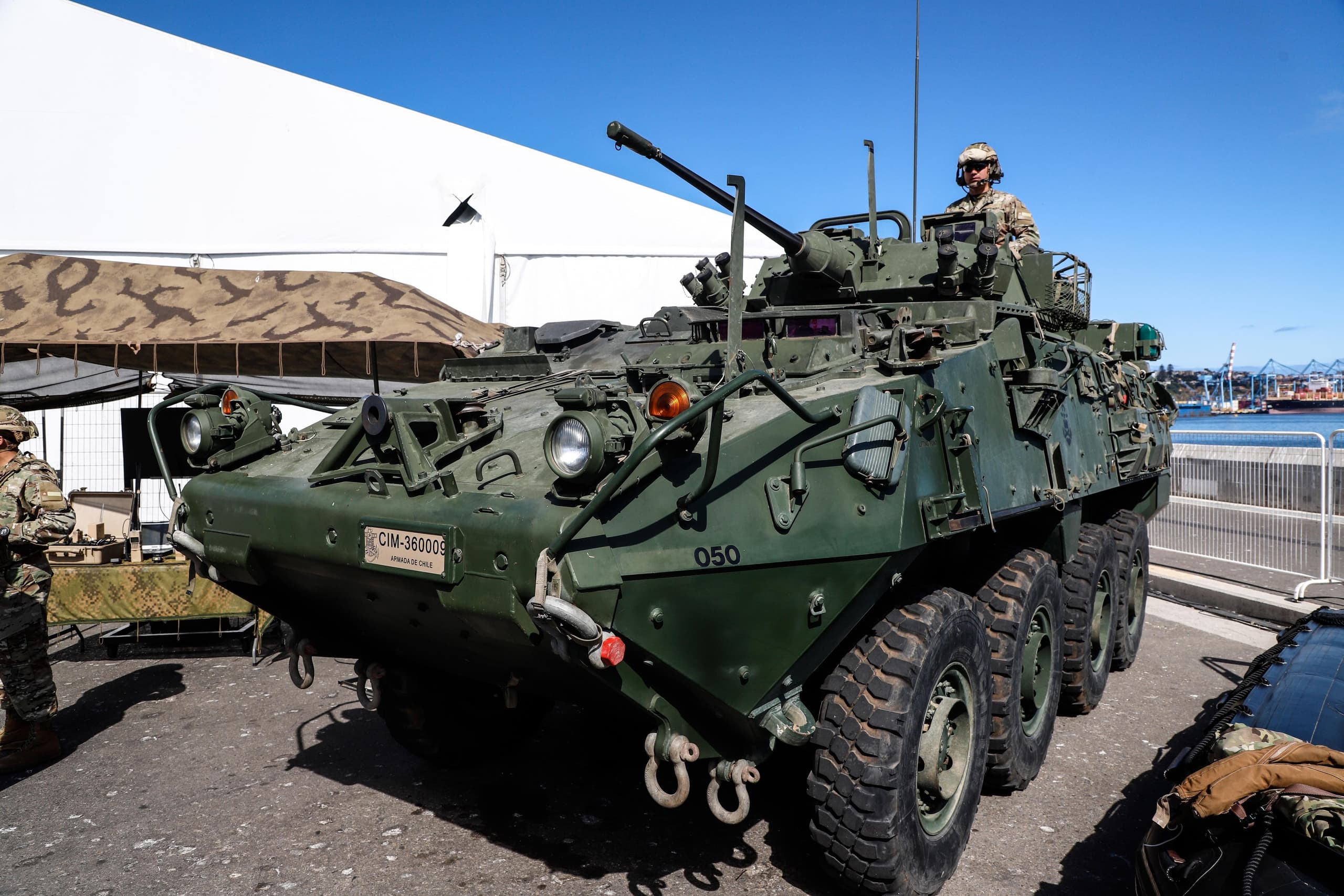
Due to the lack of personnel to man them, 20 NZLAVs were made available for sale as excess to requirements in 2012, with this number increasing in 2019 to 30. 22 of these NZLAVs would be sold to Chile for their Marine Corps in 2022, with eight remaining for sale as of today.
With the unit in Canada for testing, the unit destroyed, the 22 sold to Chile, and the 8 available for sale, 73 units are currently in service, with none out of service waiting for repair. Argentina sought to acquire the rest of the surplus NZLAVs in 2024, however this process is still ongoing.
In 2025, the QAMR would be combined with the Royal New Zealand Infantry Regiment, becoming a motorised infantry battalion, however the sub-unit would keep the QAMR name, and would continue operating the NZLAV.
According to the 2025 NZDF capability review, the NZLAV is specified to be upgraded under the “Near Term Indicative Investments, (2025–2028)”, and replaced under the "Future term Indicative Investments, (2029-2039). There are no specifics available for their replacement as of writing.
| General Characteristics: | |||||||||
|---|---|---|---|---|---|---|---|---|---|
| Name: NZLAV | |||||||||
| Country: New Zealand | |||||||||
| Type: Light Armoured Vehicle | |||||||||
| Year: 2003 | |||||||||
| ----------------------------------------------------------------------------------------------------------------------------------------- | |||||||||
| Dimensions: | |||||||||
| Length: 6.98m (22.9ft) | |||||||||
| Width: 2.83m (9.3ft) | |||||||||
| Height: 3m (9.8ft) | |||||||||
| Base weight: 13,702kg (30,207 lb) | |||||||||
| Combat weight: 16,958kg (37,385 lb) | |||||||||
| ----------------------------------------------------------------------------------------------------------------------------------------- | |||||||||
| Propulsion: | |||||||||
| Powerplant: 1x 350hp (260.9kW) Caterpillar 3126 HEUI | |||||||||
| Transmission: 1x Allison MD 3066 w/ 6 forward and 1 reverse gears | |||||||||
| Speed:109kph (67mph) on road, 70kph (43mph) off road | |||||||||
| Endurance: 200L of diesel giving a 450km (279 miles) range on road | |||||||||
| Wheels: 8x Run flat tyres each w/ Central Tyre Inflation (CTIS) and hydro-pneumatic suspension | |||||||||
| ----------------------------------------------------------------------------------------------------------------------------------------- | |||||||||
| Armament & sensors: | |||||||||
| Compliment: 3 crew, 1x Driver, 1x Gunner, 1x Commander. 7 passengers | |||||||||
| Primary armament: 1x1 stabilised 25mm M242 Bushmaster, 100/200rpm w/ 420 rounds inside the vehicle. | |||||||||
| Secondary armament: 1x1 MAG 58 7.62 MG, (gun coax), 1x1 MAG 58 7.62 MG (pintle on roof) | |||||||||
| Tertiary armament: 2x4 76mm smoke grenade launchers | |||||||||
| Sights: Thermal imaging system (TIS), Gen III Image intensification (II) (NVD), Laser range finder (LRF) | |||||||||
| Other: Laser Warning (LWS), Quiet APU, AFES Fire Suppression in crew, passenger and engine compartments, heat absorbing filters to protect against IR threats. EW equipment also fitted when needed. Dozer blade can also be fitted | |||||||||
| ----------------------------------------------------------------------------------------------------------------------------------------- | |||||||||
| Armour: | |||||||||
| No specific mm values are available for the NZLAV’s armour, however the base armour is specified to be to NATO STANAG 4569 level III standard | |||||||||
| The base armour can be upgraded with extra MEXAS ceramic applique plates and anti IED protection, unlike the Canadian variants of the LAV III, the NZLAV has not been fitted with cage armour |
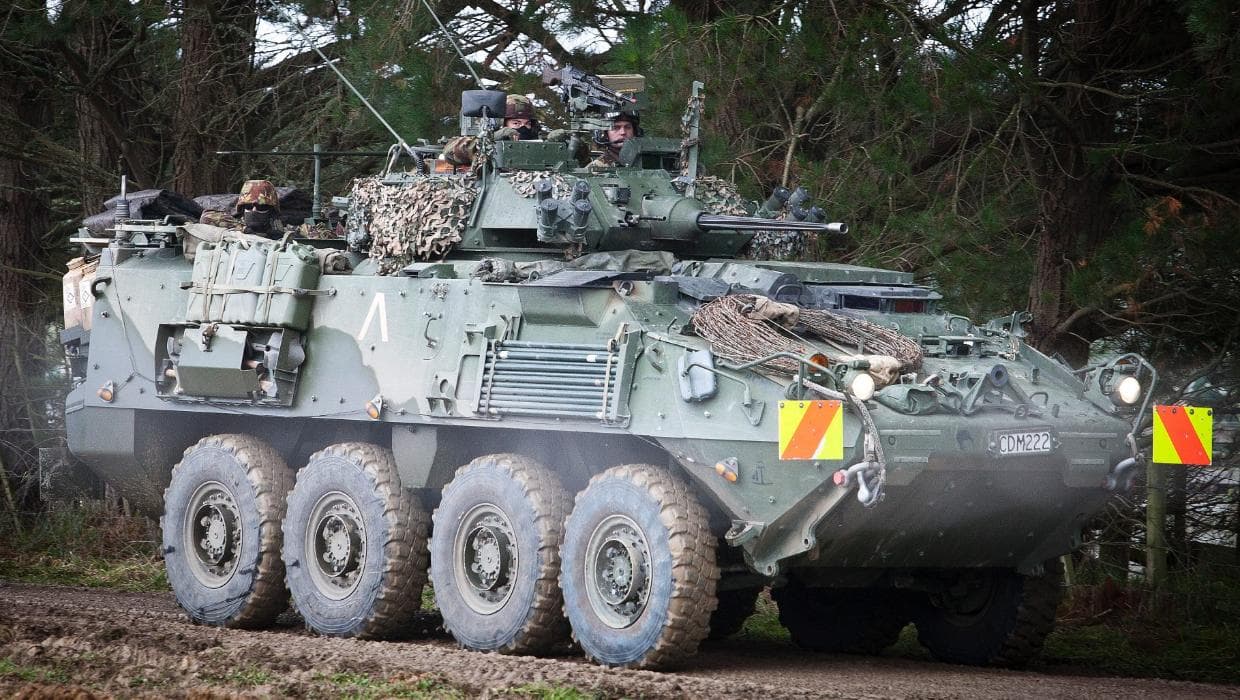
One of two NZLAVs used during the 2009 Napier Shootings.
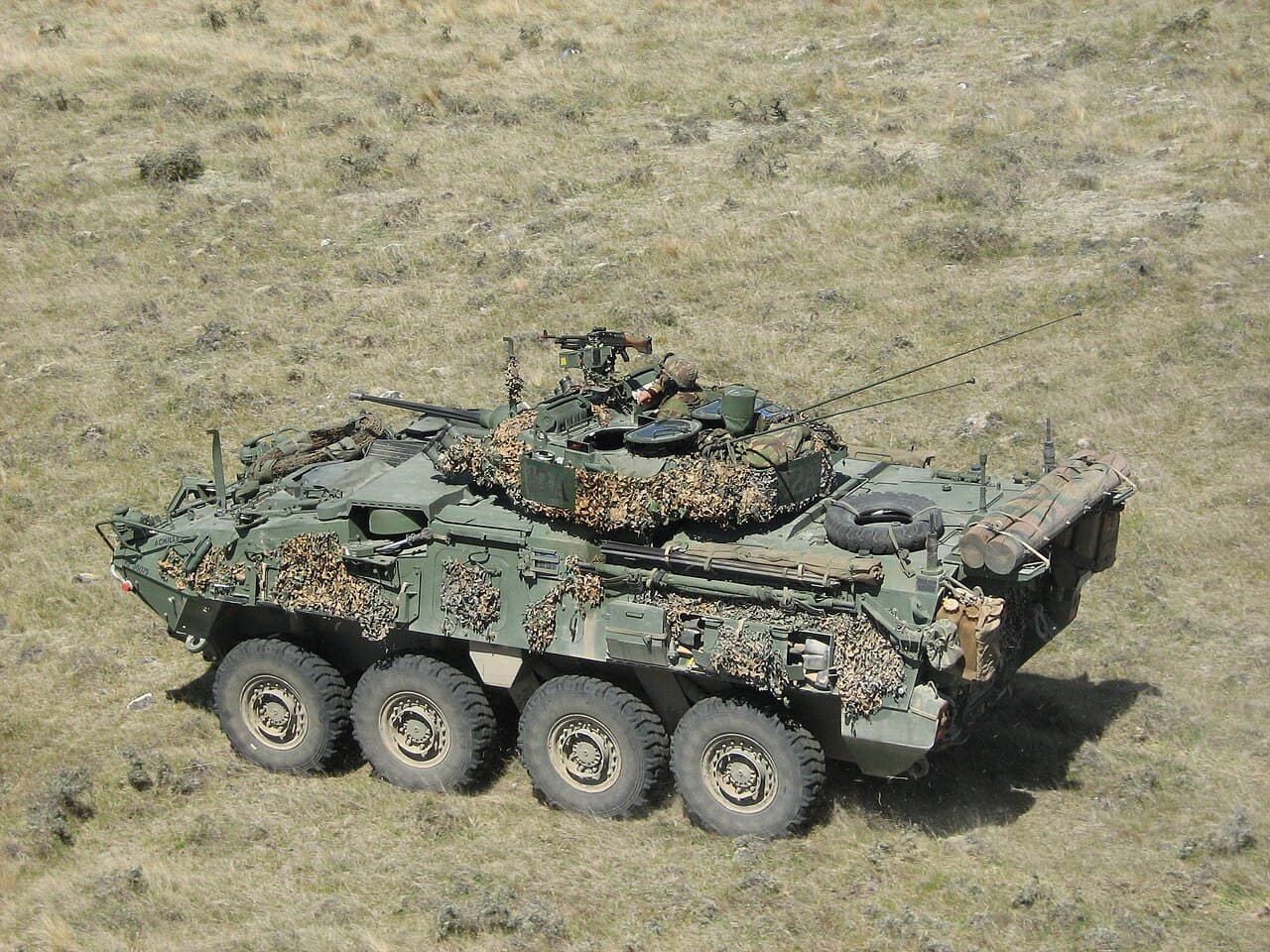
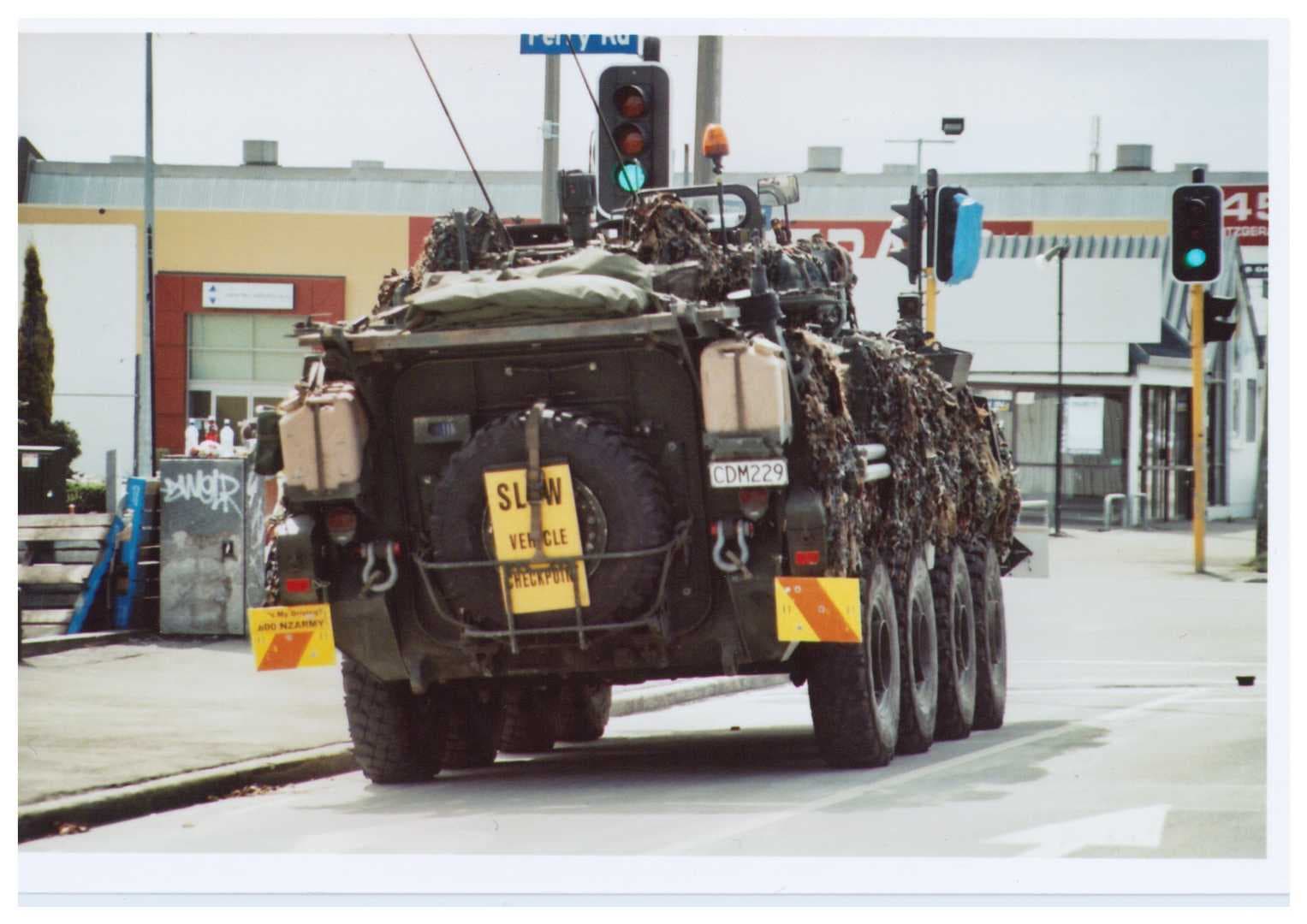
Extra Photos:
Sources:
-Report of the Controller and Auditor-General on MOD acquisition of light armoured vehicles and light operational vehicles, August 2001.
-W01 J. Dawson (2006) Development of the New Zealand Light Armoured Vehicle Company.
-P.Greener (2009) TIMING IS EVERYTHING: The Politics and Processes of New Zealand Defence Acquisition Decision Making (pp.127-146)
2025 NZDF Defence Capability plan
https://international.gdls.com/english/products/LAV/LAV-III.pdf
https://www.nzdf.mil.nz/nzdf/our-equipment/military-vehicles/new-zealand-light-armoured-vehicle-nzlav/
https://www.armsregister.com/arms_register/arms_register_documents/180_nzar_id_180_nz_lav.PDF
LAV III - Wikipedia
https://youtu.be/PBJIKnl1Q2E?si=25ecjc7mctTdQ9Ii
OIA 2022 4482 Hunter response.pdf