- Yes - In the Tech Tree.
- Yes - Event/BP.
- Yes - Premium.
- No - I would not like to see the Kiwi Short Sunderland MR.V in game.
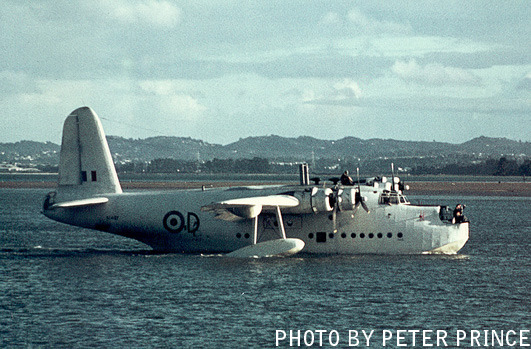
NZ 4115 flying low at Laucala Bay seaplane station, Fiji, 1955

Description:
The Royal New Zealand Air Force (RNZAF) would purchase 16 of the MR.5 Variant of the Short S.25 Sunderland, replacing its older and war worn Mk.III Models in 1951. Although the type was old, this variant being developed in 1944, it was cheap, rugged, easy to maintain, and was a developed platform which the RNZAF already had experience operating. It was also believed that their age would not affect operations in the Pacific, being employed in reconnaissance, escort, and ASW operations, which did not need extreme flight performance.
A flying boat design was chosen over a land based aircraft due to the lack of suitable airfields among the Pacific Islands, allowing RNZAF patrol aircraft to access them without significant infrastructure investment.
The choice to procure the Sunderland Mr.V also allowed the RNZAF to purchase from RAF stocks, reducing price significantly compared to its competitor, the PBM Mariner. The Sunderland’s would cost £7,000 for the airframe, and a further £30,000 for their refurbishment, compared to the cost of $1,000,000 for an equivalent number of the US built PBM Mariner. They would operate with the Serials, NZ 4105 to 4120.
They would mostly be un-armed in RNZAF service, with all guns being unmounted during peace time, however bombs and depth charges were kept on station, and provisions for mounting these guns inside the turrets were kept.
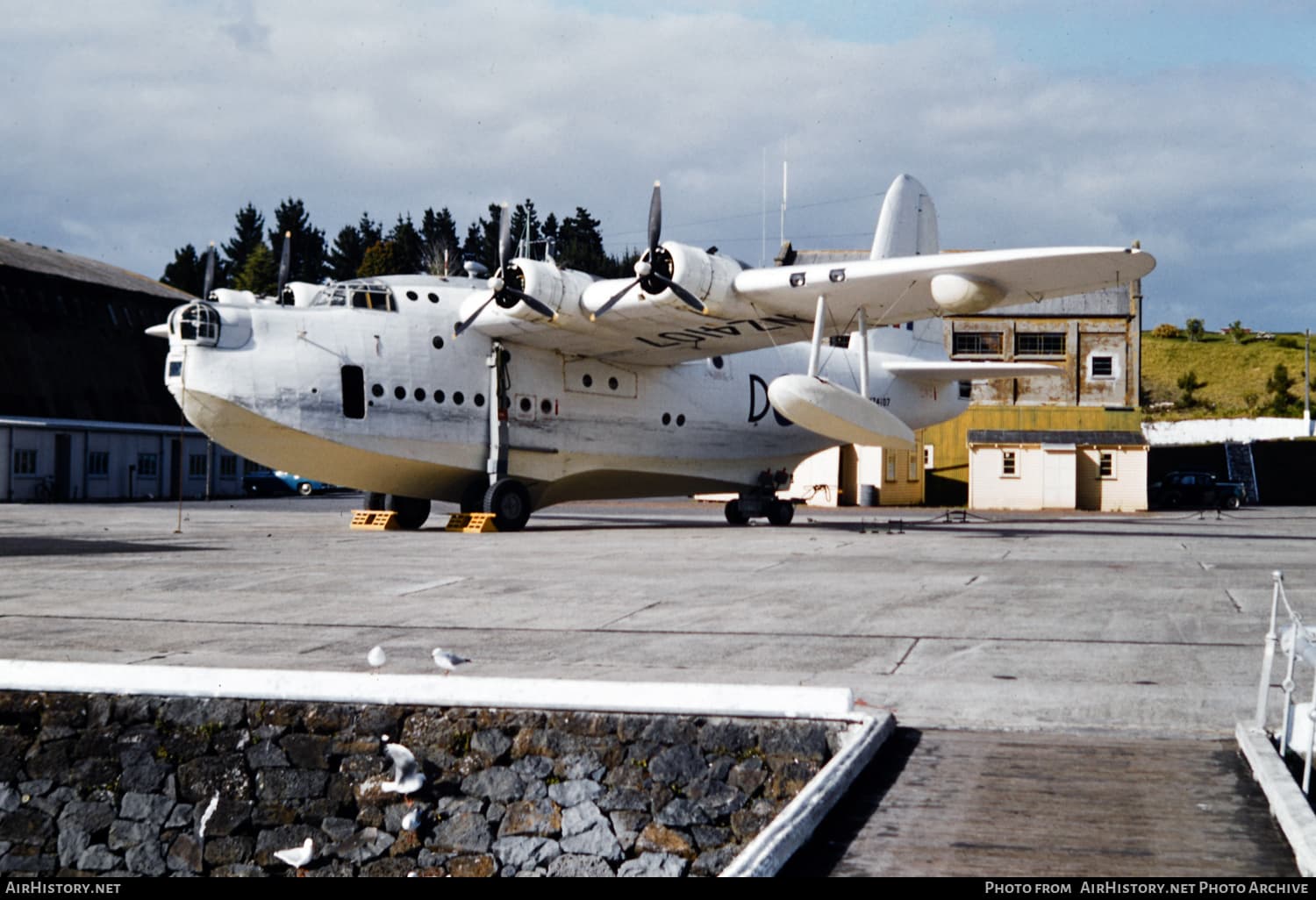
NZ 4107 sitting at Hobsonville seaplane station, 1966
History:
To fix some of the potential issues from sitting for a number of years and combat wear from RAF use, the RNZAF sunderlands would be refurbished at the Short Brother’s facility in Belfast. This would would finish up by 1953, when pilots from No.6 Squadron RNZAF would deliver the aircraft directly to Suva Bay, Fiji, where they would operate during the majority of their tenure with the RNZAF, replacing the PBY Catalina which was operating there until that point.
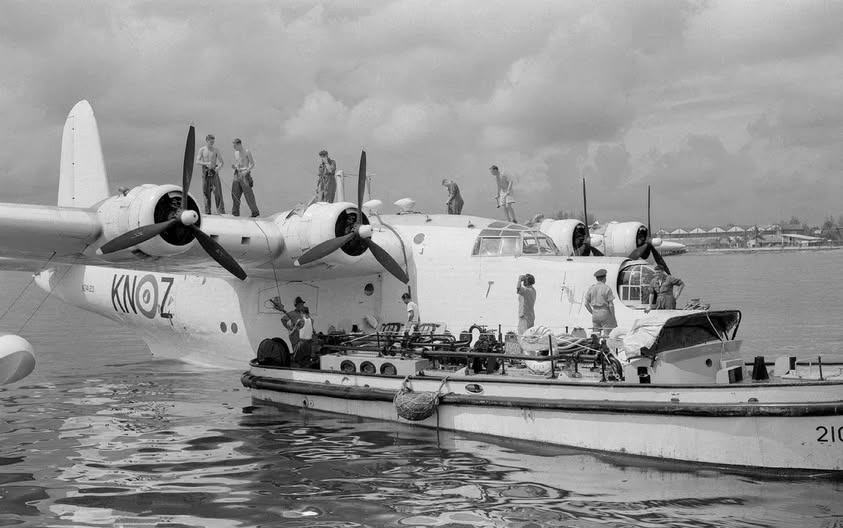
Now at Fiji, the type would equip No.5 Squadron from the 13th of June 1953. At this squadron the Sunderland MR.V would monitor sea channels, perform ASW patrols around the area under the Anglo-New Zealand-Australia-Malaya (ANZAM) agreement, but also search and rescue missions of fishermen and other civilian vessels.
It was a large concern that Russian submarines operating out of Pacific ports could travel to Antarctica, and as such No.5 Squadron Sunderlands would drop Sonar Buoys to track the submarines themselves, with the aircraft directly tracking Soviet surface support vessels. For this their patrol area was massive, totalling 13 million square kilometres, which is just over 3.7 million square nmi, spanning from Tarawa, New Caledonia, Norfolk Island, and Tahiti.
Aside from their normal duties with No.5 Squadron, they would take part in exercises around Singapore, and take part in Operation Grapple, which was part of the British nuclear programme. They would also monitor radiation levels during French nuclear testing in the area.
NZ 4120 soon after landing, 1959
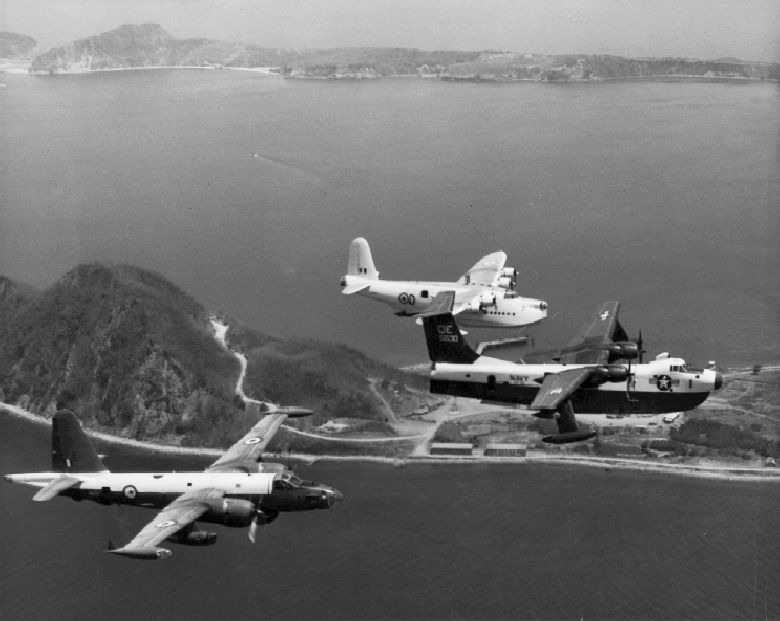
During the initial procurement of the MR.5 for No.5 Squadron, it was also decided to equip the then new Territorial Air Force’s (TAF) No.6 Squadron with the type, which would operate them out of RNZAF Seaplane station Hobsonville. They would mostly be on the same patrol and reconnaissance duties as the No.5 Squadron aircraft, even flying to Laucala Bay to exercise with them every other weekend.
When the TAF disbanded in 1957, just 4 years after the type’s arrival in the TAF, the aircraft would move to the Maritime Operational Conversion Unit (MOCU) of the RNZAF, but again would be based out of Hobsonville. In this unit they would train aircrew for No.5 Squadron in an 14 week long course.
By 1960 the type was severely outdated, which resulted in No.5 squadron struggling to detect modern submarine designs during exercises with the RN and RAAN, and it was decided that they would have to be replaced. This also coincided with many of the Pacific Islands building new runways suitable for land based maritime patrol aircraft. For this role the P-3B Orion was selected in March of 1964, entering service in 1966.
The last flight for the RNZAF’s Sunderland occurred on the 2nd of April 1967, transporting the aircraft to Hobsonville for storage from Fiji. By this time a number of Sunderlands had already been scrapped, notably some of the aircraft at RNZAF station Hobsonville, which all had been placed in storage by 1961 and a further aircraft was sold in 1963 to an airline to replace a damaged Short Sandringham. Three further aircraft were scrapped from 1964 & 65. A single airframe, NZ 4115 was donated to the MOTAT Museum in 1966. By 1967 the last 5 airframes were listed for sale.
There are currently a number of ex-RNZAF Sunderland MR.V survivors;
NZ 4108, which was converted to a Short Sandringham in 1963, and currently sits in a flyable state at the Fantasy of Flight Museum in Polk City, Florida as the N814ML, she last flew in 1996.
NZ 4111 was wrecked off the Chatham Islands in 1959 when she hit rocks on landing. Her fuselage was taken ashore and placed on a farm, she is currently under restoration.
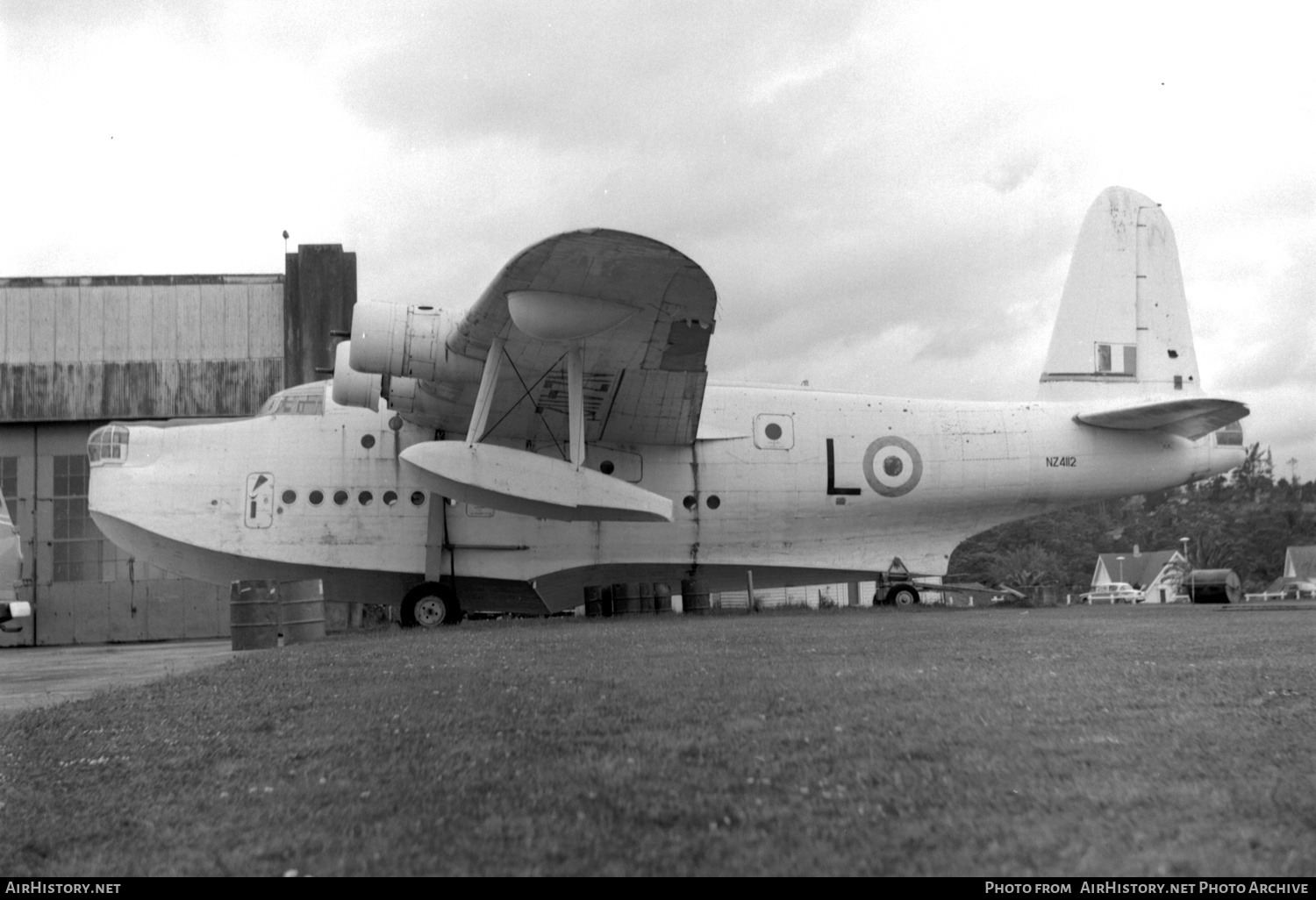
NZ 4112 was sold in 1966 for scrap, with the hull being used as a hulk by the Hobsonville Yacht Club until 1970, when her cockpit was offered to the Ferrymead Aeronautical Society as the council asked for the hulk to be removed. Her cockpit is under restoration, but the hull was scrapped in 1971.
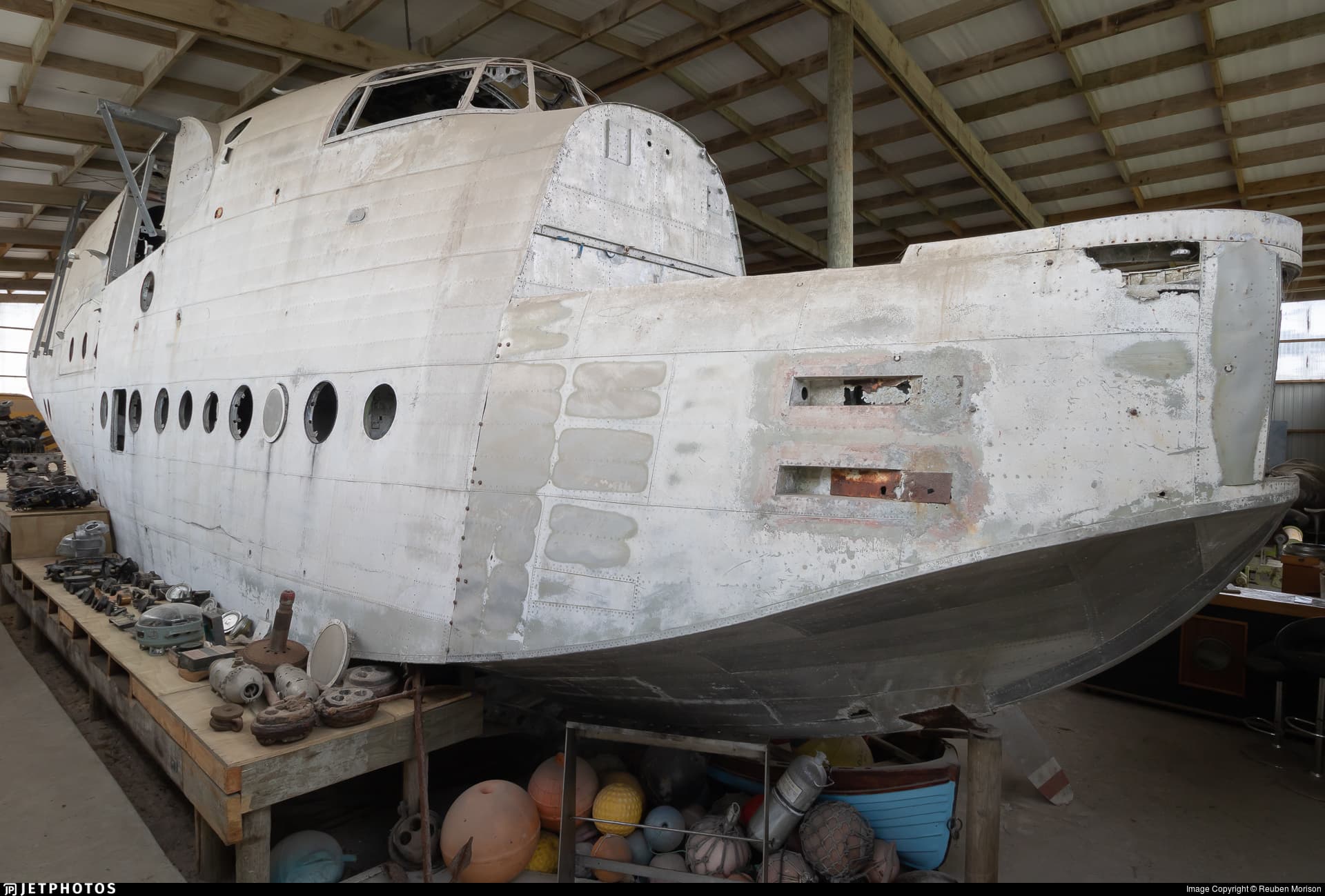
NZ 4115 was gifted to the MOTAT Museum in 1966 as a complete aircraft, she was stored outside for a number of years before being moved inside for a full restoration. She is still undergoing restoration, although it is mostly complete.
| Dimensions: | |||||
|---|---|---|---|---|---|
| ----------------------------------------------------------------------------------------------------------------------------------------- | |||||
| Length: 94ft (28.7m) | |||||
| Height: 32ft 10 1/2in (10m) | |||||
| Wingspan: 113ft (34.4m) | |||||
| Wing area: 1,487 sqft (138 sqm) | |||||
| Weight (Dry) : 18.24 ton (16.55 tonnes) | |||||
| Weight (gross): 27 ton (24.77 tonnes) | |||||
| Crew: 9, Pilot, Copilot, 2x Navigators, 3x Signallers, 2x engineers | |||||
| ----------------------------------------------------------------------------------------------------------------------------------------- | |||||
| Engine performance: | |||||
| Engine: 4x Pratt & Whitney R-1830 Twin Wasp @ 1,200hp (980kW) | |||||
| Fuel: 100/130 Octane | |||||
| Prop: three bladed, constant speed variable pitch | |||||
| ----------------------------------------------------------------------------------------------------------------------------------------- | |||||
| Aerial Performance: | |||||
| Climb Rate (clean): 1,535 ft/m (7.8m/s) | |||||
| Maximum Speed: 250mph (401kph) @ 14,000ft (4,267m) | |||||
| Range: 2,690mi (4,329km) | |||||
| Ceiling: 18,000ft (5,486m) | |||||
| ----------------------------------------------------------------------------------------------------------------------------------------- | |||||
| Armament: | |||||
| Guns: stores for 4x .303 Browning forward, 500rpg, but unmounted | |||||
| Under wing stores: 8x 250lb 4 per wing, or 4x 500lb 2 per wing. Each can be bombs or DCs | |||||
| Turrets: 1x2 .303 Browning fore, 2x1 .303 Browning mid, 2x1 .50 Browning mid, 1x4 .303 Browning tail | |||||
| Radar: ASV Mark VI C |
NZ 4115 sitting the MOTAT Museum during her restoration, 2017

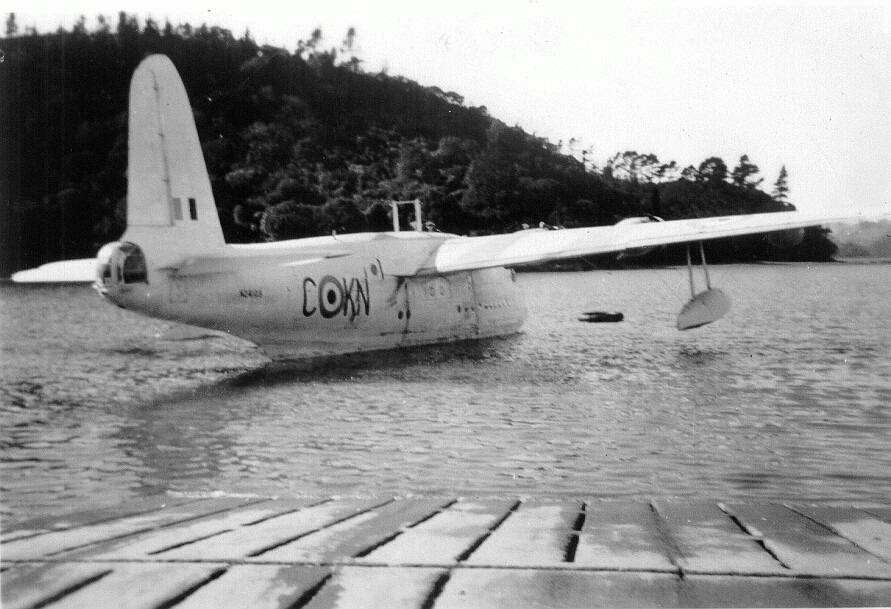
Extra Photos:
Sources:
P.Harrison, B.Lockstone, A.Anderson (1997) The Golden Age of New Zealand Flying Boats (pp.160-180, 241-251, 251-279)
L.Bridgman (1981) Jane’s Fighting Aircraft of World War II (p.137)
http://www.nzdf-serials.co.nz/nzdf-serials/rnzaf-sunderland
Short Sunderland in New Zealand service - Wikipedia
Short Sunderland – Ferrymead Aeronautical Society
https://www.key.aero/article/new-zealands-sunderlands-war-and-peacetime
Short Sunderland | Classic Warbirds