- Yes - In the Tech Tree.
- Yes - Event/BP.
- Yes - Premium.
- Yes - Squadron
- No - I would not like to see Kiwi Hudson Mk.IIIA in game.
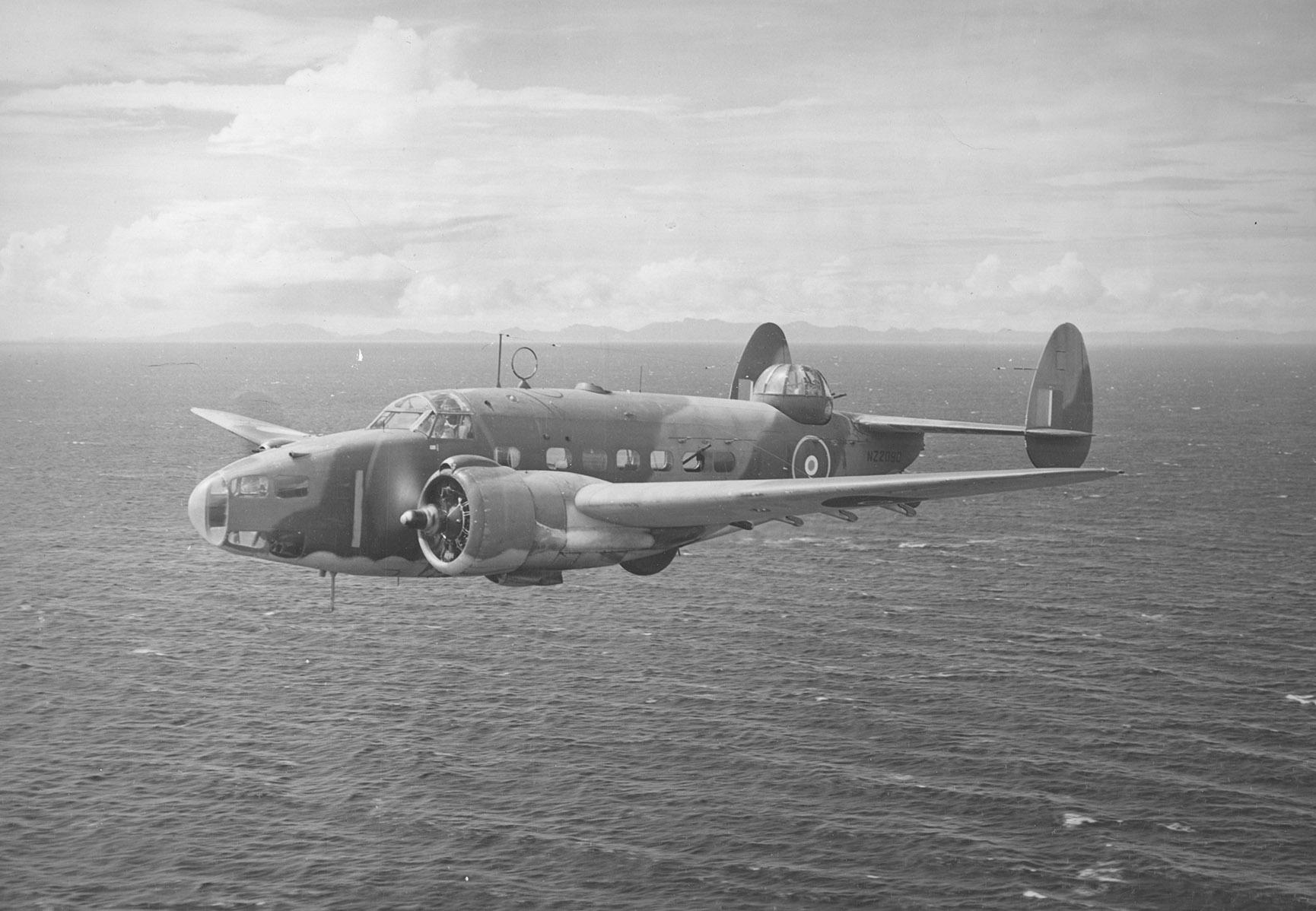
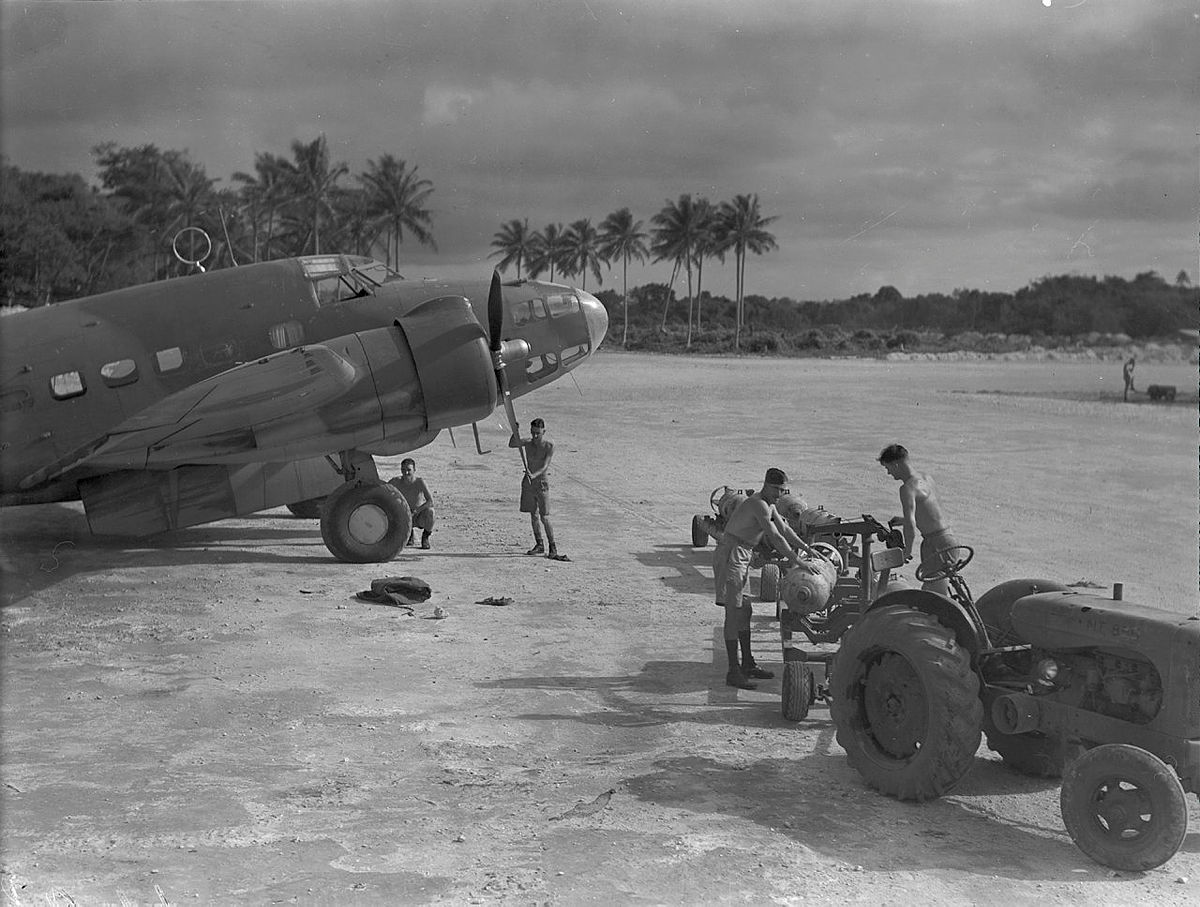
Hudson NZ2090 on patrol around Guadalcanal showing her beam Vickers K guns (1943)
Background:
With New Zealand’s coastal patrol bomber aircraft mostly comprising of three types of Inter-war biplane bombers of ranging performance, between the fast and long ranged Vickers Videbeest and Vincent, the Royal New Zealand Air Force’s (RNZAF’s) choice of patrol bomber aircraft, the slow and short ranged but well armed Blackburn T.8 Baffin, the second rate but still serviceable option, and the Fairey Gordon Mk.1, which was so poor it was relegated to training before 1940, and would only serve as a patrol bomber as a very last option, it was decided that the RNZAF needed a new aircraft to deter German surface Raiders from attacking New Zealand’s waters.
This new aircraft would replace all three types of bombers on the frontline, simplifying logistics with regards to parts, as now the RNZAF would now not need to secure parts for three different airframes, now only needing spares for a single type. Due to the issues encountered with securing shipments from the UK to New Zealand at this time, this aircraft would need to either be locally supplied, which would never produce an aircraft that would fit the requirements due to lacking local industry, or be supplied from the United States, which had a much safer and secure supply route to New Zealand than the UK did.
Although the RNZAF was an independent service from the RAF by 1923, it still relied on requests for new aircraft from the RAF as New Zealand did not have enough funding for their own orders, as such the British Air Board decided that the Hudson aircraft that already had an production line in the US was an ideal aircraft for New Zealand, and gave the RNZAF some of their airframes that were yet to be produced in early 1941.
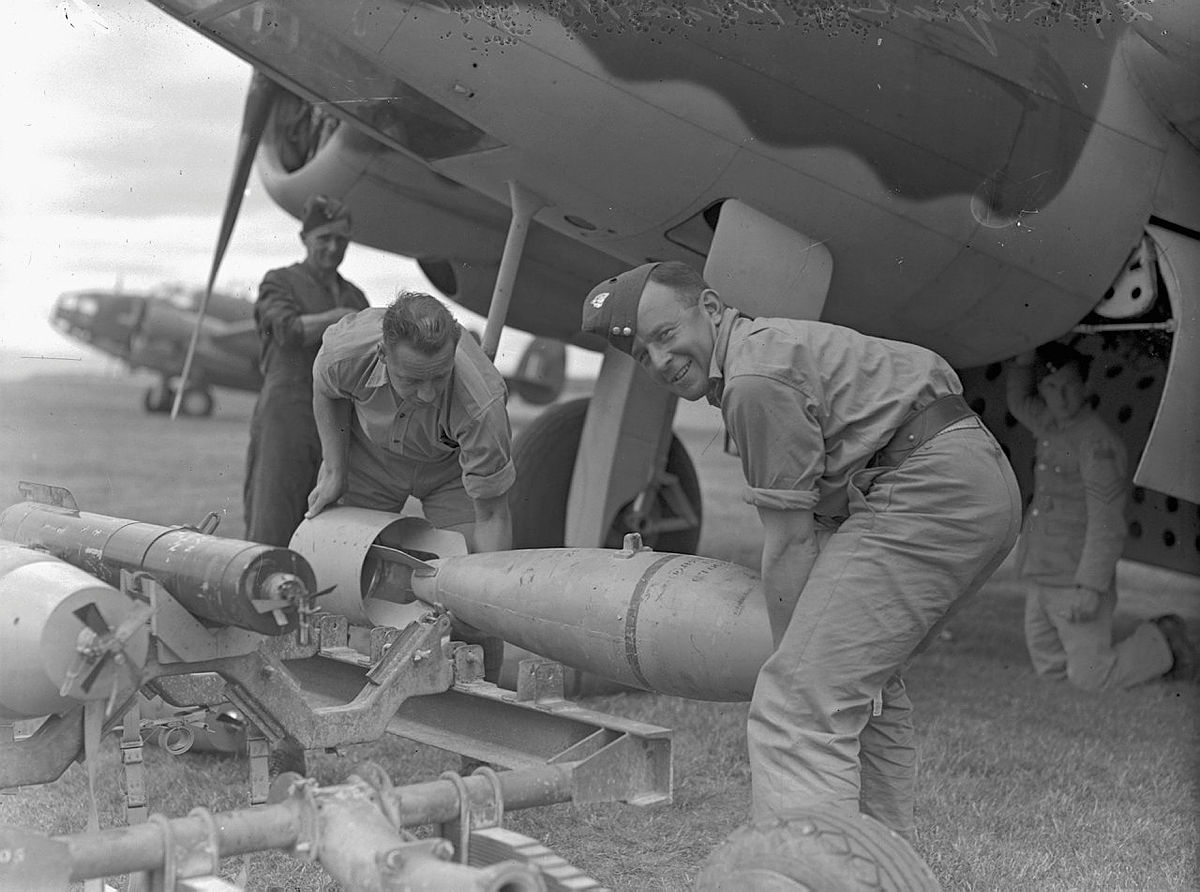
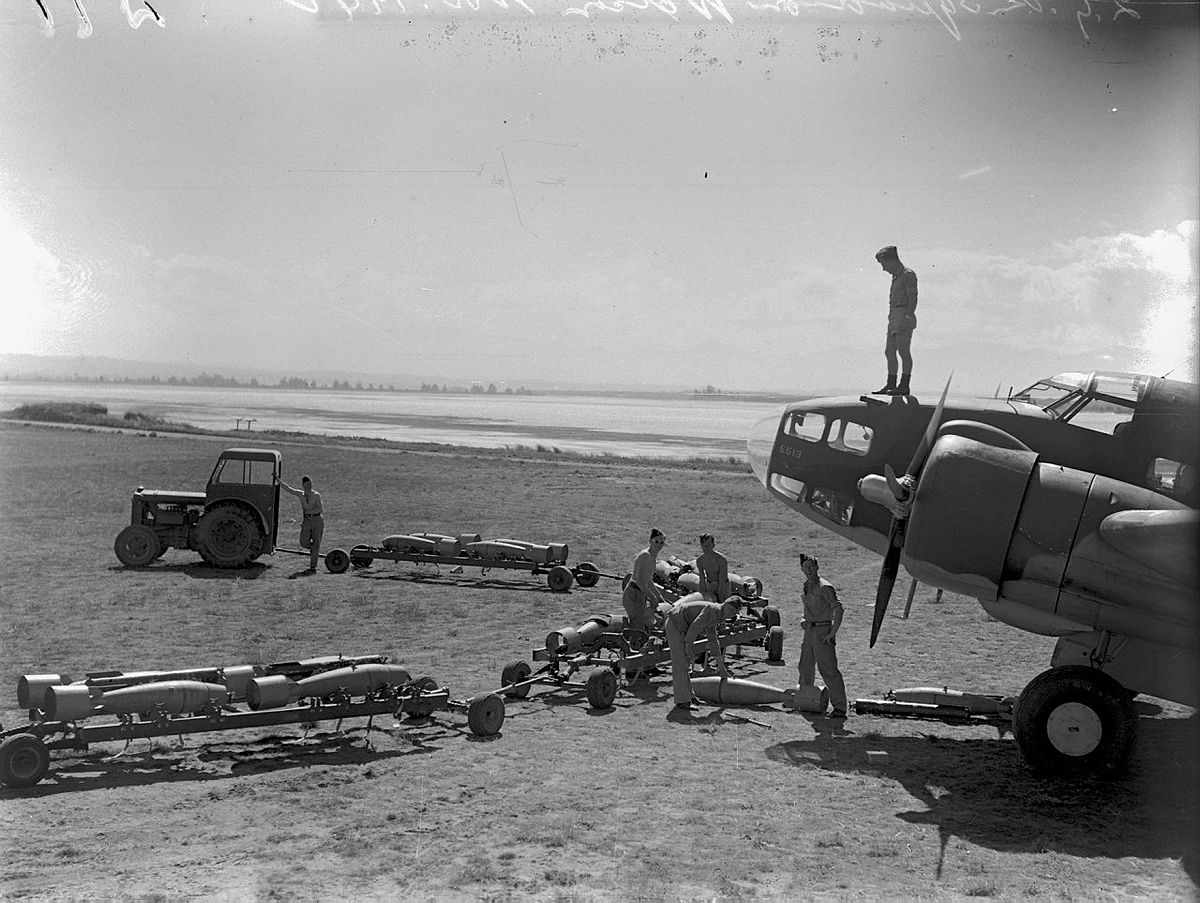
A pair of RNZAF Hudsons loading Heavy Depth Charges in preparation for an ASW patrol, (1943)

History:
Deliveries of the first RNZAF Hudsons would not be of the Mk.IIIA model, but rather the Mk.V. Six of these Mk.V airframes would originally have the RAF serials of AM589-AM594, and would arrive aboard the SS Limerick of the Union Steamship Company by May 1941, and would become operational with the No.1 General Reconnaissance (GR) Squadron out of RNZAF Station Hobsonville by the 3rd of July 1941. These Mk.V airframes would be the only ones of their type shipped to NZ, and would have NZ serials of NZ2001-NZ2006.
Deliveries of the first RNZAF Hudsons would not be of the Mk.IIIA model, but rather the Mk.V. Six of these Mk.V airframes would originally have the RAF serials of AM589-AM594, and would arrive aboard the SS Limerick of the Union Steamship Company by May 1941, and would become operational with the No.1 General Reconnaissance (GR) Squadron out of RNZAF Station Hobsonville by the 3rd of July 1941. These Mk.V airframes would be the only ones of their type shipped to NZ, and would have NZ serials of NZ2001-NZ2006.
Deliveries of the Mk.III would begin in September 1941, again aboard the SS Limerick, with the first 12 arriving by the 18th of September 1941. Simultaneously a further six were shipped aboard the SS Waiotapu of the Union Steamship Company, MV Donerail of the United States Maritime Commission, and SS. Manuel. These shipments would arrive by the 29th of September, 20th of October, and 29th of October 1941 respectively. These aircraft would have the RNZAF serials of NZ2007-NZ2036, formerly having the RAF serials of V9235-V9252 and AE490, AE494-AE504.
The first deliveries of the Mk.IIIA would begin with 13 shipped aboard the Australian merchant vessel MV Kookaburra on the 2nd of April 1942, after the Allied declaration of War on Japan in December 1941. Further shipments would continue to arrive in Zealand aboard the MS Parrakoola (10 arriving on the 27th of April), MS Temeraire (11 arriving on the 7th of May), SS Hororata (12 arriving on the 17th of June), with the final shipments arriving aboard the SS Oliver Hazard Perry, (8 arriving on the 20th of June 1942). This meant that the RNZAF would operate 54 total Mk.IIIA, and would thus be the most common variant of the Hudson within the RNZAF. These aircraft had the serials NZ2037-NZ2090.
Some Mk.VI models would also be shipped to NZ aboard the SS George Mathews (5 arriving on the 3rd of August 1942), unlike all the other aircraft which were direct purchases, these aircraft were sent via the Lend-Lease agreement.
Although RNZAF strength comprised four differing types of Hudson, Mk.III, Mk. IIIA, Mk.V, and Mk.VI, they would operate together within RNZAF squadrons, often simply referred to as Hudsons rather than their model. They would be equipped to No.1 GR, No.2 GR, No.3, No.4, and No.9 squadrons as patrol bomber aircraft, but also to No.40, No.41, and No.42 squadron as transports, as the Mk.IIIA were designed to have their interiors converted into troop compartments. Upon arrival of the Hudsons, the bomber squadrons would be renamed from General Reconnaissance (GR) to Bomber Recon (BR).
Upon request of the New Zealand Air Board to Australia, all of the RNZAF’s Hudsons intended for combat were fitted with a customary Australian practice of beam .303 Vickers K mounts to improve fire power.
Initially all except one of the RNZAF BR squadrons were kept in NZ water for Surface Raider duty, with the exception being No.4 Squadron, which was based out of Fiji where they would support No.5 Squadron that was equipped with the elderly Short Singapore. At this time No.9, No.40, No.41, and No.42 Squadrons were yet to form, and so only No.1, No.2, No.3, and No.4 squadrons were equipped. By early 1942 the RNZAF would begin preparations to join the USAAF in the South Pacific as the threat to NZ by German surface raiders was much overshadowed by the threat of a Japanese foothold in the South Pacific. As such No.9 Squadron was formed with Hudsons in July 1942, this squadron would be based out of Plaine Des Gaiacas Airfield in New Caledonia as part of Task Group 63.1, and would serve in company with the 69th Bomb Squadron and 67th Pursuit Squadron USAAF.
Their use in New Caledonia would be about the same as that in New Zealand however, consisting mostly of patrols of the coastal and shallow waters around New Caledonia, but also some minor air defence roles. From late 1942 as the waters around NZ became more secure due to the increased allied strength in the area, another squadron of Hudsons would be moved north into the frontline. The Squadron chosen for this was No.3 Squadron, moving to Palikulo Bay Airfield on Espiritu Santo Island in the New Hebrides Islands on the 9th of October. They would be joined on the frontline in late 1943 by No.2 Squadron, who moved to Espiritu Santo Island in November 1943 after No.3 Squadron moved to Kukum Field, in Guadalcanal itself earlier in October 1943. No.1 Squadron would join No.3 Squadron at Kukum Field from October to November 1943, but would move to New Georgia by December.
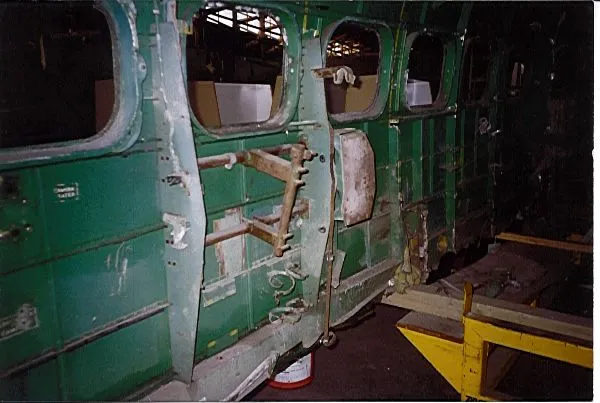
Mounting bracket for the port Vickers K gun that was fitted after their delivery to the RNZAF, this photo was taken during the restoration of NZ2013 during the mid 1990s
With the need for logistical support around both New Zealand and the area that the RNZAF was deployed to in the South Pacific, No.40 and No.41 Squadrons would be drawn up in June 1943 and early 1944 respectively, with No.42 Squadron being formed in December 1943 for VIP transport and communication. These squadrons would use the Hudson Mk.IIIA after a small conversion into a transport, but also the Hudson’s cousin, the C-60 Lodestar, which the RNZAF received nine of thanks to US Lend Lease efforts. A number of airframes were also assigned to the No.1 Operational Training Unit (OTU), with these airframes being taken off the strength of other squadrons.
During their operational time in the South Pacific, a number of encounters with enemy aircraft occurred. On the 23rd of November 1932, Hudson Mk.IIIA NZ2049 piloted by Flying Officer George Gudsell, was intercepted by three Japanese floatplane fighter aircraft after spotting an enemy convoy near Vella Lavella. This led to a small dogfight between the aircraft, with NZ2049 maneuvering skillfully at under 50ft of altitude, and escaping with no casualties or damage to itself. Only two aircraft were shot down by Japanese fighters, these being the Mk.III NZ2033 of No.3 Squadron, which was shot down near the Shortland Islands on the 13th of July 1943, and Mk.III NZ2021 again of No.3 Squadron. This aircraft was shot down by eight Japanese fighters off Vella Lavella on the 24th of July 1943. NZ2037 would be intercepted by a Zero on the 6th of March 1943, with neither aircraft scoring hits, both returning back to base intact. NZ2054 would fail to return from a patrol on the 18th of December 1942, but would be found in August 1945 near a Japanese seaplane base.
Aside from direct combat losses, many aircraft would crash or be otherwise written off due to dangerous conditions often in night time operations. These were;
- NZ2005 would crash into a cliff near New Plymouth on the 25th of January 1943.
- NZ2047, NZ2002, would be written off thanks to collisions with Kittyhawks on landing
- NZ2006, NZ2009, NZ2055, NZ2064, NZ2088, NZ2093 would crash during takeoff
- NZ2004, NZ2012, NZ2023, NZ2024, NZ2041, NZ2050, NZ2051, NZ2052, NZ2061, NZ2062, NZ2074 would crash on landing
- NZ2014 would have her Depth Charges explode on takeoff in July 1942, a fate shared with NZ2019.
- NZ2025 would run out of fuel on patrol and would ditch into the sea.
- NZ2029, NZ2034, NZ2077 would crash when flying low
- NZ2046, NZ2048 would be scrapped due to stressed mainframes and skin wrinkles on upper surfaces.
- NZ2057, NZ2081 would be scrapped due to deterioration.
- NZ2066, NZ2065, NZ2007, NZ2028, NZ2044 would disappear while on patrol.
A number of these damaged aircraft were converted into instructional airframes, and the rest were converted into scrap and spare parts, while the airframes that crashed in the South Pacific area remained where they landed. Several airworthy aircraft were converted into the C-63 transport aircraft, and had their turrets removed.
By Late 1943 these aircraft were becoming obsolete, and plans were made to replace them on frontline service with the PV-1 Ventura and some RB-34s. This came to being in early 1944, with Hudsons being placed in their Squadron’s reserves, in No.1, No.2, No.3, No.4, and No.9 Squadrons, but remaining in full active service in No.40, No.41, and No.42 squadrons.
In November 1945 the RNZAF signaled to the USAAF that the three remaining Lend Lease Hudson Mk.VI would be offered to return, but this was refused. Instead they would be sold by tender from the Rukuhia storage area to anybody that wanted to purchase one. At this point, almost every aircraft would be placed in storage, but the RNZAF kept three for Air-Sea rescue, one for photography, and seven for training. These aircraft would be placed into the Rukuhia storage area by mid 1949, with the final five being sold in November 1951, ending their RNZAF service.
Due to the large amount of aircraft sold to civilians post war, there are a number of surviving RNZAF Hudsons, these are the NZ2013 (Mk.III), NZ2031(Mk.III), NZ2035 (Mk.III), NZ2049 (MK.IIIA), and NZ2084 (Mk.IIIA).
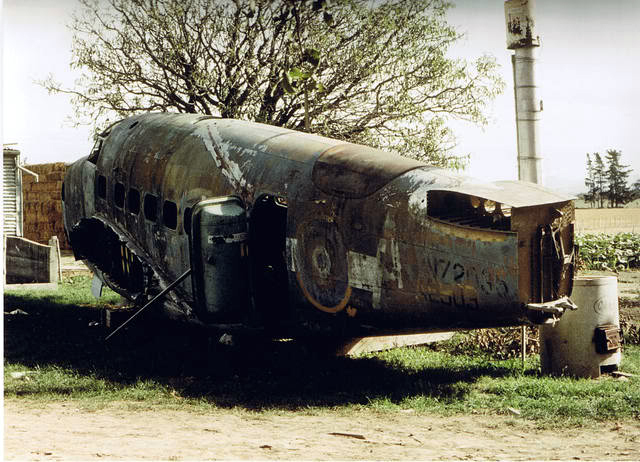
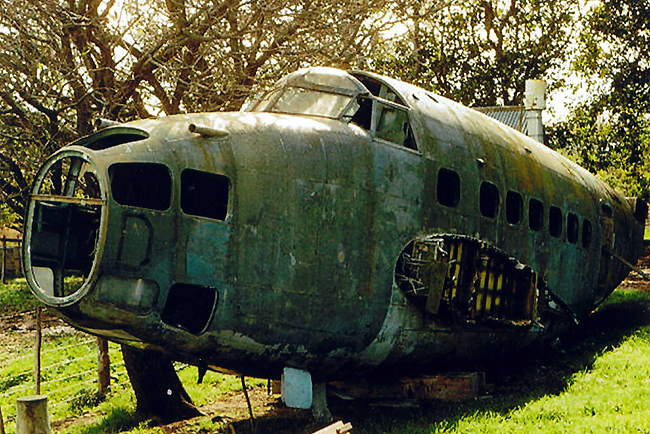
NZ2013 would be sold post war for use as a hen-house, where it was displayed on the roadside until 1982, when the owner listed it for sale as a restoration job. Money would be raised by the NZ Air Training Corp (later the air cadets) in 1984, and it would be recovered from the farm it was sitting in. By 1985 the restoration moved to Wigram, completing in 1996 for display at the RNZAF Museum in her own colours.
NZ2031 would be converted into a C-63 transport aircraft sometime during her RNZAF service, but would be sold post for use as a shed, with the wings being torched off and scrapped. It was donated to MOTAT in 1966, and would be airlifted to Auckland for restoration by a RNZAF C-130. Restoration was mostly complete by 1984 using the wings and parts of the tail off a C-60 Lodestar. This restoration was complete sometime in the early 2000’s, and she is in an early war scheme, although she is still missing her turret.
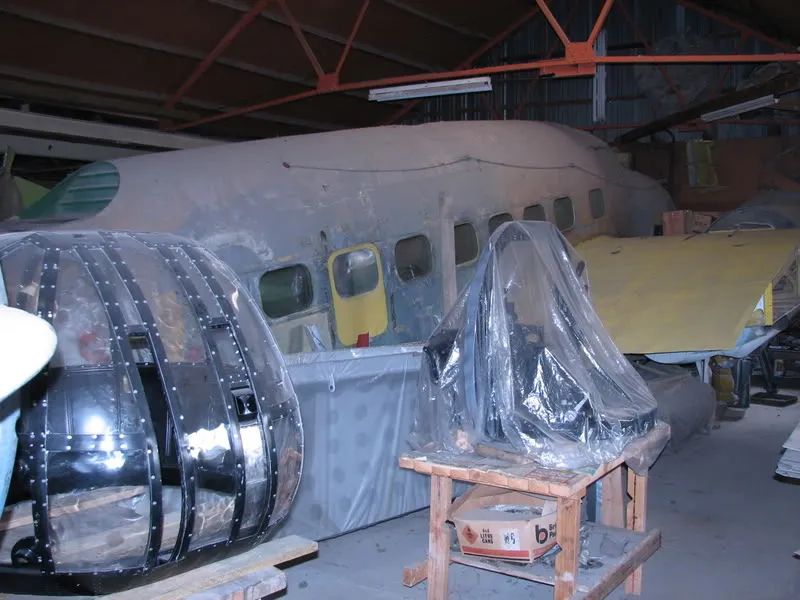
NZ2035 would be sold post war for use, for what purpose is unclear, but would be placed at Dillon’s Point, near Blenheim. This airframe would be loaned to the Marlborough Museum of Flight in the early 1970’s, however in 1973 this Museum would close, and the aircraft would return to it’s owners. It was airlifted by C-130 when it was sold to the Ferrymead Aeronautical Society for restoration, and placed at RNZAF Base Woodbourne for storage. While staying here her steering control wheel was stolen. Parts of other more derelict Hudsons are being used in the restoration of NZ2035, which is still ongoing. These include the wing centre sections and one outer wing from NZ2039.
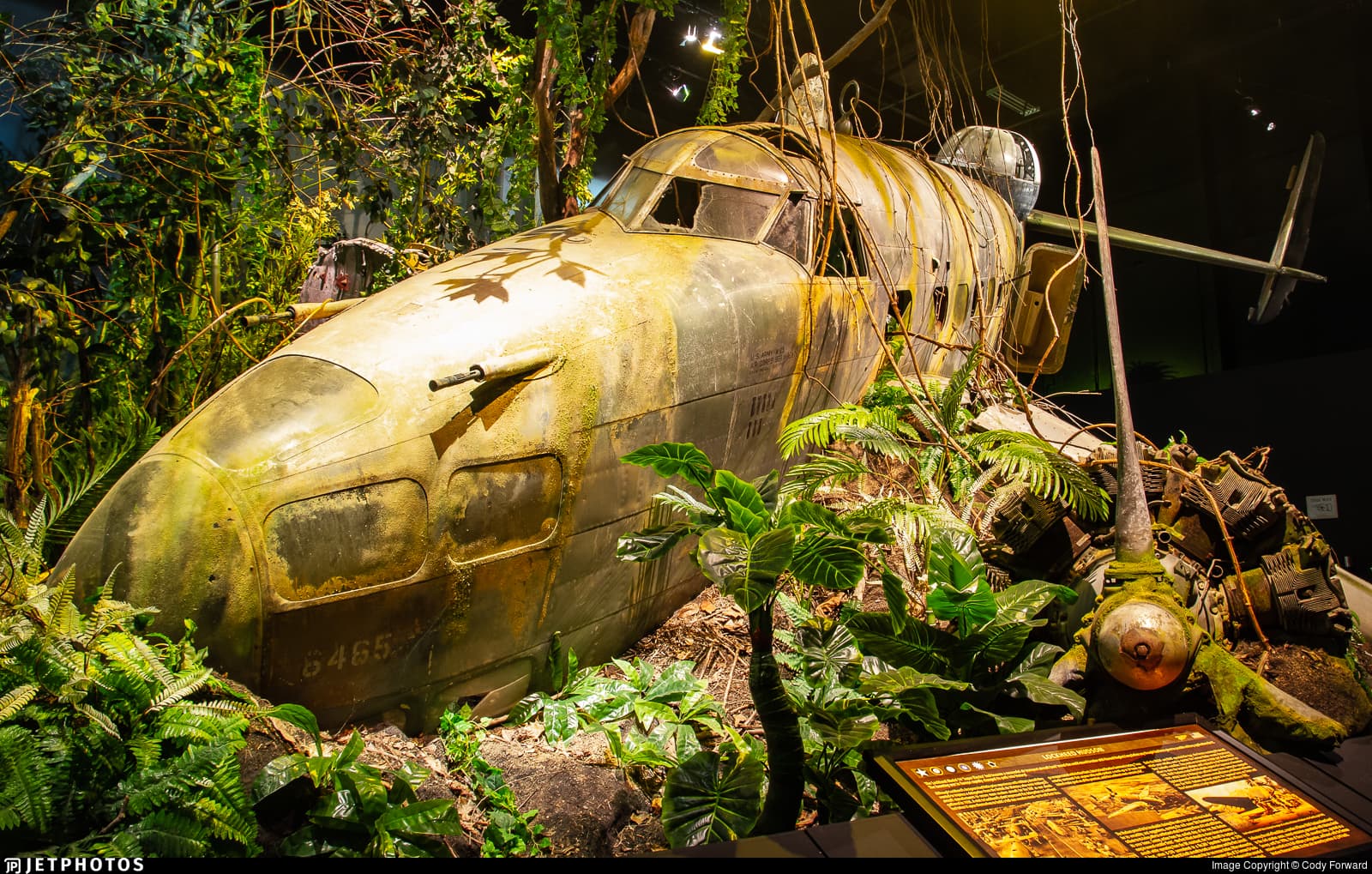
NZ2049 would be sold post war to a farmer for display with RB-34 NZ4600, being sold again sometime in the 1970s to another collector. By 2007 she was sold again for restoration under a private owner. This aircraft was restored sometime in the 2010s as a static display of a crashed aircraft at the Omaka Aviation Hermitage centre.
NZ2084 was sold post war for display, being sold in the 1960s again for display, however, by the mid 1980s it was purchased and used as a prop in the 1980 television series “The Sea Urchins”, where it was sunk underwater. After filming the scene it was recovered and donated to the RNZAF Museum. Here it was used as a guide for the restoration of the NZ2013, and upon that project’s completion would be sold to one Nigel Wilcox, where it remains in private hands to this day.
There are also a number of unidentified Hudson remains, a top Section at RNZAF Ohakea Museum, a Door Section owned by Nigel Wilcox and a caravan constructed out of the fuselage of a Hudson which is now a mobile coffee shop in Queenstown. There are also several wrecks around New Zealand and the South Pacific area where they operated.
| Dimensions: | |||||
|---|---|---|---|---|---|
| ----------------------------------------------------------------------------------------------------------------------------------------- | |||||
| Length: 44ft 4in (13.51m) | |||||
| Wing Span: 65ft 6in (19.96m) | |||||
| Height: 11ft 10in (3.61m) | |||||
| Weight (dry): 13,195lb (5,985kg) | |||||
| Weight (gross): 18,500lb (8,391kg) | |||||
| Wing Area: 551sqft (51.2sqm) | |||||
| Crew: 5 standard, up to 7 with beam guns fitted | |||||
| ----------------------------------------------------------------------------------------------------------------------------------------- | |||||
| Engine Performance: | |||||
| Engine: 2x Wright Cyclone GR-1820-G205A radial engines @ 1,200hp (894kW) takeoff power ea | |||||
| Fuel: 100/130 Octane | |||||
| Prop: Three bladed, constant speed variable pitch | |||||
| ----------------------------------------------------------------------------------------------------------------------------------------- | |||||
| Aerial Performance: | |||||
| Climb Rate: 2,160ft/min (658m/min) | |||||
| Wing Loading: 33.6lb/sqft (163.9kg/sqm) | |||||
| Maximum Speed (clean): 284mph @ 15,000ft (457kph @ 4,570m) | |||||
| Ceiling: 27,000ft (8,230m) | |||||
| Endurance (clean): 2,160mi (3,475km) | |||||
| ----------------------------------------------------------------------------------------------------------------------------------------- | |||||
| Armament: | |||||
| Fixed Armament: 2x .303 Browning MGs fixed in nose | |||||
| Turret Armament: 2x .303 Browning MG in Boulton-Paul turret, 1x .303 Vickers K MGs on each beam, 1x .303 Browning in retractable ventral turret. | |||||
| Bomb stores: 250lb GP or SAP bombs, (up to four), or 100lb GP bombs (up to ten) all in bomb bay | |||||
| Depth Charge Stores: 250lb Depth Charges (up to four) all in bomb bay | |||||
| Other: F24 Aerial Camera, 5.5" Aerial flares |
Surviving Hudson, NZ2013, at the Royal New Zealand Air Force Museum, Wigram, (2018)

Extra Photos:


Sources:
Archives New Zealand Code: R22351827, Series Code:17406 - Papers relating to the winding-up of lease-lend - Disposal of aircraft, November 1945 to May 1946
D.Duxbury, R.Ewing, R.Macpherson (1987) Aircraft of the Royal New Zealand Air Force (p.43)
P.Cooke (2000), Defending New Zealand, Ramparts on the Sea 1840-1950s (p.253, 264-266)
F. René (1988) Lockheed Aircraft since 1913, (p.150-160)
https://adf-serials.com/nzdf-serials/rnzaf-hudson
https://airforcemuseum.co.nz/aircraft/lockheed-hudson-mkiii/
RNZAF Lockheed Hudson Survivors
https://collection.motat.nz/objects/23/aircraft-lockheed-model-414-hudson-gr-mk-iii
Lockheed Hudson - Wikipedia
https://rnzaf.proboards.com/thread/28054/hudson-side-guns
https://www.kiwiaircraftimages.com/aviation.html
https://ferrymeadaero.org.nz/about/lockheed-hudson-nz2035/