- Yes - In the Tech Tree.
- Yes - Event/BP.
- Yes - Premium.
- No - I would not like to see the Grebe in game.
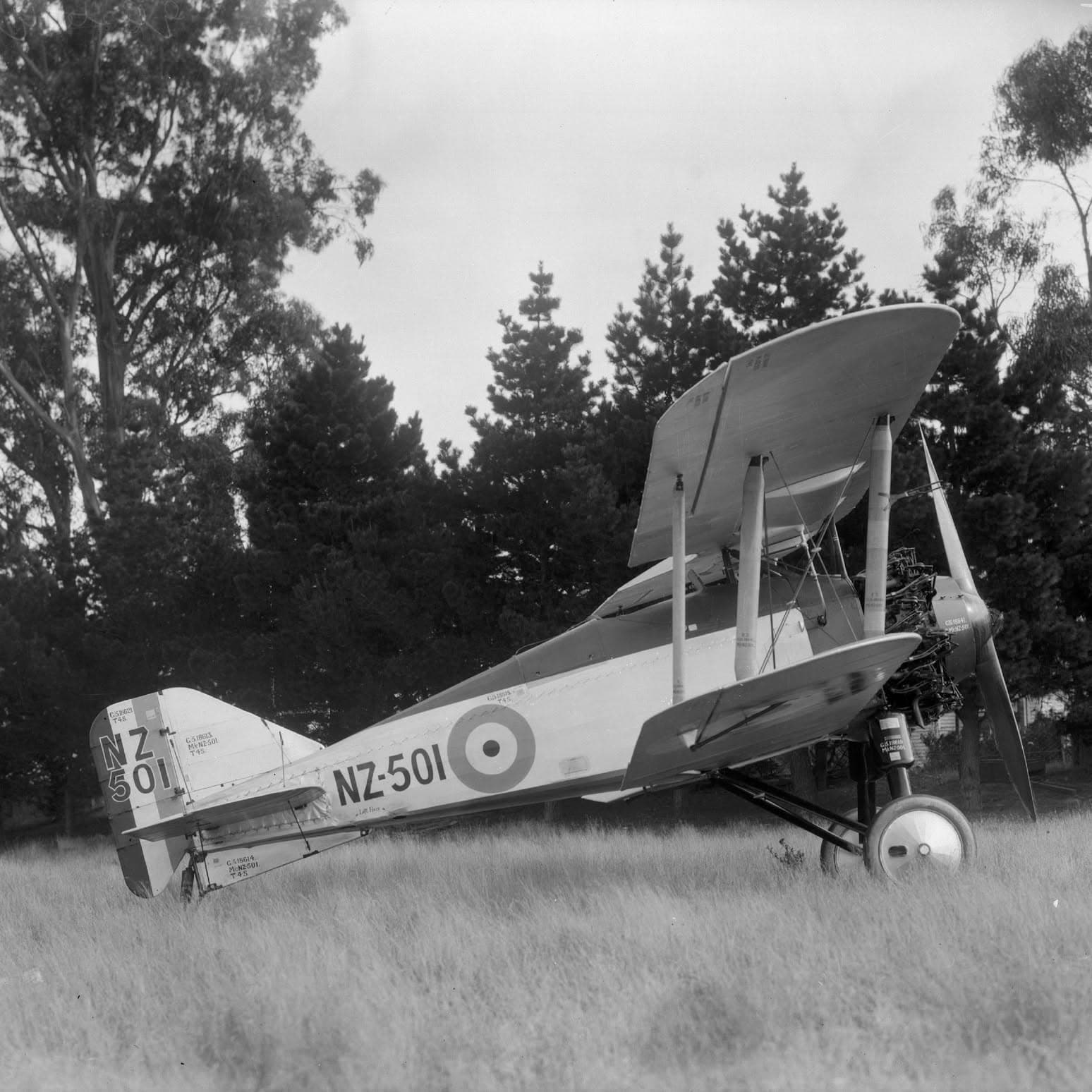
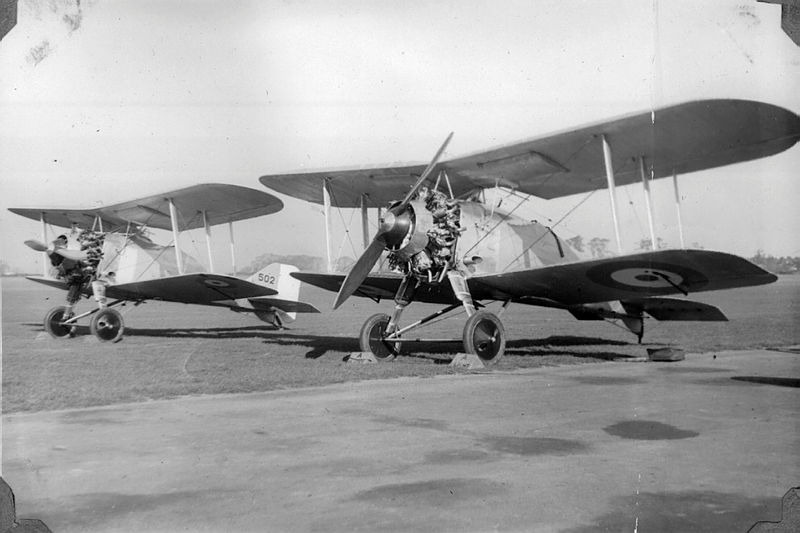
NZ501 sitting in a field at Wigram, probably during demonstration to public, (early 1930s)
Description:
From the end of the First World War, the New Zealand Government did not recognise the importance of military air power, storing the 33 Avro 504s, Bristol F.2Bs, and Airco DH.4s & DH.9s gifted to the Dominion by the British, stay in their shipping crates, or loaning them out for civilian use.
This would change in 1923, thanks to Sir Henry Wigram, who would gift Sockburn airfield to the government for military use, along with a large £10,000 donation for aviation assets. The force raised for operations out of this field would be the New Zealand Permanent Air Force (NZPAF), being established in June 1923. They would operate the old Imperial Gift aircraft as well as a few new-build Bristol F.2Bs and Avro 504s.
However by 1926 these aircraft would be hopelessly obsolete and worn, and with the government again reluctant to invest in aviation, Sir Henry Wigram would again donate funds, with a donation of £2,500 for the purchase of three new fighter aircraft.
Two standard Gloster Grebe Mk.IIs and a single dual control Mk.IIDC would be purchased for this purpose.
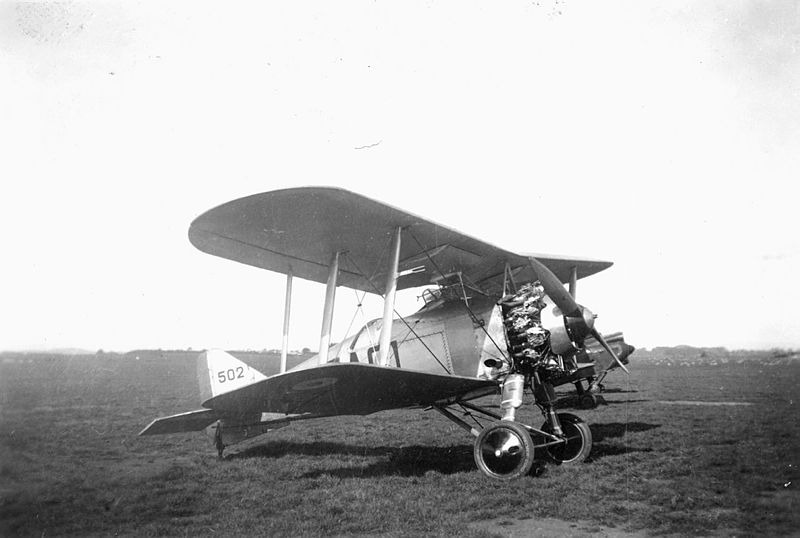
NZ502 at RNZAF Station Wigram, (1937)
History:
The three aircraft purchased would be all ex RAF airframes all having previous service and a little wear. These would be the NZ501, former J7381, NZ502, former J7394, and the dual control airframe formerly having the number J7400, but now carried NZ503. This airframe was one of the airframes modified into a parasite fighter for use with airships as part of RAF trials, however was converted into a training airframe before being supplied to the NZPAF.
All airframes would be purchased in 1927, arriving individually through mid to late 1928, NZ501 was the first airframe to arrive, making its first flight on the 2nd of March 1928. NZ502 and NZ503 both flew on the 23rd of September the same year.
They would serve almost entirely out of Wigram airfield in Christchurch, formerly Sockburn airfield, being renamed in honour of Sir Henry Wigram, who donated both the airfield and these Grebes to the NZPAF. They would however venture outside of their home field for public displays, notably at Rongotai and Blenheim.
These public displays would drive public support for further investment into the NZPAF, with displays continuing through their peacetime service. NZ501 and NZ502 would escort the famous Fokker F.VII Trimotor ‘Southern Cross’ inside New Zealand airspace when that aircraft made the first non stop Trans-Tasman flight from Australia to New Zealand in 1928.
NZ501 would also hold the airspeed record for Blenheim and Wigram for some time
NZ502 would be damaged upon takeoff on the 15th of November 1929 at Blenheim, when the controls suddenly stopped responding. The starboard wing would hit the ground before the aircraft nosedived and pitched over. The pilot, Pilot Captain M Buckley, was unharmed, and the airframe was trucked to Wigram for repairs, which would only complete in mid 1931.
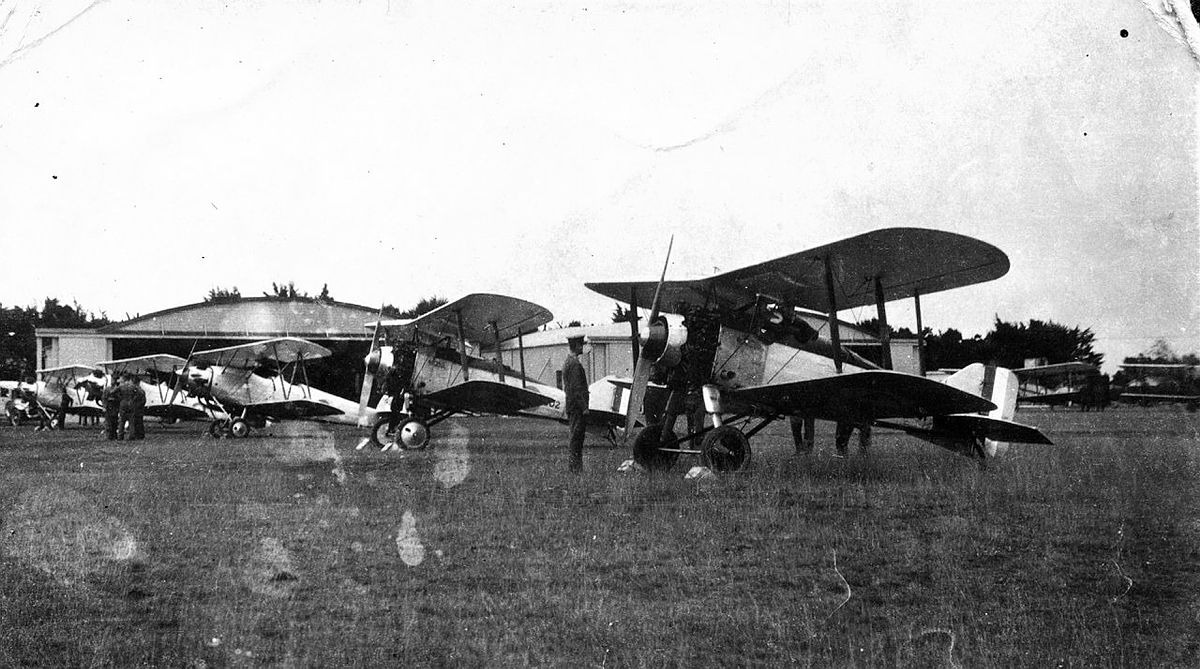
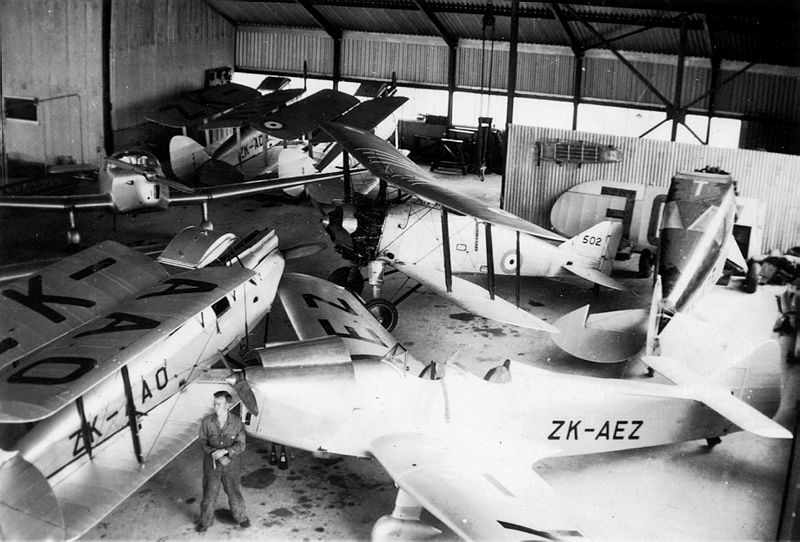
NZ501 and 502 (foreground) at RNZAF station Wigram, next to three Hawker Tomtits and two Bristol F.2bs (1935)
NZ503 would be the first airframe to be written off, crashing into an orchard at Hornby, near Christchurch on the 8th of August 1932. The aircraft supposedly suddenly dived from 1000ft into the ground. The pilot, Squadron Leader J. Findlay, and the observer, Aircraftman J. Simpson, were both injured, however survived. The airframe did not, with instruments, guns, and the rear fuselage being salvaged from the crash.
Around this time the aircraft would lose the NZ prefix to their serial, becoming simply 501, 502, however they would keep the NZ prefix in reports. A large new number was added to the fuselage, with 501 being coded as A-5, and 502 as A-6.
NZ501 and 502 were still in active service when King George V granted ‘Royal’ Status to the New Zealand Permanent Air Force, becoming the Royal New Zealand Air Force (RNZAF) in 1934.
Now in RNZAF service, both NZ501 & 502 would continue the same service as with the NZPAF, including public displays. Both aircraft would partake in the RNZAF’s first airshow at Rongotai on the 4th of June 1938, however this was to be their last.
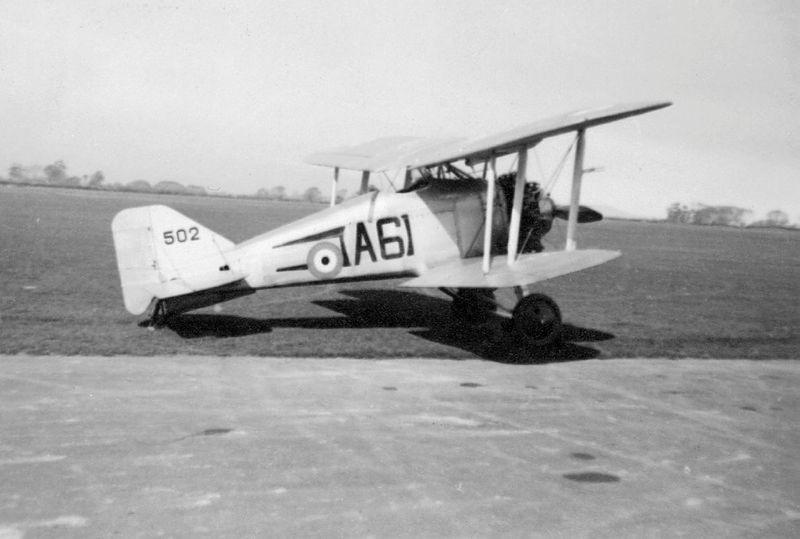
They would be withdrawn from active service in November 1938, being transported to Hobsonville for use as an instructional airframe. They would stay here upon the outbreak of the Second World War in September 1939, and with the creation of the INST numbering system for instructional airframes in 1940, NZ501 became INST1, and NZ502 became INST3. INST2 was the Fairey IIIM NZ631.
They would not be replaced by another fighter aircraft at this time, as there was very little air threat from Germany. Instead the RNZAF would operate patrol bombers as their frontline aircraft, protecting NZ from enemy surface raiders, the primary threat at the time. These airframes included Vickers Vildebeests and Vincents, Blackburn Baffins, Hawker Hinds, and Fairey Gordons.
Ironically the next fighter aircraft that would be under the control of the NZ government would be a captured BF 109 E4, which had been shot down in 1940 during the Battle of Britain, and was shipped to New Zealand to raise funds, but also as a familiarisation airframe for RNZAF personnel to learn enemy aircraft.
The Grebe’s true replacement would be the P-40E-1 Kittyhawk, purchased from RAF allocations directly from US factories in 1941, being delivered to the RNZAF in early 1942.
Still in instructional service mid war, the Grebes would be stripped of their fabric for demonstrations when both aircraft transferred to the technical school at RNZAF station Rongotai in 1943, where they were broken up and burnt in 1944.
There is currently a project to build a replica of NZ501, however this is still in the very early stages.
| Dimensions: | ||||||
|---|---|---|---|---|---|---|
| ----------------------------------------------------------------------------------------------------------------------------------------- | ||||||
| Length: 20ft 3in (6.17m) | ||||||
| Height: 9ft 3in (2.82m) | ||||||
| Wing Span: 29ft 4in (8.94m) | ||||||
| Wing Area: 254sqft (23.6sqm) | ||||||
| Weight (Dry): 1,720lb (780kg) | ||||||
| Weight (Gross): 2,614lb (1,186kg) | ||||||
| Crew: 1 (pilot) | ||||||
| ----------------------------------------------------------------------------------------------------------------------------------------- | ||||||
| Engine Performance: | ||||||
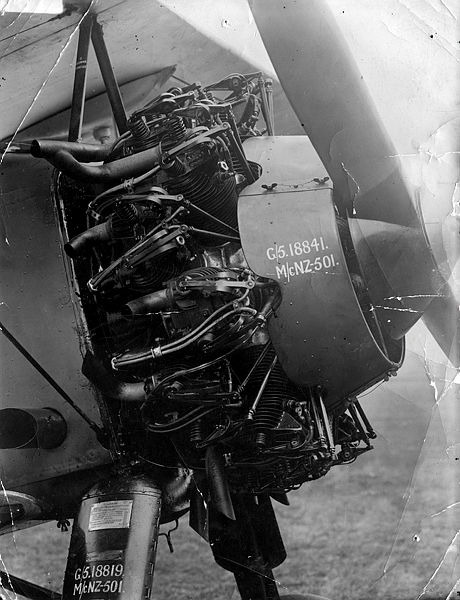
| Engine: 1x Armstrong Siddeley Jaguar IV @ 400hp (300kW) | ||||||
| Prop: wooden, 2-blade, fixed pitch | ||||||
| ----------------------------------------------------------------------------------------------------------------------------------------- | ||||||
| Aerial Performance: | ||||||
| Climb Rate (clean): 14.4 ft/s (4.4m/s) | ||||||
| Maximum Speed (sea level) : 152mph (245kph) | ||||||
| Maximum Speed (10,000ft (3,000m)) :145mph (233kph) | ||||||
| Endurance: 2hrs 45min | ||||||
| Ceiling: 23,000ft | ||||||
| Wing Loading: 10.3 lb/sqft (50kg/sqm) | ||||||
| ----------------------------------------------------------------------------------------------------------------------------------------- | ||||||
| Armament: | ||||||
| Guns: 2x Vickers .303 MGs |
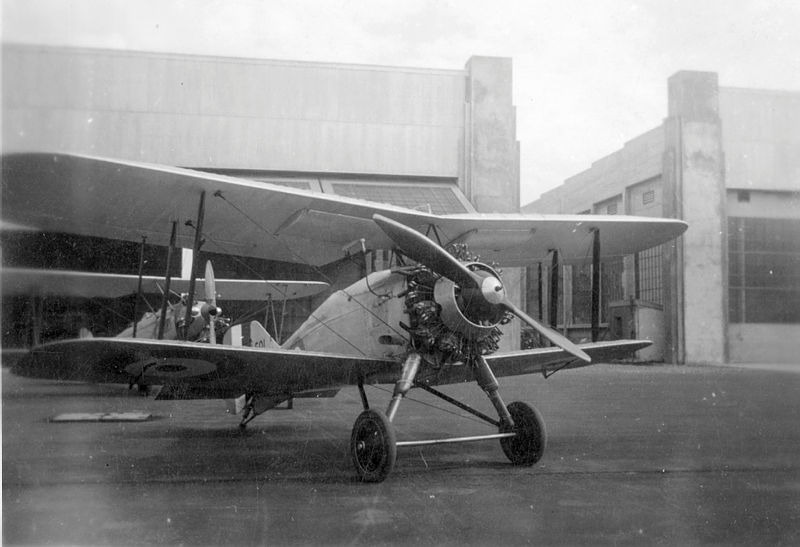
NZ501 acting as instructional airframe at RNZAF Rongotai, the technical training school. (~1943)

Extra Photos:
Sources:
D.Duxbury, R.Ewing, R.Macpherson (1987) Aircraft of the Royal New Zealand Air Force (p.39)
Gloster Grebe - Wikipedia
http://www.nzdf-serials.co.nz/nz-serials/nzgrebe.htm
https://glostergrebe.nz
Gloster Grebe · The Encyclopedia of Aircraft David C. Eyre
Incident Gloster Grebe NZ502, Friday 15 November 1929
https://www.youtube.com/watch?v=NnmZ3EoOOE4