- Yes - In the Tech Tree.
- Yes - Event/BP.
- Yes - Premium.
- No - I would not like to see the RNZAF Mosquito in game.
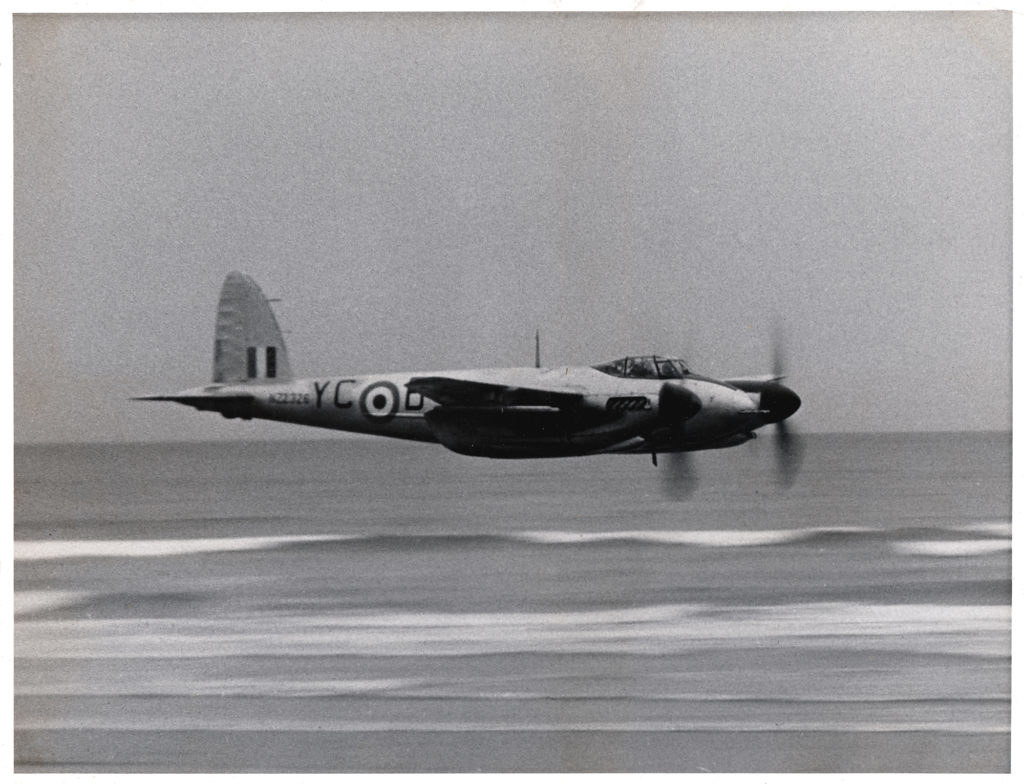
NZ 2326 on a very low pass over a beach, (n.d)
Description:
The Royal New Zealand Air Force (RNZAF) would purchase many Mosquito FB Mk.VI direct from Royal Air Force (RAF) stocks as to replace the older and war worn FG-1D Corsair in active service within the RNZAF’s No.14 Squadron in 1948, but also to equip No.75 Squadron when that force transferred from RAF to RNZAF control in 1945.
80 of these FB Mk.VI models would serve alongside eight of the T.III and Australian built T.43 trainers (4 each) in RNZAF service, but also alongside a lone Aussie built FB.40, which was effectively the same aircraft. Two ‘Highball’ aircraft would be offered to the RNZAF by the RAF in 1945, but this would be rejected.
RNZAF Mosquito FB Mk.VIs would only operate with NZ serials, unlike some other types which kept their RAF/RAAF serials for some years. They would be NZ 2320 to 2396. It would take some time for these aircraft to be delivered, ranging from 1945 to 1948, with each aircraft flying from the UK to Australia and finally to NZ. Of these aircraft, four would crash on delivery with RAF crews, mostly in and around Australia.
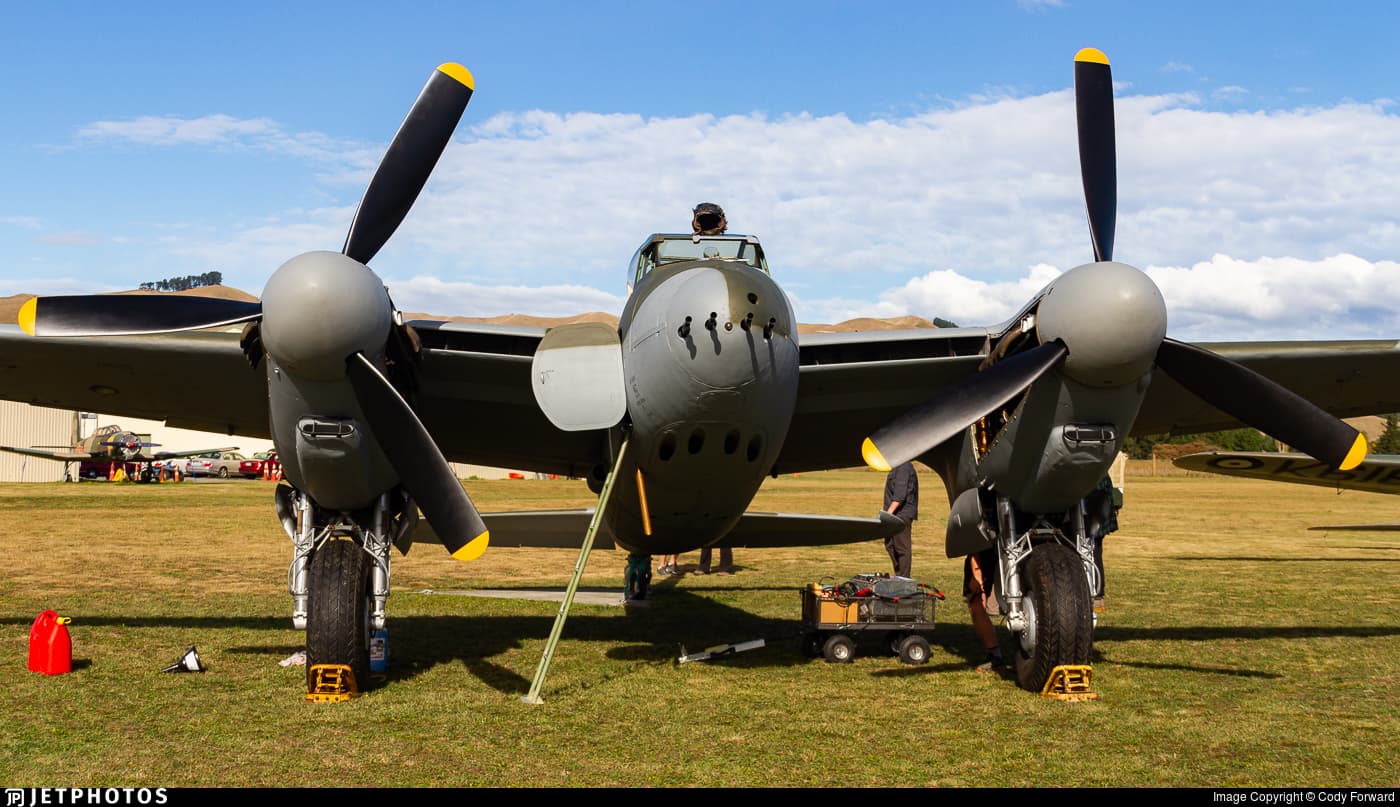
NZ 2336 sitting at Omaka after her restoration, 2022
History:
With the handing over of No.75 Squadron to the RNZAF at the end of the Second World War in 1945, they would need to be re-organised as to fit into RNZAF Squadron organisation, which itself was up in the air at the time as part of major reform. This would include shifting the type of aircraft operated, as during their RAF service No.75 Squadron mostly operated bombers, such as the Avro Lancaster and Short Stirling, however the RNZAF had no place for such aircraft in the post war.
As a result, It was decided to bring them in-line with other RNZAF Squadrons, such as No.14 Squadron, making them a fighter bomber force. For this purpose, the Mosquito FB Mk.VI was chosen to equip both No.75 and No.14 Squadrons, as No.75 Squadron had no aircraft, being effectively a new force, and No.14 squadron still operating FG-1D Corsairs. It was chosen to give No.75 Squadron airframes immediately, and No.14 squadron when they returned from service with the British Commonwealth Occupation Force in Japan.
As such No.75 Squadron would be the first to equip the type in 1945 out of Ohakea, with No.14 Squadron only equipping the type in 1948 upon their return from Japan. These aircraft would operate in a peacetime role, training in ground strike, marine strike, and patrol. With the RNZAF still finding its footing after the Second World War, it was found that too many aircraft were ordered for use in two Squadrons, and as such sold a number of airframes as excess, and others formed into instructional airframes.
Two old ships would be targeted by the Mosquitoes as targets for live munitions, the Lutterworth which was a sailing ship with a Barque Rig, sunk by bombs in 1950, and the former SS Arahura with rockets in 1952.
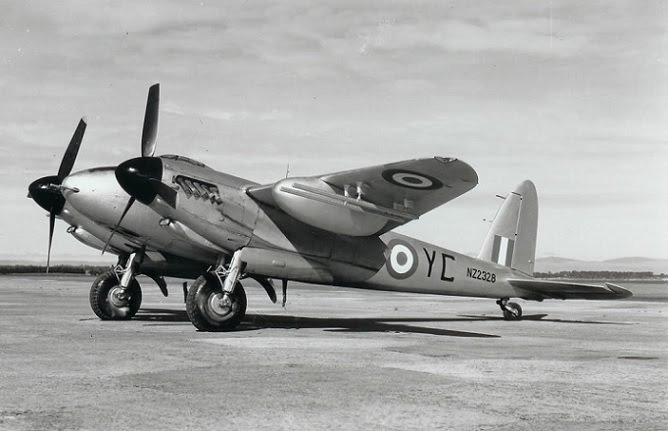
NZ 2328 sitting at RNZAF Station Ohakea during her service, (n.d)
During their short service, they would provide an essential stop gap for the RNZAF, with the delivery of the Gloster Meteor F Mk.III, NZ6001 in 1946, just after the Mosquito, starting to transform the force for the jet age, converting 50 pilots from both No.75 and No.14 Squadrons to jet aircraft, but without further jet aircraft orders (the RNZAF waiting for a better aircraft than the Meteor to be available for purchase), the Mosquito would provide an intermediate airframe to give the RNZAF something to use.
With the development of the DH.100 Vampire, and the RNZAF’s procurement of the type in 1951, the Mosquito’s would be retired as outdated. All airframes would be laid up for sale by 1956. Notably one ex RNZAF airframe, and an ex RAF airframe would be sold to Trans World Engineering Corporation of Burbank, California, for aerial mapping, however there were reports of these aircraft being used by the CIA for contraband transport in South America. Due to such reports the NZ Government banned further export of the Mosquito, and the rest were sold to farmers or scrapped.
A number of ex-RNZAF Mosquitoes exist, two T.43 airframes, both of which are restored, and one still flying. The FB Mk.VI NZ 2384 was sold to a US company in 1952, (one of the two which started the export ban), and was restored to flying condition in 2019, flying in the US with RAF colours and the serial N474PZ.
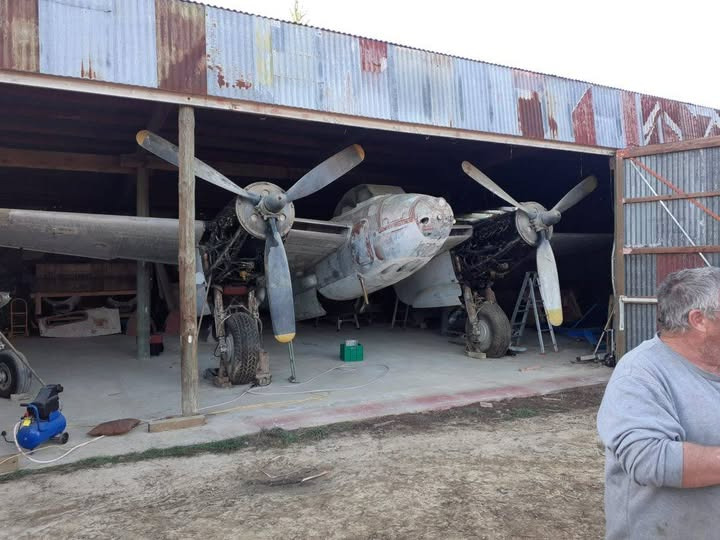
FB Mk.VI NZ 2336 was sold to a collector in 1956 and forgotten in a Woodbourne barn. She was rescued and restored to an engine running condition in 2022 in her colours with the RAF. NZ 2328 had almost the same story, being sold to a different collector in 1955 and also forgotten in a shed. She was acquired by an Aeronautical society in 1972 and is currently under restoration in her own RNZAF colours.
There are also two RNZAF FB Mk.VI wrecks, NZ 2383, which was one of the aircraft broken up in 1957, acquired by the RNZAF Museum in 1995 and is currently derelict. NZ 2355 was privately owned from 1955, and was purchased by the RNZAF Museum in 1988, she is also sitting derelict.
| Dimensions: | |||||
|---|---|---|---|---|---|
| ----------------------------------------------------------------------------------------------------------------------------------------- | |||||
| Length: 40ft 10 3/4 in (12.5m) | |||||
| Height: 15ft 3 1/2 in (4.6m) | |||||
| Wing Span: 54ft 2in (16.5m) | |||||
| Wing Area: 454 sq ft (42sqm) | |||||
| Weight (Dry): 14,300 lb (6,486kg) | |||||
| Weight (Gross): 22,300lb (10,115kg) max | |||||
| Crew: 2 | |||||
| ----------------------------------------------------------------------------------------------------------------------------------------- | |||||
| Engine Performance: | |||||
| Engine: 2x Merlin 25 @ 1,620hp (1,207.6kW) ea | |||||
| Fuel: 100/130 Octane | |||||
| Prop: 3 bladed variable pitch constant speed | |||||
| ----------------------------------------------------------------------------------------------------------------------------------------- | |||||
| Aerial Performance: | |||||
| Climb Rate (clean): 1,870 ft/m (9.4m/s) | |||||
| Maximum Speed: 380mph (611kph) @ 13,000ft (3,962m) | |||||
| Cruise Speed: 325mph (523kph) @ 15,000ft (4,572m) | |||||
| Range (clean): 1650mi (2655km) | |||||
| Ceiling: 33,000ft (10,058m) | |||||
| ----------------------------------------------------------------------------------------------------------------------------------------- | |||||
| Armament: | |||||
| Guns: 4x .303 Browning (750rpg) 4x 20mm Hispano Mk.II (150rpg) | |||||
| Underwing stores: 2x 100 imperial Gallon (454L) drop tanks, 1 per wing | |||||
| Bomb stores: 2x 250lb or 500lb bombs in belly, 1x 250lb or 500lb bomb on each wing | |||||
| Rocket stores: 4x RP-3 on each wing, reduced to 2 on each wing w/ drop tanks. |
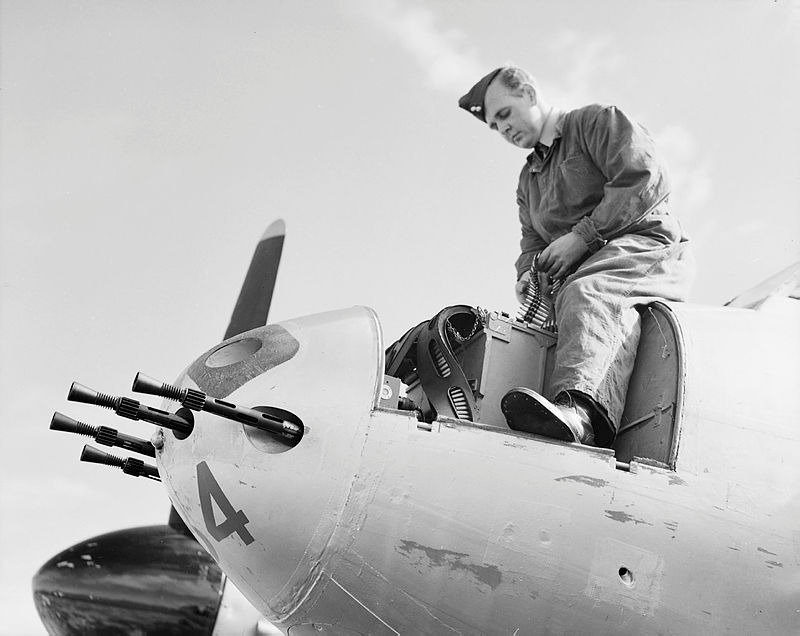
NZ 2334 being re-armed at RNZAF Station Ohakea, 1951
Extra Photos
Sources:
L.Bridgman (1981) Jane’s Fighting Aircraft of World War II (pp.115-116)
De Havilland DH.98 Mosquito FB VI – Ferrymead Aeronautical Society
http://nzdf-serials.co.nz/nzdf-serials/rnzaf-mosquito
De Havilland Mosquito - Wikipedia
WW2 Warbirds: the De Havilland Mosquito (Bomber, Fighter-bomber and Night-Fighter variants) - Frans Bonné
https://aeropedia.com.au/content/de-havilland-dh-98-mosquito/
Kiwi Aircraft Images : DH98 Mosquito