- Yes - In the Tech Tree.
- Yes - Event/BP.
- Yes - Premium.
- No - I would not like to see the RNZAF Baffin in game.
NZ.155 carrying bombs over a test range, (nd)
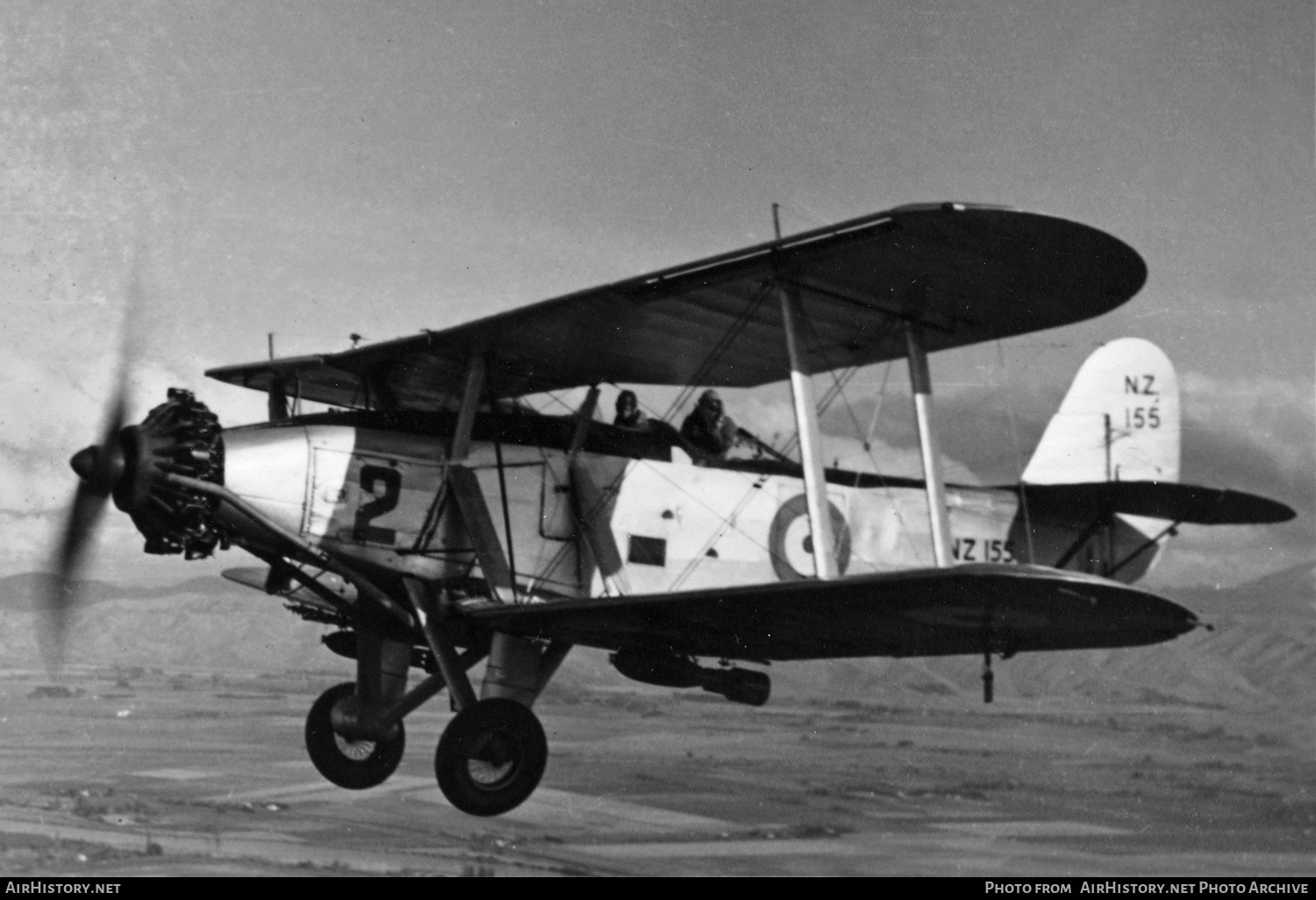
Description:
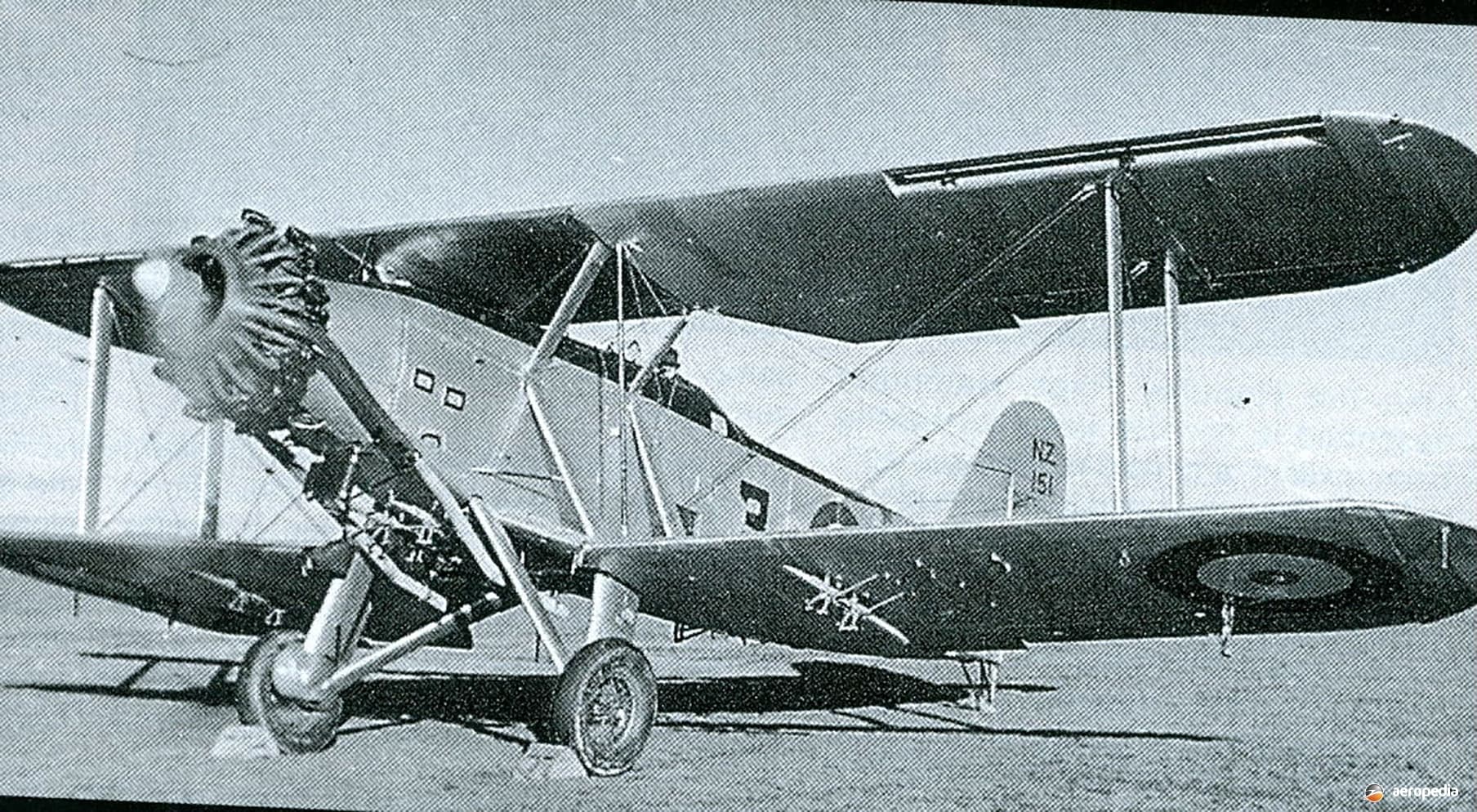
Used airframes purchased by the Royal New Zealand Air Force (RNZAF) from the Fleet Air Arm (FAA) of the Royal Navy, the Blackburn Baffin was to equip new Territorial Air Force (TAF) for coastal patrol and reconnaissance duties.
Obsolete in the FAA by 1937, these aircraft were old, slow, and very outdated. However this presented a good opportunity for the RNZAF, who believed that the type’s retirement presented an opportunity to acquire cheap airframes, but not at the cost of capability, as they also believed that the type’s obsolescence would not hinder reconnaissance duties. They were also suitable for training.
NZ.161 sitting at RNZAF Station Wigram, ~1939
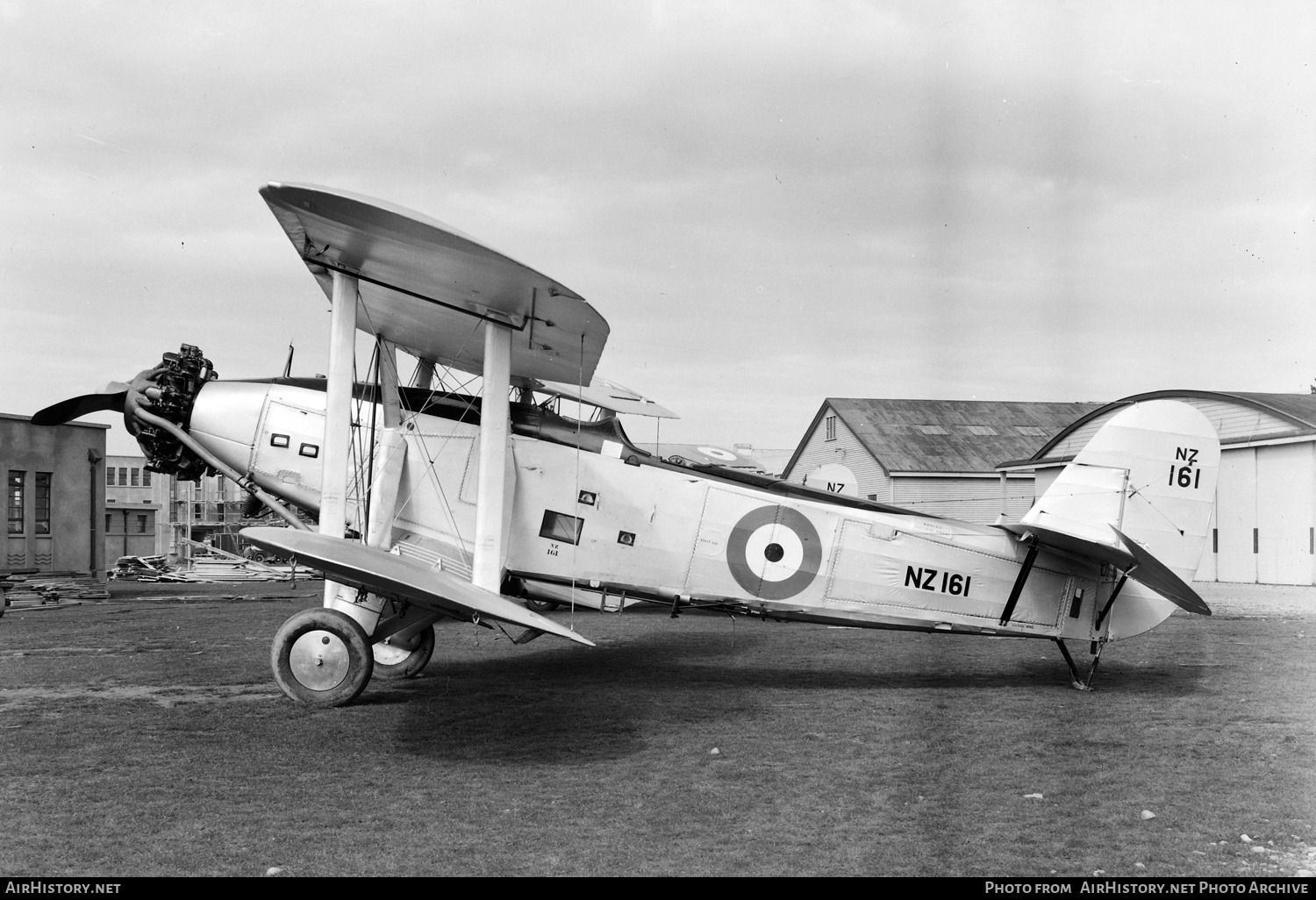
History:
By 1936, the Blackburn Baffin was starting to be replaced in FAA service by much more capable aircraft, such as the Fairey Swordfish, with all aircraft being struck off and returned to Britain for storage. The last FAA Squadron to operate the type was 812NAS, which had a number of airframes destroyed in a hangar explosion in December 1936. All airframes were in storage by September 1937.
In August 1937 the RNZAF would purchase 12 airframes from storage, equipping the type in November when they arrived. A further 17 of the best airframes were also purchased through 1938, when the Air ministry approached NZ wishing to sell further stocks. Due to the RNZAF not using the type as a torpedo bomber, the torpedo dropping gear was removed in the UK before they were shipped. The cost for these airframes was exceptionally cheap, said to be as low as £200 each.
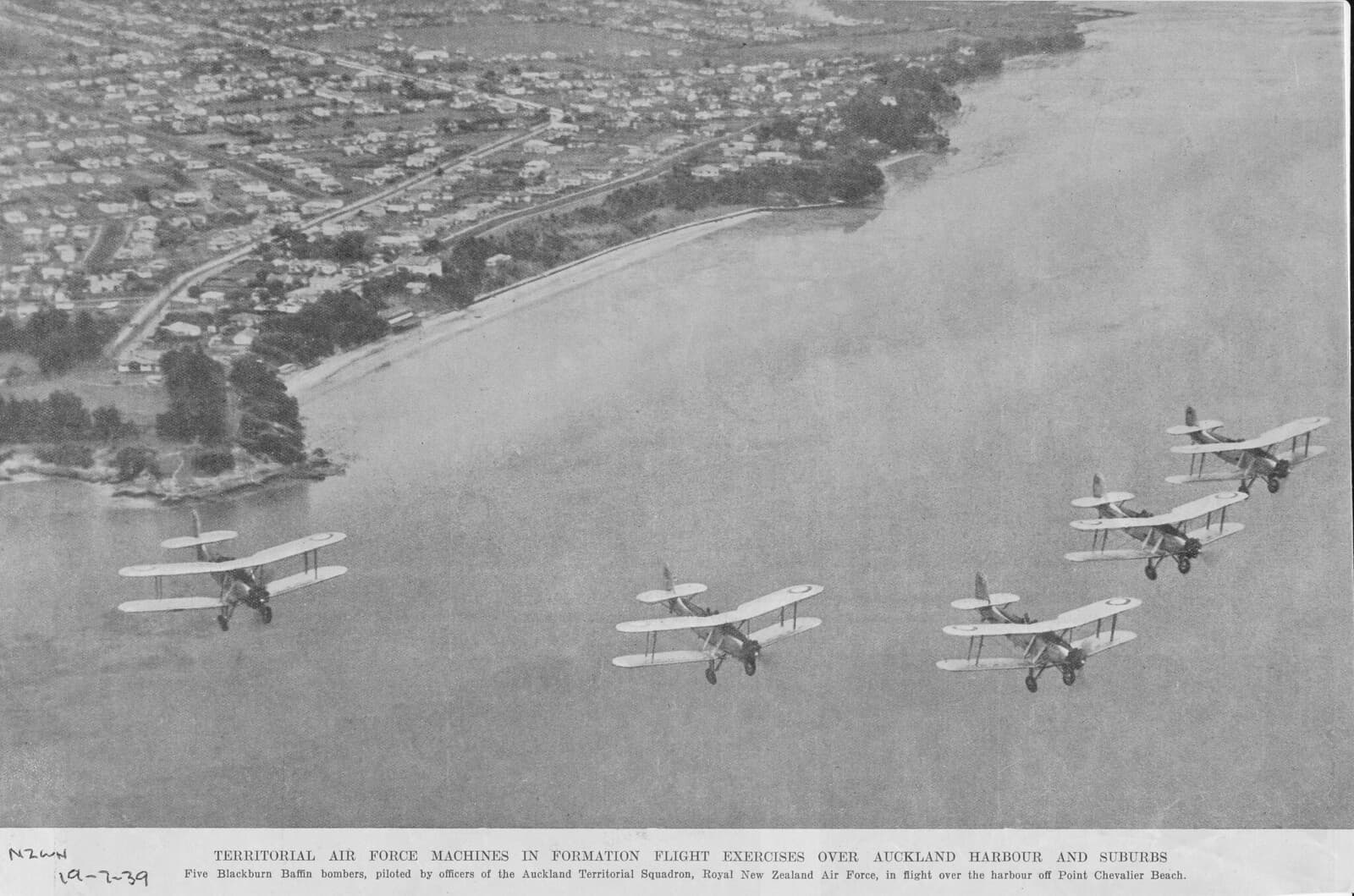
The first 12 airframes would be sent to equip the Wellington Territorial Squadron of the TAF, with the latter 17 equipping a second and third squadron at Christchurch and Auckland respectively. The Wellington squadron was active by 1938, and the Christchurch and Auckland squadrons by 1939.
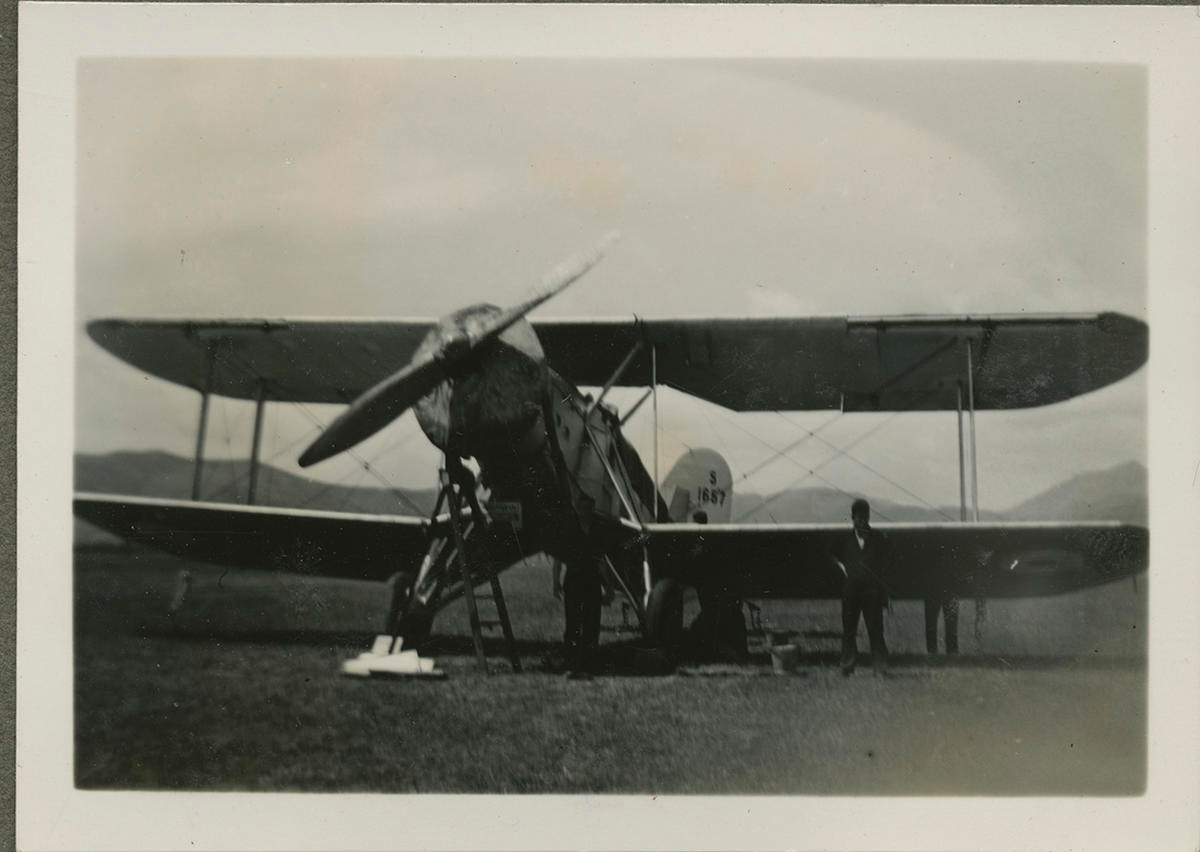
Aircraft operating in the Wellington squadron would operate using the FAA serials until 1939, when they would switch to a RNZAF standard number. Due to their later introduction to the type, the Christchurch and Auckland squadrons would always use the NZ serials. Soon after the Baffin’s introduction the Auckland squadron would be re-equipped with another type and the Baffins moved to Christchurch.
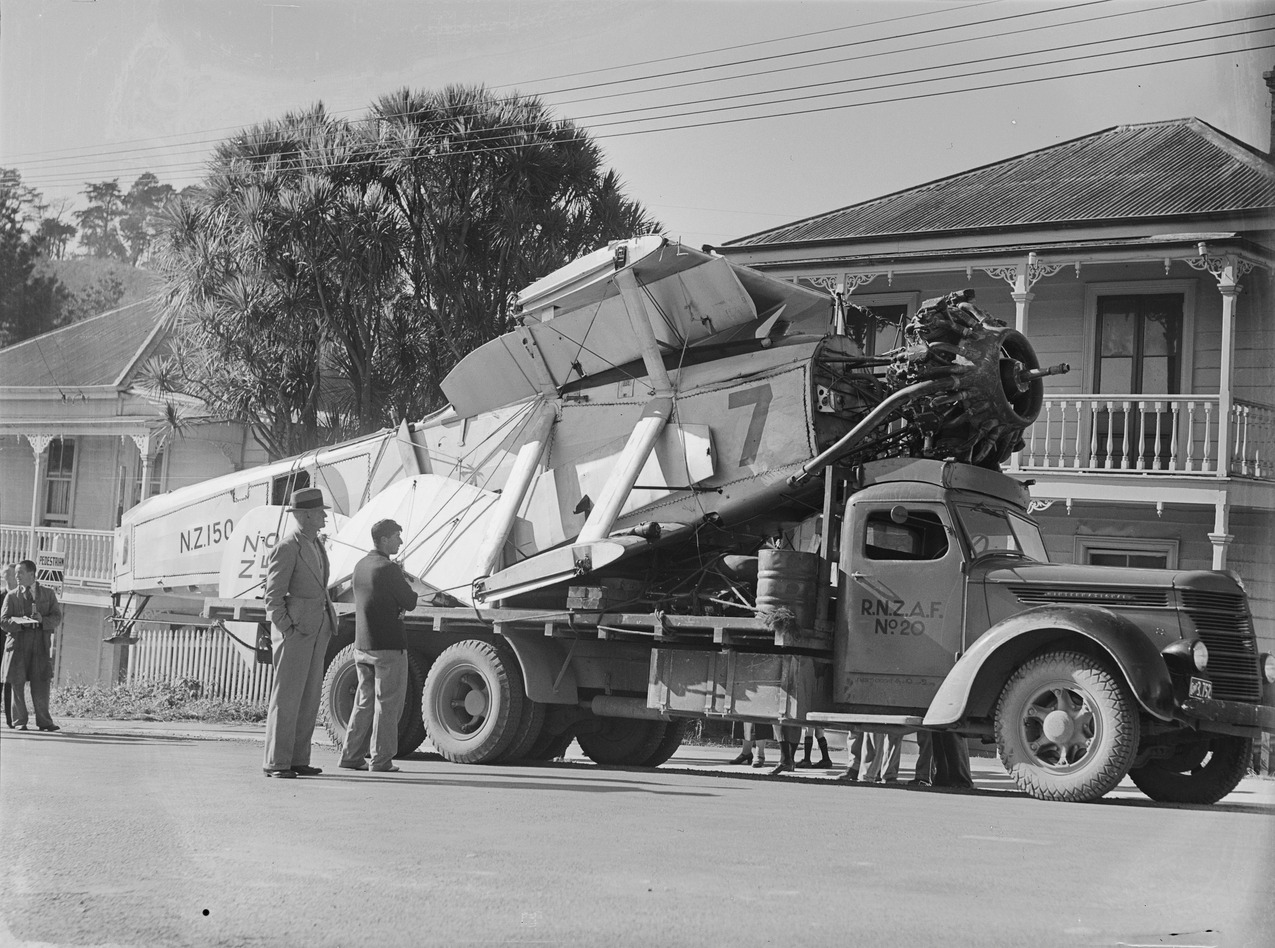
NZ.150 after ditching into Whangarei Harbour, 1940
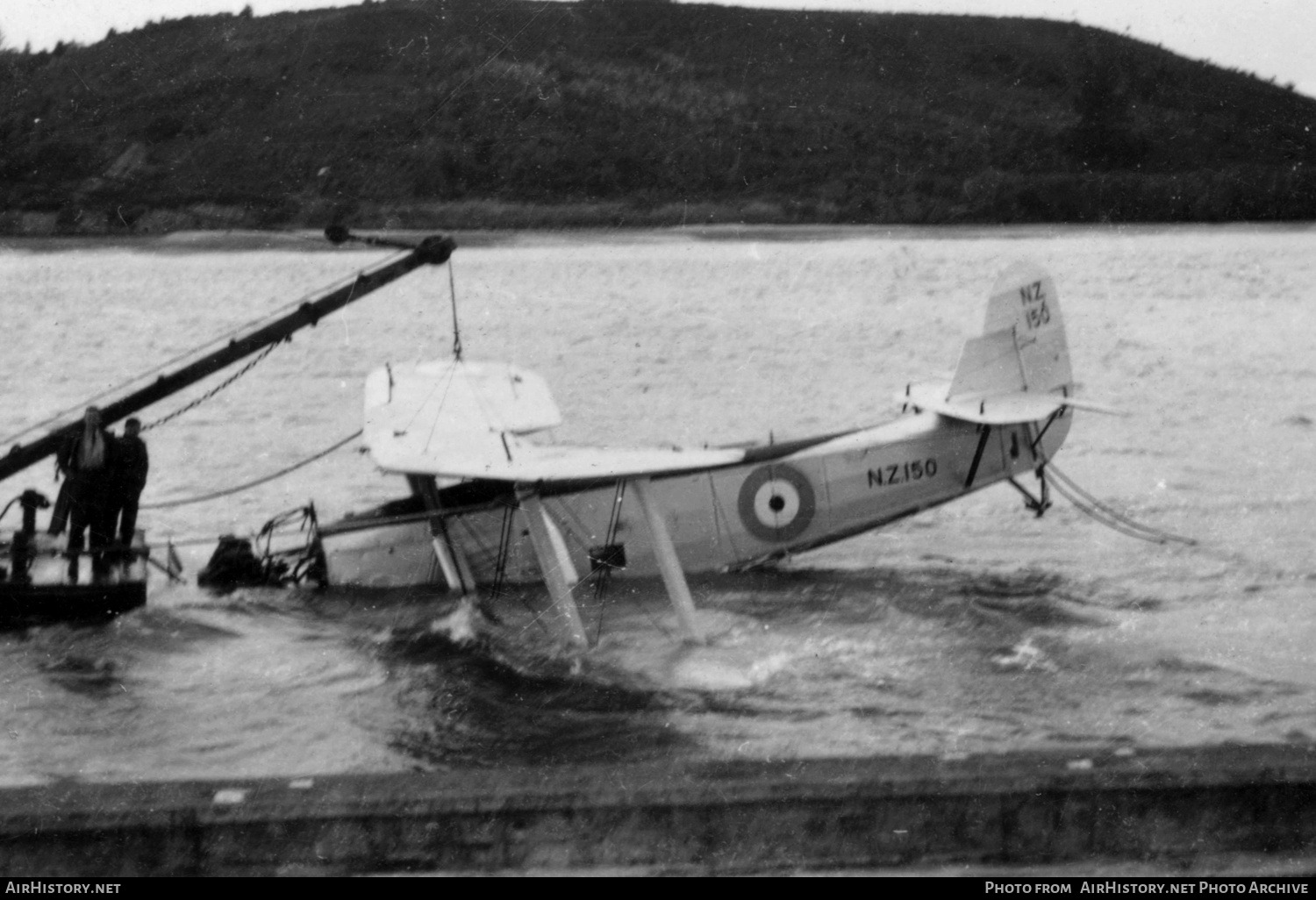
By the start of the Second World War in September 1939, 24 Baffins were still operational within the RNZAF. Before hostilities started, the Baffin was mostly used in a training role, however due to the threat of Merchant raiders operating close to NZ the type was again used as coastal patrol, spotting and identifying nearby vessels and reporting their locations.
By March 1940 all TAF squadrons were re-equipped and the Baffins moved to a new squadron, the NZ General Reconnaissance Squadron based at RNZAF Station Whenuapai, then by 1941 it was renamed to 1st GR Squadron, with half its strength being transferred to a second Squadron, 3rd GR Squadron at RNZAF Station Harewood. Squadron strength at this time would be supplemented by numerous Vickers Vincents, and Vildebeests.
As the type was extremely obsolete by this point, all aircraft would be replaced by the Lockheed Hudson, as both squadrons transformed into Bomber Squadrons. All aircraft would be placed in storage then broken up at RNZAF Station Rongotai before December 1941.
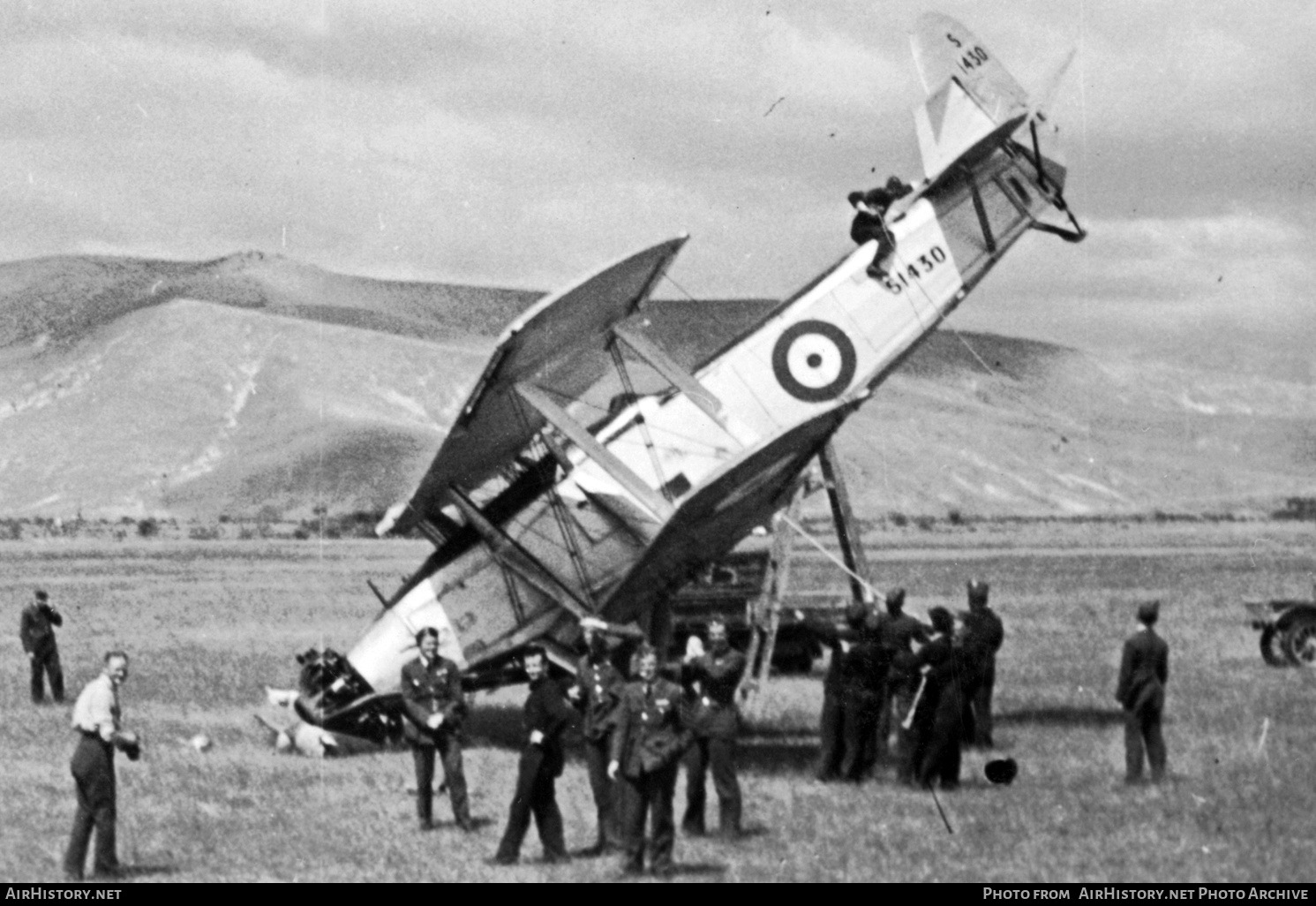
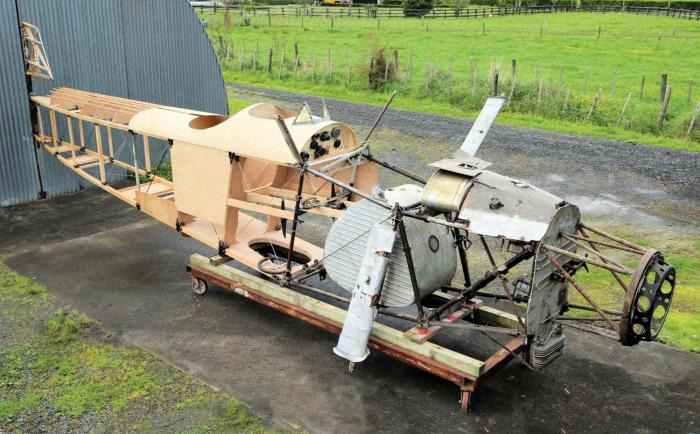
There are two surviving RNZAF Baffins, NZ160, which crashed at Wigram 1939 with no loss of life, she was recovered in 2012 and is currently under restoration. An unidentified airframe has also been recovered, and is also under restoration at the same location as NZ160.
| Dimensions: | |||||
|---|---|---|---|---|---|
| ----------------------------------------------------------------------------------------------------------------------------------------- | |||||
| Length: 38ft 3,3/4in (11.6m) | |||||
| Height: 12ft 10in (4m) | |||||
| Wing Span:44ft 10in (13.7m) | |||||
| Wing Area: 683sqft (63.5sqm) | |||||
| Weight (dry): 3,184lb (1,444kg) | |||||
| Weight (gross): 7,626lb (3,459kg) | |||||
| Crew: 2 | |||||
| ----------------------------------------------------------------------------------------------------------------------------------------- | |||||
| Engine Performance: | |||||
| Engine: 1x Bristol Pegasus I M3 @ 565hp (421kW) | |||||
| Prop: Twin blade fixed pitch | |||||
| ----------------------------------------------------------------------------------------------------------------------------------------- | |||||
| Aerial Performance: | |||||
| Climb Rate (sea level): 480ft/m (2.4m/s) | |||||
| Maximum speed (sea level): 125mph (201kph) | |||||
| Maximum Speed (6,500ft (1,981m) : 136mph (218kph) | |||||
| Range: 490mi (790km), 4.5hr endurance @ 5,000ft (1,524m) | |||||
| Ceiling: 15,000ft (4,600m) | |||||
| ----------------------------------------------------------------------------------------------------------------------------------------- | |||||
| Armament: | |||||
| Guns: 1x1 .303 Vickers fixed forward, 1x1 .303 Lewis in rear cockpit | |||||
| Underwing bomb stores: 2x 530lb bomb or 2x 250lb bomb per wing | |||||
| Ventral bomb stores: 1x 530lb bomb, or 2x 250lb bomb |
NZ.154 Baffin soon after delivery, still carrying the Fleet Air Arm serial, 1937
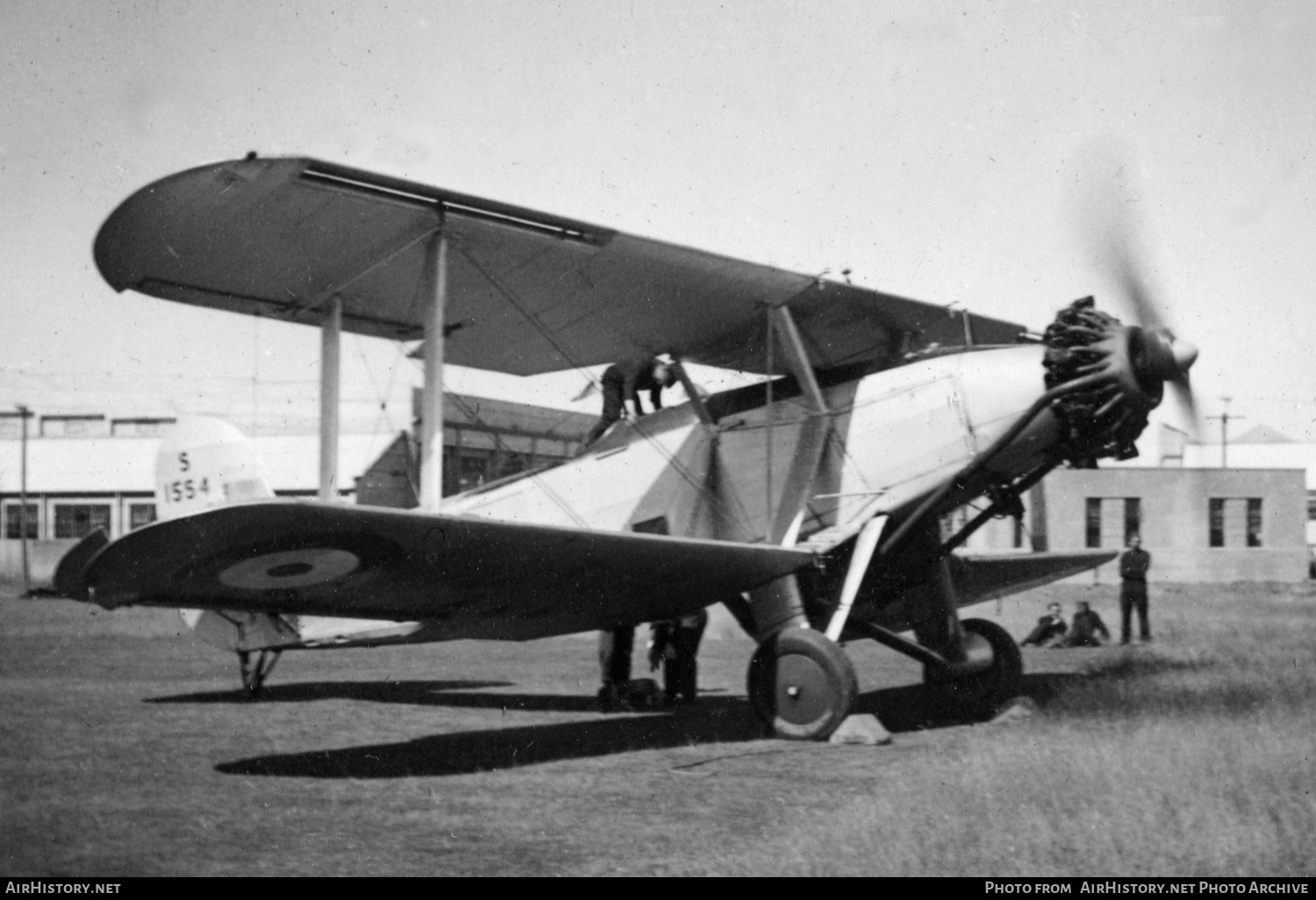
Extra Photos:
Sources:
A.J Jackson (1989) Blackburn Aircraft since 1909. (pp.349-356)
https://aeropedia.com.au/content/blackburn-baffin/
Blackburn Baffin - Wikipedia
Blackburn B-5 Baffin - bomber
https://www.key.aero/article/back-dead