NM116 PROTOTYPE 1 (1971)
INTRODUCTION
HISTORY
Spoiler
Norway received a whole lot of M24 Chaffe’s in 1945/46 as a part of the American weapons aid, and the final ones were delivered in 1955 and in total 154x were delivered! As the years went on, these tanks started to age and it’s drivetrain and weaponry was more or less considered being unfit for it’s tasks in the 1960’s. Because of this, Norway began an upgrade program to find an solution to either replace the aging M24 tanks with new ones or upgrading them for a lower cost. This was from initiative by the cavalry inspectorate and some other’s branch within the Norwegian army that initiated the idea for the experimentation for what became known as the NM116. In 1971, the French had developed a new low pressure cannon in 90mm caliber, the external diameter was the same as the old original 75mm cannon of the M24 Chaffe’s and could therefore be replaced with this, and by recalibrating the original gunner’s sight of the M24, they could shoot HEAT ammunition at around 1500 Meter’s with somewhat acceptable precision. This was a potential solution (By this i assume that it’s a mention of the French M24 Revalorisé, an demonstrator from France which simply had the 75mm cannon replaced with the 90mm, and was part of what sparked this idea, as it was theirs idea first.)
It was decided to pursue the idea of upgrading Norway’s M24 with the 90mm cannon, and an collaboration between 2 engineers from the Norwegian Army Supply Command and one engineer from Thune-Eureka was started. One of the Army’s M24 chaffe’s were devoted to this project (License plate number 1236!), and the first issue they were presented with, was the engine, the old Twin Chrysler engines needed to go, and because of Thune Eureka’s wide experience of working on the plentiful M113 wagons prior, the Detroit Diesel 2-stroke V6 diesel was chosen due to it’s wide accessibility of parts and experience with maintenance, and it just fit into the engine bay. However, this caused issues with the transmission. As the old twin Chrysler engines had each their gearbox and one common transferase, the Detroit Diesel engine rotated the opposite way, and made the vehicle run backwards. This was solved by installing an overturner (I cant find the right translation for this, its some sort of adapter) and after plentiful tests they finally managed to come up with an unique solution, being an special made GearSelector/reverse gear box just for this vehicle, and it was made and installed in Trondheim, Norway. And with this this issue being solved, a dozen more nicely presented themselves.
The second issue was the cooling system, as the radiator which was used with the Detroit Diesel engine in the M113 wagons didn’t fit in this vehicle due to the placement of the M24’s batteries, so under the first testing’s of the engine in the M24, they drove around with an 1.6L 50hp engine they had taken of an Volkswagen Type 2 Van with a fan on the top of the rear of the M24’s hull to provide power for the radiator and cool the engine (Before the gearbox solution was done, they used regular car transmissions with the engine bay open). This issue was solved by moving the batteries of the M24 from the right side of the vehicle to the left and placing 2 larger ones inside the crew compartment of the vehicle. This was done so that 2 hydraulic driven fans could be installed where the batteries oncee stood. There was also an issue with the exhaust that presented itself, as there weren’t space for the M113’s exhaust system. The solution for this ended up being to take an exhaust from the Leopard 1 Tank, and install it parallel with the engine in the rear, so that the cooling air was blown out of the hull and thinned out the exhaust in a similar way as on the Leopard tanks, thus also improving performance (It’s also worth mentioning, from the few videos that exists of this, it is LOUD). So the solutions of this vehicle were rather improvised and done with the motivation of doing it as cheaply as possible. After all the problems regarding mobility and engine were solved after some months of testing and studying, they had reworked the entire drivetrain, and replaced the old original Hydramatic transmission from the M24 Chaffee with the new Allison MT-650/653 transmission, which gave the vehicle an much smoother operation and made the vehicle more agile in terms of maneuverability in tactical situations, like backing up after shooting. After this, they began working on the internal layout. (This is the stage i have chosen the Prototype 1 (1971), as it features the Original M24 Chaffe gun and tower, but has the New Drivetrain and engine, and as the vehicle was constantly tested and worked on it was fully operational. At this stage it still had 5x crewmembers and the original ammunition layout of the M24 Chaffe).
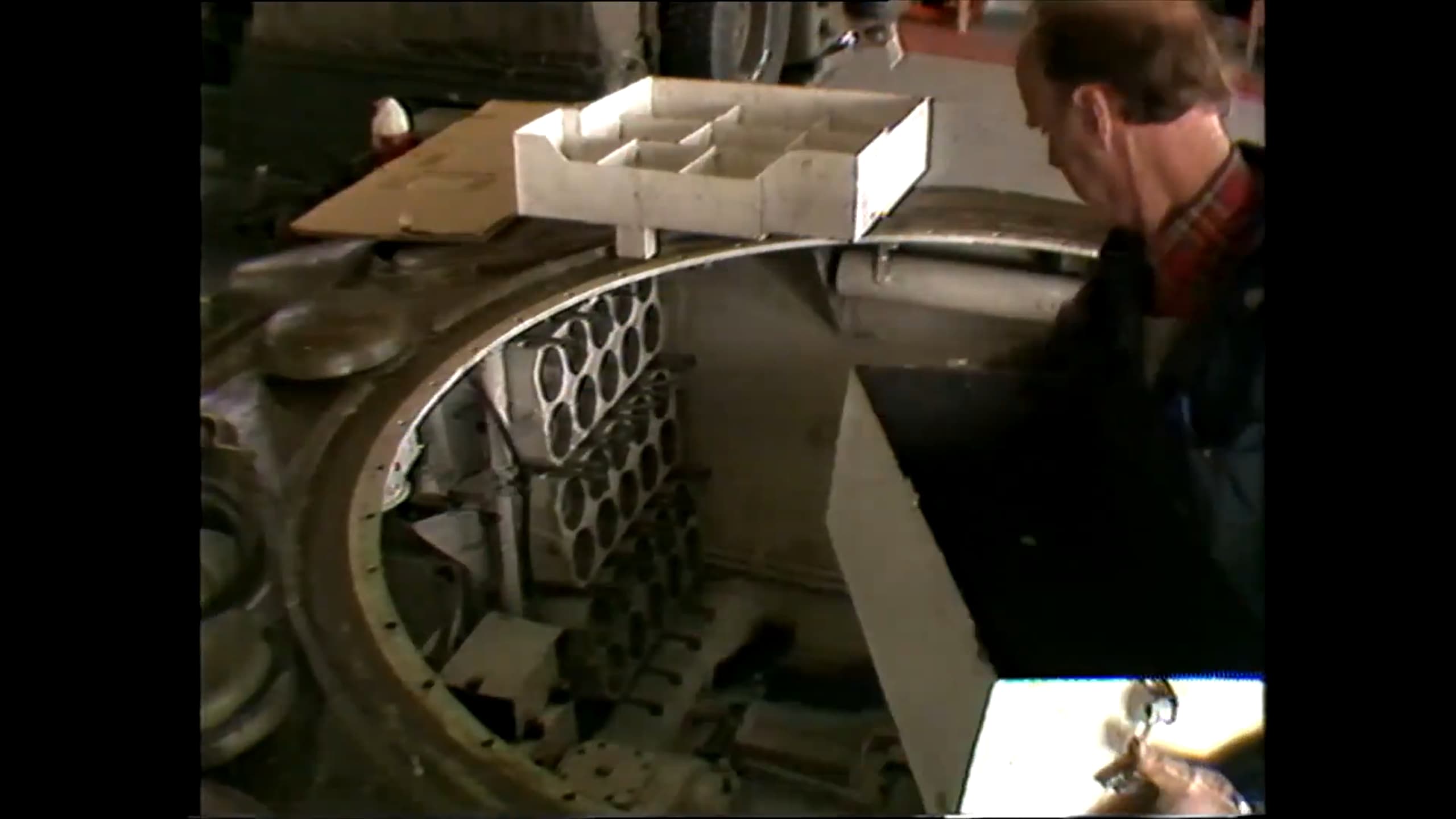
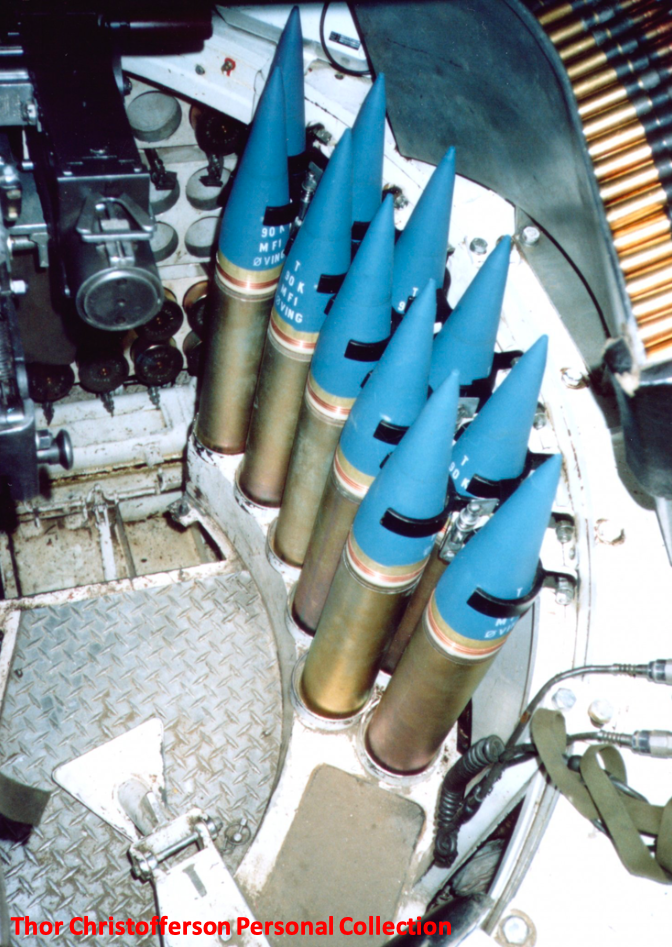
Further development trough 1972, lead to the installation of the D/925 low-pressure 90mm gun in the turret of the M24 Chaffe, replacing the old 75mm M6 Cannon. Following this, it was made clear that there needed to be something done with the ammunition storage for the new 90mm ammunition. As the main ammunition stowage of the M24 Chaffe is in the bottom of the tower room, and it was preferred to move it elsewhere, it was discussed and considered to have the ammunition stowage mounted further up, in the “cage” of the tower, so that when the tower was turning around, the ammunition followed, and this was done, a rack for 11x rounds was integrated in the right side of the turret, as a first stowage, increasing reload speed to around 6 seconds (Check image in spoiler folder). But because of this, they needed to find another area for the main ammunition stowage to be, and the solution for this was done by removing the 5th reserve crewmember located in the front right side of the hull and his machinegun and plugging the hole for the machinegun. Likely inspired by the way it was done in the Leopard 1 and M48 tanks in service at that time. With this they added a stack of 3x canisters/boxes that each held 10 rounds, 30 rounds in total. This can be seen in the image below in the spoiler folder! Which i found in an video published by the Army’s historical archive! To sum this, there were 30x rounds in the 2nd stowage (Hull) and 11x in 1rst stowage (Ready rack in turret).
At this stage the vehicle did not feature any smoke grenade launchers, hatch mounted machinegun or integrated coaxial machinegun, nor the laser rangefinder, and all the weaponry it had was the single 90mm cannon, making it identical to the one presented by France. Int he spoiler folder below i have put an image of this exact prototype, tough a little later when it had gotten the laser rangefinder installed as well as smoke grenades.
Spoiler
Picture of the ammunition storage in the front right side of the hull, screenshot taken from an promotional video, could be from the construction itself.
11x shells in tower ring, 1rst stowage.
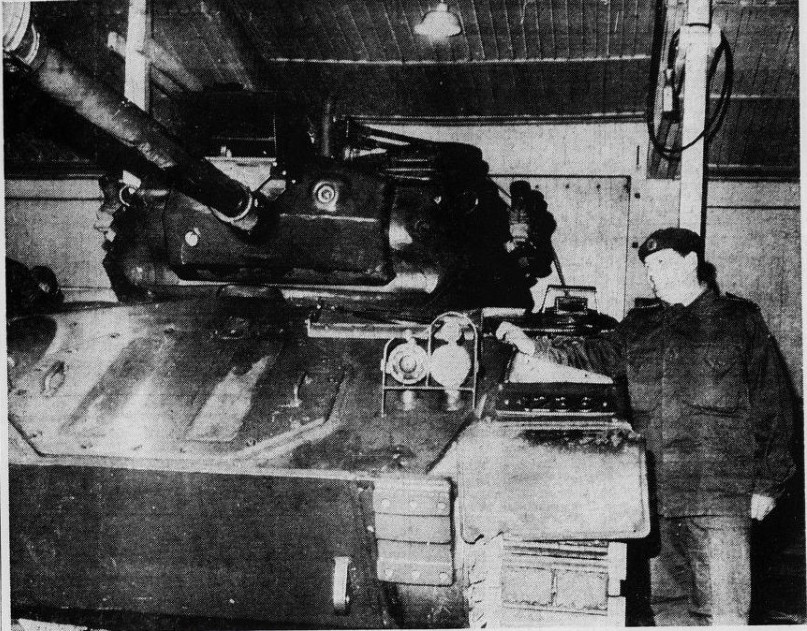
The first and original prototype, lisence number 1236.
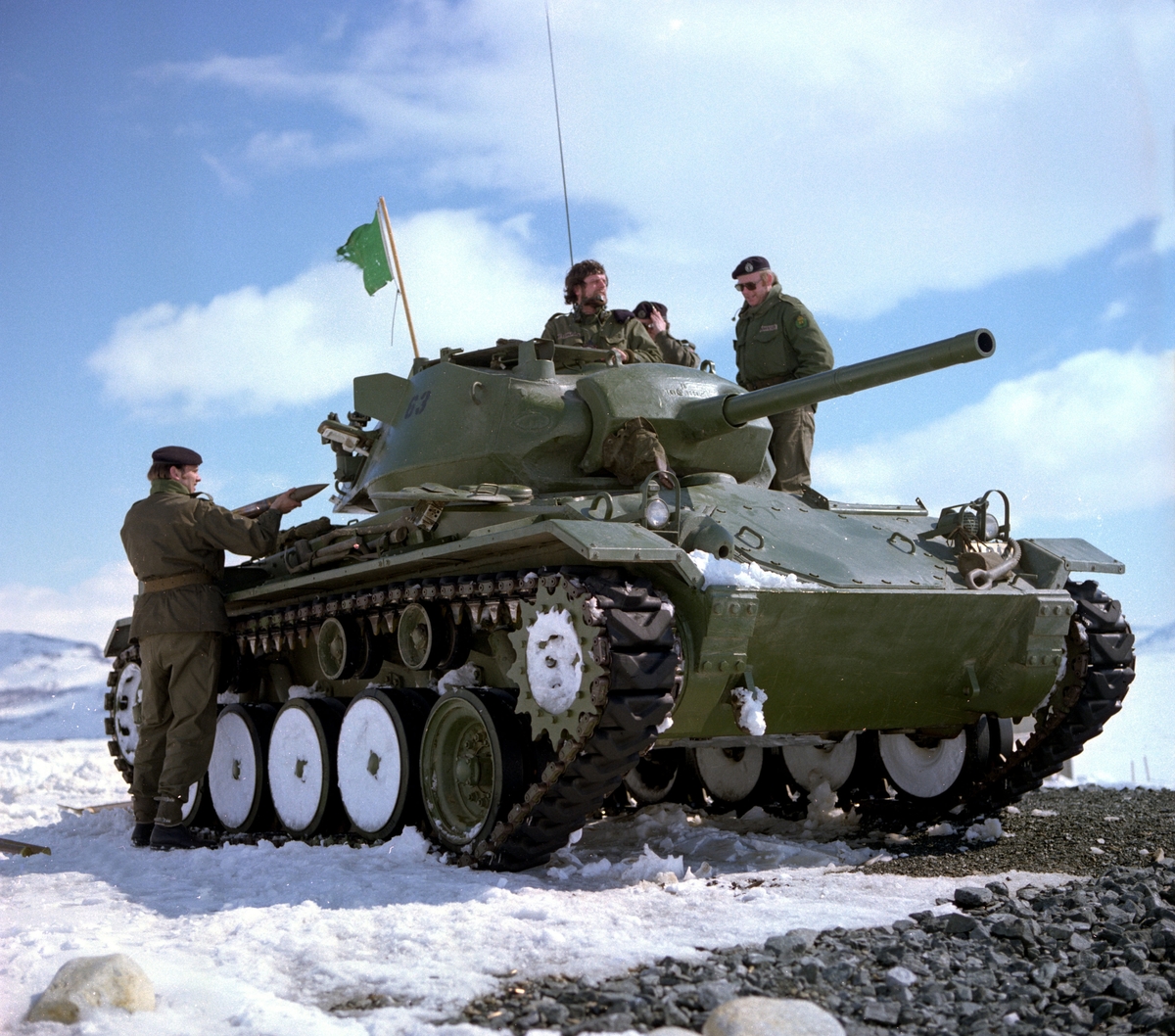
As they now were ready to present the vehicle for the Army, they got another M24 chaffe and did the exact same modifications regarding engine and cannon. It’s always been used two of the same vehicles for trials, at least in Norway considering prior history. Each of those two vehicles was different from each other in several ways, and i will describe the differences below in the next paragraph. I am going to name these two the NM116 Prototype 3(1) and NM116 Prototype 3(2). The original prototype vehicle used from the beginning has the license plate number 1236.
This further development included testing of two different 12.7mm machinegun models, both as coaxial machineguns and as pintle mounted ones. An rangefinder for the cannon, domestically developed for this purpose named Norwegian Model 128 Simrad LV3 Laser Rangefinder which was installed on the upper side of the cannon/gun mantlet. When this was installed on the prototype it didn’t have any protective cover, later on we have seen it has got a large cover over it, completely open in front, and on the production variants this has been fixed with an special made cover just foor the rangefinder, which made it better protected against both enemy fire, water and other stuff like branches. Both vehicles featured the muzzle brake, and as they experimented with night vision, they have differently installed infrared lights on the tower. The vehicles were also fitted with rubber tracks, similar to the ones featured on the Leopards at the time.
In 1973 the two final prototypes were demonstrated and tested at Hjerkinn firing range alongside demonstrations of the recently released MILAN atgm missiles and TOW atgm missiles. The summer of the same year, one of the prototypes were presented at the weapons display at Eurosatory in France as the only non-French product that year. The vehicle was choosen by the army and started mass production in 1974. The vehicle recieved several upgrades and improvements since.
DETAILS OF THE PROTOTYPE 1 (1971)
IN GAME
ARMAMENT
Spoiler
-
M24 Chaffe Turret
-
1x 75 mm gun M6 in mount M64
-Ammunition stowage/capacity: 48 rounds -
1x 7.62x51mm Browning M1919A4 Coaxial machine gun
-Ammunition Capacity/stowage for coax and hull: 3,750 rounds
-Placement: Bottom right under the cannon
-
-
Hull Armament
- 1x 7.62x51mm Browning M1919A4 Hull Coaxial machine gun
-Ammunition Capacity/stowage for coax and hull: 3,750 rounds
-Placement: Bottom right side of the hull, for the 5th reserve crew member
- 1x 7.62x51mm Browning M1919A4 Hull Coaxial machine gun
TECHNICAL DATA
Spoiler
Width: 3 m
Height: 2.77 m
Length (including gun): 5.56 m
Length (excluding gun): 5.03 m
Suspension: Torsion bar
Ground clearance: 0.46 m
Crew: 5 (commander/radio operator, gunner, loader, driver, assistant driver/bow gunner)
Engine: Detroit Diesel 6V-53T 260 hp @ 2,800 rpm
Combat weight (Prod NM116): 18.300kg
Power to weight ratio(Prod NM116): 14.2 hp/t
Top speed: 47 km/h
Operational Range: 300 km
Transmission> Allison MT-650/653 (auto, 5F/1R)
Tough this features the same drivetrain as the finished NM116, the exact weights and thus performance might be slightly off due to weight differences, production NM116 was 100kg lighter than standard old M24 chaffe!.
SOURCES
Spoiler
Old Newspaper article from Eidsvold Blad Thursday 4th of March 1976
Norwegian National library Link: Nasjonalbiblioteket
Den Sorte lue: medlemsblad for kameratforeningen Norske Dragoner hvori opptatt Hedmarks Dragonforening. - 2021 Vol. 18 Nr. 2
Norwegian National library Link: Nasjonalbiblioteket
Den Sorte lue : medlemsblad for kameratforeningen Norske Dragoner hvori opptatt Hedmarks Dragonforening. 2023 Vol. 20 Nr. 2
Norwegian National library Link: Nasjonalbiblioteket
Newspaper article from the paper Agder, Wednesday 3. mars 1976
Norwegian National library Link: Nasjonalbiblioteket
https://ritastatusreport.blogspot.com/2015/06/nm-116.html
M24 Chaffee - Wikipedia
M24 Chaffee – Wikipedia
POLL
- Yes
- No