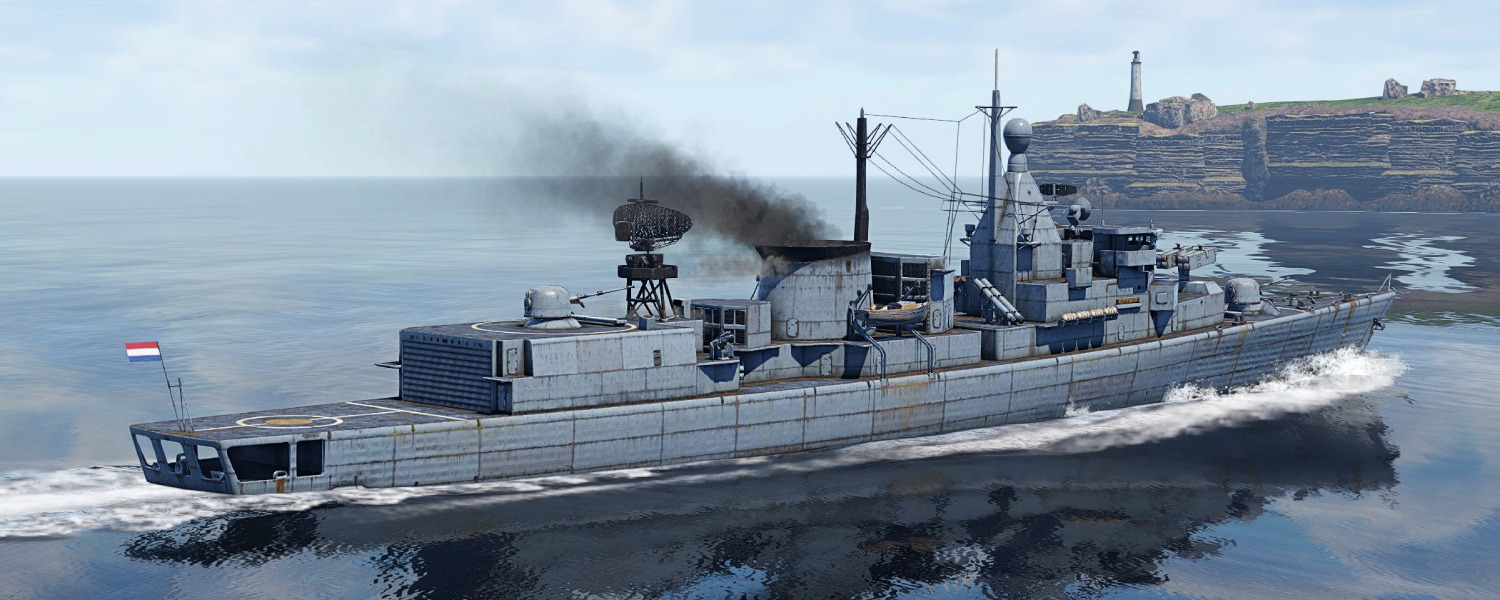
- Yes
- No
- Netherlands / Benelux naval tree (independent)
- Benelux Subtree (france)
- Independent Dutch naval tree
- Other
- No/negative
- Early variant (2 × 76 mm OTO Melara Compact gun + 2 × 20 mm)
- Mid variant (1 × 76 mm OTO Melara Compact gun + 1 × 40 mm Bofors + 2 × 20 mm)
- Late / modernised variant (1 × 76 mm OTO Melara Compact gun + 1 × 7 30 mm Goalkeeper CIWS + 2 × 20 mm)
- All variants (as separate vessels)
- Premium/Event variant
- No/negative
TL;DR: A complete Dutch Cold War frigate line: versatile, modern, and uniquely suited for multi-role naval gameplay.
History
Spoiler
In the years following World War II, the Royal Netherlands Navy (RNLN) faced the enormous challenge of rebuilding its fleet. The war had devastated the Dutch Navy, and by the early 1950s, it relied largely on second-hand vessels from allied nations. However, the Netherlands quickly emerged as one of NATO’s most technically sophisticated small navies, leveraging its shipbuilding industry and electronics expertise to design and produce advanced domestic warships.
By the 1960s and 1970s, Dutch shipbuilding companies like RDM, Wilton-Fijenoord, and electronics manufacturer Hollandse Signaalapparaten (Signaal, later Thales Nederland) had positioned the country as a leader in naval innovation. The RNLN, operating primarily in the North Sea and Atlantic under NATO command, required ships capable of anti-submarine warfare (ASW) against the growing Soviet submarine threat, while also maintaining flexibility for air defense and surface engagements.
The first generation of Dutch postwar frigates, the Van Speijk-class, were successful but limited by their origins as improved British Leander-class designs. By the late 1960s, the RNLN recognized the need for a more capable, fully Dutch-designed frigate that would incorporate indigenous radar, sonar, and command systems, and that could meet NATO interoperability standards without depending on British or American blueprints.
Development of the new S-class frigate, later officially designated the Kortenaer-class, began in the early 1970s. The name “S-class” came from the Dutch Navy’s internal project naming convention, and the ships were planned as replacements for older destroyers like the Holland and Friesland classes. The design philosophy centered on a true multi-role combatant: one capable of engaging submarines, aircraft, and surface ships alike, while remaining affordable and adaptable for future upgrades.
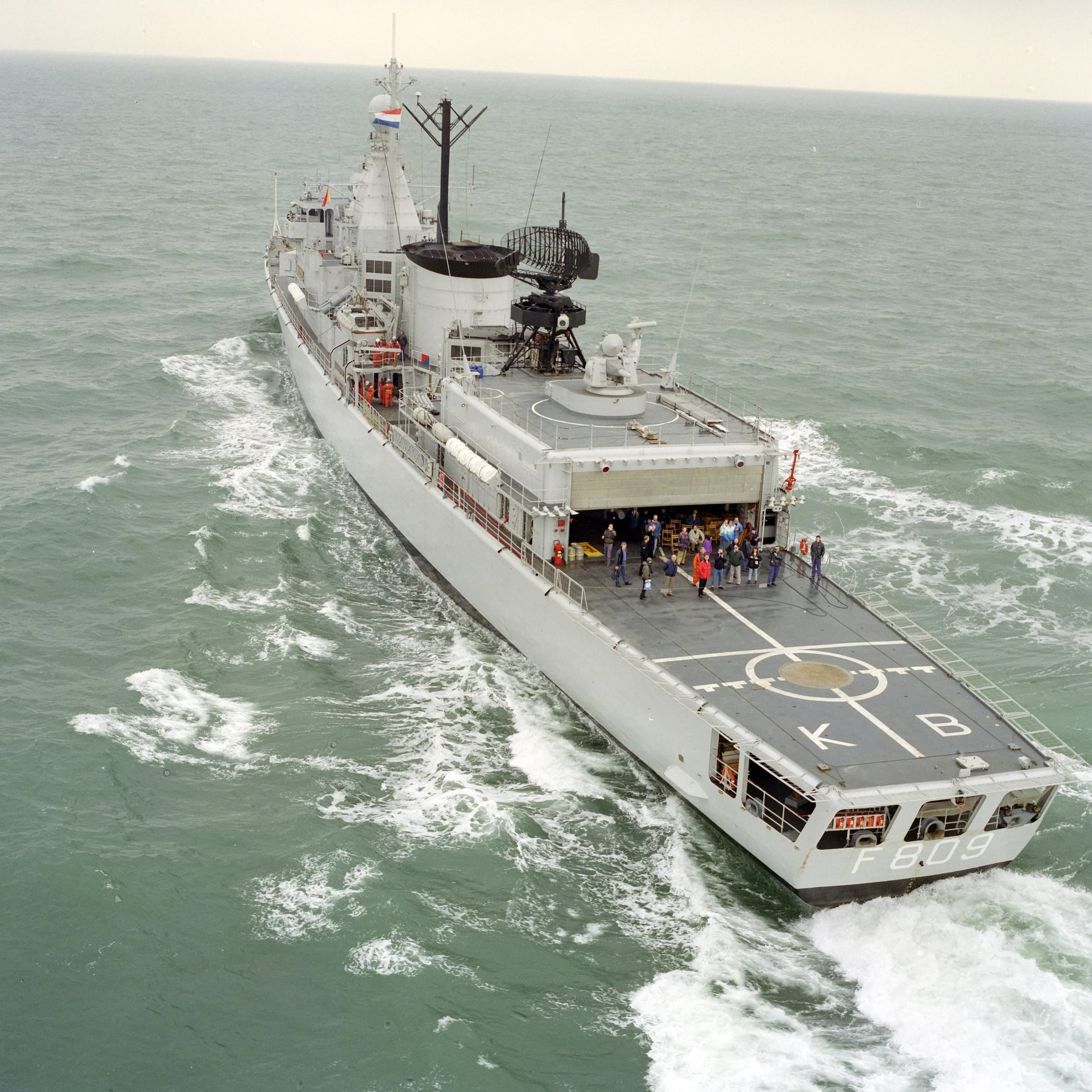
The hull form was derived from the earlier Van Speijk, but was significantly lengthened and optimized for stability in rough North Atlantic conditions. A COGOG (Combined Gas or Gas) propulsion system was adopted—using two Rolls-Royce Olympus TM3B and two Tyne RM1C gas turbines—giving excellent acceleration and a maximum speed of 30 knots. The propulsion layout provided both high speed and efficient cruising capability, ideal for NATO operations that required long-range endurance.
The sensor suite was a major point of pride for Dutch industry. Built around the Signaal LW-08 long-range air search radar and ZW-06 surface radar, complemented by STIR (Signal Tracking and Illumination Radar) fire control systems, the S-class frigates offered superior situational awareness for their size. These systems were entirely Dutch-designed, making the Kortenaer-class a showcase of the Netherlands’ growing defense technology independence.
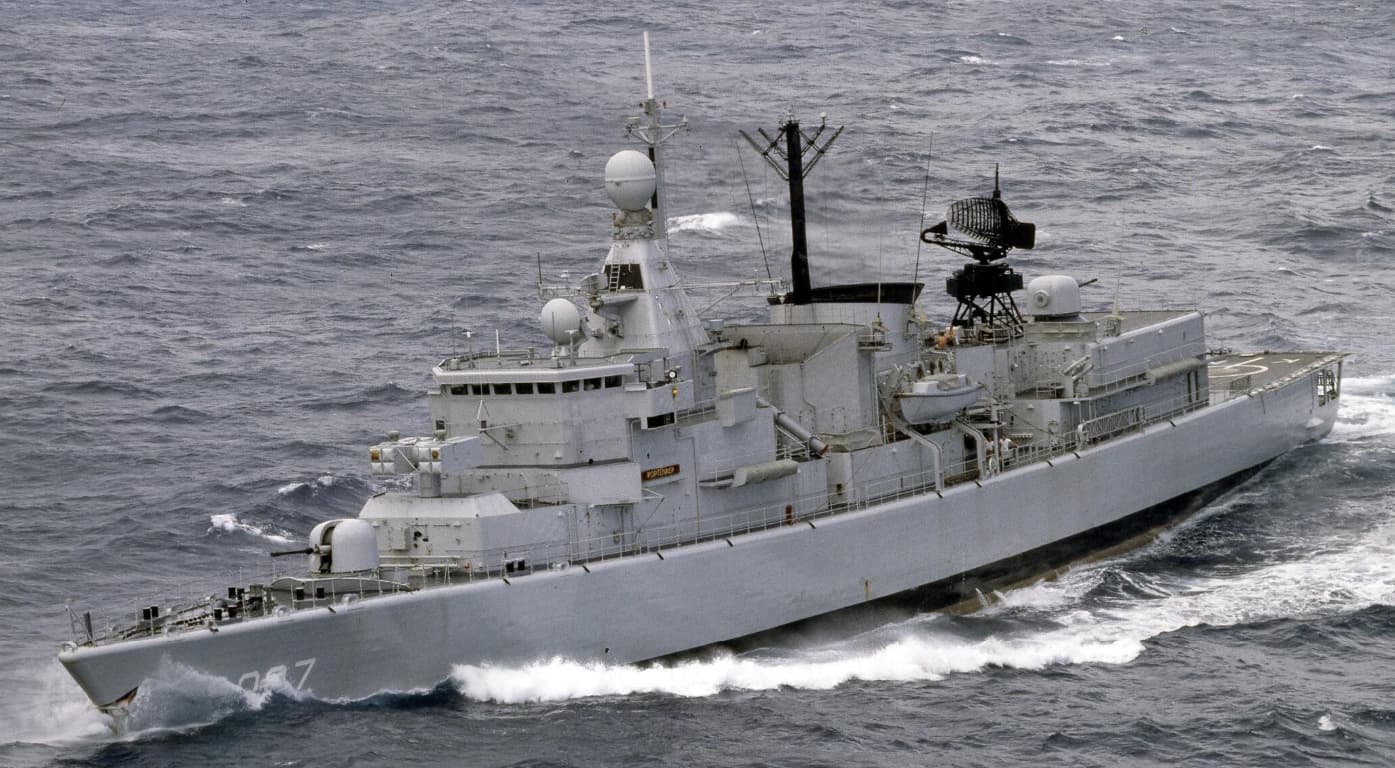
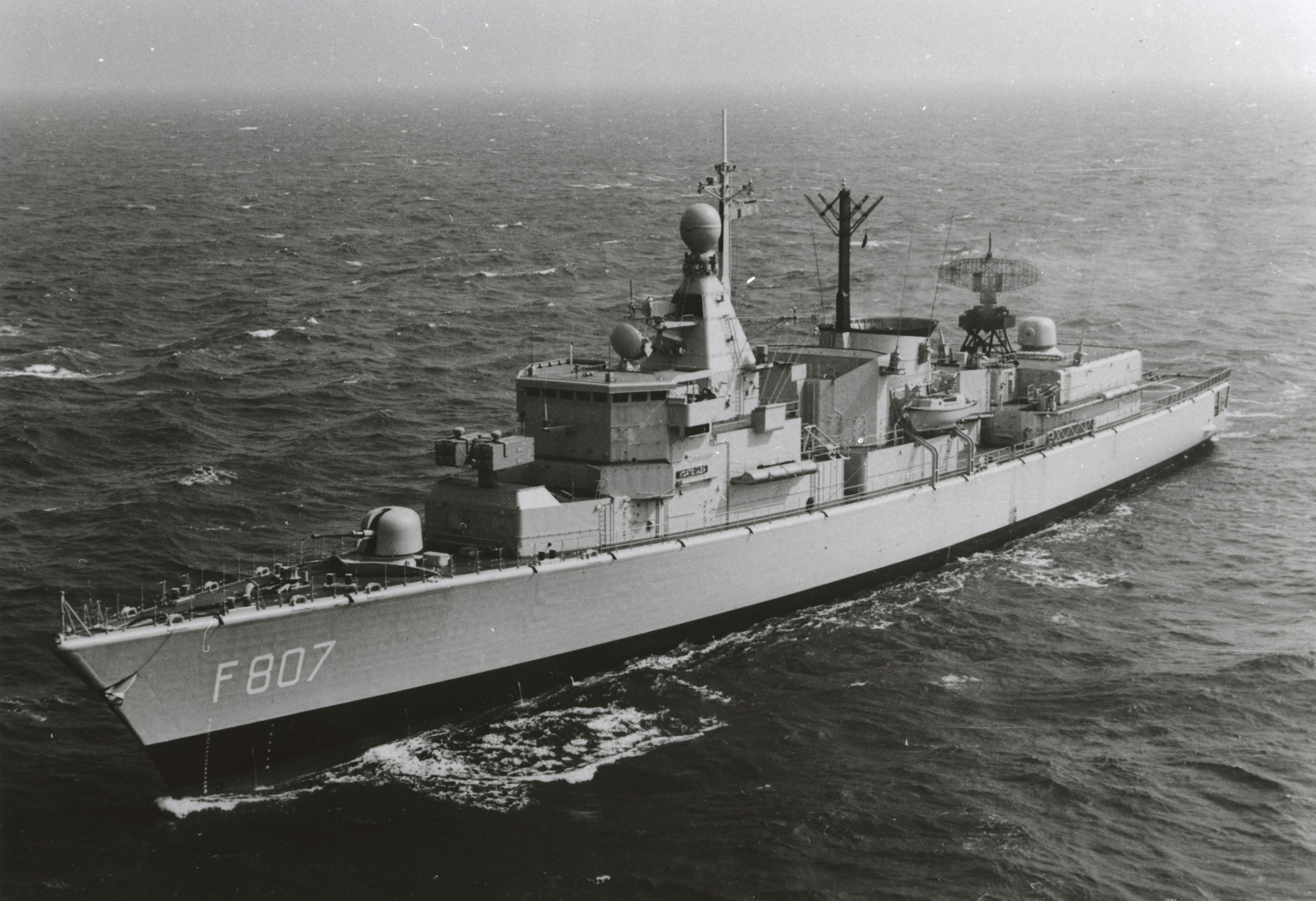
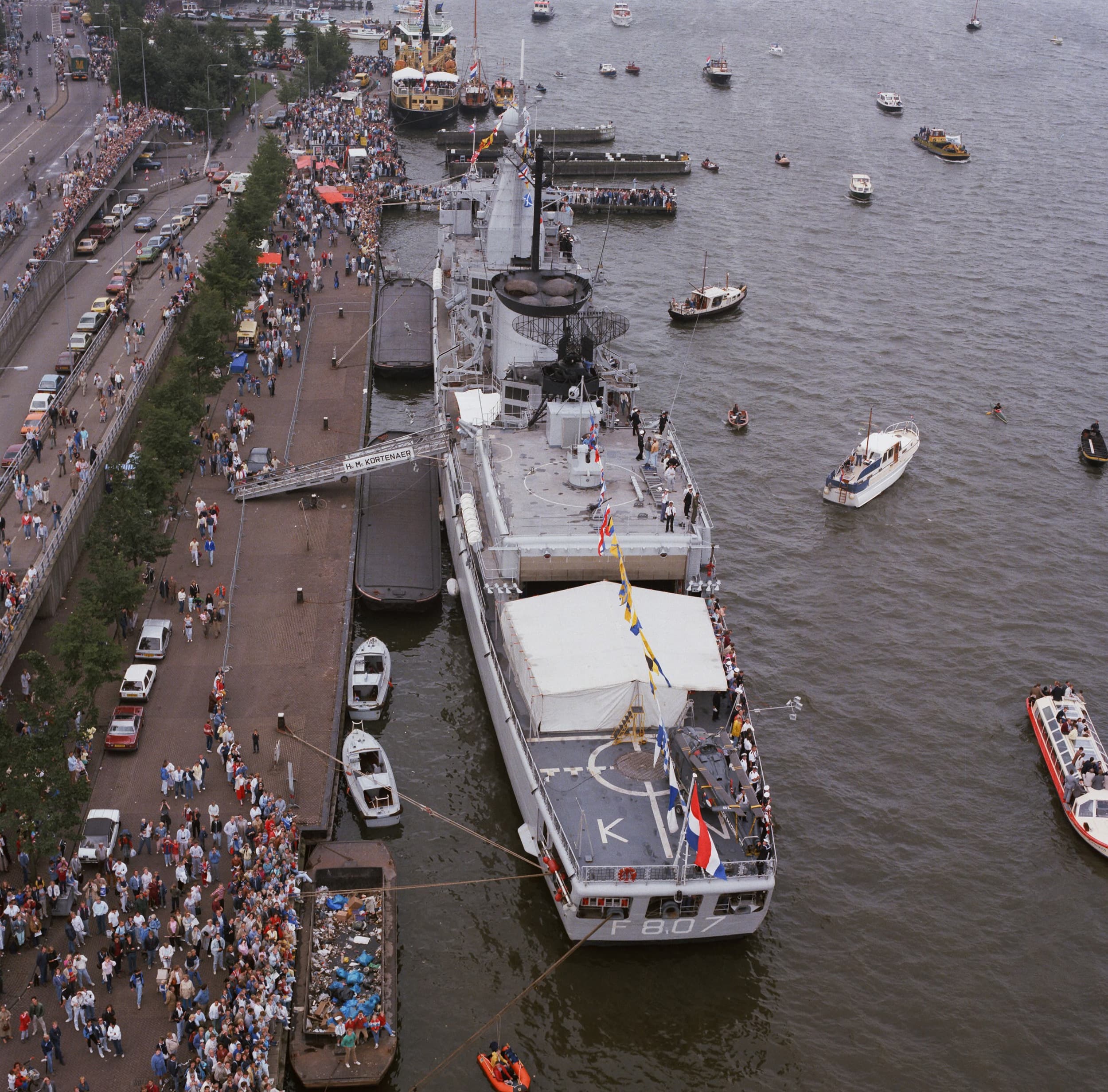
Construction began at several shipyards between 1974 and 1982. The first ship, HNLMS Kortenaer (F807), was laid down at KM de Schelde and commissioned in 1978, followed by her sister HNLMS Callenburgh (F808). Ultimately, ten ships entered Dutch service: Kortenaer, Callenburgh, Banckert, Tjerk Hiddes, Van Kinsbergen, Abraham Crijnssen, Pieter Florisz, Jan van Brakel, Witte de With, and Philips van Almonde. Each bore the name of a famous Dutch naval hero, linking modern frigates to the proud maritime traditions of the seventeenth century.
The armament layout evolved gradually during production. The earliest ships carried two 76 mm OTO Melara guns, one forward and one aft, supplemented by 20 mm Oerlikons. Mid-series vessels replaced the aft gun with a 40 mm Bofors L/70, offering a denser anti-aircraft capability. Finally, the late and modernised ships introduced the Goalkeeper 30 mm Close-In Weapon System (CIWS), a fully automatic Dutch-designed Gatling cannon capable of intercepting incoming missiles—a world-class defensive system that later saw export success.
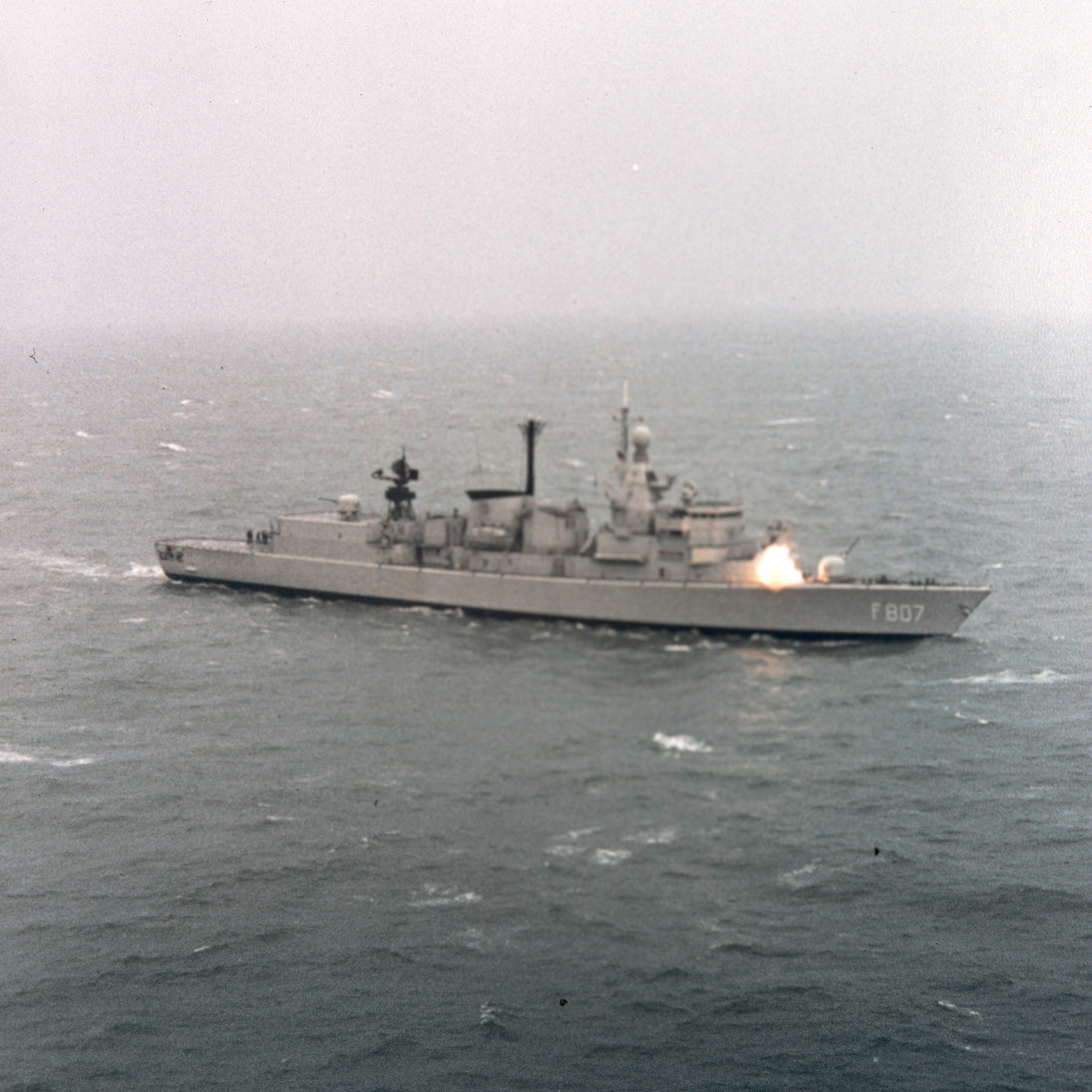
Across all variants, the ships shared the same missile armament: a Sea Sparrow short-range surface-to-air missile launcher for point defense, and two quadruple Harpoon launchers for anti-ship warfare. The Mk 32 triple torpedo tubes provided anti-submarine capability, supported by an embarked Westland Lynx helicopter equipped with sonar and torpedoes. Together, these systems made the Kortenaer-class among the most versatile frigates of the late Cold War.
During their service life, the Kortenaer-class ships participated in a wide range of NATO operations, including patrols in the North Atlantic, Mediterranean, and Persian Gulf. The class proved reliable and seaworthy, often praised for its excellent automation and small crew requirements compared to contemporary frigates of similar size.
In the 1990s, with the end of the Cold War and budget reductions, the RNLN began phasing out the S-class in favor of the Karel Doorman-class (M-class) frigates, which built directly upon the Kortenaer’s modular and electronic design philosophy. Several S-class frigates were sold to allied nations such as Greece and the United Arab Emirates, where they continued to serve for decades more.
The Kortenaer-class remains a symbol of Dutch naval engineering excellence, a product of careful design, national industry, and NATO collaboration. For War Thunder, it represents the Netherlands’ rise as a leader in frigate design and an ideal centerpiece for a Benelux naval tree.
| Dutch Variants |
|---|
| The Kortenaer-class had three main Dutch configurations during its service life. Each reflected improvements in close-in air defense and automation while retaining the same primary missile and ASW systems. |
Early Variant (e.g. HNLMS Kortenaer, HNLMS Callenburgh)
Armament configuration (as built)
Specification Details Main Battery 2 × 76 mm OTO Melara Compact guns (fore and aft) Secondary AA 2 × 20 mm Oerlikon mounts Missiles 1 × 8-cell RIM-7 Sea Sparrow SAM launcher; 2 × 4 RGM-84 Harpoon SSM launchers ASW 2 × Mk 32 triple 324 mm torpedo tubes Sensors Signaal LW-08 air search radar, ZW-06 surface radar, STIR-240 director Notes First pair of the class, with dual 76 mm layout for balanced fire sectors.
Mid Variant (e.g. HNLMS Tjerk Hiddes, HNLMS Van Kinsbergen)
Intermediate fit with improved medium AA capability.
Specification Details Main Battery 1 × 76 mm OTO Melara (forward only) Secondary AA 1 × 40 mm Bofors L/70, 2 × 20 mm Oerlikon Missiles 1 × 8-cell RIM-7 Sea Sparrow SAM launcher; 2 × 4 RGM-84 Harpoon SSM launchers ASW 2 × Mk 32 triple 324 mm torpedo tubes Notes Represents the bulk of the class; optimized for ASW, with reduced topweight and improved radar coverage.
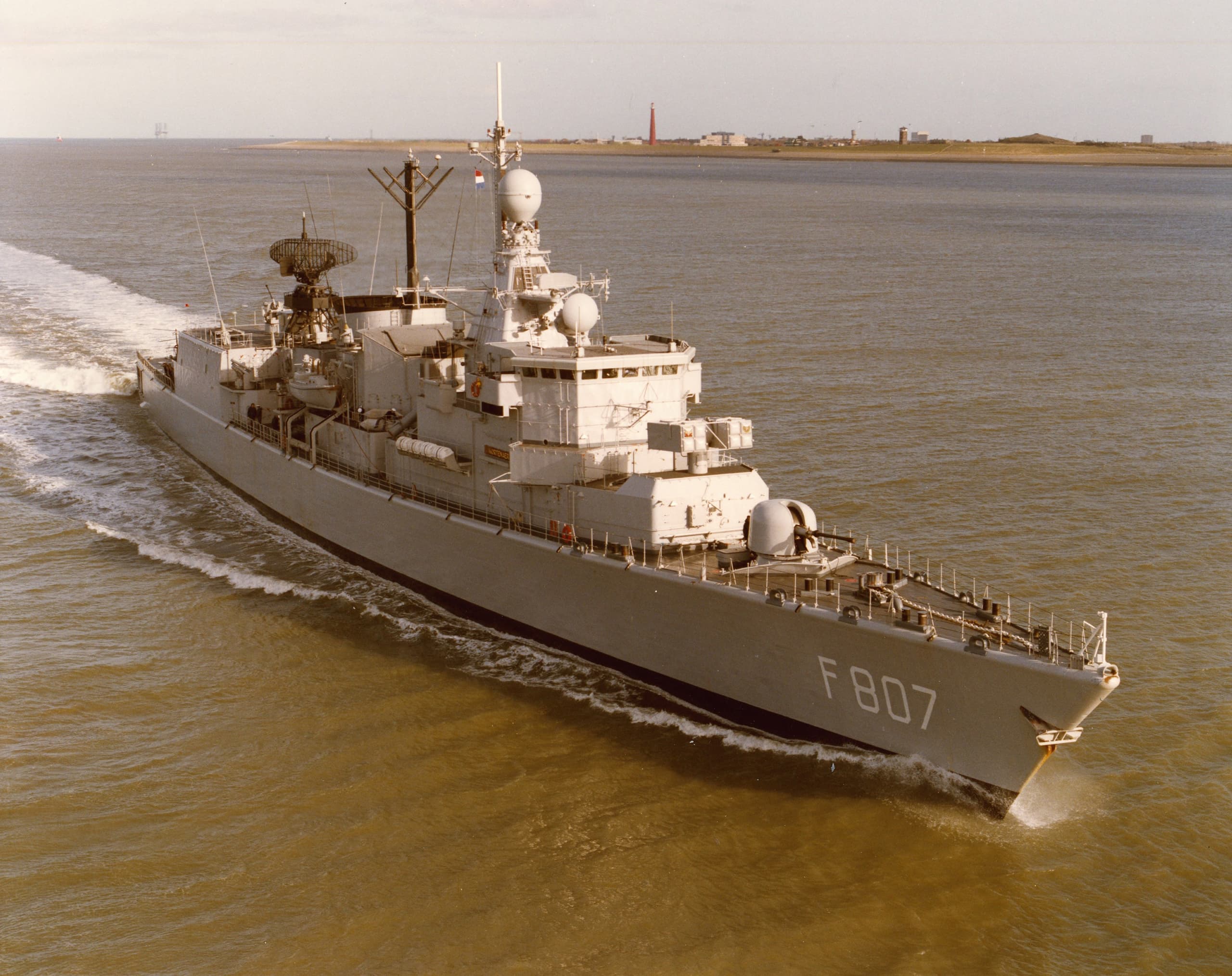
Late / Modernised Variant (e.g. HNLMS Witte de With, HNLMS Philips van Almonde)
Final Dutch configuration, introducing the Goalkeeper CIWS system.
Specification Details Main Battery 1 × 76 mm OTO Melara (forward) CIWS 1 × 7 Goalkeeper 30 mm Gatling CIWS (aft, replacing 76 or 40 mm) Secondary AA 2 × 20 mm Oerlikon mounts Missiles 1 × 8-cell RIM-7 Sea Sparrow SAM; 2 × 4 RGM-84 Harpoon SSM ASW 2 × Mk 32 triple 324 mm torpedo tubes Sensors Upgraded Signaal radar suite with STIR-180 and LW-08C Notes Represents the pinnacle of Dutch Cold War frigate design; Goalkeeper CIWS offers a unique native Dutch defensive weapon system.
Hr.Ms. Philips van Almonde, s-fregat (1981-2002)
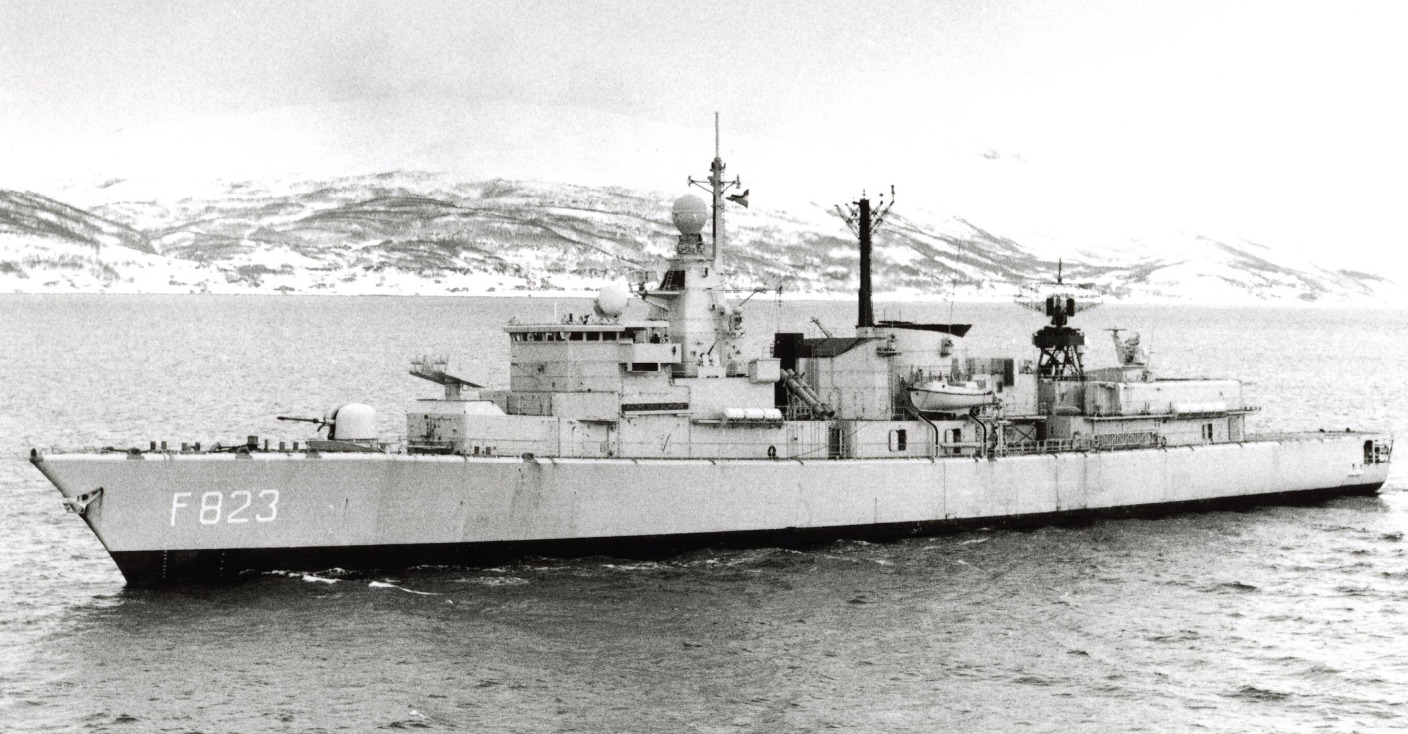
Specifications (General)
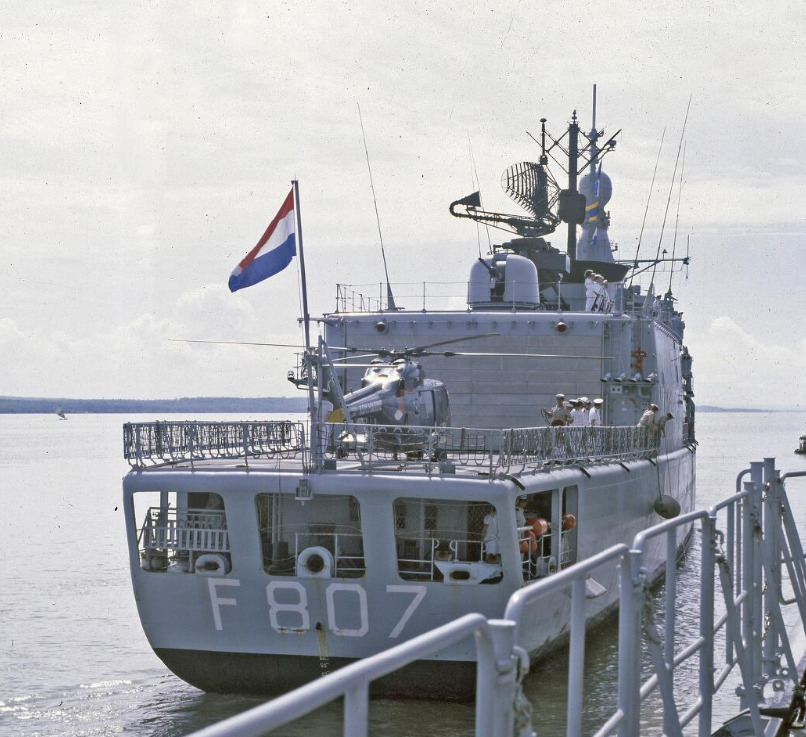
Specification Detail Displacement ~3,000 tonnes standard / 3,600 tonnes full load Length 130.5 m Beam 14.6 m Draught 4.25 m Propulsion 2 × Rolls-Royce Olympus TM3B + 2 × Tyne RM1C (COGOG) Speed 30 knots maximum Range 4,700 nmi at 16 knots Crew 176–185 (depending on variant) Helicopter 2 × Westland Lynx with hangar and deck
Place in War Thunder
The Kortenaer-class frigates would form a strong core for a future Benelux/Dutch naval tech tree, bridging the gap between postwar gun frigates and modern missile ships.
- The Early variant could appear at Rank VI, providing balanced gun and missile capability.
- The Mid variant would emphasize ASW and improved radar coverage.
- The Late/modernised variant, equipped with the Goalkeeper CIWS, would be a perfect top-tier Rank VI Dutch Coastal vessel: offering a domestically designed close-in weapon system unlike any other in NATO service.
These ships would introduce new gameplay mechanics:
- Sea Sparrow SAMs for medium-range air defense
- Harpoon SSMs for anti-surface strikes
- Lynx helicopter integration for future ASW systems
Together, the class offers a complete Cold War-era progression line: fully Dutch-designed, combat-proven, and technologically advanced.
Pictures
Sources
Sources
- Marineschepen.nl. (n.d.). S-fregatten (Kortenaerklasse). Retrieved November 2025, from https://marineschepen.nl
- Wikipedia. (2024). Kortenaer-class frigate. In Wikipedia, The Free Encyclopedia. Retrieved from https://en.wikipedia.org/wiki/Kortenaer-class_frigate
- Jane’s Fighting Ships. (1989–1990). Kortenaer-class (S-class) frigates. Jane’s Information Group.
- De Boer, C. (1985). De schepen van de Koninklijke Marine na 1945. Alkmaar: De Alk.
- Wertheim, E. (2003). Navies of the World: Frigates and Destroyers. HarperCollins.