- Yes
- No
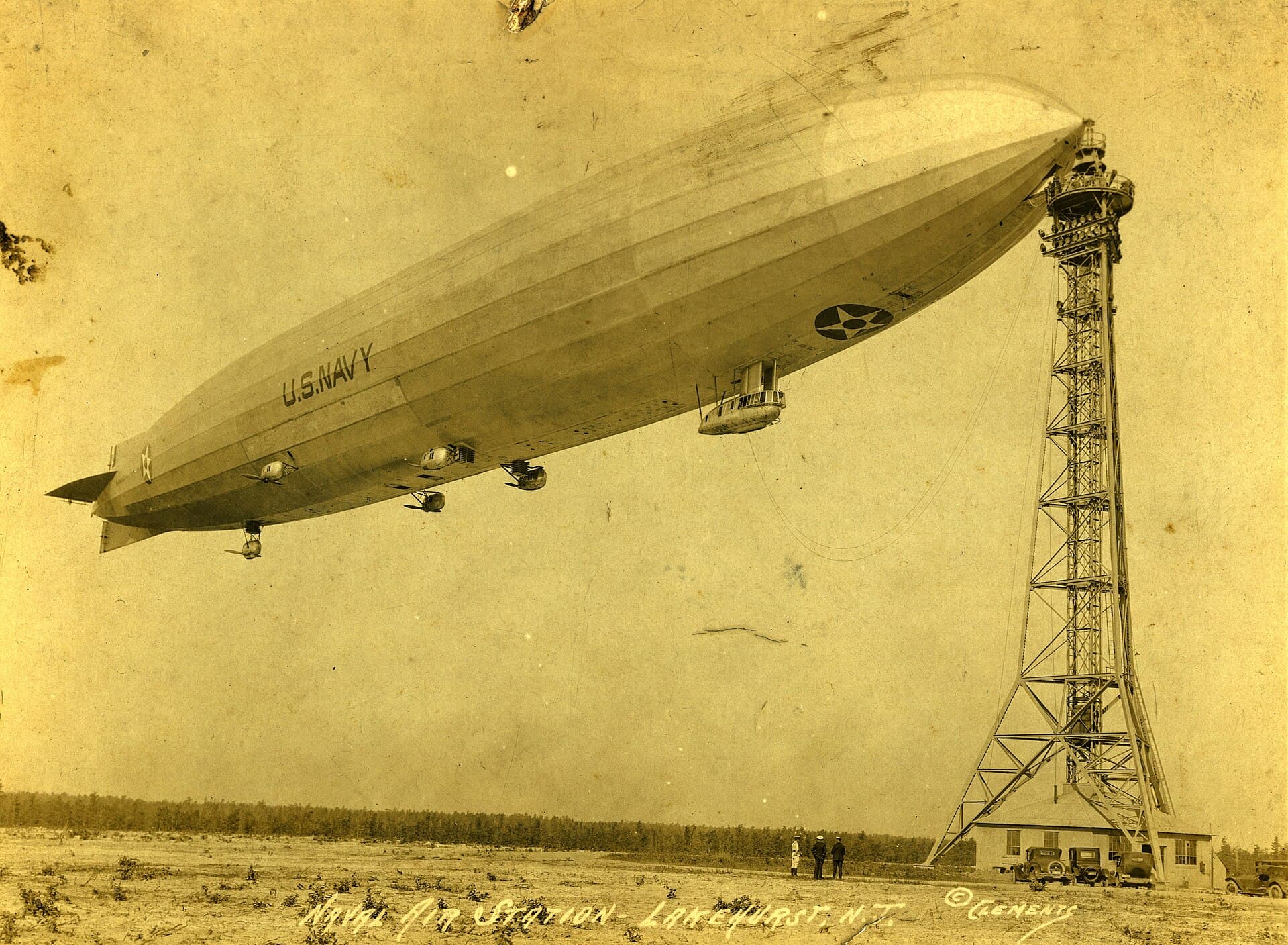
USS Shenandoah moored at NAS Lakehurst
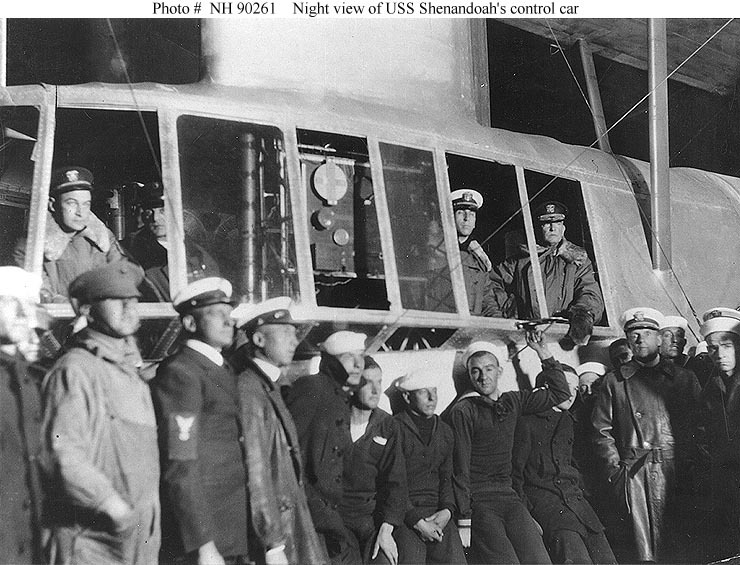
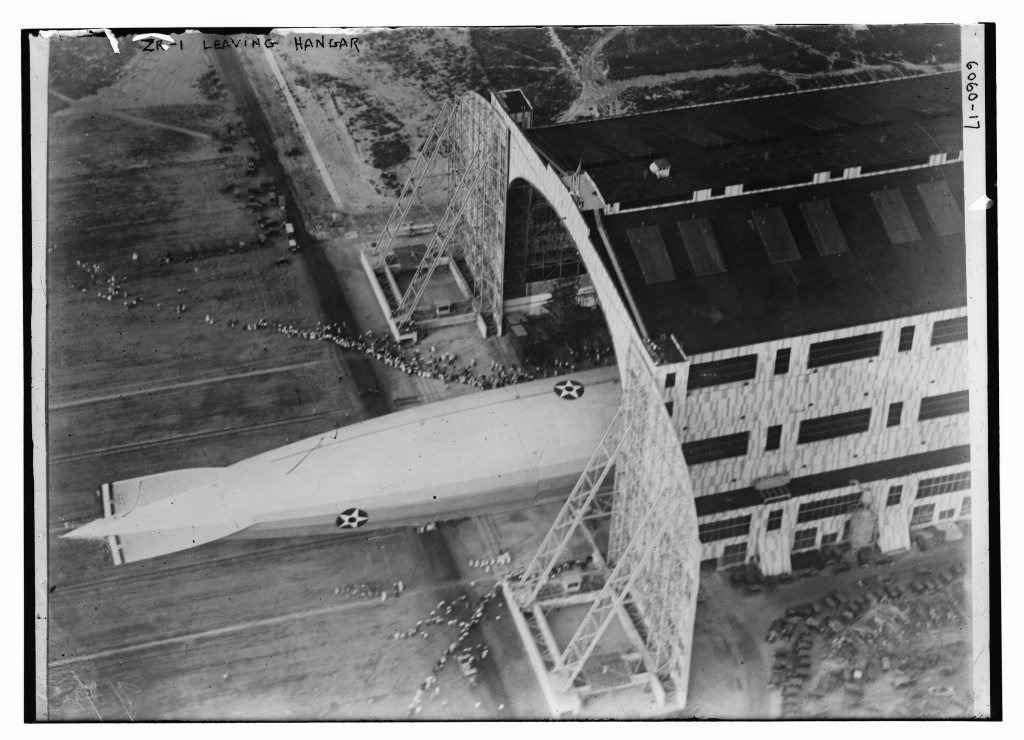
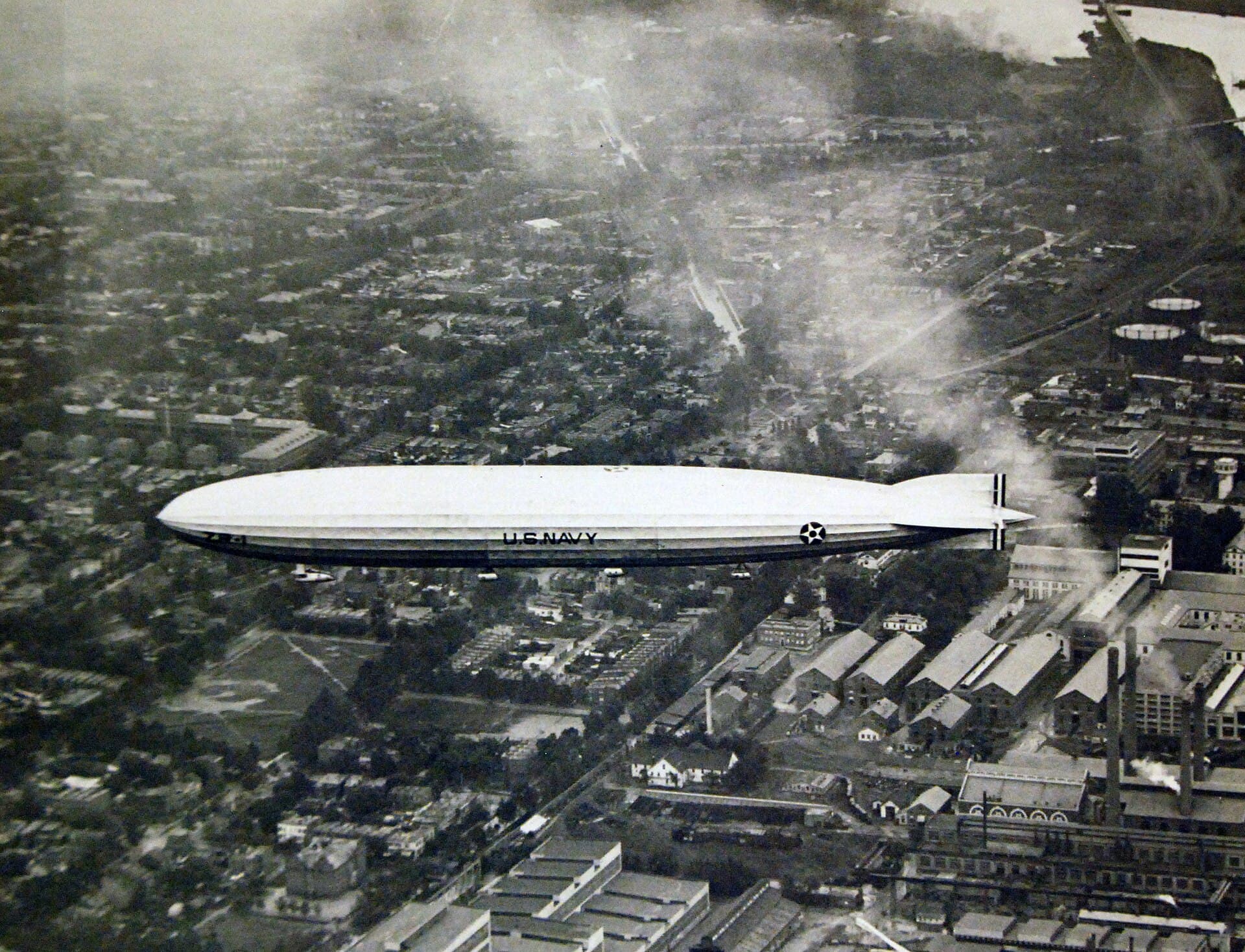
The USS Shenandoah (ZR-1) was the first of the four zeppelin airship built for the US Navy, and the only one that was designed as a bomber. Derived from German zeppelin design, the Shenandoah was filled with non-flammable helium to address one of the critical flaws of zeppelin - flammability. Though in the end, an oversight of the derived design resulted into its loss just two years after its completion.
Key Characteristics
- 680 ft (207.26 m)-long airship bomber, a one-of-a-kind after World War I.
- Filled with non-flammable helium provides massive survivability compared to German zeppelin.
- Rather small bombload, especially for its size.
- Extremely large and slow, typical for its type.
History
Spoiler
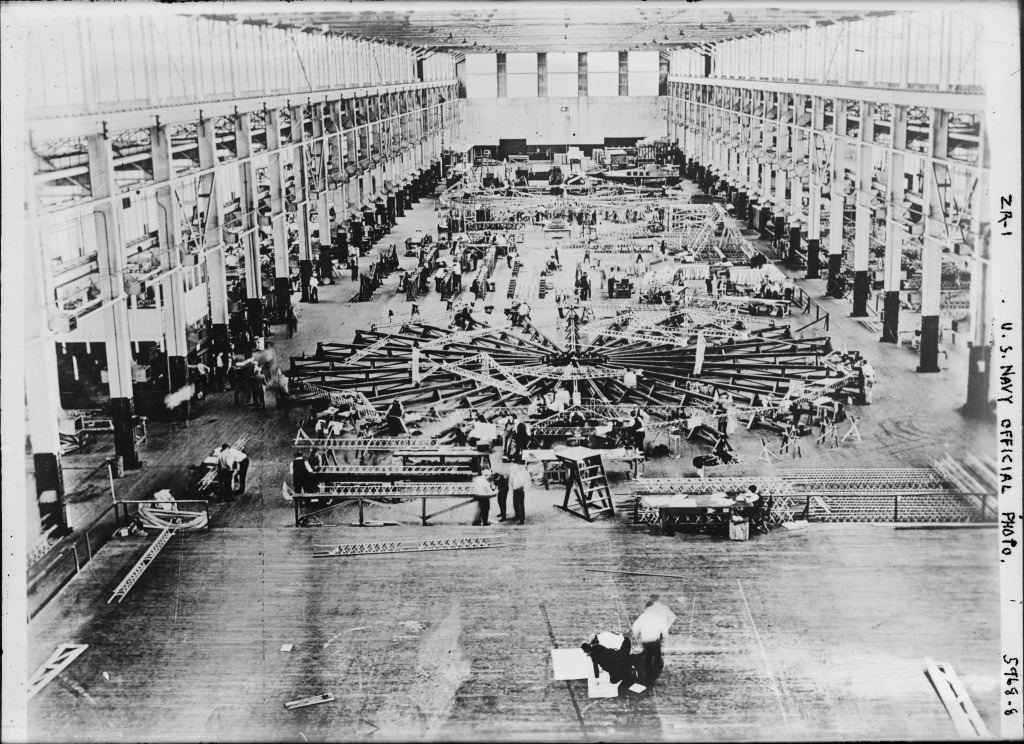
Production of components of the Shenandoah at the Naval Aircraft Factory
Since the end of World War I, the US Navy has developed an interest in operating its own fleet of airships. During that time, airships offered superior range compared to fixed-wing aircrafts, and provides much larger space for communication equipment. This allowed them to be used as “eyes of the fleet” as demonstrated by its use by the Royal Navy and the Imperial German Navy during the Great War. Therefore, a decision was made to procure new airships for the USN in 11 July 1919.
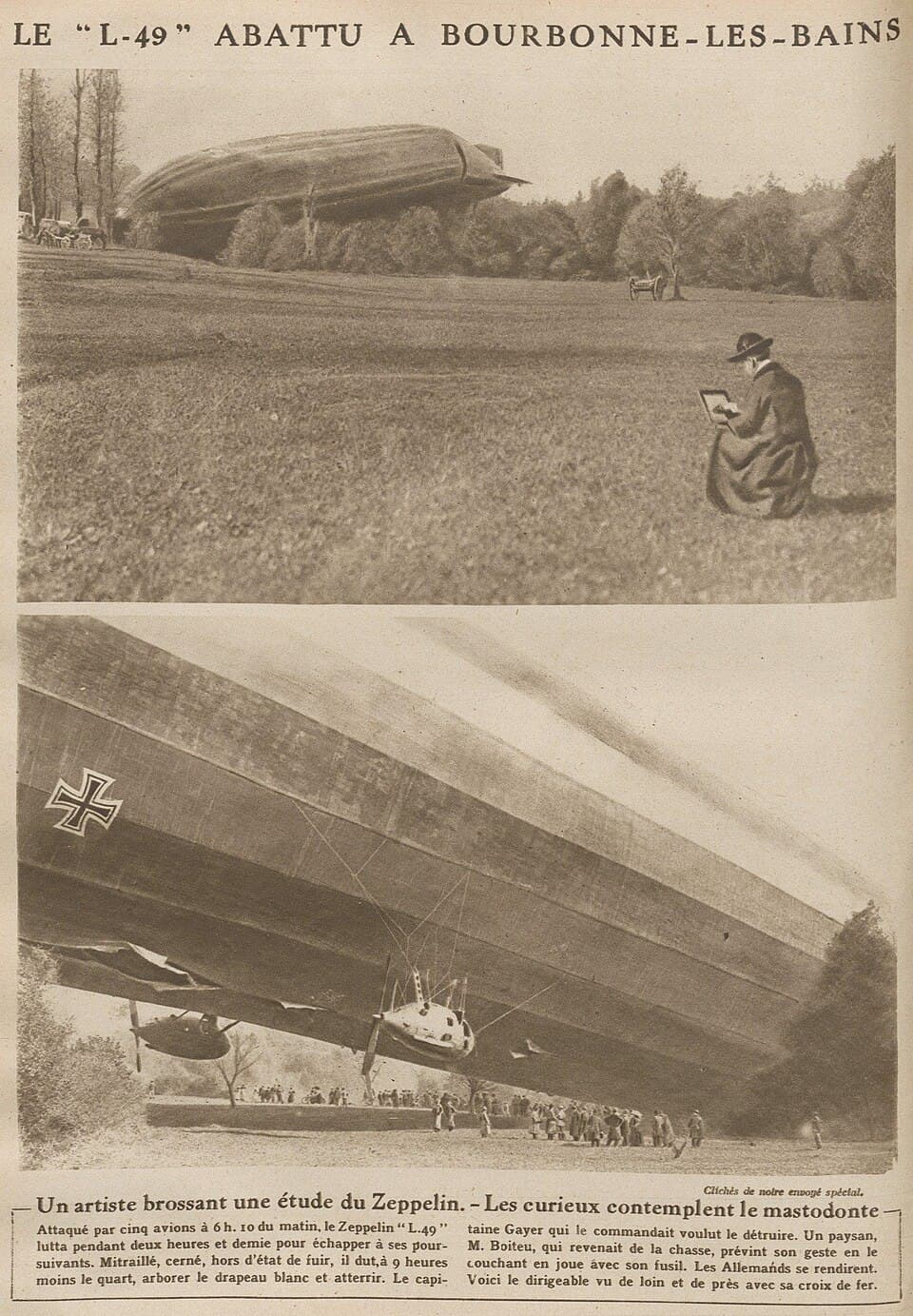
The mostly-intact wreck of the Zeppelin L 49 (LZ-96), which the Shenandoah’s design was derived from
The USN’s first airship was to be reverse-engineered from the German zeppelin, specifically from the wreck of the Zeppelin L 49 (LZ-96), a U-class zeppelin that crash landed on Bourbonne-les-Bains, France on 20 October 1917. The U-class was designed as a “height climber”, to be used exclusively for high-altitude bombing and reconnaissance missions at the expense of other qualities.
The Naval Aircraft Factory, the USN’s in-house aircraft manufacturer, was tasked with ironing out the defects of the original design, although whether the original design or the alterations were at fault for the subsequent crash of the airship is still subject of debate.
To take advantage of then-rare helium reserve and to address safety issue, the Shenandoah was filled with non-flammable helium, which provided less lift but significantly better safety and survivability. Unlike German zeppelins that usually stowing bombs outsides, Shenandoah has its own internal bombing bay, although its capacity is limited to only 8× 500 lb (230 kg) bombs.
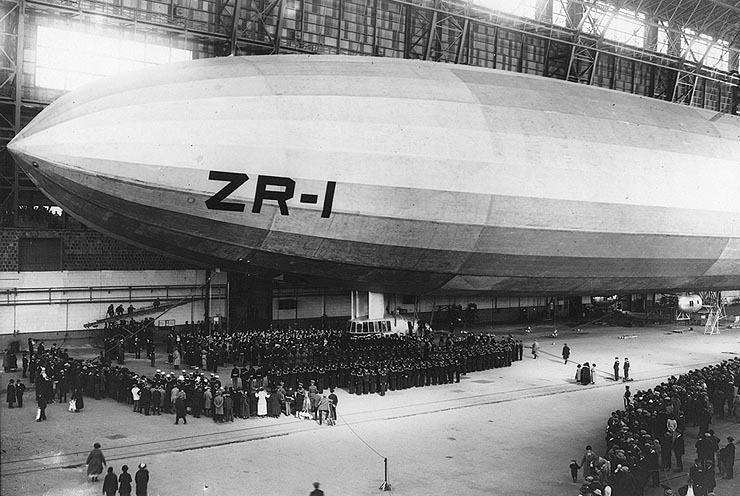
Christening ceremony of the Shenandoah on 10 October 1923
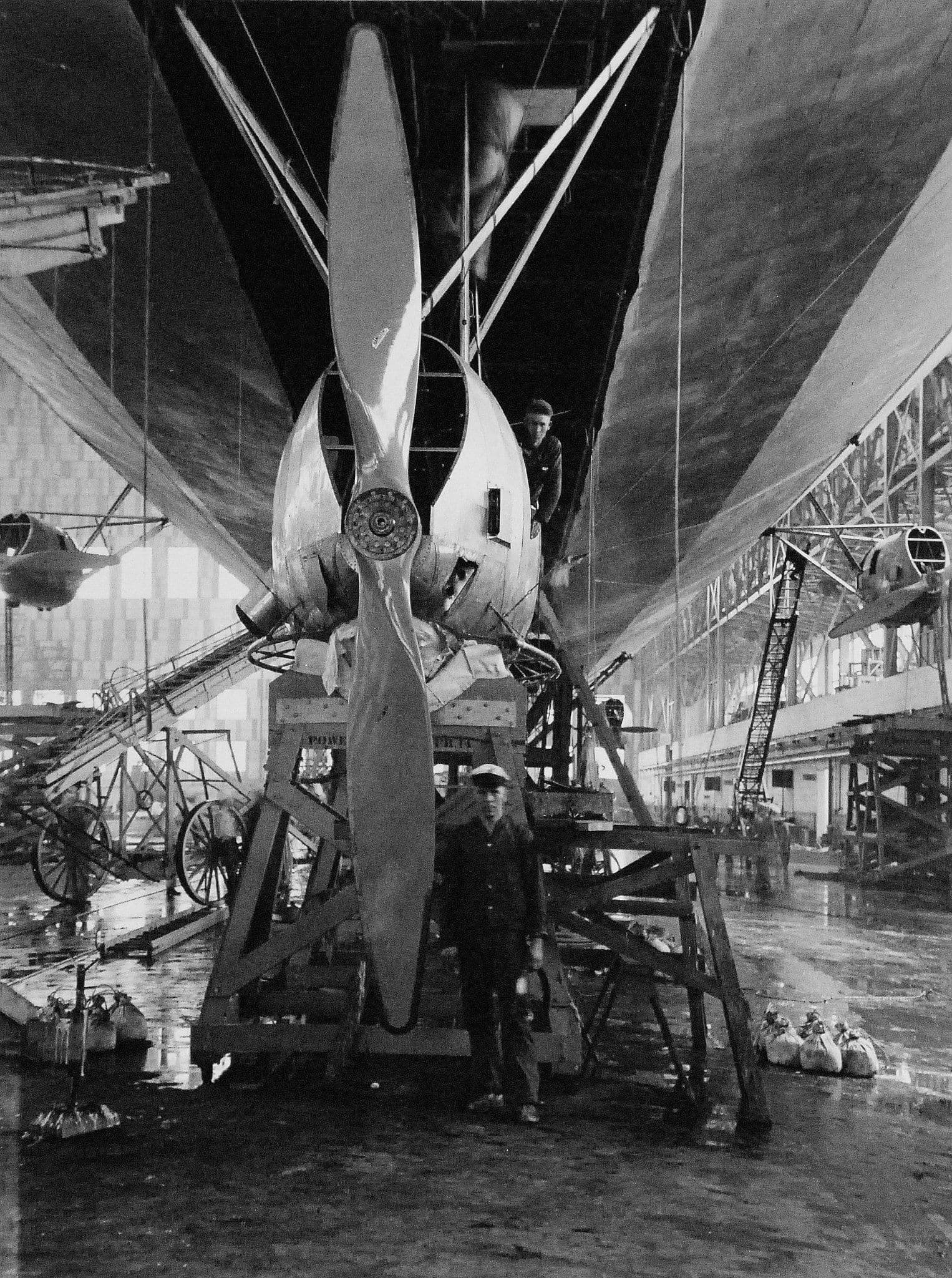
The Shenandoah’s parts was constructed at the Naval Aircraft Factory in Philadephia on 24 June 1922, and were later assembled at the Naval Air Station (NAS) Lakehurst, New Jersey. It was completed on 20 August 1923 and made its first flight on 4 September that same year.
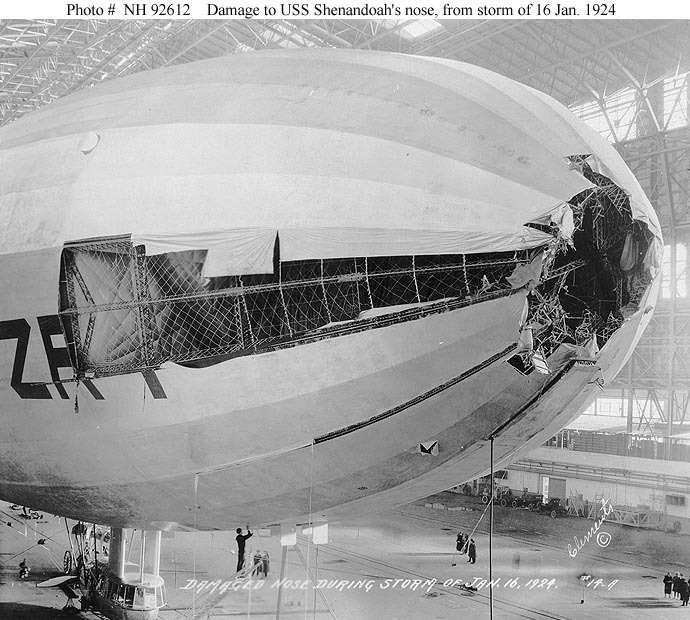
Damage on the nose of the Shenandoah after a storm on 16 January 1924
After her first flight, the US Navy began testing Shenandoah’s flight worthiness by flying it into adverse weather, as the airship was expected to regularly encounter such scenario during its assigned scouting missions. During this time, it also took part in fleet exercise, in which it successfully detected “enemy” forces, although foul weather hindered the communication between it and the surface-level fleet.
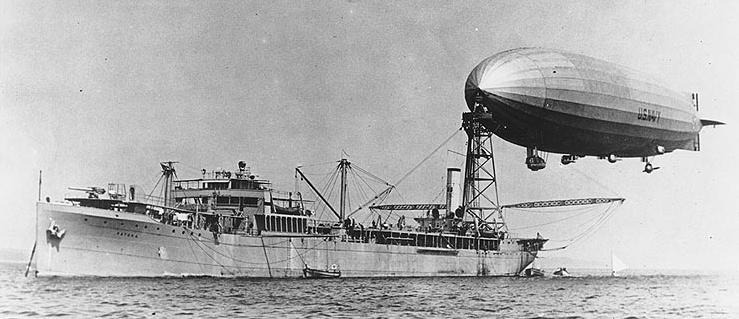
** USS Patoka (AV-6), a modified airship tender, with the Shenandoah moored alongside
On 16 January 1924, Shenandoah was blown off from its mooring at NAS Lakehaust during a storm, resulting in a significant damage on its tail and nose. This neccessitated repairs that lasted six months. As a result, a plan to use the Shenandoah for the Arctic experdition was cancelled. After repair, Shenandoah participated in a mooring test with the recently modified oiler USS Patoka (AV-6) in August 1924.
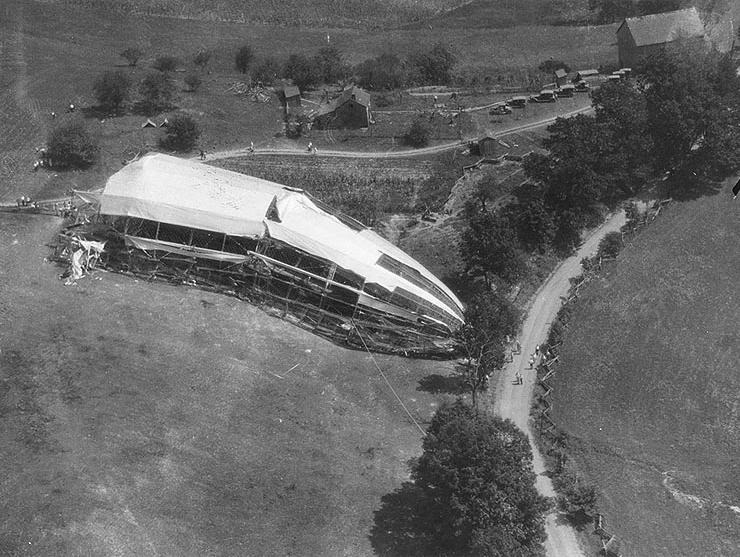
Parts of the wreck of the Shenandoah in Caldwell, Ohio.
After participating in another exercise, Shenandoah was destroyed on 2 September 1925, about 3 years after its first flight. As the airship flew over Caldwell, Ohio during its promotional flight across the midwest, it was caught in a storm that break the airship into three parts. An investigation later determined that the removal of eight out of eighteen safety valves from the helium gas bag resulted into it being unable to release excess pressure in time, resulting in the break-up. The valve’s removal was intended to save costs for procuring more helium to replace the one that was released during such emergency.
Extra images

Specifications
Spoiler
- Length: 680 ft (207.26 m)
- Width: 78 ft 9 in (24.00 m) (maximum diameter)
- Height: 93 ft 2 in (28.4 m)
- Weight: 77,500 lb (35,200 kg)
- Propulsion: Six (later five) 300 hp (220 kW) eight-cylinder Packard gasoline engines
- Top speed: 69 mph; 110 km/h
- Range: 5,000 mi (4,300 nmi; 8,000 km)
- Capacity: Useful lift: 53,600 lb (24,300 kg)
- Nominal gas volume: 2,100,000 ft³ (59,465 m³) (at 95% inflation)
- Crew: 40
- Defensive Armaments: 6× 0.30 in (7.62 mm) Lewis machine guns
- Suspended armaments: 8× 500 lb (230 kg) bombs in an internal bomb bay
Sources
Spoiler
USS Shenandoah (ZR-1) - Wikipedia
https://www.history.navy.mil/research/histories/ship-histories/danfs/s/shenandoah-ii.html
Robinson, Douglas H., and Charles L. Keller. “Up Ship!”: U.S. Navy Rigid Airships 1919–1935. Annapolis, Maryland: Naval Institute Press, 1982. ISBN 0-87021-738-0
Trimble, William (1990). Wings for the Navy: a history of the Naval Aircraft Factory, 1917-1956 . Annapolis: United States Naval Institute. ISBN 9780870216633.
Ill Wind: The Naval Airship Shenandoah in Noble County, Ohio.* Gray, Lewis. Gateway Press: Baltimore, 1989
Keirns, Aaron J. “America’s Airship Disaster”: The Crash of the USS Shenandoah Howard, Ohio: Little River Publishing. ISBN 978-0-9647800-5-7