- Yes
- No
- New vehicle
- Modification
- No

Nakajima J5N1 night fighter
The Nakajima J5N1 night fighter is a Japanese prototype heavy interceptor fighter that was developed in 1944. This plane survived the war along with 1 J5N1 prototype and two prototype Nakajima J5N1 kai. After the war, this plane probably ended up in the USA for testing.
History
In January 1943, the Japanese Navy Command sent the Shi-18 requirements for a new heavy interceptor fighter to the Nakajima factories. At this stage of the war, the Japanese Navy Command was fully aware that it was necessary to prepare against future American bombings. That’s why they ordered the construction of a heavily armed and armored interceptor fighter. The Navy’s requirements were as follows:
- Engines: type Homare 21, two engines each with 1990 horsepower
- Maximum speed: 667 km/h (altitude 6,000~6,500 m)
- Climb rate: in 6 minutes up to 6,000 m, ceiling 11,000 m
- Armament: Equipped with two 20 mm machine guns and two 30 mm machine guns
- Additionally, it would be required for the plane to have an armored cockpit and fuel tanks
- The plane was supposed to be maneuverable and easy to fly
In April 1943, the Nakajima engineers met with the navy command for the first time, where they presented the preliminary design and settled the construction details. In May 1943, it was decided how many prototype and pre-production planes would be built, a total of 15 planes, and a few design changes were agreed upon. On May 11, the design was officially approved, and construction of a wooden model of the new fighter began at Nakajima’s second plant in Koizumi. The model was completed in August, and the navy committee inspected it on August 17 and 18, 1943. The navy had a few comments about the model, and the revised model was approved by the Japanese Navy Command on October 18, giving the green light to start work on the Nakajima J5N prototype. By January 20, 1944, the technical documentation was 50% complete. The first Nakajima J5N1 prototype was ready on June 20, 1944, and it made its first flight on July 8, 1944. In tests, it quickly turned out that the plane didn’t meet the navy’s requirements. Although it was very maneuverable for a twin-engine plane, it had a lower maximum speed than expected and a slower climb rate. On top of that, the Ha-45-21 engines were faulty (they had issues with oil leaks and vibrations), the pilot’s visibility from the cockpit was worse than planned to the rear and sides, there were landing gear problems, and airflow disturbances around the engine nacelles. In testing, they tried to identify and fix these issues. However, on August 18, 1944, the first prototype crashed during landing due to landing gear failure, though the plane was later repaired. In the second prototype, larger flaps were installed to address the airflow problems, but on November 25, it crashed during a test flight. In October 1944, the navy command decided to reduce the number of J5N prototypes to just six, which basically meant cancelling the project in favor of the J7W fighter. By that time, four J5N1 prototypes had been built (the second prototype crashed), and in November 1944 and February 1945, the last two modified two-seater J5Ns were created, which initially were used only for flight tests. However, this was not the end for Nakajima J5N1 planes. In the spring of 1945, due to the increasing American air raids, the Japanese navy staff decided to try using them as night fighters with guns in a Schräege Musik arrangement, like those used in Nakajima J1N1-S and Sa fighters. In the third prototype, four Type 99 Mark 2 guns were installed behind the cockpit, and a similar modification was made to the two-seater Nakajima J5N1 Kai. This setup was tested until the end of the war, and during the raid on Nakajima factories on July 10, 1945, the first J5N prototype was damaged, and the fourth prototype was destroyed. By the end of the war, the fifth J5N prototype (i.e., the two-seater J5N1 Kai) was heavily damaged due to a landing gear failure during landing. The only two operational Nakajima J5Ns until the end of the war were prototype number 3 and number 6 (J5N1 Kai), which were tested until the end of the war. It’s not entirely certain, but after the war ended, two Nakajima J5N planes were sent to the USA, and those were the sixth J5N1 Kai and most likely the third J5N1 prototype (though it could have also been the first prototype). To this day, elements of the single-seat Nakajima J5N1 have survived.
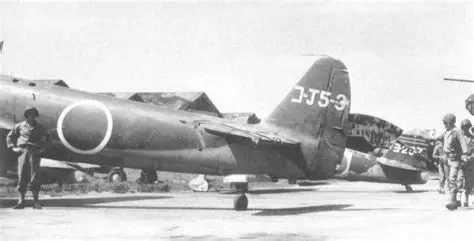


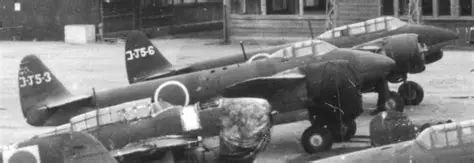
Art about Nakajima J5N1 night fighter
Construction description
The Nakajima J5N1 night fighter is almost identical to the Nakajima J5N1 from the game. The only difference is the installation of four Type 99 Mark 2 cannons on the top of the plane behind the cockpit. It’s not certain whether the forward-firing armament has been preserved.
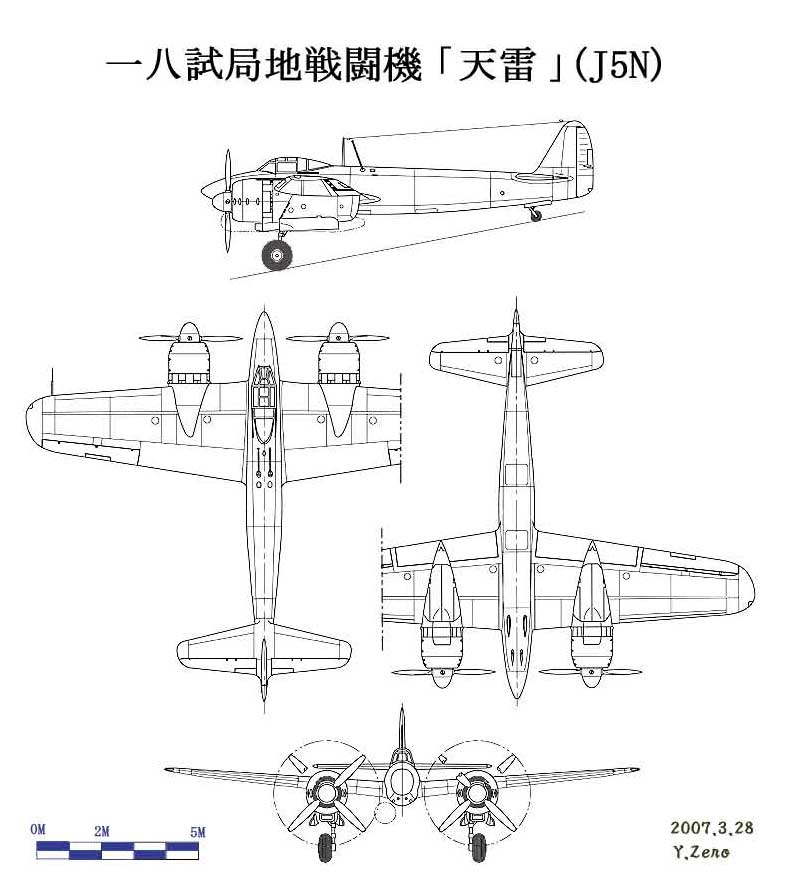
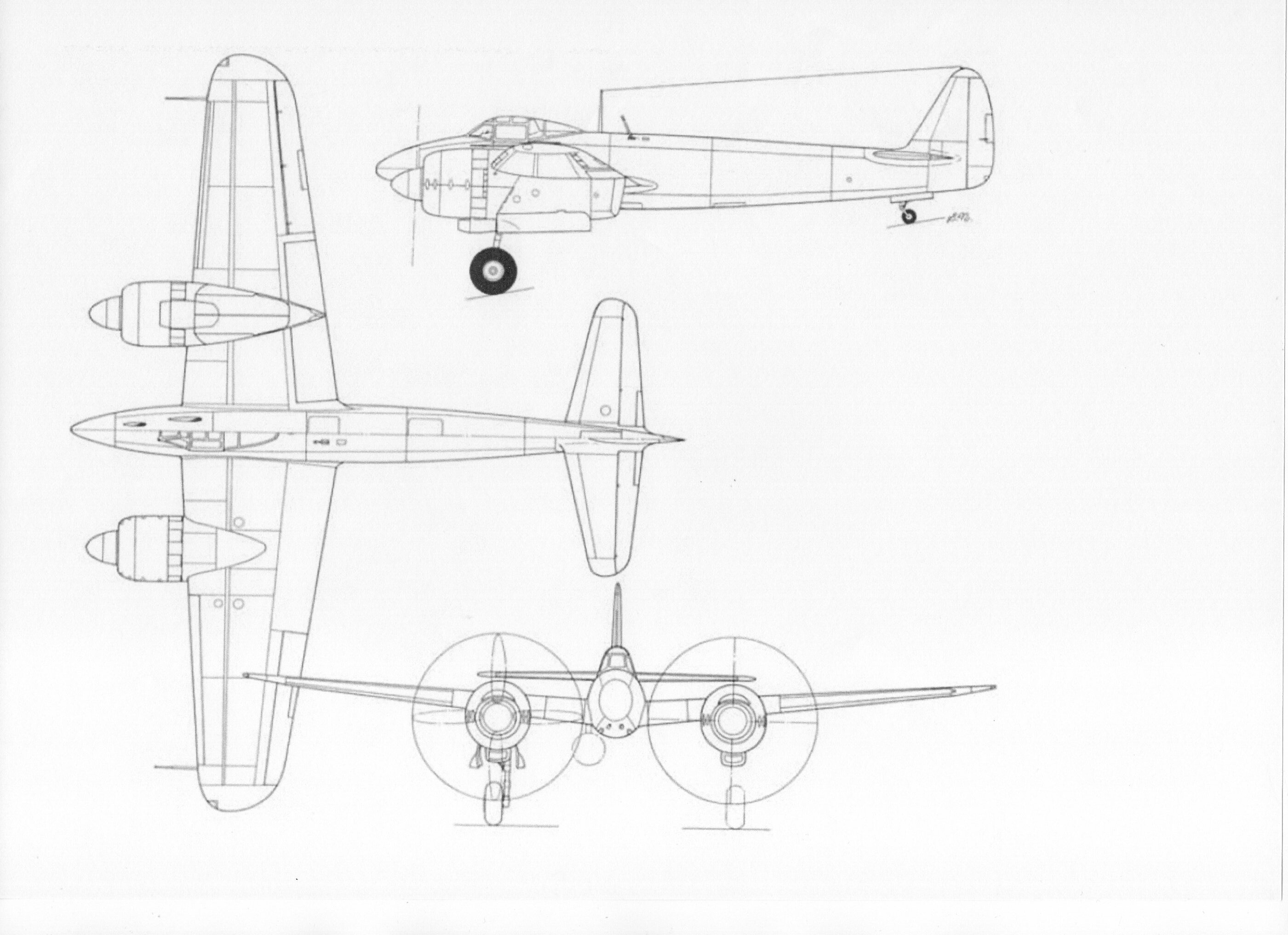
General characteristics
- Crew: 1
- Length: 11,50 m
- Wingspan: 14,50 m
- Height: 3,51 m
- Wing area: 35,0 m2
- Empty weight: 5000 kg
- Gross weight: 7 200 kg
- Maximum Take-off Weight: 8205 kg
- Powerplant: 2 × Nakajima NK9H Homare 21 (Ha-45-21) air-cooled, two-row, eighteen-cylinder engine with a takeoff power of 1,464 kW (1,990 hp)
- Propellers: Four-blade metal propeller with variable pitch and a diameter of 3,100 mm
Performance
- Maximum speed: 597 km/h
- Cruise Speed: 370 km/h
- Range: 1 482 km
- Maximum Range: 2 740 km
- Service ceiling: 11 300 m
- Time to Climb to: 4 minutes and 26 seconds to reach 5,000 m
Armament
- Guns:
- 2 x 20 mm cannons Type 99 Model 2 in the fuselage under the pilot (?)
- 2 x 30 mm cannons Type 5 in the fuselage under the pilot (?)
- 4 x 20 mm cannons Type 99 Model 2 behind the cockpit
- Bombs:
- 2 x 30 kg bombs
- 2 x 60 kg bombs
- 1 x 250 kg bombs (?)
- Fuel dump tanks:
- 1 x dump tanks under the hull
Armour
- Front windshield made of 70 mm bulletproof glass
- 20 mm armor plate in front of the pilot
- Self-sealing fuel tanks
Special thanks
Summary
The Nakajima J5N1 night fighter is an interesting plane for Japan in War Thunder. This heavy fighter, thanks to the guns on its back, can ambush enemy planes from below. This plane could become a modification for the existing J5N1 in the game or become a new plane. I encourage you to discuss in the comments and to share your own knowledge on this subject.
Finally, I apologize for the linguistic and logical errors because unfortunately English is not my main language and I had to use google translator.
Internet sources
天雷 (航空機) - Wikipedia
Nakajima J5N Tenrai - Wikipedia
Two-seat “TENRAI” | Secret Projects Forum
Japanese Aircraft of WWII: Nakajima J5N1 Tenrai
Nakajima J5N1 18-shi tenrai : Nakajima
Уголок неба ¦ Nakajima J5N Tenrai
Nakajima J5N Tenrai - Emmas Planes
Warplanes of Japan: Nakajima J5N1 Tenrai - SilverHawkAuthor Website Military History Materials
局地戦闘機 『天雷』/中島Nakajima J5N | 大日本帝国軍 主要兵器
Book sources
- 日本航空機辞典 1910年(明治43年)~1945年(昭和20年) 上巻 (Encyclopedia of Japanese Aircraft 1910 (Meiji 43) – 1945 (Showa 20), Volume 1) page 269
- 野沢正『日本航空機総集 中島篇』(Masaru Nozawa ‘Comprehensive Collection of Japanese Aircraft: Nakajima Volume’) page 230-233
- Japońskie Samoloty Marynarki 1912-45 część II (Japanese naval aircraft 1912-45 part II) page 131-132
- Japanese Heavy Fighters 1937-1945 , page 133-135
*『日本軍用機写真集』1 (ファイター) ,文林堂, (“Japanese Military Aircraft Photo Collection 1 (Fighters)”, Bunrindo) page 200-203 - Lotnictwo 1/2025 (Aviation 1/2025) page 60-66
- Model-art-595-Night-fighters.pdf - Dysk Google

Thank you for reading the suggestion, see you in the next one. Good luck pilots