- Yes
- No
- (independent) BeNeLux tree
- France: BeNeLux subtree
- other
- no/negative
- 1x twin 12.7 mm Browning
- 1x twin 20 mm Oerlikon
- both versions
- other (please comment)
- no/negative
TL;DR: M484 Dinant – Belgian MSI-class minesweeper, 14.7–15 kt, twin 12.7 mm or 20 mm guns, specialized in shallow-water mine countermeasures.
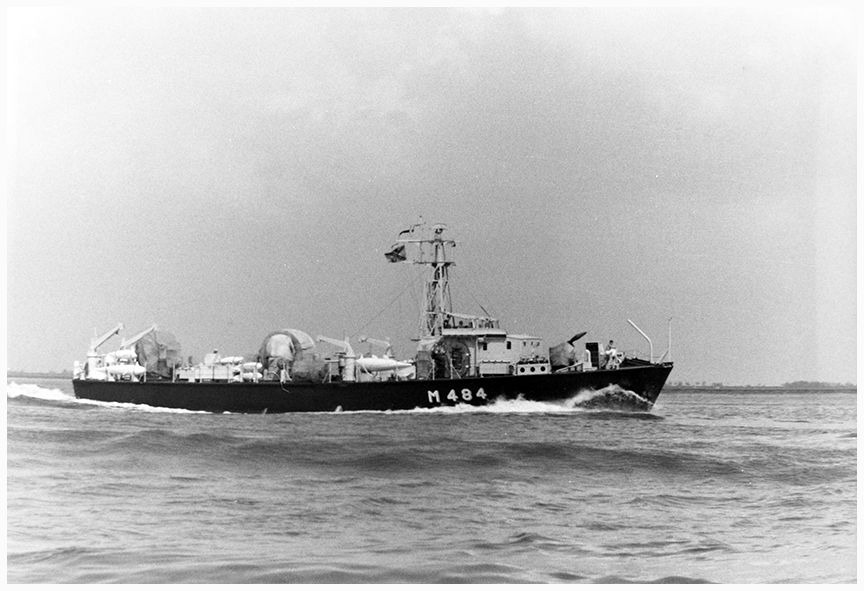
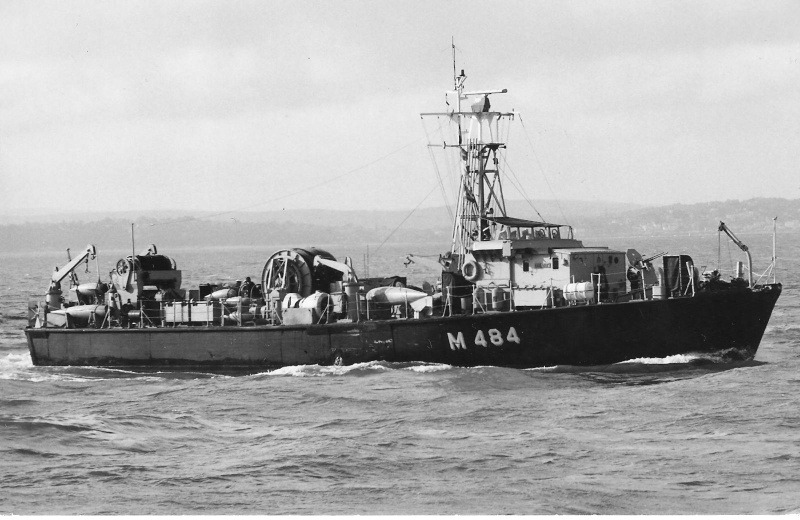
M484 Dinant during service with the Belgian Force Navale
History
History
M484 Dinant began her life at the Mercantile Marine Yard in Kruibeke, Belgium, laid down on 5 April 1958 and commissioned into the Belgian Force Navale on 14 January 1959, following her transfer from the U.S. Navy, where she had been designated M96. From the outset, her crew underwent intensive training in mine-sweeping operations, mastering not only traditional mechanical sweeps but also the innovative use of helicopters to assist in clearing dangerous waters.
Her early months saw Dinant participating in coordinated exercises with her sister ships during Benelux and Franco-Belgian naval drills, building the foundations of Belgium’s Cold War mine warfare capabilities. Under her first commander, Enseigne de vaisseau HUGE, the ship set the tone for a career defined by adaptability and versatility. Over the years, command rotated through a series of officers, including Enseigne de vaisseau MARIN, SMITH, and VAN DYCK, each contributing to the operational expertise of the vessel and her crew.
In 1961, Dinant embarked on her first extended cruise, visiting ports across Northern Europe, including Kiel, Stockholm, Copenhagen, Oslo, Horten, and Cuxhaven, showcasing Belgium’s maritime presence and testing her systems in diverse sea conditions. The following years were filled with rigorous training exercises, including NATO and Benelux mine-sweeping drills, and demonstrations of emerging mine-clearance techniques.
By the mid-1960s, the ship had alternated between operational deployments and periods in reserve. In 1962, she was based at Nieuwpoort, later moving to Kallo, where she remained ready for duty while also contributing to civilian efforts, such as combating oil spills in the Port of Antwerp. Her operational readiness was restored in the late 1960s, with a new home port at Ostende, continuing to perform mine-sweeping and training operations along Belgium’s shallow coastal waters.
In 1967, Dinant participated in the Naval Parade on 20 July, a testament to her enduring service and the skill of her crew. Training cruises continued, including the 1969 operations in the English Channel and the North Sea, visiting ports like Fécamp, Brest, Newcastle, Esbjerg, and Hamburg. In 1971, she took part in exercises at Ramsgate, followed by the extensive Norminex maneuvers, with stops at Cherbourg and Le Havre, solidifying her reputation as a reliable and versatile inshore minesweeper.
1976
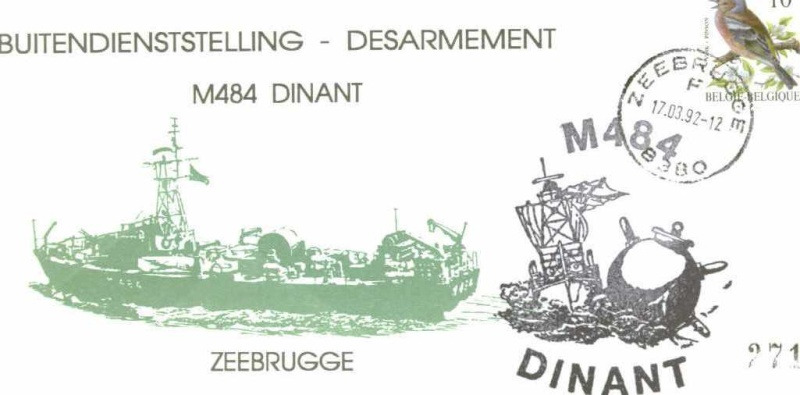
Out-of-service noticeAfter over three decades of dedicated service, Dinant was sold in 1990 and transitioned into civilian life under the name Danish Breakers, marking the end of a distinguished naval career that had spanned mine warfare, multinational exercises, environmental assistance, and diplomatic representation. Her story reflects not only the evolution of Belgium’s post-war naval strategy but also the durability and flexibility of the MSI-class inshore minesweepers.
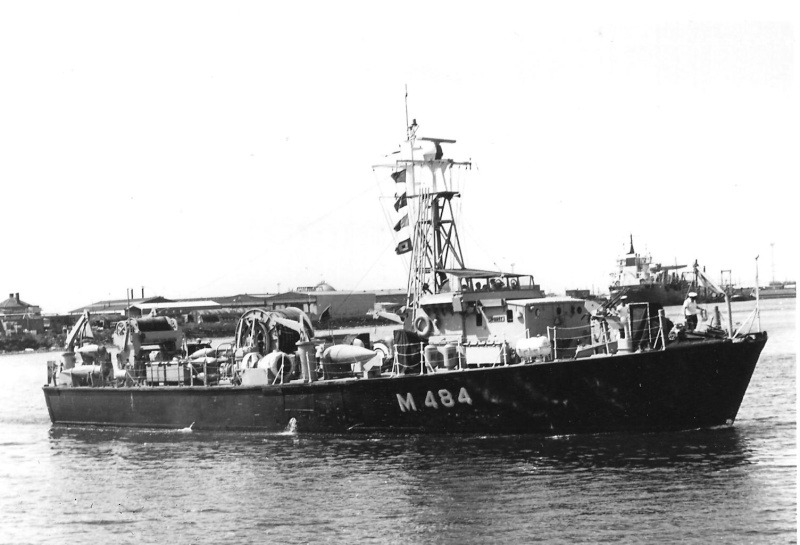
Specifications
Displacement: 173 t freshwater, 178 t seawater
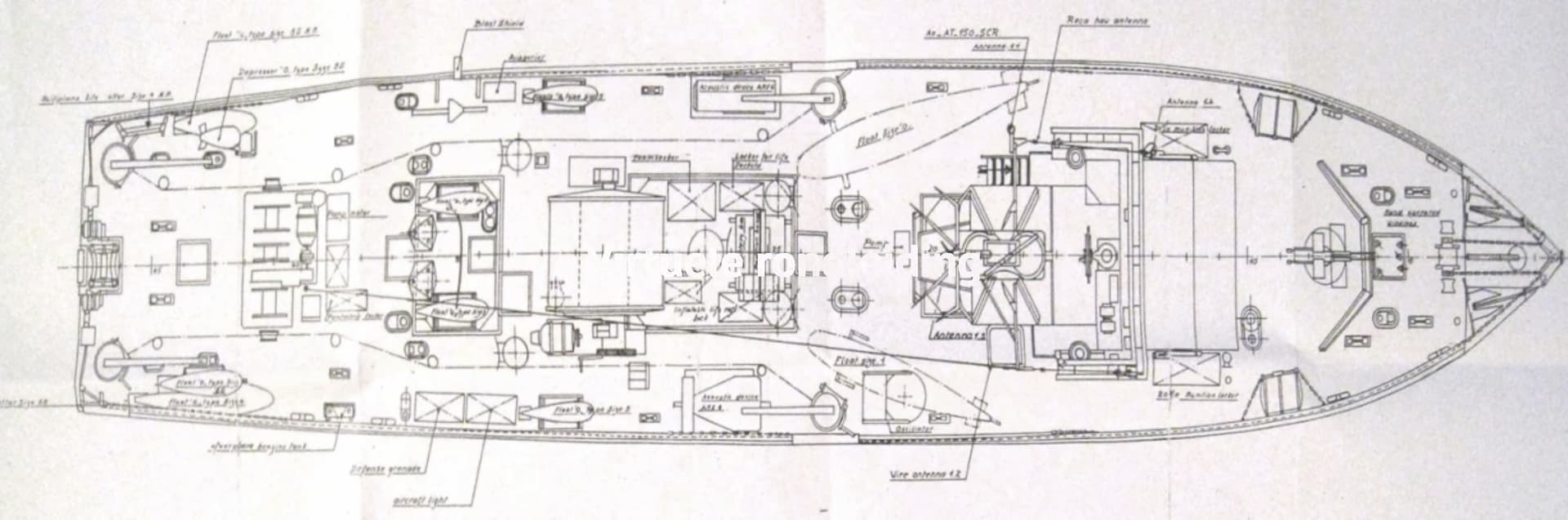
Length/Beam/Draught: 34.44 m / 6.65 m / 2.1 m
Propulsion: 2 × Nuove Reggiane diesels, 2 shafts, 1,260 hp
Speed: 14.7 knots max, 9 knots cruise
Range: 1,380 nm @ 10 knots
Crew: 15 (2 officers, 4 petty officers, 9 sailors)Armament Variants:
Version Weapons Early 1 × twin 12.7 mm Browning HMG Alternate 1 × twin 20 mm Oerlikon AA gun Mine Warfare Gear: Acoustic, magnetic, and mechanical sweeps (4–10 m depth)
Construction: Wooden hull, non-magnetic fittings
Fuel/Water: 19,340 L diesel, 3,367 L water
Place in War Thunder
Regarding nations
BeNeLux
M484 Dinant could appear in the BeNeLux coastal fleet tree as a light Cold War minesweeper. Its modest armament but specialized role makes it a unique tactical asset.
Alternatively, it could appear as a French subtree vessel, like other BeNeLux ships in historical or event modes.
Pictures
Pictures
M484 Dinant in Belgian service
Sources
Sources
Belgian Navy Forum. (n.d.). M484 Dinant. Retrieved from: http://www.belgian-navy.be/t1007p15-m479-huy
Marine Belge. (n.d.). MSI484 & sister ships. Retrieved from: https://www.marinebelge.be/msi484.html
Dragueurs de mines belges de type MSI. (2023). Wikipedia. Retrieved September 2023.
Anrys, H., De Decker de Brandeken, J.-M., & Eygenraam, P. (1992). De zeemacht: van de admiraliteit van Vlaanderen tot de Belgische zeemacht. Tielt.
Masset, F., & Grimbergs, E. (2015). MSI M477 Oudenaarde. Ruimschoots, 15(3), 21–23.
Hofkens, L. (2021). Officiële eigendomsoverdracht van de mijnenveger M477 Oudenaarde. Ruimschoots, 22(1).