- Yes
- No
- (independent) BeNeLux tree
- France: BeNeLux subtree
- Korean-flagged (SURO 6)
- other
- no/negative
- 1x twin 12.7 mm Browning
- 1x twin 20 mm Oerlikon
- both versions
- other (please comment)
- no/negative
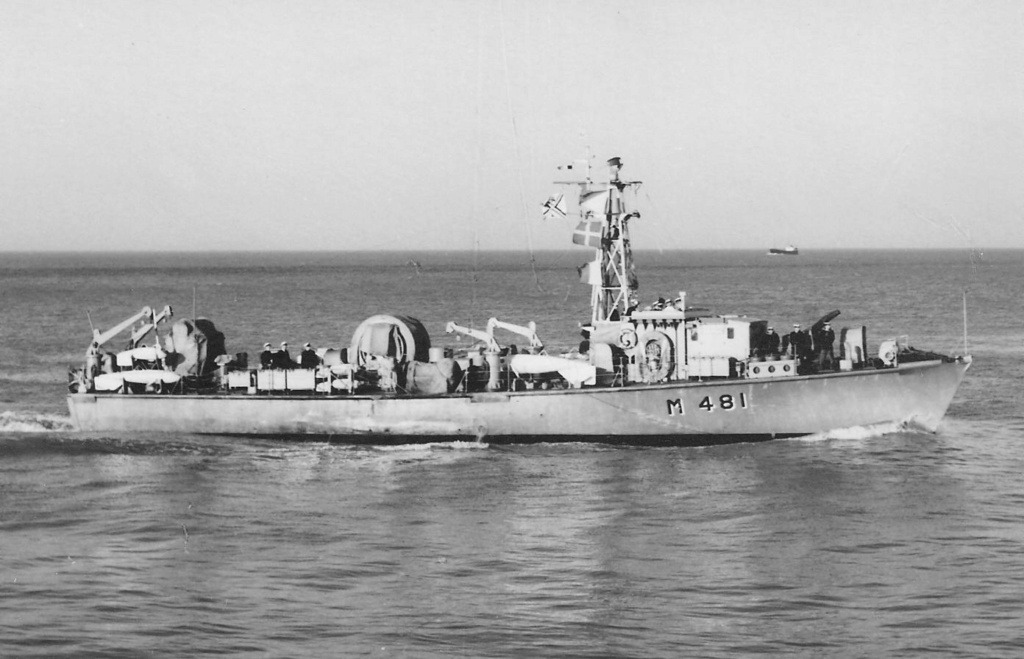
TL;DR: A Belgian-built Cold War inshore minesweeper, the M481 Tournai served 1958–1970 before being sold. Armed with twin 12.7 mm or 20 mm guns.
History
History
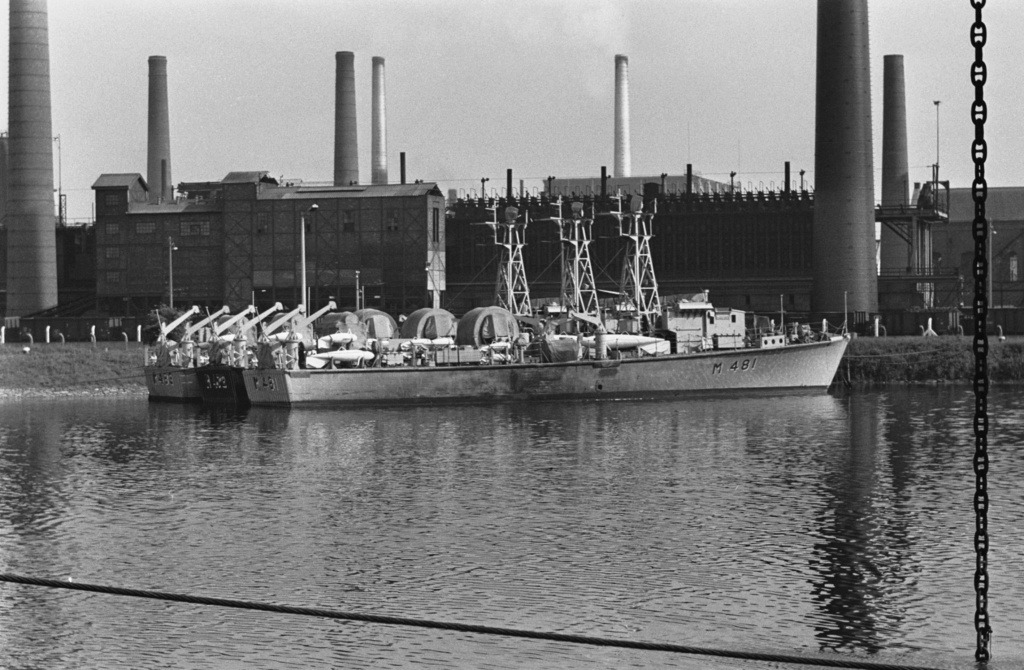
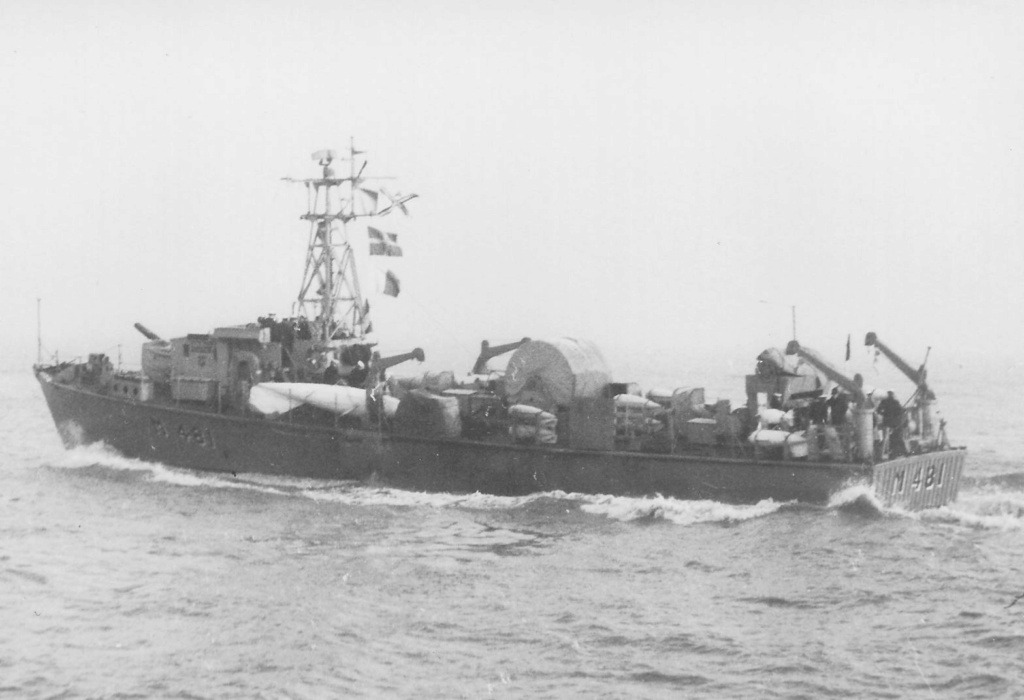
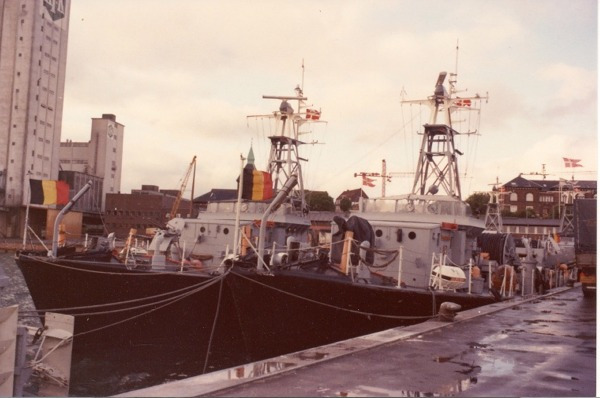
The M481 Tournai was laid down at the Mercantile Marine Yard in Kruibeke, Belgium on 18 May 1956 and commissioned in July 1958. She was the 12th vessel of the MSI Ham Type Herstal-class inshore minesweepers, designed to patrol Belgium’s shallow coastal waters, rivers, and estuaries in the post-World War II era.
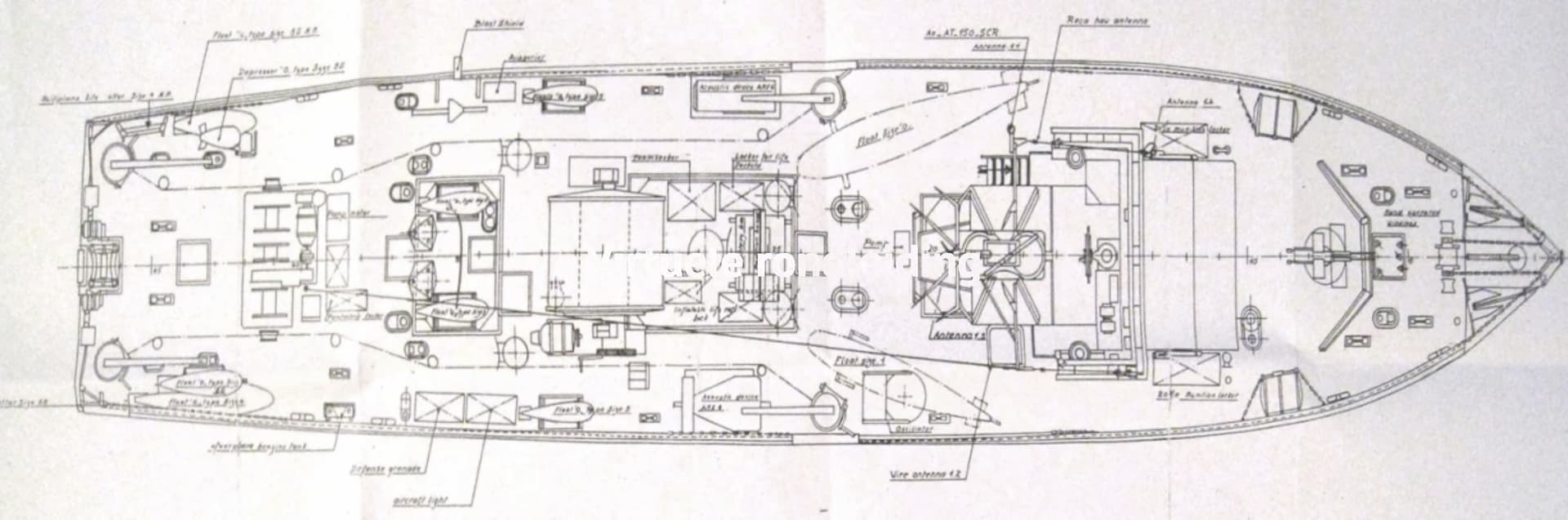
Upon commissioning, Tournai joined the Belgian Navy’s mine countermeasure fleet, tasked with sweeping contact, acoustic, and magnetic mines. Her wooden hull and non-magnetic fittings allowed safe operation in heavily mined waters, while her modest armament—either a twin 12.7 mm Browning or twin 20 mm Oerlikon—provided only limited defensive capability.
During her service, M481 Tournai participated in training cruises, exercises with NATO and BeNeLux partners, and routine patrols along Belgium’s coast. The ship’s role was largely defensive, securing vital shipping lanes, river mouths, and port approaches. Her crew typically comprised 14 men: two officers, seven petty officers, and nine sailors. On 26 March 1970, after over a decade of service, Tournai was sold and recommissioned as SURO-6.
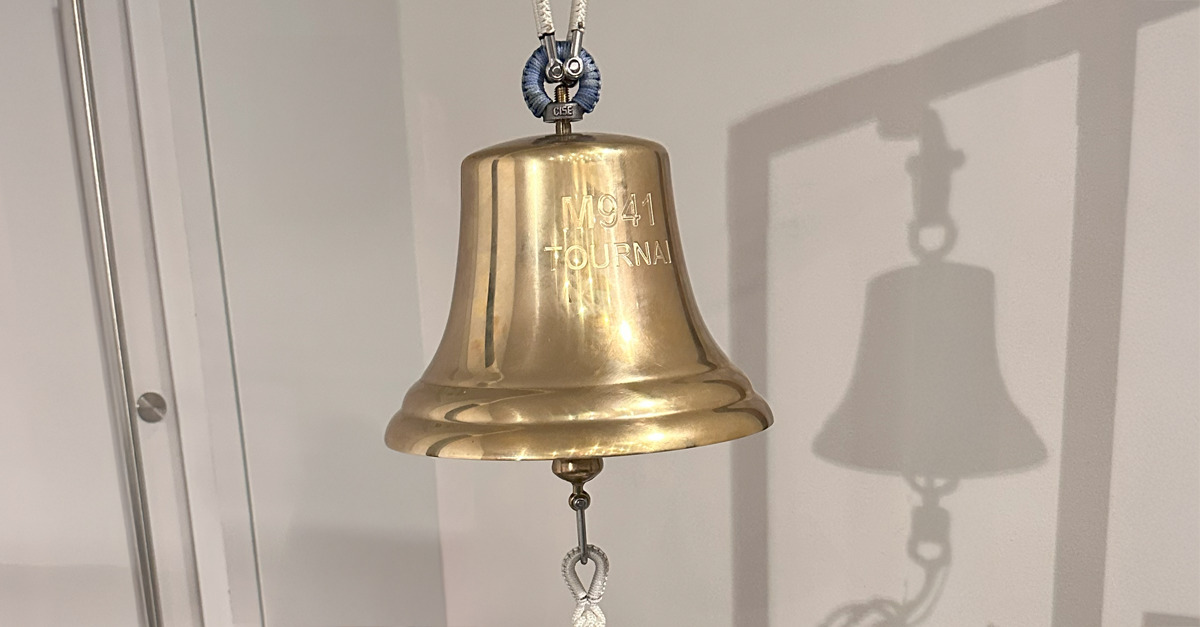
Beyond her service life, the legacy of the M481 Tournai persists. The city of Tournai, her historic sponsor, continues to honor the ship’s heritage. On 29 November 2024, the Belgian Navy ceremonially presented the ship’s bell to the city, symbolizing the enduring bond between the municipality and its namesake vessels (Ville de Tournai, 2024). This tradition was renewed with the construction of the BNS Tournai, part of a modern binational mine countermeasures program with the Netherlands. Launched on 2 July 2024 in Concarneau, France, the new Tournai is equipped with drones and advanced autonomous systems, allowing the Belgian Navy to detect and neutralize modern mine threats while minimizing risk to personnel.
The Tournai name thus bridges decades of Belgian naval history, from Cold War inshore minesweepers to cutting-edge modern mine countermeasure vessels, underscoring Belgium’s long-standing commitment to maritime security and innovation.
Specifications
Displacement: 173 t standard, 178 t (sea water)
Length/Beam/Draught: 34.4 m / 6.65 m / 2.1 m
Propulsion: 2 × Nuove Reggiane TVG29 diesels, 2 shafts, 1260 hp
Speed: 15 knots
Range: 2,300 nm @ 10 knots
Crew: 18 (2 officers, 7 petty officers, 9 sailors)Armament Variants:
Version Weapons Early 1 × twin 12.7 mm Browning HMG Alternate 1 × twin 20 mm Oerlikon AA gun Mine Warfare Gear: Acoustic, magnetic, and mechanical sweeps (shallow waters)
Construction: Wooden hull with non-magnetic fittings
Place in War Thunder
Regarding nations
BeNeLux
The M481 Tournai would be an excellent addition to a BeNeLux naval tree, serving as one of the first postwar, domestically built minesweepers. Its armament is modest, but like other small Cold War vessels already in WT, it would fill lower BR coastal ranks as a light, maneuverable patrol ship.
France
As the MSI class reflects Belgian Cold War design, it could also appear as a BeNeLux subtree for France, either as a tech tree vessel or a premium.
Pictures
Sources
Sources
Anrys, H., De Decker de Brandeken, J.-M., & Eygenraam, P. (1992). De zeemacht: van de admiraliteit van Vlaanderen tot de Belgische zeemacht. Tielt: Lannoo.
Belgian Navy Forum. (n.d.). M481 Tournai. Retrieved from http://www.belgian-navy.be
Dragueurs de mines belges de type MSI. (2023). Wikipedia. Retrieved September 27, 2023, from https://fr.wikipedia.org/wiki/Dragueurs_de_mines_belges_de_type_MSI
Masset, F., & Grimbergs, E. (2015). MSI M477 Oudenaarde. Ruimschoots, 15(3), 21–23.
Van Beylen, J., et al. (1972). Maritieme Encyclopedie (Vol. 5). Bussum: Unieboek.
Marine Belge. (n.d.). MSI 481 Tournai fiche. Retrieved from https://www.marinebelge.be/msi481.html
Ville de Tournai. (2024, November 29). Découvrez la cloche du navire Tournai à l’office du tourisme. Découvrez la cloche du navire Tournai à l'Office du Tourisme | TOURNAI.be