- Yes
- No
- (independent) BeNeLux tree
- France: BeNeLux subtree
- other (please comment how you would like to see this)
- no/negative
History
History
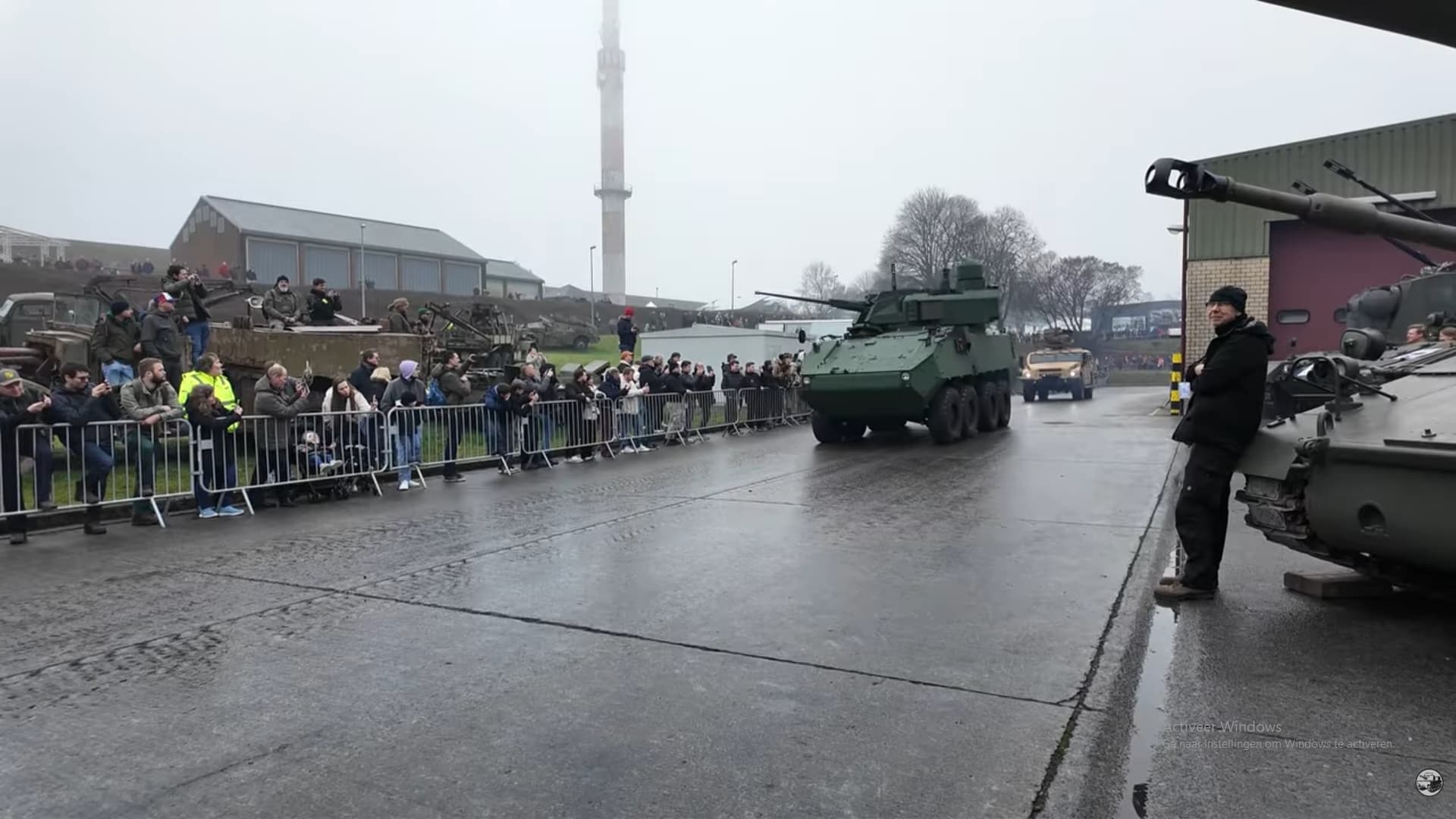
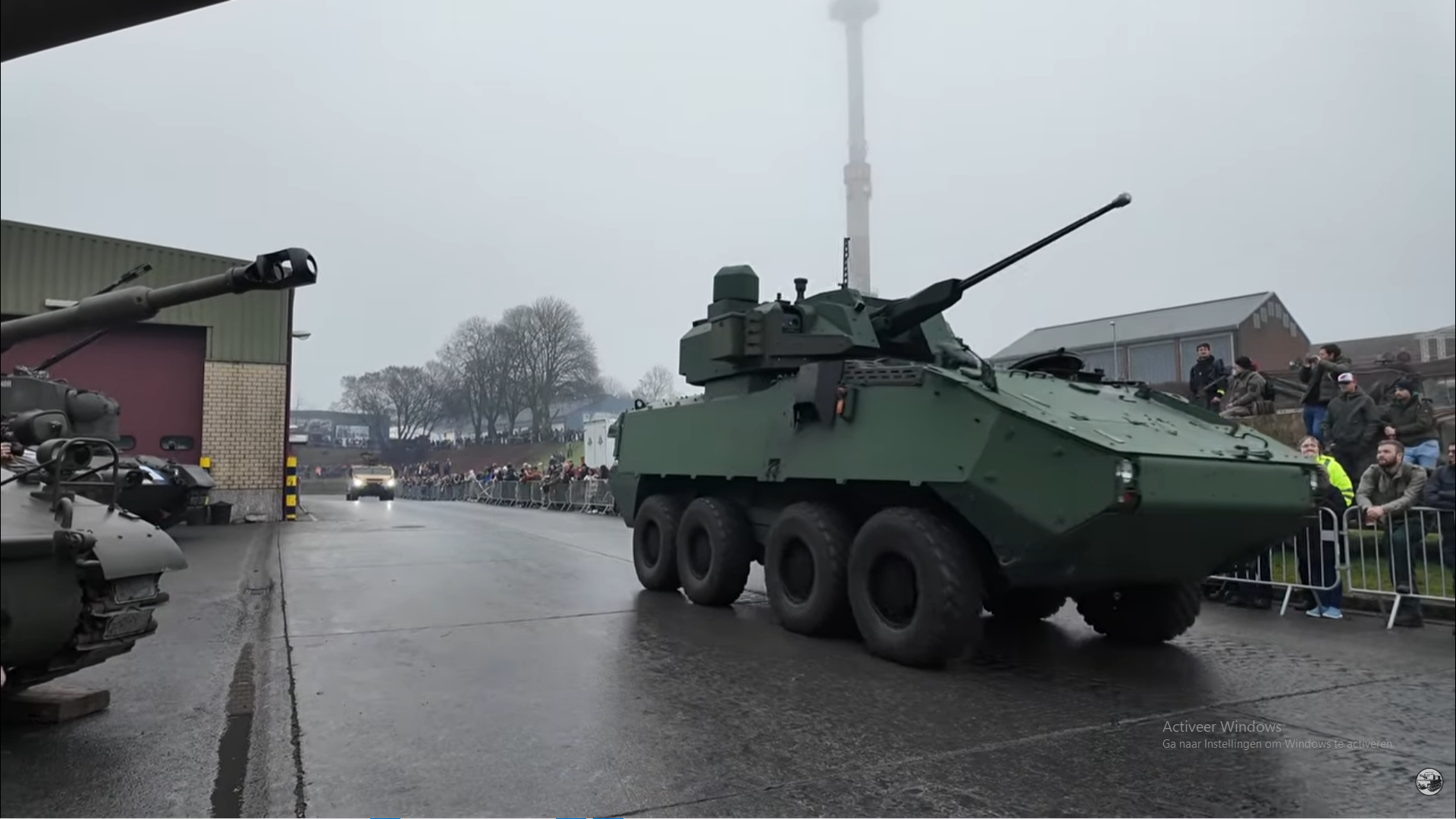
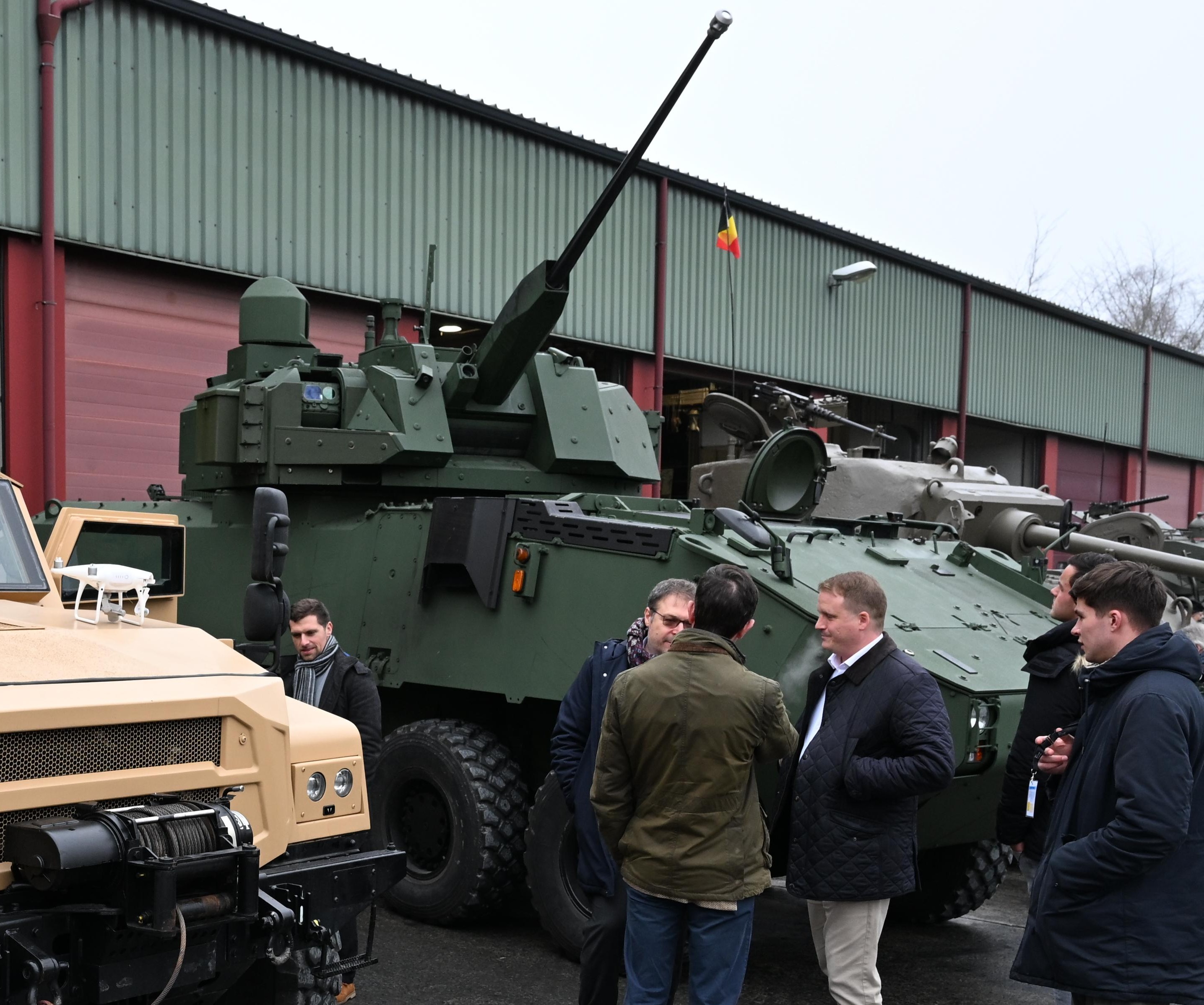
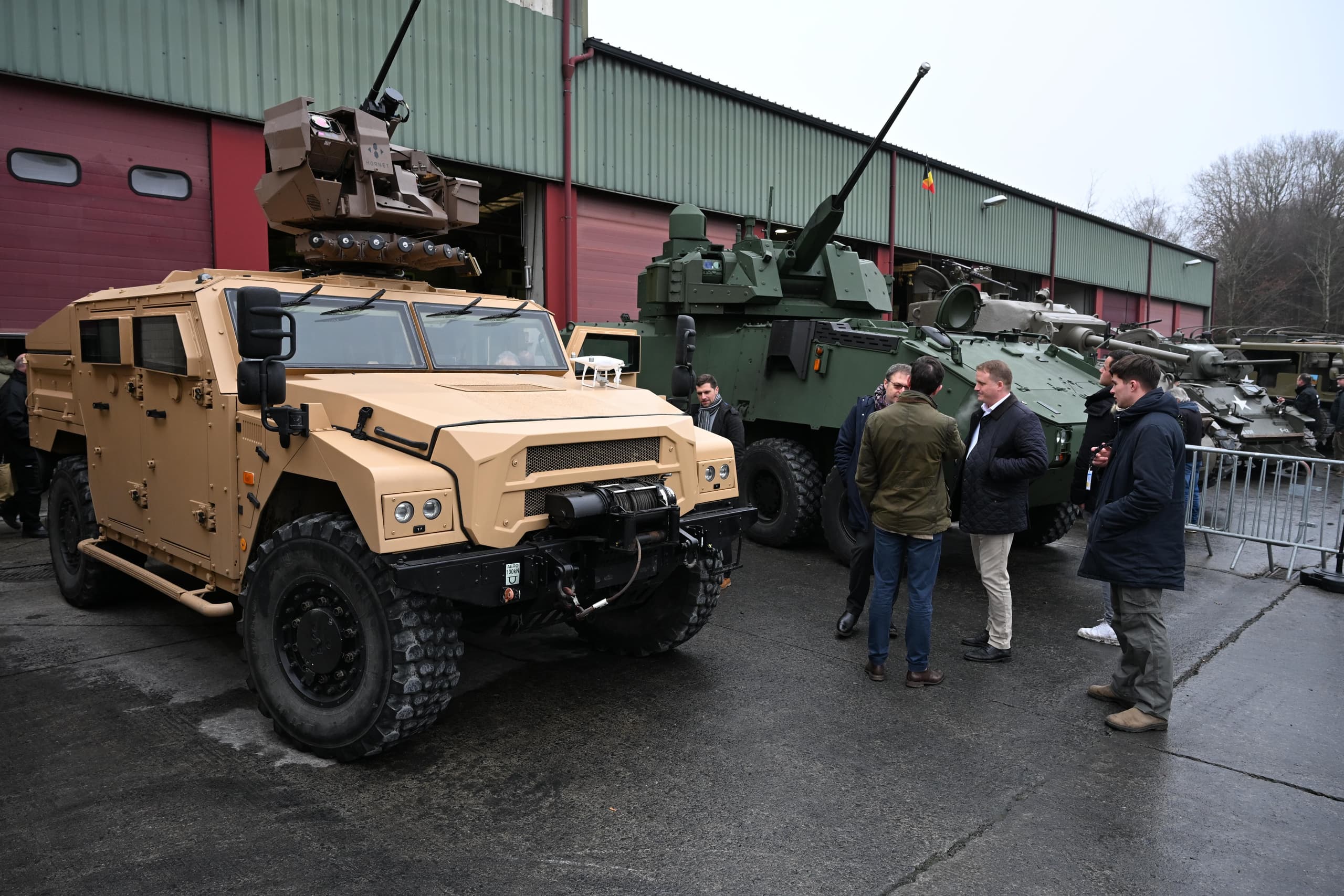
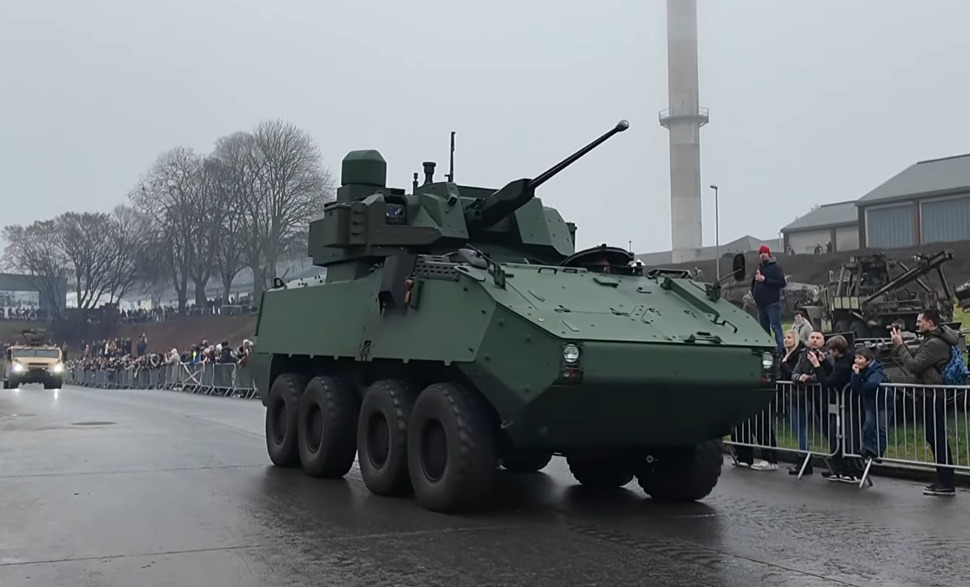
The MOWAG Piranha IIIC 3030 was not intended as a mass-produced service vehicle. Instead, it was conceived as a prototype trial platform, used to explore the operational value of the Cockerill 3030 medium-caliber turret on an 8×8 wheeled chassis already familiar to the Belgian Army.
Strategic Context
Following the end of the Cold War, Belgium restructured its armed forces around mobility, expeditionary operations, and NATO interoperability. Heavy tracked armor was progressively phased out, most notably with the retirement of the Leopard 1A5BE, and replaced by wheeled platforms such as the Piranha IIIC DF30 Spike. This shift created demand for vehicles capable of delivering direct fire, overwatch, and protection against emerging threats, without the logistical burden of main battle tanks.
At the same time, John Cockerill Defense pursued the development of a highly modular turret family capable of supporting a wide range of weapons, sensors, and mission kits. The Cockerill® 3000 Series embodied this approach, enabling customers to adapt a single turret architecture to multiple roles, from infantry support to counter-air and anti-armor missions.
The Piranha IIIC 3030 served as a joint Belgian army–industrial demonstrator, validating this modular philosophy on a platform already proven in national service.
John Cockerill 3030 Turret and Anti-Drone Trials
The Cockerill 3030 is a modular medium-caliber turret, available in manned and unmanned configurations and compatible with both tracked and wheeled vehicles. On the Piranha IIIC 3030, it was fitted with a 30 mm Bushmaster II (Mk.44) cannon and a 7.62 mm FN MAG coaxial machine gun, supported by a modern fire-control suite including 2-plane stabilization, thermal sights for gunner and commander, laser rangefinder, ballistic computer, and automatic target tracking.
Beyond conventional fire support, the turret was also used during trials related to counter-UAS (anti-drone) concepts. The combination of:
- High-elevation capability (up to +60°),
- Rapid-fire programmable 30 mm ammunition,
- Advanced electro-optical sensors and tracking,
made the 3030 a suitable candidate for short-range air defense and counter-drone experimentation. These trials reflected a broader NATO trend toward adapting IFV-class weapons and sensors to counter the growing threat posed by small UAVs, loitering munitions, and low-flying aerial targets.
In addition, the turret’s design allows for the integration of Thales Belgium 70 mm rocket pods, including Belgian laser-guided rockets, as well as turret-launched anti-tank missiles. This growth potential further reinforced its role as a flexible test platform rather than a fixed doctrinal vehicle.
Relationship to the Belgian CaMo Program
Although the Piranha IIIC 3030 slightly predates the CaMo (Capacité Motorisée) program-implementation, it can be viewed in hindsight as a conceptual precursor and complementary system. The CaMo program, developed in close partnership with France, focuses on high-intensity combined-arms warfare, centering on platforms such as the Griffon and EBRC Jaguar.
In this context, a vehicle like the Piranha IIIC 3030 represents an alternative or secondary support concept: a highly mobile wheeled platform capable of providing direct fire support, reconnaissance, escort, and counter-drone coverage alongside heavier CaMo formations. While not adopted, the trials conducted with the 3030 turret helped inform Belgium’s understanding of sensor integration, medium-caliber lethality, and modular combat systems, all of which are central themes in the CaMo ecosystem.
As such, the Piranha IIIC 3030 occupies an important niche in Belgian armored development as a technology bridge between legacy Piranha variants and modern Franco-Belgian motorized combat doctrine.
Specifications
MOWAG Piranha IIIC 3030 (Prototype / Trial Vehicle)
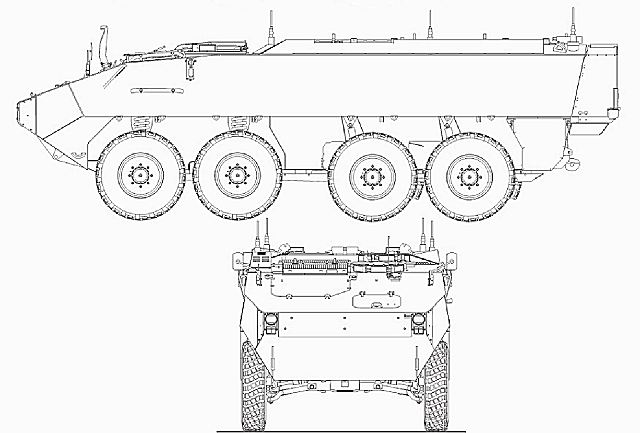
Category Specification Role Prototype, technology demonstrator Crew 3 (driver, gunner, commander) Additional passengers Up to 4 Combat weight ~20 t Length 7.77 m Width 2.72 m Height ~3.0 m Drive configuration 8×8 Engine Caterpillar C-9 diesel Power output 395 hp Power-to-weight ratio ~19 hp/t Maximum speed 105 km/h Operational range 600–800 km Armament
Component Details Main armament 30 mm Bushmaster II (Mk.44), 30×173 mm Fire modes Single shot, burst, full automatic Ammunition capacity ~255 rounds (dual-feed) Munition Types APDS, APFSDS (M928), HEI-T, PABM-T Elevation range −10° to +60° Secondary armament 1 × 7.62 mm FN MAG coaxial MG (optional Commander hatch mount with a second 1 × 7.62 mm FN MAG MG Optional weapons 70 mm rocket pod; laser-guided rockets; turret-launched AT missiles Munition details
Designation Gun Caliber Type Velocity Weight Penetration Notes Fire rate M928 Bushmaster II 30 mm APFSDS 1430 m/s 220 g >60 mm at 60° at 1000 m Fire Control, Sensors & Systems
System Availability 2-plane stabilization Yes Gunner thermal sight Yes Commander thermal sight Yes Hunter-killer capability Yes Laser rangefinder Yes Ballistic computer Yes Automatic target tracking Yes 360° camera coverage Yes Counter-UAS trial capability Yes (experimental) Protection
Aspect Details Armor protection STANAG 4569 Level 4–5 (config. dependent) Countermeasures Smoke grenade launchers Growth options Laser warning system, APS, acoustic sensors
Place in War Thunder
The MOWAG Piranha IIIC 3030 would be well suited as a high-rank prototype vehicle, most appropriately placed at Rank VII or VIII. Its defining characteristics: excellent mobility, stabilized 30 mm firepower, advanced optics, and high gun elevation, would give it a unique gameplay identity distinct from both Belgian IFVs and traditional Belgian SPAA platforms.
Within a possible future independent BeNeLux tree, it would represent Belgian experimentation with modern modular combat systems. In a French BeNeLux subtree, it would naturally complement CaMo-related vehicles by offering a lighter, more mobile support platform capable of reconnaissance, escort duties, and limited counter-air operations.
In gameplay terms, the vehicle would reward situational awareness, flanking, and intelligent positioning. Its advanced fire-control systems and tracking would make it effective against helicopters, drones (where applicable), and low-flying aircraft, while its light armor ensures it remains vulnerable to heavy return fire. As a prototype demonstrator, it would be particularly well suited as a side-grade, squadron vehicle, or event vehicle, showcasing experimental NATO technology rather than frontline standard equipment.
Pictures
Sources
Sources
Army Guide. (n.d.). Piranha DF30. https://www.army-guide.com
John Cockerill Defense. (2025). Cockerill® 3030 technical specification sheet. https://johncockerill.com
John Cockerill Defense. (n.d.). Cockerill® 3000 Series modular turrets. https://johncockerill.com/en/cockerill-3000-series
Joint Forces News. (n.d.). Piranha IIIC AIV in Belgian service.
RK InstBtl 7. (2013). Die Medium Brigade der belgischen Armee auf Übung. http://www.rk-instbtl7.de
WarWheels.Net. (n.d.). Belgian Piranha IIIC DF30 IFV index. http://www.warwheels.net
War Hertitage Institute. (13-14 Dec 2025) Live at Bastogne Baracks for NUTS-weekend, tanks, history, and powerful moments, to commemorate the Battle of the Bulge, which was fought in and around Bastogne, Belgium. https://www.reddit.com/r/TankPorn/comments/1plp383/live_at_bastogne_baracks_for_nutsweekend_tanks/ (official Belgian government reddit account)