- Yes - In the Tech Tree.
- Yes - Event/BP.
- Yes - Premium.
- Yes - Squadron
- No - I would not like to see HMAS Culgoa in game.
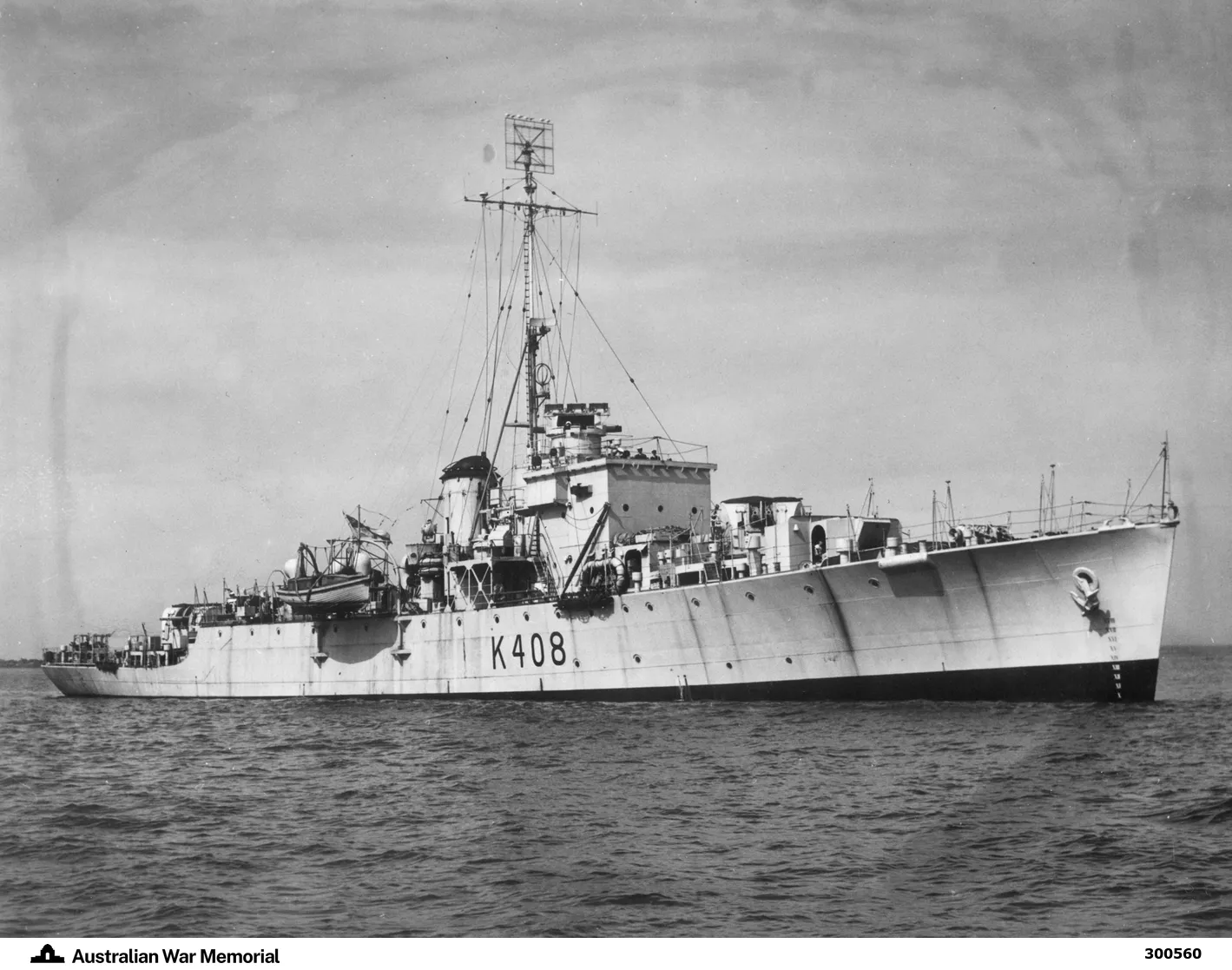
HMAS Culgoa during trials soon after commissioning, her radar aerials can be clearly seen (1947)
Background:
With the Royal Australian Navy (RAN) rapidly needing extra convoy escort forces by mid 1943 it was decided to build further of the British designed River-class frigate. Although the standard British design was ideal for ASW work, it was a bit underarmed for anti aircraft work, even with Australian improvements to the design, such as fitting a third 40mm Bofors on the bridge superstructure.
Not wanting to waste precious time to develop a new hull design for this task, the basic river-class hull would have a completely new superstructure fitted, which was more square and did not have bridge wings, reducing top weight and simplifying construction, as in common with the older more standard Australian river-class, this bridge design could also have a single 40mm Bofors gun fitted just aft of the 4-inch gun mount. The decking was reinforced to accept the significantly heavier twin HA/LA Mk.XIX mount for the QF 4-inch Mk.XVI gun rather than the single Mk.XX mount. This change alone would double their heavy gun armament.
The position of these guns would mostly remain the same, one twin mount fore and one aft, however the after gun was placed a deck lower as to allow another single 40mm Bofors to be fitted in its place. Two further 40mm Bofors were fitted just forward of this mount, one on each beam. The lighter AA armament was not removed however, with the single 20mm Oerlikons found in a standard RAN river-class being concentrated in two twin mounts beside the bridge on a stand either side of the bridge. Due to the extra amount of equipment fitted to the quarterdeck, two of the DC throwers had to be removed as well as the paravane winch. They also had improved ASDIC and radar fitted.
This improved design would be built in a second batch of vessels alongside some vessels of the original batch, due to the original design’s increased ASW effectiveness and cheaper cost of construction over the modified ships. This new class would be officially dubbed the “Modified River-class Frigate” in recognition that it was still based on the normal river-class, and had little modification besides the armament.
Occasionally these ships are referred to as the Bay-class, which is incorrect, being instead modified Loch-class frigates rather than River-class. The “Modified River-class” and “Bay-class” are often confused due to their common roots, being modifications made to older frigate classes in an effort to improve AA, and have a similar (but not identical) armament.
This suggestion is for HMAS Culgoa I as she commissioned in 1947, she is the first and only ship of her name to serve in the RAN as of writing.
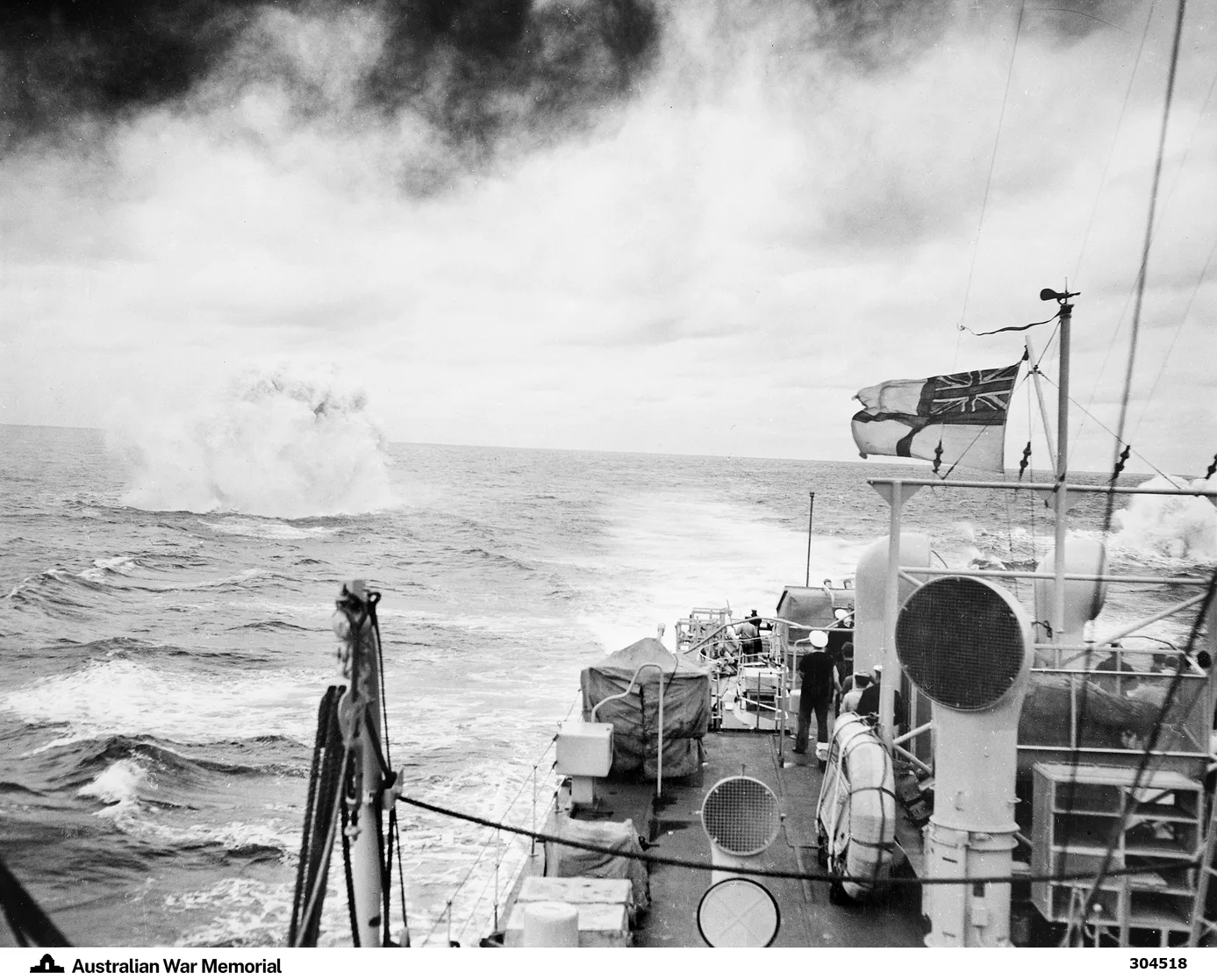
The explosion of two depth charges dropped off the stern of HMAS Culgoa, her starboard 40mm Bofors and stern twin 4-inch gun is clearly visible (1950)
History:
Laid down on the 15th of July 1943 by Williamstown Dockyard, at Melbourne, Australia. Due to lack of shipyard space and material for her construction she was only launched on the 22nd of September 1945, after the end of the Second World War. Due to this and the sudden excess of escorts now available to the RAN, completion of the Culgoa was placed on the back burner while the condition of existing ships was calculated, with worn out, but still useful ships being given priority for new parts over yet to be commissioned hulls.
Due to reduced peacetime manning levels lowering the amount of crew that would be expected aboard a vessel, the fore 40mm Bofors mount was not fitted during her fitting out, but she did keep her other armaments. Due to these factors the HMAS Culgoa would complete fitting out on the 24th of December 1946, but was not commissioned and instead placed into reserve while the RAN began to reduce it’s fleet numbers down to a more manageable number.
By the 1st of April 1947 this work would be finished, and the HMAS Calgoa would commission, replacing one of her standard unmodified River-class sisters which had a number placed into the reserve around this time.This allowed the RAN to keep a number of useful hulls available at a low cost, albeit not in active use, while keeping the least worn and most capable ships for their current needs.
Upon commissioning she would undergo trials before sailing for Japanese waters as part of the Australian contribution to the British Commonwealth Occupation Force (BCOF) on the 9th of June 1947 . Here she would conduct naval patrols out of the Yokosuka Naval Base, but not much else is known about her service here, as she would return to Sydney in December the same year. By April 1948 she would again leave Australia, this time to patrol the waters around New Guinea and the New Hebrides Islands, this work would complete around June that year before returning to Sydney.
By January 1949 she would again be deployed to the New Guinea area, this time to transport Japanese war criminals from Rabaul to Manus. She would finish this job on the 3rd of April, returning to Sydney. However she would again move to Japan, this time on the 10th of August. This would be her first long duration deployment, as she would only return to Australia in February 1950 before again being deployed to the Solomon Islands and Noumea. This time she would serve in the area as a training platform for National Service Trainees, this would last for sometime without note, but she did support the first British Atomic Test at the Monte Bello Islands in October 1952. After this test she would resume her training duties.
However, on the 3rd of March 1953, HMAS Culgoa would sail from Sydney to Japan to relieve her sister HMAS Condamine, in the Korean War. She would arrive at Sasebo on the 14th of April, and operations would begin five days later on the 19th when she would arrive off Paengyong Do to relieve HMS Whitesand Bay on the West Coast Patrol. During this time she would shell North Korean positions using her 4-inch guns, firing 102 rounds. On the 28th of April she would be relieved by the Loch-class HMNZS Kaniere.
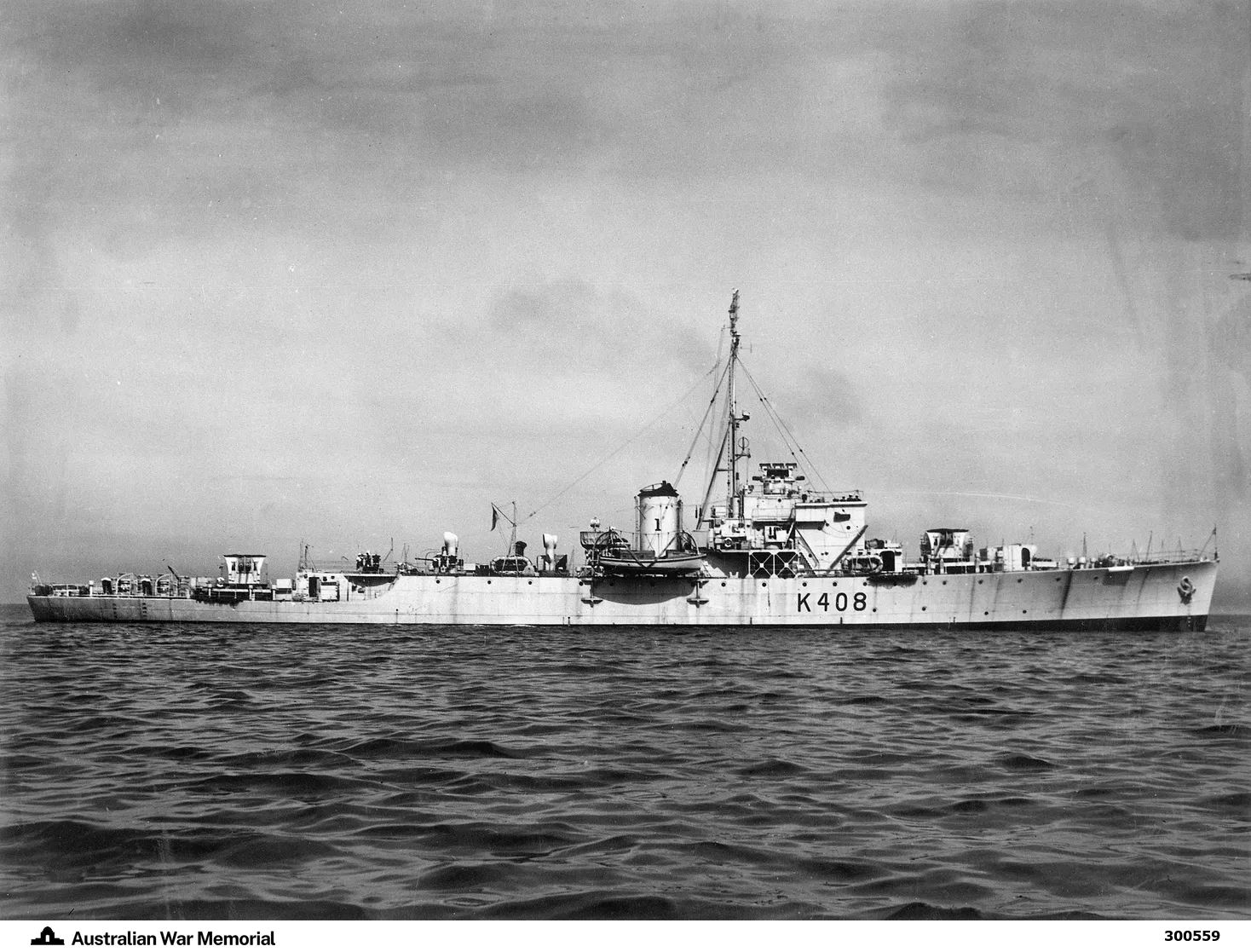
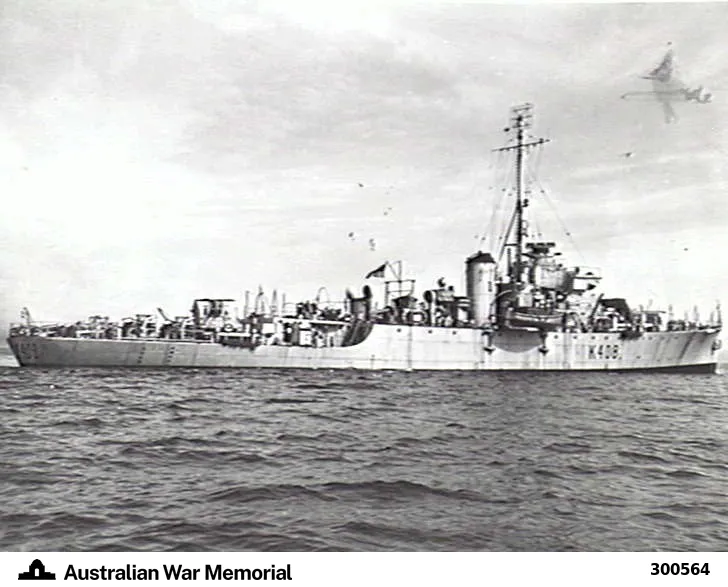
Port side of the HMAS Culgoa soon after commissioning, showing off her broadside firepower (1947)
Upon being relieved by the Kaniere the HMAS Calgoa would sail for the Chodo/Sokto area as part of Task Unit 95.1.4 in company with the HMCS Haida and other vessels, again in shore bombardment duties. This would last until the 3rd of May, but would resume operations here on the 18th of that month. As she redeployed she would bombard enemy positions for five days on the Amgak Peninsular. During this time she would assist the USS Cocopa to locate and salvage a Sea Fury aircraft that had crashed into the sea. She would be relieved in this taskforce on the 23rd of May by HMS St Brides Bay.
At this point she would move to Taeyongpyong Do to relieve the HMS Sparrow in command of Task Unit 95.1.6. This unit comprised six South Korean small craft, two minesweepers, and three patrol craft. Here they would protect a fishing fleet of over 700 Junks. This would be quiet work, and the HMAS Culgoa would leave for Kure on the 7th of June. She would move to the West Coast Patrol, along the Haeju area, to protect Taeyongpyong Do from invasion.
She would fire her final shots of the war on the 23rd of June, as she would perform shore bombardments against Chomi Do in collaboration with aircraft from the USS Bairoko. She would only fire 37 rounds. Her patrols would however continue until the 29th of June, when she was relieved by the HMS Charity, allowing the Culgoa to sail for Hong Kong. She would return to the Korean coast on the 27th of July, relieving the HMNZS Hawea at Paengyong Do, assuming her duties as commander of Task Unit 95.1.5. Here she would conduct a series of Armistice Patrols.
This would come to an end by the 15th of April 1954, being placed into the reserve having steamed 167,447 miles at sea. She would be taken out of reserve to be used as an accommodation ship for the minesweeping base HMAS Waterhen. She would be disarmed and had her engines removed for this service.
She would last as an accommodation ship until the 15th of February 1972, when she was sold to NW Kennedy Ltd of Vancouver, Canada, for scrap. She would be towed out of HMAS Waterhen in March 1972 bound for Taiwan via Hong Kong for her actual scrapping.
| General Characteristics: | |||||
|---|---|---|---|---|---|
| Name: HMAS Culgoa | |||||
| Country: Australia | |||||
| Type: Frigate | |||||
| Class name: Modified River-class | |||||
| Year of commission: 1947 | |||||
| Refit: 1947 | |||||
| ----------------------------------------------------------------------------------------------------------------------------------------- | |||||
| Dimensions: | |||||
| Length: 301ft (92m) | |||||
| Beam: 36ft (11m) | |||||
| Draught: 12ft (3.7m) | |||||
| Displacement: 1,537t standard, 2,200t full | |||||
| ----------------------------------------------------------------------------------------------------------------------------------------- | |||||
| Propulsion: | |||||
| Powerplant: 2x Oil fired Triple expansion steam engines @ 5,500ihp (4,100kW) overall across two shafts | |||||
| Speed: 19.5kt | |||||
| Endurance: 5,180nmi @ 12kt (500t of fuel oil) | |||||
| ----------------------------------------------------------------------------------------------------------------------------------------- | |||||
| Armament & sensors: | |||||
| Compliment: 175 | |||||
| Primary armament: 2x2 QF 4-inch Mk.XVI on mount HA/LA Mk.XIX | |||||
| Secondary armament: 3x1 40mm Bofors Mk.VII, 2x2 20mm Oerlikon | |||||
| Tertiary armament: 1x Hedgehog ASW mortar, 4x DC throwers, 2x DC rails, 50DCs | |||||
| Radar: Type 285 fire control, Type 276 surface search, SC-1 air/surface search | |||||
| Sonar: Type 144Q | |||||
| Other: HF/DF |
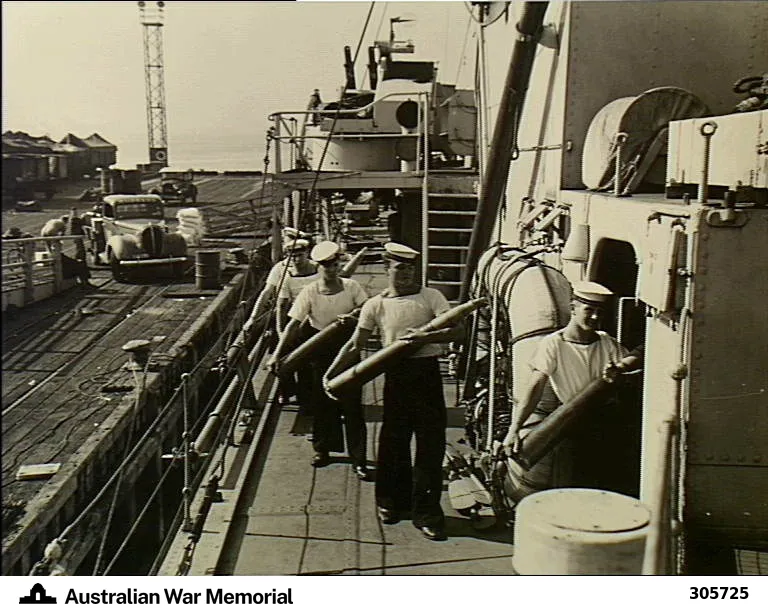
Sailors moving 4-inch ammunition towards the fore gun mount just before her commissioning. Her starboard twin 20mm Oerlikon mount can be clearly seen. (1947)
Extra Photos:
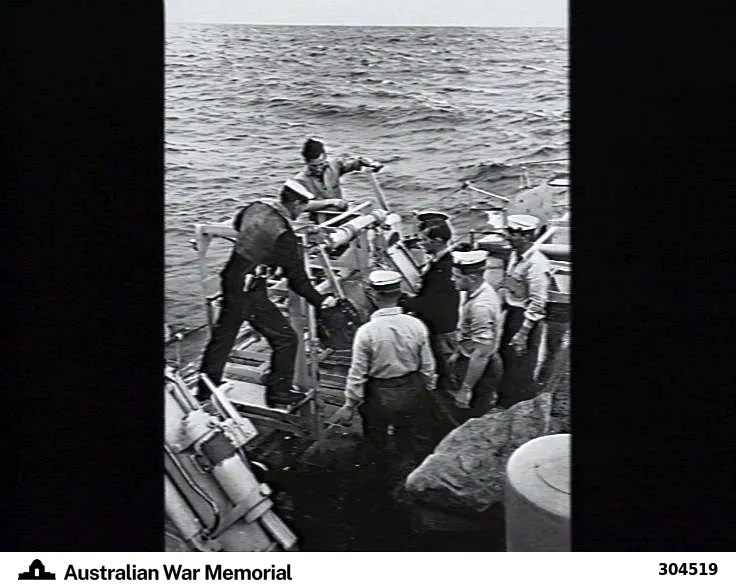
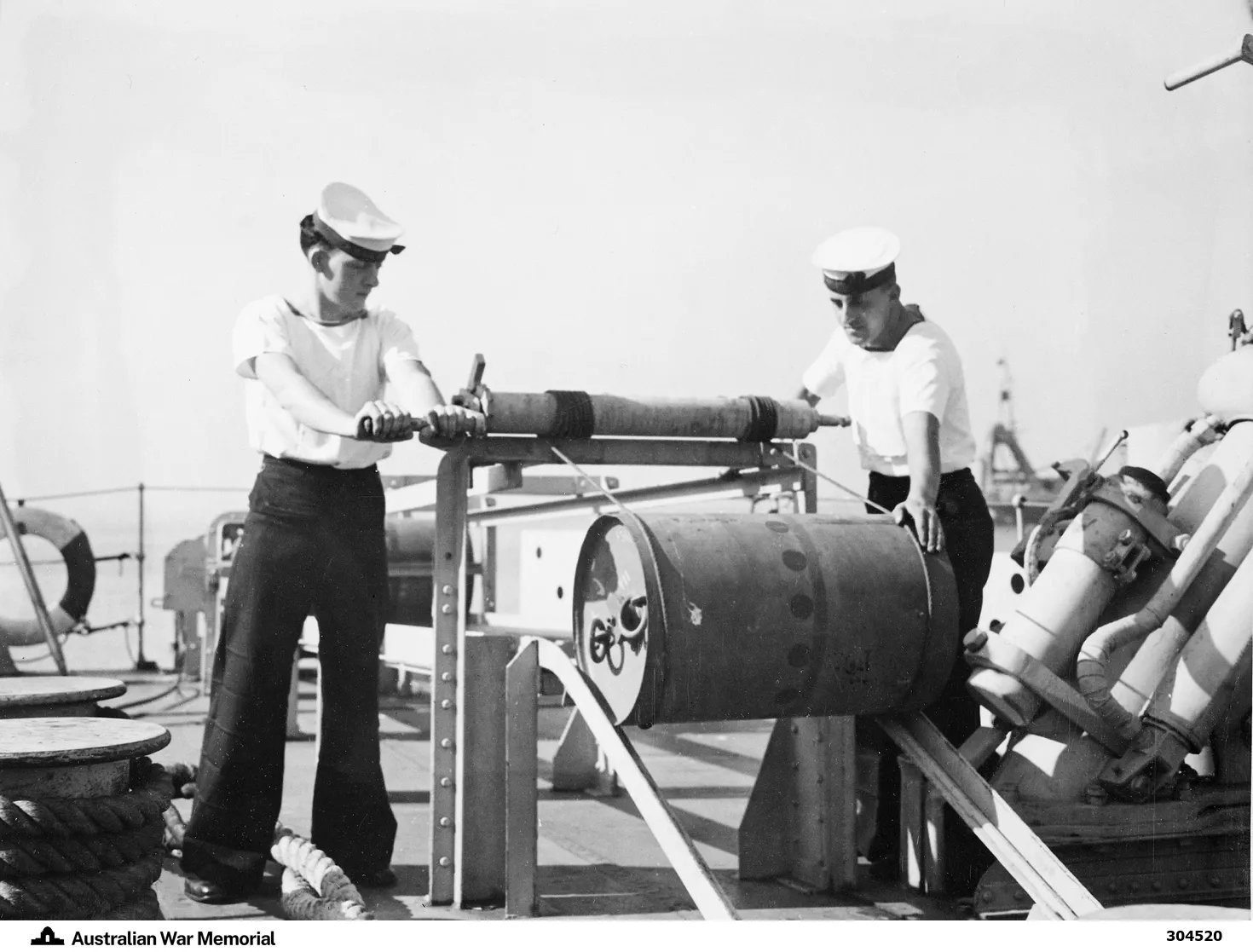
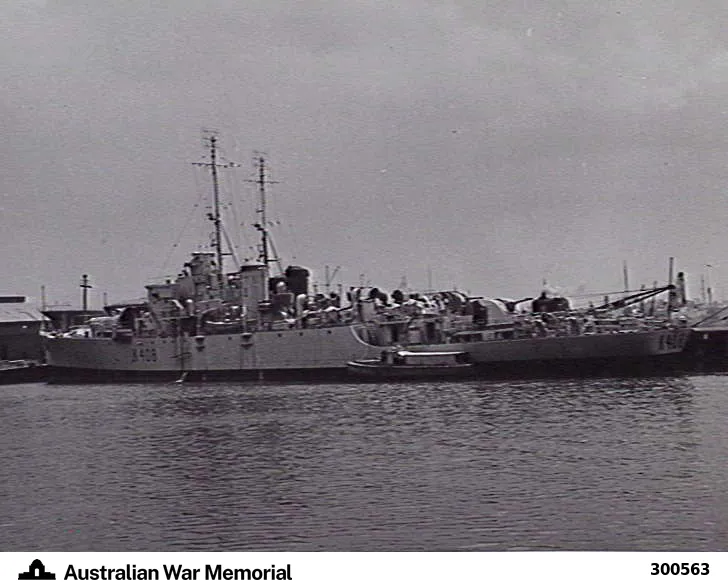
Sources:
N.Friedman (2006) British Destroyters and Frigates, the Second World War and After (pp.154-155, 334)
https://en.wikipedia.org/wiki/HMAS_Culgoa
https://seapower.navy.gov.au/history/units/hmas-culgoa
HMAS Culgoa Archives - Naval Historical Society of Australia
HMAS Culgoa (K 408) of the Royal Australian Navy - Australian Frigate of the River class - Allied Warships of WWII - uboat.net