- Yes
- No
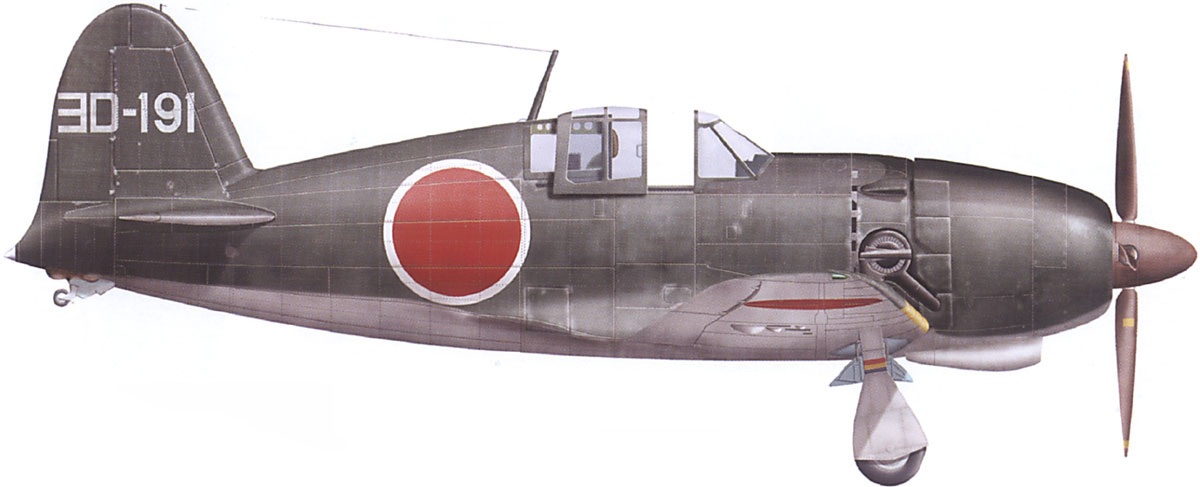
Mitsubishi J2M4 Model 32 (三菱 雷電 三二型)
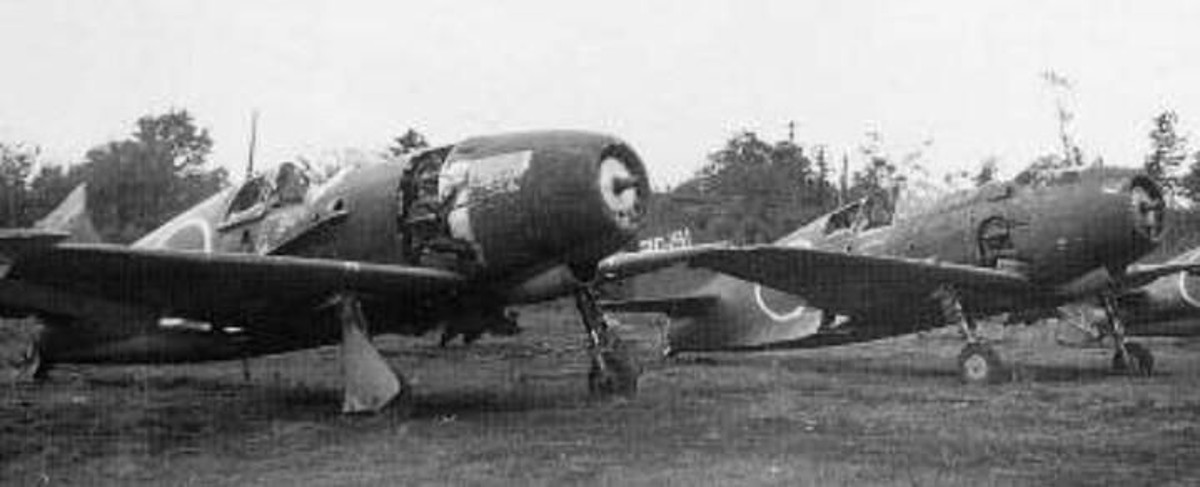
The Mitsubishi J2M4 Model 32 is a Japanese interceptor fighter modified by Kugisho (Yokosuka). A few J2M4 aircraft were built (probably 2), including the first prototype, which was based on the J2M2 aircraft, while the second prototype (?) was based on the J2M5/6. Mitsubishi J2M4 fighters were assigned to the 302nd and 352nd Air Groups. By the end of the war, at least 2 J2M4 fighters had survived.
History
By the end of 1943, the Japanese Navy was well aware of the construction of American airfields for B-29s in China and expected that the Americans would soon start using these airfields for raids on Japan. The Japanese Navy command knew that the Americans would conduct high-altitude bombing and that interceptor fighters capable of operating against B-29s were needed. It was quickly decided that the best approach was to modify one of the existing fighters to reduce the time needed to bring it into production. After verification, it was decided that the best option was to modify the Mitsubishi J2M3 fighter, which at that time was already being introduced into combat units. On January 19, 1944, the construction of a new version of the J2M fighter was commissioned to its manufacturer, Mitsubishi, but the Naval Air Technical Arsenal (Kugisho/Yokosuka) also decided to create a version of the Mitsubishi J2M equipped with a supercharger produced by them. The turbocharger (Ru-303?) developed by the Naval Air Technical Arsenal was smaller and lighter than the one developed at Mitsubishi (the Japanese had started working on turbochargers much earlier), so major modifications to the fighter’s design were not required (compared to the aircraft developed at Mitsubishi, where the nose of the aircraft underwent significant modifications—this version can be found in War Thunder as the Mitsubishi J2M4 Kai). Due to the absence of the J2M3 fighter at the Naval Air Technical Arsenal, a Mitsubishi J2M2 fighter was used to build the prototype. This was considered an additional advantage because the J2M2 was lighter than the J2M3 (3210 kg compared to 3440 kg), which is useful at high altitudes. To make room for the turbocharger, the fuel tank located behind the engine was removed, and a Mitsubishi MK4R-C Kasei 23c (Ha32-23c) engine was installed, with a takeoff power of 1,342 kW (1,825 hp). A few minor modifications were also made to the aircraft’s nose. The J2M4 aircraft design modified by the Naval Air Technical Arsenal was probably ready in August 1944, and the prototype in September (?) 1944. Tests showed that the aircraft performed well at high altitudes, but there were problems with the turbocharger’s reliability (a similar problem occurred in the Mitsubishi-produced J2M4). During work on improving the Mitsubishi J2M4 modified by the Naval Air Technical Arsenal, it was decided to replace the aircraft’s fuselage from the J2M2 with the J2M5/6, which was an improved J2M3 fuselage, to give the pilot better visibility. However, Japanese engineers were unable to solve the turbocharger problems (neither the engineers from Mitsubishi nor from the Naval Air Technical Arsenal), and on April 10, 1945, work on the Mitsubishi J2M4 was halted. However, planes modified by the Naval Air Technical Arsenal ended up, due to the huge need for interceptor fighters, in the 302nd (Tokyo defense) and 352nd (defense of the Omura-Nagasaka-Sasebo area) Air Groups, where at least one aircraft survived until the end of the war.
Construction description
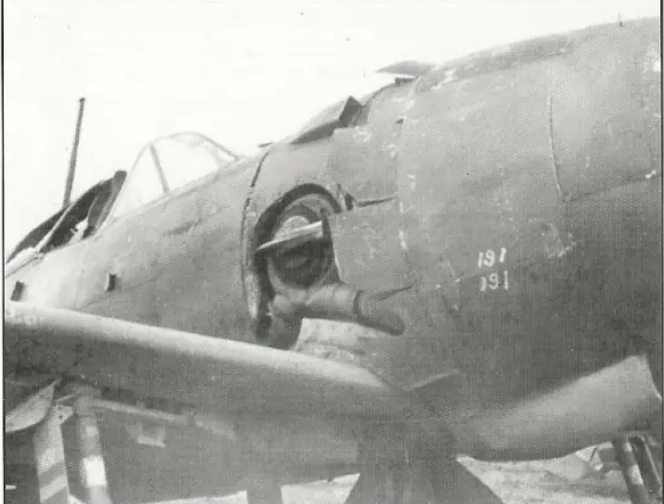
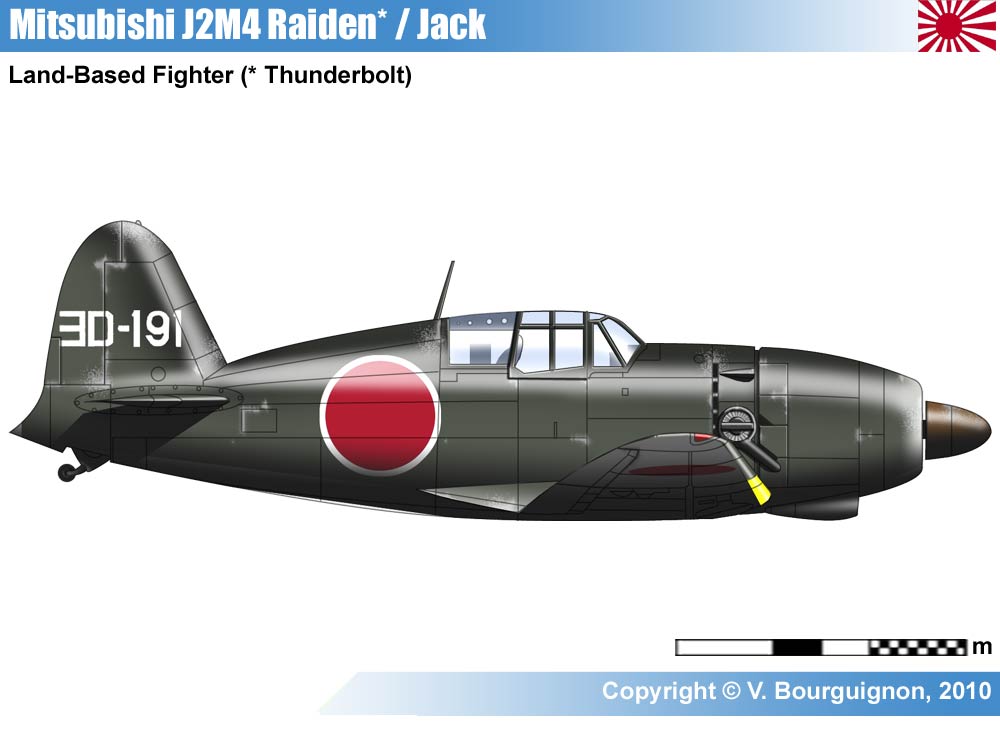
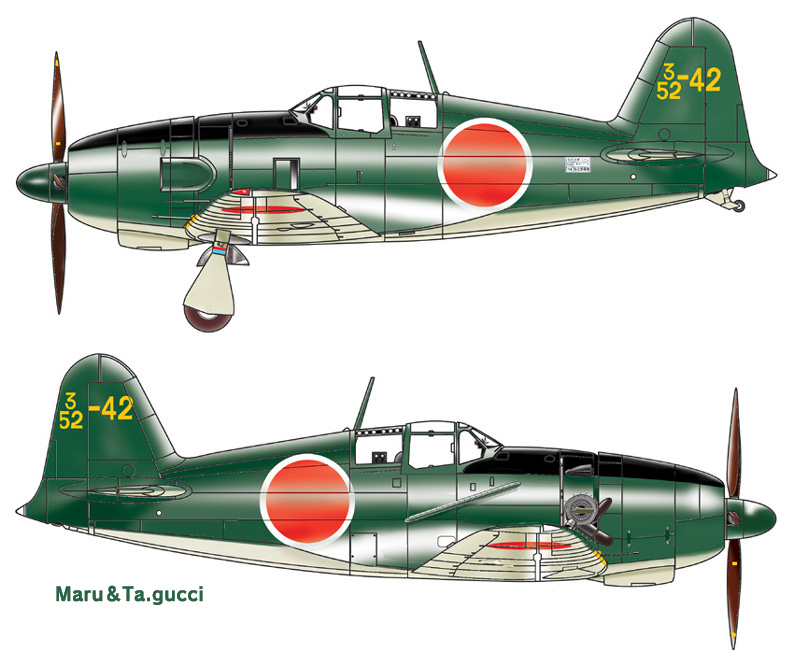
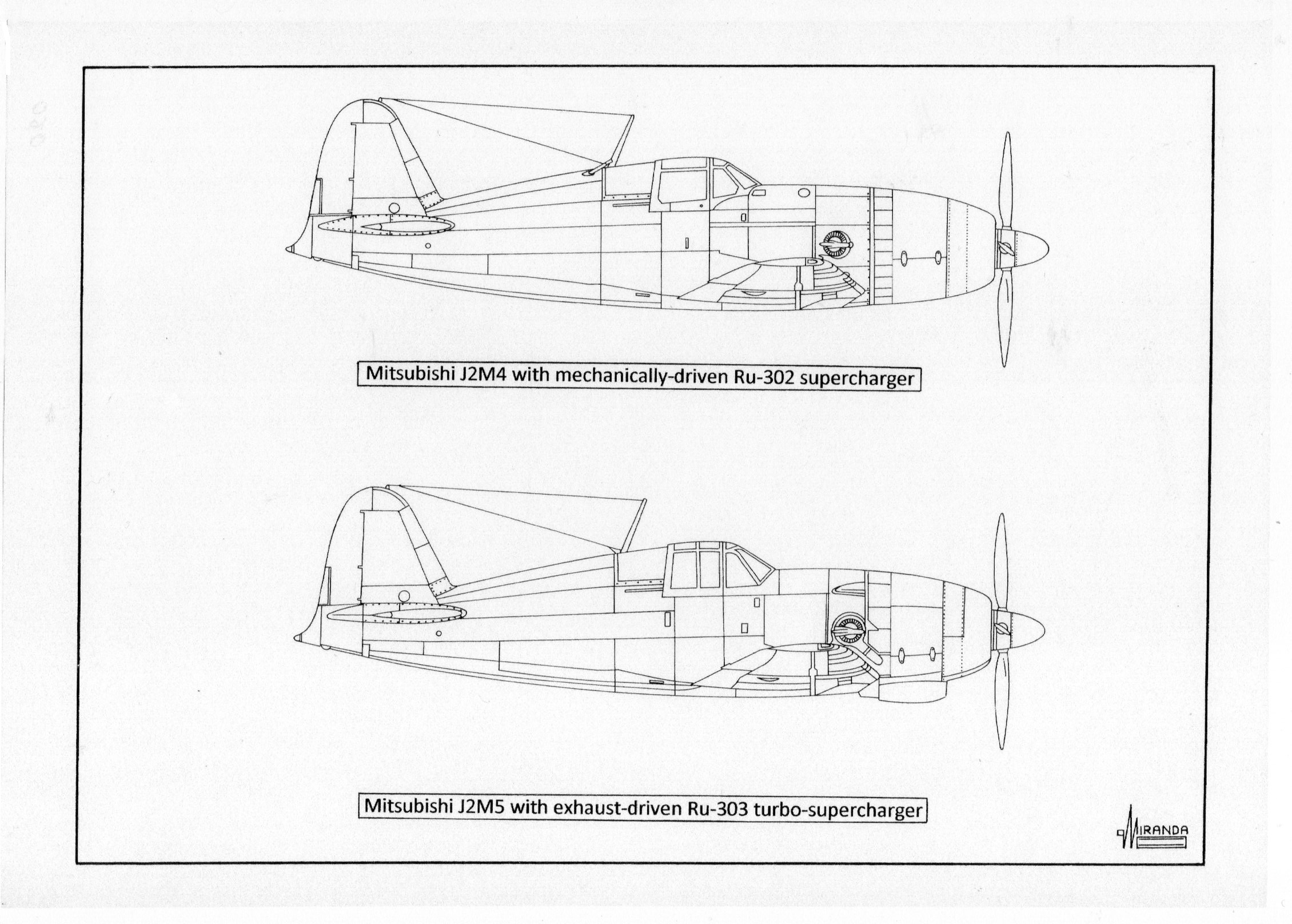
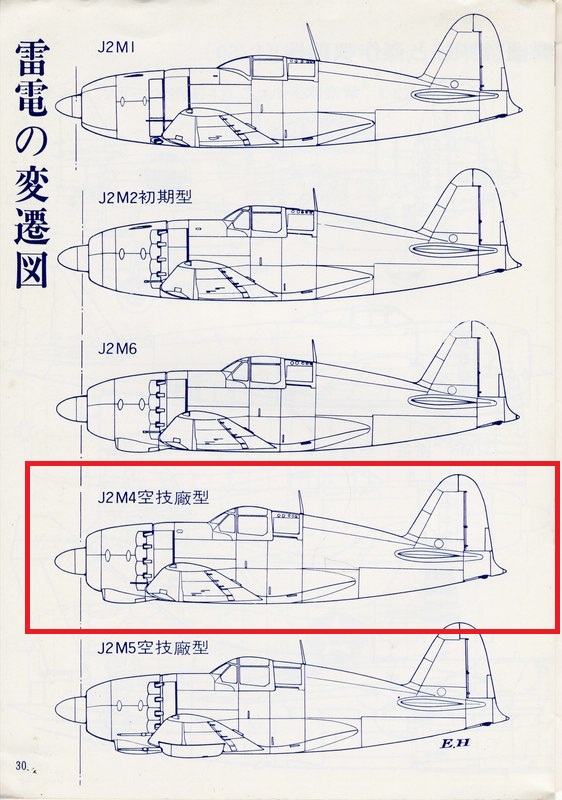
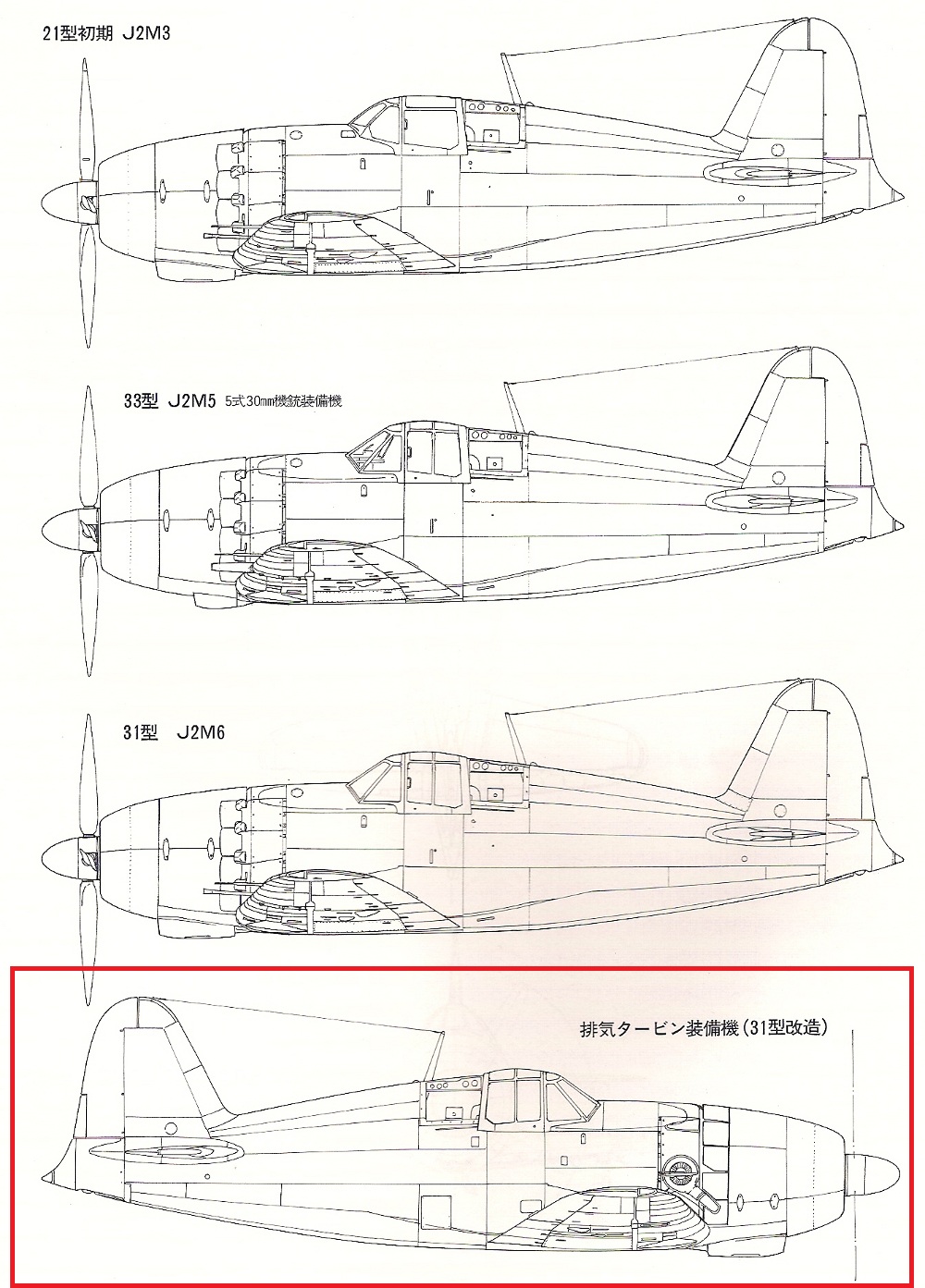
The Mitsubishi J2M4 Model 32 (Yokosuka turbocharger) is very similar to the Mitsubishi J2M5 from the game, but there are important differences between them.
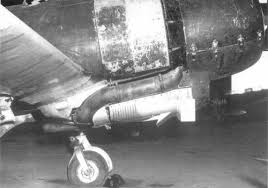
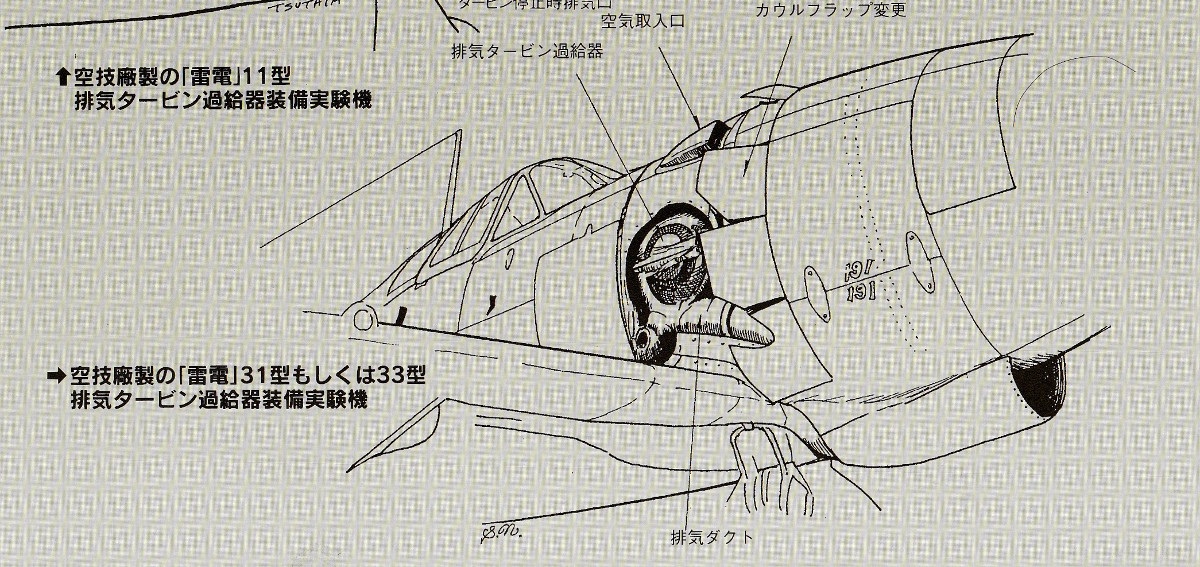
- On the right side of the aircraft’s nose, behind the engine, a turbocharger was installed
- The Mitsubishi MK4U-4 Kasei 26a (Ha-32-26a) fourteen-cylinder, air-cooled radial engine with a starting power of 1,339 kW (1,820 HP) was replaced with the Mitsubishi MK4R-C Kasei 23c (Ha-32-23c) fourteen-cylinder, air-cooled radial engine with a starting power of 1,339 kW (1,820 HP).
- The fuel reservoir behind the airplane engine has been removed
- The engine cover has been slightly modified
- Under the cockpit, a 15mm thick protective plate was installed
- The ammunition supply for the cannons has been reduced
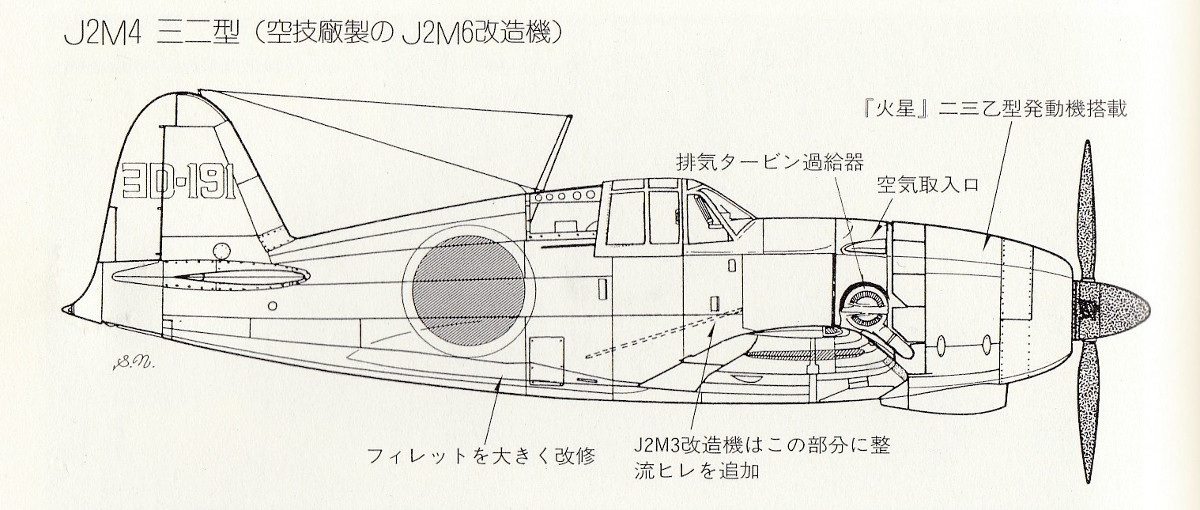
Technical sketches
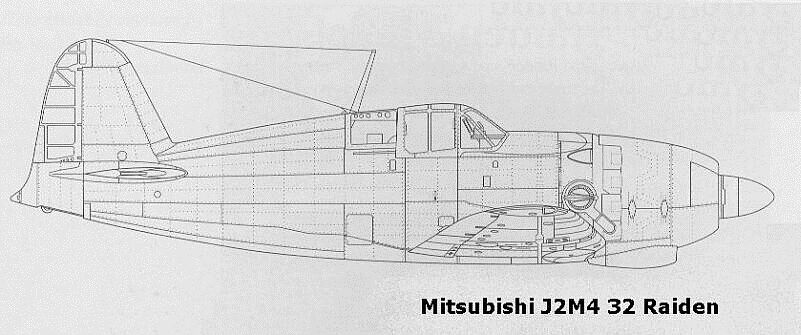
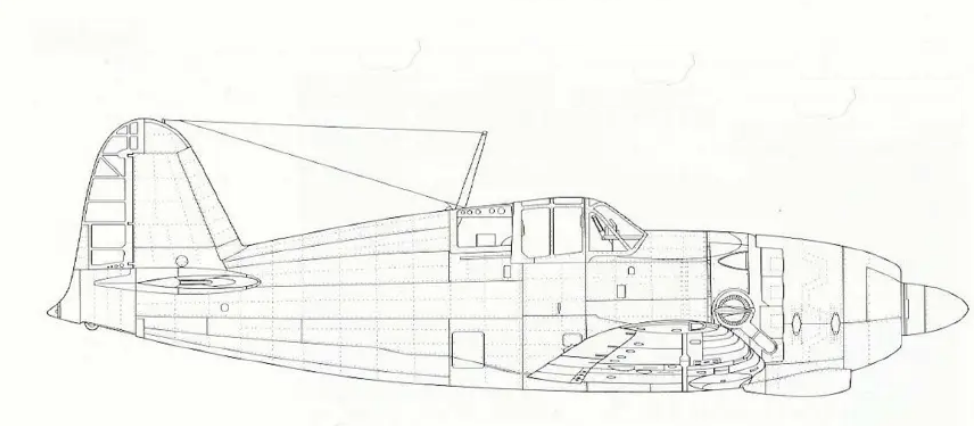
Comparison of the Mitsubishi J2M4 Model 32 (Yokosuka turbocharger) with other versions of the Mitsubishi J2M

General characteristics
- Crew: 1
- Length: 9,69 m
- Wingspan: 10,79 m
- Height: 3,81 m
- Wing area: 20,05 m2
- Empty weight: 2823 kg
- Gross weight: 3947 kg
- Powerplant: 1 × Mitsubishi MK4R-C Kasei 23c (Ha-32-23c) fourteen-cylinder, air-cooled radial engine with a takeoff power of 1,339 kW (1,820 Hp)
- Propellers: Four-blade propeller with a constant rotational speed of 3,300 mm diameter
Performance
- Maximum speed: 577-583 km/h
- Cruising speed: 370 km/h (?)
- Range: 930 km (?)
- Maximum Range: ?
- Service ceiling: 11500 m
- Climb Rate: ?
- Rate of climb: 19’30 min to 10000 m
Armament
- Guns:
- 2 x Type 99 Model 1 type 4 20mm cannon in wing (150 rounds per cannon)
- 2 x Type 99 Model 2 type 4 20mm cannon in wings (190 rounds per cannon)
- Bombs
- 2 x 30 kg bombs
- 2 × 60 kg bombs
- Rocket:
- 2 x Type 3 No.1 Mod.28 Mk.1 rockets (?)
- 2 x Type 5 No.1 Mod.9 rockets (?)
- 2 x Type 3 No.6 Mod.27 Mk.1 rockets (?)
- 2 x Type 5 No.6 Mod.9 rockets (?)
- Fuel dump tanks:
- 2 x 300 L dump tanks under wings (?)
- 1 x 400 L dump tanks under hull (?)
Armour
- 8,5 mm thick armor plate behind the cockpit
- 15 mm protective plate under the cockpit
- 70 mm additional bulletproof glass in front of the pilot
- Self-sealing fuel tanks in the hull
Summary
The Mitsubishi J2M4 Model 32 (Yokosuka turbocharger) is an interesting plane for Japan in War Thunder. This fighter will perform excellently at high altitudes thanks to its turbocharger and will serve as a free substitute for the Mitsubishi J2M4 Kai in the game (the J2M4 Kai could, for extra distinction, have two 20 mm Type 99 cannons behind the cockpit in a Schräge Musik configuration). This plane would be good to group in a folder with the Mitsubishi J2M5, while the Mitsubishi J2M3 could then be grouped in a folder with the Mitsubishi J2M6. I encourage you to discuss in the comments and to share your own knowledge on this subject.
Finally, I apologize for the linguistic and logical errors because unfortunately English is not my main language and I had to use google translator.
Internet sources
雷電 (航空機) - Wikipedia
Mitsubishi J2M Raiden - Wikipedia
局地戦闘機 『雷電』/三菱Mitsubishi J2M | 大日本帝国軍 主要兵器
Mitsubishi J2M « Raiden » (“Jack”) variants | Secret Projects Forum
Myśliwiec wysokościowy J2M4 Raiden – Samoloty 1.5
Book sources
- 日本航空機辞典 1910年(明治43年)~1945年(昭和20年) 上巻 (Encyclopedia of Japanese Aircraft 1910 (Meiji 43) – 1945 (Showa 20), Volume 1) page 252-253
- 野沢正『日本航空機総集 三菱篇』出版協同社, page 206-210
- Japońskie Samoloty Marynarki 1912-45 część II (Japanese naval aircraft 1912-45 part II) page 116-121
- Lotnictwo wojskowe numer 6/2007 (Military Aviation No. 6/2007), page 64-73
- Fighters of the Dying Sun page 101, 103
- Mitsubishi J2M Raiden, page 17-18
Mitsubishi J2M Raiden | PDF - The Xplanes of Imperial Japanese Army and Navy 1924-45 page 232-233
The Xplanes of Imperial Japanese Army and Navy 1924-45 | PDF

Thank you for reading the suggestion, see you in the next one. Good luck pilots