Lol you can’t be any more wrong…
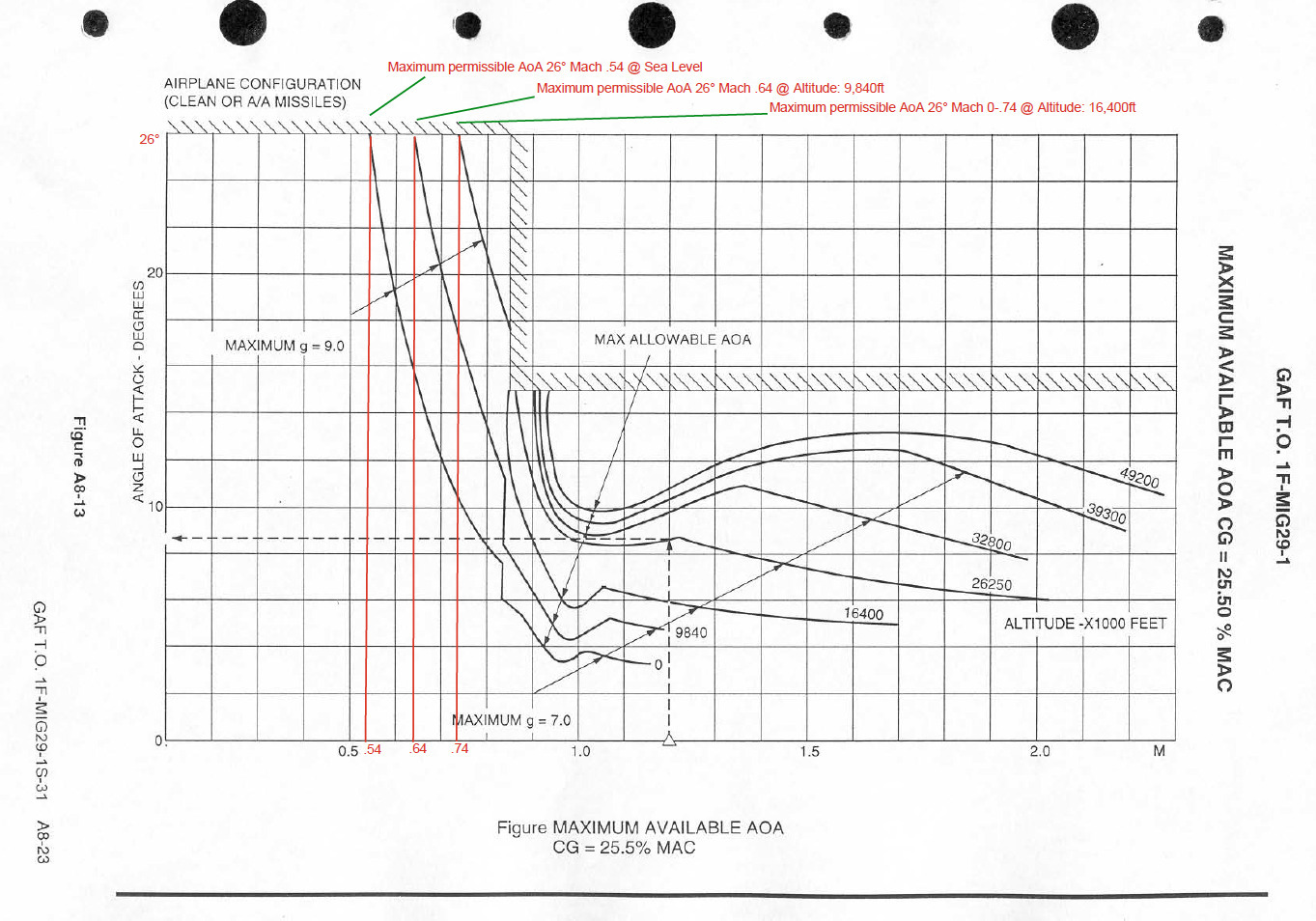
Read that graph and tell me how many G’s can the MiG-29G pull at 9,840 feet… What about 16,400 feet?
Yeah it can definitely pull 9G going faster than Mach 75. at high altitude, isn’t that right @kizvy ?
Lol you can’t be any more wrong…
Read that graph and tell me how many G’s can the MiG-29G pull at 9,840 feet… What about 16,400 feet?
Yeah it can definitely pull 9G going faster than Mach 75. at high altitude, isn’t that right @kizvy ?
@Ziggy1989 How is MIG-29 ever physically supposed to reach it’s max installed AND static thrust on the ground? It cannot even use it’s main intakes unless the landing gear is hidden
This one also show basically the same thing. Notice how AoA limit has big L shape drop off?
It should also be noted that the G limitation is not something that is hard-coded into the flight system…but rather there is monitoring equipment and the pilot will get in trouble for exceeding it. It’s no different than F-14 or F-15 having G limits.
And once again we are just going to ignore installed thrust being correct. Why does aerodynamics manual document show static installed thrust of less the 15,000kgf when you say it should be 16,600kgf at a minimum?
I’ve never seen this graph before… now it makes sense why the thrust for the mig-29 is so low at v = 0
I do not understand your questions. Take-off thrust is not the engines maximum possible thrust installed. It is simply the manufacture’s baseline. The engines actually produce more but the lowest thrust rating that all engines of the same type can reliably produce together is selected by the manufacturer and placed in the operation manual.
This is to create a safety margin when the aircraft is conducting the most critical phase of manned flight, taking off. This is a industry standard the FAA, DoD etc. has adopted.
RD-33’s Static Thrust @ Sea, Standard day (take-off thrust) = 8,300kgf × 2 = 16,600kgf
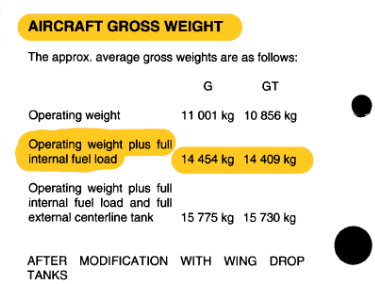
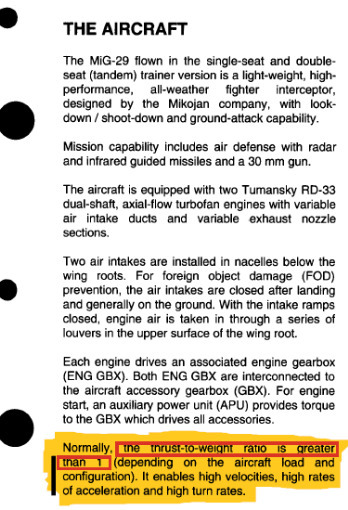
This is how the aircraft has a legendary thrust to weight.
Thrust-to-Weight Ratio (TWR)
Take-off Thrust / Gross Weight = 16,600kgf / 14,454 kg ≈ 1.15
Mig-29 is only allowed to pull 9G if it is lighter than 14200kg and is limited to 8G when heavier than that
with the drop tank you are only allowed to pull 5Gs same goes if you have rockets or bombs o
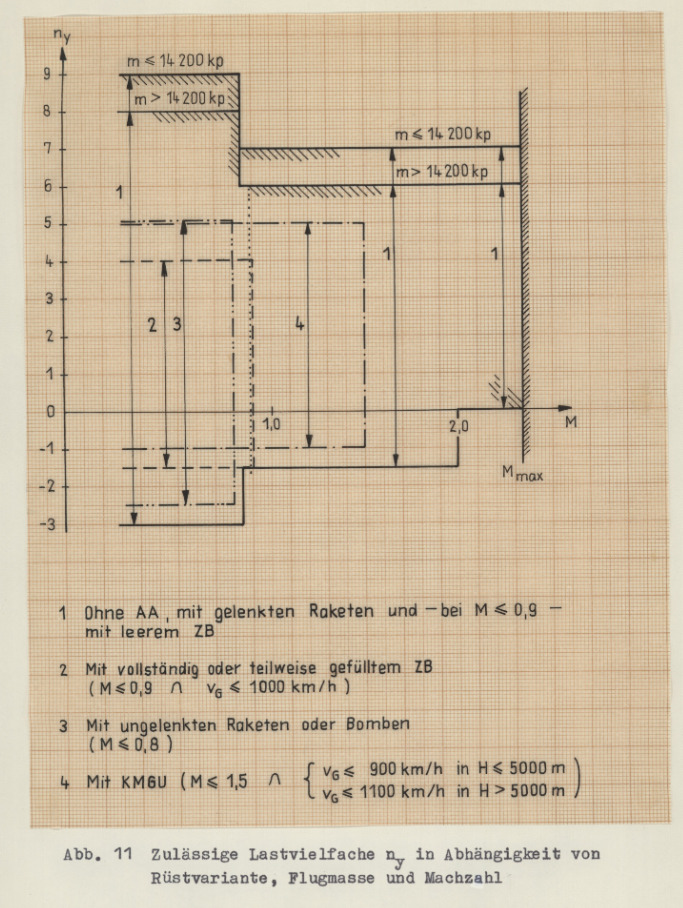
so if you are lighter than 14200kg you can pull 9Gs but only at up to roughly 6km altitude and at speeds lower than Mach 0.85

normal takeoff weight is 15765kg with 2x r27 and 2x r73
max takeoff weight is 18480kg and normal landing weight is 14200kg
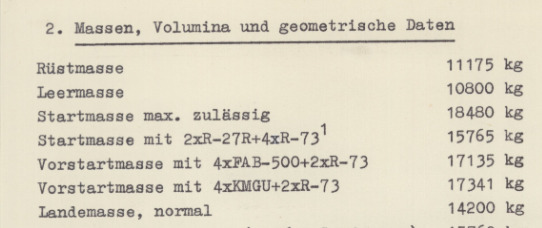
so the Mig-29 is only allowed/ able to pull 9Gs when below its normal landing weight
Yes, with a gross weight @ 14,454 kg (full internal fuel) for the MiG-29G this is consistent with reality.
It just take-off burns a little bit of fuel and its 9G ready with a thrust to weight ratio of 1:1 at take-off.
"When the engines are operating in the “Full afterburner mode during takeoff. (H=O, V=0), the thrust-to-weight ratio of the aircraft is 1.14.”
Source: ПРАКТИЧЕСКАЯ АЭРОДИНАМИКА САМОЛЕТА МИГ-29 Страница 179 (PRACTICAL AERODYNAMICS OF THE MIG-29 AIRCRAFT Page 179)
The longer it stays airborne the higher that thrust to weight ratio increases. It starts off with a 1.14 thrust to weight ratio…
Its combats thrust to weight is monstrous at 50% internal fuel, still able to be armed with missiles & has full 9G capability.
You highlighted that the MiG-29 It is a true 9G fighter almost its entire flight envelope once it burns of some of its full internal fuel after take-off.
Good job.
hi, could u point me in the direction of this (i’m assuming nva mig29a? or something similar) manual if it’s available to be shared? thanks
hi copilot could you explain to me the differences between available power and calculated thrust and specifically how it is handled in russian aerodynamic conventions? thanks
I do not think you are equipped to comprehend my explanation.
because you ran out of tokens for gemini and copilot?
Tokens? No, I said you are not equipped to comprehend my explanation. You asked me to explain something.
Why are you so hurt all of a sudden. Who are you?!
yes please explain in your own terms, i would like to know even if i will not comprehend
I am not you’re daddy, kid. I don’t even know you. Go ask him lol.
so you don’t know? :/
thank you very much!
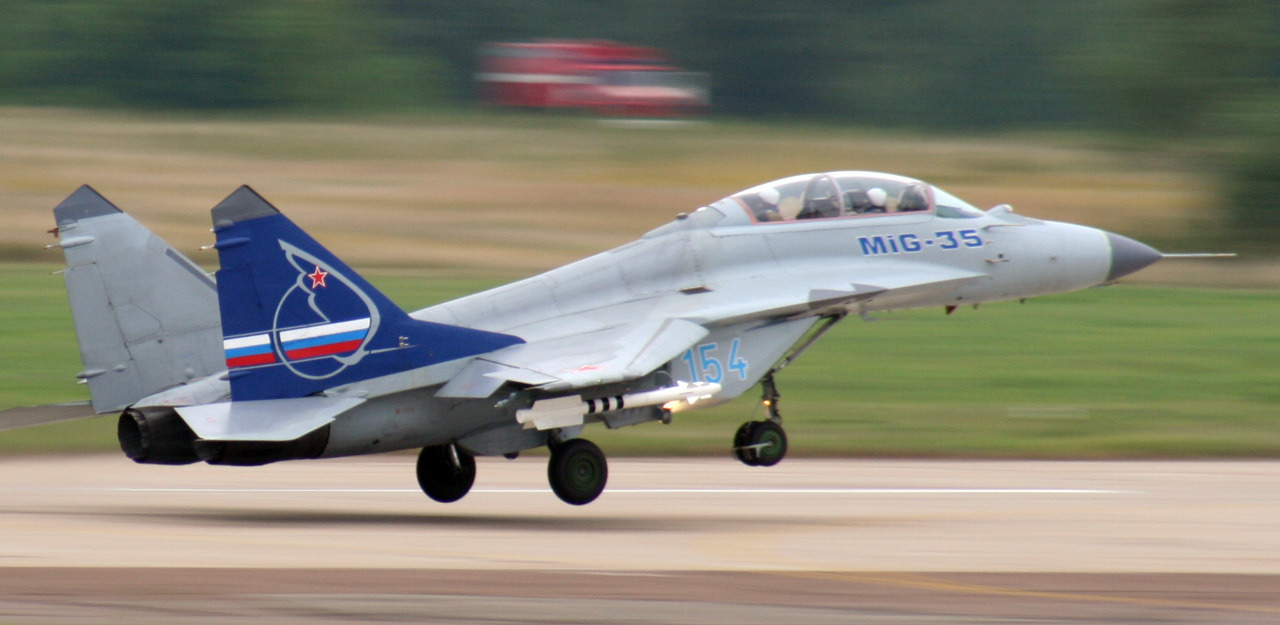
well looks like the suggestion i wrote last week for the #154 MiG-35D didn’t get accepted to the forum, will try to potentially submit another one sometime in the future
Hehe, it’s called normal take-off weight.
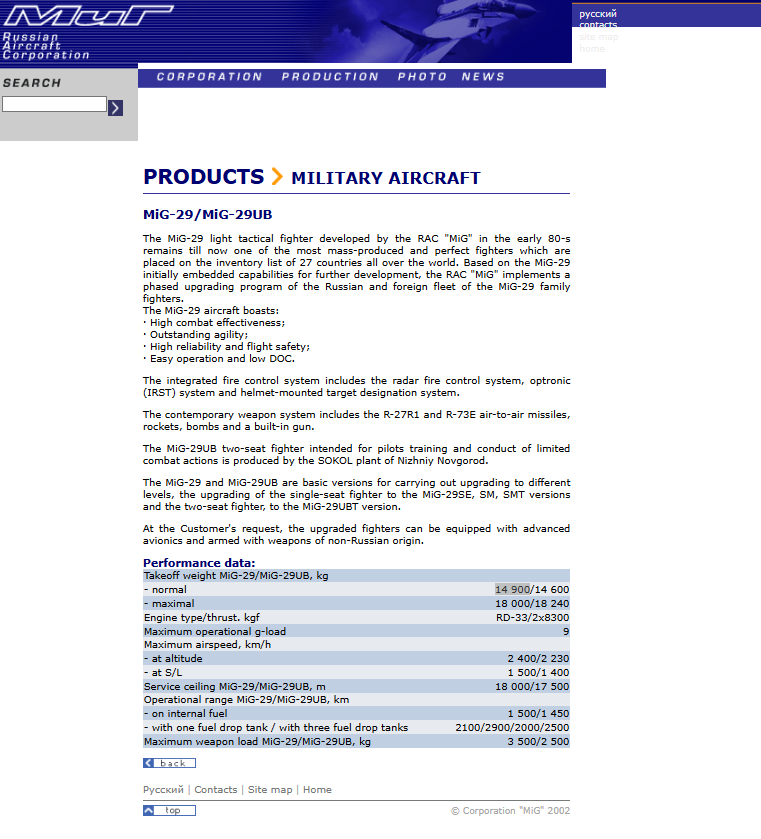
MiG-RAC officially states MiG-29 (likely 9-13 because 3 drop tanks is noted) sits at normal take-off weight of 14,900 kg while the UB sits at 14,600kg. Normal take-off weight is operating weight & full internal fuel. Do you still need me to hold your hand and explain how normal take-off weight is determined & how it relates to determining thrust to weight?? @FeetPics.
RD-33 thrust at take-off is 8,300kg each.
MiG-29
x2 RD-33 16,600kgf & Normal take-off weight (full internal fuel) 14,900kg
16,600 kgf / 14,900 kg ≈ T/W 1.11
MiG-29UB
x2 RD-33 16,600kgf & Normal take-off weight (full internal fuel) 14,600kg
16,600 kgf / 14,600 kg ≈ T/W 1.14
You have absolutely zero idea what you are talking about & everything you thought you knew about aerospace engineering was nothing more than a wild cluster of disinformation that is constantly recirculated here on this video game forum.
The Russians do not mess around with advertising uninstalled numbers as they are absolutely irrelevant to the pilot, especially in Soviet doctrine. The RD-33 was designed first and foremost for the MiG-29. Even when talking about the engine in isolation, it has already been corrected and adjusted for all installation loss. Or in words that you can understand, “channel loss”.
RD-33 8,300kgf is 100% installed thrust.
The RD-33 is a 8,000 - 9,000kgf thrust class engine.
Installed on the MiG-29 it is 8,300 kgf at take-off.
It’s not though.
8,300kg is bench test thrust and not installed thrust.

Chart from manual shows 13,500 kgf total static thrust when installed.
That’s not even a manual for any MiG-29 we have in-game lol.
You don’t even know what gross weight is, let alone take-off thrust. How do you figure you know what installed/uninstalled thrust is?
The height 0 represents at sea level.
The MiG-29 top speed at sea level is about Mach 1.3
You can’t even read a graph correctly.
You can’t even determine what early version of the MiG-29 manual you are reading.
You actually thought that every single MiG-29 to this day uses the series 1 RD-33 from the early 9.12???
This level of reading comprehension is unacceptable. I am so disappointed in you right now, @FeetPics.