Yeah I readed it. That two books is too little for the confirmation or refutation of anything. We need more data. But until then, the scheme should be taken into account, because for now we don’t have anything better.
I guess we just have to agree to disagree. You’re basing everything on a single schematic and nothing else…
Because there is nothing else. I am not saying the schematic is proof, but it should not be ignored as a clue.
Iirc it never went beyond being a bog standard MLD displayed with a bunch of weapons that the proposed 23-98 would have had.
Pls be the one with the PESA radar it would be so funny.
that is the one with the PESA radar there is no other version of it afaik
since the Bison is its own thing
MiG-23MLDG would be nice to have in TT as final most advanced variant.
2 Likes
well i tried lol

https://community.gaijin.net/issues/p/warthunder/i/KjpbrGipBeOA
here is the report he linked
1 Like
A good chunk of the things I mentioned in the MLDG post could be added to all 2nd/3rd gen Floggers as well. The ML, MLA and MLD should all get HMS, R-73s and R-24Ms. The specific appeal of the MLDG is the Gardeniya-1FU I-Band radar jammer pod and the improved radar (Sapfir-23MLA-IIM, very similar to the MLD’s radar but with better reliability and resistance to jamming/noise/clutter/ECM etc). But if gaijin only wants to add those 80s upgrades to only the MLDG, well alright fine ig (though I’d strongly argue the MLD specifically should get HMS, R-73s and R-24M).
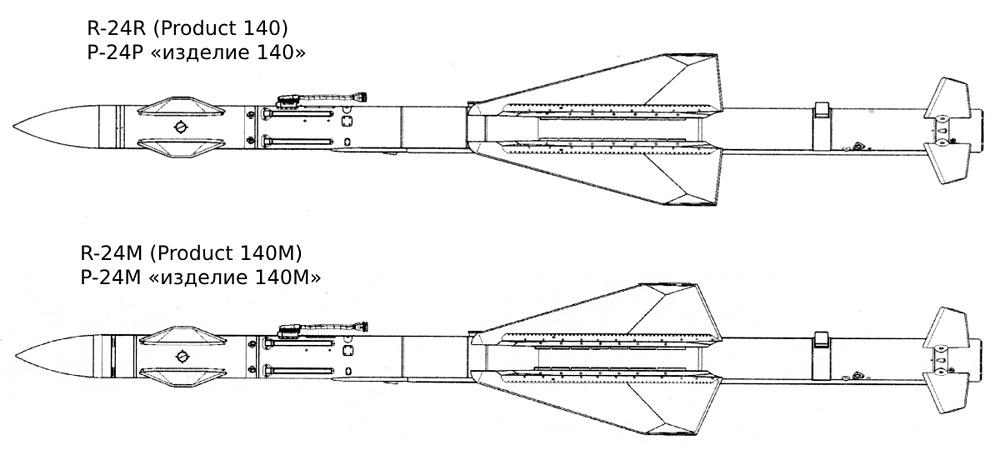
Alright, since I wrote the thread on the R-24M (and MLDG) I’ll chime in: the notion that the R-24M has better maneuverability than the R-24R is me speculating based on both the different schematic which shows it having slightly different fins than the R-24R, and a dataset I read (originally posted here) which I thought stated it had ±55° seeker boresight vs. the R-24R having ±50° - I now recognise I misinterpreted this. The way this person phrases the sentence before the dataset makes it sound like they’re talking about the R-24M, but upon checking the source they cite, they’re actually just reciting the data on the R-24 as a whole. The R-24M is a very obscure missile and it was a real pain to find any information on it, and a lot of sources were simply something like this sentence EstrogenKitten provided:
Seeing the dataset and various (albeit conflicting) drawings of it, I thought, “well, I don’t know that much about rocket kinematics, but a quick google search shows that a different fin design could give it some extra overload, plus that extra five degrees of launch boresight has to translate to something, right? What, one, one and a half, maybe two Gs?”
Actually checking the source (М. Дрофа, Е.А. Федосова - Авиация ПВО России и научно-технический прогресс: боевые комплексы и системы вчера, сегодня, завтра: монография / под ред, 2005, I dug up a PDF of it for the purposes of this post) states nothing about the R-24M specifically in the dataset and only has one sentence about it in general. The ±55° seeker boresight is referring to the the R-24T, and as far as I know there was no R-24TM.
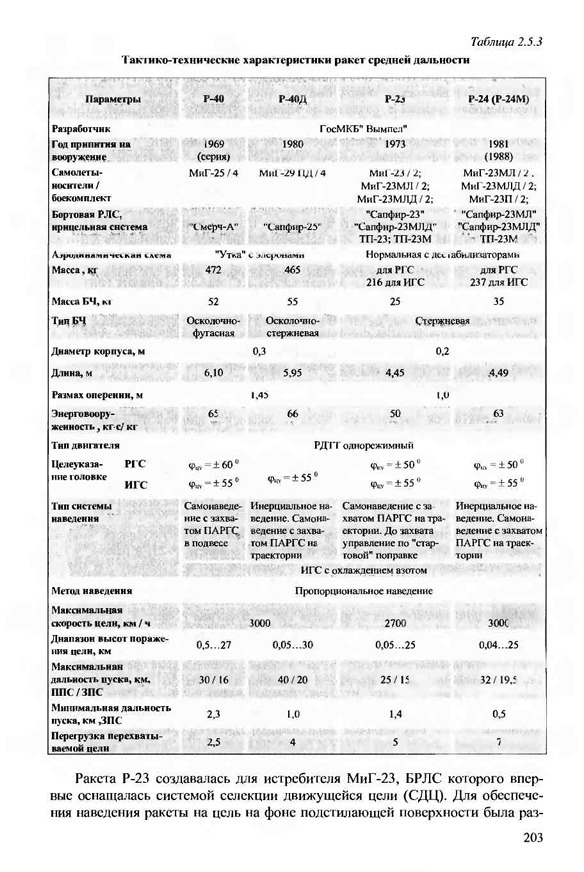
So, the boresight is the same as the R-24R. But, that doesn’t explain the different drawings. Obviously, EstrogenKitten has claimed that the R-24M drawing showing it with different fins from the R-24R isn’t real, and I don’t know how to refute that since it is virtually the only picture I’ve ever been able to find that is explicitly stated to be Izdyelie 140M/R-24M. I do think there is some credibility to the claim that it’s wrong, given that other drawings of R-24R look remarkably similar to R-24M, but others still show it looking different.


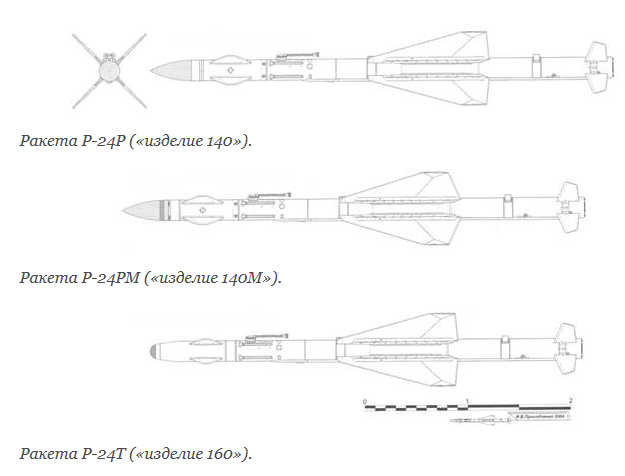
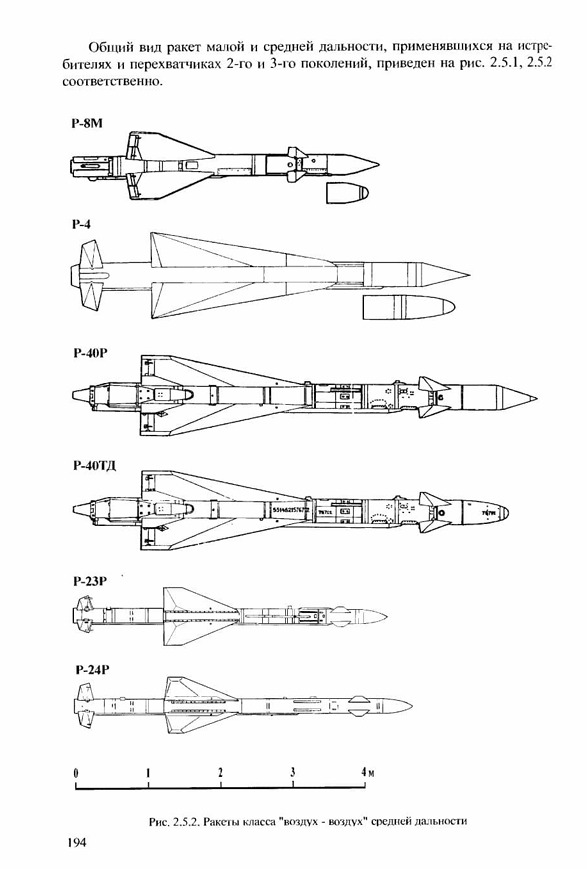
Again, this missile is barely a footnote in most sources. A paragraph at best.
The only thing that I can confirm with certainty about the R-24M is the new seeker, which gives it “vastly improved” countermeasure resistance, specifically against ECM and chaff, as well as improved low-altitude performance, specifically in terms of ignoring ground clutter. I will push back against the claim that it was designed specifically to down helicopters - it was tested against a helicopter, and it has better targeting against helicopters, if I remember correctly that was part of its design brief, but it was also tested against MiG-21 drones standing in for ICBMs. Generally speaking the R-24M (or R-24RM) is just an improved R-24R with a more reliable seeker. Kinematic improvements - if they exist - are only minor.
Update turns out the drawings of the R-24M with different fins from the R-24R are real, I found a photo of a real one mounted on a MiG-23P

The tapering on the fins is pretty easy to see and it’s very obviously different from the R-24R. So, unless this photo is fake, it’s all but confirmed that the R-24M did indeed have minor kinematic improvements.
6 Likes
That is amazing and job well done @TheFinalStarman ! I take back what I said previously and @csla1972 I think I owe you an apology since it does seem that the schematic was indeed right!
5 Likes
I have also made 2 more bug reports for the MiG-23MF
MiG-23M/MF, Radar scan zone height/elevation limits are wrong
Minor bug with the scan zone limits being a bit too high but the main scan area being too small
https://community.gaijin.net/issues/p/warthunder/i/1gSumgwVVLaC
MiG-23MF, MTI lost on pitch-up, scan zone not pitch-stabilised
Not really a bug but more of a gripe with how the game handles radar stab, this would allow for a lot more pitch up while still being in MTI (if the scan zone is below the horizon)
https://community.gaijin.net/issues/p/warthunder/i/yjB1Mq1BmCA4
2 Likes
Naaaaah, its good comrade. o7
We discussed it )))
2 Likes
The ML, MLA and MLD should all get HMS, R-73s and R-24Ms
I am curious why you said this though, R-73 was only ever used on the MLD and the pylon for it too, I have not seen any further information on why it would be backwards compatible to the others.
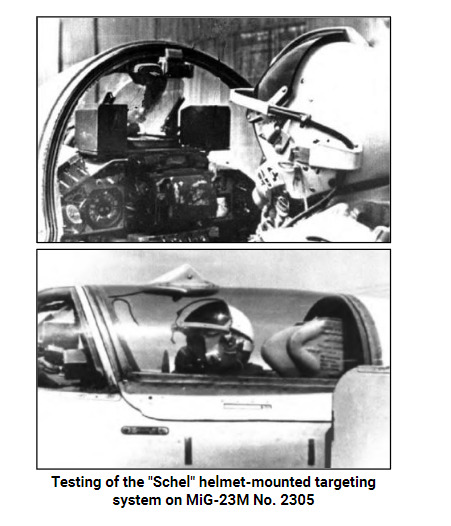
Also HMS? Not even MLD had it, it was tested on an M but I think that was about it for ML/MLA/MLD?
2 Likes
Now, for a change, I am the one being suspicious - wondering if I am actually seeing 94 degrees there instead of 91, lmao. But should be 94.
Oh don’t apologise, everything you said was perfectly accurate at the time. There was zero mention of the fins being different in no source whatsoever, only these schematics - and considering the “variations” in which the R-24R is depicted, it’s perfectly reasonable to assert that it could be likely the authors were wrong or got confused. And, absent any photographic evidence, there’s no reason not to think the R-24M would be totally identical to the R. Your conclusion was perfectly reasonable, the only difference is that now new evidence has been discovered!
Though, tbh, in hindsight… I never saw any source explicitly say that the R-24 had different fins from the R-23… so that could be why they didn’t describe that for the R-24M… ah well, not that it matters. Mystery solved!

1 Like
I have a problem with reading things, repeating them later online, and then not writing down the source where I got them from, but! today is not one of those days. That picture is from Markovsky and Priohochenko’s book “Jet Fighter MiG-23: Protecting the Skies of the Motherland”. You can read a translated version here. Aside from being an interesting read, the chapter on the MLD (Page 182 in the PDF) and “Projects and Experiments” (Page 215 in the PDF) does talk about the use of the R-73 and HMS on the ML and MLD. It seems the MLA didn’t have it (so I was wrong there) - on the ML, it was only for testing (which still counts, for WT’s purposes! Well, kind of), and the MLD began to be equipped with the R-73 starting in 1983. Curiously, while the MLD did receive the R-73 in standard service, it only received the HMS for testing, like the ML. MLD-based subvariants, like the MiG-23MLDG (Izd. 23-57), were intended to receive it as standard. So I guess that kind of counts.
Also:
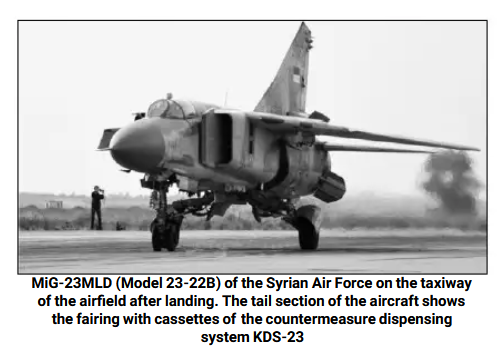
From Page 205 - interesting, seems KDS-23 dispensers being mounted in places other than the fuselage and wings was indeed a thing-
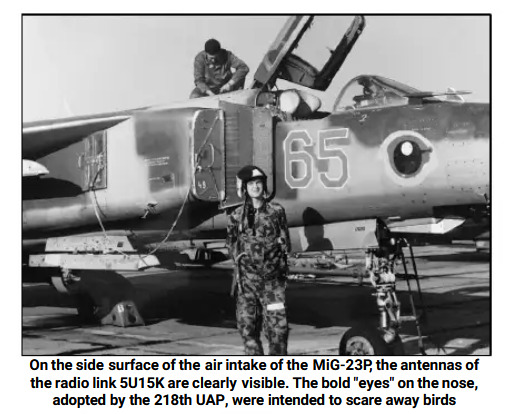
Page 210. Lol. Lmao, even
3 Likes
Russia have common ML designation for both ML and MLA if I am correct.
Curiously enough though, in the endless oddities and quirks of the MiG-23, it did have a… thumbstick mounted sight…?
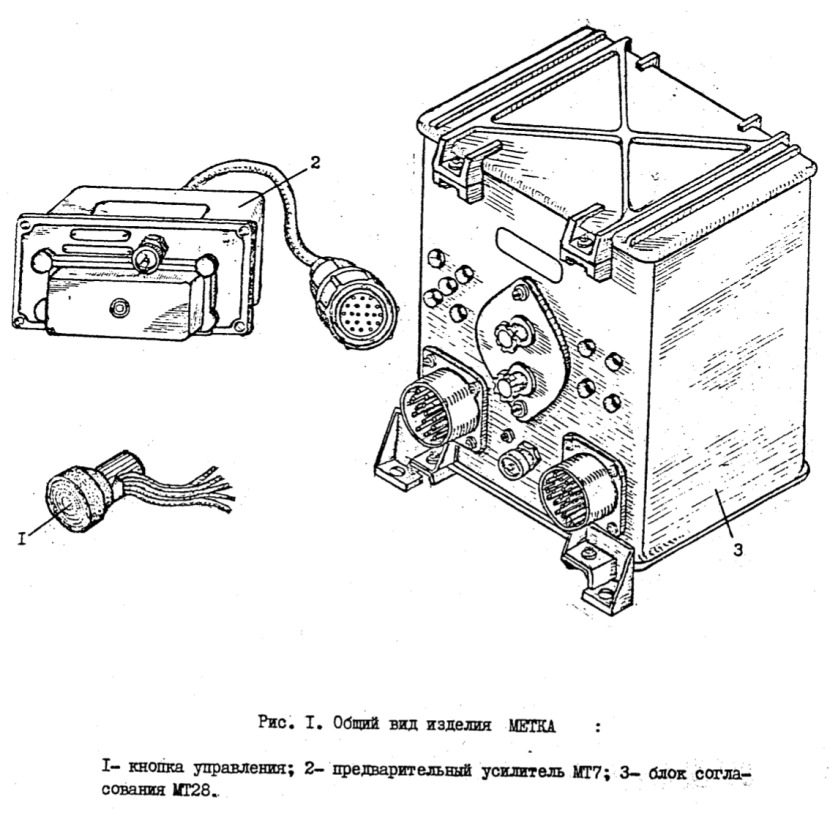
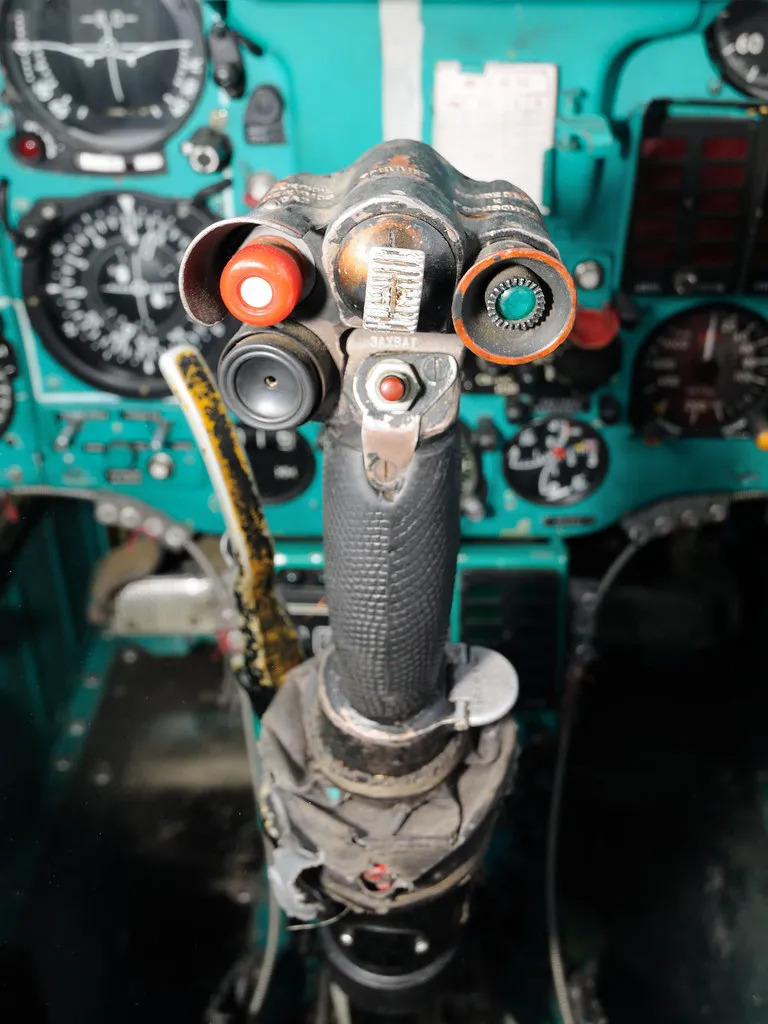
The black button on the left of the stick, featured on the ML onwards, could be used to steer the seeker of the R-60. Apparently. This was how they steered the Kh-23 as well. So that’s neat.
@csla1972 - I don’t know anything about that, but I’d believe it given that the MLA was a relatively minor update of the ML. New gunsight and radar, that’s it. Although speaking of - I’m not sure about Germany ever having the MLA - to the best of my knowledge, the MLA was never exported - Germany would’ve had the MF and ML, but the only version of the MLA they would’ve had would have been the export version MiG-23MLAE-2, which is effectively identical the MLD but without the aerodynamic improvements
The german MiG-23ML is an MLA. The ML was never exported so every export ML is an MLA.
There were not a lot of “pure” MLs and those that did exists were converted to ML(A) during their life.
The actual designations are 23-12 (ML) and 23-12A (ML(A))
1 Like
If that’s the case, then what of the export versions of the MLA, MLAE (23-19) and MLAE-2 (23-22)? The MLA was in service with the USSR Air Force as well, it would be odd for an export version to be used domestically