- Yes
- No
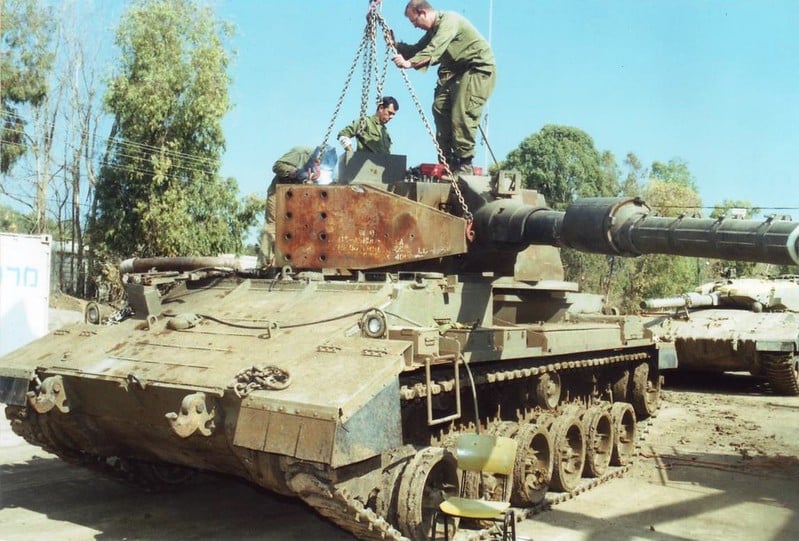
- Degem.001 Early/1973 (with M48 turret)
- Degem.001 Early/1974 (with Merkava turret)
- I voted no
Additional polls are at the end of suggestion
Merkava Prototype Degem.001 (Early)
The Early Centurion-based Prototype
- BASIC DESCRIPTION -
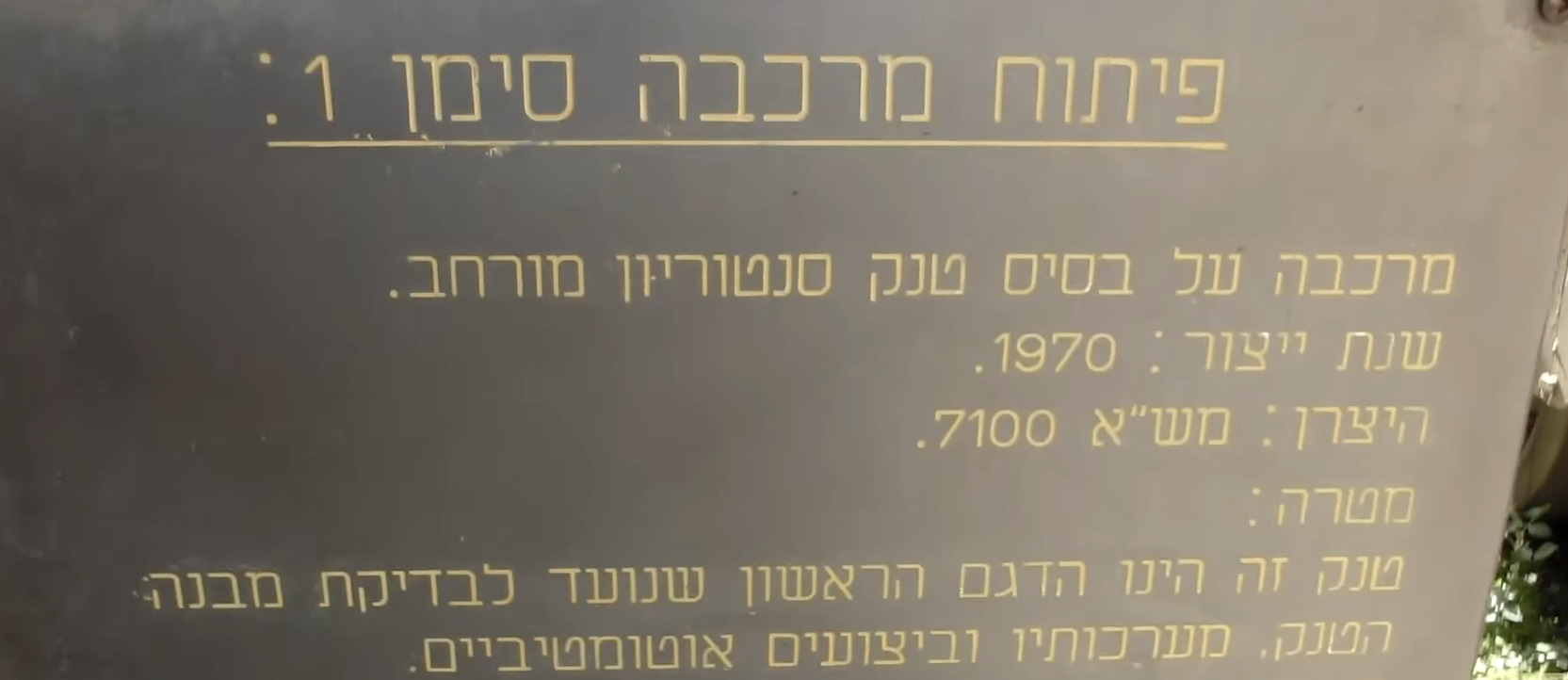
Merkava Prototype Degem.001 (Early) - Is one of two first prototypes of Merkava tank that were built in-metal, the two were built in order to test the concept, the automotive part, the possibility of firing from the tank, and in general, to ensure that the tank could be built as planned.
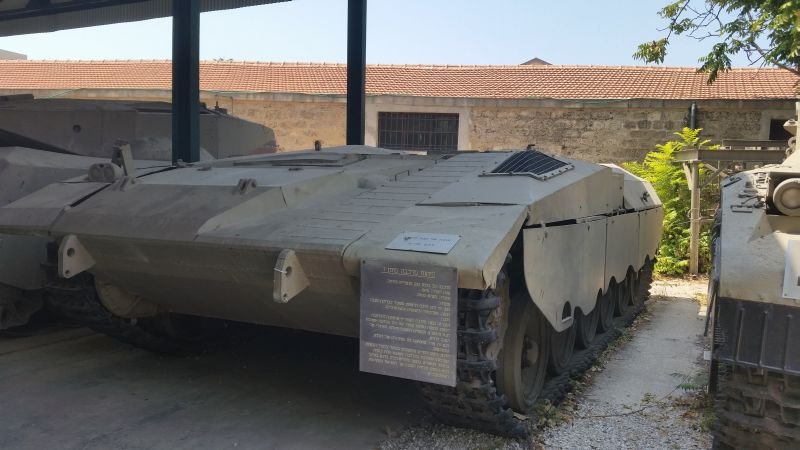
ㅤThe tank was created using the hull of a damaged Sho’t tank (Centurion). Using precision cutting, the hull was split lengthwise from bow to stern, widened, and welded back together. The engine was placed in the front of the widened hull. What had been the front of the tank became the rear, and vice versa.
ㅤAt first, its turret was a mock-up, but during mobility tests around 1973, this tank was equipped with an Magach 3 turret, and later in 1974, the tank was already seen with the newly built Merkava turret during firing trials of the model.
* Parts 1, 2 and 3 can be skipped as they are prehistory.
PART 1: THE FUTURE TANK (1967)
ㅤAt the end of 1967, the opinion was formed in the General Staff Division that a process should be initiated that would form the basis for making a decision to select the IDF’s future main battle tank.
ㅤThe need to find a new MBT for the IDF was driven by a number of factors, including: the results of the Six-Day War and the country’s expanding borders; the expansion of the IDF’s Order of Battle and, consequently, the expansion of the armored corps’ Order of Battle; the need to replace the aging Sherman tanks; and, most importantly, the search for a vehicle that would effectively counter superior tanks on the future battlefield.
ㅤ
The alternatives facing the General Staff were:
- Continue acquiring Sho’t Cal (Centurion) tanks, which require the installation of a 105mm cannon, a 750 hp Continental engine, an anti-aircraft machine gun, and a laser rangefinder.
- Continue acquiring M48A1/M48A2C tanks, which require further modernization to Magach 3 standard.
- Acquire Chieftain tanks through a joint British-Israeli development and production project, which requires planning and establishing production and assembly lines.
PART 2: THE CHIEFTAIN DEAL (1966-1969)
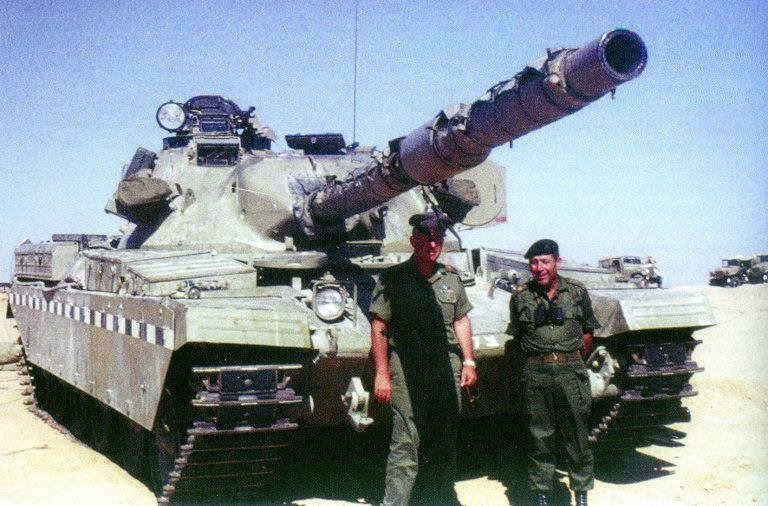
One of two Chieftain Mk.2 tanks in Negev desert, Israel.ㅤThe cooperation between the IDF and Britain regarding the joint production of the Chieftain tank, ‘Abir’ as the IDF called it [ heb: אביר, eng: Knight ], and the IDF’s acquisition of 250 tanks of this type, was one of the best-kept secrets in Israel between 1966 and 1969.
ㅤTwo Chieftain Mk.2 tanks were secretly brought to Israel, and the Ordnance Corps engineers, together with the Armor Corps personnel and with the help of British experts, worked on improving them and adapting them to the IDF’s requirements. As well as delegations, including many ordnance personnel, visited Britain over the years to learn the new tank.
ㅤDespite the secrecy surrounding the matter, details of the deal began to leak to Arab countries, leading to intense pressure from Arab countries on the British government. Ultimately, after numerous discussions within the British cabinet, involving both supporters and opponents, and prolonged deception by Britain, the UK withdrew from the agreements and, in late 1969, informed the Israeli government of the deal’s cancellation. The Chieftain project was abandoned, and both tanks were returned to the UK in 1970.
ㅤMore on this topic can be found in: Chieftain Mk.4 suggestion by commissarcarl.
PART 3: THE BEGINNINGS (1969-1971)
ㅤThe cancellation of the Chieftain contract placed the IDF in an extremely difficult position and deprived it of the opportunity to purchase modern tanks from Western countries. This situation, the knowledge gained during the development of the Chieftain, the modernization and improvement of various tanks over the years, and the completed Chieftain assembly line created a real infrastructure and led to the idea of creating an indigenous Israeli tank.
ㅤThe idea of developing Israeli tank was led by Major General Israel Tal, the head of MANPAK and Lt. Col. Israel Tilan, the head of the Tank Branch in the Armaments Corps. Some of the ideas were Tal’s and some were Tilan’s. The technical solutions were Tilan’s and the political war over the correctness of the concept was Tal’s. Tilan, the tank’s chief engineer, had revolutionary ideas and it later turned out that even the latest models of the tank continued to use the same systems that he had designed at the beginning. Tal was involved in every detail and every screw. Without Tal the Merkava would not have come to fruition. Tal drove and pushed the process and created tremendous public relations for himself among influential people in Israel, whom he recruited to commit to the project and among high-ranking guests from abroad.
ㅤIn August 1970, the green light was given, and the first instructions defining the design of the future tank were written. Production and maintenance were entrusted to the MAShA 7100 Rehabilitation and Maintenance Center. In late July 1970, the Israeli tank was given the codename “Merkava” [Heb: מרכבה, Eng: Chariot], which later became the tank’s official name. Prior to this, the tank was referred to as the “Israeli tank”.
ㅤAt the end of 1970, preparations began for the construction of a wooden model of the tank. The basic development stages included the following:
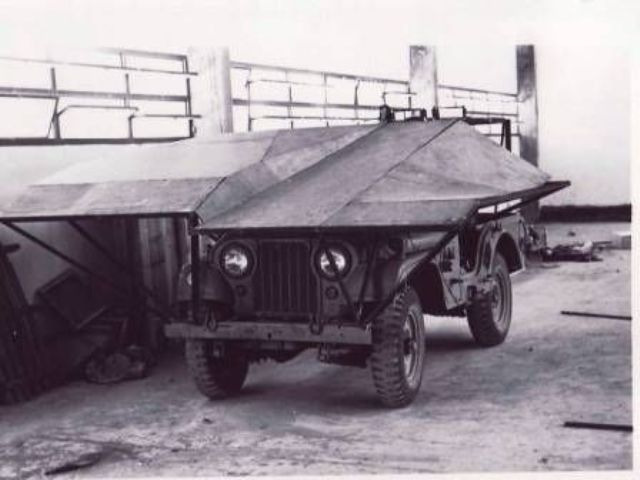
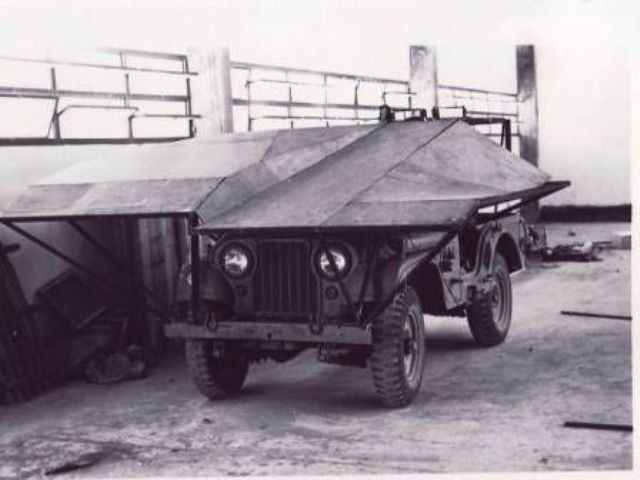
- Preparation of a jeep to test the driver’s field of vision, which was nicknamed the “Ugandan Jeep”.
- Preparation of a 1:1 scale wooden model.
- Experiments with casting the armor and armor steels.
- Development of main systems and assemblies, their testing and trials.
- Prototype construction.
- Model construction accompanied by tests and trials.
ㅤ
Left: The first wooden model; Right: “Ugandan Jeep” used for driver’s field of vision tests.
PART 4: CENTURION-BASED PROTOTYPES (1971-Mid 70’)
ㅤA year after the project’s inception, with the first wooden mock-ups and initial testing completed, work began, and in mid-1971 the first two prototypes to be built in full-metal were created in order to test the concept, the automotive part, the possibility of shooting from the tank, and in general to verify that it is possible to create a tank as it was designed.ㅤFor that task two hulls of damaged Sho’t (modified Centurion) tanks that took part in the Six-Day War (1967) were used. Using precision cutting, the hull was split lengthwise from bow to stern, widened, and welded back to provide a driver’s left-hand position next to the engine. The engine was placed in the front of the widened hull. What had been the front of the tank became the rear, and vice versa. It was as if the tank were moving backwards.
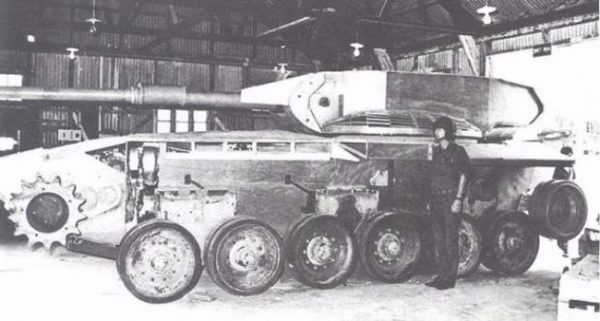
ㅤOne of them, the “mock-up”, was built at the suggestion of the main armament officer Domi and was intended to examine, before a steel model was built, issues such as field of view, accessibility, and mobility.
The mock-up prototype. Note that the Centurion’s tracks and rollers are reversed.
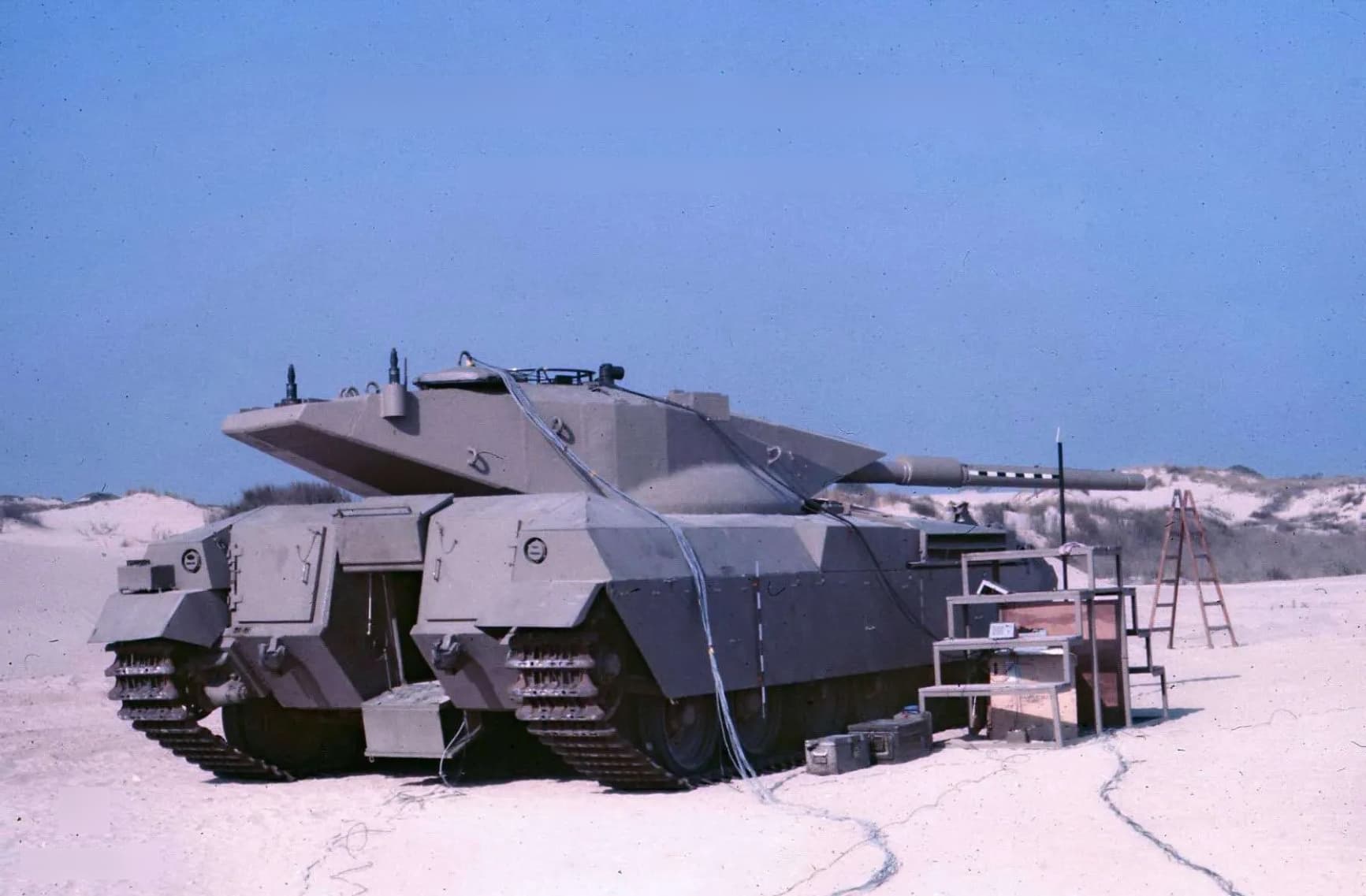
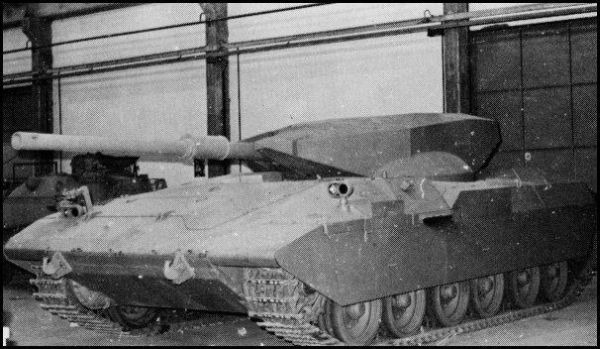
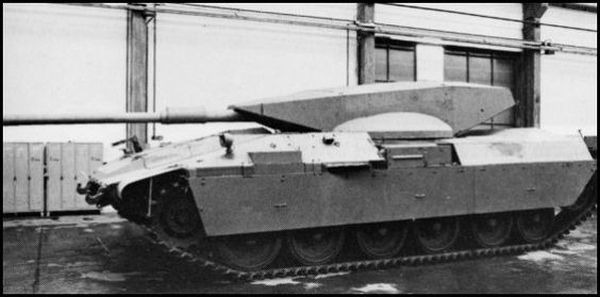
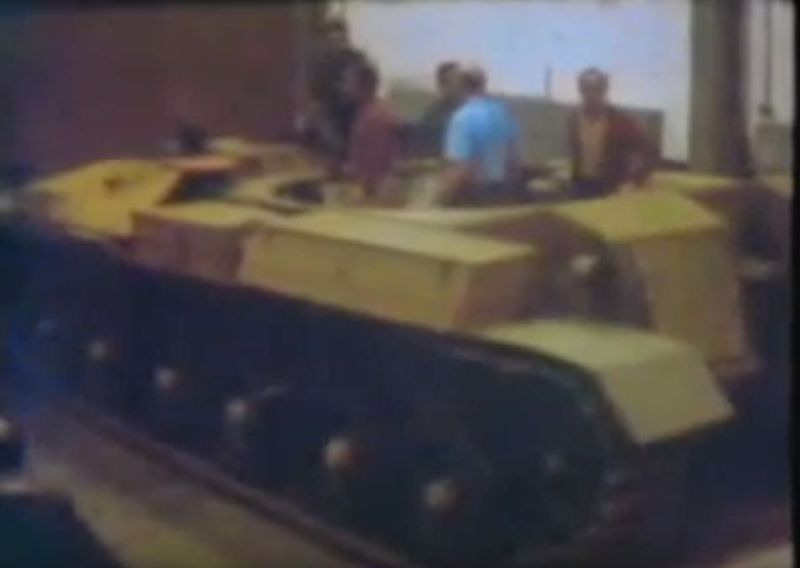
ㅤThe second and most advanced Centurion-based prototype (on which this Suggestion will be focused) was completed by September 1971. And it was called Degem.001 [heb: דגם 001, eng: Model 001]. On this model, the RAPAT (Tank Development Authority) personnel tested the various designs and began building various parts such as: the engine’s airflow. A dummy turret was built at the ‘Nachmani Engineering’ company, nicknamed the “Nachmani Turret” by the workers. RAPAT employees used this model to test various designs. The turret housed instruments for testing the compatibility of various systems and their ergonomics.
Merkava Degem.001 (early) in 1971 with a “Nachmani” dummy turret.
ㅤThis model was first rolled out at an impromptu ceremony, rolling down the concrete driveway of the MAShA 7100 repair center, with a Magach 3 turret for added weight. At the ceremony, held in mid-1973, Major General Albert Mandler was given the honor of “rolling out” the vehicle, but he declined with a smile: “It’s not a tank yet…”.
Merkava Degem.001 (early) in 1973 with a Magach 3 turret, note that it still has M48A1/A2C style commander cupola and 105mm M68 Cannon.
ㅤBefore the Yom Kippur War, in July 1973, the first test drive of Degem.001 was carried out, followed by experiments on other models of the Merkava in the Negev and Sinai sands. During the test drives, the engine overheating problem was discovered. As a solution to the problem, Lt. Col. Israel Tillen
designed new ventilation and exhaust ducts that prevented the overheating.
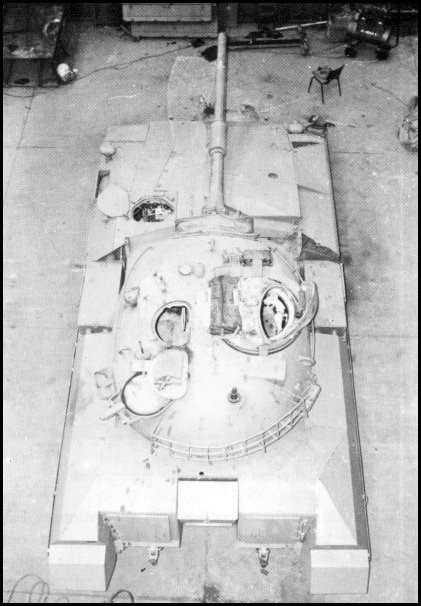
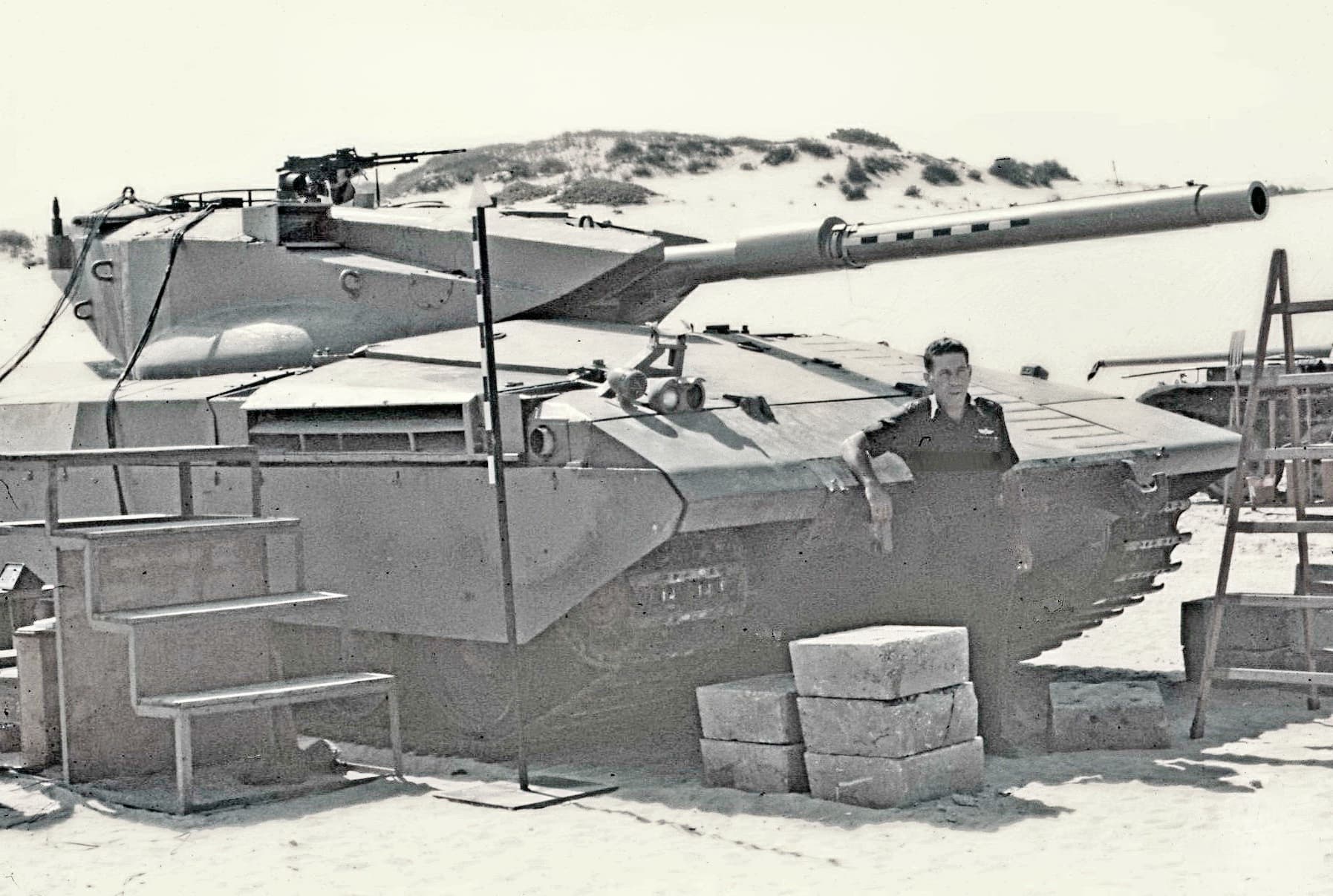
Merkava Degem.001 (early) in 1974 with a new ventilation and exhaust system, as well as the new Merkava turret, at a firing range. General Tal is in the foreground.
PART 5: AFTERWARDS (1974-)
ㅤThe last mentions of Degem.001 (early) date back to 1974, when it was used for firing tests with a new turret, but one source claims the first model was used until 1976. Around the same time, in 1974, the first photographs and mentions of a newer prototype appeared—the first prototype built without using another tank’s hull, but entirely new. This tank was also called the Degem.001 and was the first to receive an IDF serial number (צ-820001), so I prefer to add parentheses to clarify whether it was “early” or “late.” Later, a more finalized version, designated Degem.002, was developed. Both versions (001 (late) and 002) were unveiled to the public for the first time at the Independence Day celebrations in 1978.
ㅤFinally, in October 1979, the first Merkava Siman 1 tanks entered service with the IDF, and the Merkava family of tanks entered serial production.
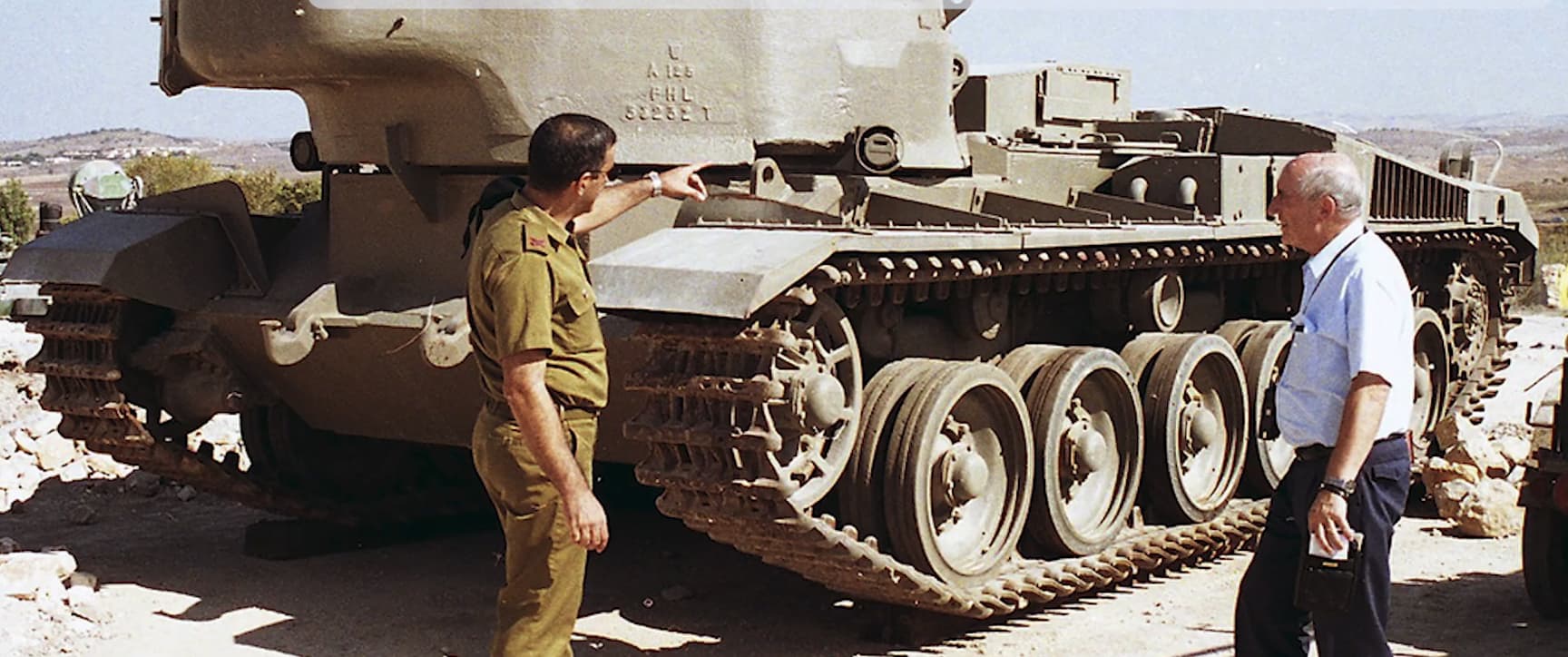
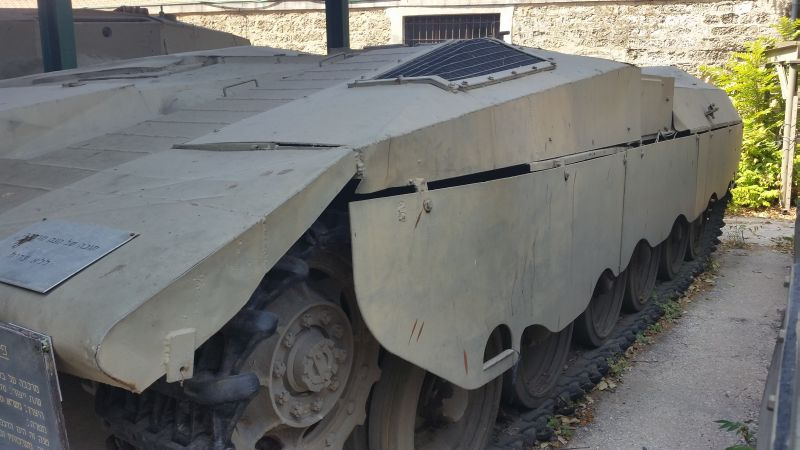
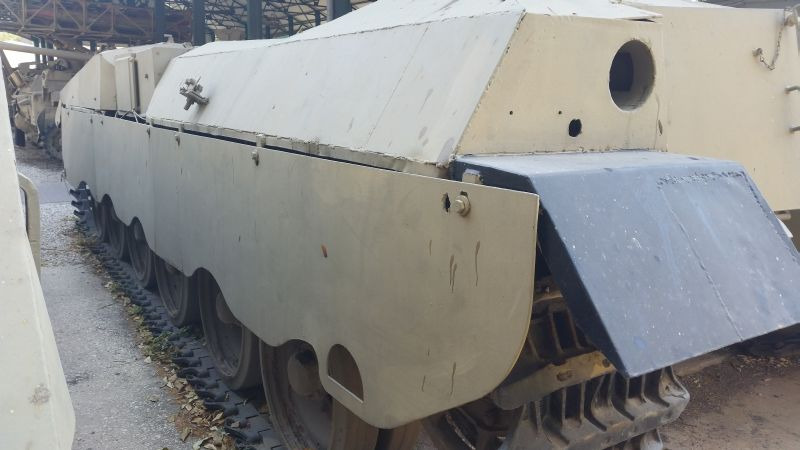
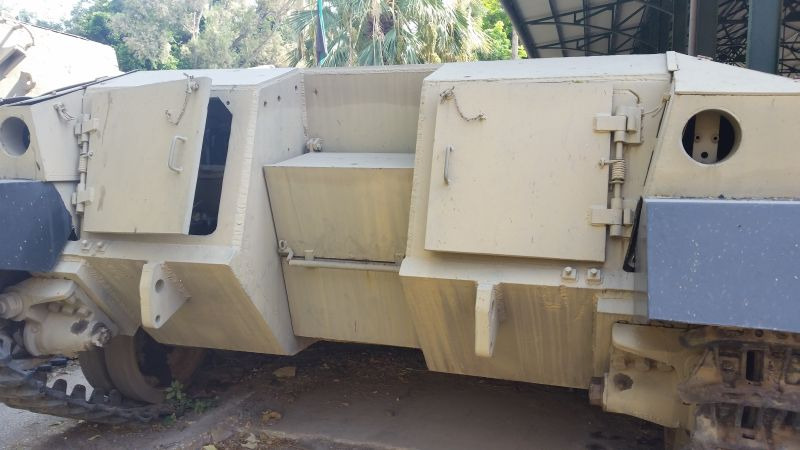
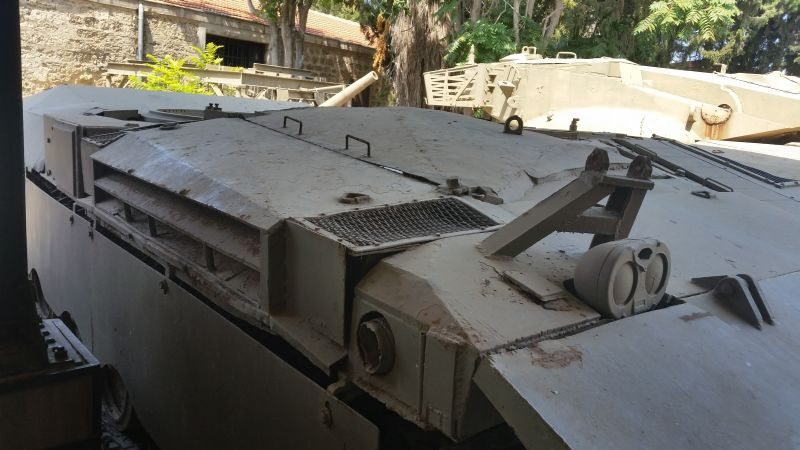
ㅤAs for the Degem.001 (Early) prototype, it was stored in IDF warehouses and at some point transferred to the Israel Defense Forces’ Batei Ha-Osef Museum (בתי האוסף) in Tel Aviv. It remained there until 2019, when the Israeli Ministry of Defense decided to close the museum in order to sell off valuable land in central Tel Aviv for residential development. Therefore, all exhibits, including the aforementioned prototype, were transferred to the Yad La-Shiryon Museum (יד לשריון).
The hull of Merkava Degem.001 (early) on display at Batei Ha-Osef Museum, until 2019.

ㅤRegarding the prototype’s technical details, there are no definitive sources with technical data, but we do know general information about the tank’s components. The only important information missing is the tank’s dimensions, exact weight, and armor thickness.
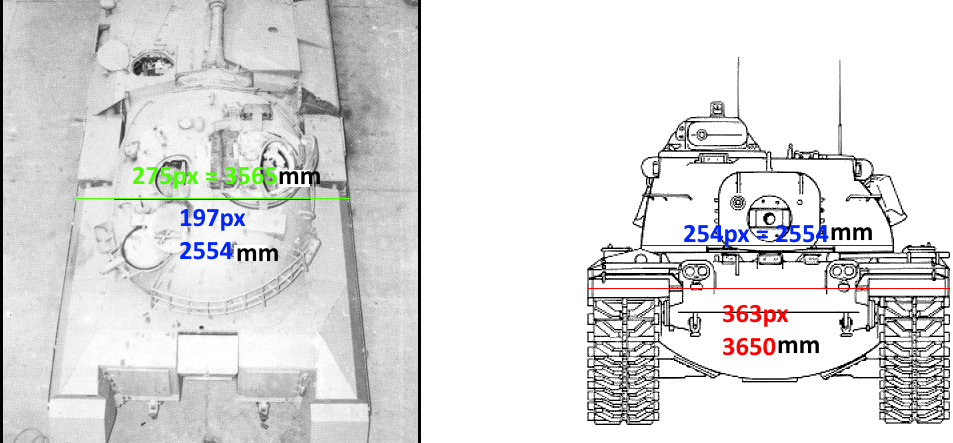
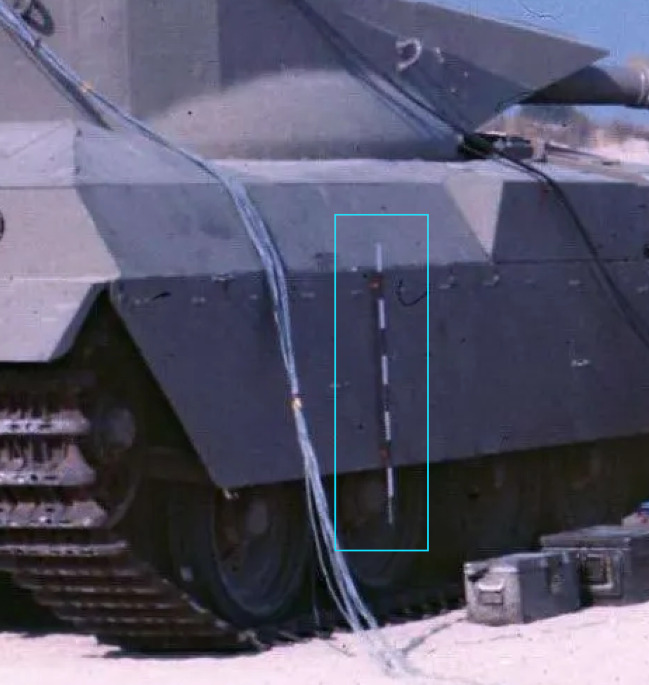
ㅤAs for the dimensions, I was able to calculate them using pixel counting. While this method isn’t the most accurate, it’s better than nothing. A more accurate way would be to physically measure it in person, as the hull of it still exists. But the museum where it was kept (Batei Ha-Osef) closed in 2019. Presumably, everything was transferred to Yad LeShiryon, but it hasn’t been on display there until now.
The information we do have about this tank can be found in the article about its history, and it goes as follows:
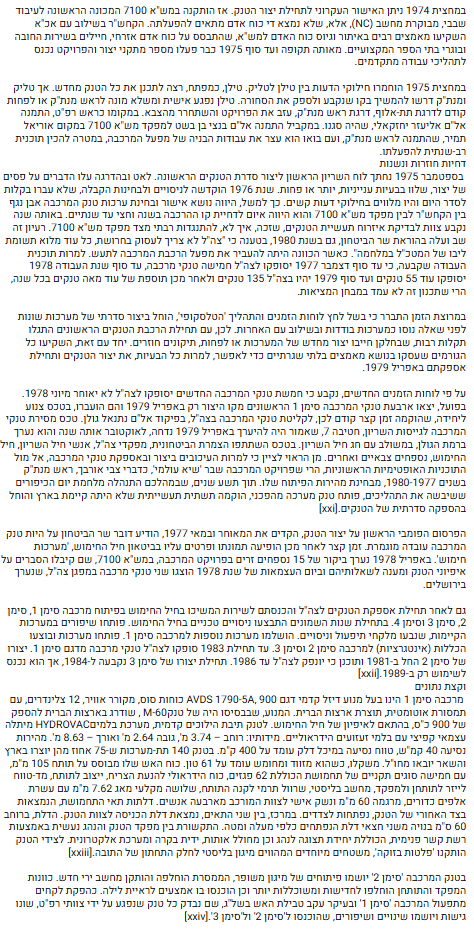
"The Merkava tank was built to be the most protected tank from direct hits by tank guns, artillery, and aircraft. Arrangements were made to prevent the tank from catching fire, by preventing the fuel, ammunition, and other systems from igniting. The gun that was initially designed was a British 105 mm, but the plans included the future possibility of installing a more powerful gun. The engine’s power system was initially designed for a 750 horsepower Continental engine, like the Magach and Sho’t, but due to the weakness of an engine of such capacity compared to the weight of the tank, it was later decided to convert the engine to 900 hp. The track and suspension system was designed according to the requirements of the tank’s weight and structure by the Germans, as was the APC system. Fire control system: The gunner’s sight with laser rangefinder was developed by the American company Hughes, in a development mission managed by the Ordnance Corps for the entire IDF tank fleet, while the rest of the system was adapted from existing items. The tank’s weight was set at 56 tons. The assembly and construction plant was established, as mentioned above, at MASHA 7100, but quite a few Israeli industrial plants participated in the Merkava plant. Among them are:
IMI - 105 mm cannon, turret ring and fuel tanks.
‘Shalon’ - NBC system.
‘El-Op’ - fire control and searchlight systems.
‘Shahal’ - hydraulic, traverse and elevation systems.
‘Esot’ - the track and suspension and final drive systems.
‘Elbit’ - fire control computer.
‘Spectronics’ - fire extinguishing systems."

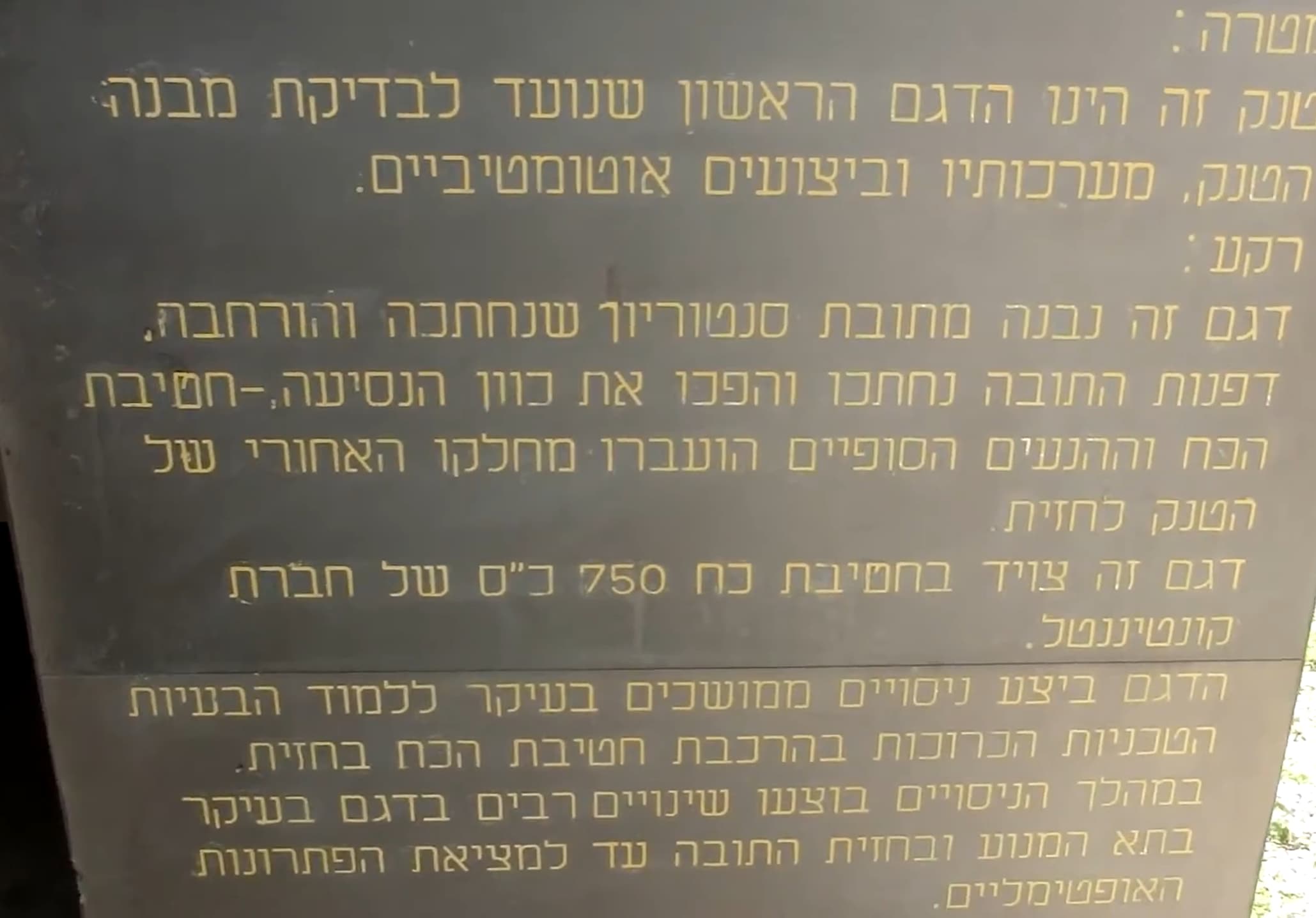
ㅤFrom the aforementioned article and information provided by the Batei HaOsef Museum, we know that early Merkava prototypes, including this one, were powered by Continental 750 hp diesel engines, although it is not stated which exact engine was used, based on the information that it was used on the Sho’t and Magach (more specifically the Sho’t Cal Alef and Magach 3), the engine used on both tanks was the 750 hp Continental AVDS-1790-2 (A or AC model), and in both cases they were paired with an Allison CD-850-6A transmission (Gears - 4F, 2R). As to the power to weight ratio, in the same article it is mentioned that the weight of the tank was set at 56 tons. Given that information, we have 13.39 hp/t ratio on this tank (750hp, 56 tons).
ㅤWhile we still don’t have official top speed, given the weak engine and poor horse power to weight ratio, the tank top speed can be estimated at around ~45 km/h and in reverse at about ~10 km/h.
Before going into detail, let me remind you that this prototype had two different versions over the years of its usage: Degem.001 Early/1973 and 001 Early/1974, which differed in their turrets. In 1973, this prototype had a Magach 3 turret, and in 1974, an early Merkava turret.
-
Degem.001 Early/1973’s Patton turret didn’t had any difference from Magach 3, undergoing no modifications, having been added for weight. Its primary armament was an unstabilized 105mm M68 gun with a stereoscopic rangefinder, capable of firing APDS, HEAT-FS and HESH rounds. Secondary armament consisted of a single coaxial 7.62mm M73 machine gun. Although the turret retained the M48A1/A2C-style commander’s cupola, the commander’s 12.7mm machine gun was removed. The tank did not have smoke grenades, and it is unknown whether it had ESS installed.
-
The Degem.001 Early/1974 was equipped with a new Merkava turret. It was armed with an Israeli 105mm Sharir gun, an Oranit fire control system, dual-plane stabilization, and a laser rangefinder, but could still only fire APDS, HEAT-FS and HESH rounds. This was because the M111 APFSDS was in development and only operational since 1978, while the tank’s last known operational date was 1976. Secondary armament consisted of two 7.62mm FN MAG 60-40 machine guns: one coaxial and one commander’s. This version also lacked any smoke grenades.
ㅤThere is no precise data on its armor and its thickness, but its hull is generally the same layout as that of the production Merkava, consisting of basic steel armor with spaced armor elements and fuel tanks that enhance protection. Since the tank was an early version of the Merkava, it had inferior protection, as the final designs were refined during development.
ㅤThe crew arrangement on the 1973 and 1974 models differed slightly due to the difference in turrets, but was generally similar: the driver was positioned on the left front of the hull next to the engine compartment, the rest of the crew were in the turret, the commander was on the right rear, the gunner was on the right front, and the loader was on the left.
ㅤThe ammunition stowage arrangement is similar to that of the Merkava Mk.1, with most of the ammunition stored at the rear. However, due to differences in the turrets, the 1973 and 1974 tanks have different first-stage ammo layout.
- Image gallery (used + unused in suggestion):
- Prototype in 1971-1973 with and without mock-up turret:
Spoiler
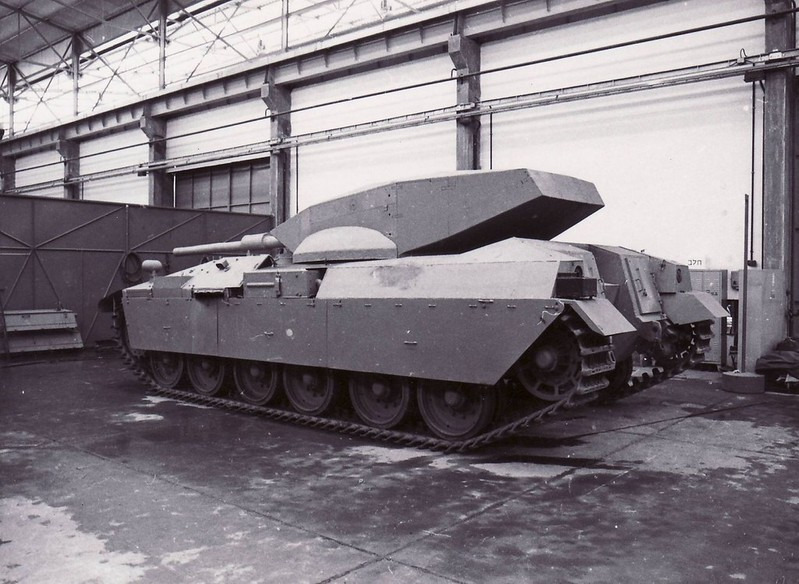
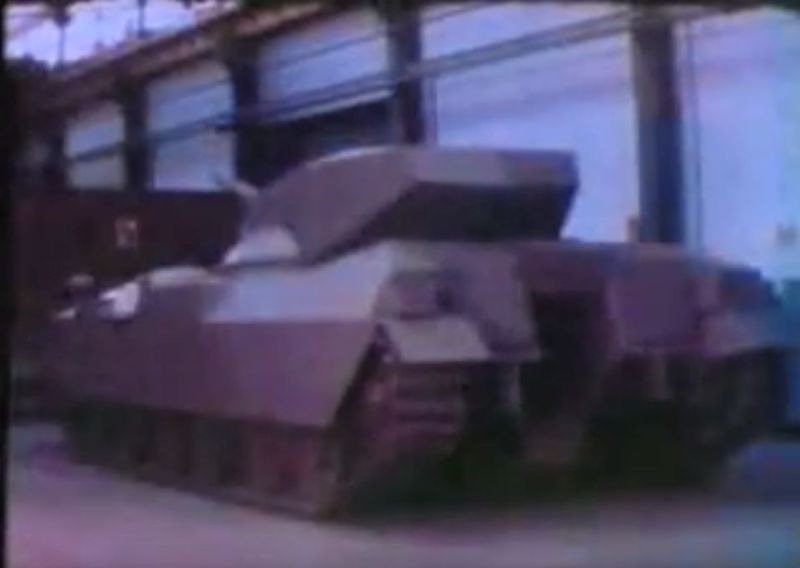
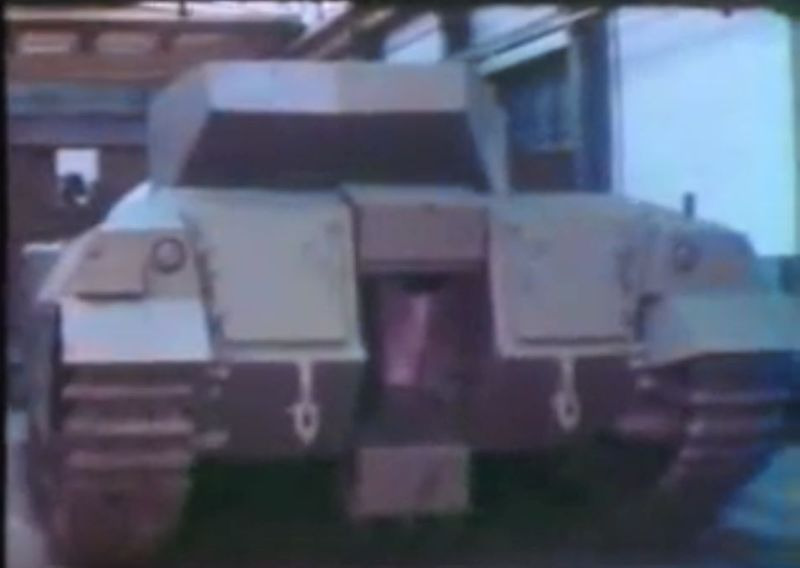
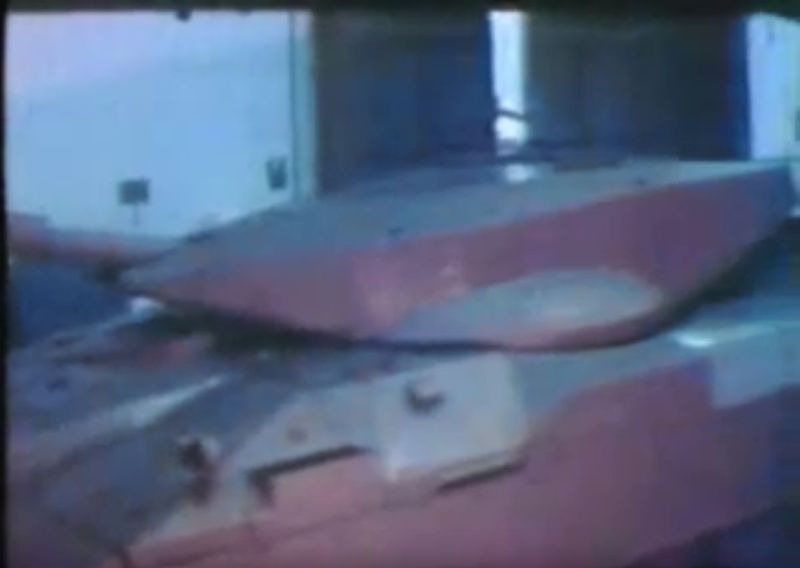
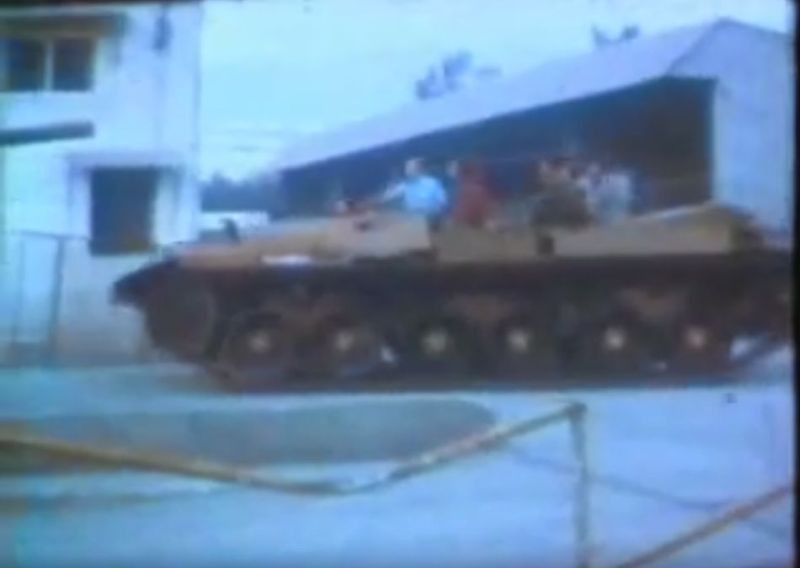
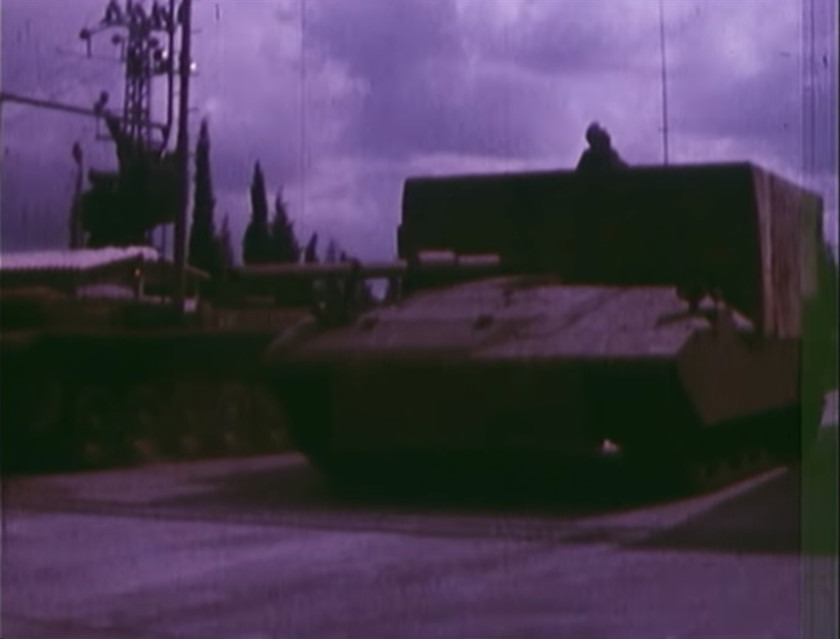
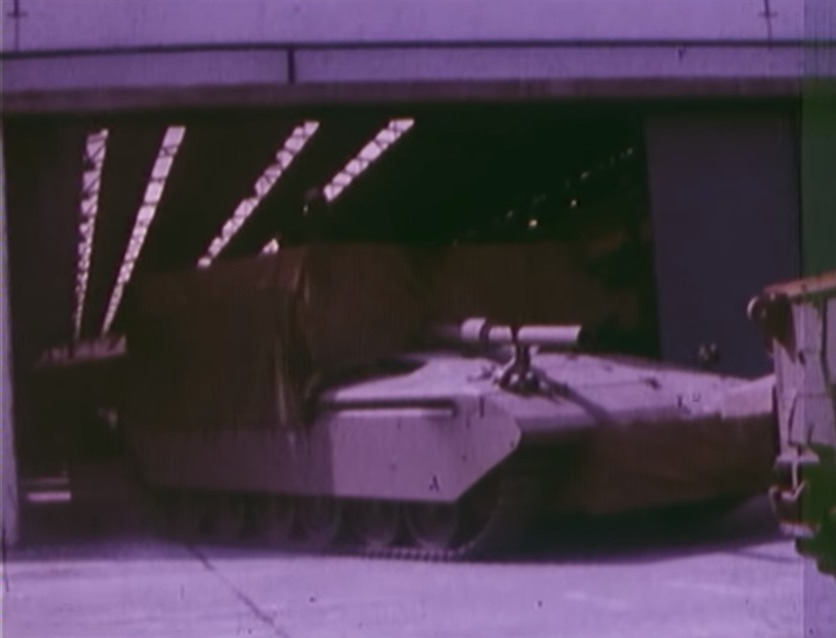
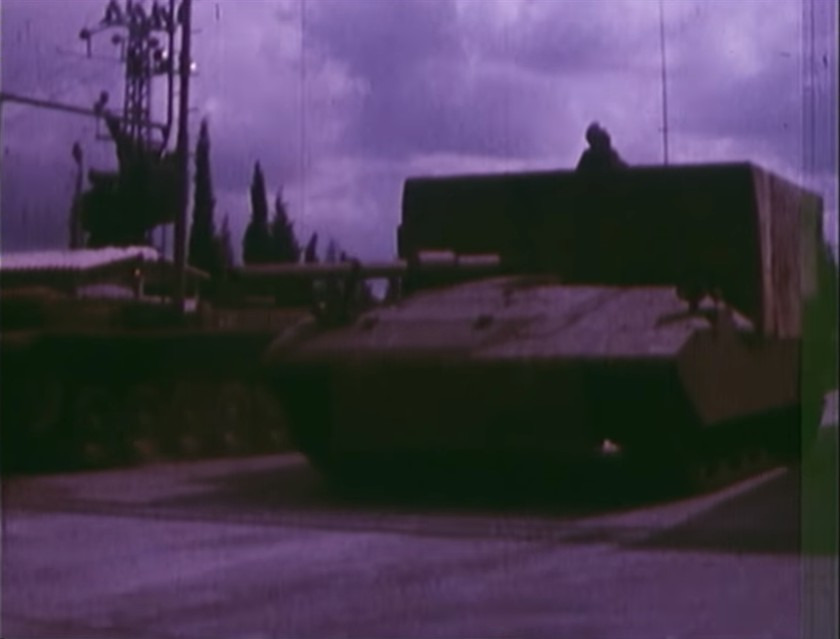
- Prototype in 1973-1974 with Magach 3 turret and an unknown fabric-covered turret:
Spoiler
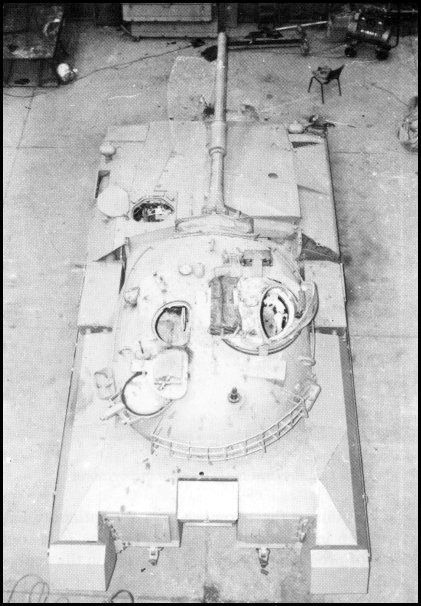
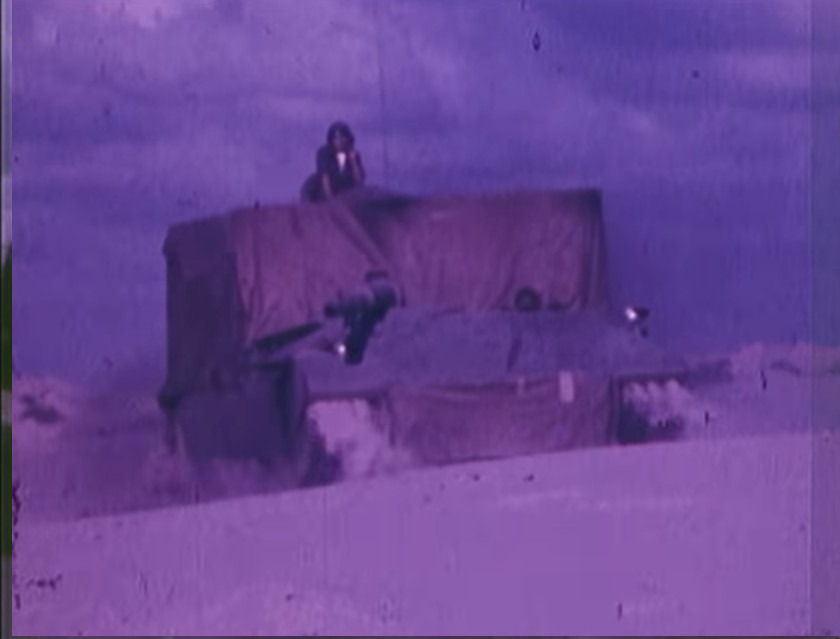
- Prototype in 1974 with Merkava turret at a firing range.
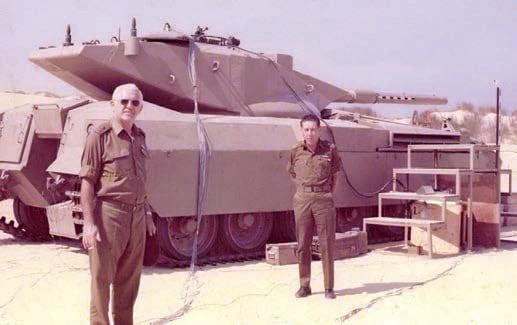
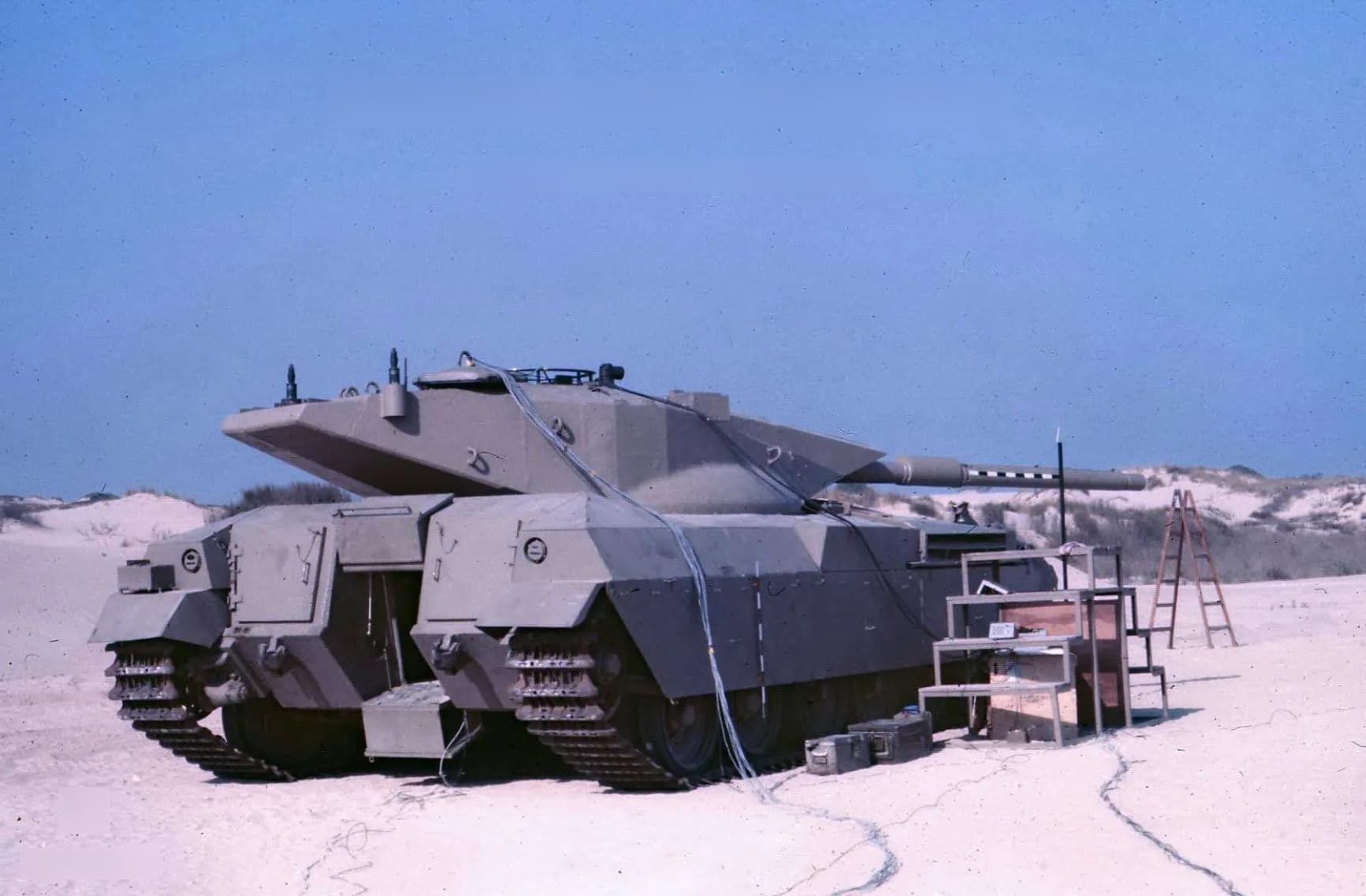
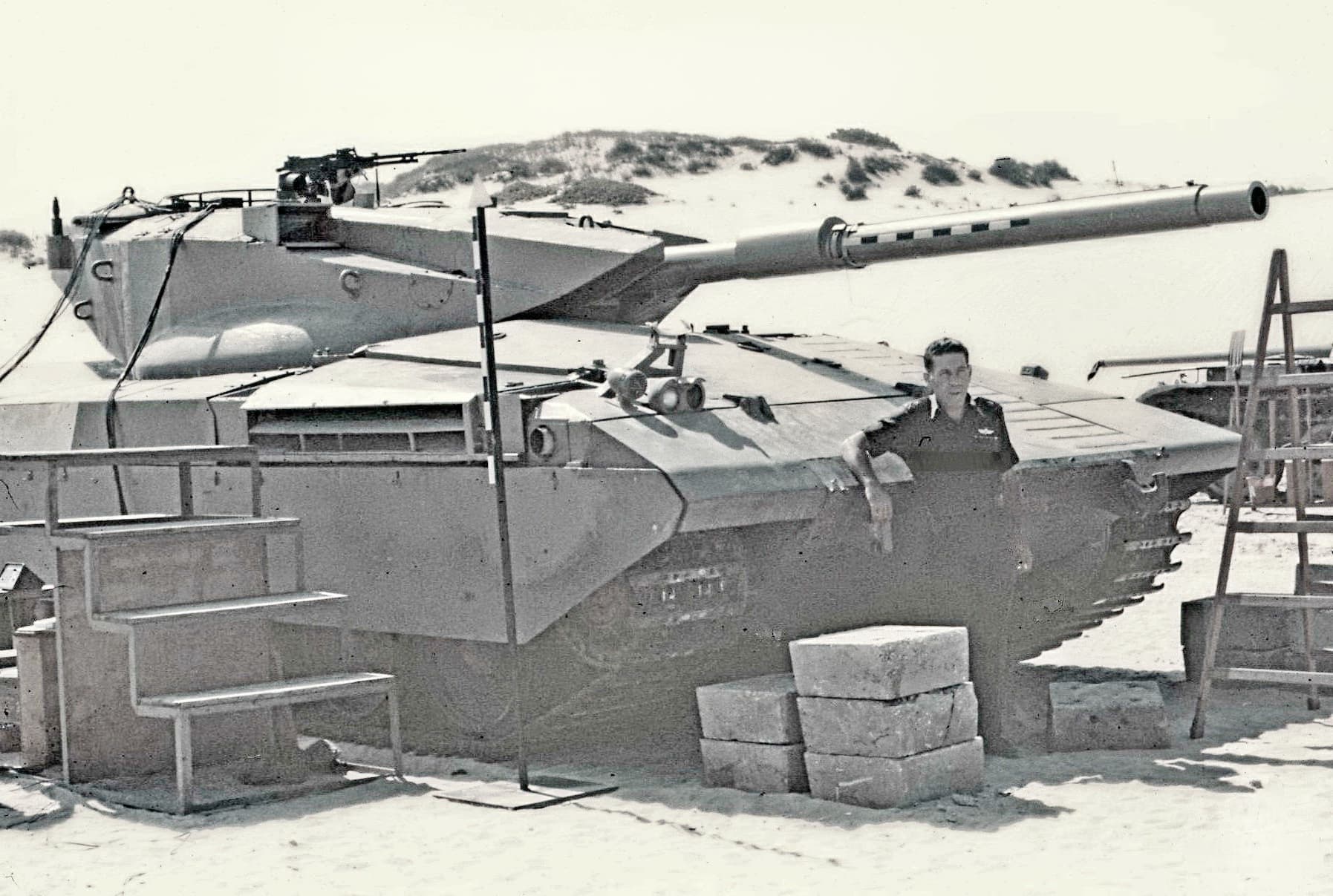
- Prototype’s hull on display in Batey Ha-Osef museum:
Spoiler
- Sources:
- In Hebrew:
Himush official site ( Technology and Maintenance Corps ) - Merkava history article:
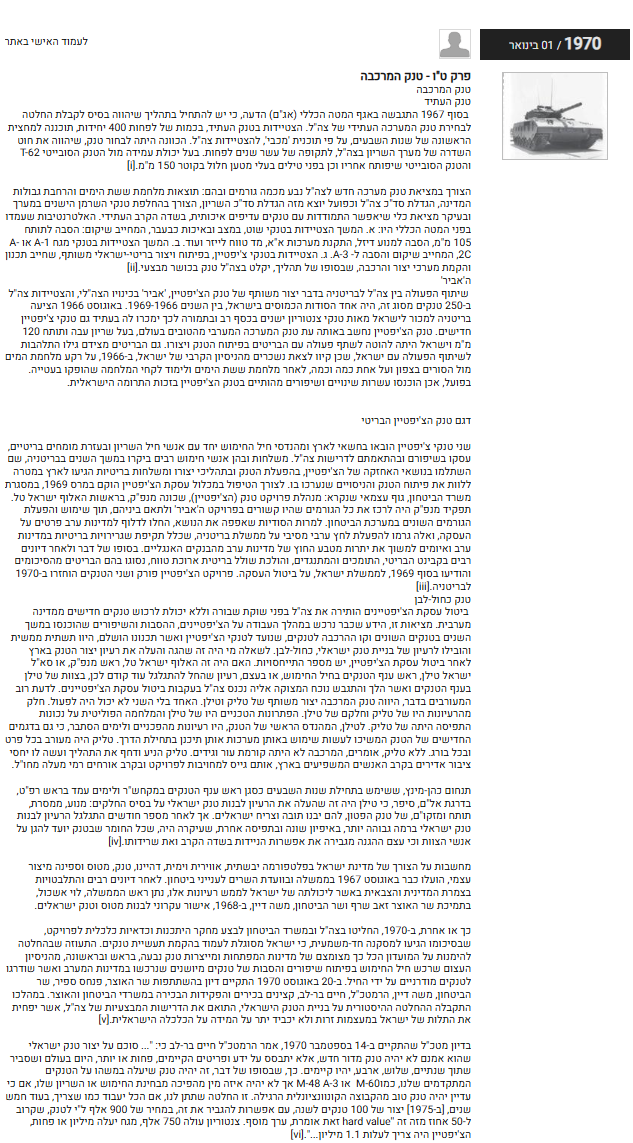

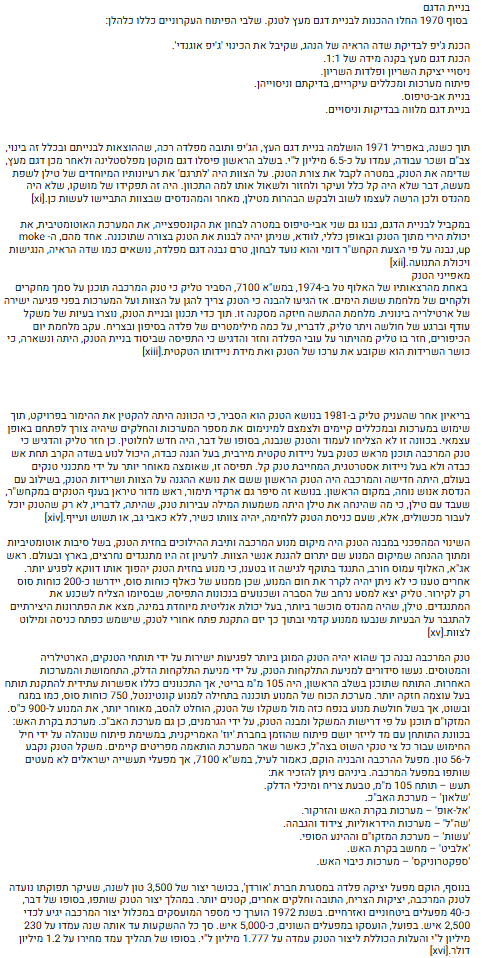
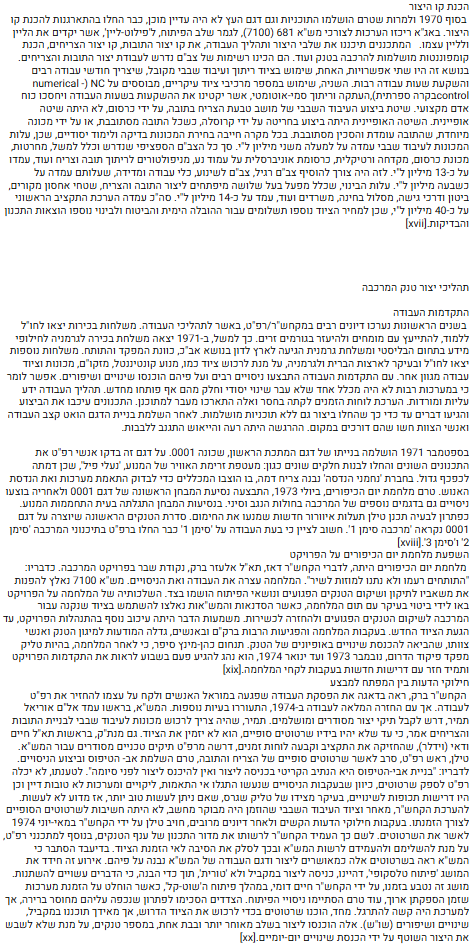
Yad La-Shiriyon Museum articles:
Spoiler
31 באוגוסט 2020: 50 שנה להקמת מנת"ק – מנהלת טנק המרכבה | פארק לטרון
16 בדצמבר 2020: טנק המרכבה סימן 1 – האמנם הייתה זו פריצת דרך – הגיגים | פארק לטרון
5 ביוני 2016: סיפור דגמי הפיתוח של טנק המרכבה סימן 1 | פארק לטרון
Batey Ha-Osef Museum display information:
-
- In Russian:
Livejournal articles from Bukvoed and David:
Spoiler
Я леплю из пластилина... - Пещера злобного Буквоеда — LiveJournal
Опытные модели Меркавы: david_2 — LiveJournal
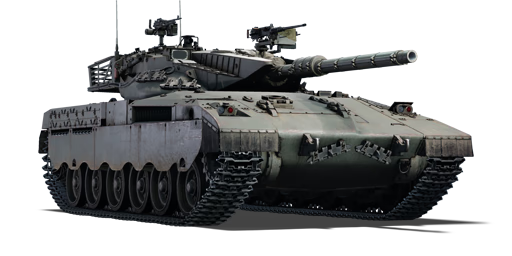
| Specifications | Merkava Degem.001 Early/1973 | Merkava Degem.001 Early/1974 | Merkava Siman 1 |
|---|---|---|---|
| Picture |  |
 |
 |
| Dimensions | |||
| Length | 7.56 meters | 7.56 meters | 7.45 meters |
| Length w/gun | ? | ? | 9.04 meters |
| Width | 3.56 meters * | 3.56 meters * | 3.70 meters |
| Height | 3.09 meters * | 2.59 meters * | 2.66 meters |
| Weight | 56 tons ** | 56 tons ** | 61 tons |
| Firepower | |||
| Main Armament | 1x 105mm M68 | 1x 105mm Sharir | 1x 105mm Sharir |
| Secondary Armament | 1x Coaxial 7.62mm M73. | 1x Coaxial 7.62mm FN MAG 60-40, 1x 7.62mm FN MAG 60-40. |
1x Coaxial 12.7mm M2HB, 1x Coaxial 7.62mm FN MAG 60-40, 2x 7.62mm FN MAG 60-40. |
| Ammo Storage | ? | ? | 60x 105mm, 1100x 12.7mm, 10200x 7.62mm. |
| ESS | ? | ? | ✓ |
| Stabilizer | None | Dual Axis Stabilizer | Dual Axis Stabilizer |
| Rangefinder | Stereoscopic Rangefinder | Laser Rangefinder | Laser Rangefinder |
| Night Vision | None | ✓ | ✓ |
| Thermals | None | None | None |
| Mobility | |||
| Engine | Continental AVDS-1790-2AC | Continental AVDS-1790-2AC | Continental AVDS-1790-5A |
| Horsepower | 750hp | 750hp | 900 hp/908 hp |
| Transmission | Allison CD-850-6A | Allison CD-850-6A | Allison CD-850-6BX |
| Gears | 4 Forward, 2 Reverse. | 4 Forward, 2 Reverse. | 4 Forward, 2 Reverse. |
| Power-to-Weight | 13.39 hp/t ** | 13.39 hp/t ** | 14.8 hp/t |
| Top speed | Forward: ~45 km/h, Reverse: ~10 km/h. *** |
Forward: ~45 km/h, Reverse: ~10 km/h. *** |
Forward: 54 km/h, Reverse: 11 km/h. |
| Road Range | ? | ? | 400–500 km |
| Suspension | Horstmann | Horstmann | Vertical double coil spring |
| Protection + Crew | |||
| Armor Type | Steel / Spaced | Steel / Spaced | Steel / Spaced |
| Crew | 4 (Driver, Commander, Loader, Gunner) | 4 (Driver, Commander, Loader, Gunner) | 4 (Driver, Commander, Loader, Gunner) |
| Smoke Grenades | None | None | 60mm Mortar |
| LWS | None | None | None |
* - Width and height are measured using pixel counting; there may be minor inaccuracies.
** - Weight was set at 56 tons at the time of development; actual weight may vary.
*** - The maximum speed is approximate.
- 8.0
- 8.3
- 8.7
- 9.0
- 9.3
- I only want 1974 model to be added
- I voted against both models
- I don’t know
- Researchable
- Premium
- Squadron
- Event
- I only want 1974 model to be added
- I voted against both models
- 8.0
- 8.3
- 8.7
- 9.0
- 9.3
- I only want 1973 model to be added
- I voted against both models
- I don’t know
- Researchable
- Premium
- Squadron
- Event
- I only want 1973 model to be added
- I voted against both models
While it’s not ideal, this proposal contains two tanks. Both are the same vehicle over the years of its development. Furthermore, information on this vehicle is extremely limited, and splitting it into two tanks would make it even worse.
In-game, both tanks will be significantly weaker than the Merkava Mk.1 and 1B due to the lack of thermals, M111 APFSDS, smoke grenades, poor mobility, and, in the case of the 1973 version of this tank, lack of a stabilizer.
In my opinion both can fit nicely in 8.0-8.7 range.
I hope you all enjoyed reading this proposal. As always, if you spot any errors or have any additional sources that could help make this proposal more accurate, please let me know.