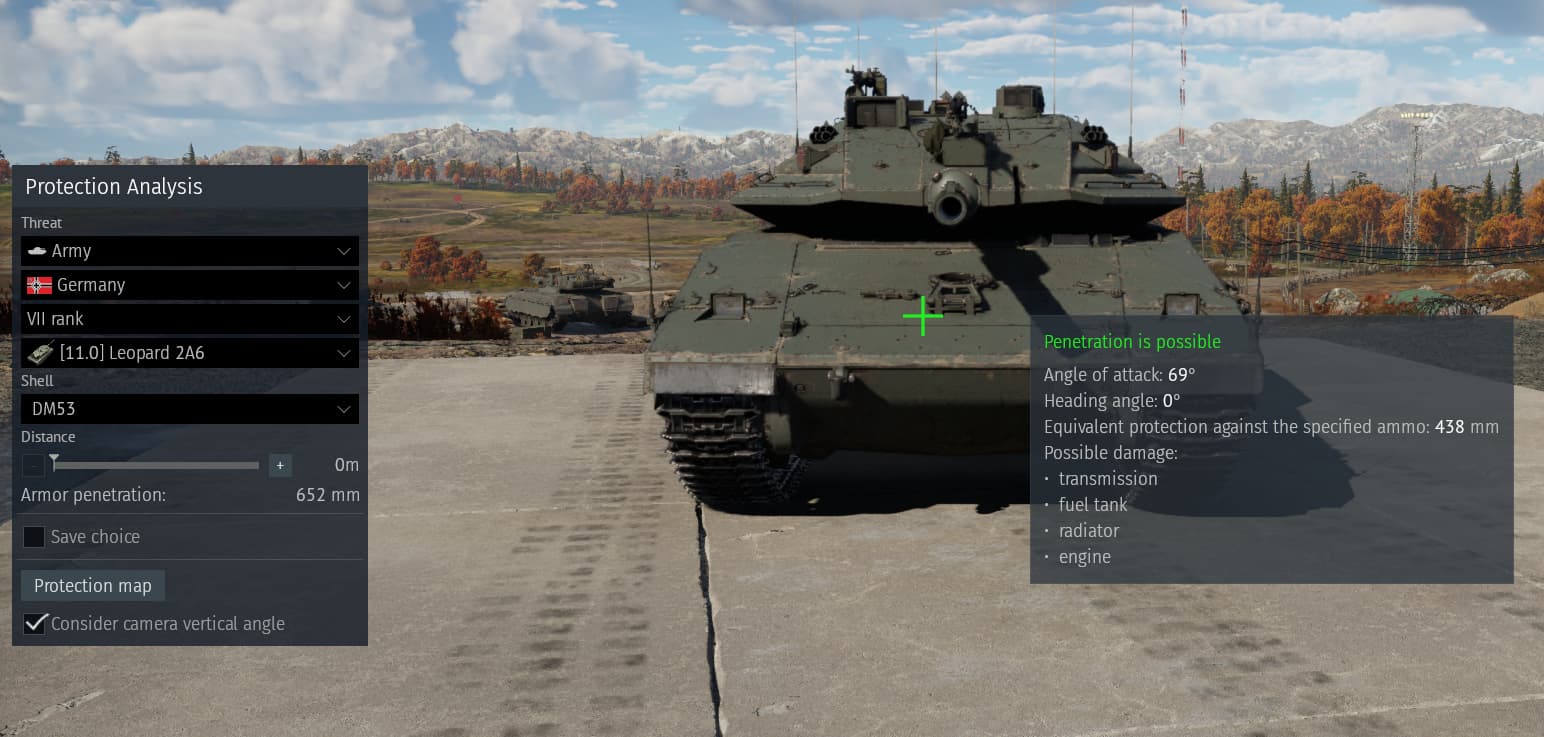
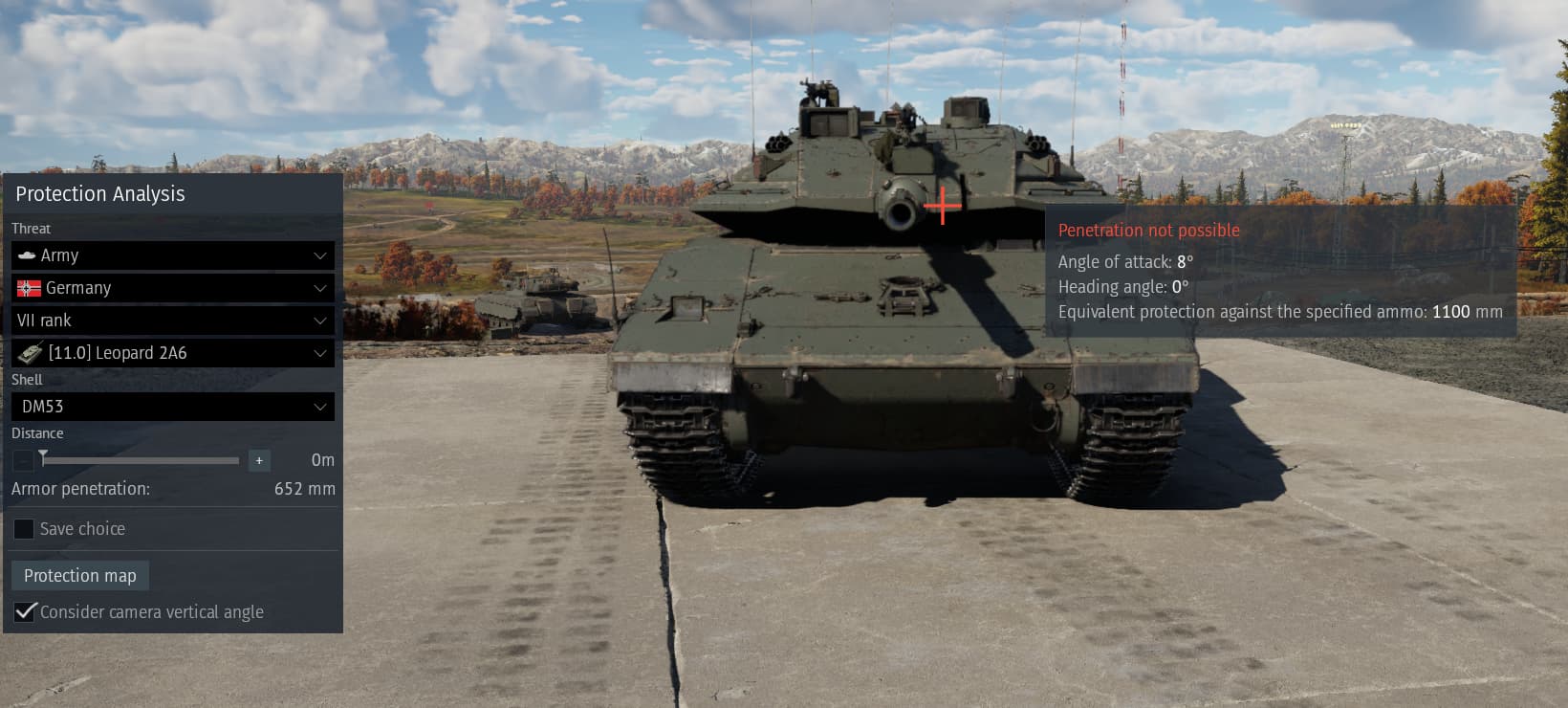
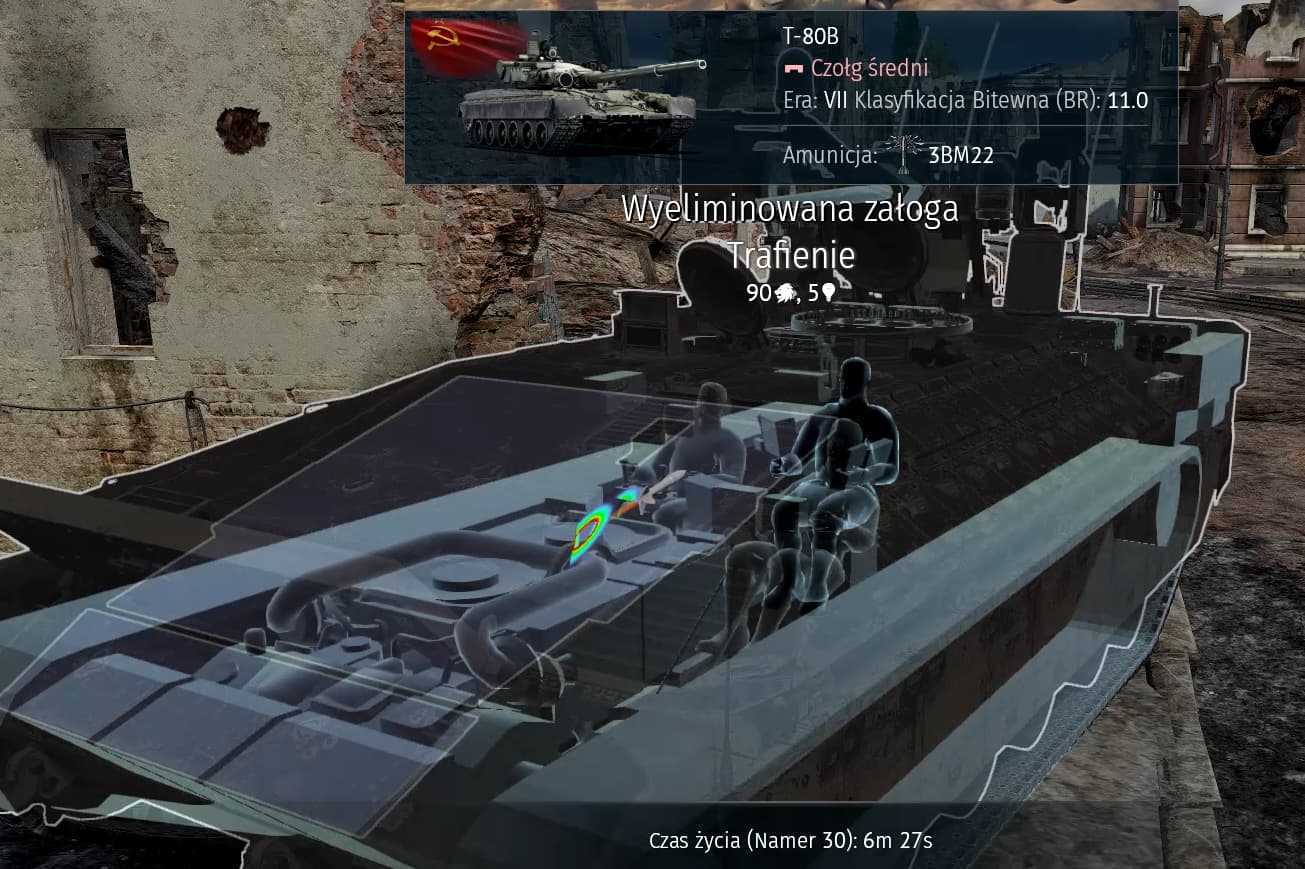
How many people are firing that? Also, personally I’ve tanked even 3bm60, M829A2, DM53, it’s not a tank (especially the LIC) that can take 0 hits.
Armor doesn’t need to be your main play/what you rely on. I suggest changing play-style or changing nation until gaijin changes something significant because you cannot play like a Maus expecting good results. Don’t be seen as best you can help it, if they see you limit how much they see of you, if they see you, limit the crew damage as best you can by angling your modules, and so on.
Overall, you have a lot more going for you than the Ariete.
That’s probably true for the LFP.
Since the crew doesn’t sit as high as that position, there’s less need for protective measures.
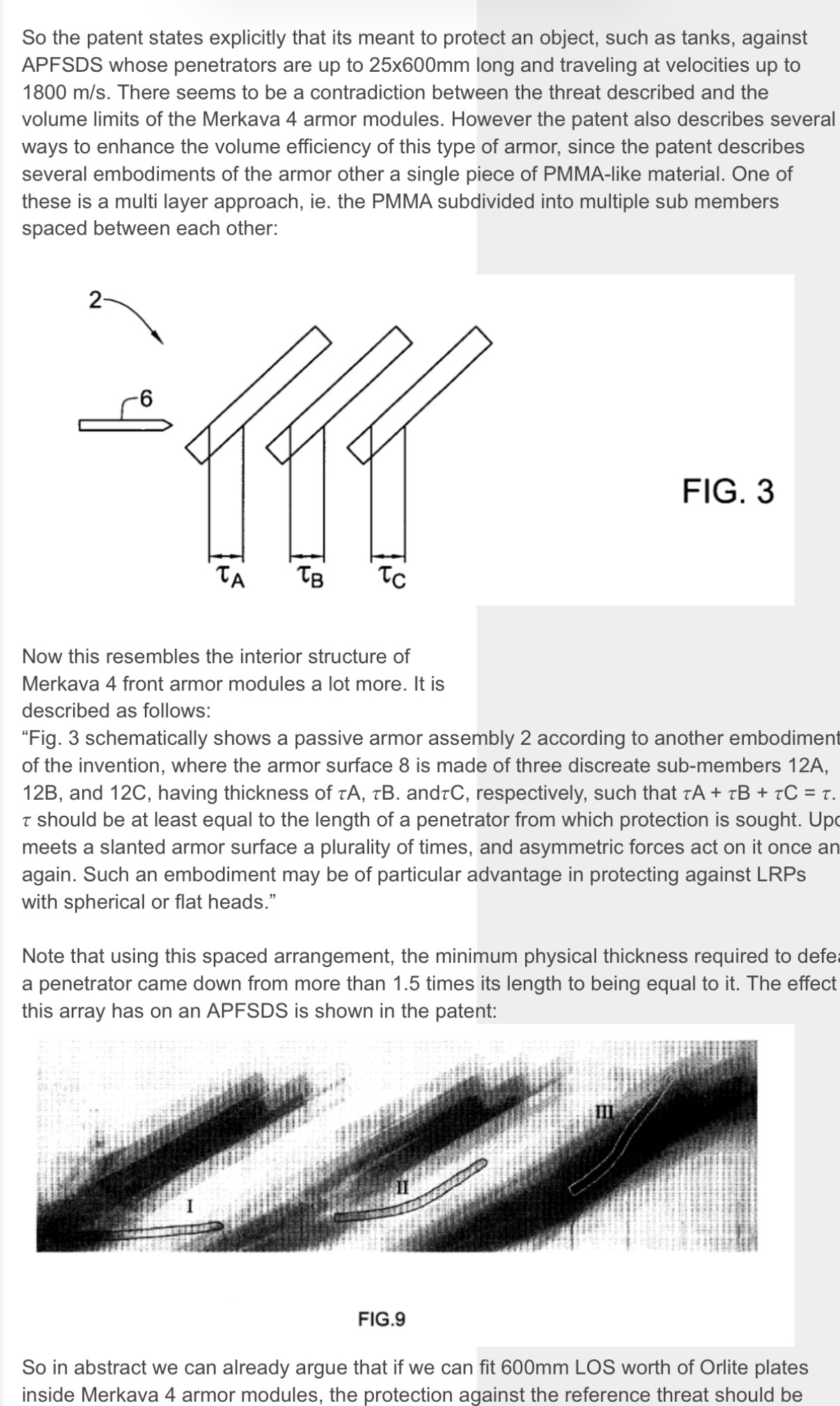
The turret’s multi-layered armor can withstand a DM43 without factoring in the KE resistance of the SLERA or composite plates (i.e., the KE resistance inherent to its structural design ×RHA1).
Considering the multipliers from the layered composite plates and the inclusion of multiple SLERA layers with KE resistance,
it’s highly likely that it can withstand a DM53.
It probably isn’t exactly a close call, but it likely wouldn’t be able to stop anything stronger than that.
first dev server merkava 4b at 10.3 stopped dm53 in the hull at a high angle, in maybe ~2% cases the apfsds had JUST enough energy to kill 1 dude
and generally had 700mm - 1400mm ke on turret
Since the addition of all the new modern mbts with aps the merkava has now become more and more less sought after. Why play a giant cardboard tank when you can have Abram’s or leopard or t90m now all with aps systems and better armor. The saddest part is the merkava armor multiplier is less than what rubber fabric screens offer in ke efficiency. It’s crazy
Yeah the namer having 65 tons of nothing but air for armor and retaining the same weight of the merkava without the turret is actually laughable. Just who even looked at that and said “yeah this makes sense” there’s even photos you can find online of the composite blocks for the sides and yet in game it’s modeled as 50 mm nera plates. Yet bmpt got everything it could ever want for its armor modeling.
If they sit low in the tank… Making turret roof and cheek shots trolly and inert. Then the LFP is the most dangerous place to be entered into…
What’s the source of that claim? Who made this claim, and why?
But why tho? I’ve seen 0 environmental evidence, or otherwise to make that believable for me personally idk. I’m open to learning more and changing my thoughts on it but I haven’t seen anything convincing other than people’s wants and wishes or assumptions. I’ve even seen a person scream and yell across the forums at people simply for asking for evidence. I guess that isn’t allowed depend on who you ask…
This is why I believe the turret can withstand a DM43.:
Considering the Merkava Mk4-M400 and later models with their slightly bulging turrets, those vehicles likely also gained the line-of-sight (LOS) protection necessary to withstand the DM53.
If the SLERA possesses the kinetic energy (KE) resistance specified in its patent, I believe even earlier Merkava Mk4 models would be capable of defending against the DM53 (though they wouldn’t have much margin for error).
Literally one of the best most in depth blog posts you can find that make a great argument about merkava armor @Alan_Tovarishch I wish we didn’t have to use classified documents otherwise his research/suggestions would make a difference. Hell we’ve got the armor report accepted for 4 years now and nothing yet
My research doesn´t use classified sources, just patents that were published over 20 years ago and for some reason flew under everyone´s radar. Some day -when I have enough time- I´ll finish the rest of the parts but the most imporant points were already made in part 1.
No I know, I was just saying that I wish we could use your blog post for an argument to gaijin instead of having to have sources we won’t possibly ever get. Cause what argument can gaijin make against the community to not buff the armor if their modeling is based off their own guesses/public information that the community also provides to them in a good if not better fashion (your blog post, and other people’s reports on the forums) I’m just waiting to hear something eventually on the report that has been accepted for 4 years now. Only keep hearing “still under consideration”
I mean I could probably believe the M400 if it’s been enhanced or significantly changed that it can maybe handle DM43 and such but I combed through the article. Maybe it because I feel a tad under the weather but…
It seems as if there’s very little confidence against serious 120mm and 125mm APFSDS that isn’t like DM13 and 3Bm9-3bm15 levels. If the armor was decently effective against darts I’d expect the hull to maybe be 520mm of strength. But that’s not enough for DM53 levels of penetration. The engine wouldn’t stop much as it’s not meant to be armor it’s meant to focus power to weight to be able to move the vehicle.
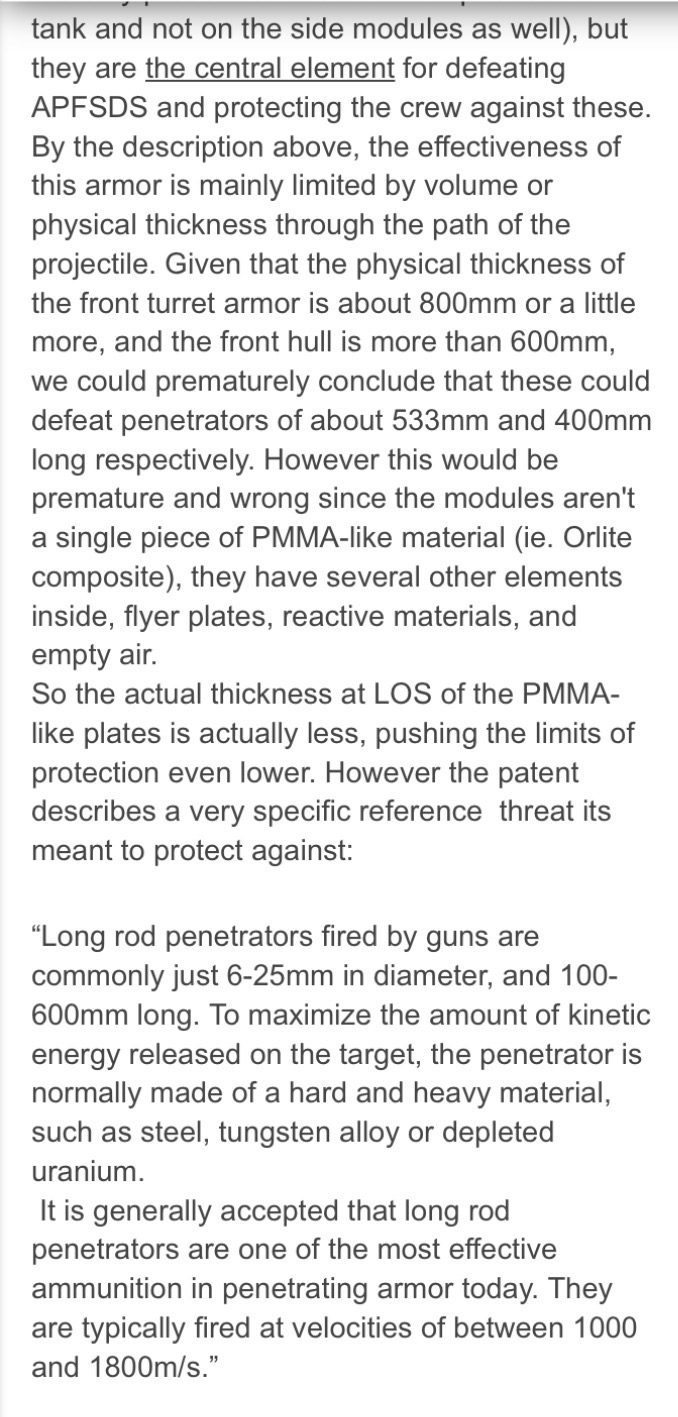
The first SS it was mentioning it might be able to stop rods the length of 533mm and 400mm. But then it doubled back and says “if we don’t account for flyer plates, other materials, and air. As this would then lower the thickness we end up with in the end”. Mango is 532mm long, the 3Bm60 is 640mm I think, so if the threshold is the penetration of Mango as the baseline it wouldn’t change much as much if the Merkava is around that thickness already. Even then, in the article it just seems unsure if it would even stop Mango.
Did I mention UFP…?
As for the UFP, I think NxRA and others significantly distort it and use the “space” in the power pack to warp the needle and stop it, so that changes the whole story…
I claimed the turret was a DM53, but…
Oh, and that article doesn’t include the properties of the armor itself (NxRA).
Here’s the section on the turret.
It states that it should at least be able to withstand DM43.
As far as I know, the KE-WA1 is a DM43. This article discusses the turret module’s LOS value and its estimated structural KE resistance based on publicly available information; it does not mention the KE resistance of the SLERA or NxRA themselves, nor does it discuss the RHA of the turret structure itself.
Is there any reason why DM23 can glance past my electronics and cause a 24 fucking second repair with an ace crew, i’ve had it up to here playing merkavas, why play these neutered cardboard boxes when a strv 122 can get copy pasted into the tree instead 😡
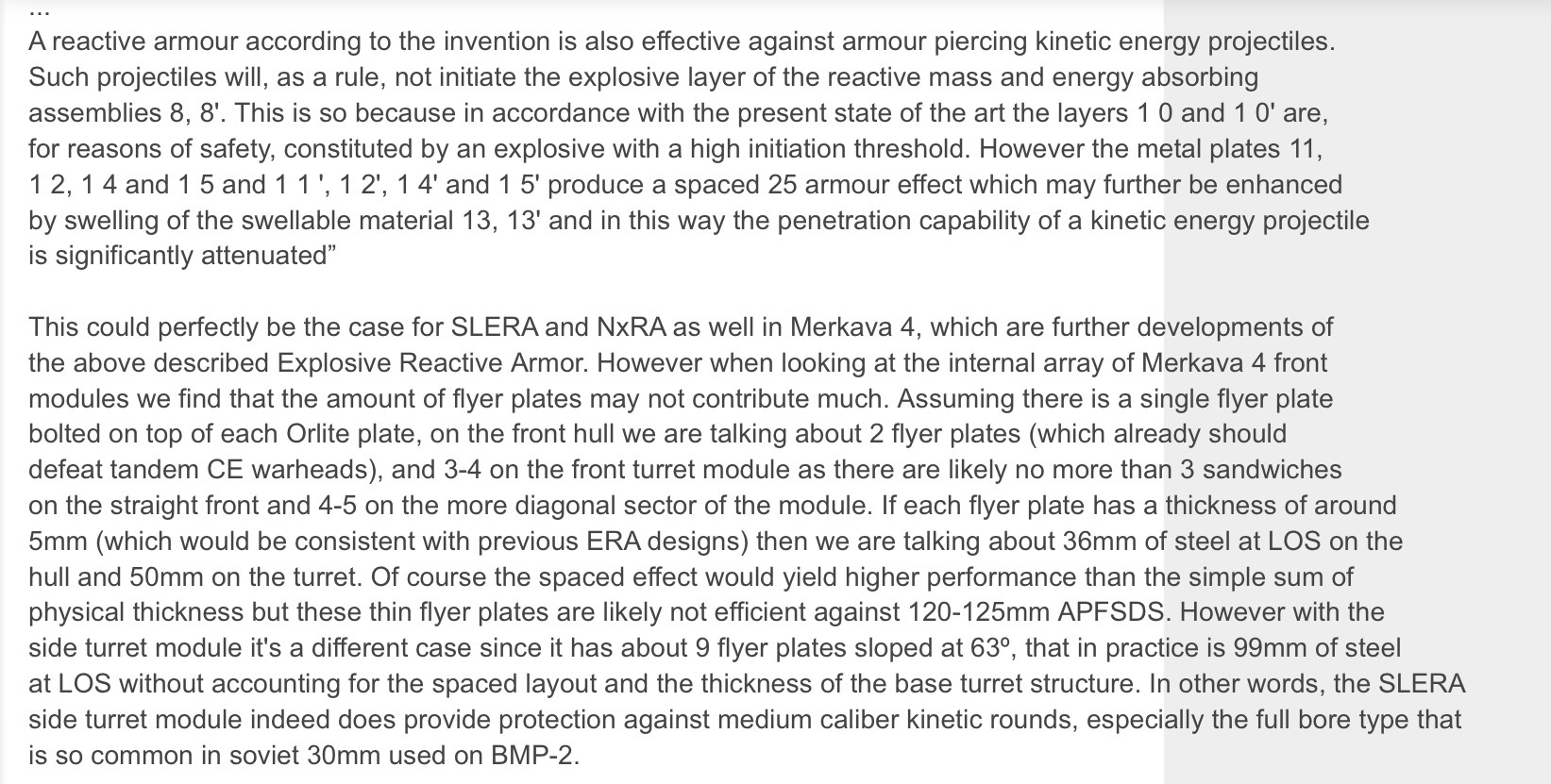
Its not exactly like that. What I concluded from all patents available is that the armor doesn´t behave like NxRA/SLERA when dealing with KE threats. Ie. the pseudo explosive elements don´t detonate and the flyer plates don´t move as it would do when dealing the CE threats. In other words, the armor remains fully passive when interacting with APFSDS. However, some the elements that constitute the NxRA -namely, the steel flyer plates- do contribute passively to the overall efficiency of the armor against KE. In conclusion, even back in 2004 the armor at least in the turret did indeed provide more than adequate KE protection. As for the front hull, the armor array may indeed provide comparable level of protection although that would be including the big powerpack cavity as if it was spaced armor, meaning, it may provide protection against DM43/KE-WA1 but the powerpack will be sacrificed anyway.
It is probable though that the front hull armor on itself could defeat Mango and similarly sized projectiles on its own.
For more modern projectiles (DM53 onwards) there is a lack of sources to conclude anything. For starters we don´t even really know if the armor modules were improved over this 20+ years of service. One thing I suspect is that at least the original armor array can be defeated with more modern 125mm APFSDS such as Svinets even if the latter has comparable raw performance against plain steel to DM43 on paper.
Wow, thanks for the correction.
May I ask a question?
Is it correct to think that, when it comes to hull armor, NxRA and SLERA function more passively—similar to RHA?
Are they slightly better than RHA?
As for the hull, I wasn’t really expecting much, but I’m glad to hear from the article’s author himself that there’s a high chance it can take out a 3BM42.
In the specific case of Merkava 4, the steel elements of NxRA/SLERA just enhance the efficiency of the “Orlite plates” against KE. The way those Orlite plates deal with APFSDS is by destabilizing and deforming the projectile as it goes through the amor module. So the armor remains passive in the way that there are no moving elements, bulging plates or explosives going off but not passive as we understand traditional homogeneous steel armor.
As for effectiveness compared to RHA, as always when it comes to composite armor the answer is nuanced. One thing is mass efficiency and the other being volume efficiency (an equivalent of LOS efficiency and the proper way of expressing the same concept). Its safe to assume that Merkava 4 composite armor is more mass efficient than using just blocks of steel with equivalent LOS efficiency, otherwise the tank would be using just the latter.
When it comes to volume/LOS efficiency, which is likely what you are more interested into, we have to differentiate CE and KE. The 800mm thick front turret modules are documented resisting Kornet hits back in 2006 so their CE protection equivalent should be more than 1200mm. Since I estimate each module is comprised of 3 armor sandwiches (“Orlite plates” with SLERA/NxRA arrays mounted on each plus other elements mentioned in other patents which I will include someday in a part 2 or an addendum to part 1), any CE jet will interact with what is likely at least 3 flyer plates. Given that 1 of those flyer plates will be set off by the precursor charge, that leaves 2 flyer plates to deal with the 152mm main Kornet charge. So if between those 2 they can defeat a 1200mm capable jet, if we add the theoretical performance the first flyer plate (that was set off by the precursor), then the overall CE protection may be represented as up to 1800mm. So yes, the module is theoreticallymuch more LOS efficient vs CE than RHA. The front hull I guess relies on sacrificing the powerpack to protect against threats such as Kornet but I would expect the UFP being capable of resisting on its own something on the level of RPG-29.
Regarding KE protection, if my interpretation of the sources is correct, then that 800mm module provides protection against projectiles capable of penetrating at least about 700mm (25x600mm @1800 m/s). It may be even more efficient given that the module features numerous Orlite plates in a spaced configuration and is also reinforced with the steel flyer plates, these two features are explicitly mentioned in one of the main patents as making the whole armor more efficient vs KE than if it was made up of a single thicker “Orlite plate”. So I can´t rule out protection against something like DM53 but I choose to be conservative, hence 800mm LOS = 700mm RHA equivalent vs APFSDS. So no, its less LOS efficient than RHA (like contemporary composite arrays) but also much lighter. Regarding the UFP, its LOS thickness is about 600mm (75% the LOS thickness of the front turret module), which would yield about 525mm of RHA equivalent vs APFSDS, which is juuust enough against the likes of Mango in my opinion.