Would you like to see this in-game?
• History:
Click here to see the background history of the design
After many attempts at designing a feasible amphibious tank, in the first quarter of 1941 Vickers had finally come up with a slightly more sensible idea for an amphibious tank. The Vickers submission was a much more conventional design, carrying three crewman. The turret resembled a Tetrarch tank’s turret and was similarly armed. it weighed about 5.5 tons, and hardly had any equipment: even the radio was removed. The armour was made from the highest quality aluminium, created by the use of electrolytic process, and expensive way to create armour. The armor was 30mm thick on the front and 14mm everywhere else. However the high cost, slow pruduction and limited combat potential of the tank meant that both Vickers and the Government agreed that this was a bit of a dead end and dropped it before any serious design work took place.
While both these projects were underway, DNLE had carried on working on the AT-1. Their first port of call, in October 1940, had been to carry out some experiments in a naval testing tank, to check water resistance and the wake of the proposed hull. They were also interested in how track propulsion would work and in December 1940 this was investigated. On the latter date, spuds were applied to the tracks, measuring 2-, 1.5- and 1-inch in depth. Even smooth track was calculated. To get a speed of 3 knots, a smooth track would need to be run at a speed of 35mph. The half-inch increments in the spuds produced negligible changes in overall speed: for example, the decrease from 1.5 to 1 inch lost a mere 0.15 knots in speed.
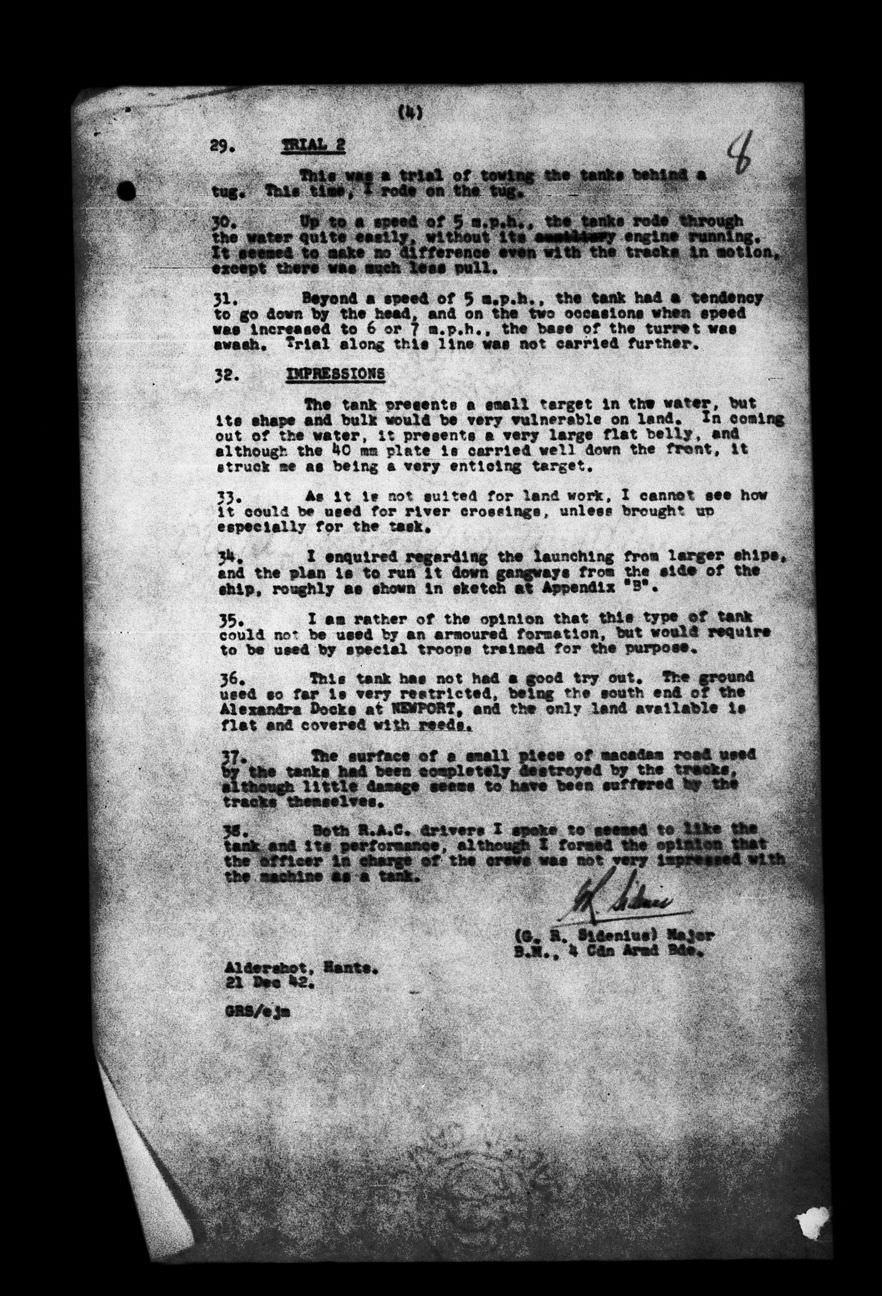
The earlier testing of the hull shape was with a 1/3rd scale model of the hull made with paraffin wax. This was tested in water at speeds from 2 to 6 knots. It was found the fastest practical speed was about 5 knots, as at over 6 knots water resistance increased extremely rapidly. It was found that at 5 knots the bow wave covered the front of the tank but the top hatches were dry. Some hydrodynamic changes were suggested to the hull, such as rounding the corners and sprockets of the track. But these were rejected as they would make the tank element of the AT-1 much harder to manufacture and design. The Department for Naval Construction, which was carrying out the tests, idly suggested that paddle wheels be fitted to the tank, and would theoretically get above 5 knots, but it comes as no surprise that these were rejected.
With this data in hand, the DNLE drew up its plans for the AT-1 and submitted them for approval. The War Office requested some changes, the most important of which was the upgrading of the Meadows MAT engine to a Meadows DAV, which increased the AT-1’s horsepower from 165 to 250hp. This also meant losing the single-man rear deck machine-gun turret. Another change requested by the War Office was the replacement of the two-man turret with a more standard three-man one. The final request was the addition of suspension; odd as it may seem, the first plans had none.
Description From the Book:
• Characteristics:
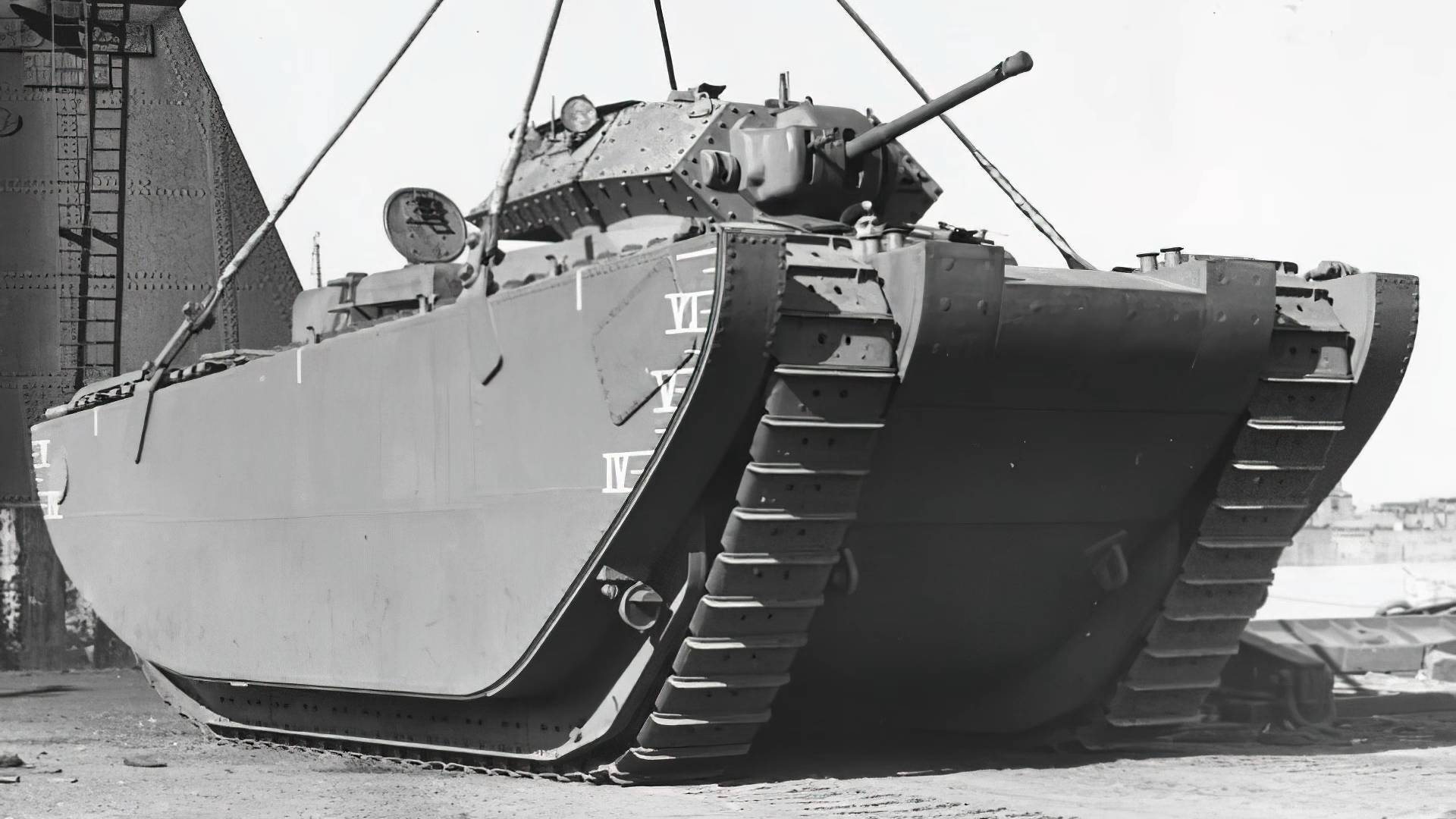
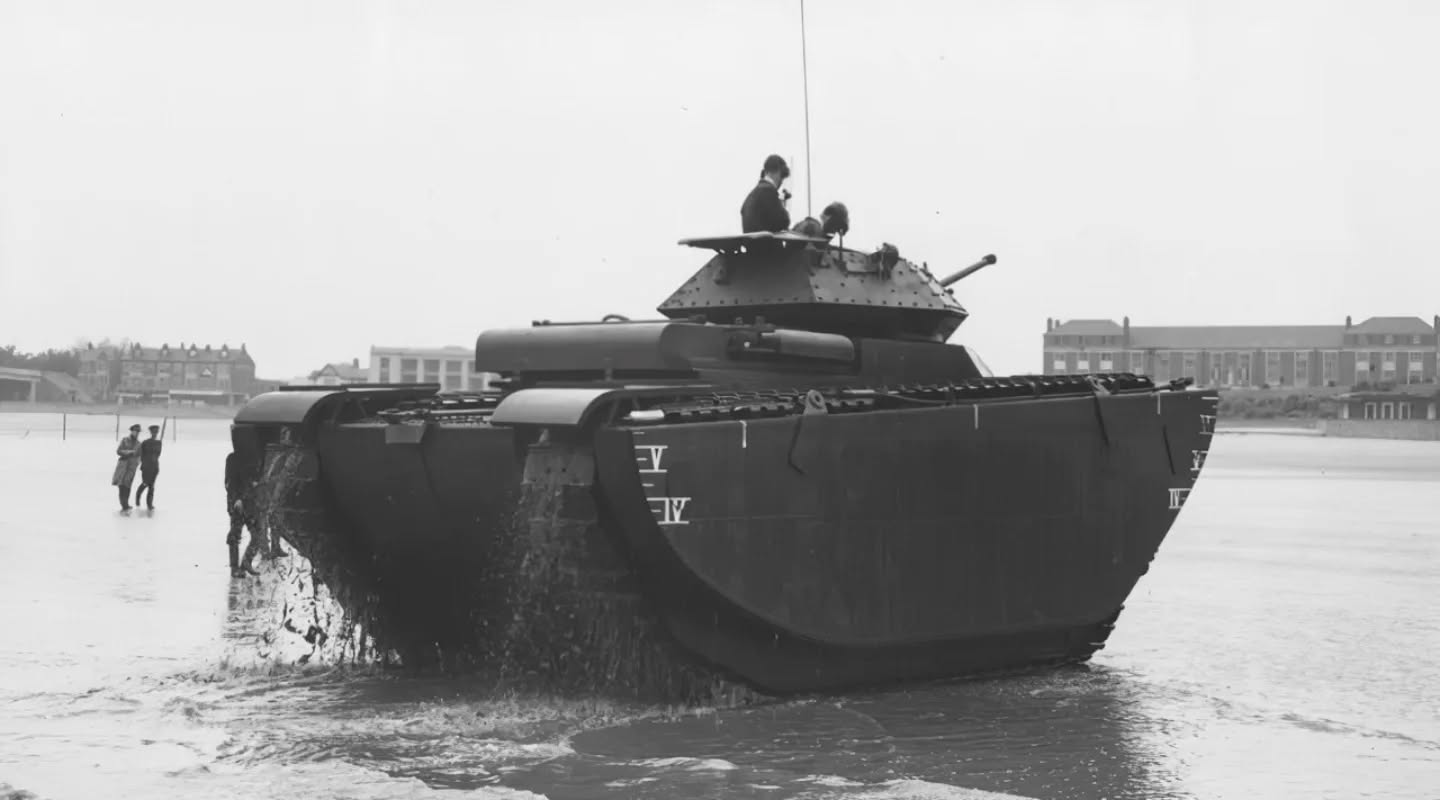
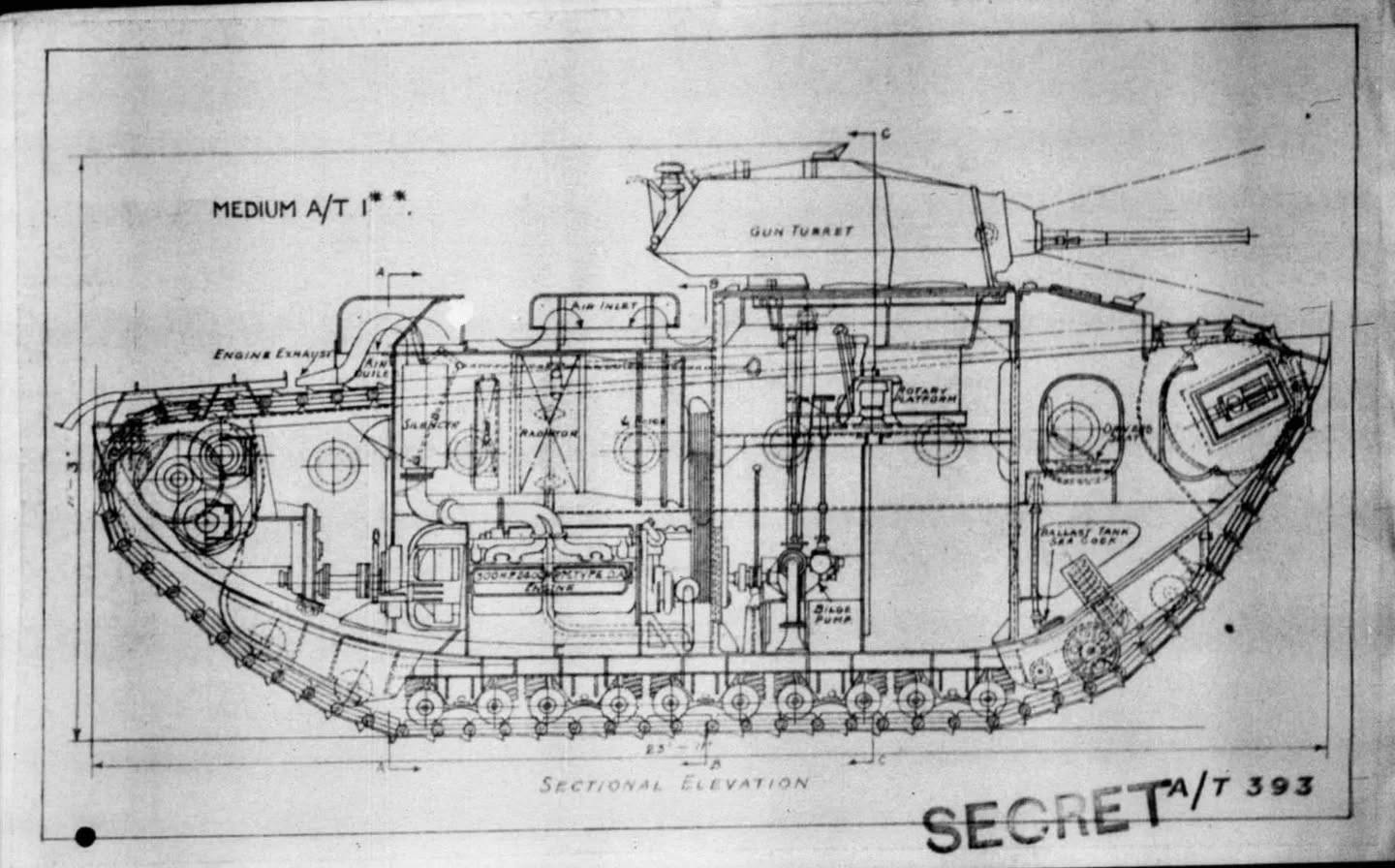
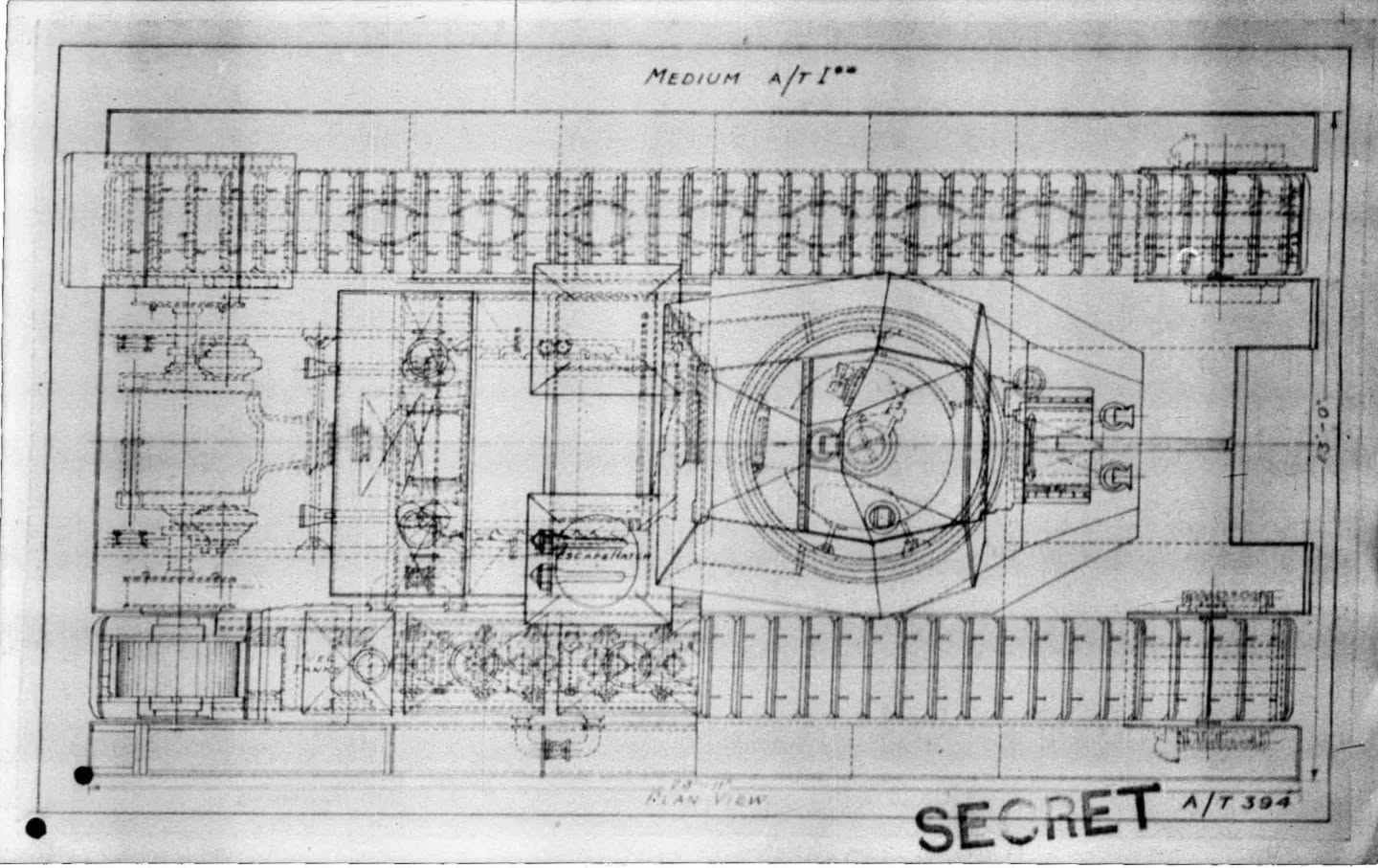
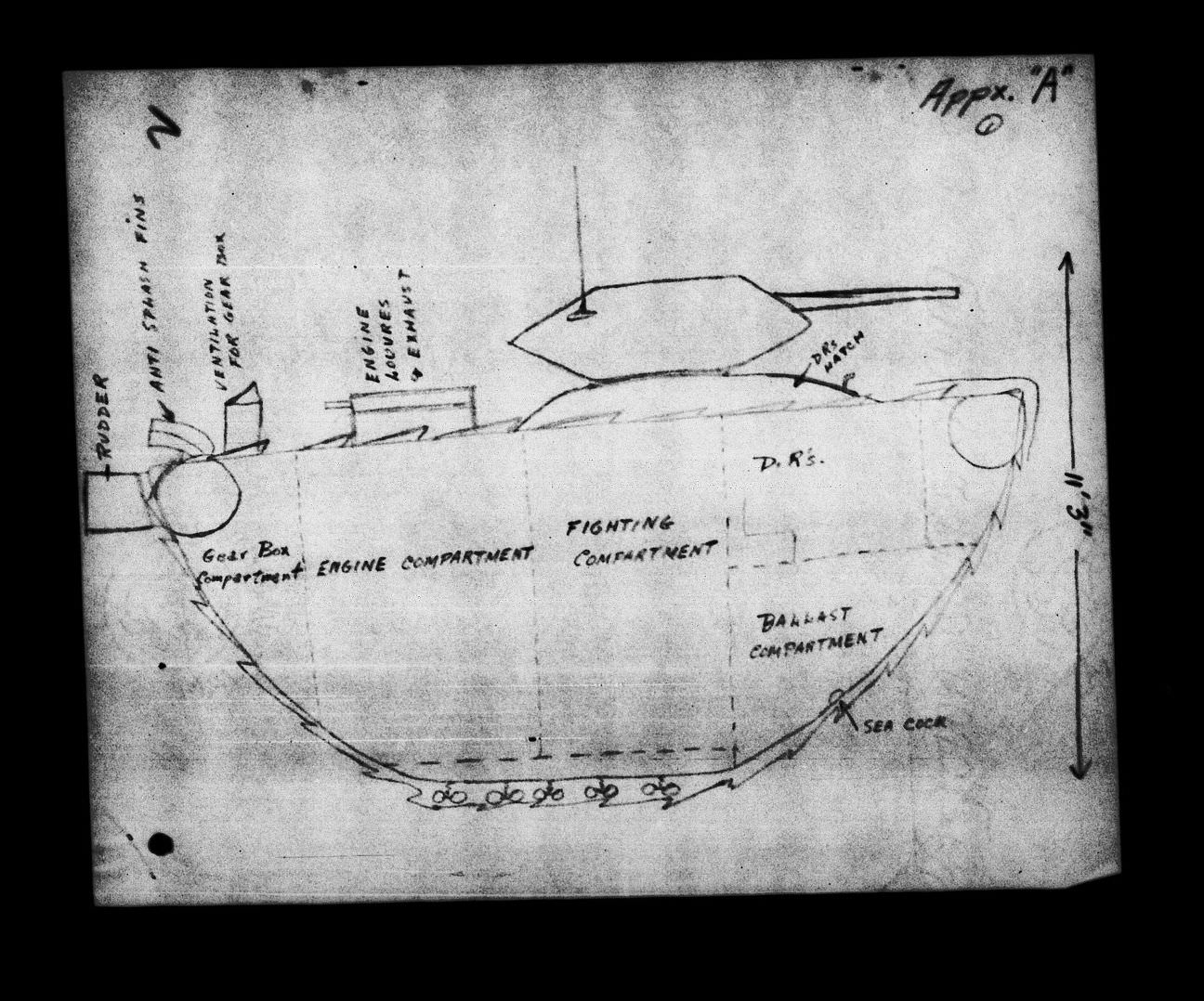
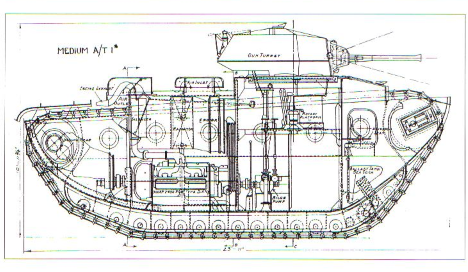
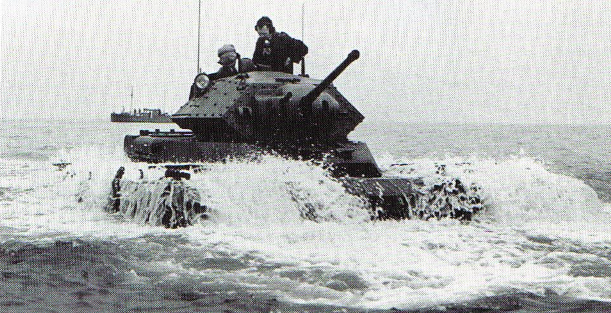
Apart from looks, the tank had a pretty conventional layout, a Crew of 5, a Commander, Gunner and Loader in the turret, and a Driver and Assistant Driver in the hull. The engine was located in a compartment at the rear, the gear box compartment was also at the rear, separated from the crew by a large bulkhead. Notice how the Driver’s compartment is also separated from the Middle fighting compartment by another large bulkhead. And yes, it’s amphibious.
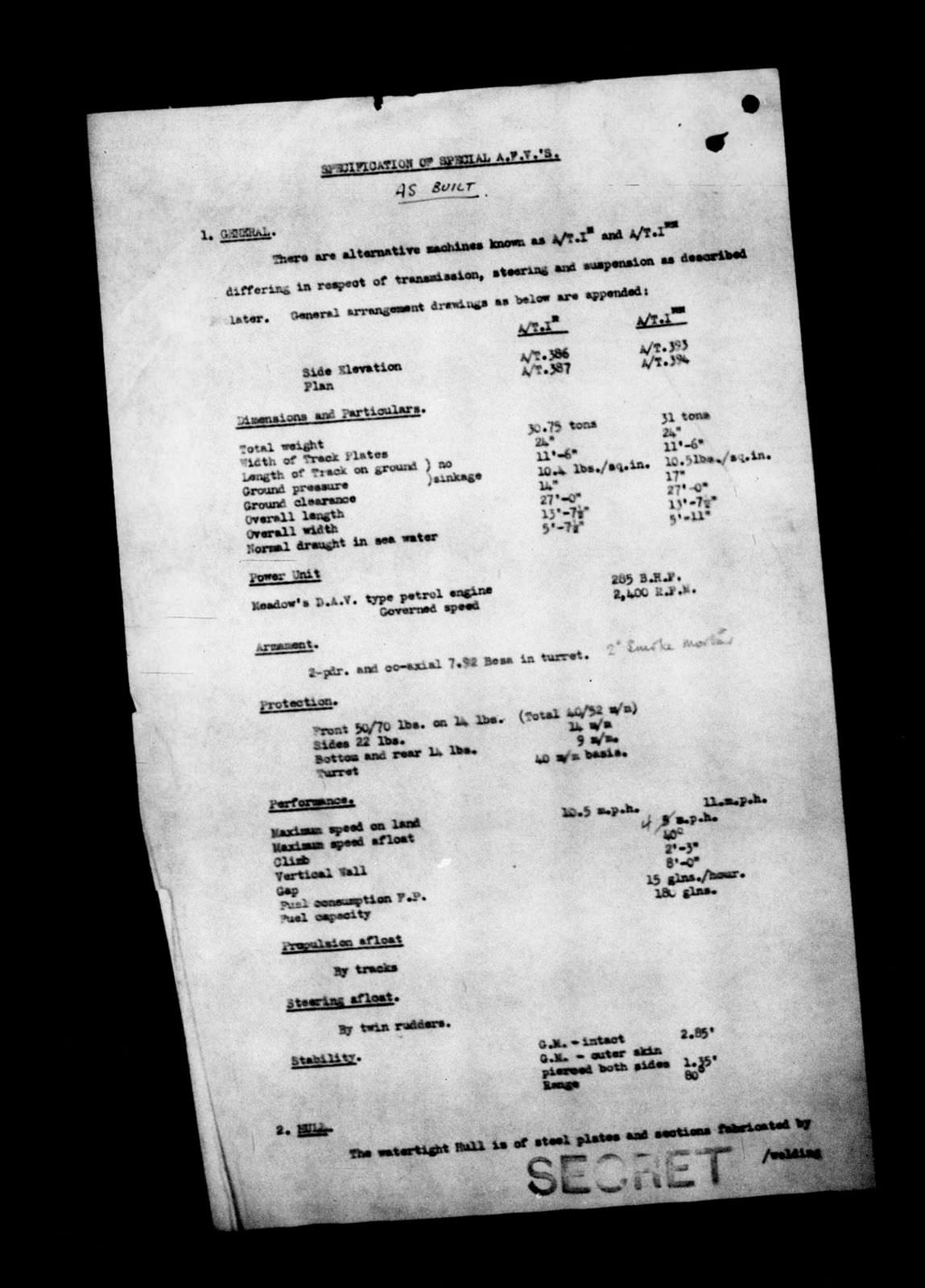
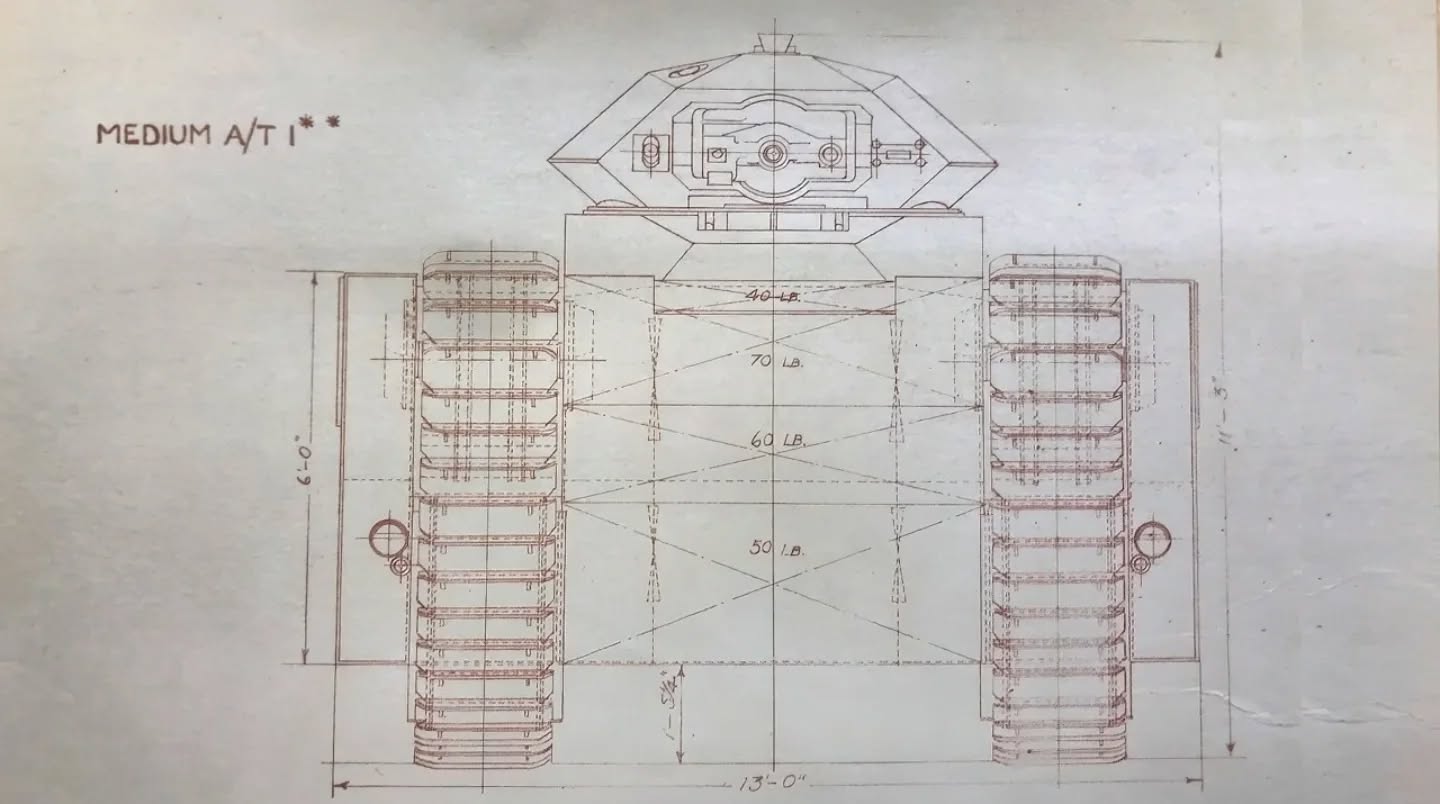
The tank was approximately 7.32m long 3.35m high and 3.96m wide, and it could weight between 30.5 and 31 tons. It was powered by a Meadows DAV engine that produced 285hp at around 2400rpm, giving the A/T 1 medium a top speed of 10mph or 16kph on land, and a speed of 5 knots at sea;
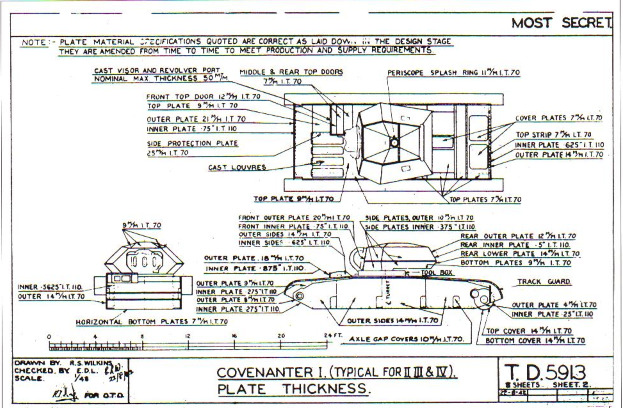
The tank armor was of a riveted construction, with some parts being cast, The tank’s hull armor was double skinned and had between 52mm to 40mm of armor on the front, the sides and rear were 13.5mm thick, the hull roof was 6.5mm thick, it had the same turret as the late Covenanter tanks. For 1940 this made it well armored, witch was needed for how massively tall it was.
Hull front: 52mm upper and middle section, 40mm lower
Hull sides: 13.5mm outer + 13.5mm inner + 14mm
Hull rear: 13.5mm
Hull roof: 6.5mm
Hull Floor: 9mm
Turret front: 20mm outer + 19,05mm inner
Turret mantlet: Cast of variable thickness from 50.8mm to 63.5mm and 76.2mm
Turret sides: 14mm outer + 16mm inner
Turret rear: 12mm outer + 12.7mm inner
Turret rear lower: 14mm
Turret roof: 9mm
All visor ports are cast, 50mm thick, all top doors are 14mm thick. The tank also had a ballast tank located at the front bellow the Driver’s compartment essentially giving the A/T 1 extra spaced armor at the lower hull front.
This is the turret that the A/T I has:

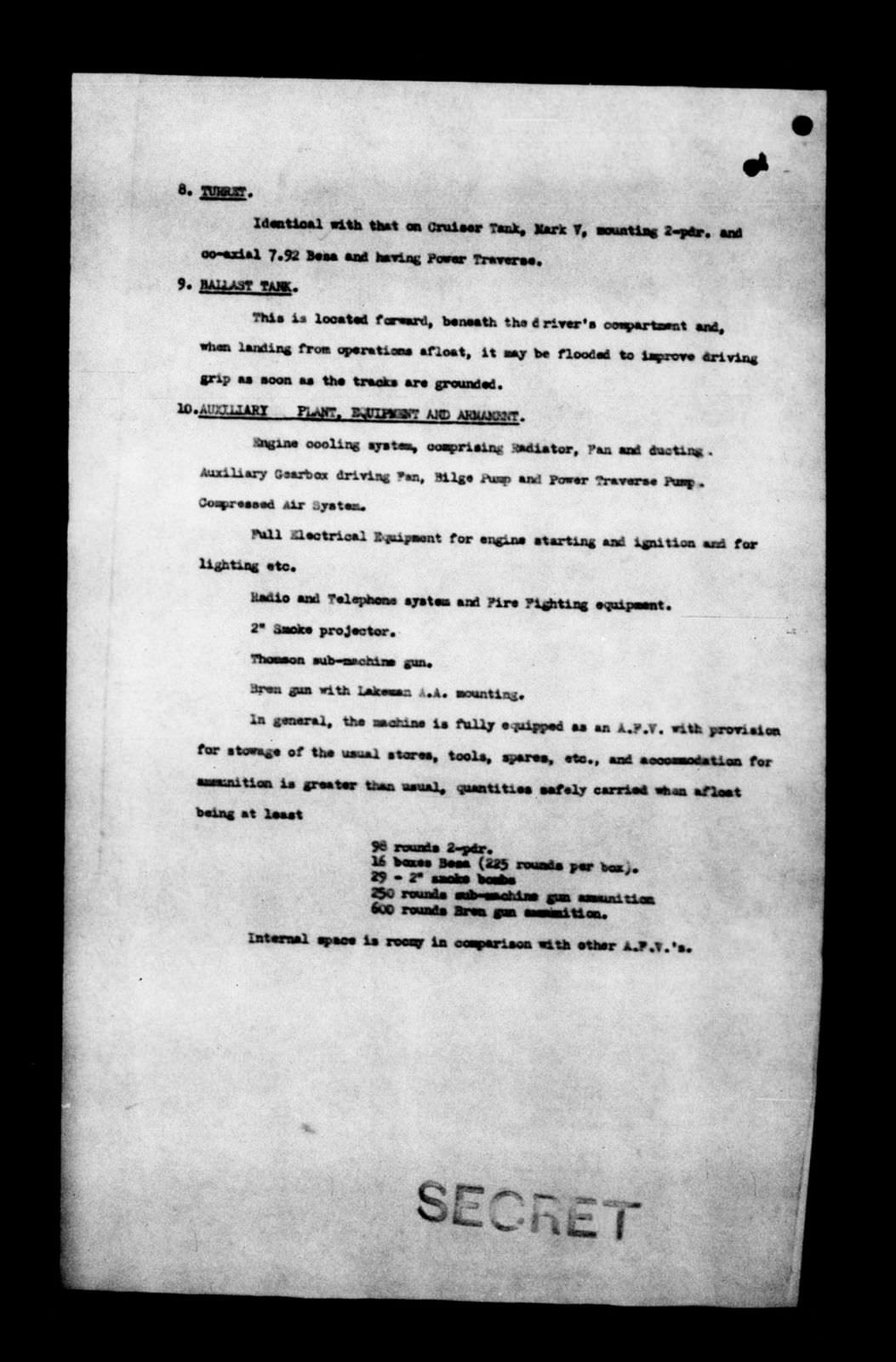
• Armaments: The tank was armed with a QF 2-pounder, with -15º of gun depression and 20º of gun elevation, and a coaxial 7.92 BESA machine gun, it also had a 2" smoke mortar, i haven’t found how much ammo was carried, but it probably carried around 100 rounds for the 2-pdr, and 3000 rounds for the BESA.
• Conclusion:
A total of four A/T I mediums were build, the only difference between them was their suspensions, because the first plans of the tank had none. The A/T I* had their front wheels sprung, while the other two, the A/T I** had all their wheels with suspension, this also means that potentially 2 different vehicles could be added.
• Final words:
Overall the A/T I medium would be an amazing addition to war thunder, it might be big and slow, but it compensates with a very well protected crew compartment, being immune to most autocannons from the front, and well protected against heat projectiles, because the tank is basically composed of a whole lot of spaced armor, and with so many internal bulkheads it’s like the tank has spall shields for every compartment, all that with the crew and important components spread into four different compartments, creates a very survivable and versatile tank. capable of peaking over obstacles and using positions that other vehicles can’t, and make use of it’s well protected turret.
Sources and additional photos:
Here’s the file that mentions that the A/T I has the same turret as the Cruiser Tank Mark V, the same armament and the same power traverse, and confirms, once again, the presence and position of the Ballast tank, for additional information, also the diagram that shows the armor of the Covernanter. Thank you
@Jarms for provinding the sources.