- Yes
- No
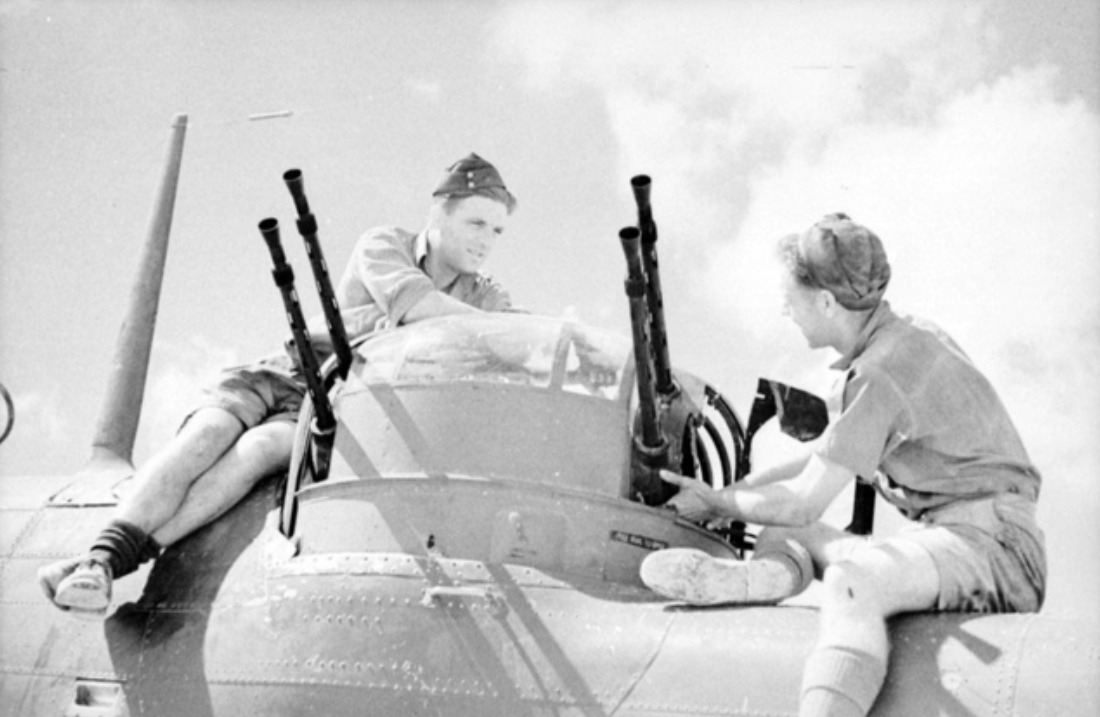
Berca, Cyrenaica, Libya. c. 1943. Armourers of No. 454 (Baltimore) Squadron RAAF at work on the Bolton-Paul turret fitted to their Baltimore Mark III aircraft. (AWM)
Hello, and welcome to my second suggestion for a very little-known, yet very important bomber used by the RAF during the Second World War, the Martin Baltimore Mark III! This version features an improvement over the previous variants of the aircraft by including a powered Bolton-Paul turret in place of the dorsal gun mounts. Like the previous variants, I feel like this would fit well in the British tree due to a current lack of any lower-rank light bombers in the tech tree.
History
Spoiler
I described the initial development of the Baltimore in my post about the Mark II; however, I will briefly describe it here. The Baltimore itself was developed from the Previous Martin Model 167, mainly used by the French; however, following the French capitulation, the remaining order of undelivered aircraft was taken over by the UK under the name Maryland. The Baltimore was an overall improvement of the previous Maryland, originally designed for both the French and British, with the initial French orders being transferred to Britain alongside the Maryland following the French capitulation, and the RAF’s own orders following shortly after. Despite the Baltimore solving many of the issues that the RAF had been unhappy with, it still had one major drawback: the defensive armament.
The original Baltimore design featured just 2 defensive machine guns in flexible mounts on both the upper and lower back of the aircraft (alongside the 4 fixed rear guns), with the Mark II improving that to 4 guns, but the flexible mounts struggled to offer the level of protection required by a frontline bomber of the time. The American mounts themselves caused significant issues before being replaced with British alternatives, and even then it was still not enough to protect from modern Axis fighters of the time. From the 151st aircraft on, this issue was going to be, at least partially, fixed with the inclusion of a Bolton-Paul Type A turret in place of the dorsal gun position, this turret not only increased the defensive armament by 2 x .303 cal machine guns, but also made it far easier for the gunner to track and shoot down incoming aircraft due to it being a fully powered turret capable of both horizontal and vertical traverse with ease, something that was quite tricky on the flexi mounts of the previous variants.
This new and upgraded variant, the Mark III, would enter service in late July of 1942, replacing the Mk.II’s of No.223 Sqn and would operate alongside other squadrons’ Baltimores during the lead-up to and during the Second Battle of El Alamein, in which Baltimores pounded Axis supply lines, quite significantly contributing to the choking of Rommel’s supplies, which led to the major Allied counterattacks moving into the closing stages of 1942. Overall, 250 Baltimore III’s were built, finishing off the original French order of 400 aircraft from May 1940, although a large quantity of these were lost when the merchant ships Thurso Bank and Loch Don were sunk whilst crossing the Atlantic. Despite the large quantity produced, the Mark III would not last much longer than the previous variants; however, despite the increased defensive armaments, rifle-calibre machine guns just didn’t cut it for daylight bombers by this stage of the war, and as such, by January 1943, the first Mark IIIA aircraft had already arrived to replace the Mark III, the Mk.IIIA being identical to previous Mk.III but with the dorsal turret being improved to include one of Martin’s own turrets, featuring twin .50 cal machine guns which offered a massive increase in defensive armament and would stick for the remaining aircraft.
At the start of 1943, the Baltimores gained a new role in the Allied air forces, with multiple squadrons recieving hand-me-down Mark III’s from other squadrons, being assigned to maritime and coastal patrol operations, one of the main squadrons to use their Baltimores in this role was No.454 Sqn RAAF, who had previously been equipped Bristol Blenheims near Iran, however, in February 1943 they moved to RAF El Amiriya in Egypt, where it joined 201 Group. It began operating as a maritime patrol squadron for many months, using the Mark III aircraft until September, and from which, quite surprisingly, it seems to have suffered only a single loss to enemy action during this time, that being when the aircraft AG995 was lost on the 23rd of July whilst operating over Crete, causing the death of the gunner W/O KS Wedgewood, with the other three crewmembers being taken as POWs. Towards the later stages of the year, 454 Squadron’s Mark III aircraft would be complemented by later models joining, with the first Mark IIIA aircraft being received in September, although the squadron would continue to use their Mark III aircraft until at least June 1944, one of the latest squadrons to get rid of their Mark III airframes.
Images
Spoiler
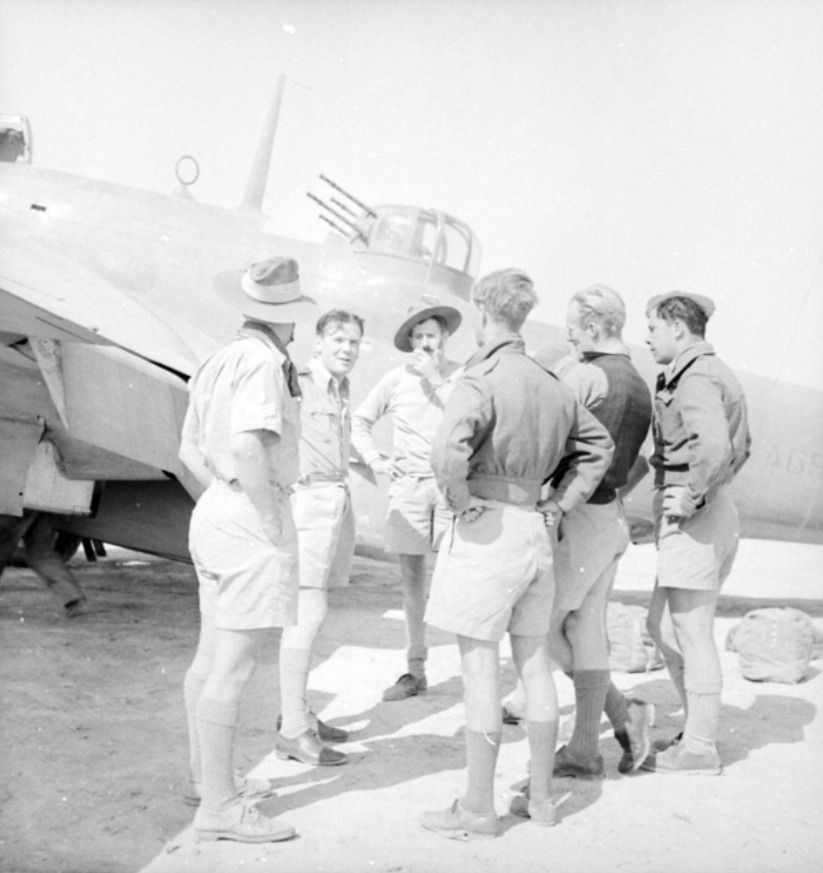
Wing Commander Ian L. Campbell, Commanding Officer of No. 454 (Baltimore) Squadron RAAF, questions a crew of a Baltimore Mark III who have just returned from a raid; the Bolton Paul turret is clearly visible behind them (AWM)
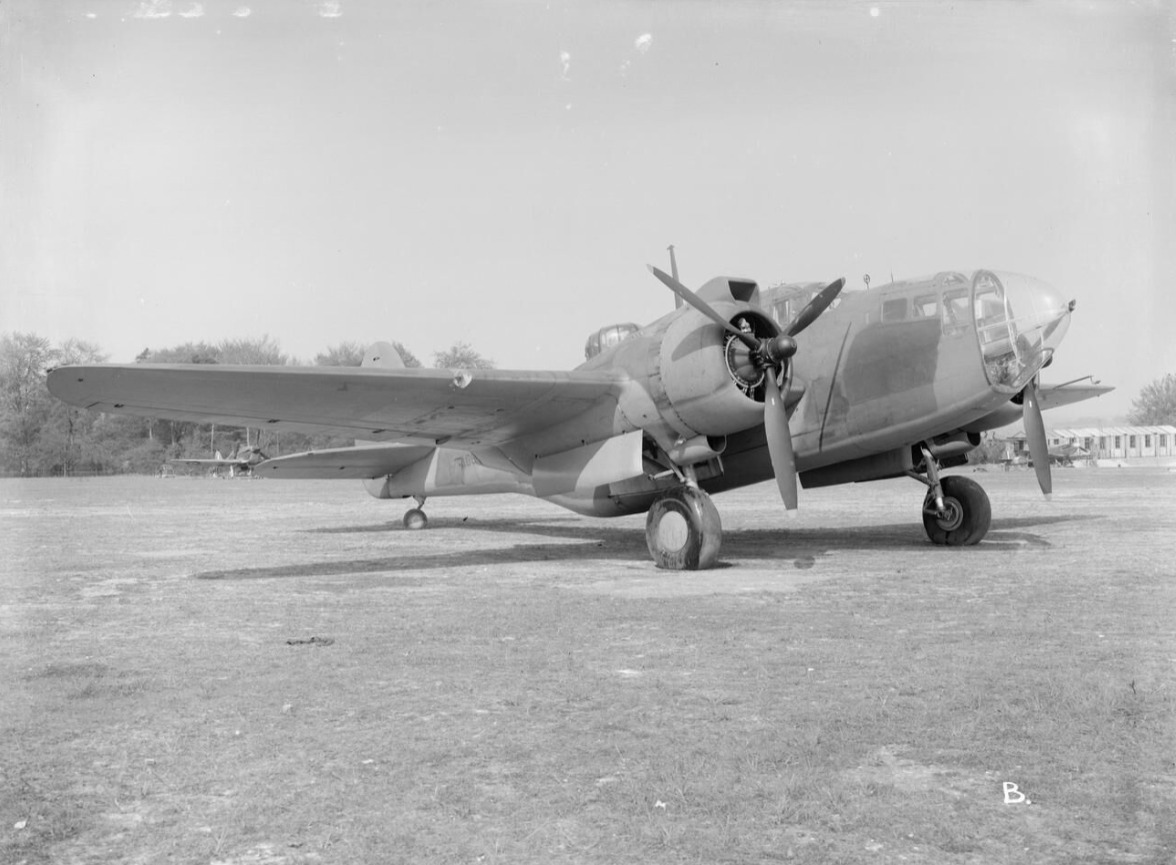
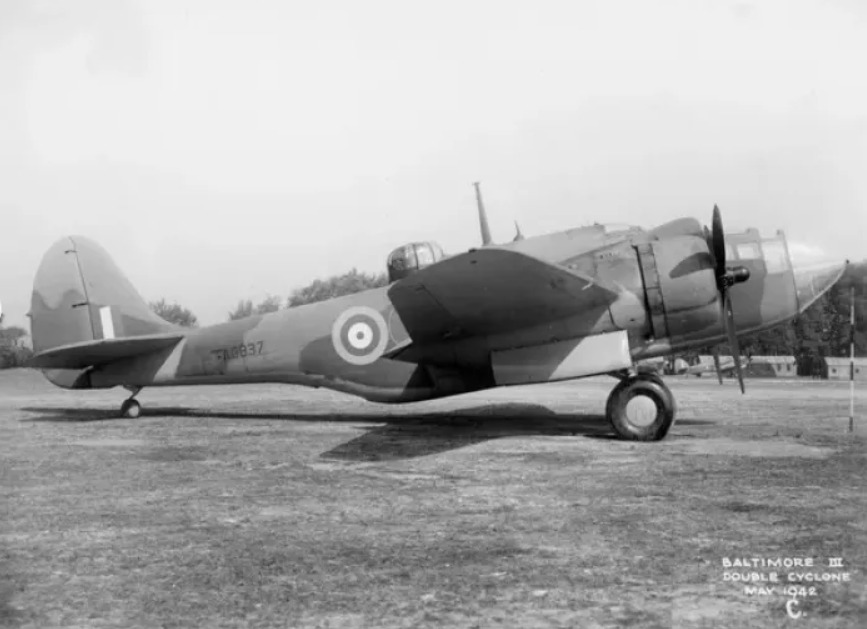
Baltimore Mark III, AG837, at Boscombe Down during handling trials before being passed to service in the Middle East. (IWM)
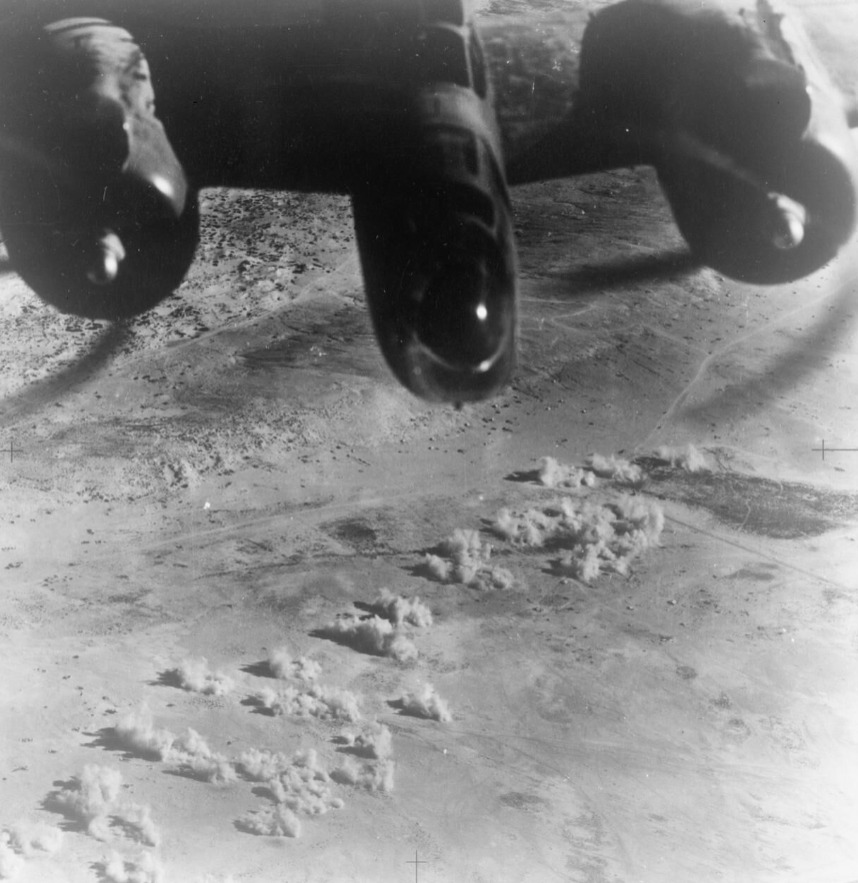
A Baltimore Mark III flies over the target as bombs explode on the German-held landing ground at El Daba, Egypt, during a raid by No. 223 Squadron RAF (IWM)
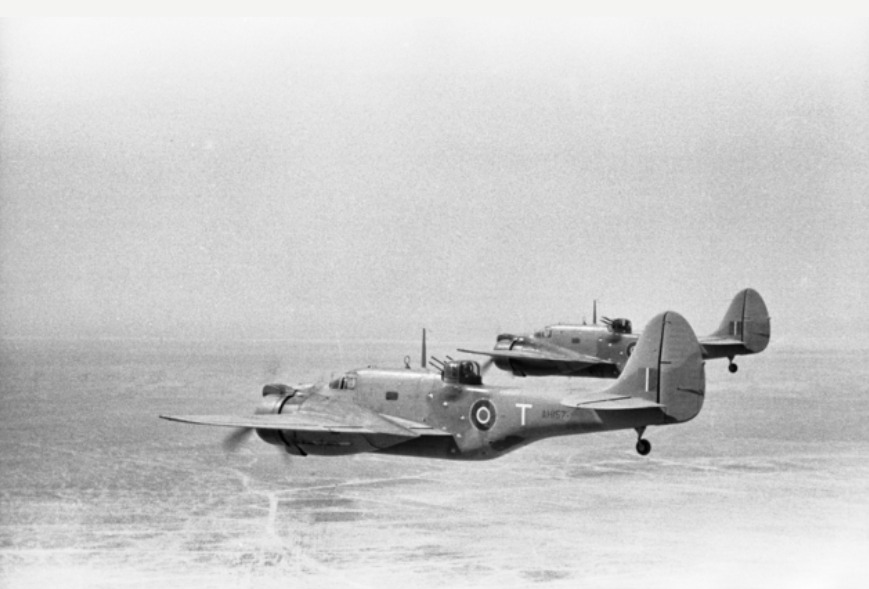
Two Baltimore Mk.III’s of No. 454 Squadron RAAF, the closest aircraft is serial AH157, coded “T” (AWM)
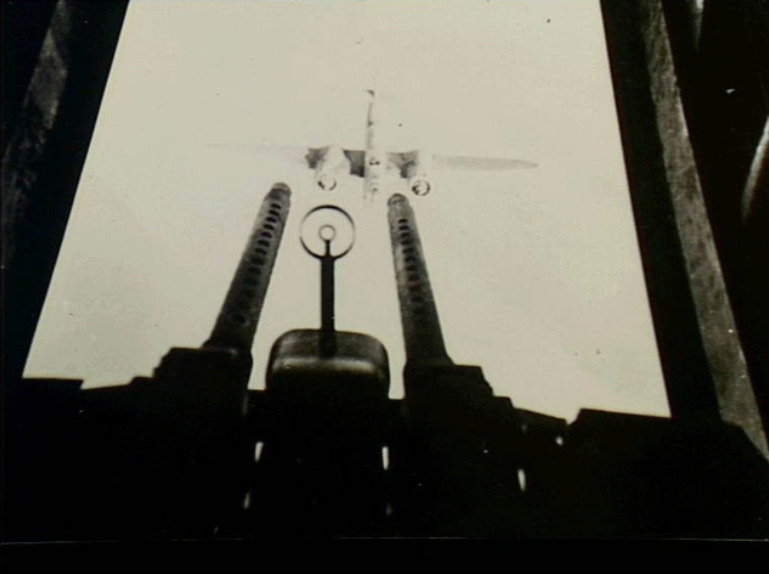
A view from the under gunner’s guns from a Baltimore of No.55 Sqn in September 1942, the aircraft is most likely a Mark III (AWM)
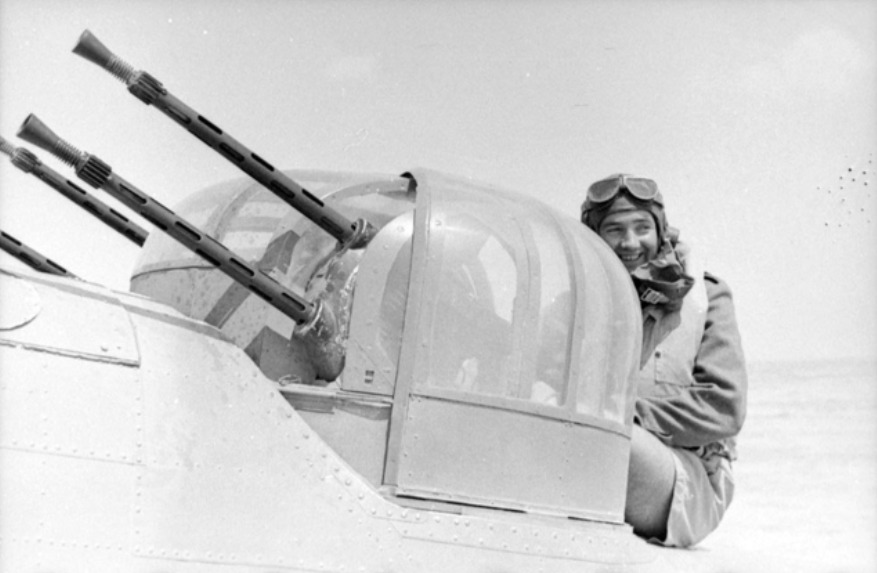
An air gunner of No. 454 Squadron RAAF climbs into the mid-upper turret of a Martin Baltimore aircraft before take-off (AWM)
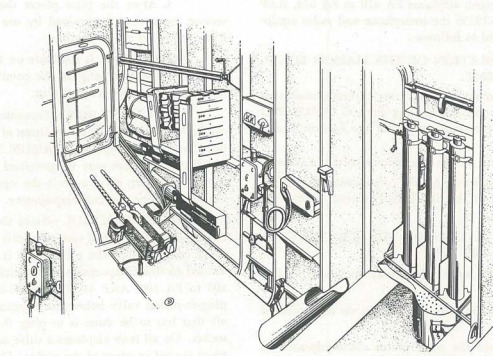
A Diagram of the rear section of the Baltimore II & III, showing the dual mount for the rear .30 cal machine guns, as well as the fixed rear-facing machine guns on either side of the gunner
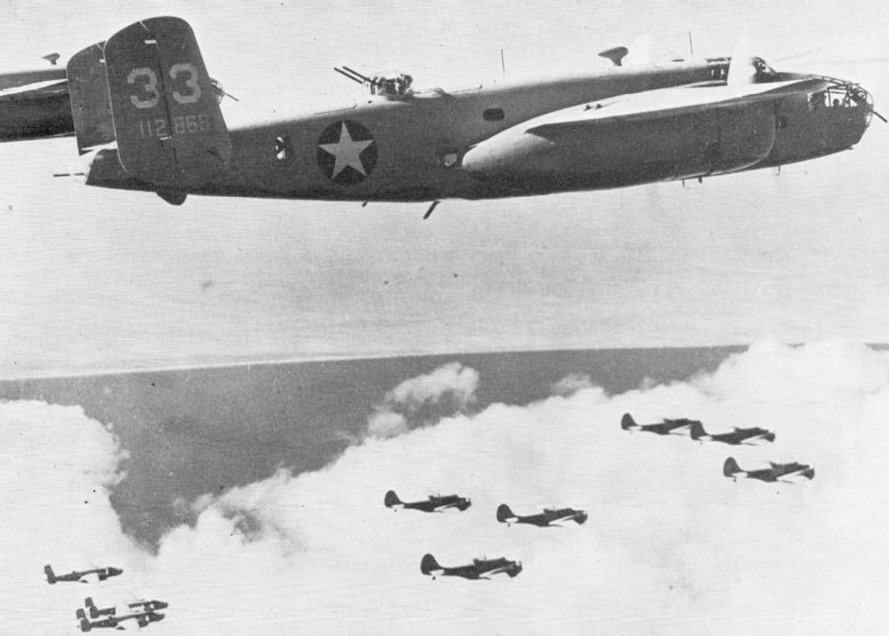
A Mixed formation of Baltimore III’s, accompanied by B-25 Mitchells of the US 12th Bomb Group. These mixed formations were incredibly common for this type of aircraft towards the later stages of the Mediterranean conflict
Another Angle of AG837 whilst at Boscombe Down, this time showing the clear silhouette of the Bolton-Paul turret fitted.
Specifications/Armament
Spoiler
General characteristics
- Crew: four: pilot, navigator/bombardier, radio operator, gunner
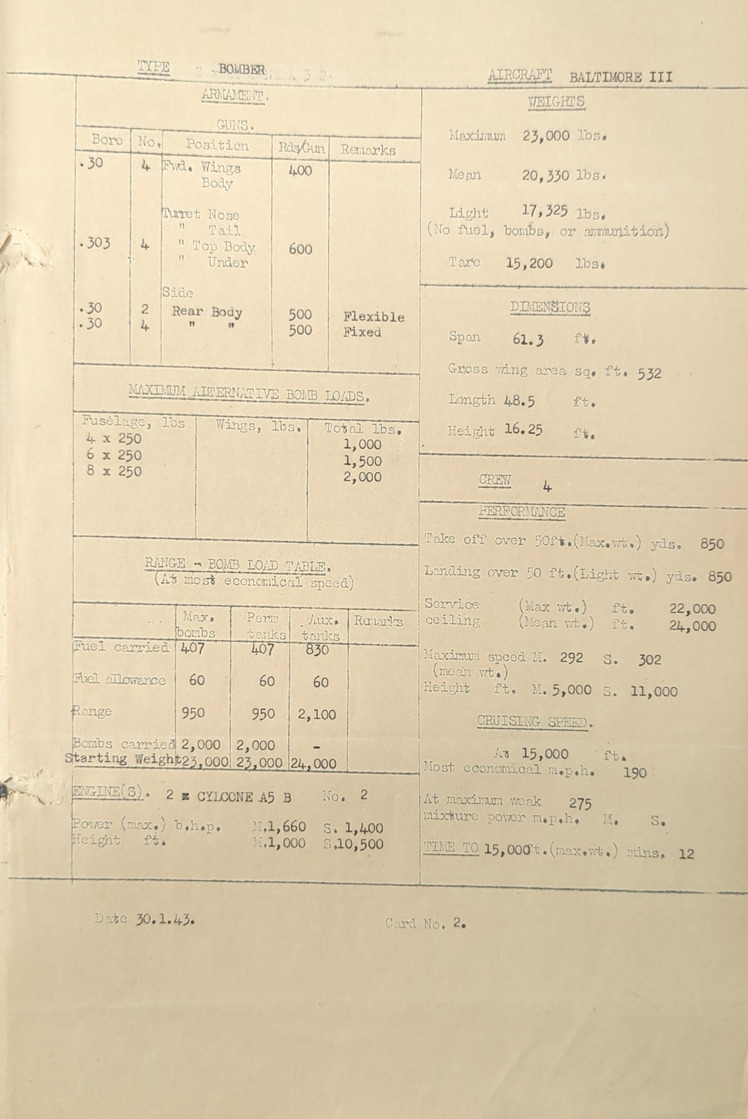
- Length: 48 ft 6 in (14.8 m)
- Wingspan: 61 ft 4 in (18.7 m)
- Height: 14 ft 2 in (4.32 m)
- Wing area: 538.5 sq ft (50 m2)
- Empty weight: 15,991 lb (7,253 kg)
- Gross weight: 23,185 lb (10,900 kg)
- Powerplant: 2 × Wright-Cyclone R-2600-A5B engines, 1,600 hp each
Performance
- Maximum speed: 305 mph (488 km/h, 295 kn) at 11,600 ft (3,540 m)
- Cruise speed: 224 mph (360 km/h, 195 kn)
- Range: 980 mi (1,577 km, 850 nmi)
- Wing loading: 46.2 lb/sq ft (226 kg/m2)
- Power/mass: 0.14 hp/lb (220 W/kg)
Armament
-
Offensive weaponry:
- 4 x 7.62mm (.30 cal) Browning machine guns in the wings. (400 rounds per gun)
-
Defensive weaponry:
- 4 x 7.7mm (.303 cal) Browning machine guns in Bolton-Paul dorsal turret. (600 rounds per gun)
- 2 x 7.62mm (.30 cal) Browning machine guns in lower rear mount. (500 rounds per gun)
- 4 x Fixed 7.62mm (.30 cal) Browning machine guns on either side of the rear gunner ( 2 per side). (500 rounds per gun)
-
Suspended Armament:
- Max Bombload: 2000 lbs
- 4 x 500 lbs G.P, M.C or AN-M64 bombs
OR - 8 x 250 lbs G.P, M.C or AN-M57 bombs
OR - 2 x 500 lbs S.A.P bombs/ S.B.C Carriers
- 4 x 500 lbs G.P, M.C or AN-M64 bombs
- Max Bombload: 2000 lbs
Place in game
Spoiler
As I mentioned earlier, I feel the British tree does not have much representation of light/medium bombers in its tech tree. Much of the bomber line consists of long-range strategic bombers, which, whilst carrying huge bombloads, struggle massively when it comes to speed and defensive armament. Additionally, a large portion of the light and medium bombers the tree does have are either rare premium or event vehicles that are difficult or downright impossible for newer players to achieve.
A big issue that I did not mention in my previous suggestion for the Mark II is that most of the bombers that fit this role for Britain are either based on American designs such as the Bostons and Venturas, or are identical to what the US used, with aircraft like the Mitchell and Marauder seeing widespread use. This can be a very tricky subject for some players, who don’t want to see “Copy & Paste” aircraft thrown across multiple trees, and in this case the Baltimore offers an ideal situation, being a unique aircraft used exclusively by the UK and Commonwealth, but also being a major production aircraft with large amounts of info available for addition to the game, rather than a one-off prototype with little information about it in public spaces.
In terms of BR, like the Mark II, I would expect this to sit around 2.3 in BR, being quite similar in capabilities to that of other bombers around that BR range. Britain currently has zero bombers outside of the Wellington at this BR in the tech tree, and the Baltimore would add a unique and new playstyle to the lower ranks of the British tree.
Sources
Spoiler
Martin Baltimore - Wikipedia
Client Challenge
Martin Baltimore III
Martin Baltimore Light / Medium Bomber Aircraft
ADF Serials - Baltimore
https://www.awm.gov.au/advanced-search?collection=true&facet_type=Photograph
https://www.iwm.org.uk/collections/search
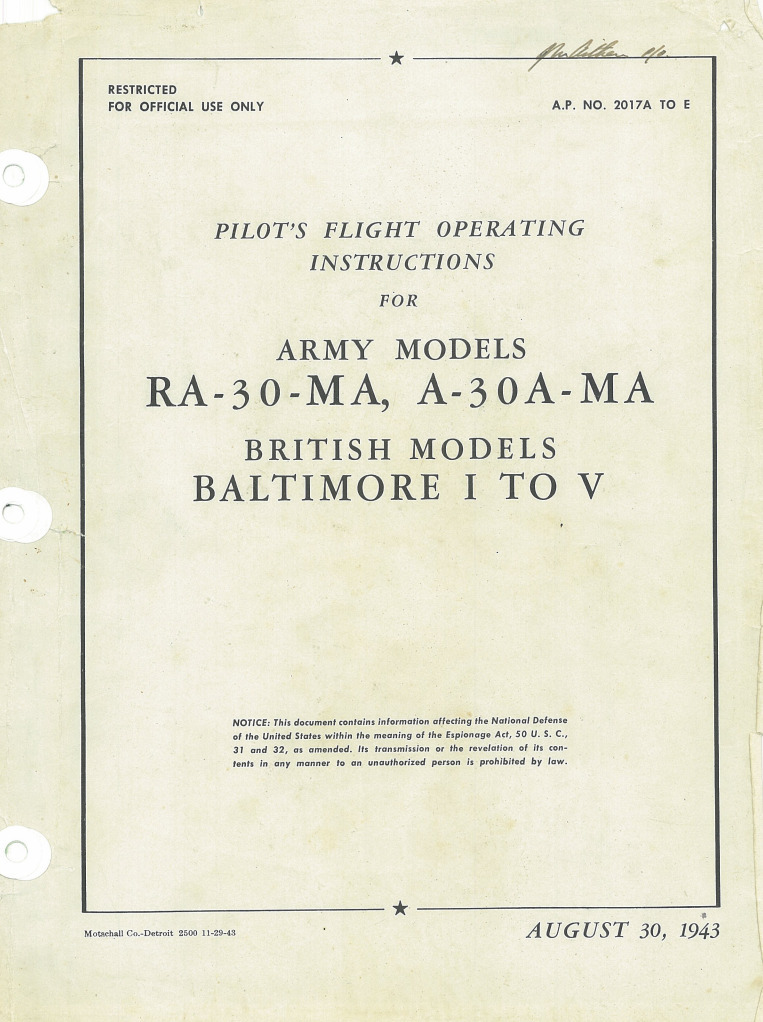
Air Publication 2017A, Pilots Notes, the Baltimore I Aeroplane, including II & III
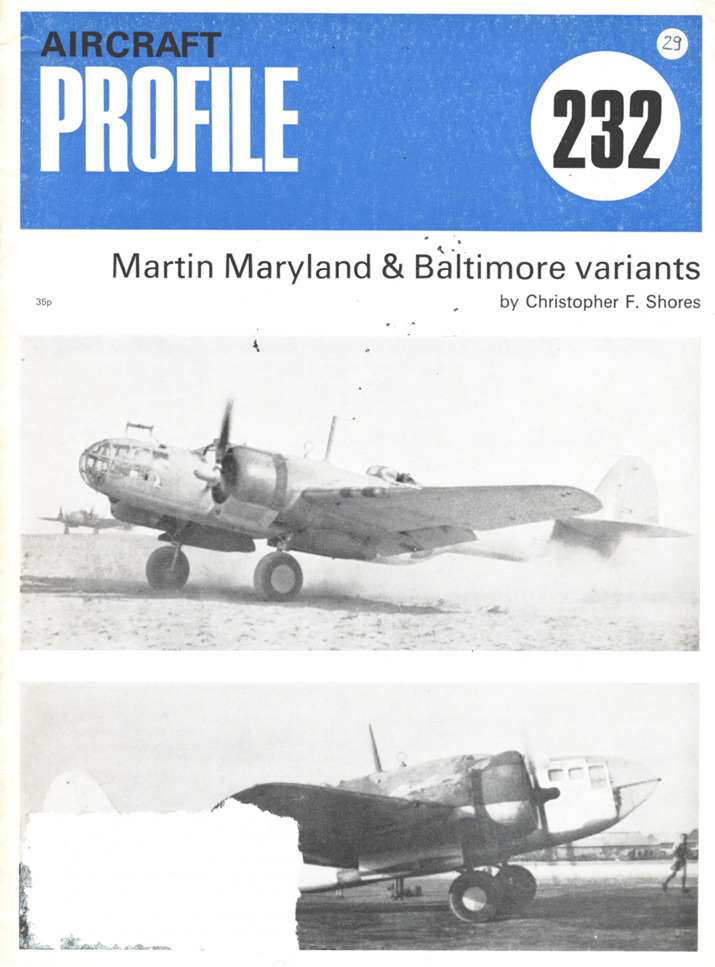
Aircraft Publication No.232 Martin Maryland and Baltimore Variant, Christopher F. Shores
Martin 187 Baltimore, Krzysztof Janowicz, Adam Jarski