- Yes
- No
A Baltimore Mark II of No. 232 Wing RAF raises the dust while operating from a landing ground in the Western Desert. (IWM)
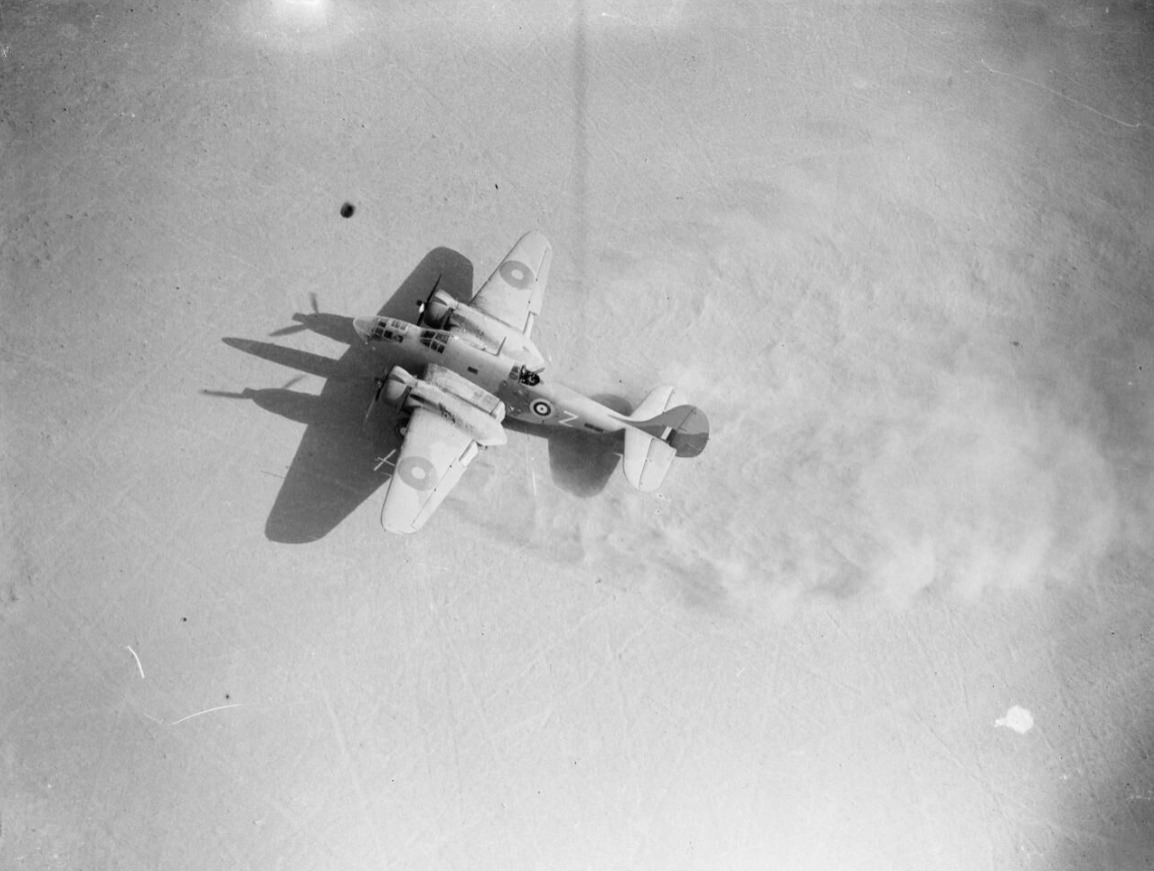
Hello! And welcome to a suggestion for a rather unknown, yet still major, bomber the RAF used during the Second World War, the Martin Baltimore. Personally, I feel the British tree has a lack of smaller, light/medium bombers that I feel this kind of aircraft would solve, with the Mark II Baltimore being the main first variant to see use.
History
Spoiler
To understand the Development of the Baltimore, we have to mention Martin’s previous light bomber, from which the Baltimore was based: the Model 167, known in RAF service as the Maryland. The Maryland itself (at the time known as the XA-22) had originally been designed in the mid-1930s and had been offered to the USAAC during its transition to larger, monoplane bombers. However, with the US failing to see a use for the XA-22 within its forces, it fell to the French, who at the time were looking for an aircraft just like the XA-22 to take the fight to Nazi Germany, as a conflict between the two nations was seeming more and more likely as time went on. For this, Martin largely redesigned the aircraft, giving it the internal designation of Model-167, from which it would go into service with the French under the same name. Now, as was very common after the collapse of France in mid-1940, not all of the Martin-167s ordered had been delivered, and with Britain grasping for any aircraft it could get its hands on, the remaining aircraft were diverted to the RAF, entering service as the Maryland with slight modifications.
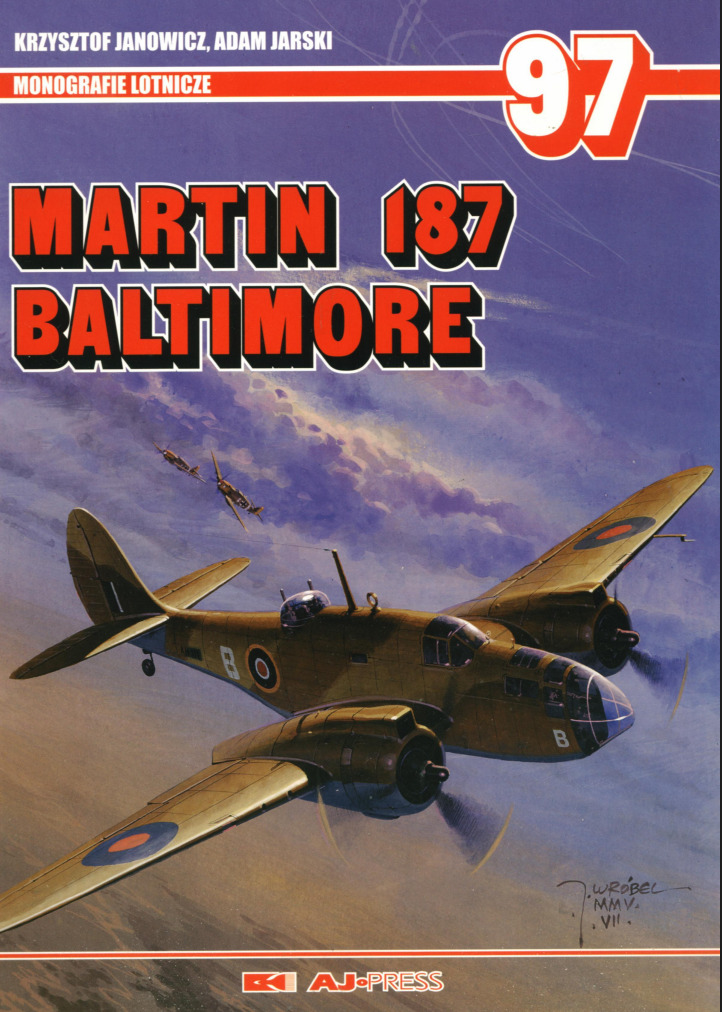
Now, whilst the Maryland saw a fair amount of use with the RAF in the Mediterranean, it had some drawbacks, and the British were not happy with the aircraft, believing it to be obsolete as soon as they got the first aircraft in 1940. However, Martin had already been internally working on an improved Bomber, based on the Maryland, to meet both French and British requirements before the start of the war. This design, the Martin-187, had already been on the radar of both the French and the British from early on in its development. The aircraft itself was loosely based on the previous Maryland, using its wings and crew layout, but featured an entirely new fuselage, tail and more powerful Wright Cyclone R-2600-A5B engines. The engines alone offered around a 50% increase in power over the ones used in the Maryland. Whilst no orders had been directly placed for the British, 400 of the aircraft had been ordered by the French before their capitulation, which the British would quickly take over amid some slight renegotiations. These renegotiations involved the fitting of a powered turret to replace the flexible rear mounting the French had ordered; however, the first 150 aircraft (50 Mark I and 100 Mark IIs) were still delivered with the flexible mounts, with the later Mark II featuring dual mounts instead of singles (although several Mark I’s that reached frontline Squadrons were refitted with the dorsal Dual mounts due to something I will mention shortly).
As funds from the Lend-Lease initiative became available in early 1941, the order of 400 aircraft was increased by another 575 airframes in June 1941 (a further order for 600 coming the following year), the same month the first Martin Model-187B (the modified version for the RAF) took flight, with deliveries commencing soon after, with the first aircraft reaching the United Kingdom in October. The very first Mark I’s were used mainly by OTU’s; however, some aircraft did make it through to frontline squadrons, alongside the first Mark II aircraft. The First Frontline Squadron to receive the aircraft was No.223 Sqn, who recieved theirs in March 1942, with the second squadron, No.55, becoming operational 2 months later. It was during these early stages that the sheer power of the Baltimore became an issue, whilst the aircraft was far more powerful and far faster than the Blenheim and Maryland aircraft the crews used previously; its incredibly strong engines meant it couldn’t be put to full throttle immediately, otherwise the aircraft would flip itself during take-off, causing significant damage!
Overall, the crews were happy with the improvements the aircraft made; however, one major, and quite serious, flaw was discovered by the crews of No.223 Squadron, that being how difficult the upper mounts of the defensive armament were to move horizontally due to the positioning of the ammunition feeds for the American .30 calibre machine guns. This was uncovered during the Baltimore’s first mission since moving to LG116 on the 23rd of May, in which 4 Baltimores were ambushed by 8 Bf-109F fighters of I/JG.27; due to the Baltimores both being unable to bring the dorsal guns to bear, paired with a lack of fighter cover, all 4 aircraft were lost to zero on the German side. Because of this disaster, the dorsal armament was quickly refitted with British .303 calibre machine guns, and some Mark I’s also in service received this upgrade too.
Following these small upgrades, and a slight change of the way operations were carried out, the losses of Baltimores dropped significantly, with both squadrons being well into the groove of bombing operations by the time of the retreat to El Alamein in June 1942 and in the lead up to the Second battle of El Alamein in october, large formations of Baltimores, escorted by the new P-40 Kittyhawk fighters, were an ever common sight for axis supply lines in the western desert, with axis supply losses skyrocketing in the later half of the year. Meanwhile, British tactics had led the number of losses of Baltimores during missions to drop to almost zero, with most losses now coming from either ground fire or mechanical failures during take-off/landings.
Towards the end of July, however, the Mark II was already beginning to be phased out, in favour of the new Mark III aircraft fitted with a Bolton-Paul turret in the dorsal position, featuring 4 x .303 calibre Browning machine guns; however, the Mark II would serve on with multiple squadrons until the end of the year, being passed down from No.223 and No.55 to No.21 SAAF, No.69 Sqn, No.203 Sqn and multiple more, with a few Mark II’s still seeming to still be in use in secondary reconnisance or training roles by at least mid-1944 before being replaced by newer and newer aircraft.
Images
Spoiler
A Baltimore Mark II, AG793 “N” of No.55 Sqn RAF operating from landing grounds in the Western Desert during the Alamein offensive (IWM)

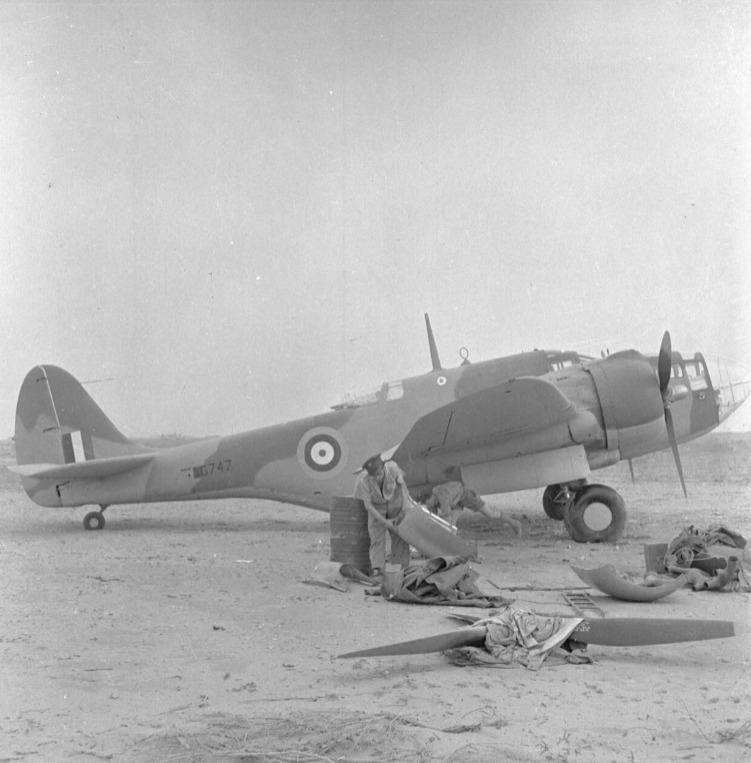
Engine mechanics at work on a Martin Baltimore Mark II, AG747, at a desert airfield (IWM)
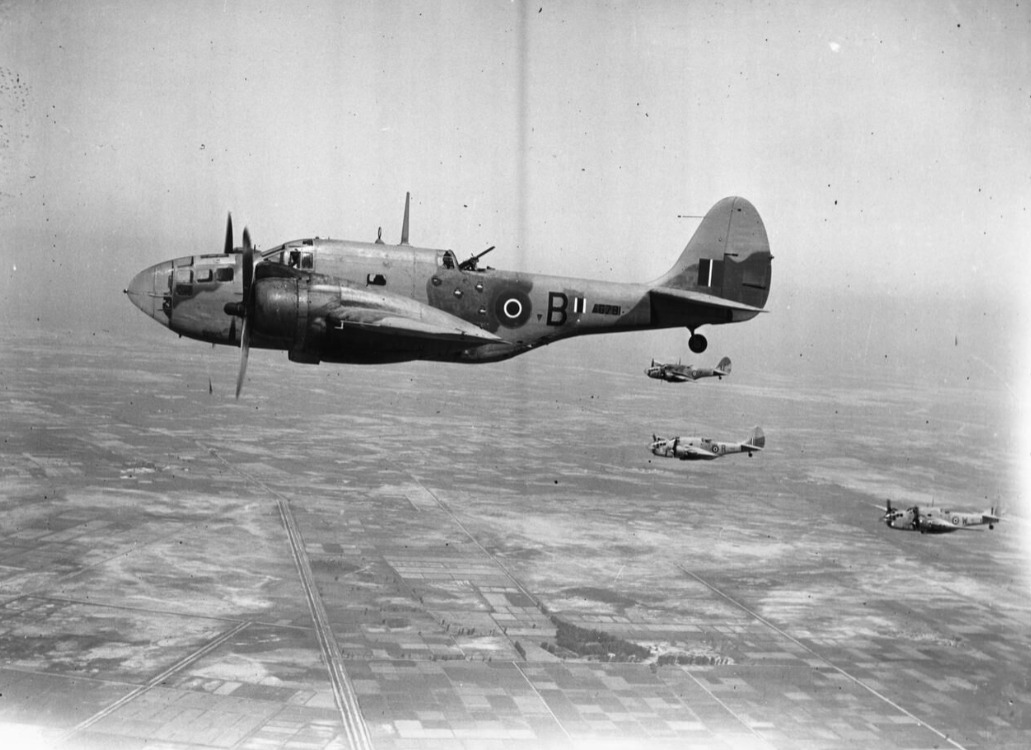
A section of Martin Baltimore Mark II’s of No.55 Sqn RAF during a bombing sortie as part of the Alamein Offensive (IWM)
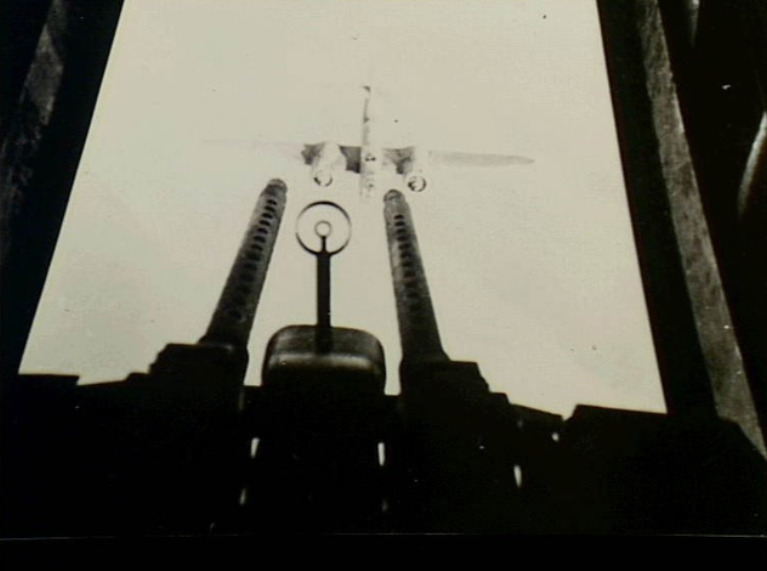
A view from the under gunner’s guns from a Baltimore of No.55 Sqn in September 1942; the aircraft itself is likely a Mk.III; however, the gun mount should remain the same. (AWM)
A modified Long-range photo-reconnaissance Baltimore of No.69 Sqn RAF in Malta, 1942; the aircraft is either a Mark I or II
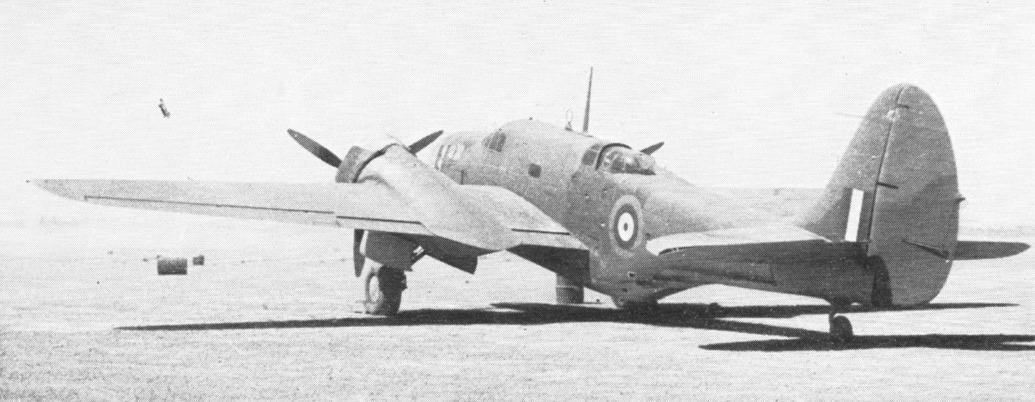
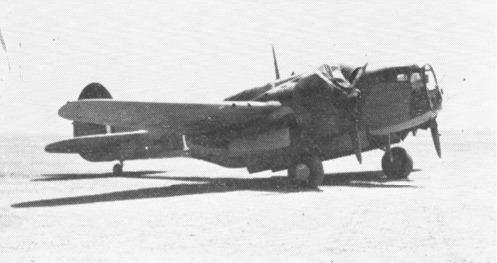
Another Baltimore II of No.55 Sqn, on an airfield in the western desert; you can clearly see the holes in the wings for the 4 offensive .30 cal machine guns
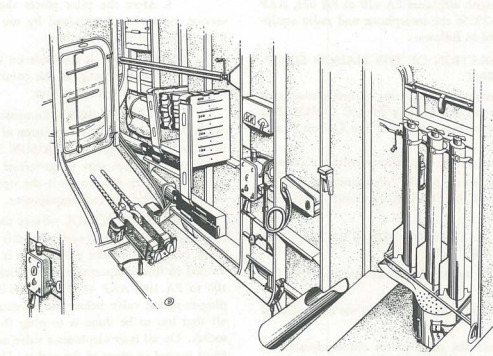
A Diagram of the rear section of the Baltimore II & III, showing the dual mount for the rear .30 cal machine guns, as well as the fixed rear-facing machine guns on either side of the gunner
Specifications/Armament
Spoiler
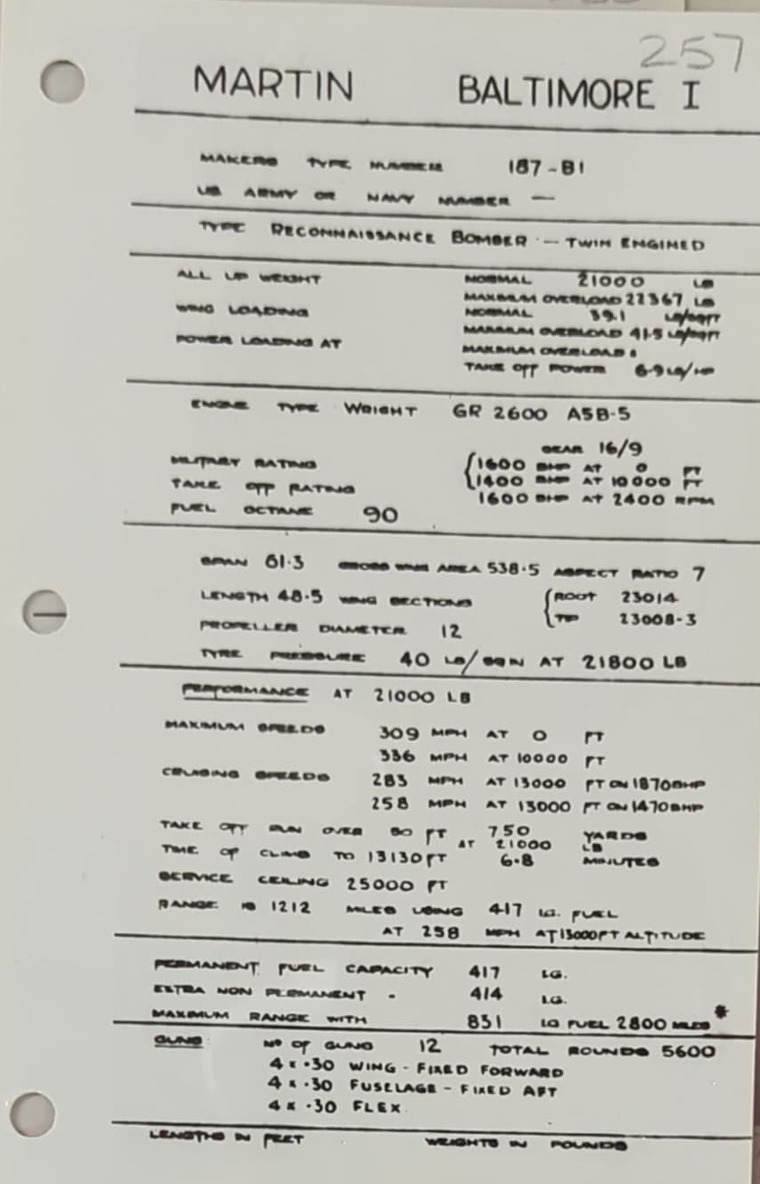
General characteristics
- Crew: four: pilot, navigator/bombardier, radio operator, gunner
- Length: 48 ft 6 in (14.8 m)
- Wingspan: 61 ft 4 in (18.7 m)
- Height: 14 ft 2 in (4.32 m)
- Wing area: 538.5 sq ft (50 m2)
- Empty weight: 15,991 lb (7,253 kg)
- Gross weight: 23,185 lb (10,900 kg)
- Powerplant: 2 × Wright-Cyclone R-2600-A5B engines, 1,600 hp each
Performance
- Maximum speed: 305 mph (488 km/h, 295 kn) at 11,600 ft (3,540 m)
- Cruise speed: 224 mph (360 km/h, 195 kn)
- Range: 980 mi (1,577 km, 850 nmi)
- Wing loading: 46.2 lb/sq ft (226 kg/m2)
- Power/mass: 0.14 hp/lb (220 W/kg)
Armament
-
Offensive weaponry:
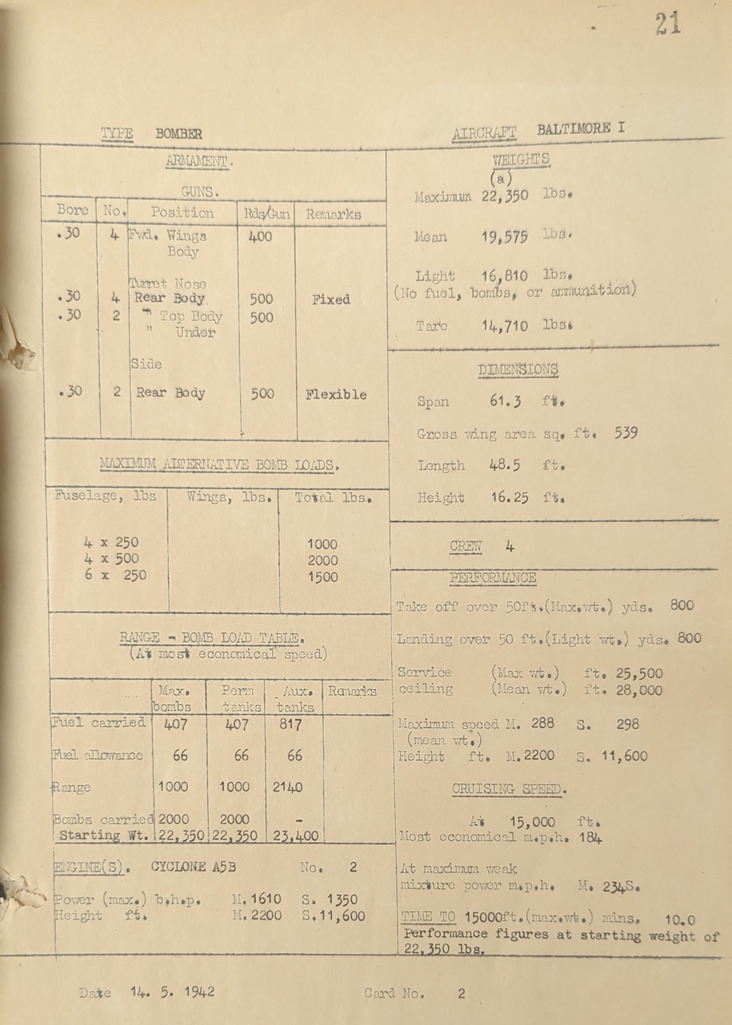
- 4 x 7.62mm (.30 cal) Browning machine guns in the wings. (400 rounds per gun)
-
Defensive weaponry:
- 2 x 7.62mm (.30 cal) Browning machine guns in dorsal Flexi mount (later replaced by 7.7mm (.303 cal) Brownings). (500 Rounds per gun)
- 2 x 7.62mm (.30 cal) Browning machine guns in lower rear mount. (500 rounds per gun)
- 4 x Fixed 7.62mm (.30 cal) Browning machine guns on either side of the rear gunner ( 2 per side). (500 rounds per gun)
-
Suspended Armament:
-
Max Bombload: 2000 lbs
- 4 x 500 lbs G.P, M.C or AN-M64 bombs
OR - 6 x 250 lbs G.P, M.C or AN-M57 bombs
OR - 2 x 500 lbs S.A.P bombs/ S.B.C Carriers
- 4 x 500 lbs G.P, M.C or AN-M64 bombs
-
Place in game
Spoiler
As I mentioned at the start, I feel like the British tree lacks any meaningful light and medium bombers, with most of the few already in-game being restricted to old event vehicles such as the DB-7 and Boston/Havoc or rare premium aircraft that return very rarely, like the Hudson Mk.V. Which is something I find quite sad, as I very much enjoy the challenges of taking these kinds of aircraft and, once the bombs are dropped, using them as makeshift heavy fighters with their offensive armaments, which I find to be an increadibly fun and rewarding playstyle as opposed to seal clubbing at lower ranks.
In terms of BR, I expect the aircraft would sit around 2.3, as it is undeniably better than the Martin 167 already at 2.0 in the French tree but would be worse than the American A-20G-25 currently at 2.7. This is a BR where Britain is quite lacking in Bombers, with its only real bomber being the Wellington, which, whilst having an insanely high bomb load for its BR, lacks in speed and defensive armaments, which the Baltimore would provide a smaller, yet more survivable alternative to. Personally, I feel this could be the first aircraft in a folder of various Baltimore aircraft, starting at the Mark II, and progressing through the Mark III to the Mark IIIA or IV with their constantly increasing armaments. However, that is wishful thinking for now, and any Baltimore added would be a positive addition.
Sources
Spoiler
Client Challenge
Martin Baltimore - Wikipedia
Martin Baltimore Light / Medium Bomber Aircraft
Martin Baltimore II
https://www.awm.gov.au/advanced-search?collection=true&facet_type=Photograph
https://www.iwm.org.uk/collections/search
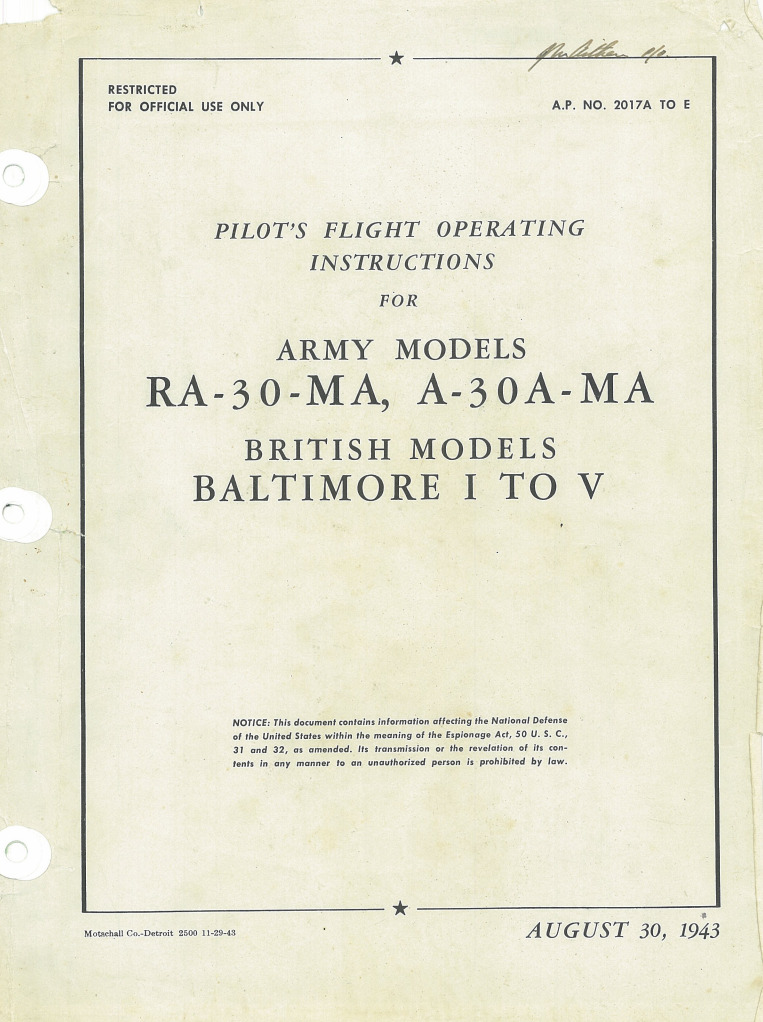
Air Publication 2017A, Pilots Notes, the Baltimore I Aeroplane, including II & III
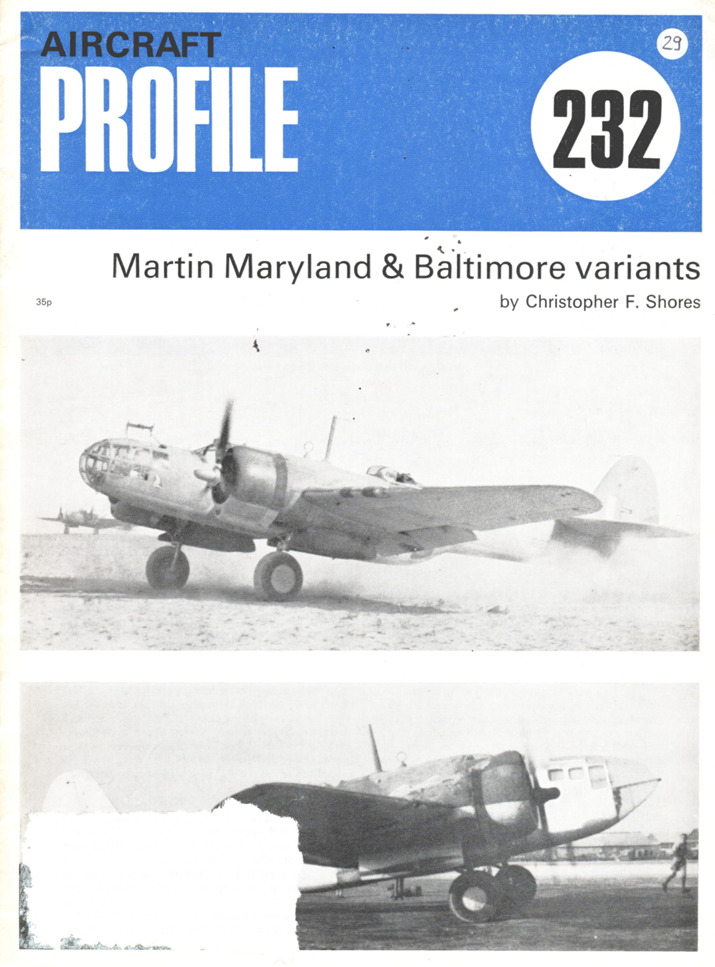
Aircraft Publication No.232 Martin Maryland and Baltimore Variant, Christopher F. Shores