- Yes - In the Tech Tree.
- Yes - Event/BP.
- Yes - Premium.
- No - I would not like to see HMAS Manoora in game.
HMAS Manoora as she commissioned, still wearing her civilian colours, (1940)
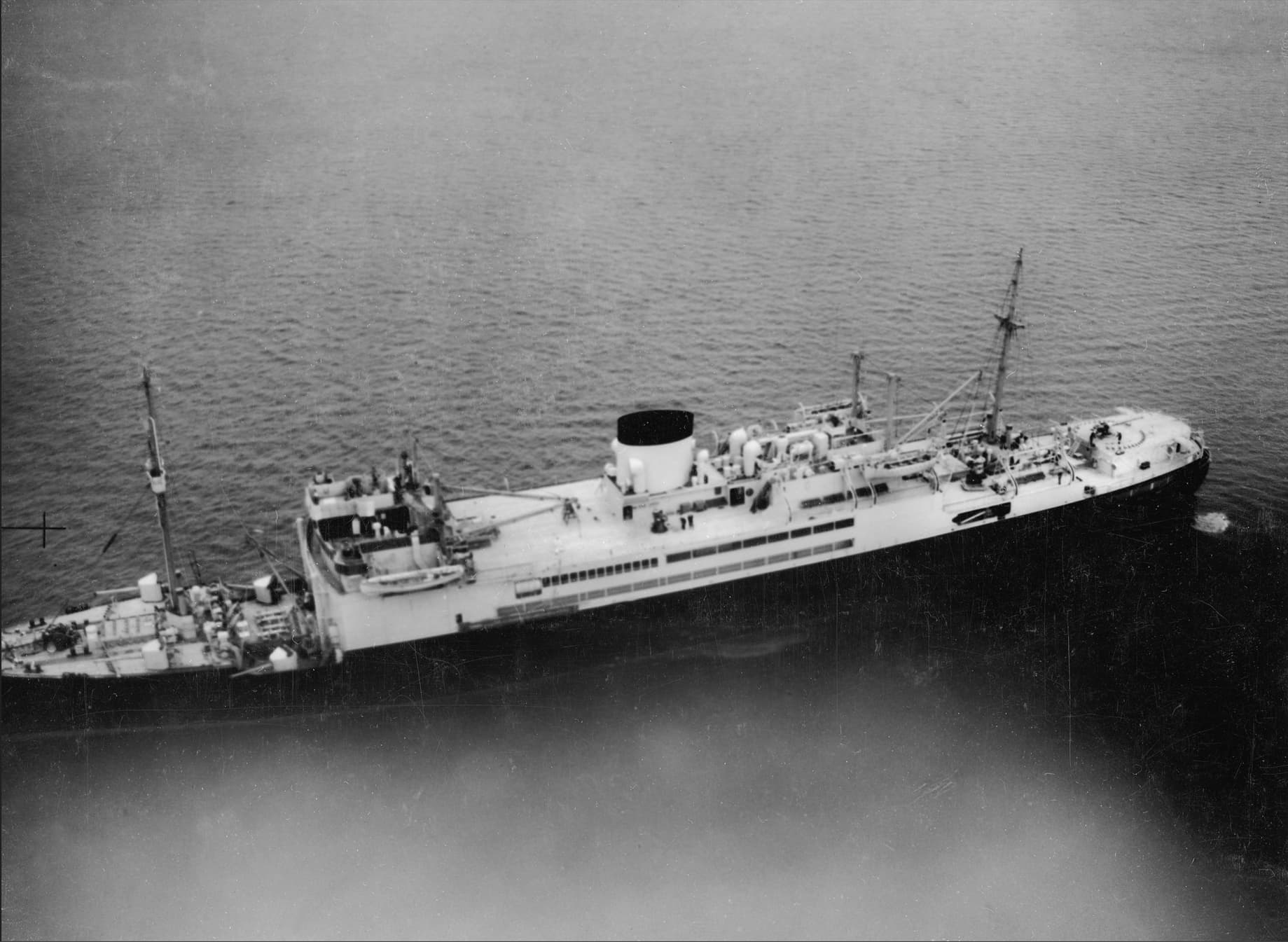
Description:
HMAS Manoora was one of two Armed Merchant Cruisers used by the Royal Australian Navy (RAN) during the Second World War, although she was originally built as a civilian vessel for the Adelaide Steamship Company as a passenger liner, operating the Cairns to Fremantle route.
Her design would effectivly be a larger and faster copy of the Adelaide Steamship Company’s TSMV Manunda, which had been completed in 1929. In civilian hands she would operate as the sister of this vessel, however when war broke out the Manunda was converted into a hospital ship rather than AMC due to its smaller and slower design compared to the more modern Manoora.
As a passenger liner, TSMV Manoora could carry 176 First Class passengers, and 136 Second Class passengers, and at the time of her building was the largest ship operated by the Adelaide Steamship Company.
This suggestion is for the HMAS Manoora’s fit as she commissioned as an AMC in 1940.
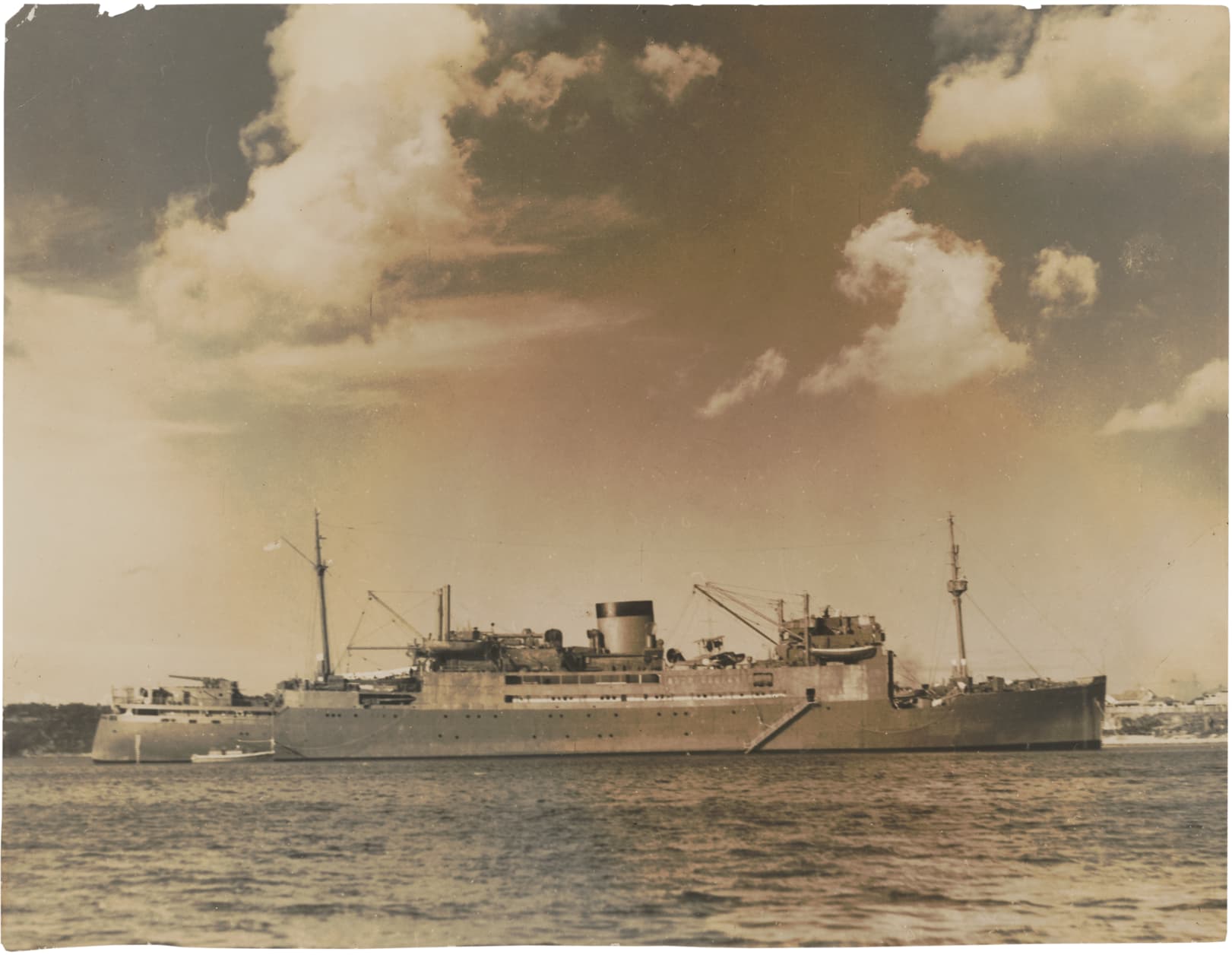
HMAS Manoora in port, note Walrus aircraft forward of funnel, and 6in gun aft. (1942)
History:
Laid down as the TSMV Manoora by the Alexander Stephen and Sons Ltd in Govan, Scotland, in July 1934, she would be launched relatively quickly, entering the water on the 25th of October 1934, fitting out and completing by the 7th of February 1935. She would leave British waters for Australia on the 13th of February, arriving in Brisbane via Fremantle on the 13th of June.
Her first voyage under her owners took place on the 11th of April 1935, from Sydney to Fremantle, with voyagers with passengers taking about a month, sailing from Cairns to Fremantle, stopping at Sydney, Brisbane, and Townsville.
This would continue until the outbreak of the Second World War in September 1939, where the Manoora would be selected for conversion to AMC. However she would only be requisitioned on the 11th of October 1939, and was moved to Sydney for conversion. During conversion, on the 12th of December 1939, she would commission as HMAS Manoora.
The plans of her conversion included placing 2x 6-inch guns on the Fo’c’sle, two in the welldeck forward, and a further two placed on the Promenade deck, one of each of these guns were mounted on each side of the ship, only allowing a single gun to fire on a broadside. A single 6-inch gun was centrally mounted on the docking bridge aft.
Her plans also included fitting a single Supermarine Walrus 1 /Seagull V aircraft abaft the funnel, two quad QF 2pdrs (Pom-Poms), and two single 4-inch guns on the boat deck, as well as a further 4-inch gun on top of the engineer’s house. However, due to material shortages of both the 4-inch guns and quad Pom-Pom mounts, neither were mounted, with AA instead provided by two single 3-inch guns mounted where the Pom-Poms were planned, and two single .303 Vickers K guns on the bridge wings.
As this significantly reduced the forward top weight, while the aft top weight remained the same, the aircraft catapult and recovery crane was moved to the boat deck just fore of the funnel to compensate.
The original plans for her conversion to AMC.
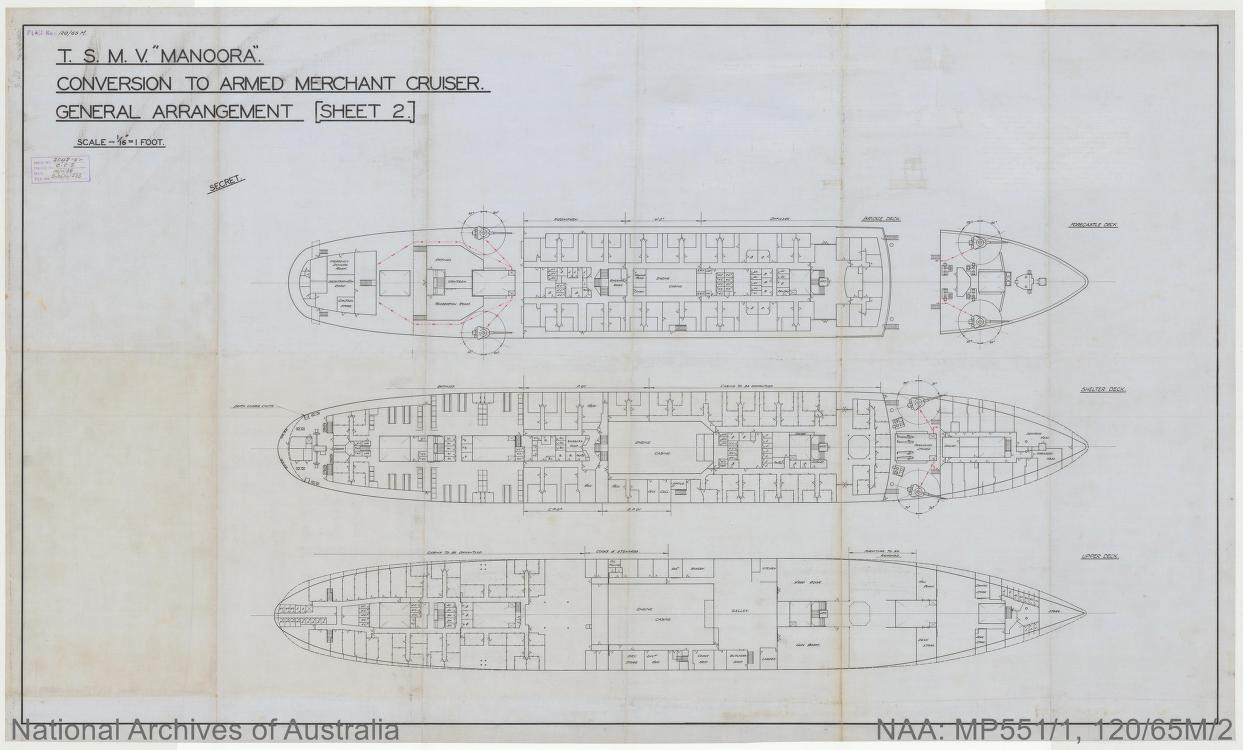
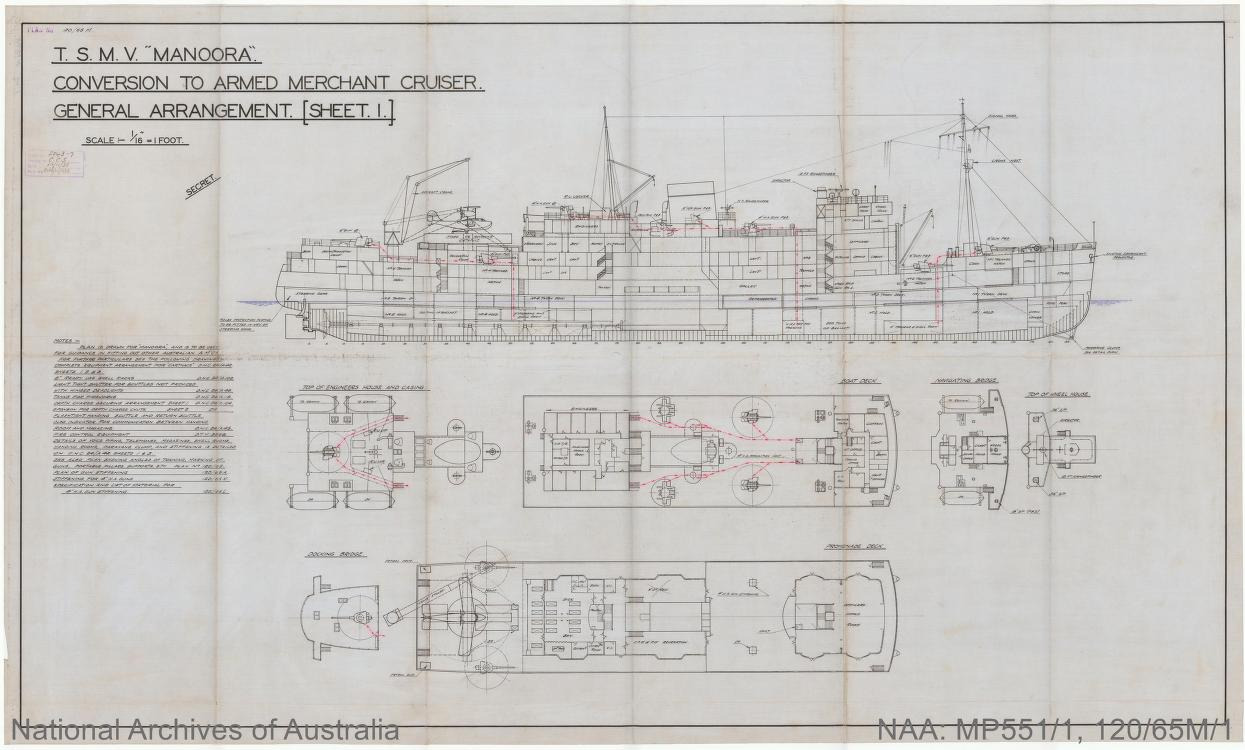
These works would complete on the 5th of February 1940, and sea trials were conducted in Port Phillip Bay, before moving to Queensland. Now in Queensland, she would conduct further exercises around this area and the Coral Sea.
When these exercises completed, she would sail for Macassar, where she would conduct patrols, as to prevent the breakout of axis shipping from ports across the Dutch East Indies. Upon the German invasion of Norway, her job was to now ensure that Norwegian and Dutch shipping fell under Allied control, as part of these operations, she would board the tankers Havbor and Thordis, and would escort them to Thursday Island, where they would be joined by a further two Norwegian vessels. She would then escort these four merchantmen to Brisbane.
From here she would operate in New Guinea and North East Australia, however, as Italy’s intentions were unclear at this time, with the Italians not being a part of the war at this time, the Manoora would be sent to shadow the Italian Liner, MS Romolo, which had departed Brisbane on the 5th of June. This would be called off on the 9th, as it was still unclear if they were to join the war, and the Admiralty did not want to draw the Manoora too far off her station with an indefinite pursuit.
However, at 09:00 on the 11th of June 1940, East Australian Time, war with Italy was declared, and the Manoora was ordered to relocate the Romolo and intercept her. By this time the Romolo was 160miles away and sailing north east. HMAS Manoora would sight the Italian vessel on the morning of the 12th, 220miles south of Nauru.
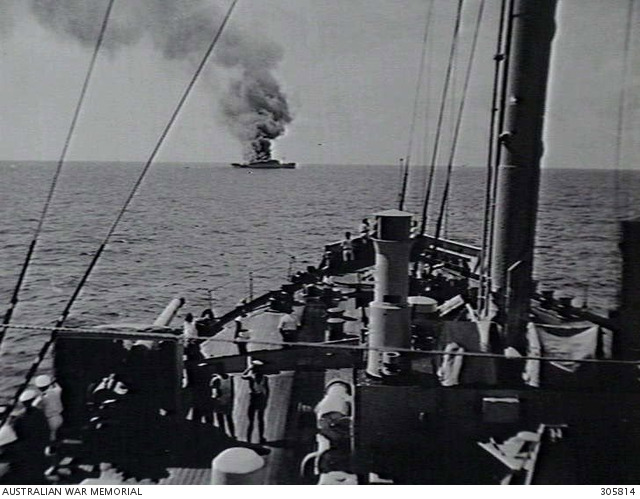
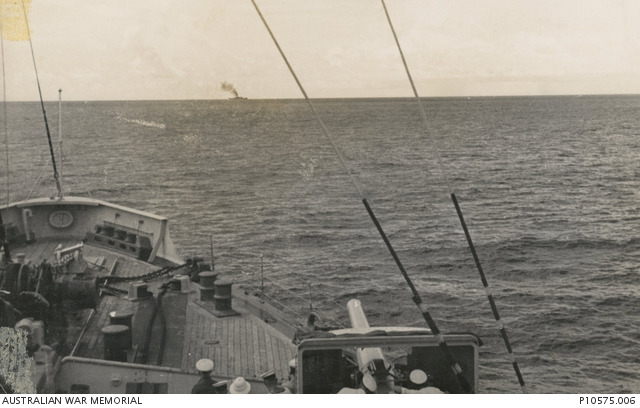
Upon sighting, the Manoora sent the following signal to the Romolo, “Stop Instantly or I will fire. Do not attempt to sink ship. Do not abandon ship because I will not pick you up.” This signal was acknowledged with the Romolo replying “OK”, however remained on her speed and course. At this time, she was out of range of the Manoora’s guns, and furthermore at 12:30, she was hidden by a rain squall. 15 mins later, she was sighted, however she had stopped, was listing to port, and burning with boats lowered.
Manoora refused to send men aboard due to the danger posed to his men, however she did pick up all the Romolo’s passengers and crew, picking up 129 people. After picking up survivors, she would fire upon the wreck, firing seven shells from the forward guns as to speed up her sinking. The Romolo sank at 19:15, 2 degrees 20 minutes south, 163 degrees 45 minutes east.
As she returned to Australia, she would be sent to assist the American merchant vessel, Admiral Wiley, who had run aground on Kitava Island. Manoora would arrive here on the 15th of June, however there was not much that could be done for the situation apart from taking off her crew. In addition to the Italian Prisoners, she would carry the 31 Americans taken off the wrecked ship. She would arrive in Townsville on the 17th of June.
Upon return she would have a small refit, completing in August 1940, she would conduct patrols from Townsville, before moving to Brisbane in October for further patrols. She would move to patrol New Guinea and Nauru, as there had been reports of German Raiders. This work would be interrupted by a refit February 1941, but after completion would return to this area in November 1941.
After another refit in November, she would sail for Singapore, arriving there on the 6th of December. She would then patrol and escort convoys between India, Ceylon, and Burma until March 1942, when she would sail back to Australia as part of convoy SU.1. She would remain in port until the 17 of April, when she would escort a pair of convoy to and from Noumea, with the HMAS Bungaree.
HMAS Manoora after her conversion to LSI, note landing craft along her sides. (1943)
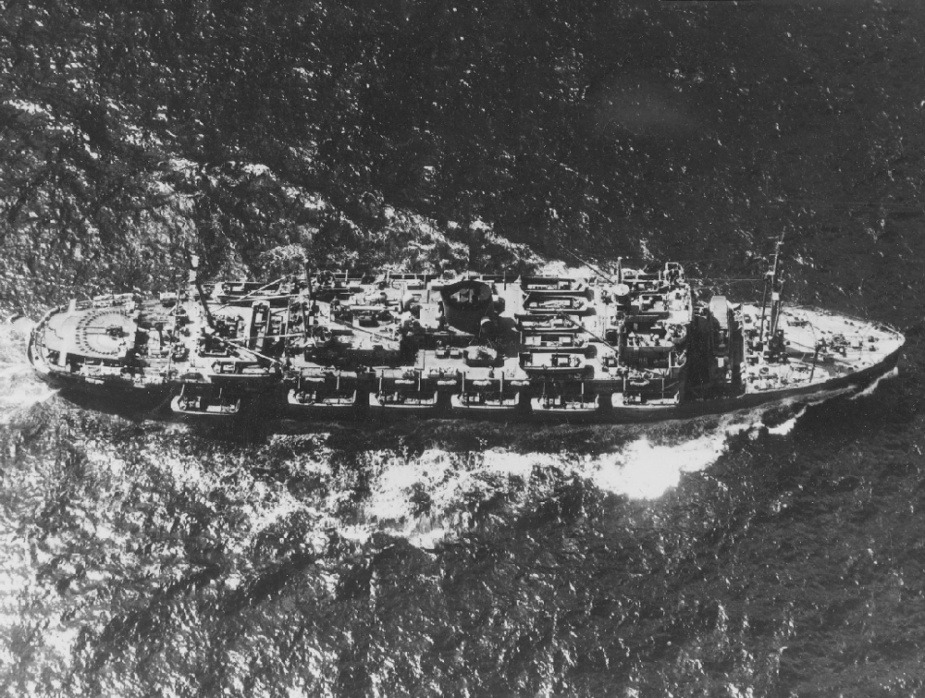
After further escort duties from the 4th of July to the 29th of September, HMAS Manoora would be placed in refit, as to become the RAN’s first Landing Ship Infantry (LSI). These works included removing most of the AMC guns, replacing them with a single 12pdr on the fo’c’sle in a guntub, six single 40mm Bofors guns, and eight single 20mm Oerlikons. She did however keep the single 6-inch gun aft, and the two 3-inch guns on the boatdeck.
The aircraft catapult and recovery cranes were also removed, and fittings for landing craft were fitted. This allowed her to carry 17 Higgins Boats, and two Landing Craft Mechanized (LCM). She could carry 850 soldiers at this time.
She would recommission from these works on the 2nd of February 1943, with her pennant changing from F48 to C77. HMAS Manoora would be sent to Port Stephens, for amphibious training with US units. This would last six months. After this, she would be sent for a small refit in January 1944, lasting until February. Upon completion her last 6-inch gun was swapped for two 4-inch types, and berthing for troops had increased to 1,250.
The HMAS Manoora would sail for operations in New Guinea in company with another LSI, the HMAS Kanimbla. Her first landing would take place at Tanahmerah Bay in April. On the 17th of May she would land the US 41st Division on Wakde Island. By September she was preparing for landings at Morotai landings, embarking 1,272 men at Maffin bay on the 10th of September. The two Australian LSIs would sail for Humboldt Bay on the 16th, arriving on the 18th. Here they would be joined by the third Australian LSI, HMAS Westralia.
Together they overhauled their equipment and prepared for landings at Leyte, taking part in a practice landing at Tanahmerah Bay on the 10th of October, departing for Leyte on the 13th, as part of the Panaon Attack Group, leaving the main group for Panaon at 02:00 on the 20th of October, arriving there at 08:45. Cargo discharge was completed by 16:00, and the vessels would leave for Humboldt bay on the 25th of October.
These three ships were then tasked with transporting troops from Humboldt to Leyte, being designated as part of ‘Transport Group A’ on the 30th of November, this group included 15 other vessels. This was done in preparation for the Lingayen landings. Practice landings were done in company with Transport group B, at Lae, before finally sailing to assault Luzon Island in the Lingayen Gulf.
In company with the HMAS Westralia, she would embark Australian troops for the first time for the landings at Tarakan, leaving Morotai on the 27th of April 1945, each vessel towing an LCT, they would arrive on the 30th of April, with the landing occurring on the 1st of may. During operations in the final months of the war, she and the other LSIs would take part in operations off Brunei, landing troops on Green Beach, they would also take part in the Balikpapan Landings, arriving there on the 1st of July 1945.
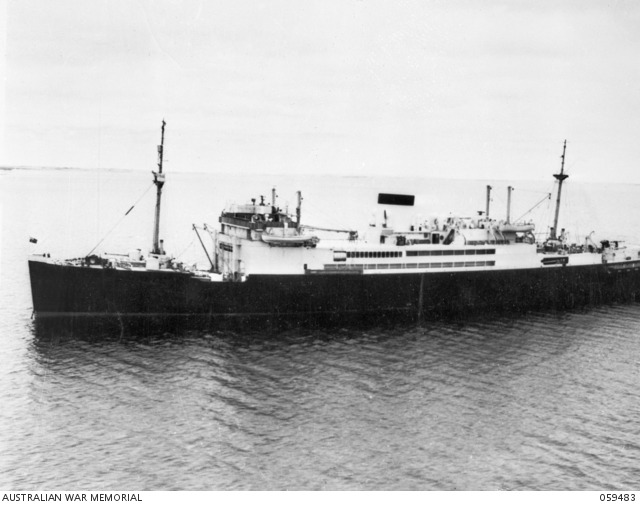
Post war she would repatriate troops from New Guinea, New Britain, Morotai, and Borneo. As combat operations were not expected, all guns were removed at this time, and she was repainted a flat grey. She would pay off this duty on the 6th of December 1947, being returned to the Adelaide Steam Ship Company on the 31st of August 1949.
She would continue her old route until August 1969, when she was sold to an Indonesian firm, who renamed her to Albulombo. She would be sold for scrap under this name in October 1972, however she broke her tow and sank en route to Taiwan.
| General Characteristics: | |||||
|---|---|---|---|---|---|
| Name: HMAS Manoora | |||||
| Country: Australia | |||||
| Type: Armed Merchant Cruiser | |||||
| Class name: Manoora | |||||
| Year of commission: 1939 | |||||
| Refit: 1941 | |||||
| ----------------------------------------------------------------------------------------------------------------------------------------- | |||||
| Dimensions: | |||||
| Length: 463.5 ft (141.3 m) | |||||
| Beam: 66.2 ft (20.2 m) | |||||
| Draught: 22 ft 6.5 in (6.871 m) | |||||
| Displacement: 10,856t | |||||
| ----------------------------------------------------------------------------------------------------------------------------------------- | |||||
| Propulsion: | |||||
| Powerplant: 2x JG Kincaid Diesels generating 8,200bhp (6,100kW) | |||||
| Speed: 15.7kt | |||||
| Endurance: unknown | |||||
| ----------------------------------------------------------------------------------------------------------------------------------------- | |||||
| Armament & sensors: | |||||
| Compliment: 345 | |||||
| Primary armament: 7x1 BL 6-inch Mk.VII | |||||
| Secondary armament: 2x1 QF 3-inch 20 cwt (HA) | |||||
| Tertiary armament: 2x1 .303 Lewis | |||||
| Radar: -nil | |||||
| Sonar: -nil | |||||
| ----------------------------------------------------------------------------------------------------------------------------------------- | |||||
| Aircraft carried and specs: | |||||
| Type: Supermarine Walrus Mk.1 | |||||
| Number: 1 | |||||
| Engine: 1x Bristol Pegasus VI @ 750hp (560kW) | |||||
| Weight (empty): 4,900 lb (2,223 kg) | |||||
| Max Speed: 135mph at 4,750 ft (217 kph @ 1,448m) | |||||
| Climb Rate: 1,050 ft/min (5.3 m/s) | |||||
| Armament: 2x .303 Vickers K, 6x100lb bombs or 2x 250lb bombs or DC |
HMAS Manoora post WWII, now acting as a troop transport, (1947)

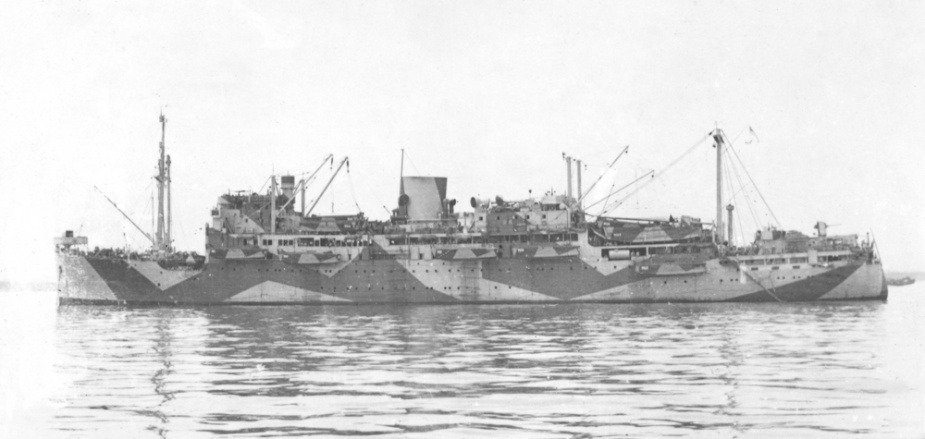
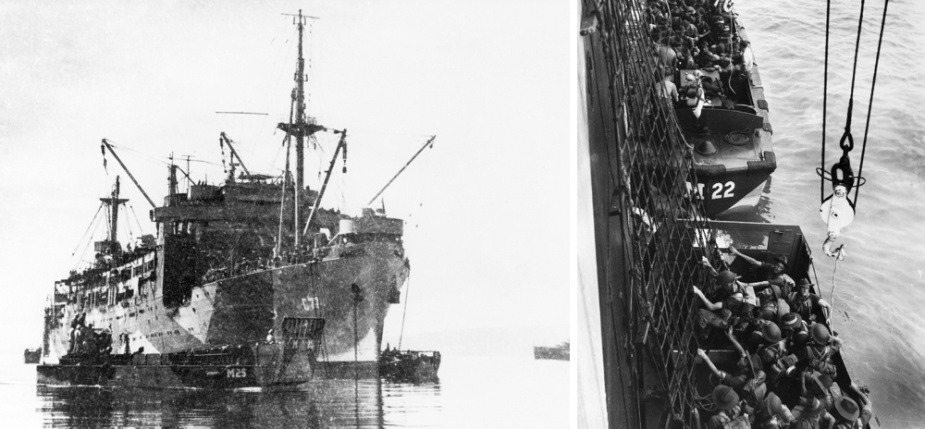
Extra Photos:

Sources:
Gillett, R. (1983). Australian and New Zealand Warships 1914-1945 (p.142-143)
NAA, MP551/1, 120/65M/1, General Arrangement of MV.Manoora conversion to Armed Merchant Cruiser
Hermon, G. (1957) Royal Australian Navy, 1939-1942 (pp.105-107, 115, 119-126)
P.Plowman, (2003), Across the sea to war, Australian and New Zealand Troop convoys.
NAA, B6121, 211E, “Romolo” - Sinking by HMAS “Manoora”
HMAS Manoora (F48) - Wikipedia
https://seapower.navy.gov.au/history/units/hmas-manoora-i
Allied Warships of WWII - Armed Merchant Cruiser HMAS Manoora - uboat.net
T.S.M.V. Manoora 1935 to 1962 and she had three names thereafter, & the T.S.M.V. Nanunda 1929
HMAS Manoora I Archives - Naval Historical Society of Australia
https://www.worldnavalships.com/forums/thread.php?threadid=2912
https://archive.org/details/f48ga1938/page/n1/mode/2up