Pretty much, yes.
Maybe we’re misunderstanding each other, but I’m assuming the numbers in the source are what you should be able to see and aim at in the game in protection analys.
In the game, the T-80U’s UFP, for example, has a 630-640mm resistance. It should be 620-630mm (the center plate also needs to be adjusted).
Do you disagree with this, or are we simply misunderstanding each other?
@Jεcka , this applies to you too.
We’re misunderstanding each other.
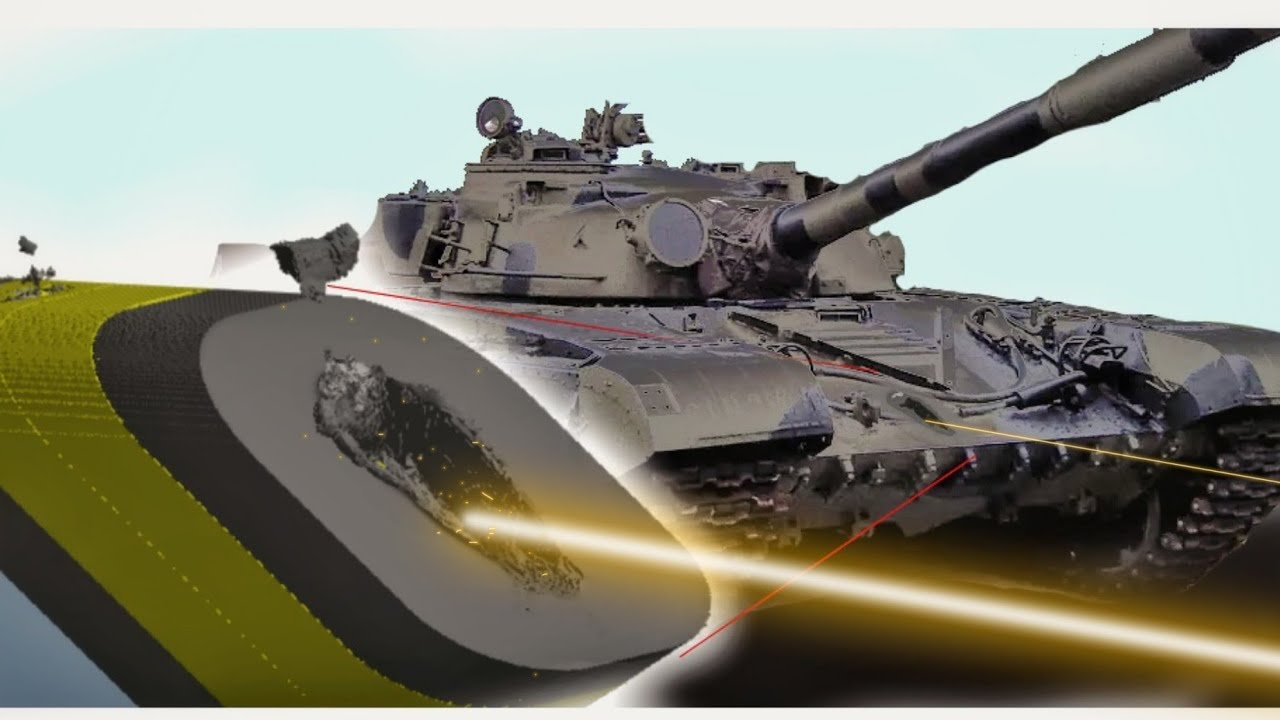
What me and @Nowel are talking about is the conversion of T-series protection into an equivalent “0 degree” amount (which is very easy) in order to actually make them penetrable to which they should be, for example, by all accounts DM33 should be more than capable of defeating T-72Bs upper plate from over 1km based on simulations (some of them simulate distances GREATER than 2km’s and the round cracks the backplate and casues it to splinter into the crew compartment).
In the game, however? DM33 fails to perforate even at POINT BLANK distance.
This is due to Gaijin ONLY using the LoS 0 perforation of APFSDS - so fx, DM33 instead of perforating 604mm at 68 degrees, allowing it to defeat non-K5 spots on all T-series, it has to aim for LFP or driver hatch because that stat is not used.
Then there’s DM53, which by brute force alone should basically ignore any non-Relikt tanks, as it has 768mm of perforation at 68 degrees LoS, thus in practice it should completely nuke all K-5 T-series from over 2km’s anywhere it hits, can’t reliably penetrate them even under 500 meter distance.
This is a simulation of DM53 (this one actually performs worse than the actual one, due to it not being a monoblock in this simulation, the actual one would fare better), it can defeat T-90A’s upper plate from 3km’s, in WT you will be hard-pressed to achieve this result from 100 meters…

That’s why the conversion of T-series protection to LoS 0 is so important, as it stands, their protection is on average ~25% higher than it realistically could ever be against what they face…
Gaijin already uses “LoS 0” protection for NATO tanks, the only ones that don’t actually use this metric are T-series, and, maybe, Chinese tanks.
Another examples:
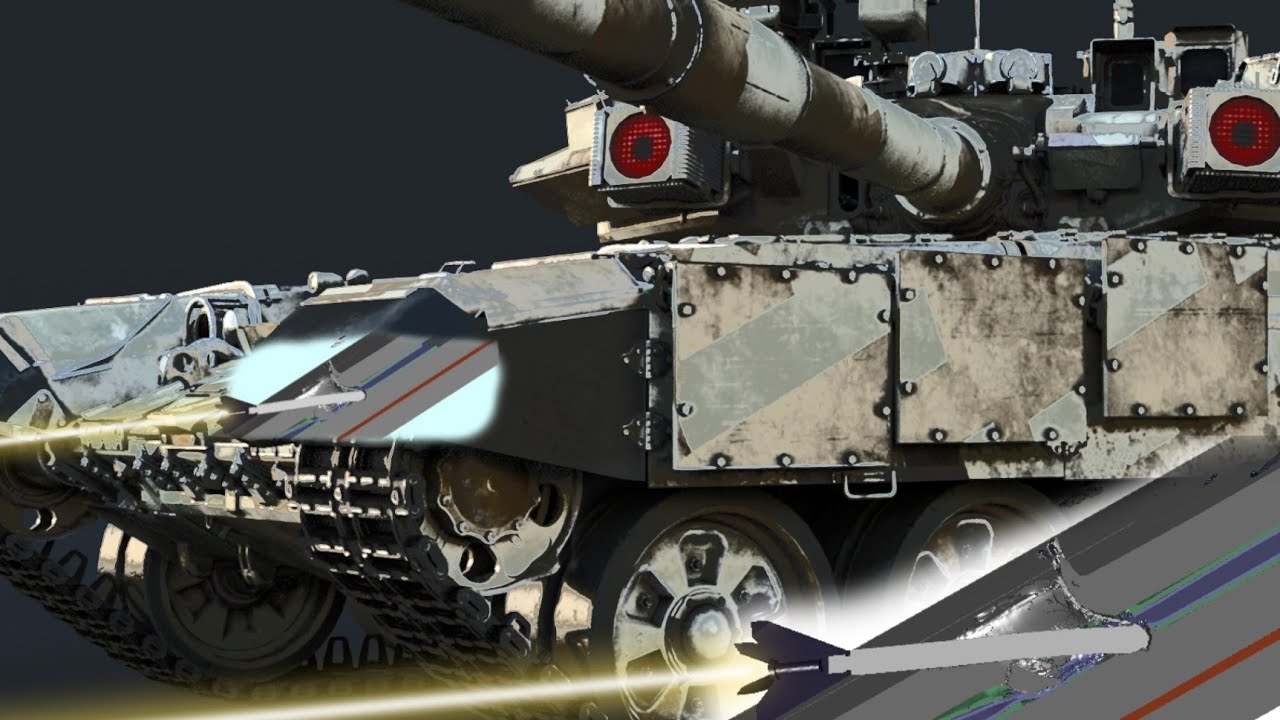
DM33 vs T-90A without K-5 (cannot be replicated in the game)
Here where the simulated distance was 2.1km’s based on velocity loss of DM33 (any less and it would have perforated, as indeed, the performance of DM33 sub-2km’s is enough to perforate, i.e 558mm at LoS 68 at 2km’s…)
(Granted, the person making the simulation used wrong dimensions for DM33, which means they simulated the engagement with lower perforation than the DM33 actually has at 2.1km, this engagement, based on perforation achieved… would’ve been closer to 3km’s…).
I hope this explains the core issue we’re dealing with here.
3 Likes
I mean the famous image of the t80bvm claimed to be destroyed from an apfsds was most likely shot by something like the 3bm42 as there wasnt much equipment able to fire nato rounds at the time, which while it missed the era it still hit the hole composite array.
3 Likes
It shouldnt, its a relatively simple mistake to make, but the 620/630 provided by the source is the los 68 value. Convert that into los 0(what the game displays), and you get about 520mm. Which given the time frame of the vehicle isnt bad armour, it also isnt ridiculously strong either.
1 Like
So, I am gonna give a general heads-up regarding these simulations that we often times find online on YouTube and using them as an actual argument to come up with changes for the game. Now, first of all, I am of the opinion, that Gaijin doesn’t really care about realistic armor values when it comes to modern vehicles, of course, the general direction they use to come up with the current values is usually based on tests conducted on armor, like the Swedish trials, but at the end of the day, it’s their game, they are the arbiters of truth, they have the upper hand and can simply rule out a source no matter how good it is.
For the simulations. Conducting realistic simulations using Explicit Dynamics or LS-DYNA is not a simple task. It’s a lot easier to conduct simulations on Static models because the material constants used for those cases are usually intrinsic (e.g. Young Modulus, Poisson ratio, Yield Stress, Tensile Strength, etc.).
But when you have to simulate high-rate, large-deformation events, it gets a lot trickier because the response of the material will be dependent on factors that you cannot guess reliably, like strain-rate sensitivity, plastic flow behavior at large strains, failure/erosion criteria, thermal softening, etc. Such behaviors are governed by constitutive laws that need input parameters that can usually be acquired through actual mechanical tests like quasi-static tension/compression, high strain-rate tests, or failure tests under different stress states. Without this data, you’re essentially choosing numbers that look the part for your case, which is not science, that’s storytelling.
So, when someone shows up and posts simulations like the ones you’ve linked to, it’s very difficult and actually nearly impossible to tell if they represent reality, as none of them are clear about what parameters or models they are using in their sims, but if I were to guess, I don’t think any of these channels have either the expertise, the electronic hardware, nor the lab resources to come up with realistic explicit dynamics simulations, especially when you have composite arrays being penetrated. They could certainly try to prove me wrong, but I am yet to see any of them put papers out where they scientifically write and justify the models and parameters chosen for each case and justify their results.
I don’t blame you if you are insufficiently informed about this, as it is a very specific area of simulations, in fact, in my opinion, one of the most complicated areas aside from CFD, but it is very easy to be fooled by a random guy posting a simulation and making claims without any real justification.
To clarify, I am not saying the DM53 isn’t capable of piercing through K5 + T72 Composite, I just don’t think there’s enough evidence to suggest those simulations are accurate to reality.
1 Like
The biggest issue at least for me in this respect is that Gaijin is known to use a (arbitrarily tuned, heuristic) Formula to approximate the performance of Anti-Tank Shells (both CE and KE), but then turns around and “uses” Accurate values for the performance of armor.
This disparity in treatment of relevant elements is a significant part of as to why things are as skewed as they are.
1 Like
I am aware those simulations don’t always tell the whole truth, however, I am using them just as an example.
Of course… I could just drop DM33s and DM53s actual firing trials against a T-80U that West Germany acquired via the BND and end this topic once and for all, but obviously I am not going to do that, just as I haven’t posted DM63s technical drawing which would make Gaijin poo their pants, as they’d have to adjust its performance by at least 10% up, and get myself officially and permanently booted from this forum, which I am not really ready for yet.
Generally those simulations, from what I have gathered, tend to actually underestimate how good APFSDS actually are against armors.
2 Likes
If you’re saying that the T-72B/80BV UFP without the K-5 should have significantly less protection than it does (i.e., less than ~460-470 normalized protection for the DM33 to penetrate it), then this simply contradicts the proven resistance of the T-72A or T-64A UFP, which we discussed above.
The T-72A has a normalized protection of 370mm in the game, which, as discussed above, is correct based on the M111 fire data.
The 370mm of normalized protection is provided by the 76-50 package, which is three-layered.
However, in your opinion, five-layer armor (which is much more effective than three-layer armor with the same steel thickness) made of 50-50-50mm high-hardness steel (T-80BV) provides only 450mm?
This simply means that either the T-72A and T-64A should have significantly lower protection, which we know is not true, or the data for the T-80U and others has already been normalized.
All Soviet documents already provide normalized protection.
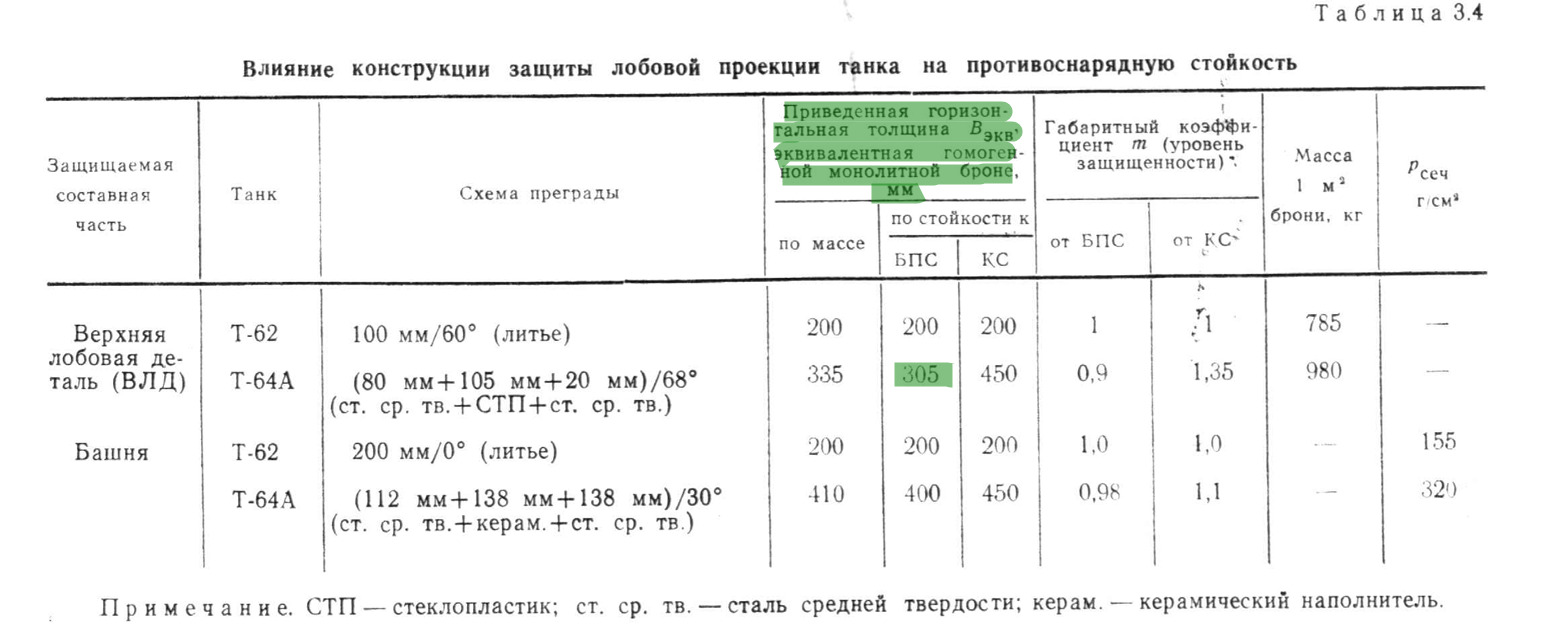
So, either you deny the data in the @Fireball_2020 report, and in general all the data on the protection of the T-series, or you are wrong and the data in that source on the T-80U and T-80BV is normalized.
The top line literally says “normalized horizontal thickness of steel equivalent.”
That is, the T-64A, with an extremely weak armor package, for which even the thicknesses of the front and rear plates weren’t optimized (80-20 is much worse than 60-40, for example), provided 305mm of protection (and we’re definitely talking about normalized protection here), while the T-80BV, with a much better five-layer 50-50-50 HHA package, only provided 450mm? Even without taking into account the hardness of the steel and the significantly more optimized five-layer armor package, a simple 50% increase in steel thickness already provides 457mm of protection (305 x 1.33).

3 Likes
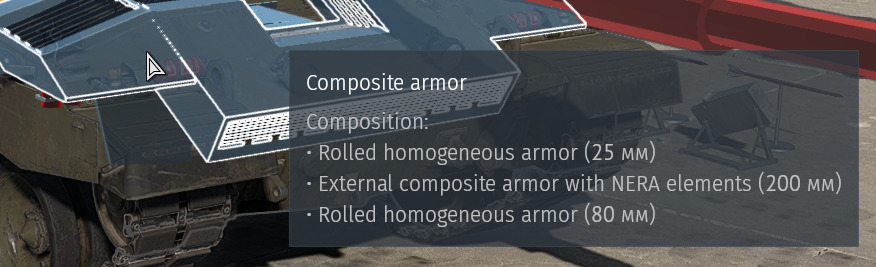
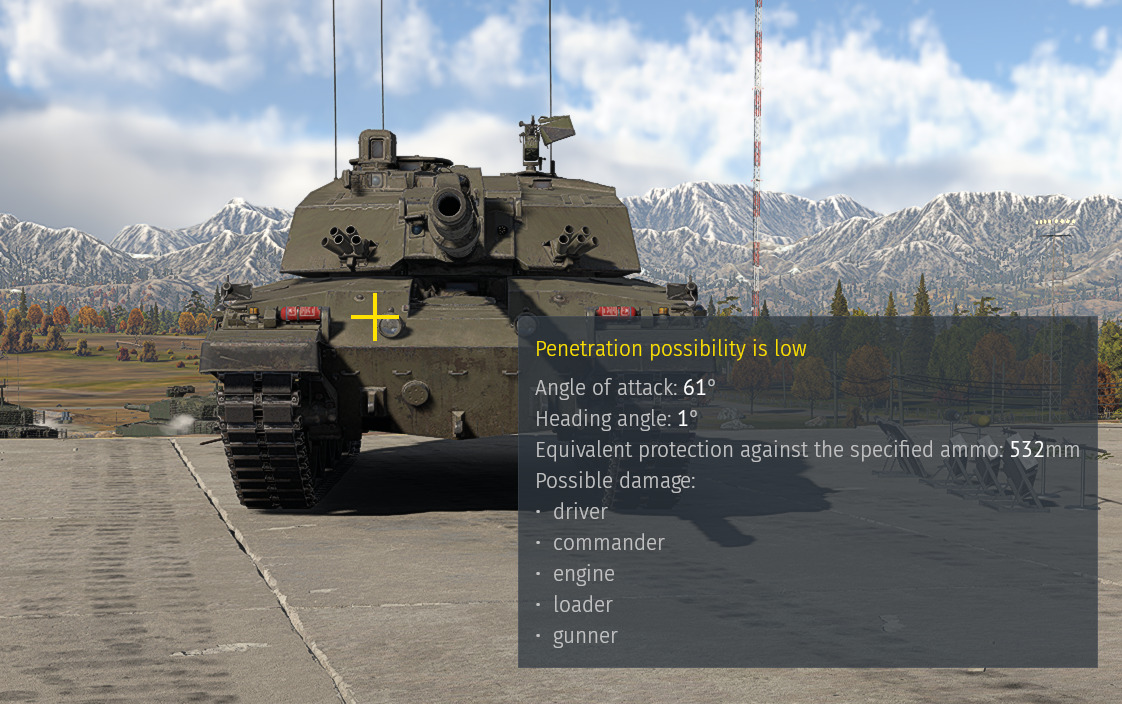
Except it seems that it does also overperforms, in game without the apliqé it only can penetrate it under 200m.
This is from tankograd,

I recommend reading my conversation with @Fireball_2020 , where I explained the difference between acceptable and unacceptable penetrations, and he ultimately admitted I was right.
You’re trying to draw conclusions, but you’re making mistakes at every turn.
Literally, the T-64A, with its non-optimized 80-20 armor package, provided 305mm of steel equivalent at 0 degrees.
The T-72A had a more optimized 60-50 package (which is also slightly thicker), resulting in a resistance of 330mm.
The thing is are those test performed with long rod apfsds?
This isn’t specified, but the book is from 2006, so it could be anything.
In any case, even if this data is from the 3BM22, for example, the 330mm of protection (as in the game) for the T-72A is fully supported by this data. (If 305mm were for the long APFSDS, the T-72A should have higher protection than 330mm, since the additional 10mm of steel and the optimized thickness of the front and rear plates provide a significant increase in resistance.)
Except it’s not supported by this data… against 3bm22 it is nowhere even close to the 330mm of protection, it is literally 410mm, so it does really matters which round was used as short rod apfsds have worse angle performance
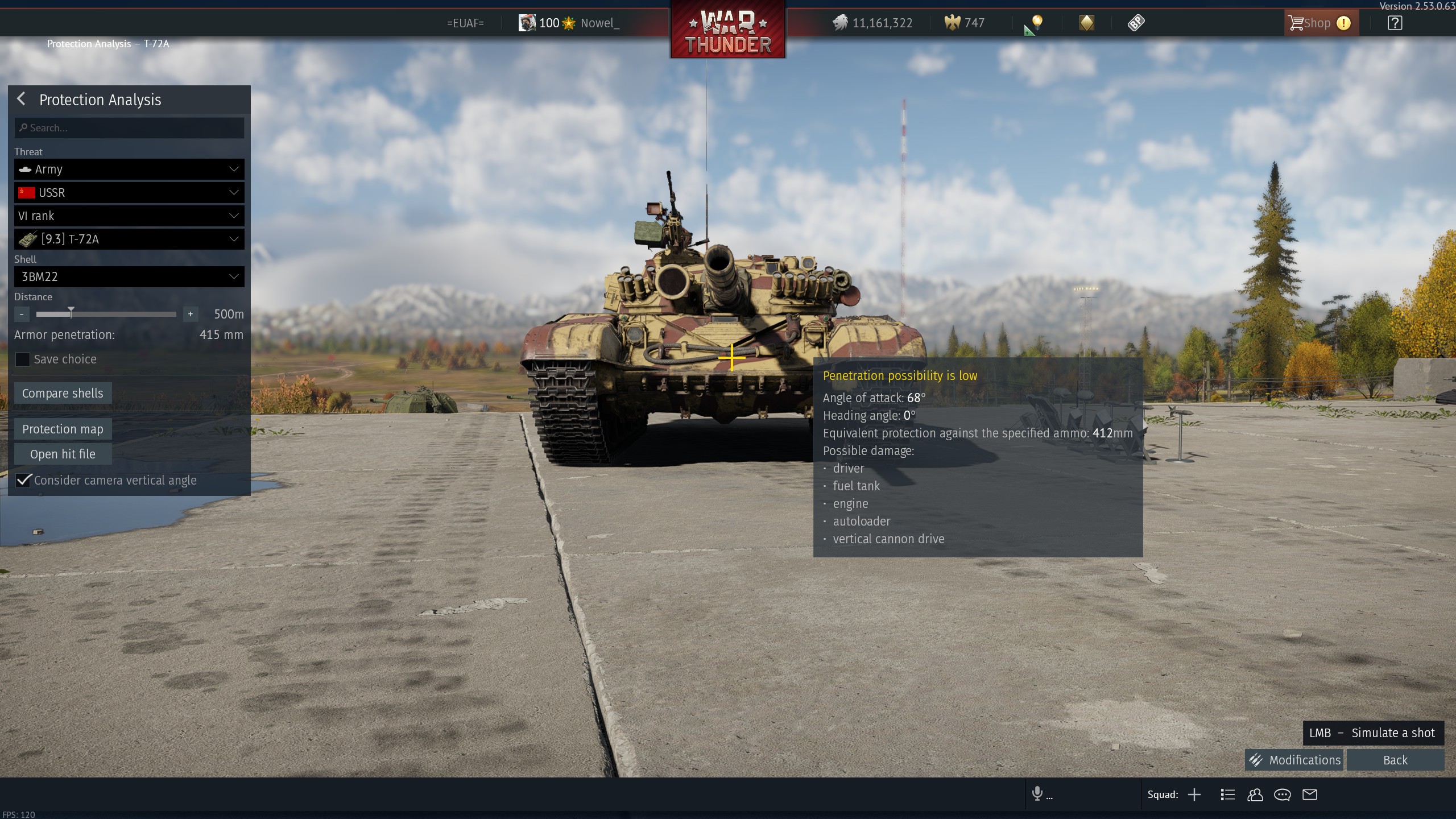
This is the base hull
So, 330mm for the long APFSDS.
For the short ones, it’s obviously higher, given that the T-64A, with its much worse package, has 305mm for them.
In game it does, irl quite unlikely since it was able to be penetrated by m111 2 km away so it would be closer to 300-310mm
However doesnt mean that the 305 value(which isnt even on the game ) is for long rod apfsds, in fact this 300 value is far closer in game to the protection agaisnt short rod than against long rod.
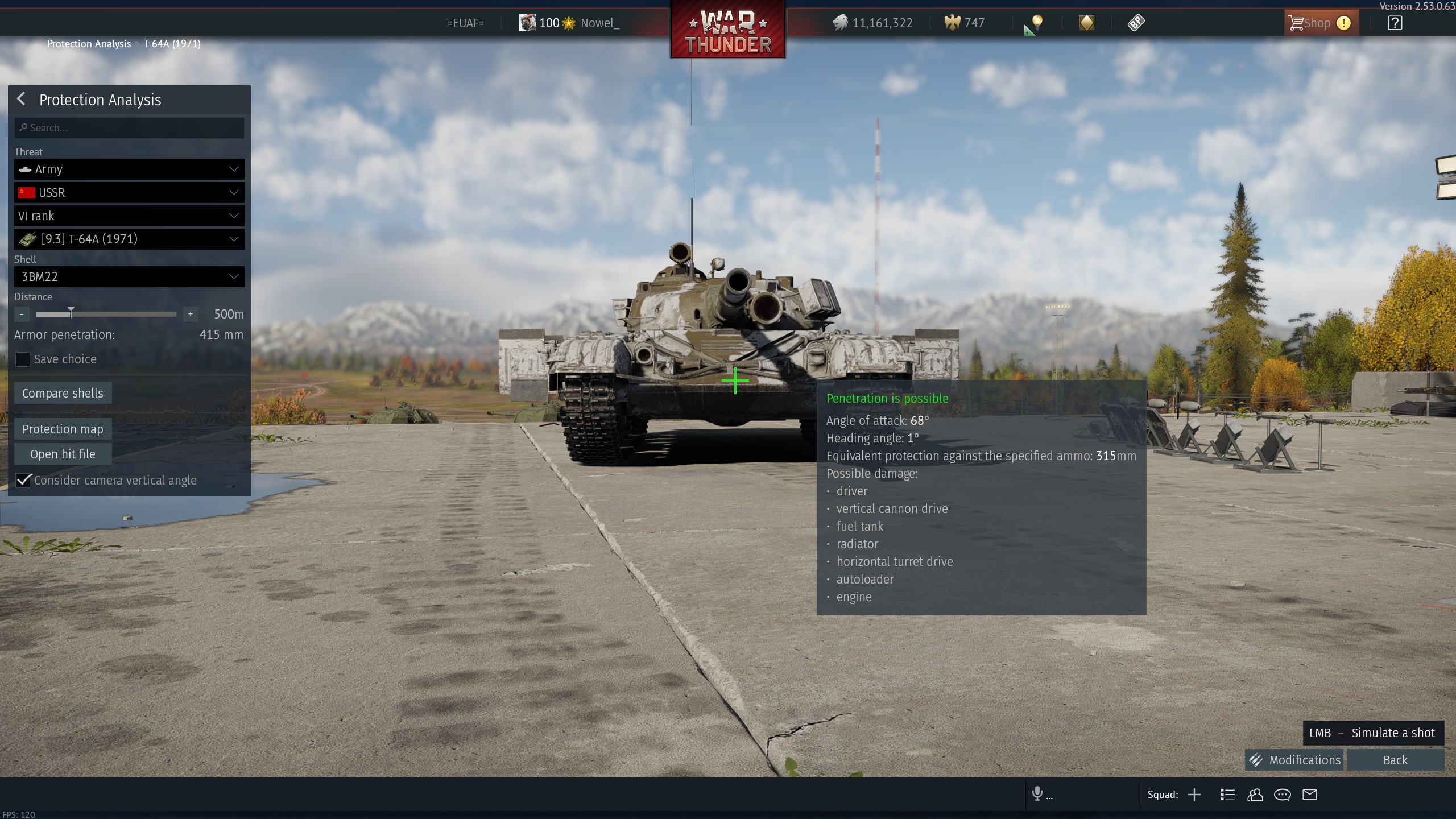
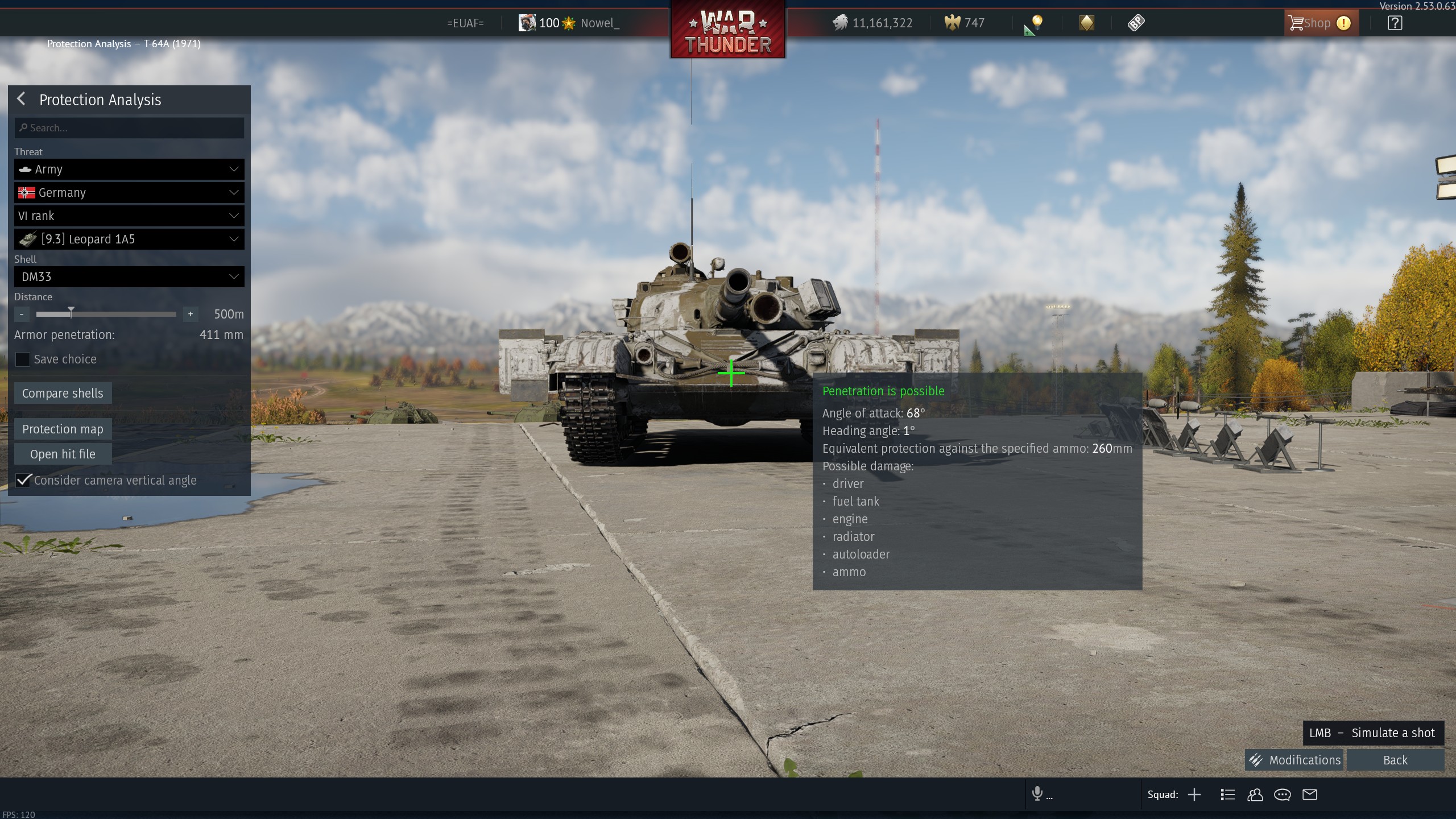
You don’t understand the meaning of “standard” and “non-standard” damage.
Furthermore, this is impossible, given that the T-72A’s durability is significantly higher than that of the T-64A, and we know the data for the T-64A.
Furthermore, all of this has already been discussed in detail above.
We know that the M111 inflicted adequate damage on a T-72A with an additional 16mm RHA plate from 300 meters.
This contradicts the possibility of completely penetrating the APFSDS core from 2 kilometers without the 16mm RHA plate.
Learn the concepts of acceptable and unacceptable damage. I’m tired of explaining it twice, to be honest.
And it does, since these values that youre providing could very much be against short rod, and quite likely they are as the t64 was vulnerable against british apds.
In game it provides 260 vs long rod and 310 vs short rod which does coincides with your source
How does this contradicts it ? Youre the one contradicting yourself, in game the m111 can only penetrate the t72A at point range without the 16mm plate, while youre admiting that they "inflicted adequate damage " on the t72A with the aditional 16mm Plate, so with the plate would be round 330 and without around 300-310.