- Yes
- No
Backround
Spoiler
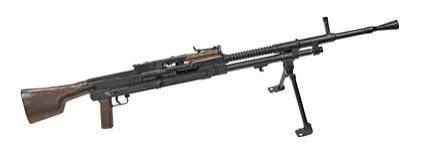
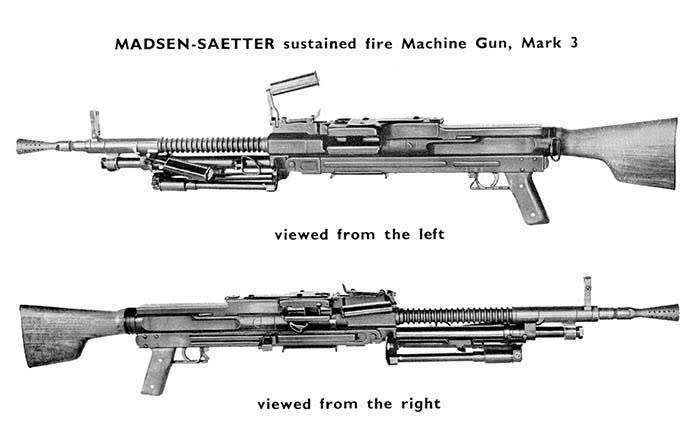
The Madsen Saetter was designed as a General Purpose Machine Gun (GPMG) in the early 1950s by weapons designer Eric Larsen-Saetter. At that time, armies around the world were being re-equipped with this new concept utilising the GPMG. This machine gun enabled advancing troops to deliver high-volume, accurate fire, and it could also serve a dual role as a heavy machine gun—mounted on a tripod for perimeter defence and mounted on tanks and troop transport vehicles. The high rate of fire was made possible by rapid barrel changes, allowing the operator to replace the barrel before it overheated. This allows one barrel to cool whilst firing with the other.
The German army during the Second World War pioneered this concept. Madsen itself is no stranger to the field of firearms manufacturing. Based in Denmark, they produced one of the most prolific machine guns of the first half of the 20th century: the magazine-fed Madsen light machine gun. The company subsequently moved on to designing the Madsen Saetter (GPMG), a far more recent and innovative design. This new weapon system incorporates many concepts from other successful firearms produced previously. Madsen saw no real reason to create an entirely new system. The Madsen Saetter (GPMG) utilised the locking system from the Russian RPD light machine gun and the German Gewehr 43 automatic rifle, consisting of a lever mounted in a recess in the receiver to lock the bolt. The weapon also utilised the highly reliable belt-feed mechanism from the German MG42 machine gun.
This well-engineered system, typical of Madsen, was designed to be manufactured in many less developed countries. As it is gas-operated with a piston-operated operating rod (op-rod) system, this machine gun features a three-position gas regulator that enables it to fire under adverse conditions. It also allows the rate of fire to be adjusted as required. To reduce production costs, several parts of the weapon are stamped from sheet steel.
In the 1950s, an early version of this weapon, the Mark I, was tested in the UK by the British Army with a view to possible adoption. The more expensive but highly reliable FN MAG subsequently succeeded in beating all other competitors, including Madsen. After that, the majority of the international machine gun market was dominated by the Belgian FN MAG or the West German MG42/59. Madsen was subsequently forced to settle for selling its weapons to a few small countries in South America. Madsen’s machine gun was subsequently only adopted and produced under licence in Indonesia. Research into the system used by Madsen Saetter makes it quite clear that the main reason why this weapon system could not compete effectively on the world market was that it had not yet been fully developed to its third model, or Mark III version. Unfortunately, when the British eliminated the Mark I version from the competition, they deemed it unreliable. This undermined the machine gun’s marketability worldwide. Consequently, Madsen’s company had to make the system more reliable. Madsen subsequently initiated the transition from the Mark I to the Mark III (the Mark II version was, in fact, identical to the Mark I). In the Mark III series, the enlarged barrel was shortened by four inches (101.6 mm), but made heavier to dissipate heat more efficiently. The barrel locking mechanism was reinforced. The front sight was also reinforced and designed to fold away when not in use. These changes were made to reduce the likelihood of damage.
The bipod was subsequently reinforced and made lighter by changing the material from steel to aluminium. A sling swivel was also added, which the Mark I and II versions lacked. The top cover was then redesigned to allow it to be closed whether the bolt was in the forward or cocked position. It should be noted that the Mark I and II versions only allowed the top cover to be closed when the bolt was in the cocked position. The Mark III version is fitted with a magazine pouch mount beneath the centre of the weapon, allowing soldiers to use a neat and well-designed 50-round magazine pouch. This enables soldiers to move without the risk of getting snagged on bushes, trees, or the magazine falling out in the sand. The ammunition belt holder also keeps the belt clean and out of the way, whilst the cocking handle is no longer obstructed. The trigger guard has been substantially improved on the Mark III version. This may seem insignificant, but all Madsen Saetter machine guns use the trigger guard as a rear lock that engages with the rotating and lifting mechanism on the tripod. This reinforcement of the trigger guard is crucial because a machine gun that is not securely locked onto the tripod will be neither accurate nor reliable. One of the most important aspects in improving the reliability of the Mark III version compared to the Mark I or II is the reinforcement of the bolt, which prevents the non-reciprocating bolt from moving and causing the weapon to jam. Once the barrel has been replaced, the new lock secures the bolt in the forward position more securely. All of the above improvements to the reliability of the Madsen Saetter system would have been of great assistance in its use; unfortunately, however, they all came too late.
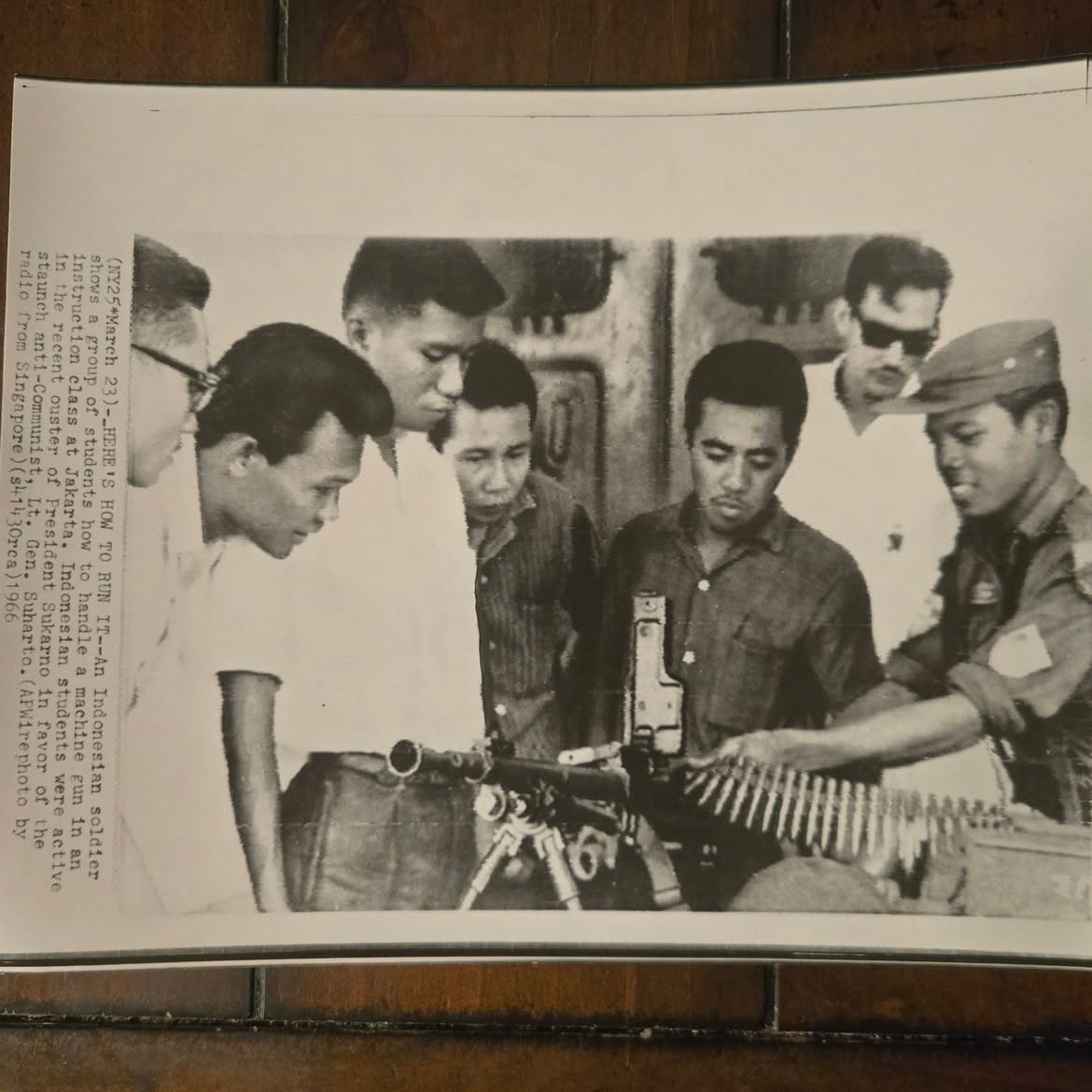
The Madsen Saetter machine gun was typically manufactured to fire 8mm, .30-06 and 7.62×51mm calibre rounds. However, it appears that, if desired, one could change the calibre by replacing the barrel, feed tray and, in some cases, the ejector. This would significantly improve logistical flexibility. Furthermore, the weapon uses non-disintegrating cartridge belts in the German pattern, although Madsen also produced its own slightly different cartridge belt pattern. Both types of ammunition belt work well in the Madsen Saetter Mark III. The Madsen Saetter’s average rate of fire is 750 rounds per minute, with a maximum effective range of 800 metres. The design of the Madsen Saetter tripod is an engineering marvel; it is lightweight and easy to fold. This tripod provides an extremely stable firing platform, and accuracy is further enhanced by the buffered mount. This means that when firing, the machine gun recoils very gently whilst remaining balanced, thanks to its support system. Madsen were so successful in the manufacture of their weapon mounts that they eventually ceased producing firearms altogether and focused their efforts on manufacturing mounts for various types of weapons worldwide, including those of their long-standing competitors: the Belgian FN MAG and the West German MG42/59. With this new focus on machine gun mount production, the Madsen Company changed its name to Disa System Group of Denmark. Indonesia became the sole purchaser of these automatic weapons, and also acquired a licence to manufacture and produce, in limited quantities, the Madsen Saetter Mark III machine gun—which fires .30-06 Springfield calibre rounds (the same calibre as the American Garand automatic rifle)—for the Indonesian Army at the PT Pindad factory. The Madsen Saetter Mark III 30-06 Long calibre Light Machine Gun (SMR) was subsequently modified by PT Pindad into the 7.62 mm calibre SPM-1, of which 4,550 units were produced. The Salvadoran Army also acquired a number of these machine guns, which were chambered for .30-06 calibre rounds. An unspecified number of El Salvador’s Madsen Saetter machine guns were subsequently modified to fire 7.62×51 mm NATO rounds.
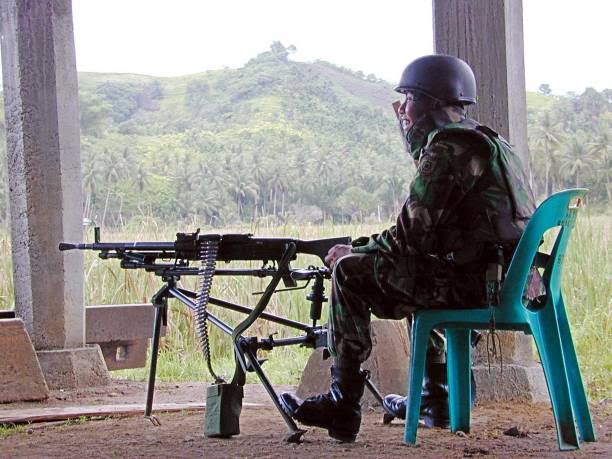
Indonesian Army soldier with Madsen-Saetter GPMG during Aceh Insurgency
Variant for the game
Spoiler
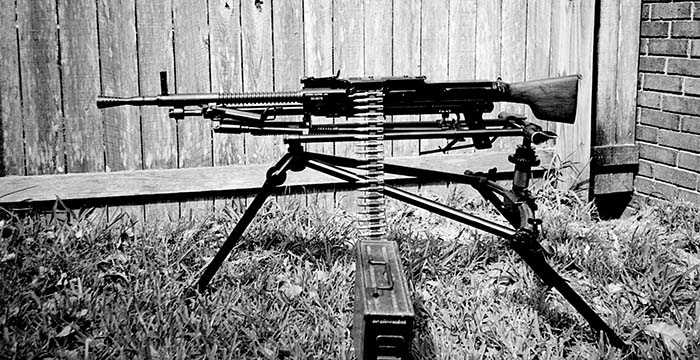
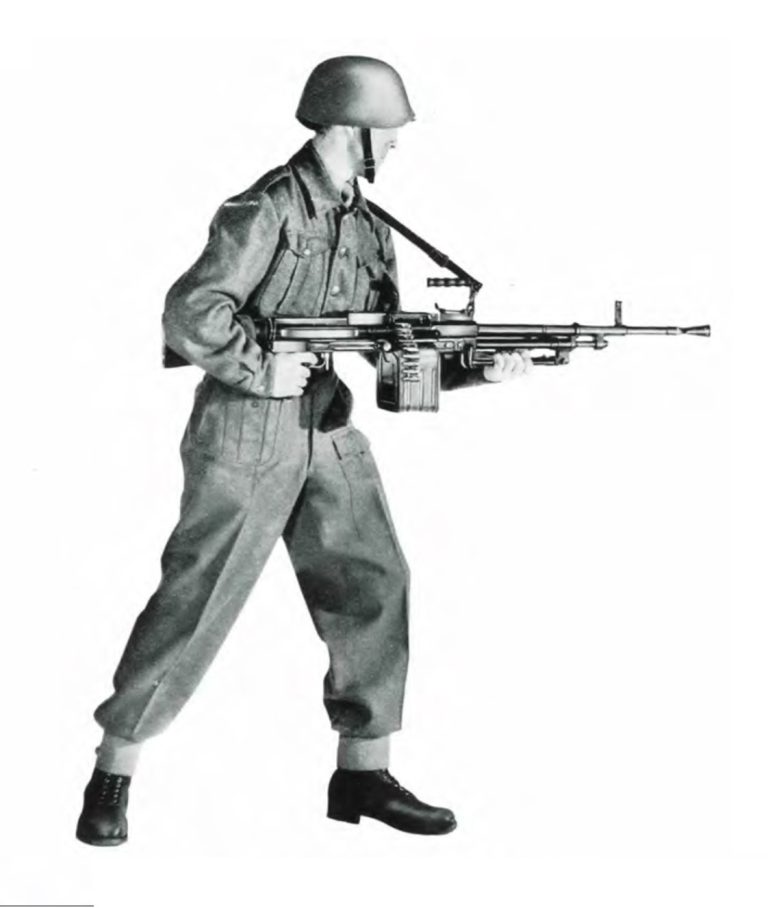
There is not much different aside from weight and length between Mk I to Mk IV Madsen-Saetter so i propose 2 different configuration for 3D Decoration: Standalone and Tripod version
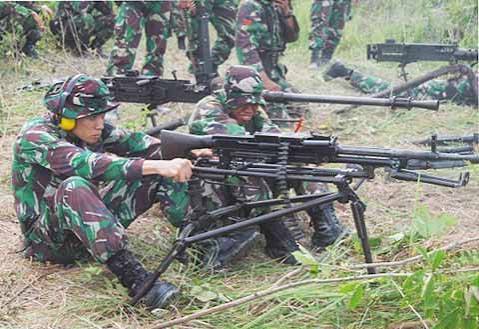
Madsen-Saetter on Tripod
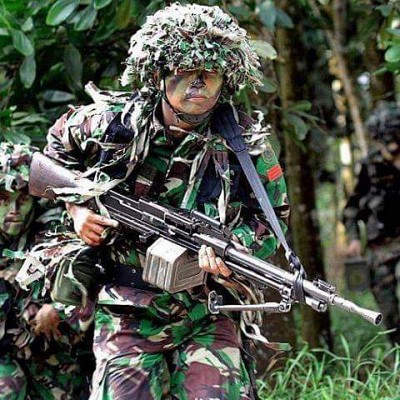
Standalone Infantry Madsen-Saetter GPMG
Why we should get this GPMG 3D Decoration?
Spoiler
I think this is a good choice of 3D Decoration for Swedish and Japanese Ground Player, first it’s a unique Danish made GPMG that can be used for Danish ground vehicle in Swedish TT and second since Indonesia is the main customer and user of Madsen-Saetter GPMG then it could be added for 3D decoration for Indonesian ground vehicle in Japan TT.
Additional pic and video
Source