Disclaimer: This is a work in progress and will be submitted when completed. This is mainly a way for research, discussion, and suggestions before it gets submitted.
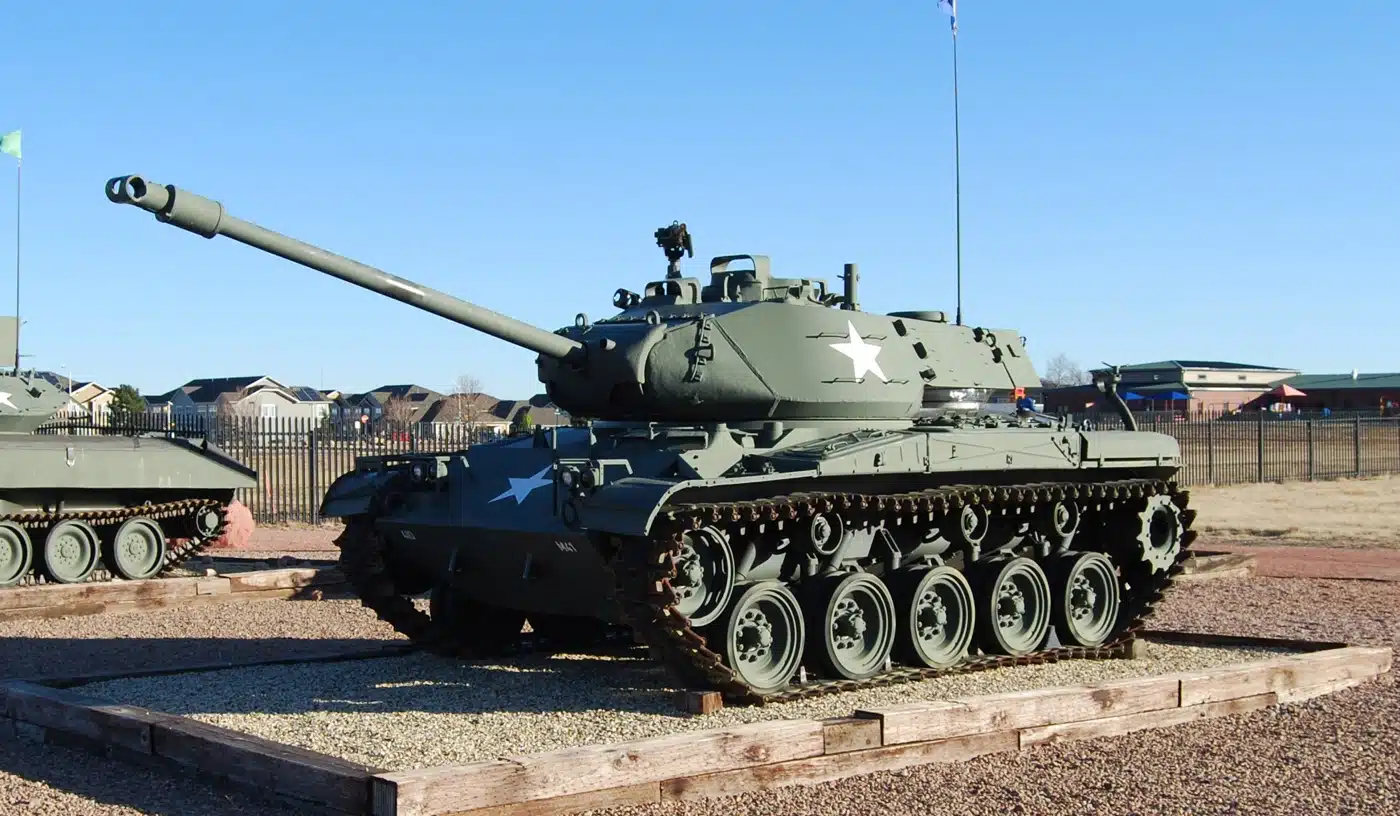
This Is a US M41A3 at the 4th Armored Division museum and is shown here for visual purposes to exibit the tank in a clean and well-maintained condition.
HISTORY
After World War II, the U.S. Army recognized that the M24 Chaffee light tank was no longer sufficiently robust for modern scouting. In 1946, they began a project for a new “76mm Gun Tank.” This led to the T37 prototype in 1949. While the T37 was fast, its internal optics were too complex to maintain. Designers simplified these parts to create the T41, making it more reliable for soldiers to use in the field.
The Korean War in 1950 compelled the Army to accelerate its development. They rushed the tank into production at a Cadillac plant in Ohio by 1951. It was officially named the Walker Bulldog to honor General Walton Walker, who tragically died in a jeep accident in Korea, after a South Korean weapons carrier swerved out of its lane and collided head-on with Walker. Due to the rapid production, early models experienced numerous mechanical issues that necessitated thousands of engineering fixes within the first year of service.
The M41 was built around a 500-horsepower engine, allowing it to hit high speeds of 45 miles per hour. Although the Army wanted a tank that was light enough for transport planes, the final version weighed approximately 25 tons. This made it too heavy for most cargo aircraft of the early 1950s. Despite its weight, its 76mm gun was powerful enough to destroy most medium-sized tanks used at the start of the Cold War. During the 1950s, the Army improved the design with several new versions. The M41A1 introduced a more reliable turret system and increased ammunition capacity. Later, the A2 and A3 models featured fuel-injected engines, enabling the tank to travel further on a single tank of gas. While these changes kept the Bulldog useful for scouting, its gun eventually became too weak to fight the heaviest new Soviet tanks.
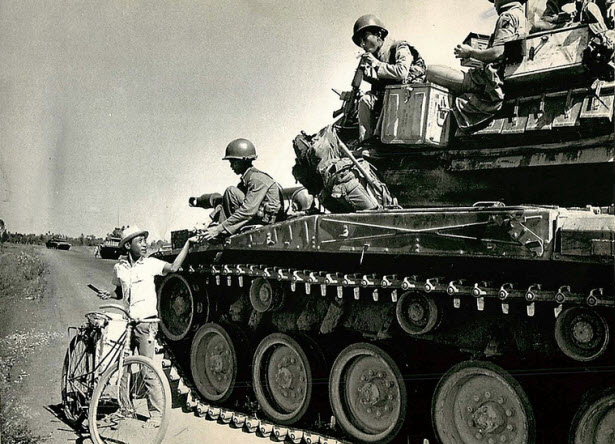
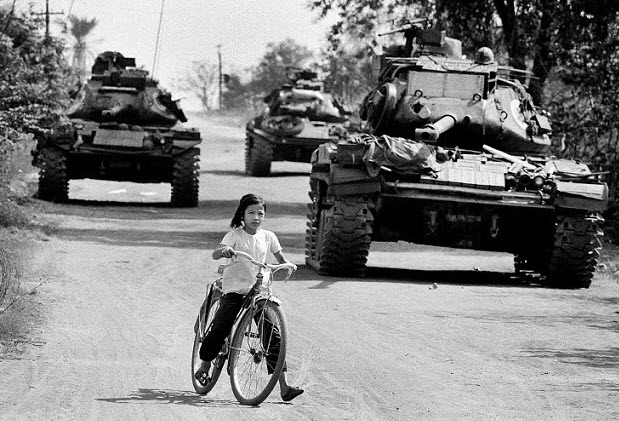
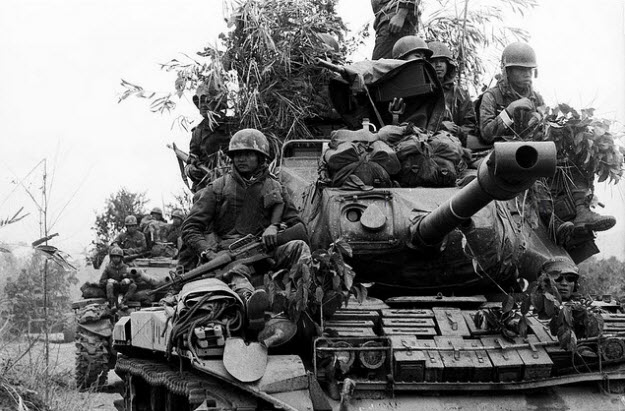
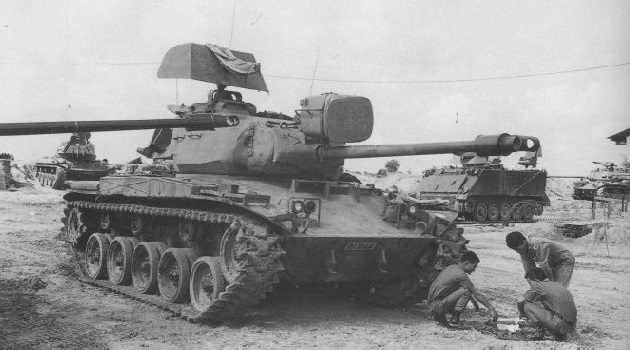
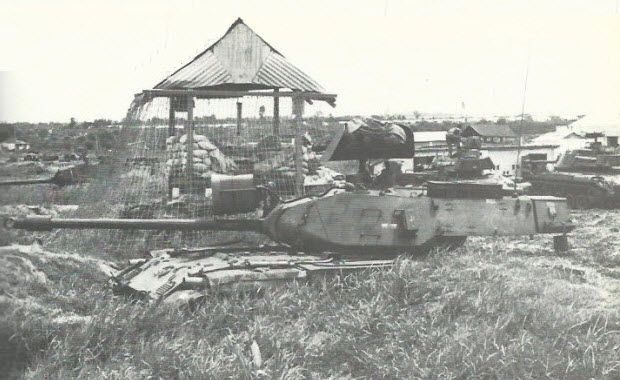
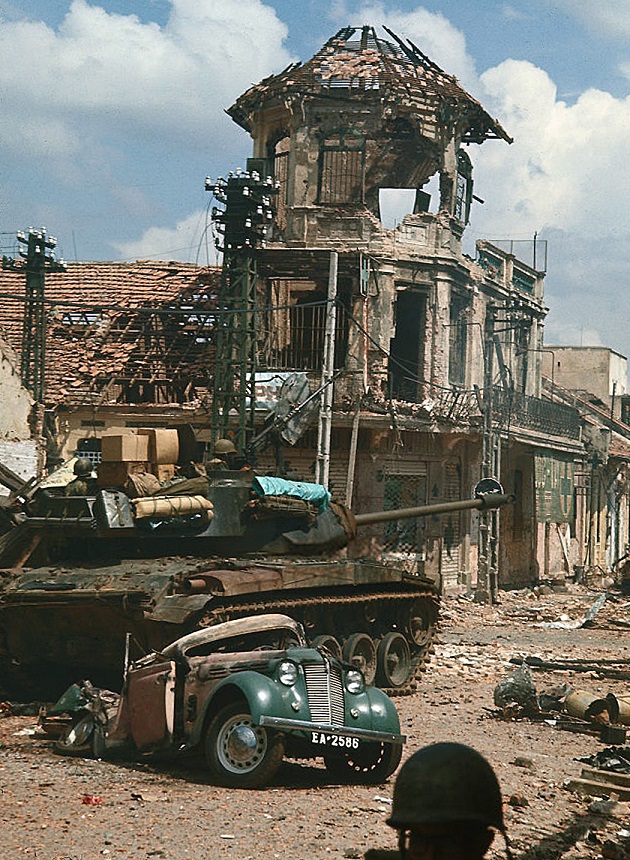
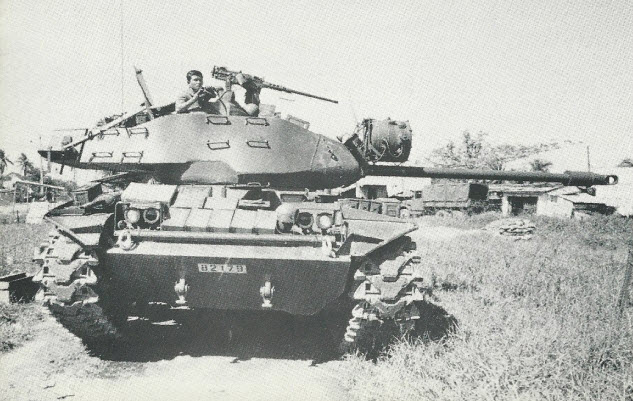
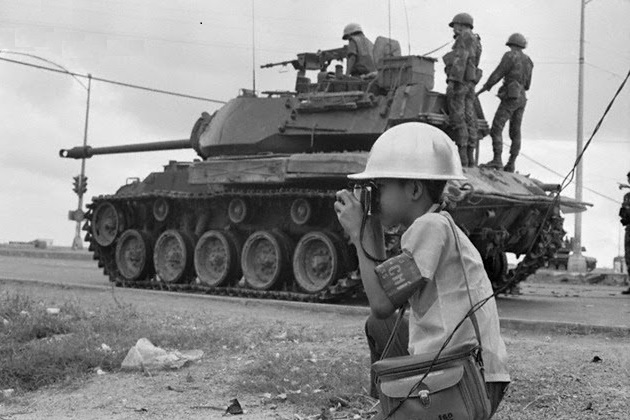
The M41 saw its most famous combat during the Vietnam War with South Vietnamese forces. Its small size was a perfect fit for the local jungle terrain and smaller crews. The U.S. Army retired the tank in 1969, but it was exported to over 30 countries. Many of these nations continued to use the Walker Bulldog for decades because it was reliable, fast, and easy to maintain.
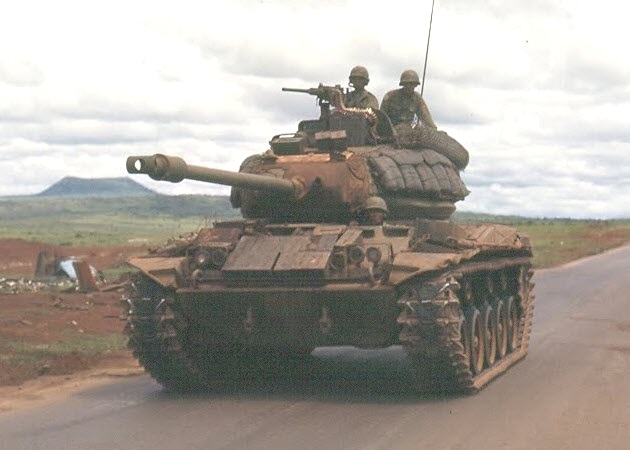
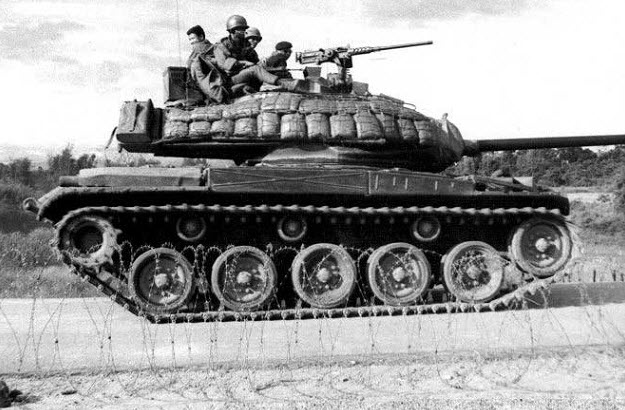
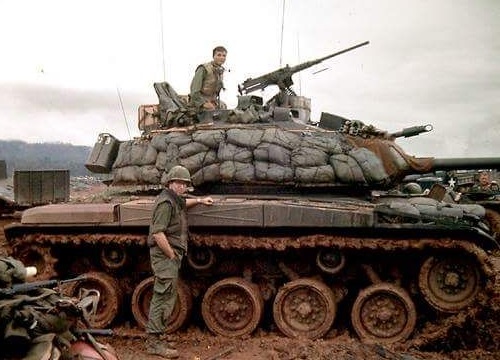
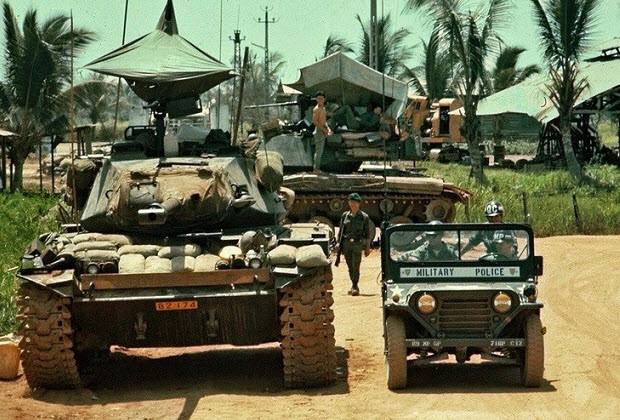
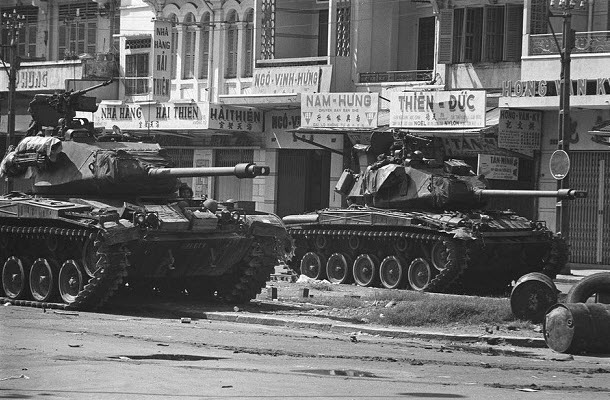
While the tank was active with the South Vietnamese army, it saw several minor “upgrades” and variants, such as a version modified to mount the AN/VSS-1 Xenon spotlight and a gun shield. However, one of the most common upgrades seen was the addition of sandbags and wood as additional armor, while it may at first seem as if that wouldn’t work well as protection against rounds looks can be decieving as they were intended to protect the tank against newly introduced hollow charge anti-tank missiles and would also be a moderate defence against HEAT, HE, And HEATFS by causing the rounds to detonate prematurly and dispersing the shockwave while also potentially preventing the warhead from penetrating the armor.
COMBAT HISTORY
The M41 Walker Bulldog never saw official combat with the U.S. Army, but it became a legendary fighter in the hands of American allies. Its combat debut occurred in 1961 during the Bay of Pigs invasion, where five M41s were used by CIA-trained Cuban exiles. Despite being heavily outnumbered, these light tanks successfully knocked out several Cuban T-34-85 tanks and held their ground until they ran out of ammunition. This early success demonstrated that the Bulldog’s 76mm gun could punch well above its weight class when operated by skilled crews (the M41 has a crew of four).
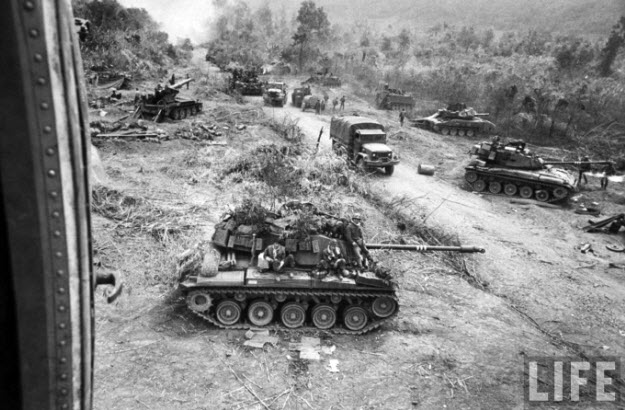
The tank’s most extensive service took place during the Vietnam War, primarily with the South Vietnamese Army (ARVN). Initially, the ARVN used the older M24 Chaffee, but they upgraded to the M41 in 1965. The tank was a perfect fit for South Vietnamese soldiers because its smaller interior matched their physical stature, and its lighter weight allowed it to navigate the region’s soft soil and narrow bridges. During Operation Lam Son 719 in 1971, M41s famously engaged North Vietnamese T-54 and PT-76 tanks, often winning these duels through superior speed and fire-control accuracy.
Beyond Southeast Asia, the M41 saw action in various global “hotspots” throughout the Cold War. In the Middle East, Lebanese forces used the Bulldog during the early stages of the Lebanese Civil War. In Africa, Ethiopian M41s fought during the Ogaden War against Somali forces. Because the tank was so widely exported, it also became a common sight in political upheavals; it was frequently the primary armored vehicle used in numerous military coups across South America and Thailand, where its intimidating presence was often more important than its actual firepower.
As the 20th century progressed, the M41’s combat role shifted from front-line fighting to internal security and training. After the fall of Saigon in 1975, the North Vietnamese captured hundreds of Bulldogs and integrated them into their own army for several years. While the U.S. replaced its light tanks with the M551 Sheridan, many nations, such as Taiwan and Brazil, continued to upgrade their M41s with diesel engines and improved guns. These “Super Bulldogs” remained in service for decades, a testament to a design that began as a simple scout and ended as a global workhorse.
SOURCES:
M41 Walker Bulldog in combat – Mike's Research
76mm Gun Tank M41 Walker Bulldog
M41A3 Walker Bulldog - First Division Museum
M41A3 Walker Bulldog
M41 WALKER BULLDOG - Tucson Military Vehicle Museum
IMAGES:
STATS:
ARMOR
HULL:
Front: 31 mm
Sides: 25 mm
Rear: 19 mm
TURRET:
Front: 25 mm
Sides: 25 mm
Rear: 25 mm
Note: I envision the sandbags, Wood, and other miscellaneous cargo as an additional armor modification that would offer limited protection against HEAT, HEATFS, and HE (to a limited degree); however, it would not provide significant protection against kinetic rounds. It would also increase the vehicle’s weight by approximately 2000 lbs or 1 US Ton (approximately 907 kg) (based on educated guesses and images, equivalent to approximately 45 sandbags when averaged out to 35lbs per bag, with an additional 500 lbs added to account for the wood and other items). This, in turn, would impact mobility and decrease its top speed to somewhere around 41-43 mph.
MOBILITY
Engine: AOS-895-5 fuel injection engine (500 hp)
Top speed (without add-on armor): forward: 45 mph, reverse: 11.5 mph
Transmission: Allison CD-500-3 cross-drive transmission, 2 forward, 1 reverse
WEAPONRY
MAIN:
65 (11 round ready rack)
76.2mm M32+ .30 M1919A4 (COAX)
M331A2 (APDS) 300mm MAX PEN
M496 (HEATFS) 296mm MAX PEN
M352 (HE) 15mm MAX PEN
M339 (APBC) 177mm MAX PEN
TRAVERSE:
-10/20 degrees
Horizontal: 24 max
Vertical: 4 max
SECONDARY:
.50 12.7mm M2HB (roof-mounted) 2000 rounds of ammo
.30 7.62mm (COAX) 5000 rounds of ammo
OPTICS:
Gunner: 7.2-8x
Commander: 7.2-8x
The vehicle does have access to an active night vision system for the driver
- Yes
- No