Putting there here as I was told to by the Ai for the forums (it locked the post and told me to put it here if a specific vehicle) Request guidance as to where I’m supposed to post these issues - Machinery of War Discussion / Helicopter - War Thunder — official forum
M3A3 Bradley hull STANAG armor is bugged ( M3A3 Bradley hull STANAG armor is bugged // Gaijin.net // Issues)
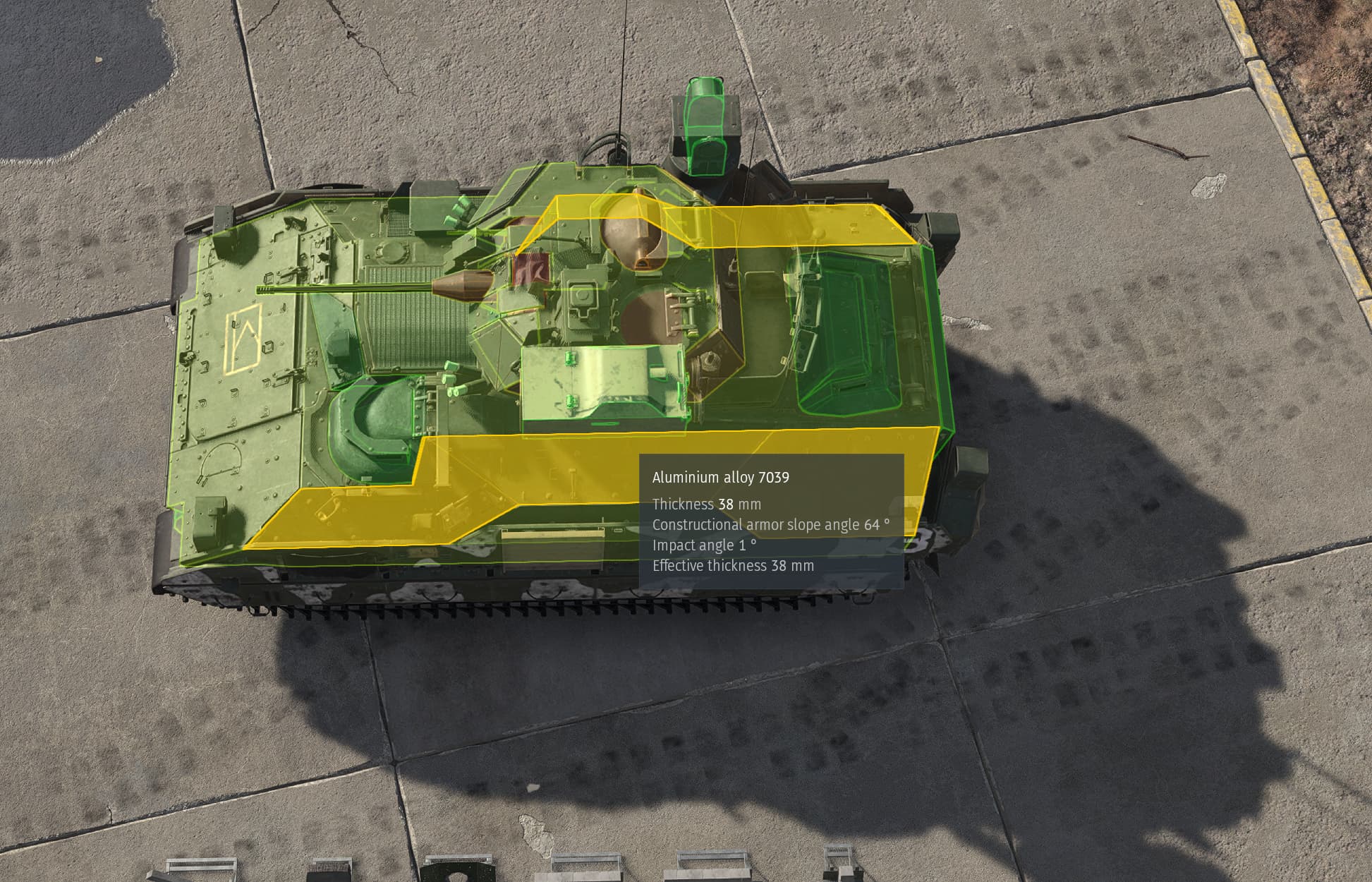
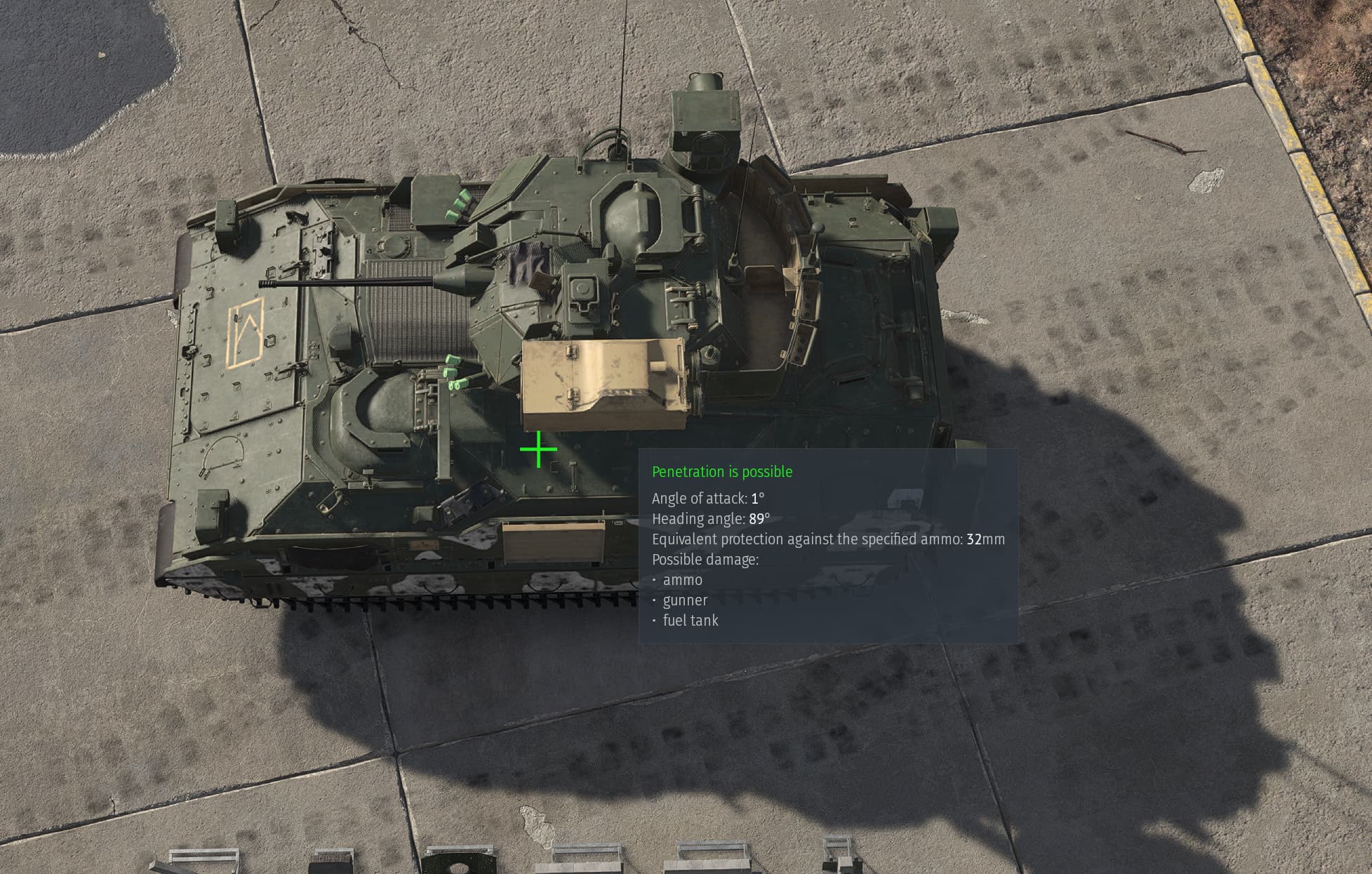
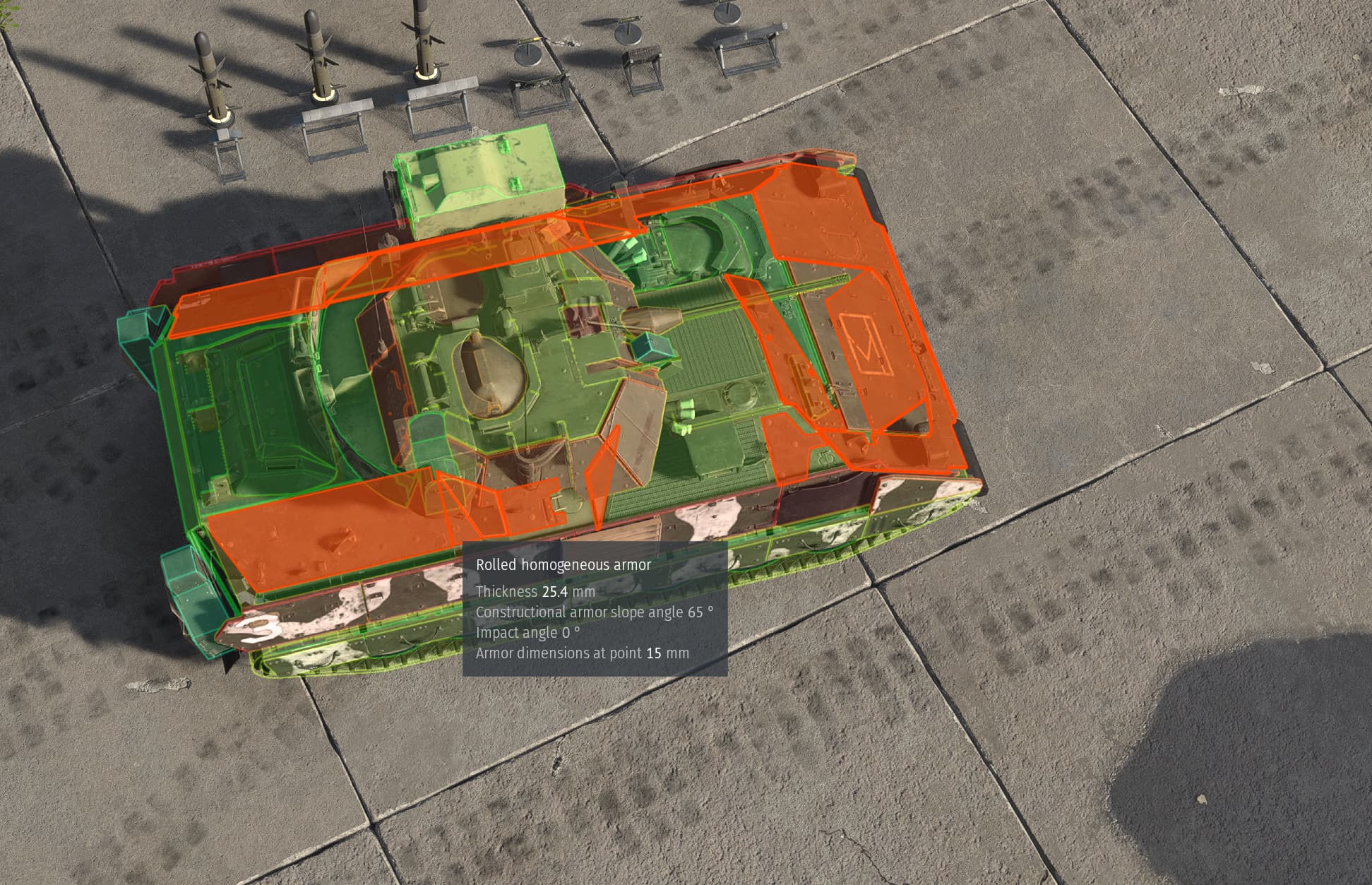
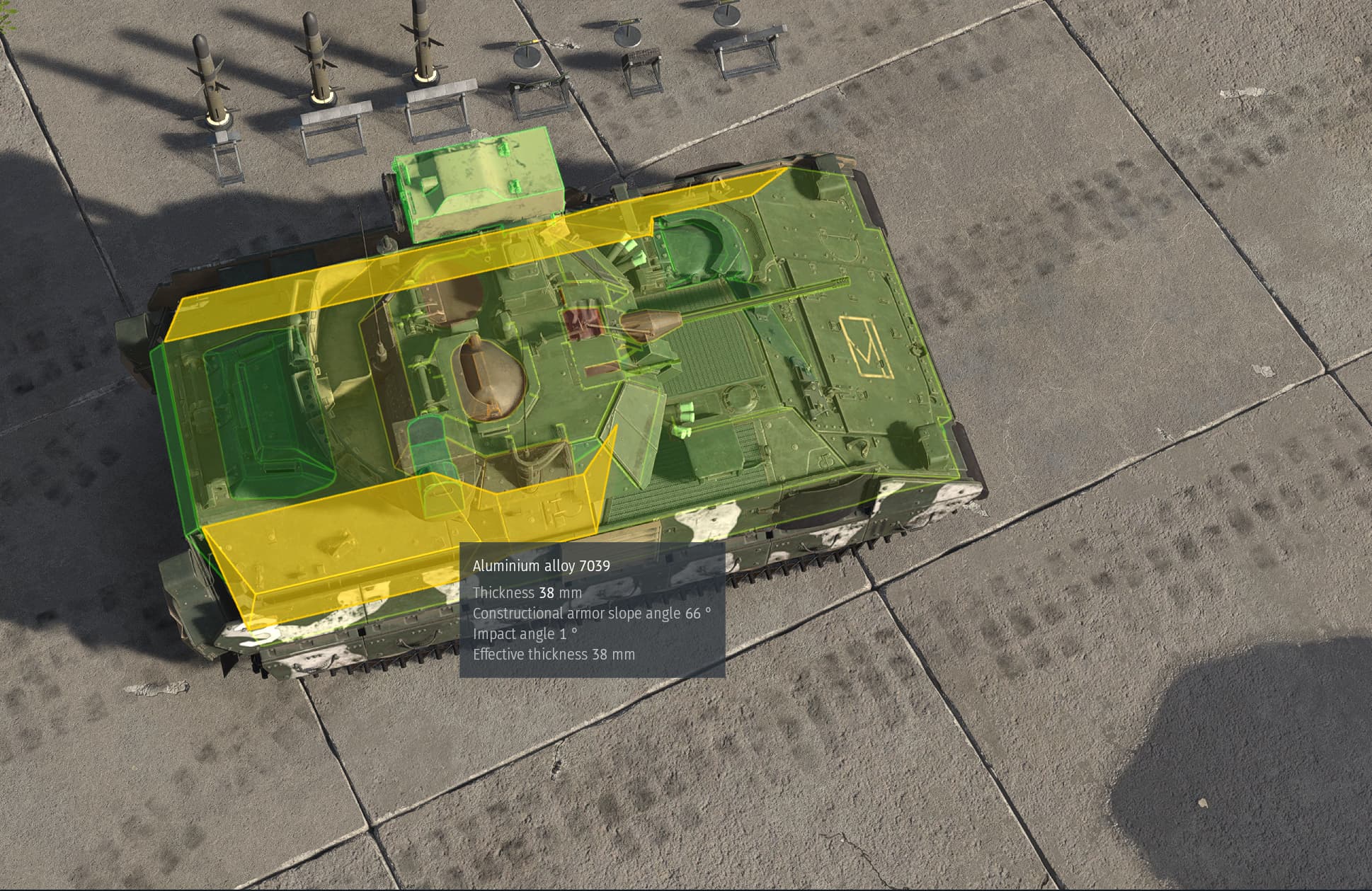
The M3A3 Bradley STANAG hull armor currently provides less ballistic protection than the protection thickness of the material.
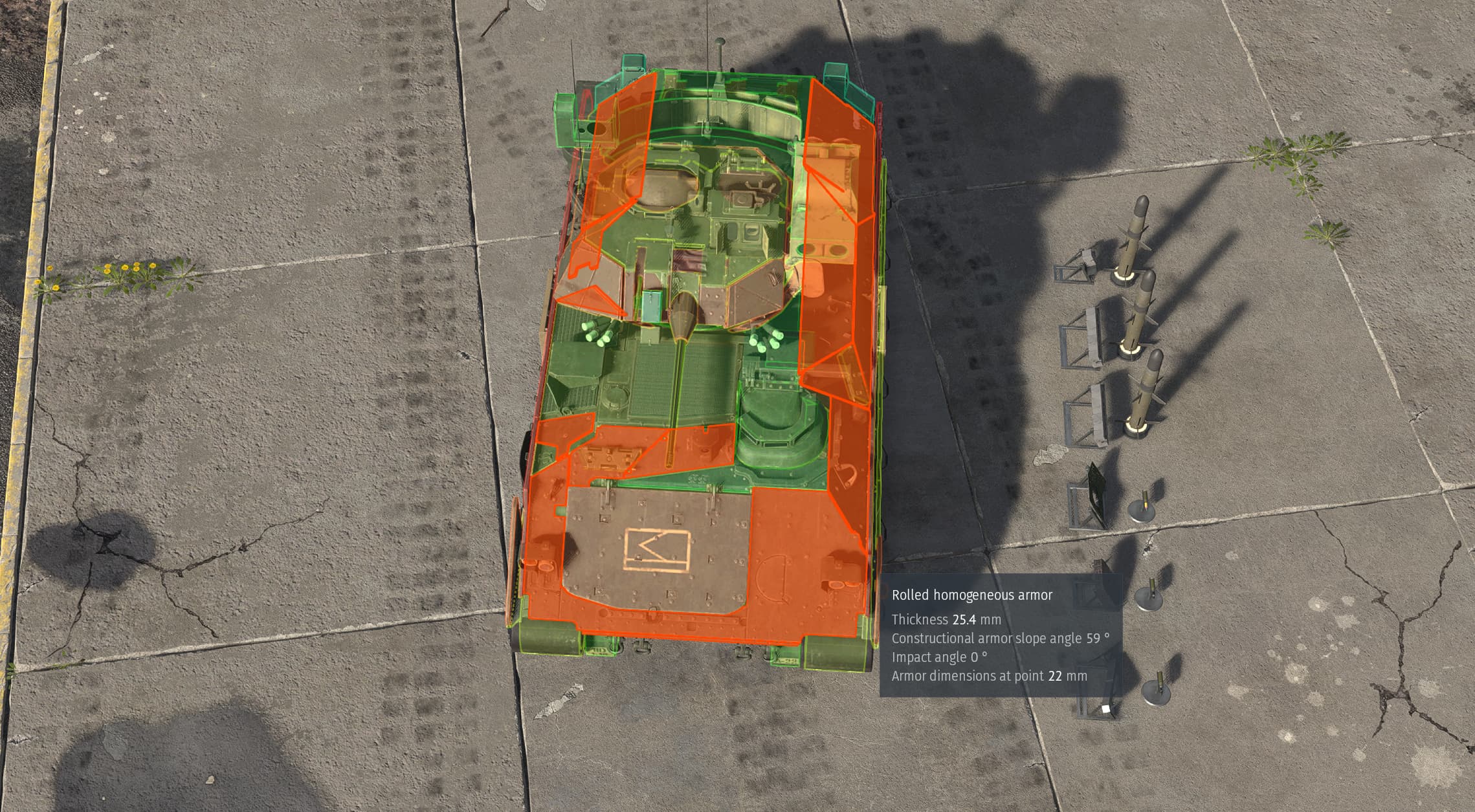
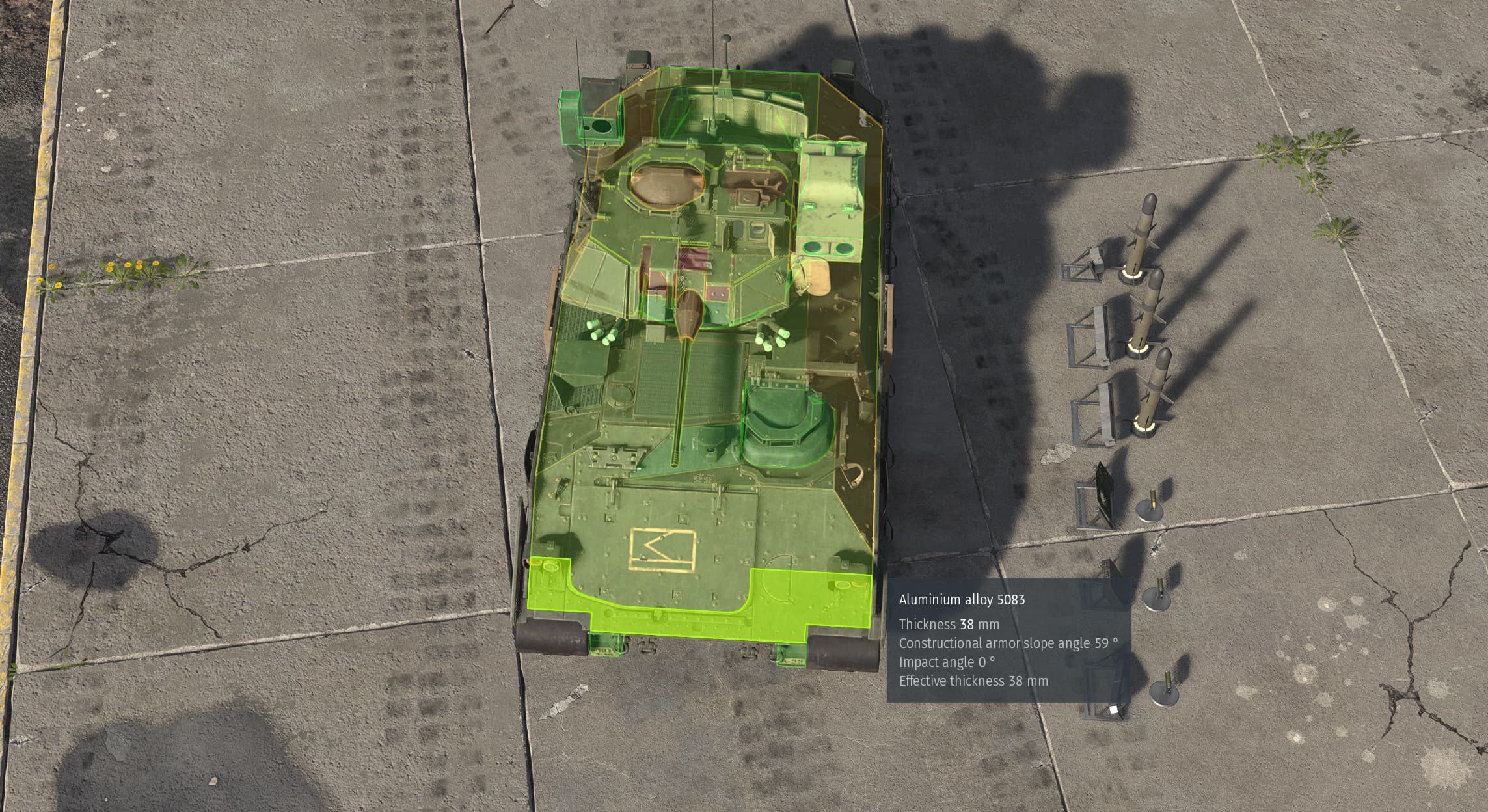
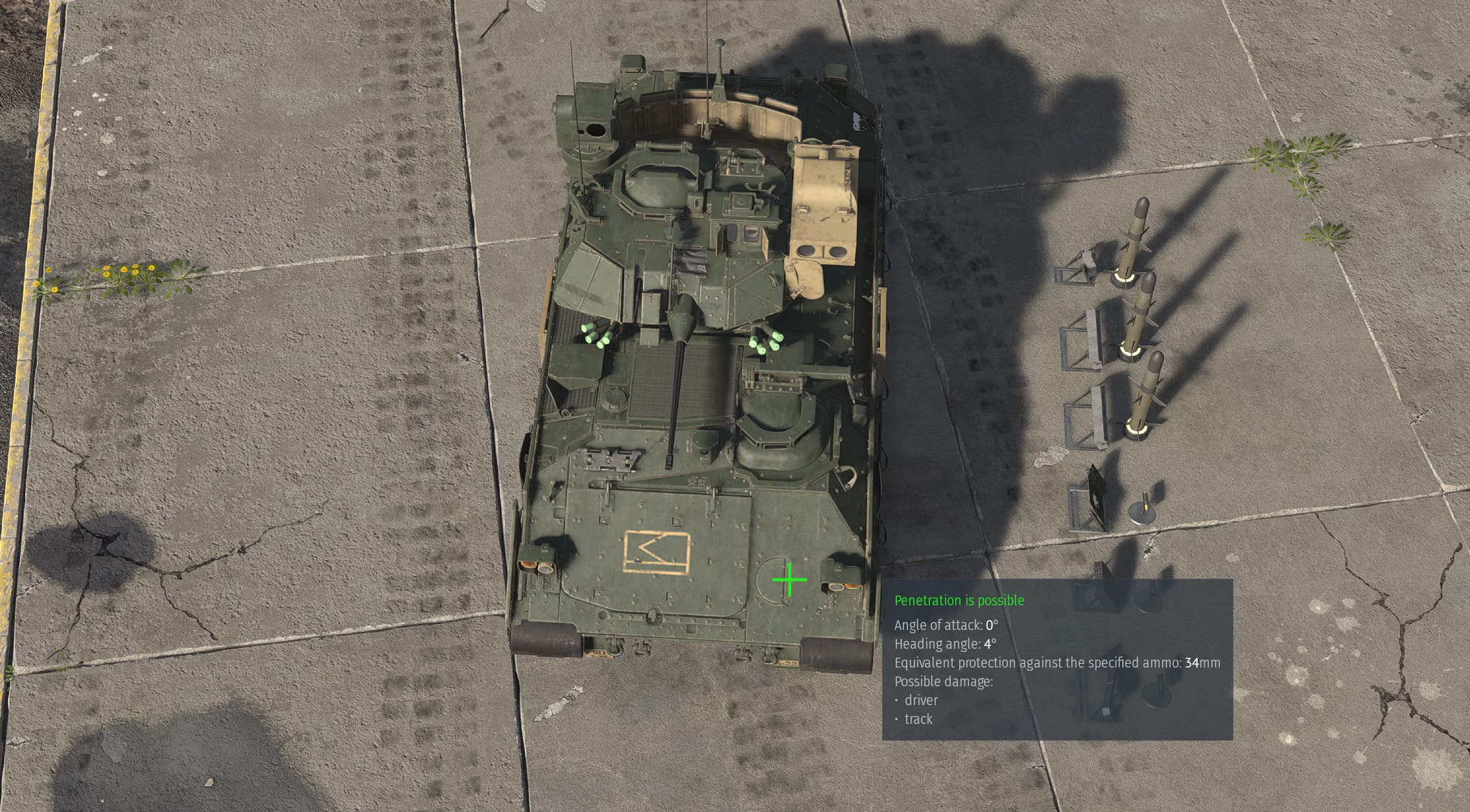
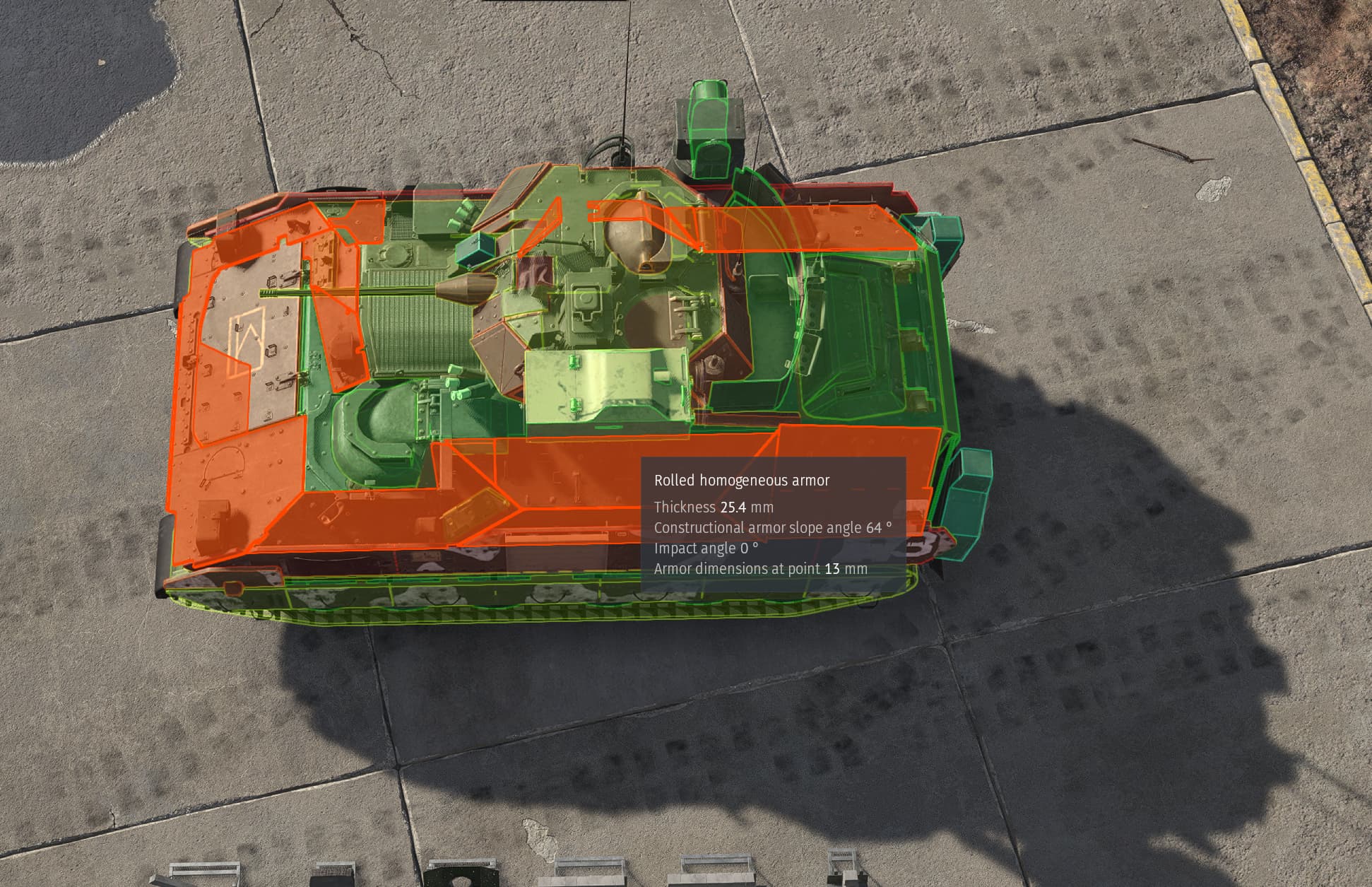
First 9 photos are the in-game screenshots and, for some reason, lack the penetration value data randomly. Added literally just because it’s required and the file size cap doesn’t allow screen captures to be added. However, all data is pulled from 0* impact angle
IAW War Thunder Wiki (provided by Gaijin @ Armour | War Thunder Wiki), the STANAG RHA multiplier should be x1.00, providing ballistic protection equal to thickness (so the 25.4mm), Aluminum Alloy 5083 is x0.32 and Aluminum alloy 7039 is x0.50. With this, the effective thickness from the POVs I gave should be as follows (keep in mind, Gaijin’s calculations like to round up for displaying. Effective thickness was the same even when I changed ammo types with other autocannons):
Front armor -------- ((25.4mm * 1.0) + (38mm * 0.32)) = 37.56mm (in game is 3mm short at 34mm of protection)
Port armor ---------- ((25.4mm * 1.0) + (38mm * 0.50)) = 44.4mm (in game is 16mm short at 28mm of protection)
Starboard armor - ((25.4mm * 1.0) + (38mm * 0.50)) = 44.4mm (in game is 10mm short 34mm of protection)
Also, don’t ask me how the port and starboard armor get different in-game protection values when it’s exactly the same material and thickness. Also, with the STANAG armor, it becomes LESS effective the steeper the angle becomes.