- Yes, at 1.3 BR
- Yes, at 1.7 BR
- Yes, at 2.0 or higher BR
- No

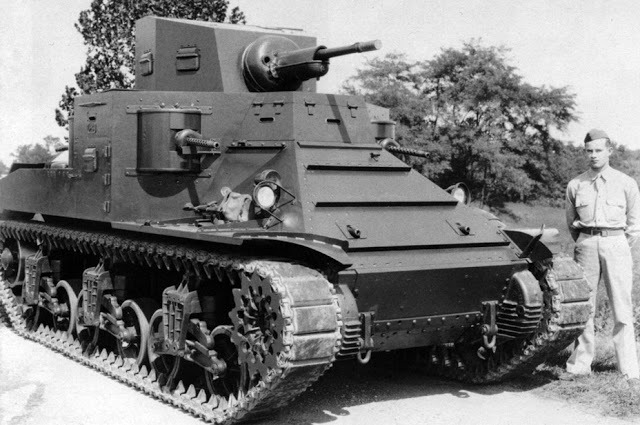
American armored development was troubled during the interwar period. It saw the development of “pseudo” medium tanks, designated as such only so that they may distinguished from the combat cars of the cavalry, with true medium tanks only being developed in the immediate aftermath of the First World War, ending with the Christie “medium” tanks, and in the immediate buildup to the Second World War, beginning with the T5 Mediums which eventually developed into the M2 Medium.
The M2 Medium, while being the more popular image of the small series of tanks due to its prevalence in War Thunder, was actually the less known brother to the M2A1 which was developed to rectify problems found during testing of the M2 and from reports flooding in from the aftermath of the German invasion of Poland.
The addition of the M2A1 Medium would help to fill in the large gap between the current in-game M2 Medium, at 1.3, and the M3 “Lee,” at 2.7. It could optionally also be foldered with the M2 Medium if the line between that and the M3 “Lee” are restored.
History
In 1940, the American armored forces were small and comparatively light compared to other major countries. The Great Depression forced the development of lighter and cheaper vehicles, and a small number of those at that. However, with the Depression coming to an end and the possibility of war on the horizon, the previous restrictions to armored development started to end.
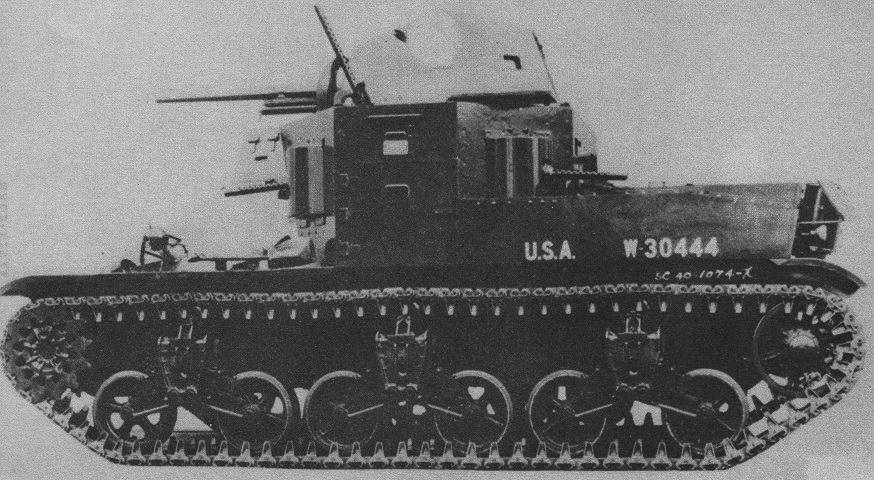
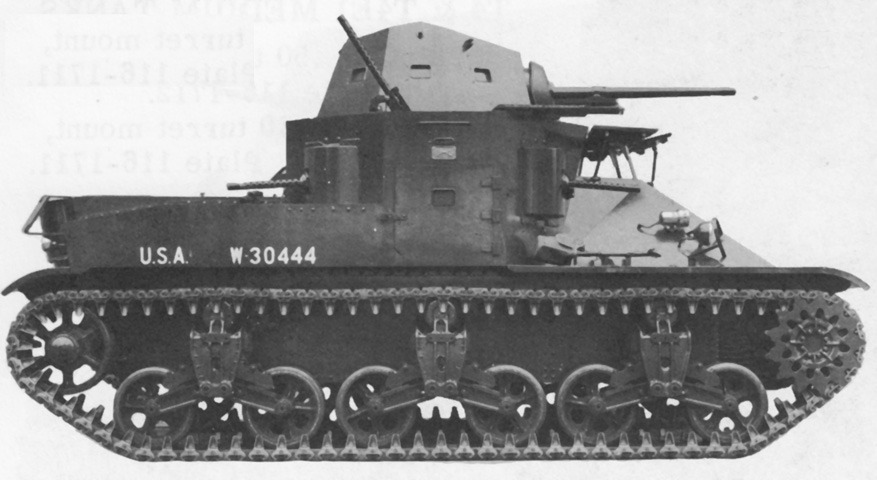
M2 Medium W-30445
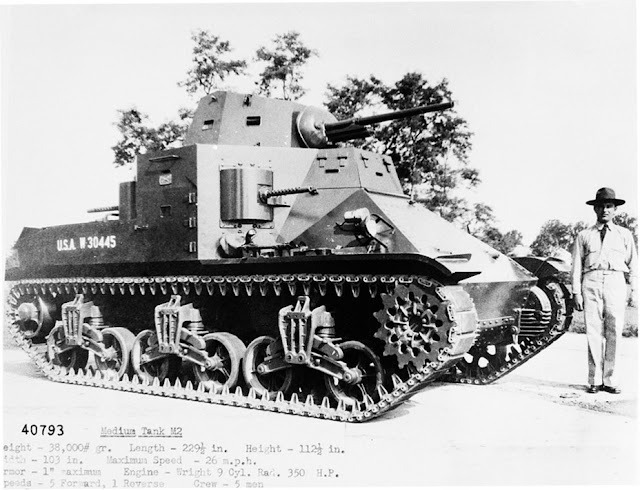
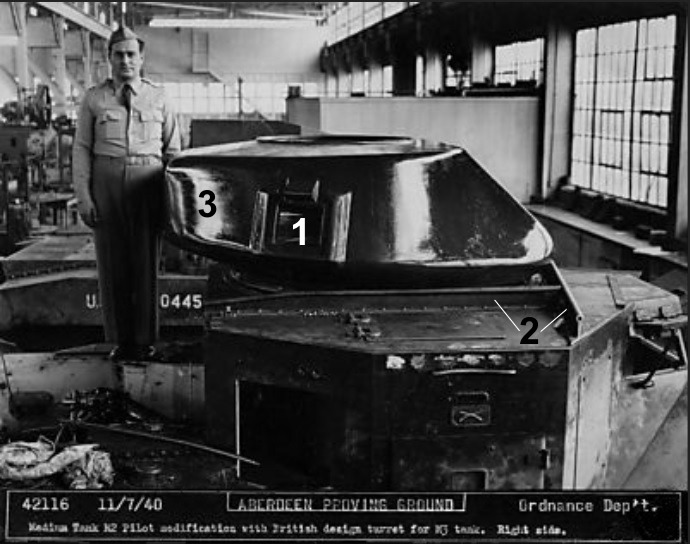
Prior to the M2 Medium, America’s only “medium” tanks were no more armored or heavily armed than the combat “cars” of the cavalry. The T5 Medium was their intention to finally rectify that issue with the M2 Medium being the end result of that program. However, after a limited production run of only 18 vehicles, it was decided to redesign the tank.
The reasons for this were mainly down to two: the first being that the turret design, while expected to be cramped simply due to the nature of conical turrets, proved to be too much of a detriment to the ergonomics of the commander-gunner and the loader. The turret also reduced the visibility of the commander due to a hatch atop the turret being absent. Instead, his hatch was located on the rear of the turret, which made it more difficult for him to poke his head out in order to survey his surroundings than it otherwise would be.
The second main issue only became evident once the invasion of Poland occurred. While the tank was never expected to be able to withstand actual anti-tank guns at normal engagement ranges, it was expected to withstand lighter fire. However, reports showed that the side armor, being only 1" (25.4 mm) thick, would be too vulnerable to the German 2 cm autocannons and similar caliber guns.
There were a number of other smaller issues and modernizations that would be noticed during testing of the M2 Medium, but they were relatively minor in comparison.
Pending the changes, a further order for 54 M2 Mediums for the 1940 fiscal year was cancelled. However, mass production of the improved M2A1 Mediums proved to be another issue in itself. At the time, America’s only large scale tank production plant was the Rock Island Arsenal and they had been the ones to construct the initial M2 Mediums. However, they were also responsible for the construction of much of America’s artillery and were also in the process of constructing other tanks at the time.
William Knudsen, then Head of the Office of Production Management, which organized military production, attempted to solve this issue by inviting Kaufman Keller, then president of a Chrysler Corporation, to a meeting on the 7th of June. Following it, it was agreed upon that Chrysler would both construct a new tank factory and would produce 1,000 M2A1 Mediums with a scheduled production date between September of 1941 and August of 1942 with approximately 100 tanks a month. The contract was signed on the 15th of August, but not even two weeks in, on the 28th of August, the contract was cancelled.
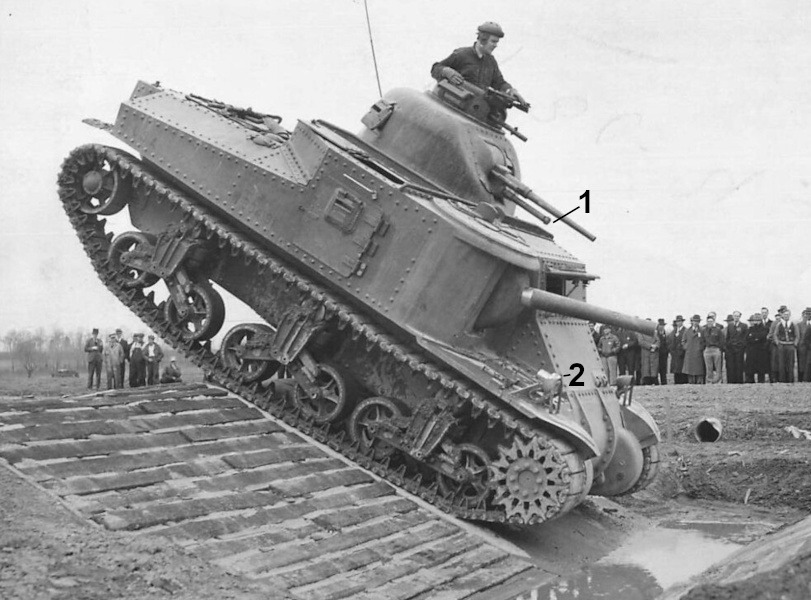
The construction of the new tank factory would still go underway – it would lead to the construction of the Detroit Arsenal Tank Plant (DATP). However, the order for 1,000 M2A1 Mediums was cancelled. Instead, the contract was changed to an order for 1,000 M3 Mediums. Like the situations in Europe had forced the redesign of the M2 into the M2A1, it again forced the abandonment of the M2A1 in favor of the M3. This was mainly down to one factor: the Pz. Kpfw. IV, while still only having the snub-nose gun at the time, showed that a 75 mm gun was likely to be the future of armored warfare. This forced another hasty design in the form of the M3 Medium, later nicknamed the “General Lee” and the “General Grant” by the British.
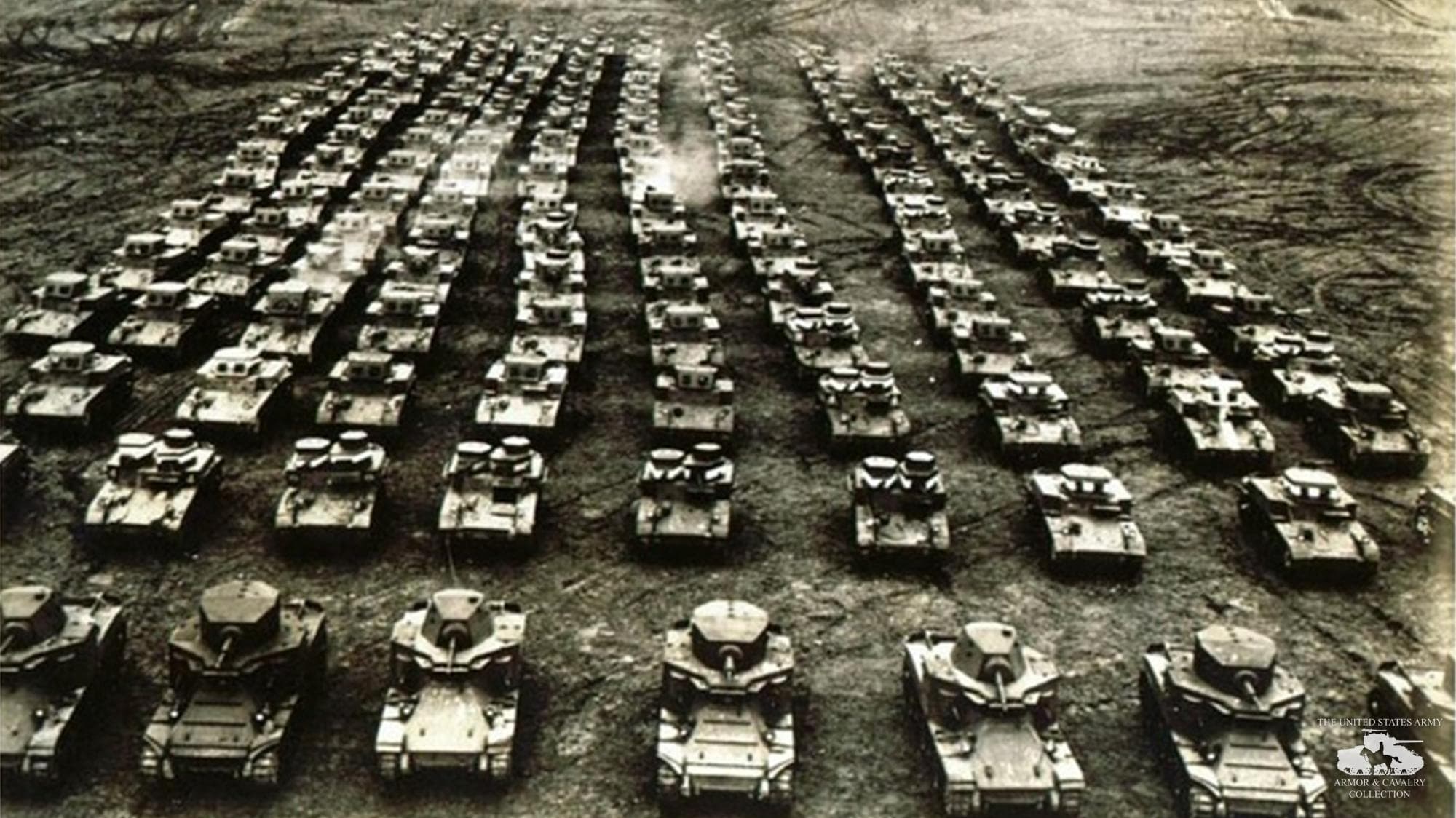
However, producing the new M3 Medium would still take time and until then, America’s armored forces were still painfully inadequate. The 18 M2 Mediums were still their only true medium tank and the bulk of the 400~ tanks that were available for the newly formed and independent Armor Branch, formed on the 10th of July by Major General Adna Chaffee, were outdated. Luckily, Rock Island Arsenal, now left with surplus resources, could facilitate the small-scale production of an M2A1 Medium batch until the M3 Mediums could be produced in suitable numbers.
M2A1 Mediums under production at Rock Island Arsenal
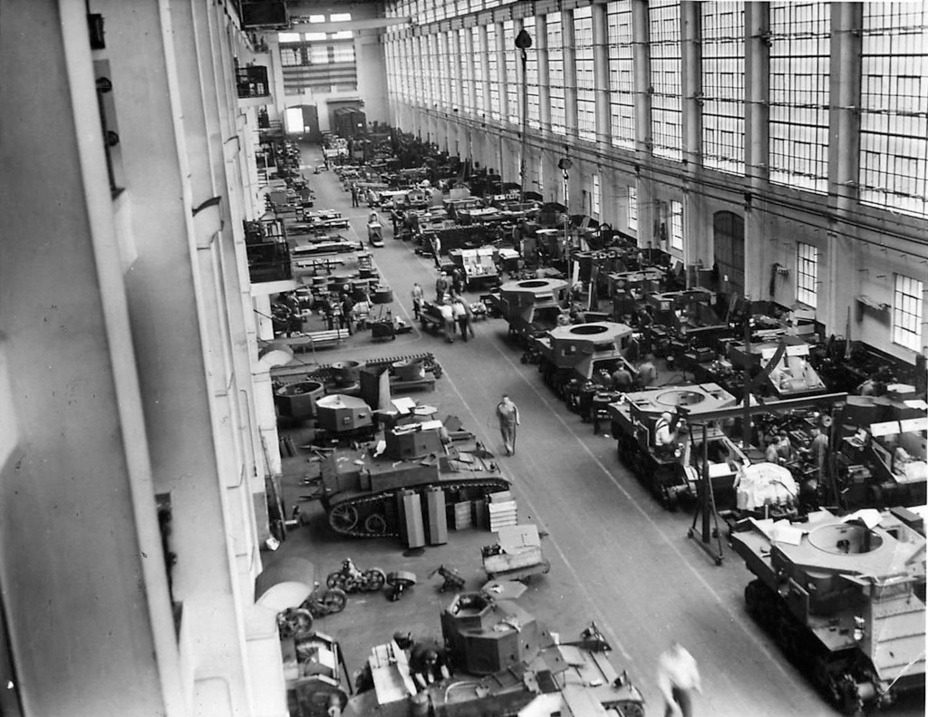
An order for 126 tanks was made and the first M2A1 were completed by September. Production would continue into 1942 with the last M2A1s being delivered by August. The order wasn’t fully completed but was rather cancelled prematurely with only 94 of the 126 tanks having been produced, since not only have M3 Medium production long eclipsed it by that point, but the M4 “Sherman” was also in full-swing by that point.
M2A1 Mediums underway to the 2nd Armored Division for training exercises
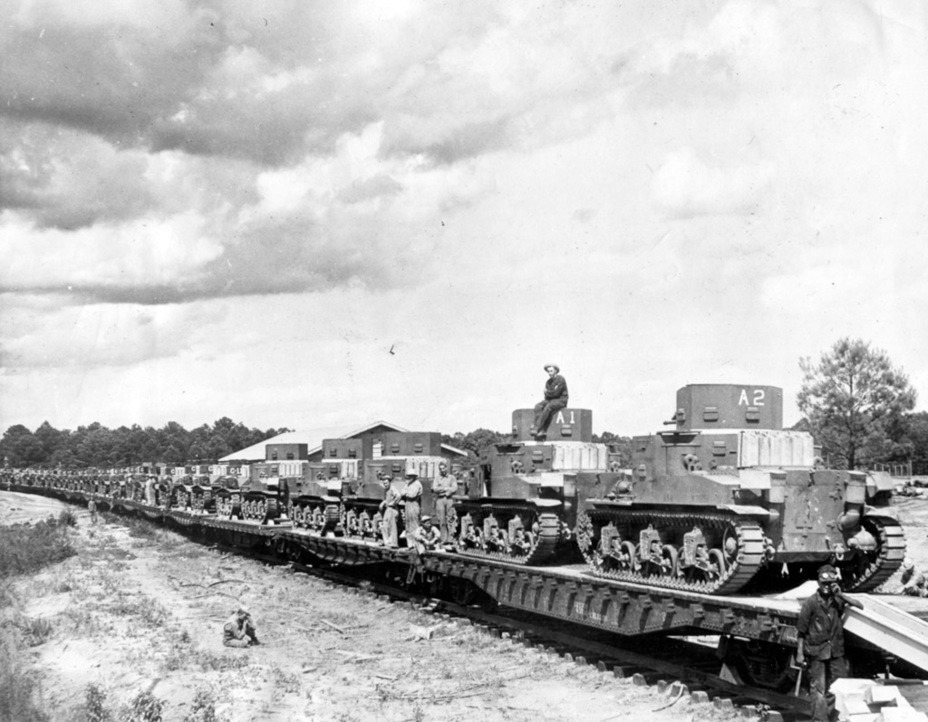
The fate of the M2A1 Mediums was the same as the M2 Mediums. All of them were relegated to training tanks, being considered unsuitable for actual combat when compared to the M3 and M4. They were deployed to the 67th Infantry Regiment (Medium Tanks) of the 2nd Armored Division and to the 69th Armored Regiment of the 1st Armored Division. However, even that was short-lived due to the large production of M4 “Sherman” making the M3 “Lee” obsolete. By the end of 1942, all M2 and M2A1 were officially designated obsolete and withdrawn from service, and replaced by the M3 “Lee” in the training roles.
M2 Medium W-30445 at the U.S. Army Armor and Cavalry Collection
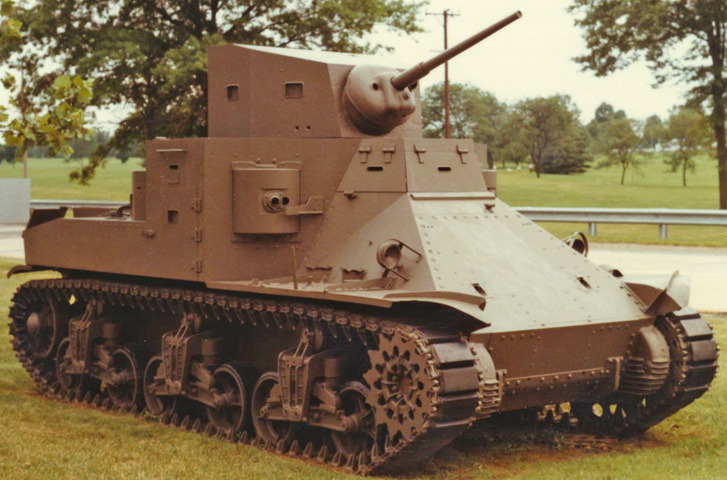
M2A1 Medium at the U.S. Army Armor and Cavalry Collection
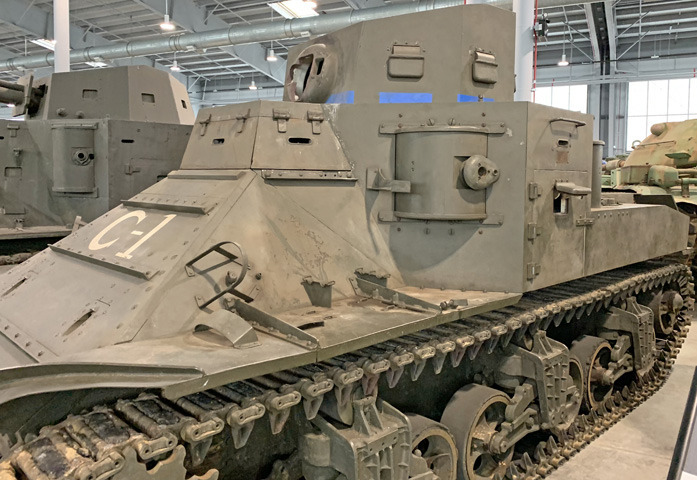
Most of the tanks were scrapped with only two examples remaining to this day. The first of these is the M2A1 prototype, which combined the hull of the M2 Medium W-30445 with that of a M2A1 turret; this tank is currently located at the U.S. Army Ordnance Museum at Fort Lee. The second of these is an M2A1 currently located at the U.S. Army Armor and Cavalry Collection at Fort Benning. The former, for display purposes, had an M23 gun mount. This has led to misinformation that the M2A1 Medium were, at some point, rearmed with an M23 gun mount, but this is false.
Replica M2A1 Medium at the Patton Museum of Cavalry & Armor
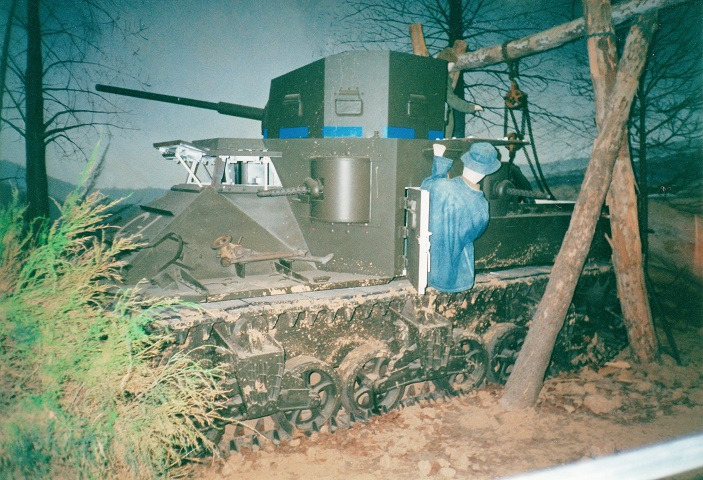
There is also a single M2A1 replica that currently exists at the Patton Museum of Cavalry and Armor.
Both the M2 and the M2A1 Medium are far from famous, but they had an essential role in preparing American industry for tank production and in giving experience to designers in how to design a medium tank. The tanks, while outdated, were far from bad and, in the hypothetical scenario that they had been deployed in combat, would have likely faired at least okay against contemporary tanks.
Design
The M2A1 Medium is largely similarly to its predecessor, the M2 Medium. The largest differences between them is in the turret.
Top-down view of M2A1 Medium
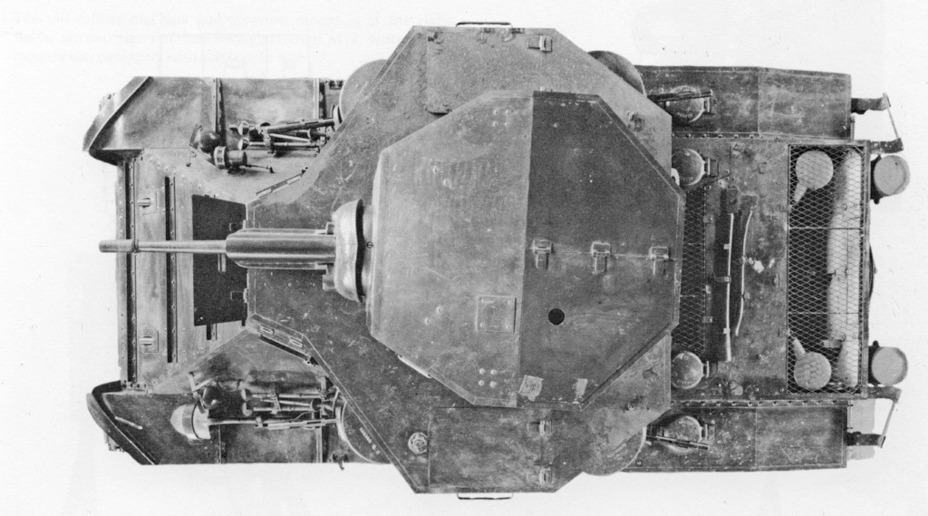
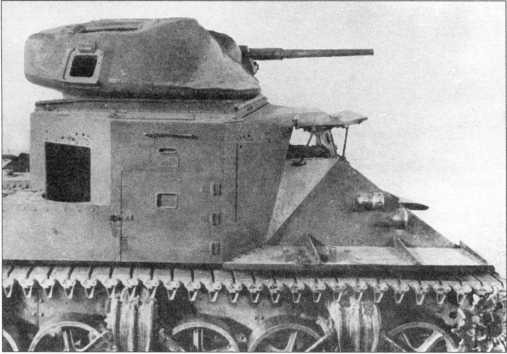
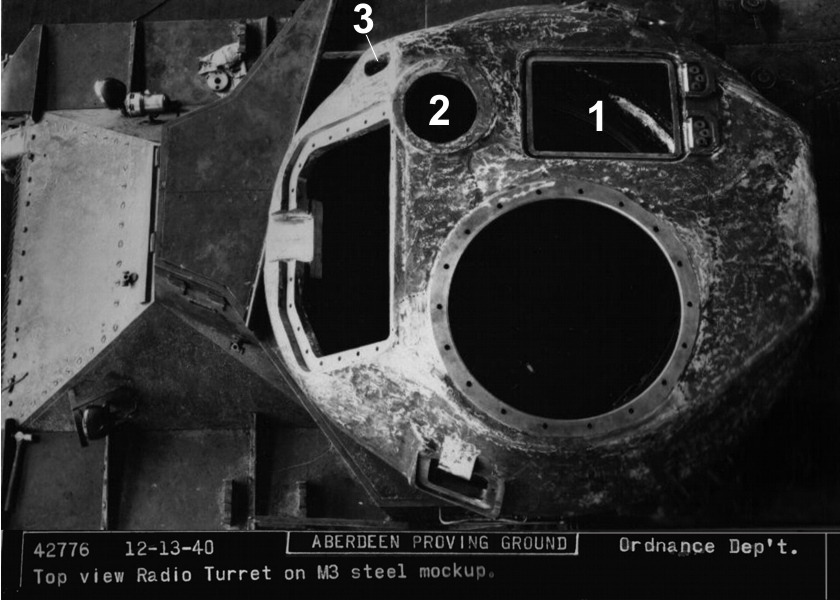
The base shape of the turret is the same between both of them. However, the M2A1 removed the slope and changed it for a more conventional right-angled design. While this allowed for far more space within the turret, it caused the protection to be slightly worse from the loss of the slope. To compensate for this, the sides of the turret were up-armored from 1" (25.4 mm) to 1.25" (31.75 mm). With the increased surface area of the roof, the hatch for the commander-gunner was moved from the rear of the turret to the top of the turret, allowing for him to more easily survey the surroundings of the vehicle.
The gun and the gun mount were also changed. The 37-mm M3 was replaced by the 37-mm M5, shortening the barrel and reducing the possibility of it getting stuck on foliage or debris at the cost of 13 m/s of velocity. The earlier mount, of which I cannot find the designation for, was switched for the 37-mm M19 gun mount. This was a closely related version of the M20 that was fitted onto the M2A4 Light. It improved the protection around the recoil device of the gun by encompassing it and the base of the barrel in a thin sheet of metal, and allowed for limited horizontal traverse of 20° which allowed for precise targeting adjustments without having to turn the turret.
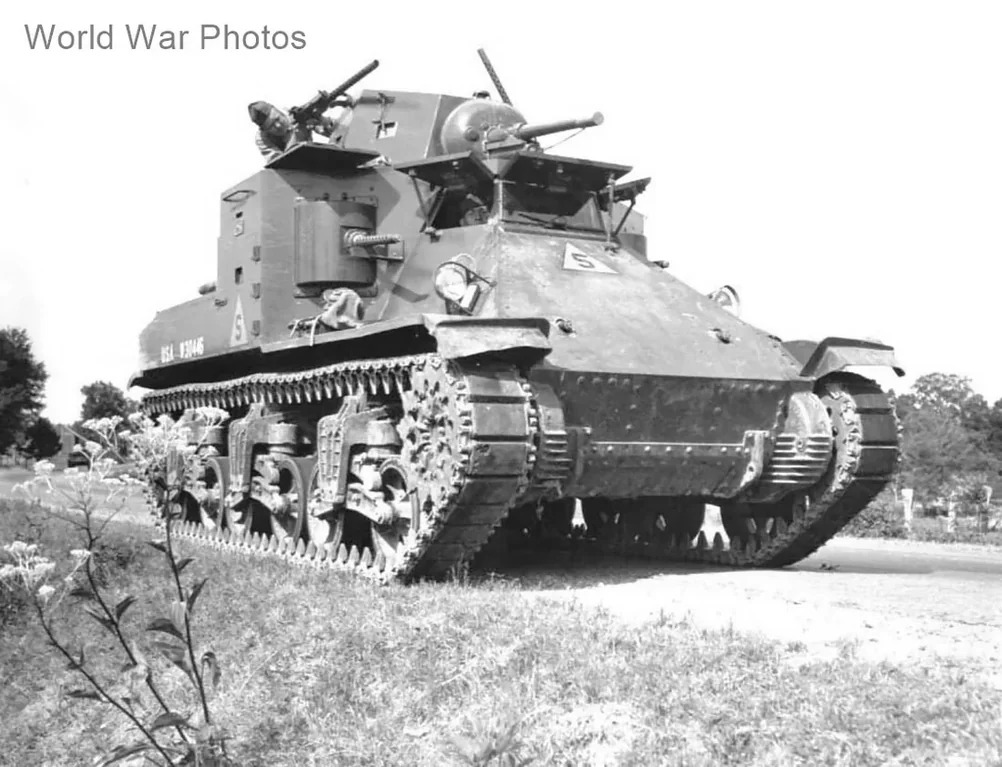
Angled view of M2A1 Medium; improved sponson protection, observation ports, & bullet deflectors in view
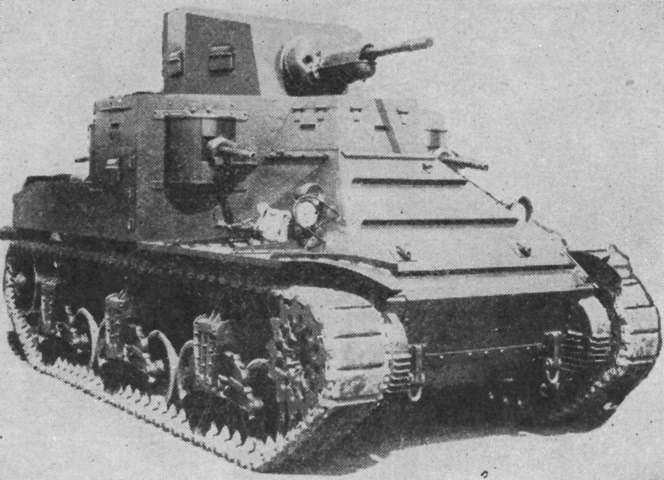
The second most significant change between the M2 and the M2A1 came in the improved protection of the latter. To make it invulnerable to autocannons from normal engagement ranges, the thickness of the sides and rear, along with the prior-mentioned turret, were increased from 1" (25.4 mm) to 1.25" (31.75 mm). The front remained unchanged since the sloped 1.125" (28.525 mm) was considered to already be sufficient protection.
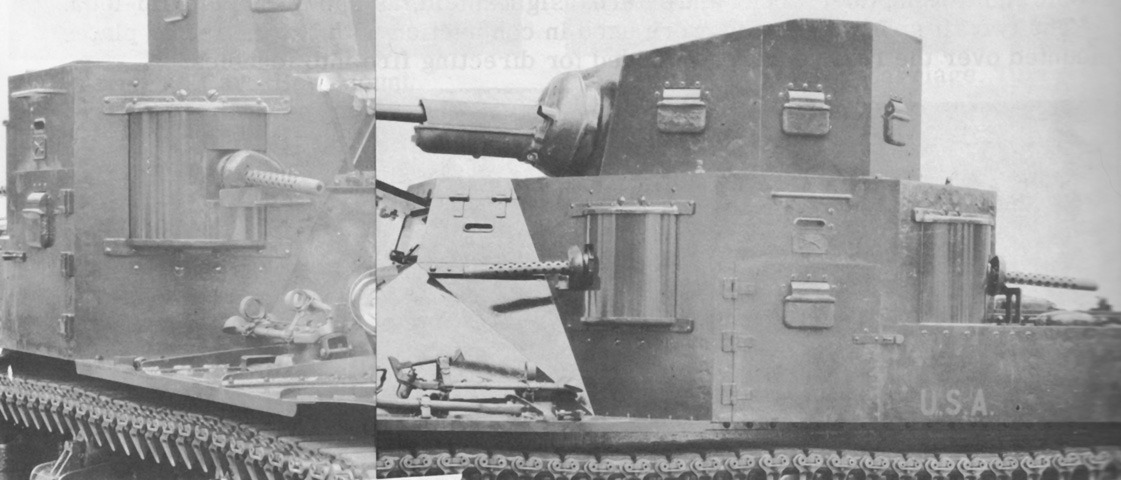
Other small vulnerabilities were also fixed. The sponson machine guns had their protection improved through the installation of small gun shields that covered both the machine gun and the sight. Both the observation ports and the pistol ports had their interior shutters replaced with exterior flaps, allowing for them to be opened more easily and making them less vulnerable to being shot out. The roof hatches on the hull, previously opening up opposite ways, were altered to both open up rearwards. Finally, bullet deflectors were added to the front slope of the hull.
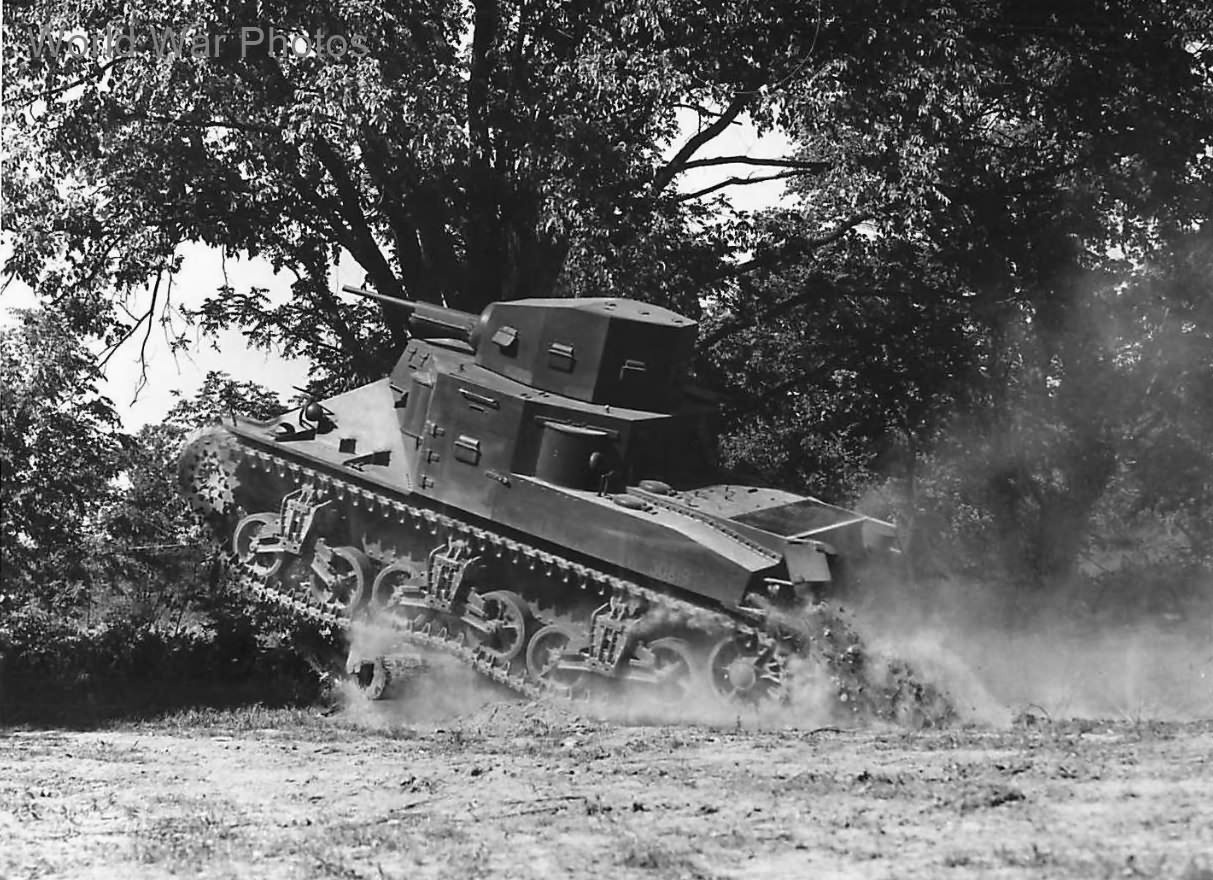
All of the changes increased the weight of the vehicle from 19.0 t (17.2 mt) to 20.6 t (18.7 mt). To compensate for it, the tracks were widened from 337 mm to 362 mm and the 350 hp (261 kW) Wright R-975 engine was replaced by a 400 hp (298 kW) Continental R-975E-C2 engine. Despite the increased weight, both of these changes improved the tank’s agility by reducing the ground pressure from 18.8 psi (1.32 kg/cm²) to 15.3 psi (1.07 kg/cm²) and improving the power-to-weight ratio from 18.5 hp/t to 19.4 hp/t. The maximum speed remained the same since the transmission was unchanged, aside from the addition of hydraulic controls that allowed the driver to more easily switch gears.
The last possible change is something I cannot confirm yet. During the turret redesign, the stowage mountings for the anti-aircraft machine guns was removed. While the mountings for the machine guns are still present on both the left side of the hull, in front of the hatch, and on the right side of the hull, on the bottom of the hatch, there is no visible place for the guns to be stored. I also have not found a single photo of an M2A1 with anti-aircraft machine guns in use on these positions, leading me to the conclusion that these were removed, likely due to being too difficult to use, having too limited of firing arcs, and opening the possibility for shrapnel and bullets to shower the open hatches.
Statistics
| General | |||
|---|---|---|---|
| Name(s): | Tank, Medium, M2A1 | ||
| Type: | Medium tank | ||
| Status: | Production | ||
| Derived From: | None | ||
| Derivatives: | None | ||
| Produced: | 94 | Production Date: | 10/1940-08/1941 |
| Producer(s): | United States of America | 94 | 10/1940-08/1941 |
| Rock Island Arsenal | 94 | 10/1940-08/1941 | |
| Used: | 94 | Service Date: | 1940-1942 |
| User(s): | United States Army | 1940-1942 |
Full User(s) List
| – | Unit | Date | Status |
|---|---|---|---|
| User(s): | United States Army | ||
| 67th Infantry Regiment (Medium Tanks) | ???-1942 | Decomissioned | |
| 69th Armored Regiment | ???-1942 | Decomissioned |
| Technical | |
|---|---|
| Dimensions: | 5.88x2.86x3.0 yd (5.38x2.62x2.74 m) |
| Weight: | 20.6 t (18.7 mt) |
| Ground Pressure: | 15.3 psi (1.07 kg/cm²) |
| Crew: | 5 |
| 1 x - Commander-Gunner | |
| 1 x - Loader-Sponson Machine Gunner | |
| 2 x - Sponson Machine Gunners | |
| 1 x - Driver |
| Armament(s) | ||
|---|---|---|
| 1 x - Gun, 37-mm, M5 | ||
| Ammunition: | 200 | |
| APC-T, M51B2, 37-mm | Armor-Piercing Capped Ballistic Capped with Tracer | |
| Penetration: | 86 mm | |
| Velocity: | 870 m/s | |
| Weight: | 0.87 kg | |
| APC-T, M51B1, 37-mm | Armor-Piercing Capped Ballistic Capped with Tracer | |
| Penetration: | 86 mm | |
| Velocity: | 870 m/s | |
| Weight: | 0.87 kg | |
| APC-T, M51, 37-mm | Armor-Piercing Capped Ballistic Capped with Tracer | |
| Penetration: | 86 mm | |
| Velocity: | 870 m/s | |
| Weight: | 0.87 kg | |
| AP-T, M74, 37-mm | Armor-Piercing with Tracer | |
| Penetration: | 77 mm | |
| Velocity: | 870 m/s | |
| Weight: | 0.87 kg | |
| HE, M63, w/ BD, M58, 37-mm | High-Explosive with Base Fuze | |
| Penetration: | 32 mm | |
| Velocity: | 808 m/s | |
| Weight: | 0.73 kg | |
| Filler Weight: | 38 g | |
| HE, Mk. II, w/ BD, M38A1, 37-mm | High-Explosive with Base Fuze | |
| Penetration: | 27 mm | |
| Velocity: | 822 m/s | |
| Weight: | 0.56 kg | |
| Filler Weight: | 27 g | |
| Canister, M2, 37-mm | Canister | |
| Penetration: | ??? mm | |
| Velocity: | 752 m/s | |
| Weight: | 0.88 kg | |
| Filler Weight: | 122 steel balls | |
| Angles of Fire: | Turret | |
| Traverse: | -/+180° (manual) | |
| Mount, Gun, 37-mm, M19 | ||
| Traverse: | -/+10° (manual) | |
| Elevation: | -10°/+20° (manual) | |
| Aiming Device(s): | Telescope, M5A1 | |
| Zoom: | ??x (variable) | |
| Field of View: | ??°-??° | |
| 7 x - Machine Gun, Caliber .30, | ||
| Browning, M1919A4, Fixed | ||
| Ammunition: | 21,000 | |
| Cal. .30, AP, M2 | Armor-Piercing | |
| Penetration: | 13 mm | |
| Velocity: | 853 m/s | |
| Weight: | 10.7 g | |
| Cal. .30, T, M2 | Tracer | |
| Penetration: | 5 mm | |
| Velocity: | 835 m/s | |
| Weight: | 9.8 g | |
| Angles of Fire: | 1 x - Cal. .30 M1919A4 (coaxial) | |
| Turret | ||
| Traverse: | -/+180° (manual) | |
| Mount, Gun, 37-mm, M19 | ||
| Traverse: | -/+10° (manual) | |
| Elevation: | -10°/+20° (manual) | |
| 4 x - Cal. .30 M1919A4 (sponsons) | ||
| Sponsons | ||
| Traverse: | -/+90° (manual) | |
| Ball Mount | ||
| Traverse: | -/+17° (manual) | |
| Elevation: | -/+17° (manual) | |
| 2 x - Cal. .30 M1919A4 (bow) | ||
| Fixed | ||
| Aiming Device(s): | 1 x - Cal. .30 M1919A4 (coaxial) | |
| Telescope, M5A1 | ||
| Zoom: | ??x (variable) | |
| Field of View: | ??°-??° | |
| 4 x - Cal. .30 M1919A4 (sponsons) | ||
| Telescope ??? | ||
| Zoom: | ??x (variable) | |
| Field of View: | ??°-??° | |
| 2 x - Cal. .30 M1919A4 (bow) | ||
| None |
| Armor | ||
|---|---|---|
| Location | Thickness | Type |
| Turret | ||
| All-around | 1.25" (31.75 mm) | RHA |
| Gun shield | 1" (25.4 mm) | CHA |
| Roof | 0.375" (9.525 mm) | RHA |
| Hull | ||
| Front | 1.125" (28.575 mm) | RHA |
| Sides & rear | 1.25" (31.75 mm) | RHA |
| Lower rear | 0.375" (9.525 mm) | RHA |
| Sponsons | ???" (??? mm) | RHA |
| Sponson gun shields | ???" (??? mm) | CHA |
| Roof | 0.375" (9.525 mm) | RHA |
| Floor | 0.25" (6.35 mm) | RHA |
| Automotive | ||
|---|---|---|
| Engine: | 1 x - Continental R-975E-C2 | |
| Power: | Gross: | 400 hp (298 kW) |
| Net: | 340 hp (253.5 kW) | |
| Torque | Gross: | 890 ft/lb @ 1,800 rpm |
| Net: | 800 ft/lb @ 1,800 rpm | |
| Fuel: | Type: | Gasoline |
| Capacity: | 125 gal (473 l) | |
| Transmission: | Constant mesh w/ hydraulic | |
| Forward: | 5 gears | |
| Reverse: | 1 gear | |
| Steering: | Controlled differential w/ levers | |
| Brakes: | Mechanical |
| Suspension | |
|---|---|
| Type: | Vertical Volute Spring (VVSS) |
| Road Wheels: | 2 per bogie, 3 bogie per track |
| Return Rollers: | 3 per track |
| Drive | 13-tooth front drive |
| Idlers: | Adjustable rear |
| Tracks | |
|---|---|
| Type: | Rubber |
| Width: | 14.25" (362 mm) |
| Mobility | ||
|---|---|---|
| Speed: | Forward: | 34.0 mph (54.0 km/h) |
| Reverse: | 4.4 mph (7.0 km/h) | |
| Power-to-Weight: | 19.4 hp/t (15.9 kW/t) |
================================================================================
Sources