M26E1 Reload rate

Hello,

Today I would like to make a suggestion for the M26E1.

First some background context so we can all be on the same page before I make the suggestion:

The vehicle is a veteran workhorse that sadly is purchasable only a few times a year, and is not to be confused with the T26E1-1 or M26A1. This vehicle shares many of the same features, and deficiencies of the standard M26 Pershing. It differs in that it is a slightly heavier vehicle due to the longer 90mm T54 canon, and has access to a coaxially mounted .50 Cal heavy machine gun, instead of the 7.62. The M26E1 weighs 42.9 tons, while the standard M26 weighs 41.6 tons. Both vehicles have the same engine of 500HP at 2600RPM. In Realistic and Arcade battles both tanks sit at a Battlerating of 6.7, with the M26E1 being at 6.3 while the standard M26 remains at the stated Battlerating in Simulator matches.

Now onto the proposed change for the M26E1:

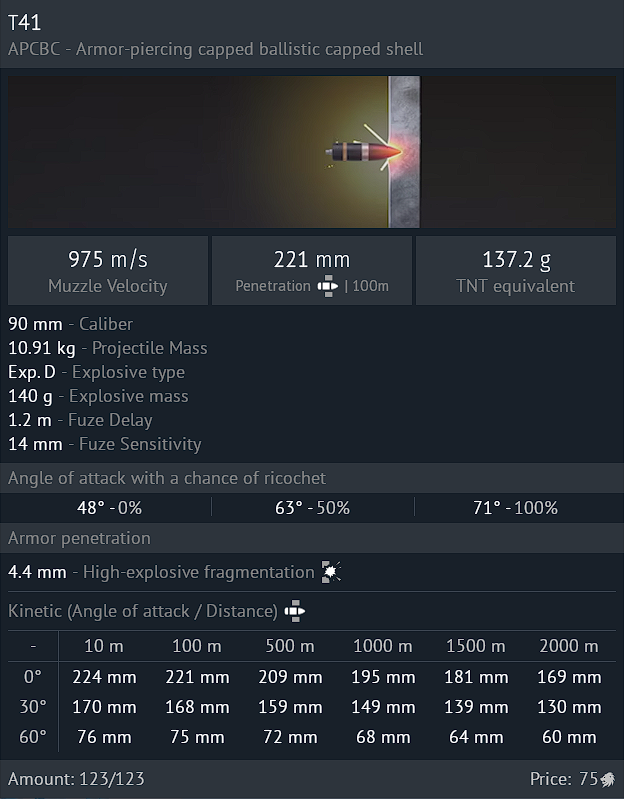
The M26E1 in my opinion needs a reload buff. As of the first week of 2026 the M26E1 offers a reload time of 11.1 seconds per shot on a single piece loaded 90mm gun. This is the information on the tank:
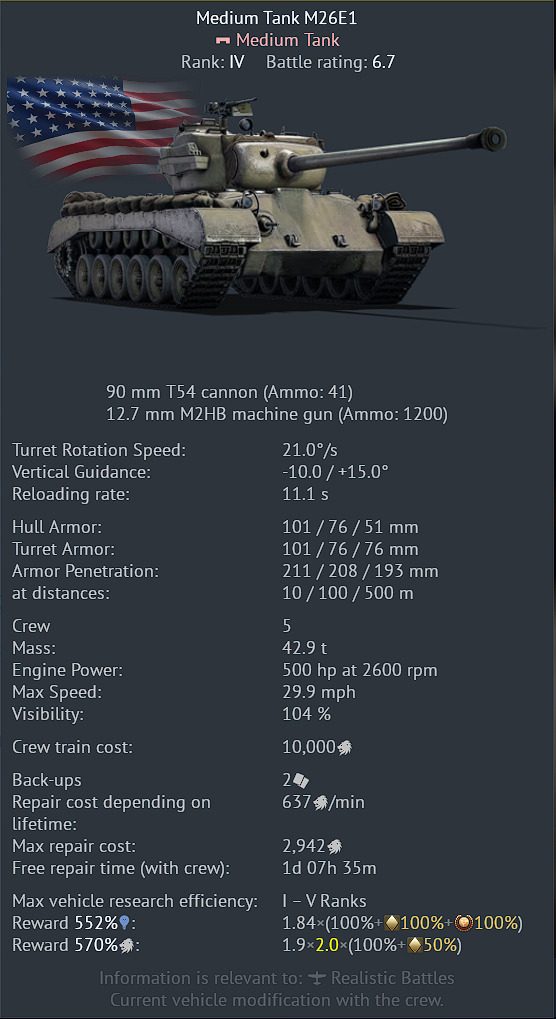
The gun has access to the following ammunition:

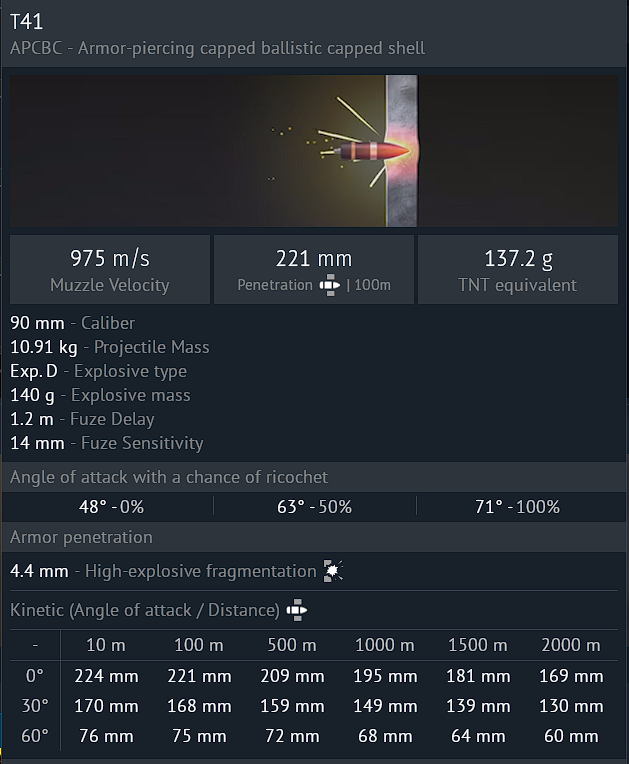
  • APCBC: T41
    image

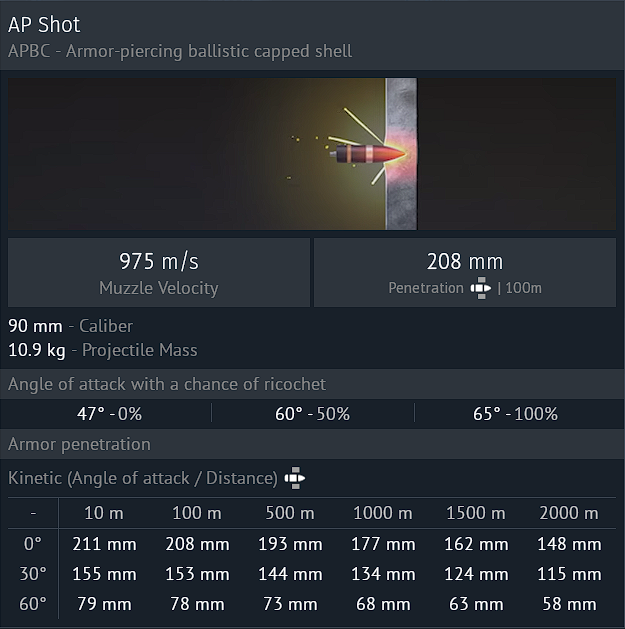
  • APCBC: AP Shot
    image

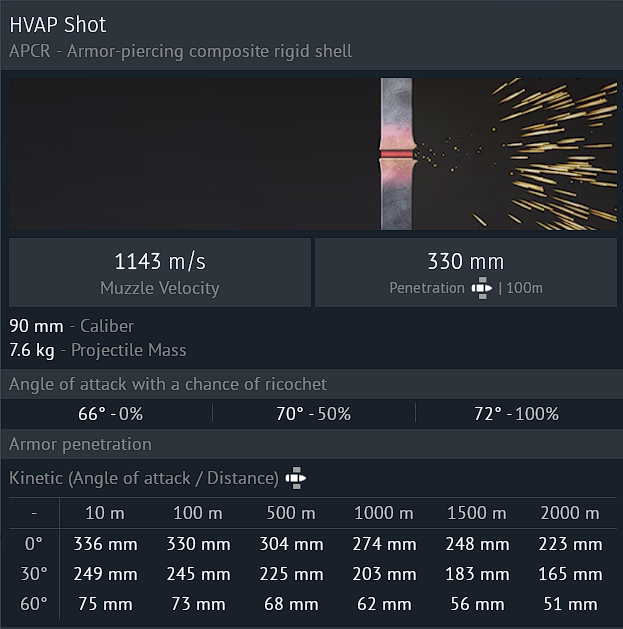
  • APCR: HVAP
    image

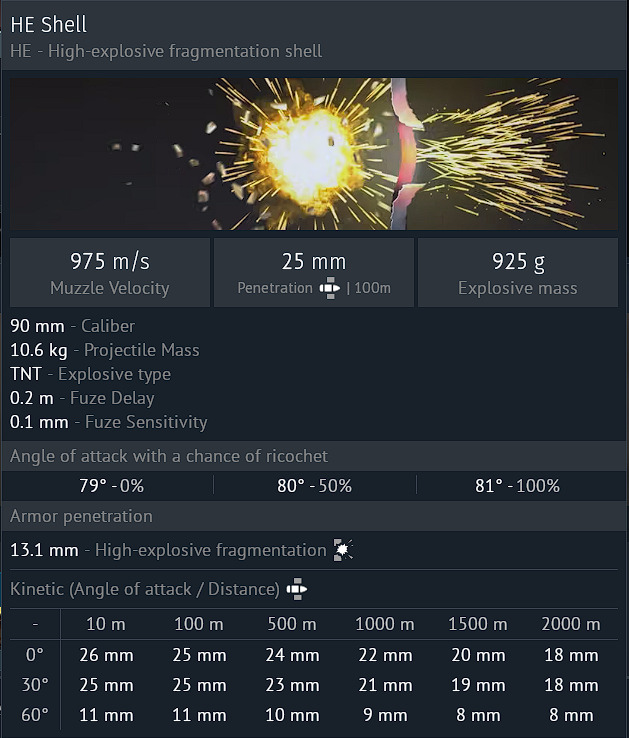
  • HE:
    image

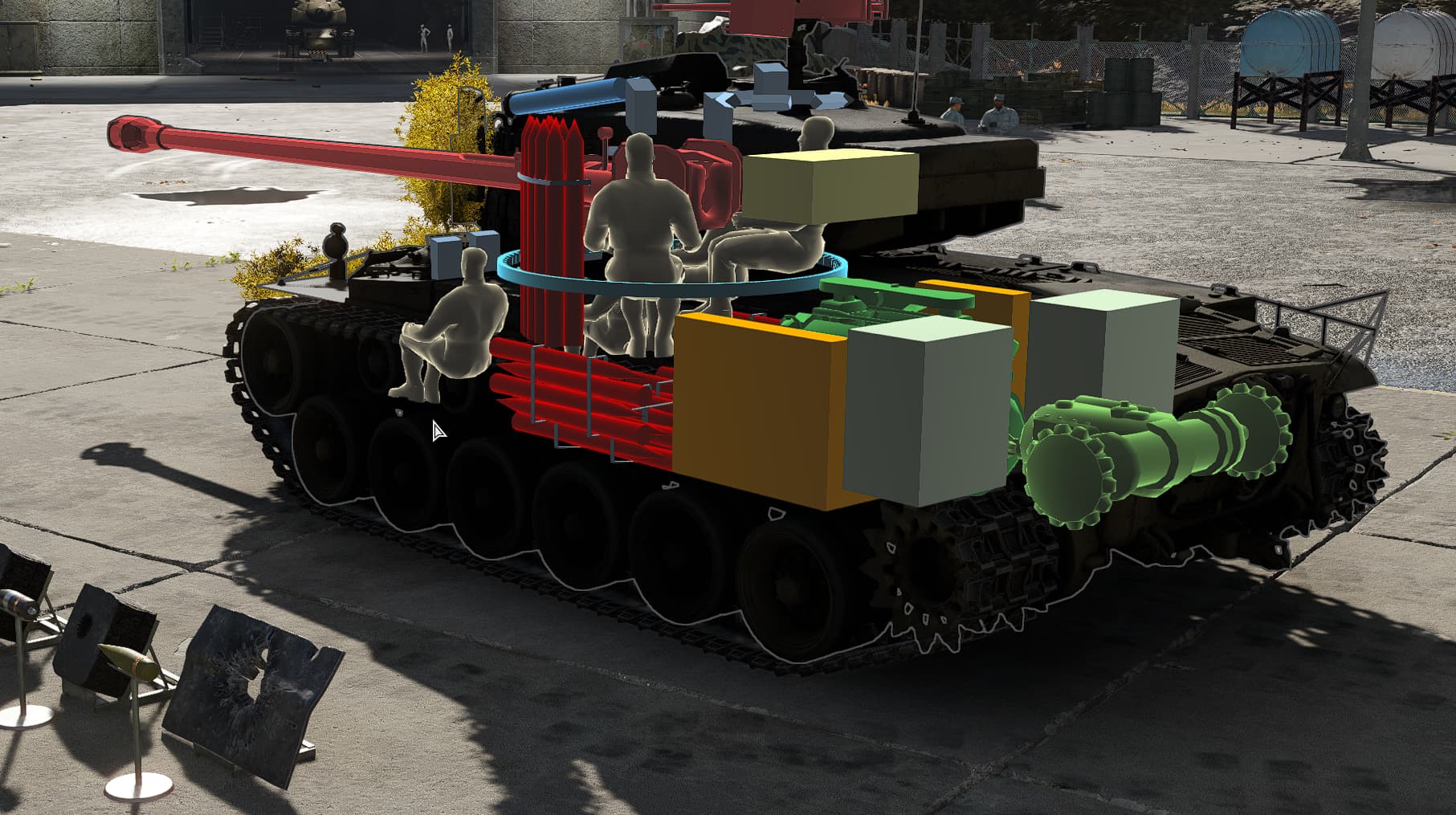
As can be seen the M26E1 offers the typical long 90mm American canon experience. The gun differs from the other variants however in the sense that it provides vast improvements in charge and chamber pressure efficiency. This means that the shell casings do not need to be as long and large as the shells found on the T26E1-1 as shown below:

T26E1-1:
M26E1:
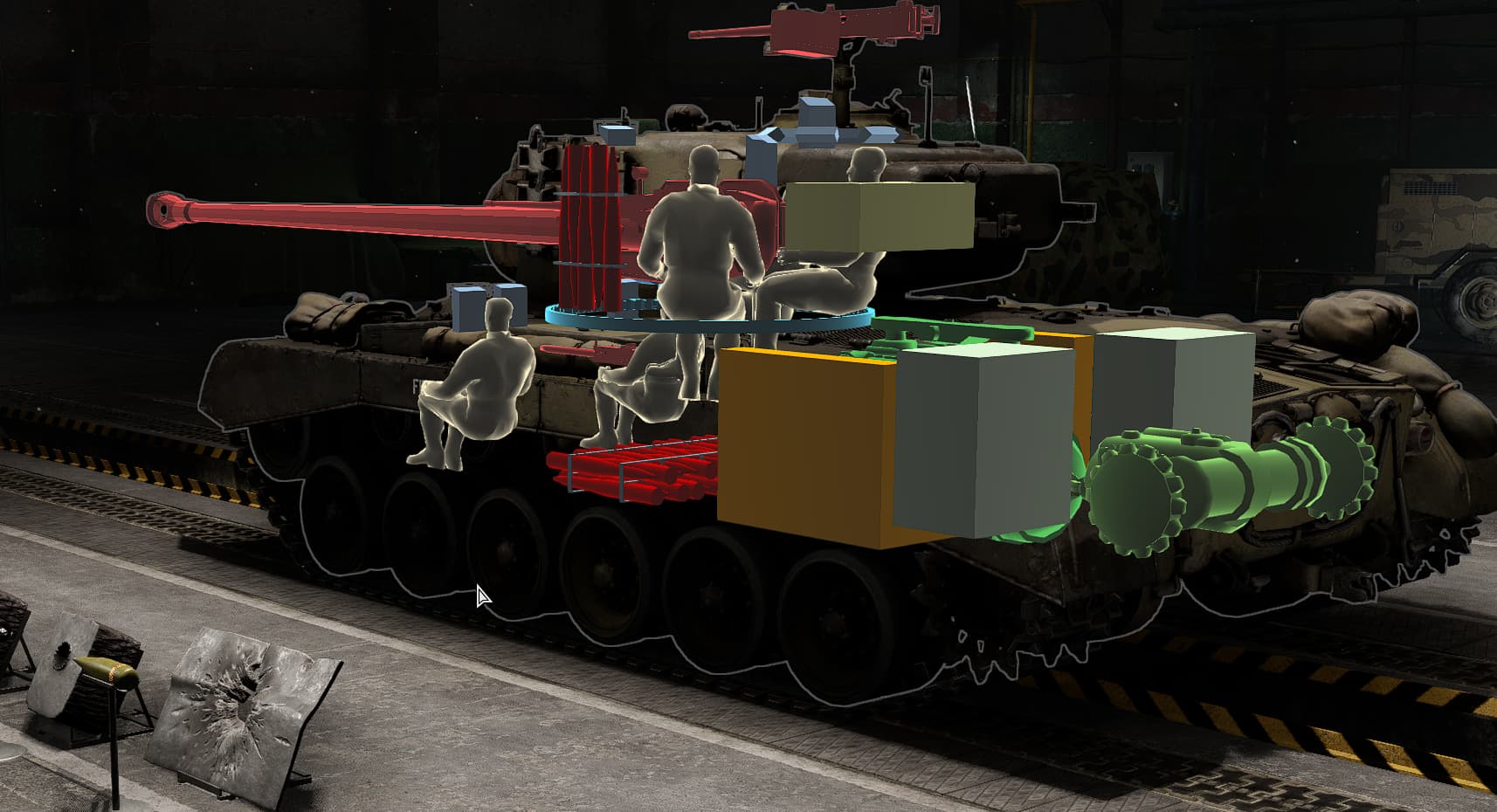
As you can see the shells casings on the M26E1 look to be around half the length of the shell casings found on the T26E1-1. This would make for a considerably more comfortable reloading process. To drive home the fact that the M26E1 should get a faster reload time lets take a look at the shell size of the standard M26:

M26:
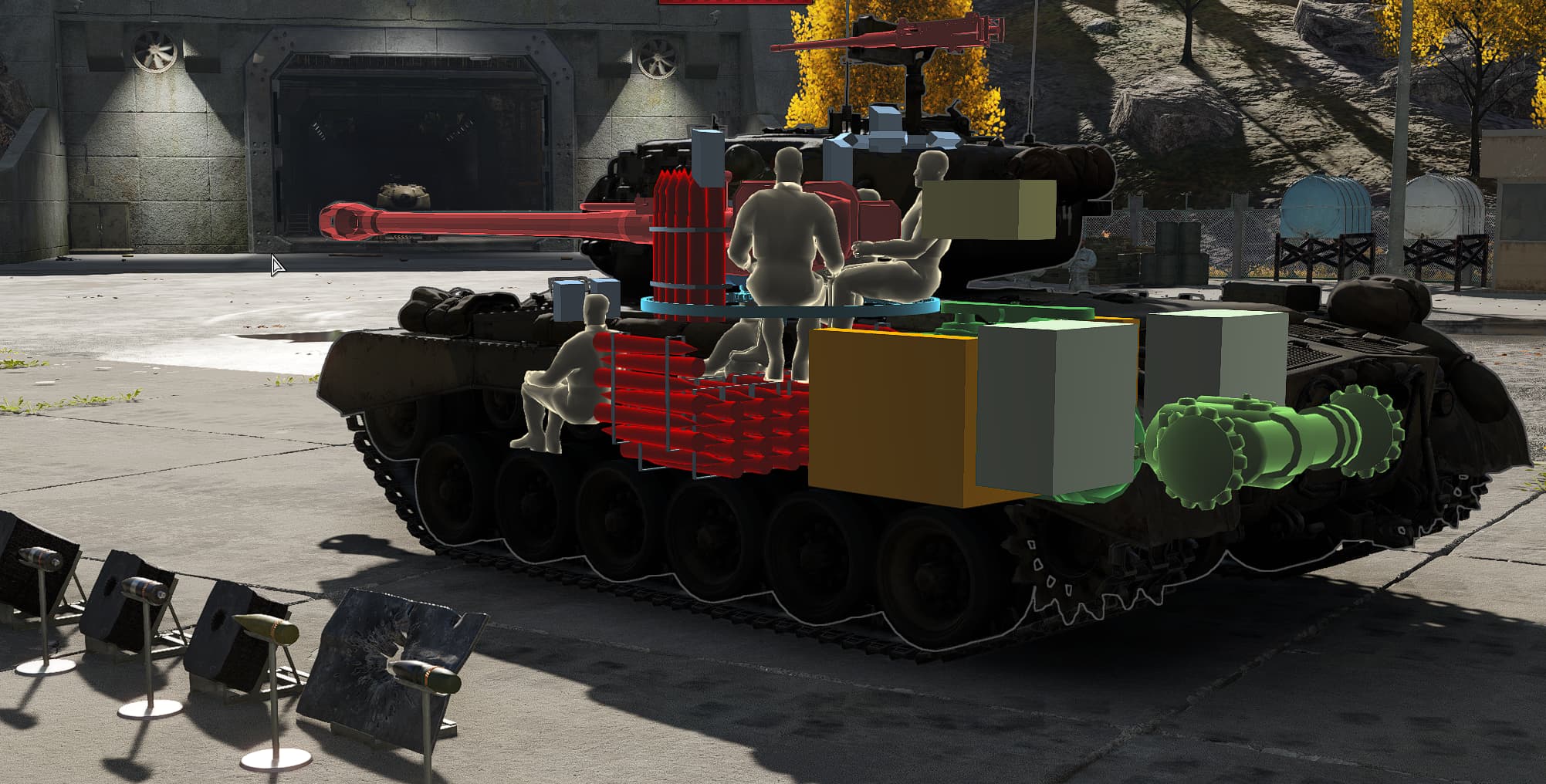
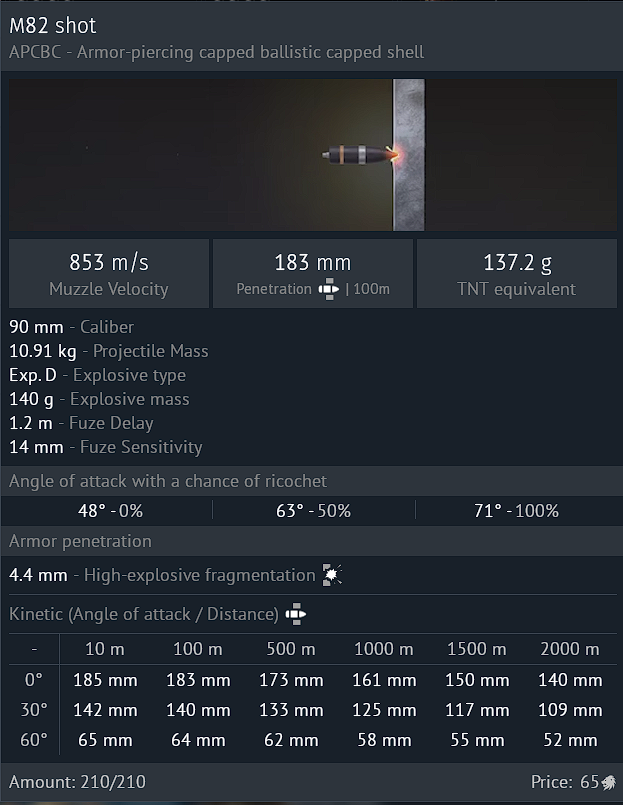
As can be seen the shells of the M26 and M26E1 are very similar in size and dimension. The M26 gets a reload time of 7.5 seconds on an aced loader, while the M26E1 is stuck at 11.1 seconds. That’s a 48% slower reload time for having what appears to be the same ammunition, especially when you factor in weight. For Example, lets look at both the M26’s and M26E1’s APCBC shells that contain HE filler:

M26:
image

M26E1:
image

The Masses are near Identical.

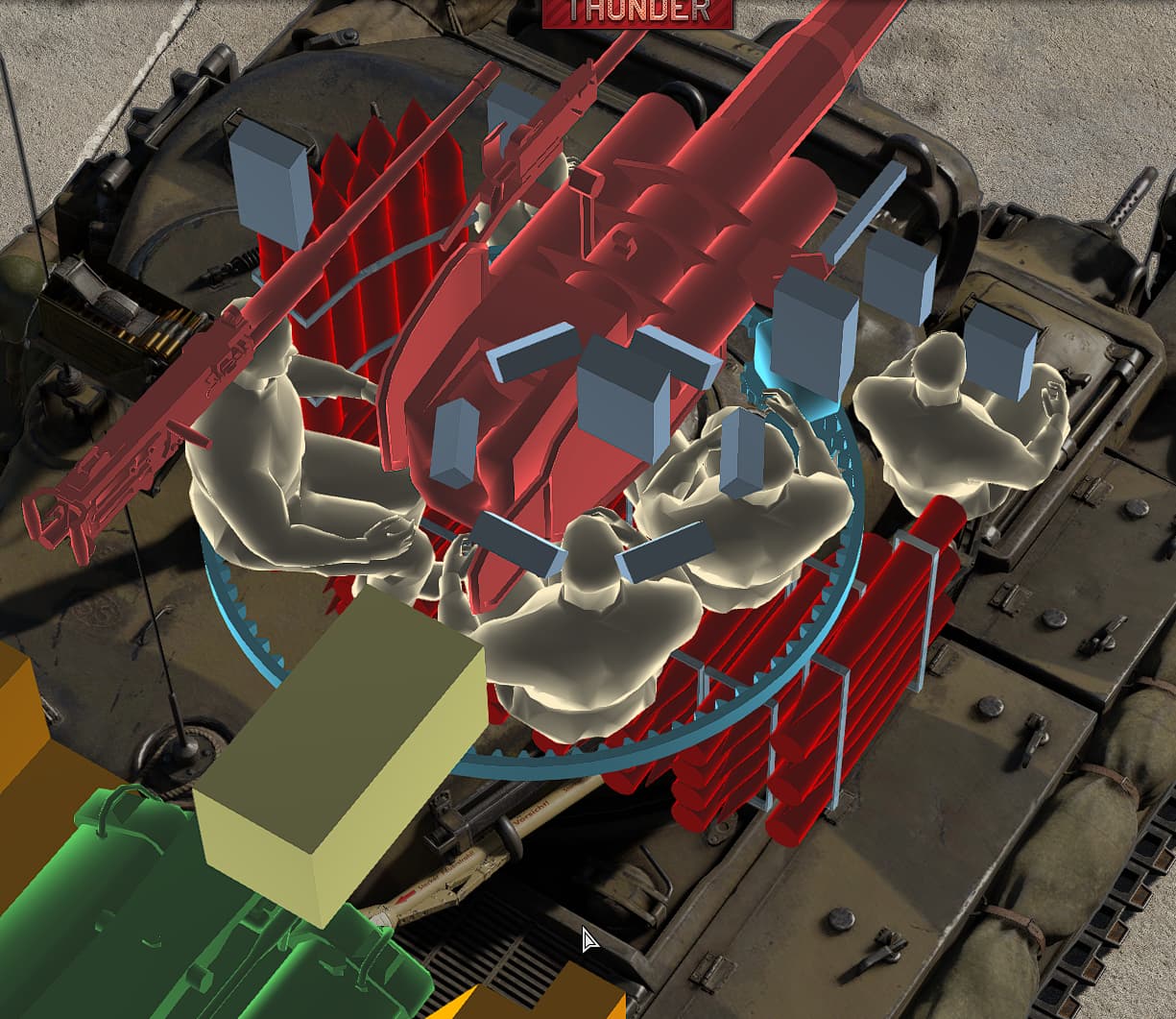
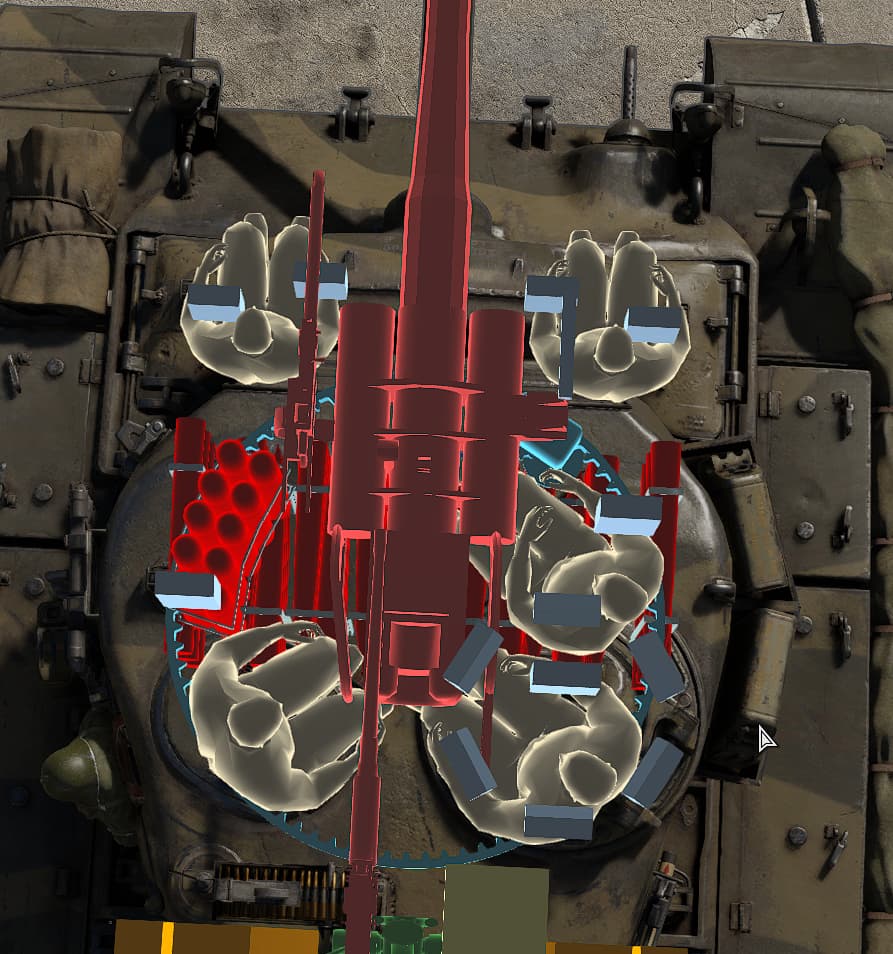
After awhile of thinking I thought the issue of reload time difference between the M26 and M26E1 was due to crew space. Maybe the breach of the M26E1 is significantly larger and thus
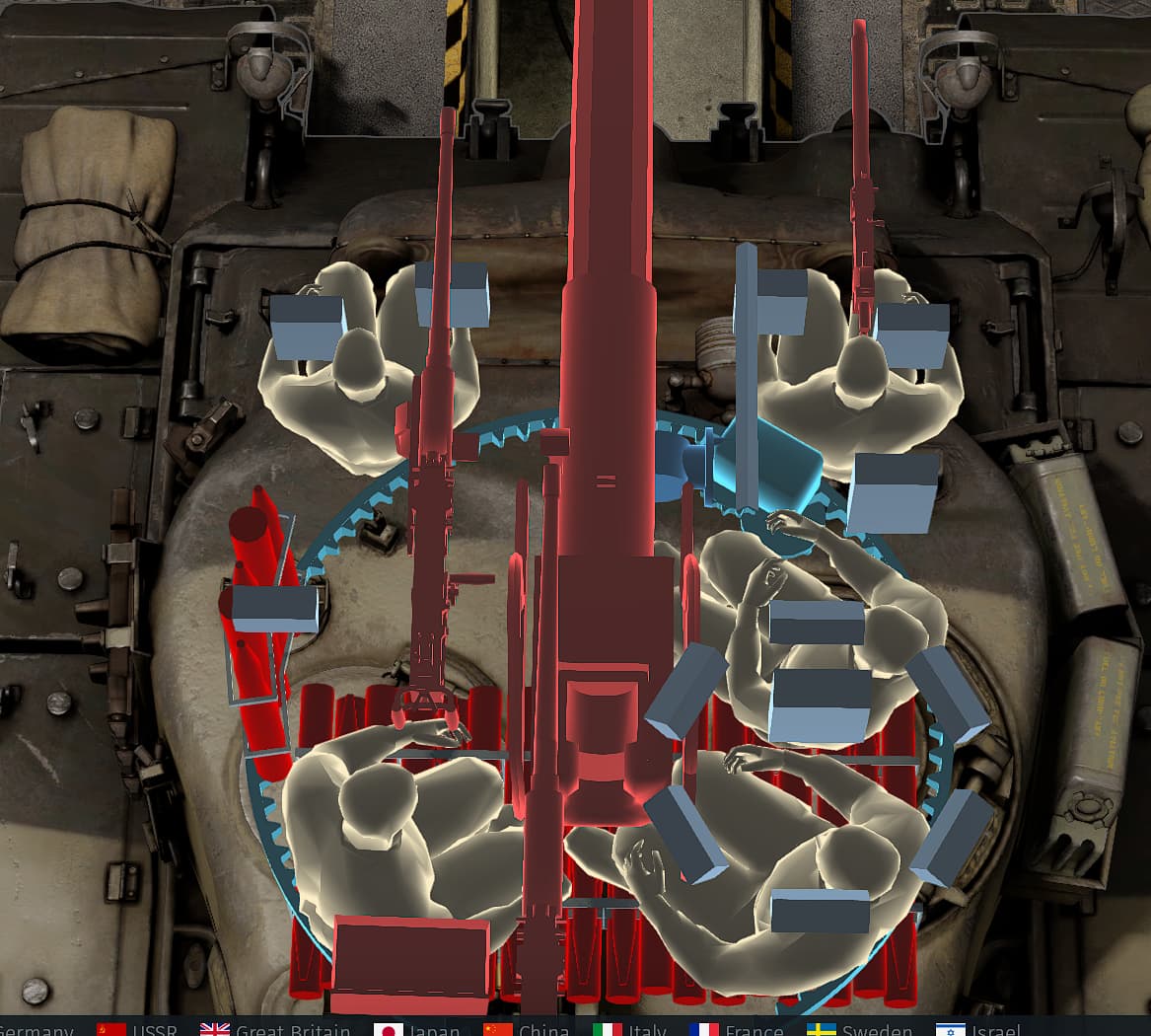
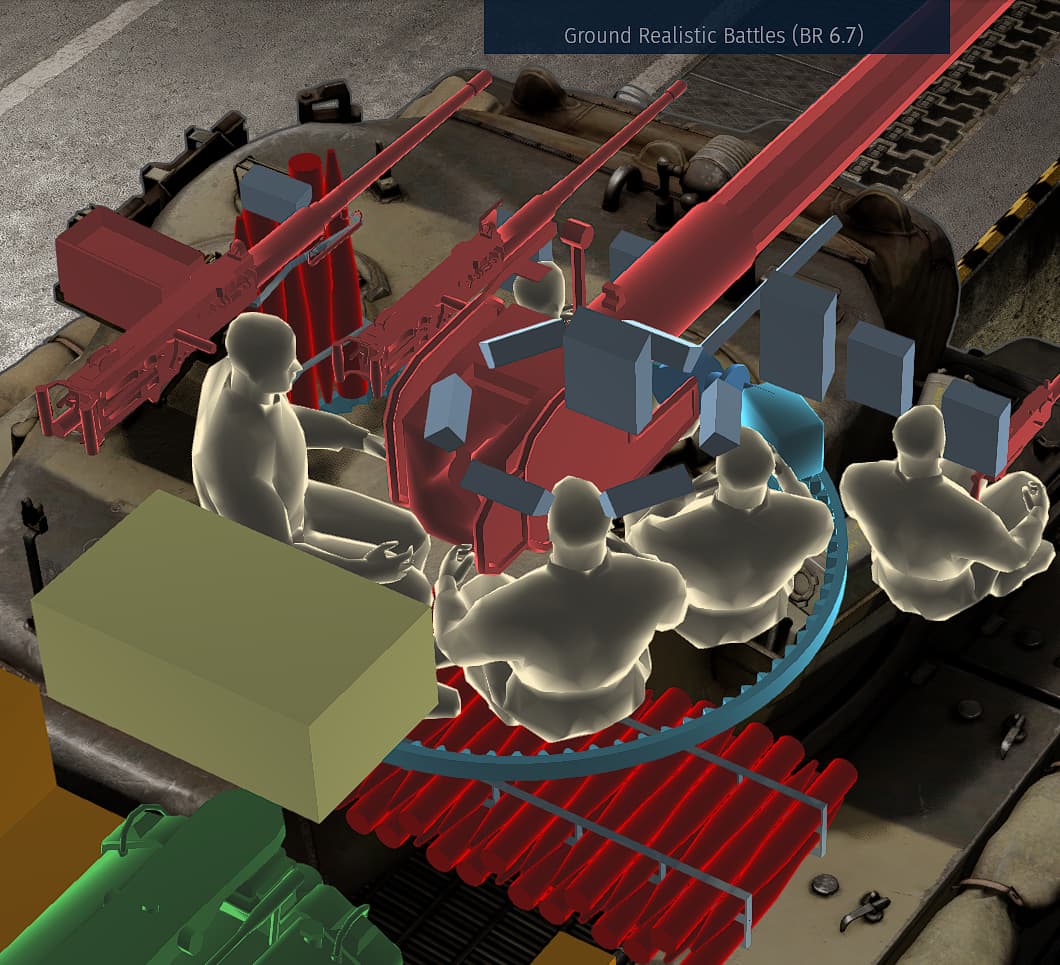
restrictive to the loader. Below are images of the crew compartments in the turrets for each tank.

M26:
image

M26E1:

The photos in game show the crew of the M26E1 actually having a little bit more room in the turret for, not just the loader, but the commander and gunner as well, which would make for a better fighting compartment experience.

I also think this tank deserves a reload buff due to the fact that German tanks like the Tiger II (Nr.1-50), Tiger II, Tiger II (Sla. 16), Panther II, Tiger II (10.5 cm KwK.) have all received a reload buff within the last 2 years. For the Long 88mm the reload time dropped from 8.5 seconds aced to 7.5 seconds aced. The 10.5 cm canon dropped from 15.4 seconds aced to 12.5 seconds aced while receiving a penetration buff to 284mm, granted the explosive TNT filler dropped to 140 grams, which is still extremely potent.

In conclusion, I think the M26E1 should get the same reload time as the M26. My evidence for this change are stated and shown above. Not only does the tank use similarly sized shells as the M26, that are around half the size of the of the T26E1-1, but the breach of the M26E1 also takes up less space inside the turret of the M26E1 allowing the loader more room to maneuver and reload.


4 Likes

Ok whats the suggestion

2 Likes

i refuse

3 Likes

7 Likes

Attack the D point!

2 Likes

I accidently hit post before I was done I just edited it and reposted. I hope my formatting made my suggestion easy to follow along.

Not just for the m26e1 but for the t32 and t32e1 and yes i 100% agree with you

11.1 seconds is plenty for the long 90mm bruh.

M26E1 may not have the armor of the super Pershing, but Pershings in general don’t have armor. Just use it as a sniper, honestly man the long 90mm is essentially 1 shot kill with T41, don’t even need to carry HVAP because the pen is good enough already on the T41 for tiger 2 H turret

11.1 though is aced which is pretty long for 90mm gun, especially when other cannons just as lethal on tanks with a bit more armor are reloading much faster, I think his general point is the thing just seems like they forgot about it lol.

1 Like

You cannot have an analogue for long 88 at same BR else german mains will suffer without their best WR and KDs.

1 Like

A lot of text for simply saying the long 90mm of the M26E1 actually uses slightly shorter rounds than the short 90mm.
Only difference is width and weight.

So the RoF should barely change compared to the regular M26.

2 Likes

Yes, you’re right. But I had to give details otherwise it turns into me saying “needs a faster reload”, and then someone else says “nuh uh”. Got to give good in depth logical reasons otherwise it turns into an uncontrolled opinion fest.

When you have Long 88’s at 6.7 that penetrate 237mm with APCBC with 108 grams of TNT equivalent filler, that reload in 7.5 seconds or faster; you also can’t forget about the Ferdinand and Elephant that reload at 6.7 seconds, it starts to not make sense why the M26E1 reload rate is so long. Its especially ridiculous when the Panther II is only .3 Battlerating away with a 900HP engine, a long 88 with a 7.5s reload time, a stereoscopic range finder accurate to 4km, and better armor than the M26E1. The Panther II also used to be a 6.7 for the longest time, and considering Germany’s poor winstats at 6.0 - 7.0 the Panther II could easily be moved back down to 6.7 again.

3 Likes

I want to add an addition to my comment.

For those worried that a change of this nature would be too powerful, know that the M26E1 only has a ready rack of 5 shells. This acts as a balancing mechanic to the tank in the sense that if you fire off too many rounds, too quickly, your reload rate will decrease substantially.

1 Like

Kungstiger exists. As for everything else, there are plenty of powerful guns at 6.7, the Tiger II’s reload speed is the tradeoff you get for a very easy ammo rack and an armour profile slightly worse than that of other heavies in this bracket. Considering it also gets the worst mobility of any 6.7 heavy, on balance it works out just fine.

1 Like

To be fair, the Tiger II isn’t anymore “ammorackable”(yes I’m making that a verb, adjective, and noun) than any other tank at that battle rating, most tanks in game from reserve, to where APHE is phased out, at around battlerating 9.0, are easy to ammorack (verb) because of APHE’s damage model. The way APHE currently works in game, where it produces a sphere of destructive shrapnel and overpressure inside a tank, makes it by far the most devastating ammunition type for post pentration damage in game. It delivers better post penetration than even APFSDS at 12.7. Every APHE firing tank cannon from long 88s, to short 88s, to 75mms, to 128s, to 90mm canons, to soviet 122mm, and 85mm canons, all ammorack (verb) tanks with near certainty. It is an ammo type that very easily wreaks havoc on the inside of tanks. Its funny because in many cases the explosive filler will KO ever crew member and also set off an ammo rack (noun) effectively double tapping the targeted tank. So, the idea that one tank’s more or less ammorackable (adjective) in game than another is yet to be seen. The soviet IS-2s scatter their ammo anywhere they cant fit it inside the hull and turret. Pick almost any weakspot on that vehicle and your likely to hit ammo. The M26, T34, T26E1-1, T26E5, M26E1 all have ammunition ready racks inside the turret just like the Tiger II does. Any APHE shot that penetrates more than 203mm can go through each one of those gun mantles and not only knock out the turret crew out, but also ammo rack (verb) the tank in one shot.

The next thing you bring up is that the Tiger II’s lavk of protection. It doesn’t have the worst armor profile of any heavy tank. You can not say that objectively. That is your opinion and you can feel that way, but thats not reflected in game. The Tiger II hull offers some of the thickest hull armor at its battlerating. Having 150mm at a 54º on the upper front plate and 100mm at 51º on the lower front plate would make any other heavy jealous and 80mm on the side and rear makes angling an amizing experience. That hull armor applies to every version of the Tiger II. The turret is where things differ. The turret is not the most armored turret at 6.7, but it is one of the best. The weakest is the Nr.1-50, the tank offers a curved turret face offering good deflection angles for poorly aimed shots but can be easily penetrated by most shells at 6.7 if you hit exactly on the crest of the curve. The H model’s turret is the best Tiger II turret offering 184mm of armor and slightly dropping to about 176 if you hit the tiny pixel sized area of the gunner’s optic, but by in large 99% of the H model’s mantle is 184mm. 184mm for a turret face beats out 95% of the heavy tanks at 6.7. The only tanks to beat that are the american T34 at 203mm and the T26E5. The other heavies fall short of what the Tiger 2 offers considerably. And when we do the math 203-184=19. Thats a 19mm difference between a Tiger II and one of the best armored turrets the US has to offer at 6.7. 19mm at 6.7, in the vast majority of cases, is not enough to save you. That armor difference is like if they upgraded the H’s mantlet armor by putting tracks over it. Its not enough to make a big difference. By the way, this is all forgetting that the Tiger II weakspot of 184mm (yeah “weak” pffff) is not only the easiest moveable weakspot by wiggling both the hull and turret, but is also one of the smallest gun mantles at that battlerating to hit for how armored it is. Just do a profile comparison. The American and Russian tanks have true five heads that you can see and nail a mile away. Also, some food for thought, the strongest rival tank to the Tiger II H at 6.7 is the US T34, peer to peer. It gets slightly better turret armor at the sacrifice of a substantially weaker turret ring of 158mm and a hull that is riddled with easily manipulated soft spots. The driver and assistant driver hatches, the MG port, and the left and right side of the lower plate. All of those weakspots, if struck, will most likely result in both crew annihilation and catastrophic ammo racks. One final thing the ammo racks of those US tanks I listed have the ammo in the turret closer to the front of the turret than the Tiger IIs. The ammo on the T26E1-1, M26, M26E1, T26E5 sit next to and between the loader and commander. On the T34 its there too, but also between the gunner and second loader and at the rear on bother sides of the commander. Imagine that. Turret ammo on the Tiger IIs at least fit it at the furthest back of the turret behind all the crew. On US tanks its in the middle and scattered through out the turret.

As for the Tiger II’s mobilty. For as heavily armored as it is coming in around 68 tons, it moves great for its size. Yes, the engines were nerfed a few updates ago, but they still move well for pushing almost 70 tons.

The war thunder devs do not strictly stick to reload times based solely on balance. Is balance considered when giving a tank a 7.5 second reload? Yes, but there is also historical prescident taken into consideration as well even if they say they don’t use documentation. They clearly use a weird mixture of necessary game balance and real life information. Sometimes in game tanks, like the IS-2 for example, in real life have a reload time of over 20 seconds and in game that reload matches, sometimes tanks could reload in 3 seconds like the 17pdr centurion in real life, but it reloads in 6 seconds in game because doing that would make the tank too insane, especially in a video game with map boundaries and forced objective play with adrenaline and fear of death taken out of the equation.

From the detailed screenshots I shared there should be no reason the M26E1’s loader takes longer than the M26 to reload. The crew room, shell size and weight are the exact same on both vehicles. So from a realistic perspective they should be equal. I have established that. Now, here comes the argument that from a game balance perspective that same M26E1 should also get a 7.5 second reload considering the fact that rival tanks offer better armor, mobility and firepower. To make things on more of a level playing field, the tank should have a reload rate that follows the trend of reload time improvements. Germany has received, many of in the last 2 years.

1 Like

Yes, I know APHE is busted. What makes the Tiger II an easy ammo rack is simply the fact that the weakspot is the turret face.

Of course. But in War Thunder, turret armour is always more important than hull armour. In an IS-2 (Obr. 1944), or a T26E5, you can greatly increase your survivability if you’re hull down. With the Tiger II, not so much. To be clear, the tank is perfectly competitive and there are ways to stay alive. You can side-scrape, hide your turret and bait shots with your excellent upper front plate. Still, if you can kill a tank through the turret, it’s always preferable.

It’s a good thing that I didn’t say that, then. I said:

Maybe try to read more closely next time. The only thing I deemed “worst of all heavies” in the Tiger II is its mobility. Its protection level is excellent but other heavies at or around this BR have a better armour profile. So if you want to use the trite old triangle of performance, the Tiger II has good protection (but not the best for a heavy), terrible mobility (even for a heavy) and the best reload of any heavies it’s likely to meet, with the exception of French autoloaded heavies which are in any case a full BR higher than it. That’s balanced, imho.

You don’t need to tell me how to play Tiger IIs, my man. I’ve been doing this for the past three months while playing them at 7.0 instead of 6.7:

They are very competitive tanks. The Serienturm versions, that is, I wouldn’t touch the pre-series version with a ten-foot pole personally. The reload rate is one of their strengths and makes them competitive in spite of other shortcomings.

Post nerf, the regular Tiger II has a whopping 10.03 horsepower per ton. You might want to check that number on the IS-2, T26E5 or literally any other heavy in this bracket before you mention its comparative mobility again.

They explicitly use reload as a soft balancing factor, and have been for years.

This sentence alone tells me that your knowledge of the subject matter is very superficial. The figures you often see cited for IS-2 reloads are taken as average of all ammo racks. In reality the rate of fire would start out considerably quicker and then become slower and slower as the tank expends ammunition. You can find a lot of information about this on places like Tank Archives, where reload and gunnery trials comparing Tiger II and IS-2 are documented.

The reload of the IS-2 in game is completely about balance.

There are no German medium tanks at 6.7 to make this comparison with. In fact, there are no German medium tanks within two BR steps down (the Panthers at 6.0) and three steps up (the Leopard I at 8.0). Comparing the M26E1 to the Tiger II is therefore not the correct approach to take imho. If you compare it to the regular M26 there’s actually a pretty obvious answer about what the trade-off is. Compare it to the T-44 and things already get more interesting.

“Yes, I know APHE is busted. What makes the Tiger II an easy ammo rack is simply the fact that the weakspot is the turret face.”

Yes, you can ammo rack the Tiger II through the turret face, but as I stated earlier, you can do the same exact thing to other 6.7 tanks, both heavy and medium, at the same battlerating. The Tiger II is not alone and solitary in this vulnerability and special in its weakness. That argument about its gun mantle cannot be used to discourage changes to other vehicles around the Tiger II’s battlerating. The IS-2 (1944), T26E1-1, T34, T26E5, M26, and M26E1 are, and can be, KO’d in the exact same manner as Tiger IIs and this occurs all the time. The Long 88 slingers are capable of inflicting the same damage back that it can receive.

“Of course. But in War Thunder, turret armour is always more important than hull armour. In an IS-2 (Obr. 1944), or a T26E5, you can greatly increase your survivability if you’re hull down. With the Tiger II, not so much. To be clear, the tank is perfectly competitive and there are ways to stay alive. You can side-scrape, hide your turret and bait shots with your excellent upper front plate. Still, if you can kill a tank through the turret, it’s always preferable.”

I was wrong earlier in my post, the Tiger II H has changed slightly, now the gun mantle is 188mm instead of 184mm, post model update. The gunner’s sight armor drops to 153mm on one pixel sized area, and then outside that spot, quickly reaches back up to 188mm. What I’m saying is that if you call the gun mantle of the Tiger II a weak spot then you have to say the same thing about tanks like, the T26E5, the T26E1-1, and the T34. The T26E5, for example, has multiple areas on the mantle that drop below the protection level of the Tiger II’s 188mm and 153mm. the T26E5 does have some areas where it jumps to 278mm, but these are easy to shoot around. There are weak areas all over the turret face to shoot. The T34’s gun mantle is 203mm thick, that can be shot through with the long 88. The T26E1-1 actually has the best gun mantle armor listed here, but if you shoot wide of the mantle the turret armor is only max 169mm thick, easy for the Tiger II to shoot. The IS-2 (1944) is the weirdest one here. The multiple pieces behind the mantle make shells sometimes non-pen, but in most areas the armor on the turret reaches only 124mm and lower in most areas. The Hull is actually more consistently strong on the IS-2 (1944) than the turret. In hull down scenarios, all of the tanks listed here are more than susceptible to being one shot through the turret. They have plenty of ammo there to also be ammo racked. The idea that Tiger IIs are not as good at hull down fighting is not true. they have plenty of armor to deflect and bounce shells and are at no greater risk than these previously listed counterparts.

  1. “an armour profile slightly worse than that of other heavies in this bracket.”

How else am I supposed to read that? You said that it has an armor profile slightly worse than other heavies at the bracket. I disagreed and said it doesn’t have the worst armor profile. You yourself said it had an armor profile slightly worse than that of the other heavies at its battlerating. I don’t see what I misrepresented. I am not trying to be malicious or rude. I am just engaging with your ideas seeing as this is a forum.

  1. “You don’t need to tell me how to play Tiger IIs, my man. I’ve been doing this for the past three months while playing them at 7.0 instead of 6.7:”

I am not telling you specifically how to play your tank. You play the way you see fit. I was making a point that in general terms, the Tiger II’s gun mantle is very easy to move and make harder to hit, seeing as it has good steering and turret traverse.

  1. I don’t know why you feel it necessary to show me, what I can presume to be, your stat card. I never said you were bad at the game or questioned your ability.

  2. “Post nerf, the regular Tiger II has a whopping 10.03 horsepower per ton. You might want to check that number on the IS-2, T26E5 or literally any other heavy in this bracket before you mention its comparative mobility again.”

I just did the math your 10.03 HP/T is an incorrect calculation for all Tiger II variants. I don’t know where you pulled that number. The Tiger II (Nr.1-50) has a HP/T ratio of 8.76 (600HP/68.5T). The Tiger II H has a ratio of 8.60 (600HP/69.8T). The Tiger II H (Sla.16) has a ratio of 9.71 (680HP/70.0T). The 10.5 Tiger II has a ratio of 12.44 (900HP/72.3T). So, before you misinform the entire discussion that the Tiger II has a 10.03 HP/T ratio, know that no model of the Tiger II has that. I almost took your calculation for granted which almost skewed the opinion I was going to post and I wasted a lot of time rewriting it. The T26E5 has a ratio of 10.77 (500HP/46.4T). The IS-2 (1944) is 11.25 (520HP/46.2T), the T26E1-1 has a ratio of 10.02 (500HP/49.9T). The T34 is 12.31 (810/65.8), but the engine is limited to 21.8 MPH. So, in the end these other Heavies will accelerate and get to top speed slightly faster than a Tiger II. The T34 is the outlier getting a 12.31HP/T ratio, however the tanks speed is limited to 21.8 mph, which is lower than all other heavies listed, so it balances out in the end. But, when looking at the slight hits to the Tiger II’s mobility the other benefits that come from that are great, having one the fastest reloading, highest penning APHE shells at its battlerating and amazing armor coverage to boot. I think your 3.5 K/D and 68.8% win rate can attest to that in your Sla.16.

2 Likes

You can. It’s just not as easy, at least imho. Shooting the gun mantlets of the T26E5, T30 and T34 is a very RNG experience. To be clear, sometimes shooting the Tiger II turret face is also RNG. I have definitely seen instances where someone shot me in the turret face and the round just magically disappeared. I even documented some of them. Like this poor IS-2 that should have killed me and got buggered by the snail instead:

However, the RNG is much higher vs the 6.7 American tanks, and of course against the same IS-2 as well. Plenty of times I’ve shot there and gotten the kill, plenty of times my rounds have disappeared.

Let me put it this way, if I turn a corner and a T34 turns a corner and we’re both unangled and in the open, the mantlet will never be my first choice for where to shoot him. I will always do the MG port if I can. Second choice is the corners of the lower front plate. The mantlet is something I only shoot if they go hull down, and if they do, I am much more worried about them, because I know there is a higher chance that my round will disappear.

While this also happens to the Tiger II, it’s less subject to volumetric, or at least that’s what it feels like to me. When shooting at other Tiger IIs in “civil war” matches (rare in GRB, but sometimes when playing in a squad the matchmaker will put all vs all) I’ve never really worried about where to shoot them, it’s such an obvious and easy target. Of course it helps that the average Tiger II player does not wiggle the turret.

It is a weak spot, indeed. It’s just less reliable to use than on Tiger IIs, in my opinion.

Well yeah, that one’s a bit of an exception, as you have to shoot at the gaps where the applique is not present. Very weird armour profile.

I think you are extrapolating more than what I’m actually saying. The Tiger IIs are good at a bit of everything in my opinion. It’s just that hull down, other heavies are much scarier. The ideal cover scenario for the Tiger II is not to go hull down but to side-scrape while hiding the turret.

You’re supposed to read this as: “other heavies at this BR get a better armour profile at the expense of a slower reload”. The T26E5 is probably the best example of this. It is a true “breakthrough” tank. To a degree so is the IS-2 but its reload means it cannot push alone.

Tiger IIs are not the best for breakthroughs. Imho what they do best is instead aggressive defence. Like holding a corner or a cap. You’ll get there too late to be the one who pushes it first anyway, but if the enemy counterattacks, your reload and gun handling enable you to defend a location even against multiple enemies if you use cover to hide your turret.

My apologies, I think it’s from before the nerfs. Still, that reiterates my point even further, they are so slow. Especially the regular Serienturm version. In this game, mobility matters a lot.

I would still pick acceleration over top speed in a heavy, since you’re likely to spend more time accelerating than being at top speed while playing this game.

I am not saying that the Tiger II is bad. That’d be crazy. I usually spend my time here arguing against people who complain that it’s bad (usually German mains who haven’t learnt how to use it properly). I’m saying that its highs are very high, its lows are very low, and this produces a balanced competitor at its battle rating. Before the engine nerfs the Tiger IIs were imho 7.0 material, while now they fit 6.7 just fine. Take away the reload advantage though and that changes very drastically.

1 Like

You wouldn’t be taking away an advantage though. The Tiger II, heavy tank, would still reload at 7.5 seconds with 237mm of pen and 108g of TNT equivalent filler, it would still be the fastest reloading heavy tank at 6.7, that would not change. It would also still be the best penning APHE, at every range at 6.7 by a considerable amount. I am just calling for a slow medium tank, the M26E1, to get a more reasonable reload time.

I feel like this discussion between us is distracting from what I originally posted about, and whether purposefully or not it is clogging up the discussion. I posted about the M26E1 receiving the same reload time as the M26 based on shell weight, size and available space inside the turret as my primary arguments, and used screenshots of other related vehicles to prove the point. I mentioned some rival tanks and their recent changes and advantages as a smaller secondary argument in a single paragraph. You’re on a soap box about the Tiger II not being good enough. Most of the points that I made in response to your original post you agree with for the most part, besides a few differences. So what are we even trying to talk about? At the end of the day, reducing the M26E1’s reload time would not upset the balance or meta at 6.7. German long 88s would still rain supreme, because even if the M26E1’s reload was moved down to 7.5 seconds, the Long 88s would still pen more armor and overall be a more capable gun at most ranges.