History
On September 6, 2023, drawing lessons from the war in Ukraine, the US Army announced that it would no longer pursue the M1A2 SEPv4 program. Major General Glenn Dean, Program Executive Officer for Ground Combat Systems, commented on the decision, stating, “The Abrams tank can no longer grow its capabilities without adding weight, and we need to reduce its logistical footprint. The war in Ukraine has highlighted a critical need for integrated protections for Soldiers, built from within instead of adding on.”
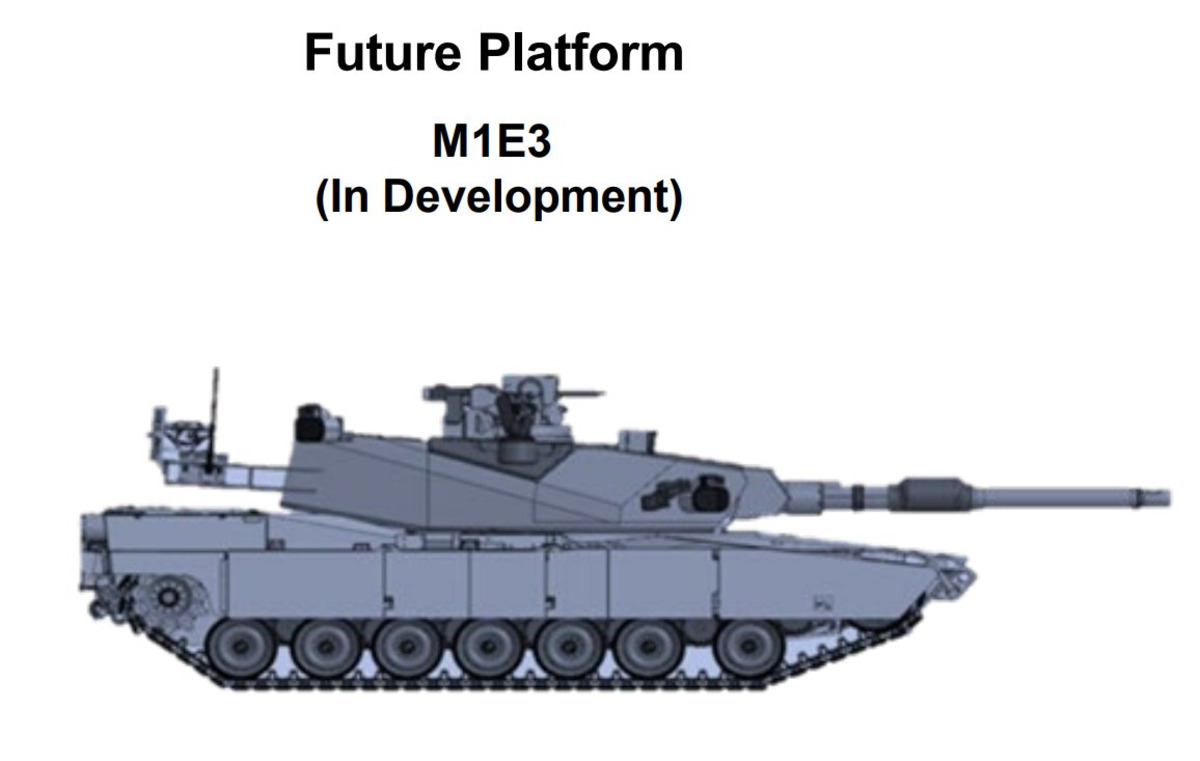
Instead, the Army declared requirements for a new platform that would become known as the M1E3. The Army elaborated that the M1E3 would incorporate the best features of the M1A2 SEPv4 while complying with the latest modular open systems architecture standards, allowing faster technology upgrades and reduced resource demands. This approach would enable the Army and its industry partners to design a lighter, more survivable tank that would be highly effective at initial fielding and easier to modernize in the future. The M1E3 was envisioned as a modernization effort focused on improved survivability and combat effectiveness in an era increasingly shaped by drones, digital warfare, and networked threats projected through 2040 and beyond.
The M1E3 is not a completely new tank design but rather an engineering change to an existing platform. As defined by its “E” designation, it represents a modification more significant than a minor upgrade and serves as a prototype and development configuration until the vehicle is formally type-classified and receives an “A” designation. The Army initially anticipated that the M1E3 would reach initial operational capability in the early 2030s.
The design goals for the M1E3 reportedly included a hybrid electric drive, an autoloader, a new main gun, integrated armor protection, improved command, control, and networking capabilities, artificial intelligence applications, the ability to operate alongside robotic vehicles, and masking technologies to reduce thermal and electromagnetic signatures.
Previously, General Dynamics Land Systems unveiled the Abrams X technology demonstrator, which reportedly incorporated several concepts later associated with the M1E3, such as a hybrid electric diesel engine, enhanced armor, and AI-assisted systems. Abrams X served as a proof of concept and helped drive the Army’s decision to work closely with GDLS to refine the M1E3’s requirements and development pathway.
In the spring of 2025, the US Army reportedly sought to accelerate the M1E3 development timeline, compressing it to roughly one-third of the original projection and aiming to field the platform within 24 to 30 months. Army officials acknowledged that integrating an autoloader required additional development time due to technical challenges. They also emphasized that the M1E3 was intended to feature built-in active protection systems designed to counter missiles, RPGs, and drone-based threats. The vehicle was projected to achieve a weight reduction of approximately ten tons compared to the M1A2 SEPv3.
By September 2025, the Army anticipated that four M1E3 prototypes would be operational within service by 2026. In early December 2025, General Dynamics Land Systems announced that it had delivered the first M1E3 pre-prototype vehicle to the Army.
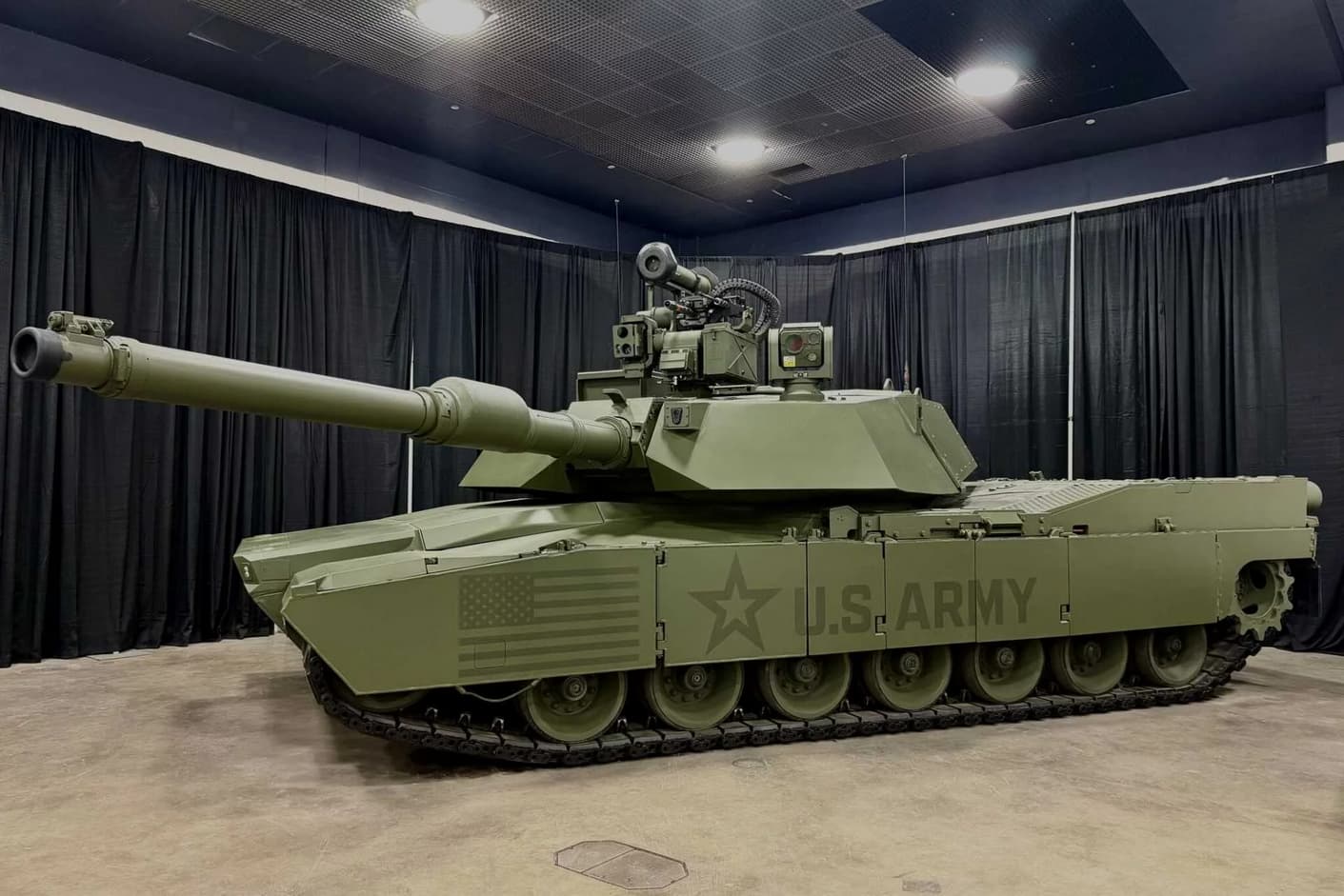
This culminated on January 14, 2026, when the M1E3 was publicly unveiled for the first time at the Detroit Auto Show. The vehicle was observed to feature a hybrid power system, an autoloader, and a remotely operated turret equipped with a Javelin missile launcher, an Mk. 19 grenade launcher, and a machine gun. It retains the Abrams’ 120mm M256 smoothbore main gun and incorporates a remotely operated weapon station, enhanced sensor systems, and modernized networking capabilities. The vehicle is lighter than previous Abrams variants while integrating advanced technologies.
The demonstrator includes a redesigned hull, an unmanned turret, an autoloader bustle, a three-person crew layout, and simplified digital controls. The turret used on the test vehicle appears to be based on an older M1A1 turret that has been heavily modified for experimental purposes. Existing hatches, periscopes, and elements of the fire control system were removed, and the turret was converted to an unmanned configuration. While the powerplant reportedly remains unchanged, the vehicle appears to use a new suspension system, likely hydropneumatic in nature.
It should be emphasized that this vehicle represents an early demonstrator and pre-prototype configuration. The final production M1E3, or eventual M1A3, is expected to differ significantly in appearance and capability. US Army officials have stated that this platform is intended primarily to test concepts related to crew layout, controls, and system integration rather than serve as a finalized design. As such, features such as the remotely operated weapon station configured with a grenade launcher, machine gun, and Javelin missile may have been included solely for demonstration and evaluation purposes.