- Yes
- No
Hello, I had found some good sources covering the M1917 in Canadian service, so here is a suggestion for them. These pieces of equipment have an interesting way they ended up in Canadian hands.
History:
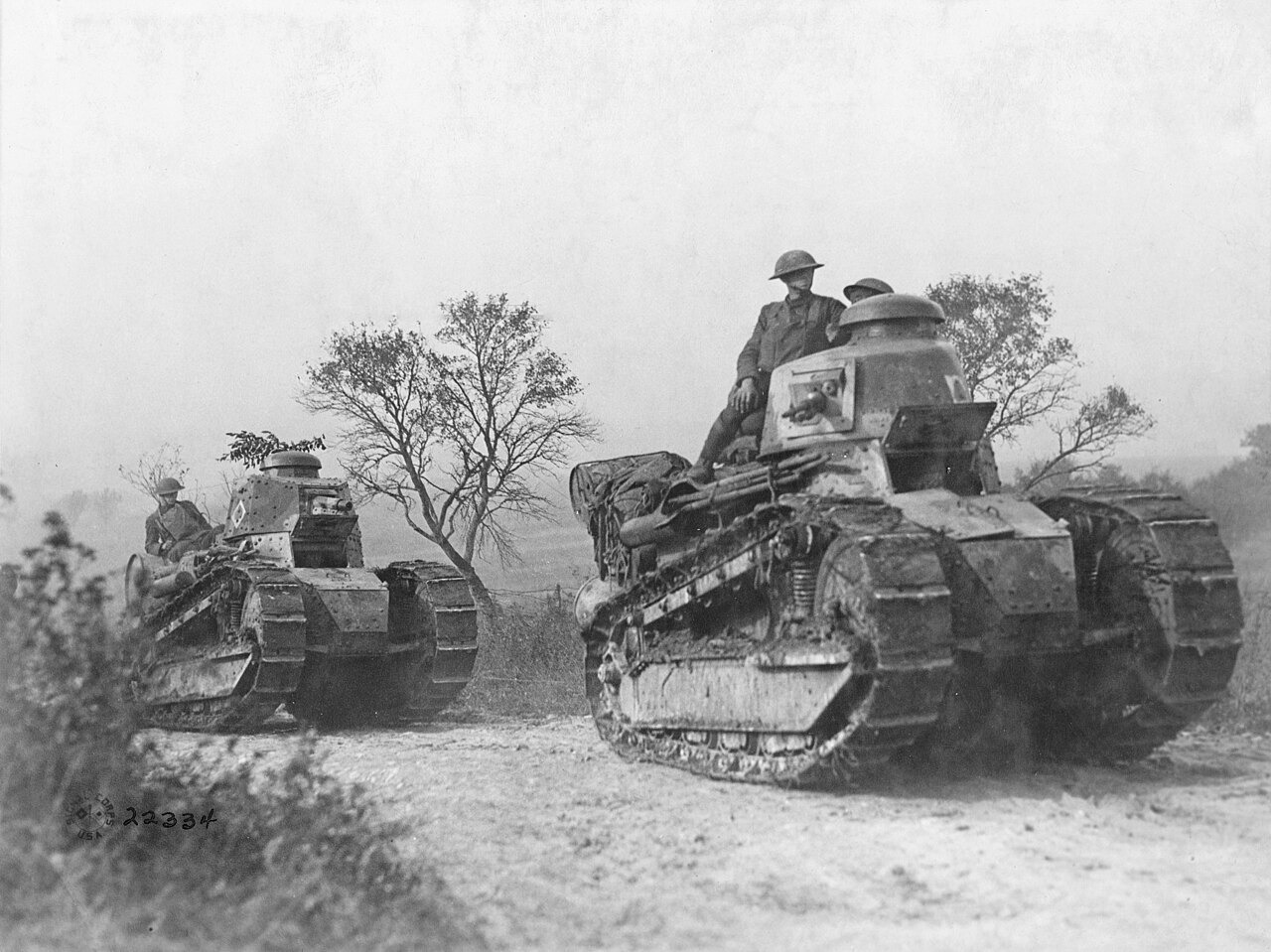
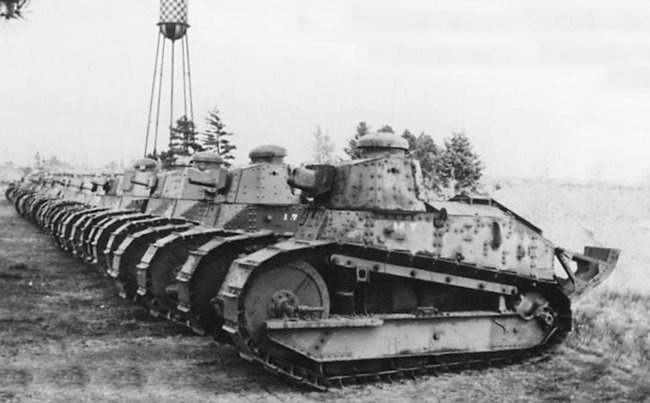
Due to the fact that many standard design features were first implemented here, the Renault FT would be referred to as the first modern tank in the world. Features like sloped armour, rear engine and a 360 turret for the main gun. Well, France would build over 3,000 Renault FTs; it would be built under license by the US as the M1917 and derivative models built like the Italian and Russian Fiat 3000 and T-18 models, respectively.
The US had originally ordered 4400 M1917s, by the end of production, only 950 were built, which had been delivered to the US Tank Corps after the war. Part of the delays would be due to the many difficulties the US engineers faced, as the blueprint for the Renault was in metric compared to the imperial used by the US. They would see some changes by the US: two different machine guns, being the Marlin M1917 7.62mm and the Browning M1919 7.62mm that replaced that, a Buda 4-cylinder engine, which didn’t improve speed but torque. It also had a steel idler wheel over wood, and the exhaust switched to the left side; vision slits for the driver, lifting hooks and a different mantlet. 1920 would see the Tank Corps demobilized and tanks transferred to the infantry. Due to accidents, fires and part cannibalization, nearly all of the tanks had been mothballed by the start of World War 2.
The Canadian Armoured Corps would be basically non-existent by the time 1939 had rolled around. Despite that, its roots had links to the 1936 reorganization by Major-General McNaughton. This reorganization had taken the 35 Horse cavalry regiments, reduced them to 16 and filled the remaining with 4 armoured car regiments, 2 motor machine gun regiments and 6 tank battalions (tho 5 of them already existed). With the need to train the new tank battalions, a school would be set up in London, Ontario, on the 1st of November 1939. However, by 1938 it would be determined there wasn’t enough space at the London location and would be moved to Camp Borden, Ontario, along with being renamed to Canadian Armoured Fighting School (CAFVS). Despite the Borden location having enough space, the school still lacked vehicles, with its fleet only having 12 Carden-Loyd tankettes, a single truck, and a Dragon artillery tractor. Despite the lack of equipment, CAFVS would conduct its first course from the 11th of July to the 23rd of July in 1938. In September of that year, its equipment wohs would be lessened by the delivery of 2 Vickers Mark VIB tanks, with 14 more received in 1939, tho do to a lack of spare parts, they had limited usefulness. With the formation of the Canadian Armoured Corps (along with the renaming of CAFVS to A-33 Canadian Armoured Corps Training Establishment) on the 13th of August in 1940, the lack of training vehicles was felt more than ever.
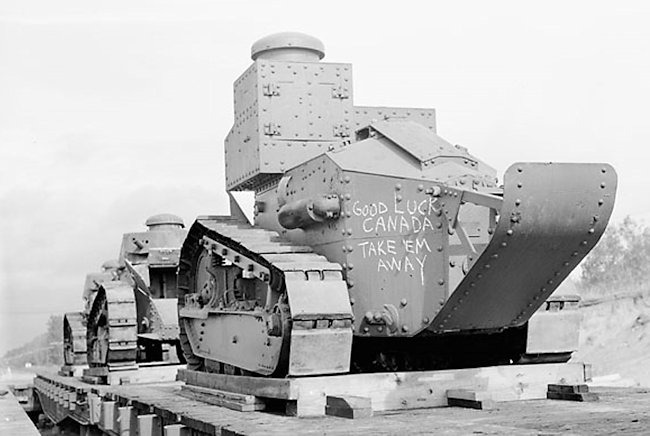
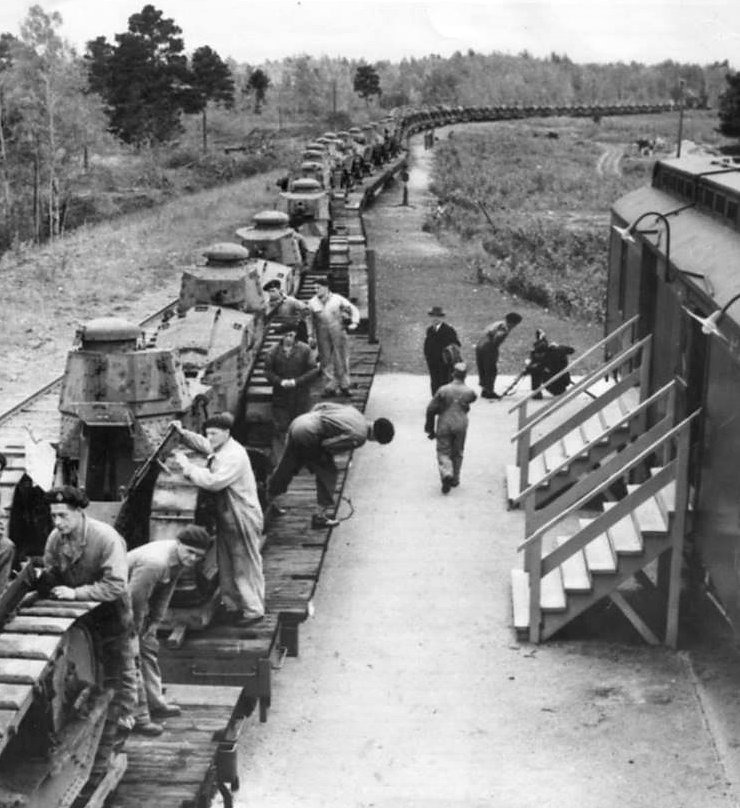
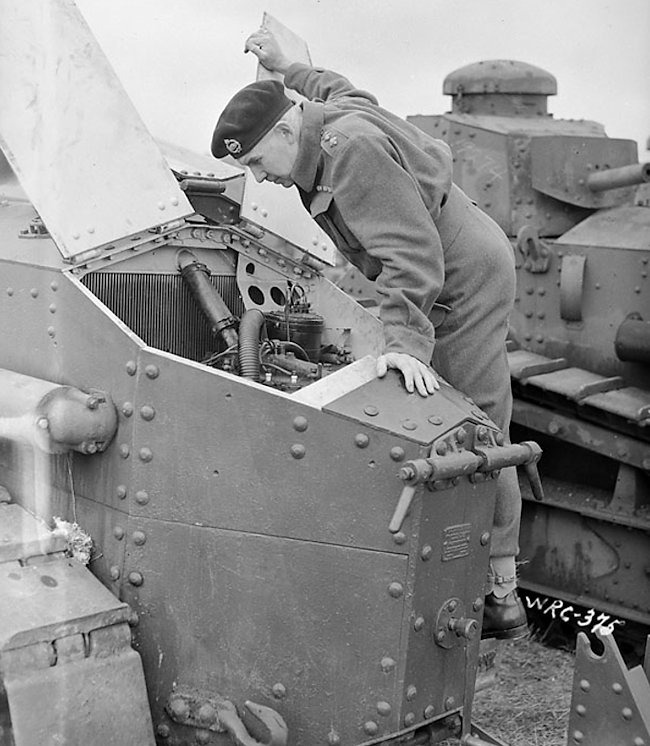
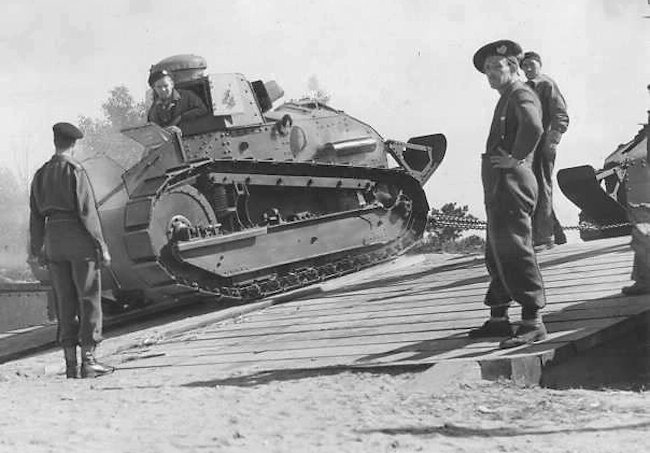
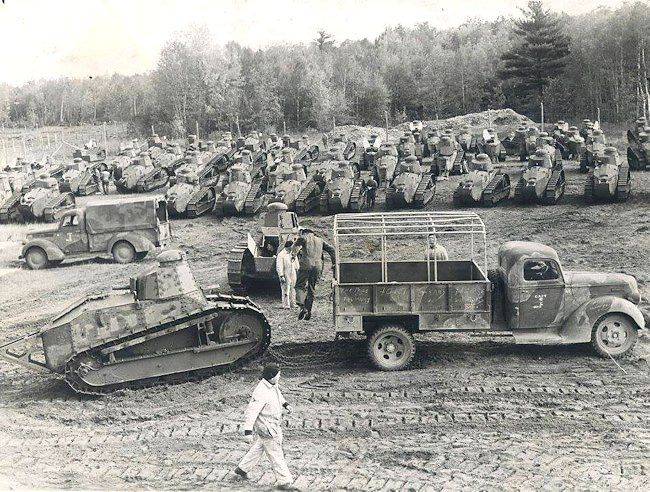
July of 1940 would see talks between high-level officials of Canada and the US, despite the fact that the US was still bound by the Neutrality Act of 1935, which made it so it couldn’t sell anything related to war to a nation at war. In late August 1950, Mr Worthington would visit Rock Island Arsenal in Illinois, where a number of M1917s where located. Due to this visit, it was set up to purchase 250 of them for $250 per tank. However, only 236 would be delivered on the 8th of October, 1940. Despite attempts to foil the deal, they would end up being dropped when it was read that 1,500 tons of scrap metal had been delivered to Mr. Worthington at Camp Borden Iron Foundry.
After this delivery, training would be ramped up rapidly, with new crewmen being trained in 13 weeks. With the training meant to do at least two kobs, the 13 weeks would be followed up with 4 weeks for wheeled vehicles and 2 for tracked vehicles. More specialized training would happen after, with 4 weeks for the gunner role, and for roles that had a driver paired with another one, it would be 8 if it included radio operator and 4 if it was mechanic. Following all of this, there would be 4 more weeks of training, split in half between crew training and tactical field exercises.
December of 1940 would see a request from the British War Office for Canada to deploy an armoured division for the British to equip a train. This would end up being the 1st Canadian Army Tank Brigade, which was shipped to the UK in July of 1941 and given Matilda tanks. At home, the M1917s (nicknamed “Renaults” by the Canadians) served as the primary armoured training vehicle until their replacement with the Ram tanks in 1943. The M1917s would be sold to the civilian market primarily to farmers and loggers. Out of all the M1917s bought by General Worthington, only two had survived.
More pics
Specs:
Dimensions (L x W x H): 4.88 (4.02 without tail) x 1.71 x 2.14 m
(16’0″/13’2″ x 5’7″ x 7’0″)
Total weight, battle ready: 6.7 tons
Crew: 2 (commander/gunner, driver)
Propulsion: Buda HU modified 4-cylinder 4-cycle vertical L-band gasoline engine, 42 hp@1,460 rpm
Speed: about 5 mph (8.85 km/h)
Range: 20 miles (32 km)
Fuel tank: 24 US gallons
Armament Female tank: .30 cal (7.62 mm) Marlin machine gun or
M1919 .30 cal (7.62 mm) Browning machine gun (238 rounds)
Armament Male tank: 37 mm (1.46 in) M1916 cannon
Armor: 6 – 22 mm (0.24-0.86 in)
Total production: 236
Sources
Light Tank M1917 in Canadian Service - Tank Encyclopedia
www.canadiansoldiers.com
https://tankmuseum.ca/blog-post/the-m1917-in-canadian-service/
M1917 light tank - Wikipedia
https://www.youtube.com/watch?v=5xc8Z4mErOg
https://www.youtube.com/watch?v=VZoOjq7Z5gg
Restored Rare Tank Display | Canadian War Museum