- Yes
- No
- (independent) BeNeLux tree
- France: BeNeLux subtree
- Dutch (sub) tree
- other
- no/negative
TL;DR: The Dutch RDM upgrade of the M109 series: 155 mm/52-calibre, extended range (~40 km), automatic/semi-automatic ammo handling, LINAPS inertial/gun-laying system, reduced crew, improved shoot-and-scoot.

History & Service
History
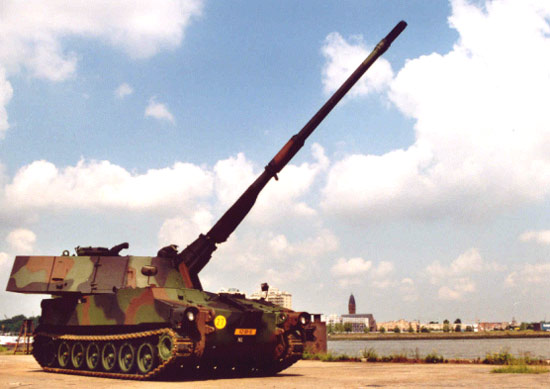
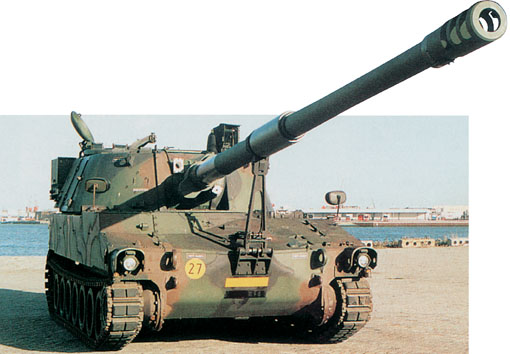
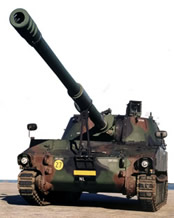
The story of the M109L52 begins with the ubiquity of the M109 self-propelled howitzer family, widely used around the world since the 1960s. Acknowledging the limitations of older M109s (shorter barrel lengths 39/47 calibre, dated fire-control, open chain logistics), many users like the Dutch Royal armed forces looked for upgrade options rather than wholesale replacement. The Dutch firm RDM Technology BV (Netherlands) (Rotterdamsche Droogdok Maatschappij NV) stepped into this role, offering a modular upgrade called the M109L52 in the late 1990s and early 2000s.
By late 2000, RDM Technology began firing trials of its private-venture M109L52 version fitted with the 155 mm/52-calibre Extended Range Ordnance (ERO). This upgrade targeted existing users of the M109 series, offering significantly improved range, lethality, and system autonomy, at the lower cost of refurbishing rather than buying entirely new systems.
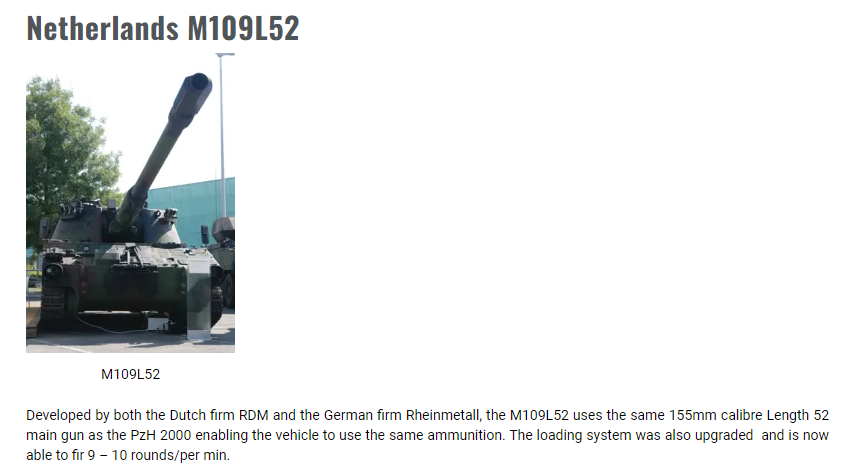
The M109L52 upgrade comprised several key elements: a new 155/52-calibre gun (in early prototype form using an RO Defence ordnance then ultimately a German Rheinmetall 155/52 barrel as used on the PzH 2000), strengthened cradle and muzzle brake reducing recoil by ~50 % compared to the older 155/39 barrel, modified turret and chassis to absorb higher firing loads, and improved suspensions and drivetrain components.
On the systems side, the upgrade introduced an Ammunition Handling Kit (AHK) with a drawer magazine, electrically driven projectile rammer and automatic/semi-automatic primer feed allowing a burst rate of three rounds in ten seconds according to RDM. The fire-control system was modernised via the BAE Systems Laser Inertial Artillery Pointing System (LINAPS) and integration of a muzzle velocity radar and laser range-finder for direct fire capability. Furthermore, a remote travel-lock operated by the driver allowed the vehicle to come into action without crew leaving the armour-protected hull.
Crew reduction was part of the modernisation: from six people in the traditional M109 crew, the L52 version claimed reduction to four: commander (who also lays the weapon), assistant gunner, loader and driver. Additional improvements included an auxiliary power unit (APU), NBC/air-conditioning system mounted in the bustle, and modular applique armour/spall liners depending on customer configuration.
Operationally, the upgrade sought to bridge the gap between older self-propelled artillery and next-generation systems like the PzH 2000 or the British AS90. Marketing materials stated that the M109L52 could offer “80 % performance of the PzH-2000 for 50 % of the budget”. Because of this cost-effective appeal, many armies with M109 stocks considered the upgrade path feasible, although this was especially aimed at appealing the domestic defence market, as the Dutch ministry of Defence at the time was looking at buying the PzH2000NL.
The M109L52 stands as an example of modernising legacy artillery platforms to meet network-centric warfare requirements: GPS/INS navigation, automatic gun-laying, fast position shoot-and-scoot capability, extended range ammunition (ERFB-BB, sensor-fuzed rounds up to ~40 km) and improved crew protection and vehicle autonomy.
In a Dutch/BeNeLux context, this vehicle represents a typical national industry-driven upgrade solution, aligning with NATO doctrines of the 2000s that emphasised mobility, networked operations and cost-effective upgrades rather than large scale procurement of brand-new systems. While the Netherlands did not adopt the full package as a widely fielded system, the concept remains significant for its engineering and export potential.
Specifications
Characteristic Data Chassis Base M109 series (A3) Crew 4 – Commander, Gunner, Loader, Driver Weight ~28 t (combat loaded) Dimensions Length 7.0 m • Width 3.2 m • Height 3.3 m (approx.) Engine Detroit Diesel 8V-71T (450 hp @ 2300 rpm) Power-to-Weight Ratio ~16 hp/t Transmission / Drive Allison TX-100-2A automatic, front drive Suspension Torsion bar with reinforced components Top Speed (Road) 56 km/h Operational Range ~350 km Primary Armament 155 mm L52 Gun-Howitzer (Rheinmetall barrel) Barrel Length 8.06 m (52 calibres) Muzzle Velocity 827 m/s (ERFB-BB) • Up to 930 m/s (RAP) Ammunition Types HE • HE-BB (Base Bleed) • Smoke • Illum • SMArt (sensor-fuzed) Ammunition Stowage 28 – 36 rounds (depending on AHK fit) Maximum Firing Range Up to 40 km (ERFB-BB) Rate of Fire (Manual) ~3 rds/min (20 s reload) Rate of Fire (with AHK) 3 rounds in 10 s (burst) / ~7 s reload (ready rack) Elevation / Depression –5° / +75° Traverse (Turret) ±30° Fire Control System LINAPS (Laser Inertial Artillery Pointing System), muzzle velocity radar, laser rangefinder Auxiliary Systems APU • NBC / Air-conditioning • Remote travel-lock Armor Protection 12 – 35 mm RHA (front mantlet ~35 mm) Smoke System 8 smoke grenade launchers + engine injection In-Game Role Long-range support / counter-battery SPG with burst fire capability
Place in War Thunder
The Dutch M109 L52 would fit perfectly at Ranks VI-VII as a modern self-propelled gun combining M109 mobility with advanced Dutch fire-control and a 52-calibre gun.
- In a BeNeLux tree, as a late-tier artillery vehicle.
- In the French subtree, as a capable NATO counterpart to the AUF1.
- Possibly as a premium or event vehicle highlighting Dutch innovation.
Its strong accuracy, burst-fire system, and modern design would make it a unique long-range support option.
Pictures
Pictures
Sources
Sources
- Army-Guide.com. “M109L52 Modernization of the vehicle.” Manufacturer: RDM Technology BV. (Army Guide)
- Dutch Defence Press. “Modern artillery at low-cost.” Leo van Westerhoven, 5 October 2004. (Dutch Defence Press)
- Archive of RDM Technology BV “Defence Engineering” page (RDM Technology). (web.archive.org)