- Yes
- No
Hello, I remembered a friend had shared some history with me, so now I’m suggesting the M109s in Canadian service. This time, an extra buy: the M109A2
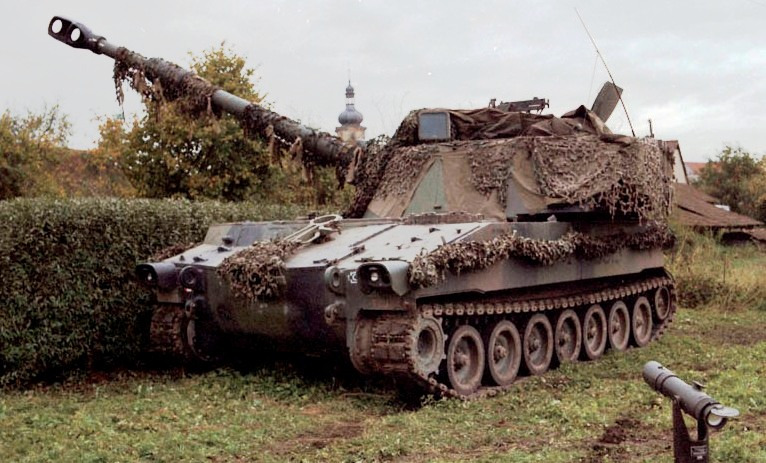
History:
Canada would procure the M109 in 1966. Well, they were primarily to be used overseas in West Germany; they would first be delivered to the Royal Canadian School of Artillery and RCEME school between the months of March and May of 1968, with the fleet’s service officially starting in July 1968 with deliveries to 1 RCHA, with the fleet split between West Germany and Canada under 4 CMBG.
Between November of 1976 and March of 1977, all 50 of Canada’s M109s would be upgraded to the M109A1 standard, under the M109A1 Modification Projects. 24 of them would be converted by 202 Workshop Depot located in Montreal, and the remaining 26 would be converted at CFB Lahr through modification kits. This would be followed up on by a purchase of 26 new M109A2s in 1984, to further supplement the existing fleet. These would replace all of the M109A1s in West Germany, with the M109A1s returned to Canada; these served in West Germany until 1992, with reductions to the CFE, which had 1 RCHA return to Canada.
An upgrade to the M109A4+ standard would happen in late 1992 after a Depot Level Inspections and Repair (DLIR) had been issued to overhaul 30 vehicles, these being 26 M109A2 and 4 M109A1. RDM Technology would win the contract, which resulted in the vehicles having to be shipped to the Netherlands for the upgrades to be completed by 1995. However, due to issues with RDM’s work, 202 Workshop Depot had to inspect and repair the vehicles after they were returned to Canada. A second DLIR would occur with an order for 46 more M109A1s to be upgraded to M109A4+ standard. This would be done by 202 Workshop Depot in two groups, one of 18 vehicles and another of 28, that was completed in 1996 and 199, respectively. However, these upgrades wouldn’t save the vehicles, as after this they would be retired in batches until February of 2005, when the last vehicles had been fully withdrawn from service.
Specs:
Crew: 6
- Chief of Section
- Gunner
- Assistant Gunner
- Driver
- 2 × Cannoneers
== Dimensions ==
- Combat Weight: 25.0 t (25,000 kg / 55,000 lb)
- Length (without gun): 6.19 m
- Gun Overhang (forward): 2.94 m
- Width (without fenders): 3.15 m
- Height (to top of AAMG): 3.28 m
- Ground Clearance: 0.45 m
- Fire Height: ~2.0 m
- Turret Ring Diameter: 2.50 m
- Track Width: 0.38 m
- Ground Pressure: 0.828 kg/cm²
== Armament ==
=== Primary Armament ===
155 mm M185 Howitzer
- Mount: M178 Turret Mount
- Ammunition Capacity: 36 rounds
- Traverse: 360°
- Traverse Speed: 11°/s
- Elevation Range: −3° to +75°
- Elevation Speed: 7°/s
=== Secondary Armament ===
12.7 mm M2HB Machine Gun
- Mount: Turret Anti-Aircraft Mount
- Ammunition Capacity: 500 rounds
- Traverse: 360° (manual)
=== Fire Control Equipment ===
- M117 or M117A2 Panoramic Telescope (Gunner)
- M118A2 or M118A3 Telescope (Assistant Gunner)
== Armour ==
Construction Method: Welded
Material: Rolled 5083 Aluminum Alloy
=== Hull Armour ===
- Upper Front: 31.8 mm @ 75°
- Lower Front: 31.8 mm @ 19° / 60°
- Sides: 31.8 mm @ 0°
- Rear: 31.8 mm @ 0°
- Roof: 31.8 mm @ 90°
- Floor: 31.8 mm @ 90°
=== Turret Armour ===
- Front: 31.8 mm @ 22°
- Sides: 31.8 mm @ 22°
- Rear: 31.8 mm @ 0°
- Roof: 31.8 mm @ 90°
== Mobility ==
=== Engine ===
General Motors 8V71T Model 7083-7396
- Configuration: 8-cylinder, 2-cycle, V-type, supercharged diesel
- Net Power: 345 hp @ 2,300 rpm
- Gross Power: 405 hp @ 2,300 rpm
=== Torque ===
- Net: 895 lb-ft @ 1,600 rpm
- Gross: 980 lb-ft @ 1,700 rpm
=== Transmission ===
Allison XTG-411-2A
- 4 Forward Gears
- 2 Reverse Gears
=== Fuel Capacity ===
- 511 L (135 gal)
=== Steering ===
- Mechanical steering wheel system
- Clutch-brake steering in low gears
- Geared steering in high gears
=== Brakes ===
- Multiple-disc type
== Suspension and Running Gear ==
Suspension Type: Torsion Bar
- 7 dual road wheels per side
- Individually sprung road wheels
- Front drive sprockets (10-tooth)
- Rear adjustable idlers
- Shock absorbers on first and last road wheels
=== Tracks ===
T136 Track
- Double-pin, center guide
- Steel track with detachable rubber pads
- Width: 380 mm
- Pitch: 152 mm
- 79 shoes per track
- Ground Contact Length: 3.96 m
T137 Track
- Single-pin, center guide
- Steel track with detachable rubber pads
- Width: 380 mm
- Pitch: 152 mm
- 79 shoes per track
- Ground Contact Length: 3.96 m
== Performance ==
- Maximum Road Speed: 56 km/h
- Cruising Range: ~350 km
- Maximum Grade: 60%
- Maximum Vertical Obstacle: 0.53 m
- Maximum Trench Crossing: 1.80 m
- Turning Radius: Neutral/Pivot Steering
- Maximum Fording Depth: 1.10 m
== Key Differences from the M109A1 ==
- New M178 gun mount replacing the earlier M127 mount.
- Ammunition stowage increased from 28 to 36 rounds.
- Improved reliability and maintainability through numerous automotive and suspension refinements.
- Updated optical equipment, including M117A2 and M118A2/A3 sights.
- Slight increase in combat weight to 25.0 tonnes.
- Amphibious flotation kit capability removed; standard fording depth increased to 1.10 m.
Sources
RCAA Annual Report 1994-1995,
Jane’s Armour and Artillery 1999-2000,
Jane’s Armour and Artillery Upgrades 1995-96,
Jane’s Armour and Artillery 1994-95,
155 MM Howitzers in Canadian Service by John Davidson,
Guns of the Regiment by Doug Knight,
Land Technical Bulletin (Technique Terrestre) 1977 Issue 3,
LORE Technical Bulletin (Bulletin Technique Du GM Terre) 1977 Issue 4,
LORE Technical Bulletin (Bulletin Technique Du GM Terre) 1981 Issue 1,
EME Journal 1989 Issue 2,
EME Journal 1990 Issue 1,
EME Journal 1990 Issue 3,
EME Journal 1993 Issue 2,
EME Journal 2004 Issue 1,
RCEME Technical Bulletin Vol 13 No 2 Jun 1968,
RCEME Technical Bulletin Vol 13 No 3 Nov 1968
M109 howitzer - Wikipedia
https://en.rcamuseum.com/m109-a2-155mm-self-propelled-howitzer/
www.canadiansoldiers.com
https://www.youtube.com/watch?v=LGJa5mmzeac
Canadian Artillery: 155-mm M109 SP Howitzer - SilverHawkAuthor Website Military History Materials
155mm SPH M109