- Yes
- No
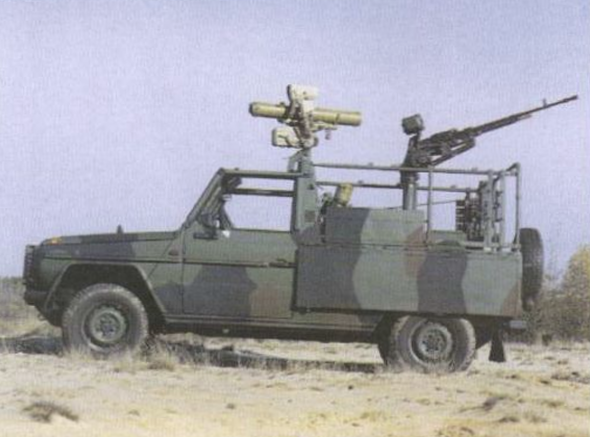
LWB Jeż

HISTORY
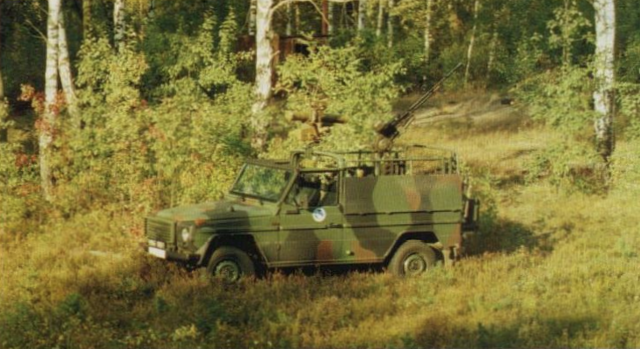
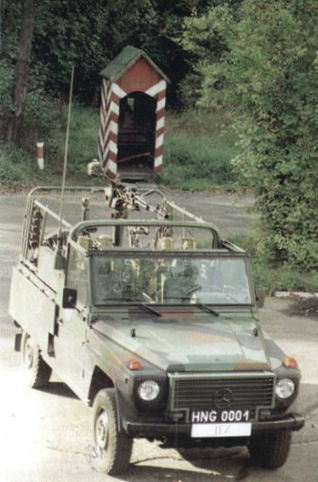
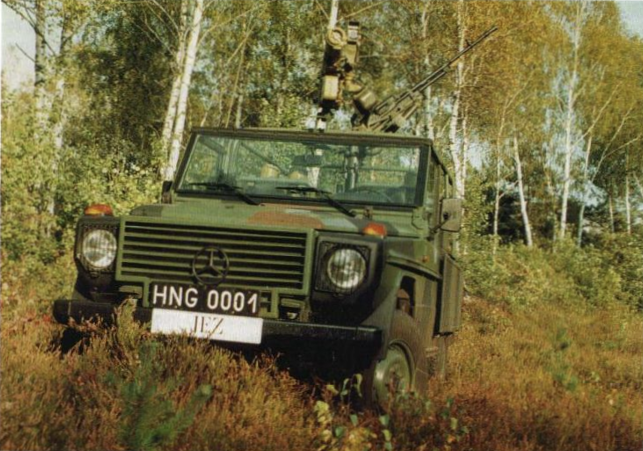
The Lekki Wóz Bojowy Jeż (Light Combat Vehicle Hedgehog) was a Polish military design from the mid-1990s, developed during a period of transition for Poland’s automotive and defense industries after the political shifts of 1989.
Envisioned by Brigadier General Adam Tylus, the vehicle’s concept was formalized in 1995 as part of a strategic development initiative by the Sobiesław Zasada Centrum S.A. group. Their core strategy relied on polonizing Mercedes-Benz vehicles assembled in Poland by gradually introducing domestic components, as well as modernizing Polish vehicles with high-quality Mercedes-Benz engines.
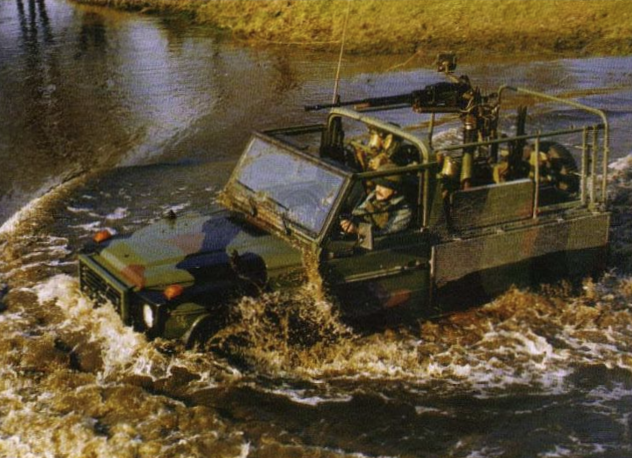
The Jeż was constructed on the chassis of the highly reliable German Mercedes-Benz 290 GD cross-country vehicle. These were actively acquired and highly regarded for their reliability and fuel efficiency by the Nadwiślańskie Jednostki Wojskowe MSW (Vistula Military Units of the Ministry of Internal Affairs) and the Polish Border Guard. The vehicle was chosen for its exceptional durability, possessing a powertrain lifespan estimated at 300,000 to 400,000 kilometers and an active military service expectancy of around 20 years. It was highly capable in rough terrain, featuring the ability to tackle 80% inclines, ford depths of up to 0.7 meters, and even be air-dropped fully equipped from a helicopter from a height of up to 6 meters.
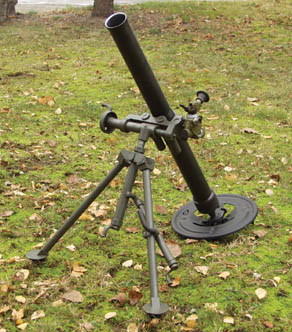
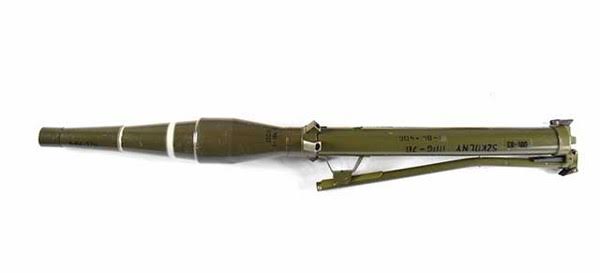
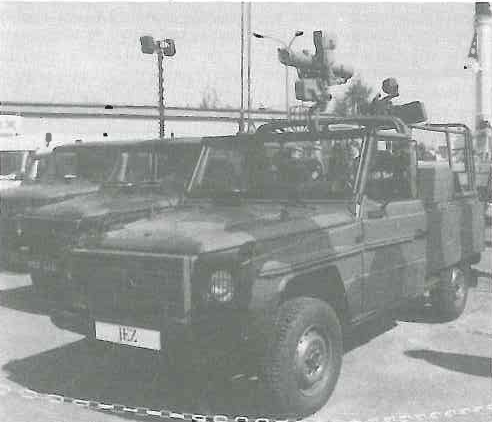
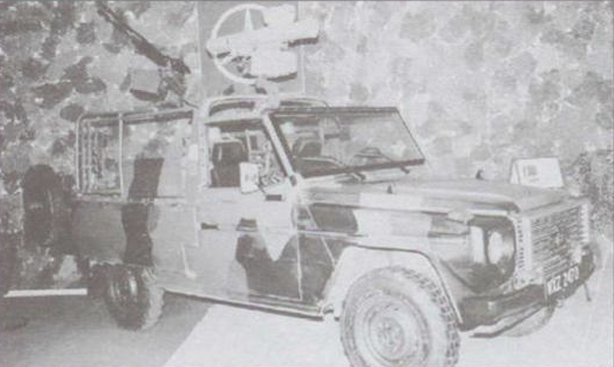
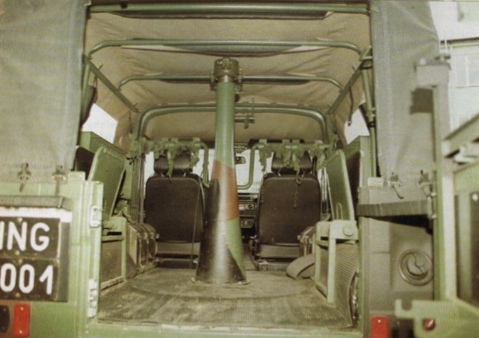
The name, Jeż, was derived from its extensive, densely packed, and highly diverse armament. Intended to destroy enemy personnel, command-and-observation points, light field fortifications, and armored targets, the vehicle was packed with an array of weaponry. This weapon suite included the Polish LM-60D 60 mm mortar, six RPG-76 Komar hand-held anti-tank grenade launchers, a 12.7 mm NSV heavy machine gun, the 9K111 Fagot anti-tank missile system, and two Strela-2M portable surface-to-air launchers, alongside military radio equipment.
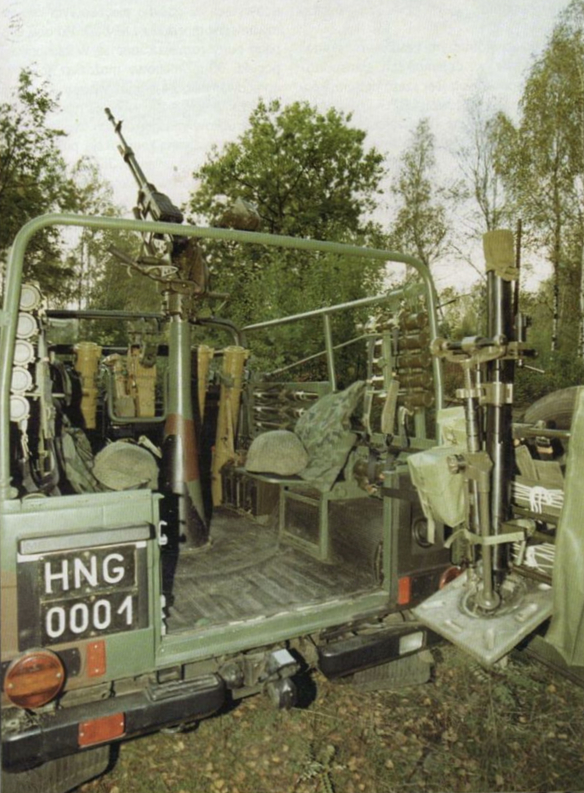
Whole armament of LWB Jeż
LWB Jeż was equipped with a lightweight modular armor package developed by the Military Institute of Armament Technology (WITU) to increase crew protection against small arms fire and shell fragments without significantly affecting the vehicle’s mobility. The package protected the engine compartment, cargo area, wheel arches, underbody, and included additional side armor panels, individual crew shields, and a bullet-resistant windshield.
The side and rear doors were fitted with aramid composite panels similar to those used in ballistic vests, while the cargo floor and wheel arches received the same type of protection. Additional side armor extensions were made of aramid composite enclosed in duralumin casings. The engine compartment was protected by specially profiled 4 mm armored steel plates.
The frontal armor was capable of stopping 7.62 x 39 mm PS ball ammunition at an impact velocity of 720 m/s, corresponding to NIJ Standard 0101.03 Level III protection. The remaining armor sections met NIJ Level II requirements, providing protection against shell fragments and handgun threats. Altogether, the armor package covered nearly 11 m² while adding only 136 kg to the vehicle’s weight, making it an effective lightweight protection system for a highly mobile combat vehicle.
Despite its debut at MSPO 1995, the LWB Jeż never entered mass production, the project successfully demonstrated how advanced modular armor and diverse weapons could be integrated into a highly mobile, air-droppable light chassis.
CHARACTERISTICS
ARMAMENT
9K111 Fagot missile system
- Ammo capacity: 1 Missile ready racked, 4 behind driver & commander
- Elevation: ±20°
- Horizontal: ±30°
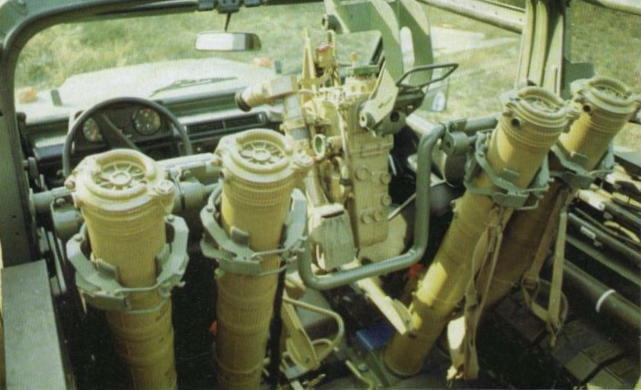
9M111 Fagot missile
- Warhead type: HEAT
- Armor penetration: 400 mm
- Projectile caliber: 120 mm
- Max velocity: 240 m/s
- Avg velocity: 186 m/s
- Min / Max range: 70 / 2000 m
- Guidance: SACLOS
9M111-2 Fagot missile
- Warhead type: HEAT
- Armor penetration: 460 mm
- Projectile caliber: 120 mm
- Max velocity: 240 m/s
- Avg velocity: 186 m/s
- Min / Max range: 70 / 2000 m
- Guidance: SACLOS
12.7 mm NSV machine gun
- Elevation: 0°/+87°
- Horizontal: 360°
- Ammo capacity: 50 rounds ready racked, 3 x 50 rds magazines on each side (300 total)
- Rate of fire: 700-800 rds/m
- Velocity: 845 m/s
- Range 2000 m
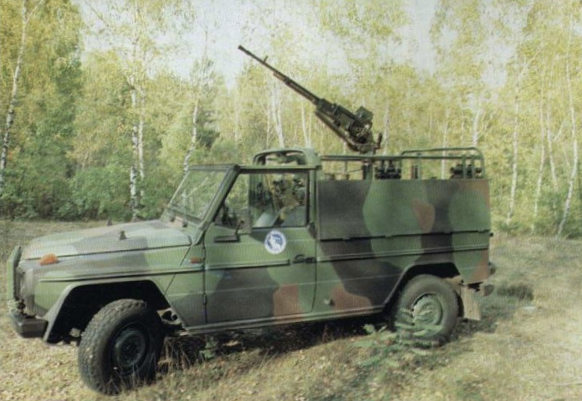
Armament more suitable for infantry mode
2 x Strela-2M missile launcher (in-game)
LM-60D mortar
6 x RPG-76 Komar rocket propelled grenade
MOBILITY
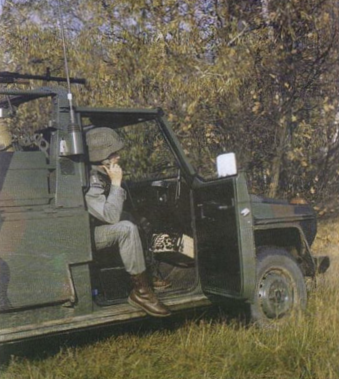
- Crew (4): Driver, Commander, Gunner, 2nd Gunner
- Engine: OM 602 D29
- power: 72 kW / ≈98 PS @ 4000 rpm
- Transmission:
- Gears: 5 forward, 1 reverse
- Max speed: 137 km/h
- Combat weight: 2800 kg
DIMENSIONS
Length: 4630 mm
Width : 1690 mm
Height: 1960 mm
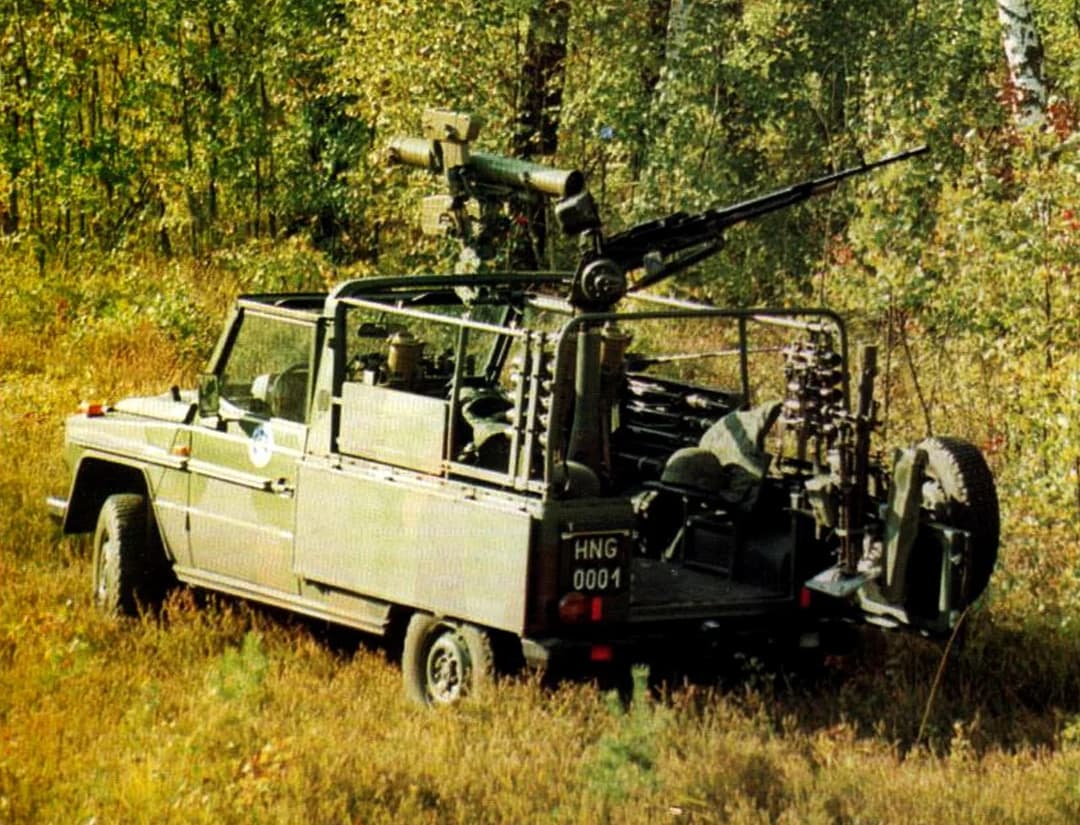
Summarized characteristics
- Crew (4)
- Driver, commander, 2 x gunner
- 9K111 Fagot Missile system
- Ammo: 9M111, 9M111-2
- 12.7 mm NSV machine gun
- Weight: 2800 kg
- Engine: OM 602 D29 72 kW / ≈98 PS @ 4000 rpm
- Max speed: 137 km/h
- Length 1,63 m Width: 1,69 m Height: 1,96 m
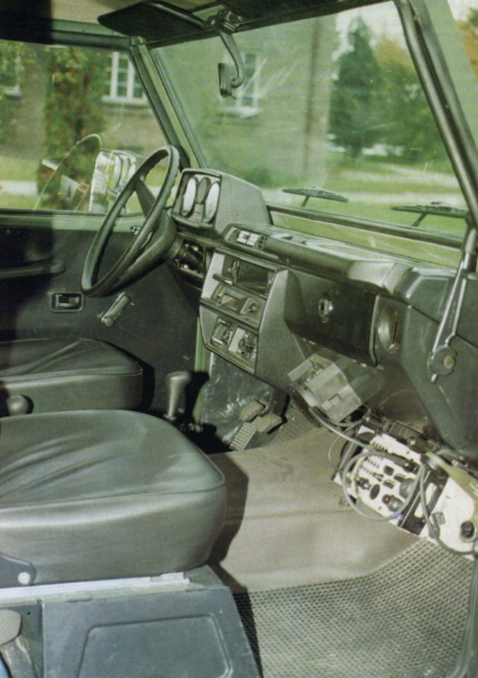
Photos/Videos
Sources
Broshures/Books/Magazines/Manufacturer
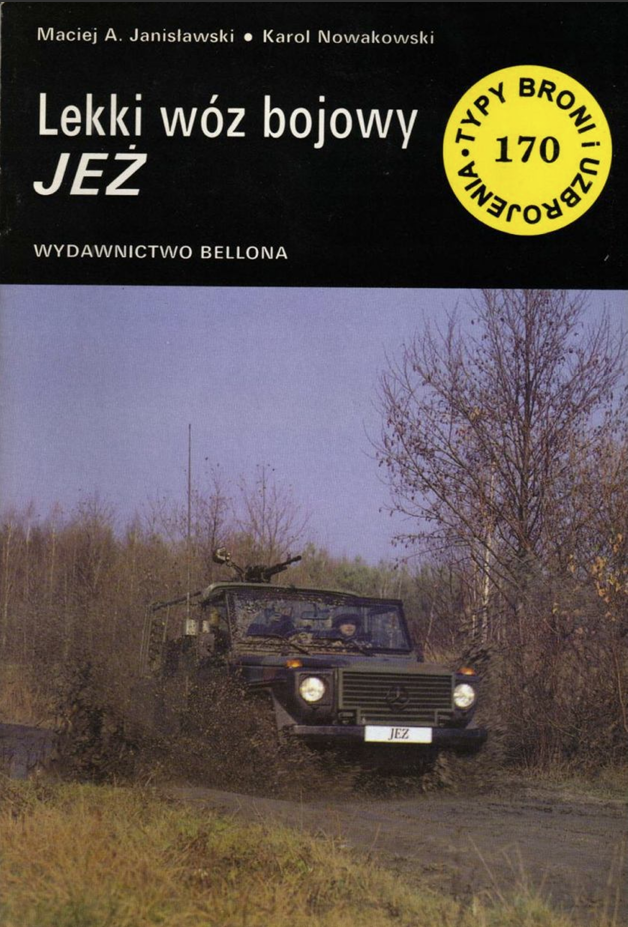
- Typy Broni i Uzbrojenia 170 - Lekki wóz bojowy Jeż
Armament
- 9M111
- Portable anti-tank system 9K111. Technical description and operating instructions (for calculation) 9K111.00.00.000 DTO, 1990 r
Эта версия браузера устарела, файл нельзя открыть
- Portable anti-tank system 9K111. Technical description and operating instructions (for calculation) 9K111.00.00.000 DTO, 1990 r
Переносный противотанковый комплекс 9К111 | Ракетная техника
dimensions, mobilty
- Typy Broni i Uzbrojenia 170 - Lekki wóz bojowy Jeż