[Would you like to see this in-game?]
- Yes
- No
0
voters
TL;DR: An unfinished amphibious gun carrier fitted with the M18’s turret.
History:
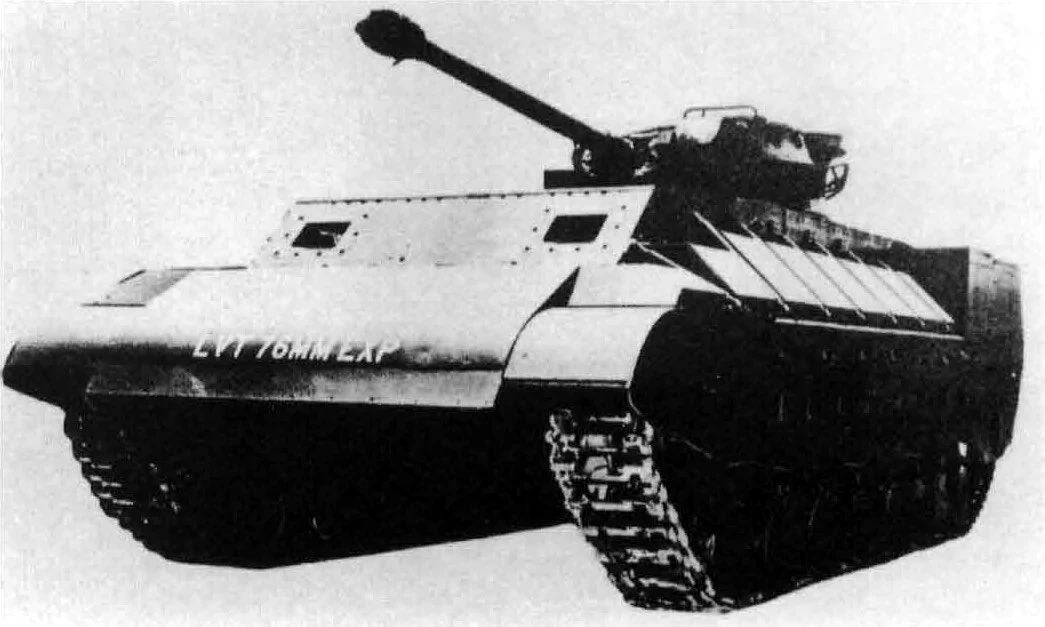
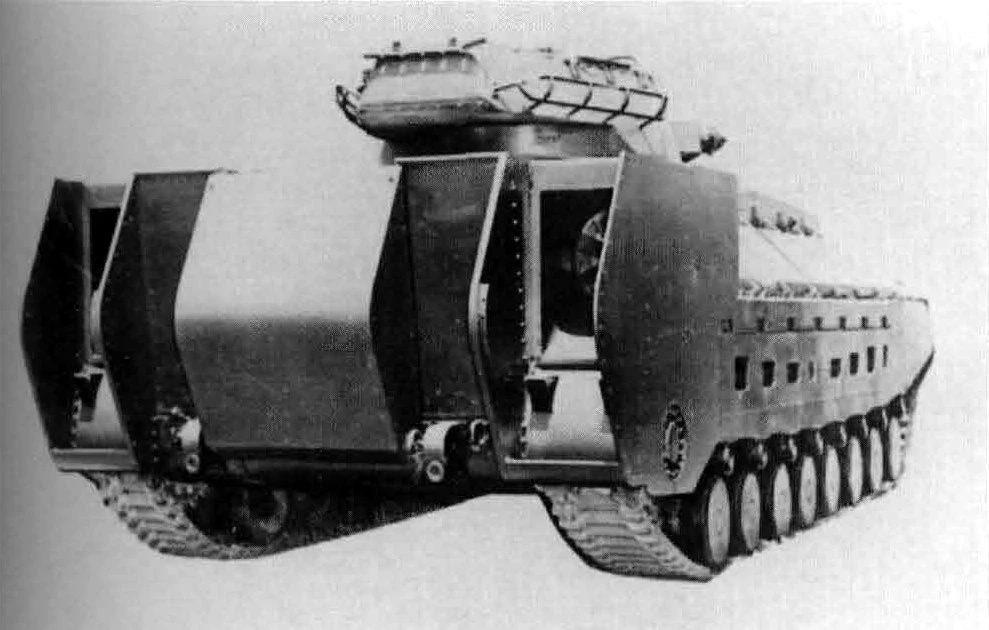
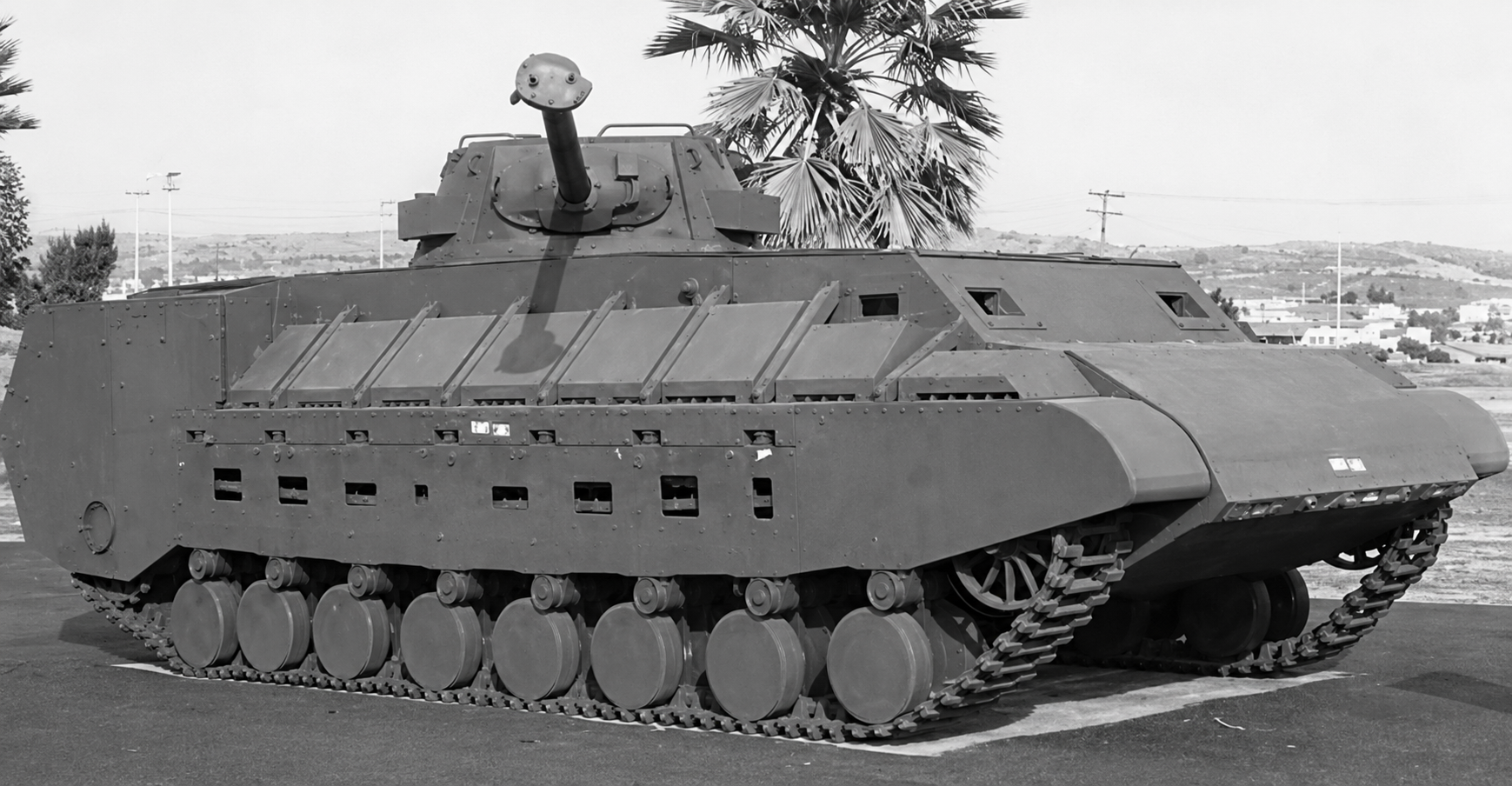
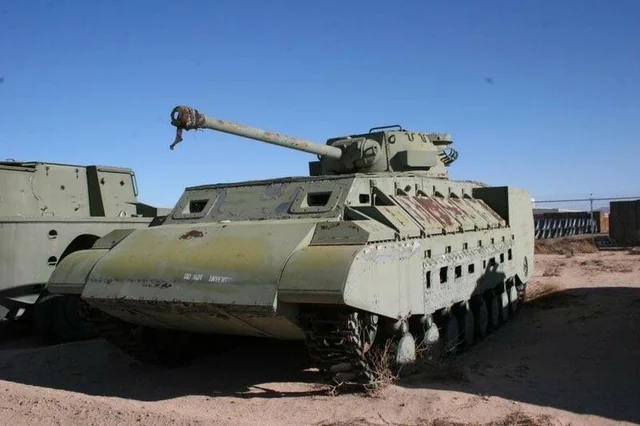
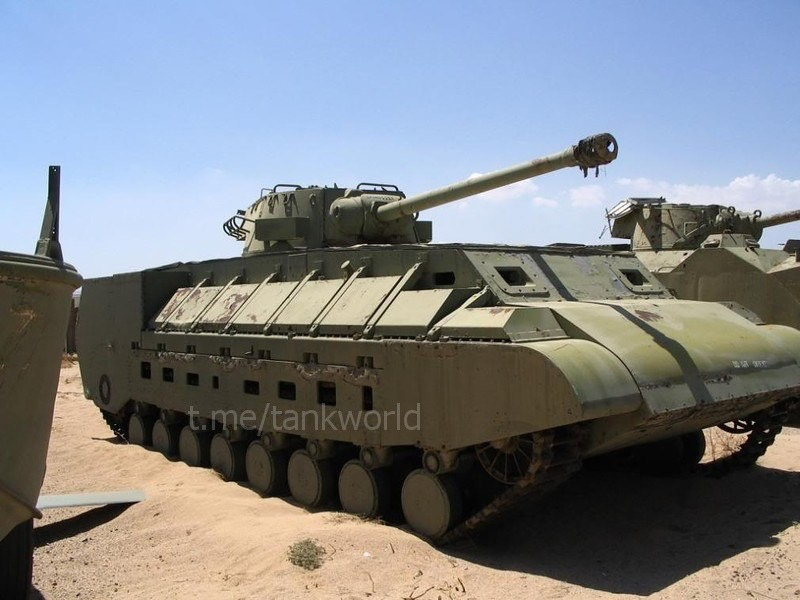
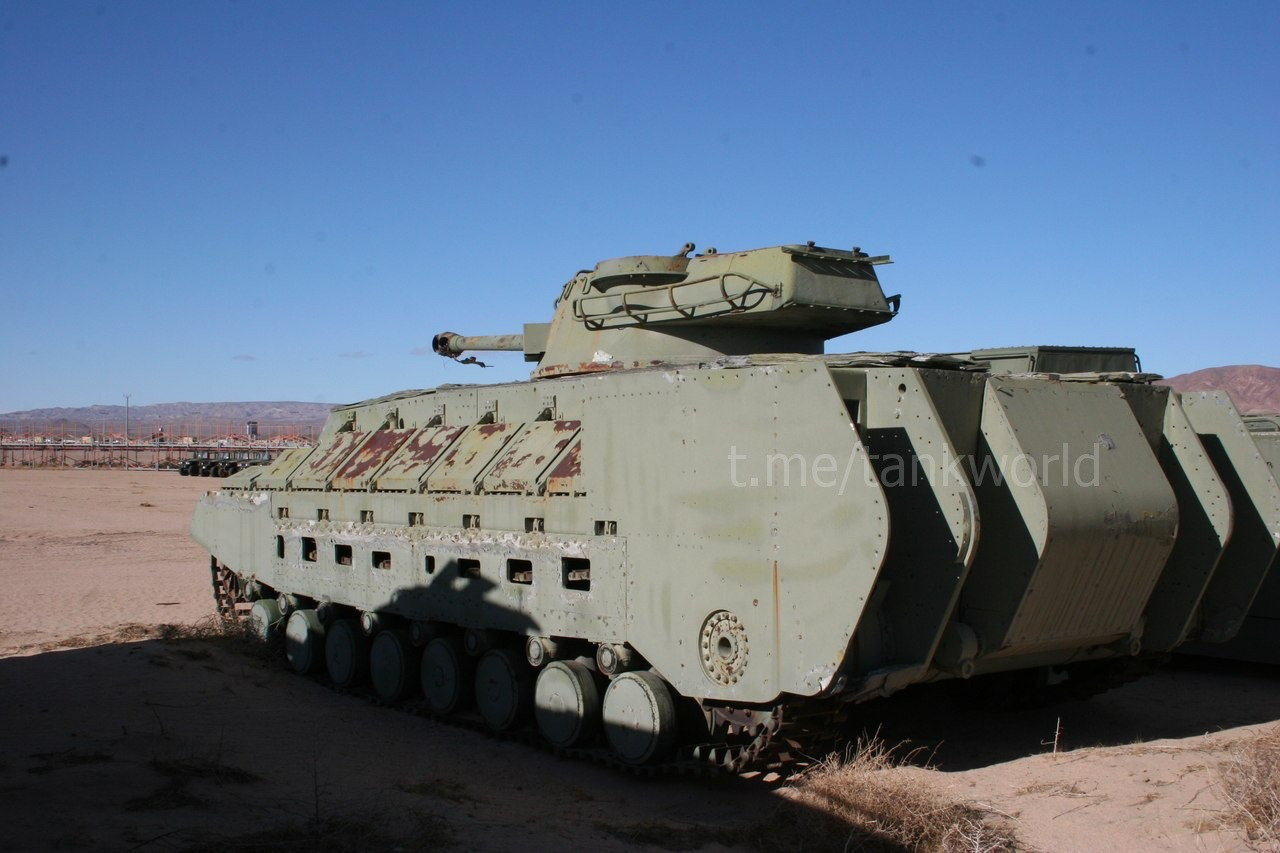
During WW2 and especially during the Pacific Campaign, the US relied heavily on their newly developed Landing Vehicle Tracked, or LVT, designs. Initially designed and intended as tracked amphibious cargo carriers, the LVTs quickly saw adaptations into into more intense forms. First starting with machine guns for self-defense then additional armor for better survivability. It wasn’t long before they were adapted for intense amphibious landings, being fitted with full-on tank turrets. Both the LVT(A)(1) and LVT(A)(4) served well in their intended roles, however, the former lacked overall firepower and was thus replaced by the later and the later was quickly showing its age in the Post War era. The LVT(A)(4) was deemed to still have some life in it, however, leading to an upgrade program in 1945 that would fit these vehicles with a powered turret traverse and gyrostabilizer. Now, called LVT(A)(5), these vehicles would see service in the Korean War, however, it was still very clear that the design was truly reaching its end. Marmon-Herrington was tasked with developing an amphibious version of the M18 way back in 1944. While none of the resulting designs (T86, T86E1, and T87) would ever see production, they did result in valuable experience that could be put to use in the future. In 1951, the US Navy’s Bureau of Ships felt that the future was now and, seeing the need for a more capable amphibious assault vehicle, contracted Marmon-Herrington to develop it. The exact details of the contract are unknown, however, Marmon-Herrington, for one reason or another, decided to take another stab at an amphibious M18. Their resulting design was named simply LVT 76MM EXP, also called the Marmon-Herrington LVT. The hull was completely original, ambitious, and almost sci-fi in design, with a bow that sloped downward instead of the conventional upward slope found on almost all other LVT designs. It featured tracks recessed into strange looking sloped side sponsons. It was completely enclosed except for the M18 turret mounted on the roof. Unfortunately, it has never been seen with a .50 cal. The hull was made from aluminum alloy to reduce weight and improve floatation. Unfortunately, the vehicle was plagued with issues rather early on in its development, the most major being electrolytic action between dissimilar metals, which led to fabrication issues. This, combined with the US military’s declining interest in dedicated LVT gun carriers, led to the LVT 76MM EXP being quietly abandoned and left unfinished when the contract was terminated. The automotive components, while never installed, were to be the 500hp Ford GAF V8 engine and Jered Model 900 transmission, giving the vehicle an estimated speed of 48kph (lower end estimate) on land and 5kph in the water during which it would be propelled by its two large rear propellers. Unlike its T86, T86E1, and T87 ancestors, the LVT 76MM EXP was potentially intended to be capable of transporting troops and/or cargo in some capacity as the rear of the vehicle featured a large ramp door. It’s armor was between 19 and 38mm with an estimated crew of 3-4. Troop/cargo capacity is unfortunately unknown. The sole unfinished prototype potentially survives to this day in one of the US’s many storage lots as there are modern color photos of it. Whether or not it has been scrapped since those photos were taken is ultimately unknown. The last definitive location comes from Hunnicutt who says that it was handed off to the LVT Museum at Camp Pendleton shortly after its contract termination, however, satellite imagery doesn’t seem to have captured it.
Place In War Thunder:
Amphibious tanks have always been a weird but ultimately unique subclass in War Thunder. They usually have reduced armor to allow for adequate floatation, setting them apart from traditional light tanks that can usually at least survive heavy machine gun fire. This reduced armor usually comes with a boost to mobility and better firepower for their BR. This is where it gets interesting for the LVT 76MM EXP. This vehicle, if the estimates are accurate, is actually pretty slow for an amphibious tank and really slow for an M18 variant. Anywhere from 45-65kph is what could be expected for this vehicle depending on the exact weight. This could make it feel anywhere from rather sluggish to adequately mobile but ultimately nowhere near the original M18. Gameplay wise, the LVT 76MM EXP would function very similarly to the Soviet PT-76B, having similar mobility but a better overall gun. Spawn in and immediately either begin a flank or stick close to your more heavily armored teammates. Ignore your amphibious capabilities entirely. 5kph is not good enough to be useful. Resist the temptation of the water and play like a much more poorly armored light tank. Placement is an interesting topic. Sure, its “obscure unfinished prototype” nature makes this vehicle a perfect candidate for an event reward, however, the US has been hurting for a light tank between the M24 and M18 for years. The LVT 76MM EXP is an ultimately worse M18 that is simultaneously superior to the M24 in many aspects. It would slot in between them perfectly. Even in its worst interpretation, the vehicle is still armed with the outstanding 76mm M1 cannon which can put down anything it would be expected to fight, easily making up for its other lackluster stats. It would make for a perfect stepping stone to the M18, introducing players to the fantastic cannon while also making them go “Damn, I really wish this thing was faster” or “Damn, I really wish this thing wasn’t as large”, leading them to the M18.
Specifications:
Armament: 76mm M1 cannon
Dimensions: Unknown
Weight: 18000-20000~kg
Armor: 19-38mm aluminum alloy armor
Crew: 3-4
Ammunition: Same as M18 Hellcats in-game
Speed: 45-65~kph
Horsepower: 500hp
Pictures:
Rear View:
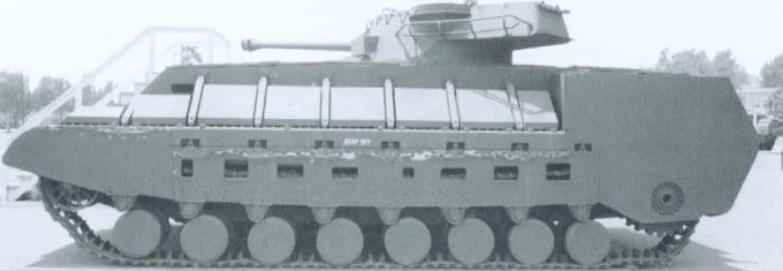
Side View (Possibly from when it was on display):
Another View of when it was possibly on display (Note: This image was enhanced by AI as the original image was tiny. Do excuse any weirdness.)
As It Is Today (3/4th View):
As It Is Today (Other Side 3/4th View):
As It Is Today (Rear View):
Sources:
Bradley: A History of American Fighting and Support Vehicles by R.P. Hunnicutt
M18 Hellcat Tank Destroyer 1943–1997 by Steven J. Zalogahttps://combat1.sakura.ne.jp/LVT-76mmEXP.htm
LVT 76-mm gun carrier: shushpanzer_ru — LiveJournal
https://firearmcentral.fandom.com/wiki/Marmon-Herrington_Experimental_LVT
76mm Gun Motor Carriage T86, T86E1, and T87 (Amphibious) - WarHistory.org