- Yes
- No
Hello, I’m suggesting the Aurora, and a sub-hunter that was a cross between two aircraft.
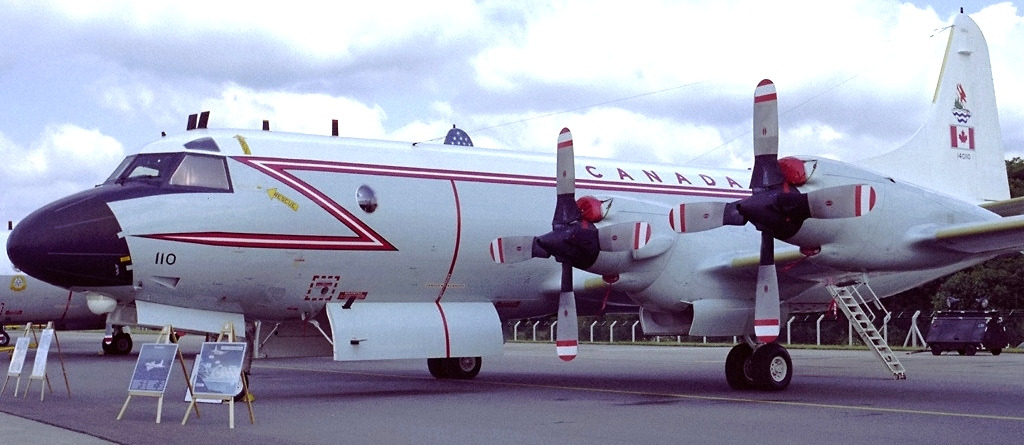
History:
The CP-140 Aurora is a Lockheed P-3C with the electronics of the S-3 Viking, along with Canadian ESM wingtip pods over American ones. This allowed the aircraft to do its primary role of anti-submarine warfare but also perform the work of maritime surveillance, counter-drug, and search-and-rescue. This led the CP-140 to be Canada’s only Strategic Intelligence Surveillance Reconnaissance (ISR) aircraft, which led it to conduct its mission over land, water, and littoral areas. These were done in support of a number of federal government departments, including the Canadian Joint Operations Command and the RCMP.
Lockheed would shut down the production line for the P-3 Orion in 1991; as mentioned earlier, they share the same airframe as the CP-140. Three of the surplus airframes had been purchased by Air Command; however, they lacked the anti-submarine fit. Because of this, they’d be designated CP-140A Arcturus and used for training and coastal surface patrol missions.
In 1998, the Auroa Incremental Modernization Project (AIMP) would be initiated; however, this was halted by the government on the 20th of September, 2007, as they evaluated whether to continue to upgrade the fleet or replace them. The Department of National Defence would rescinded the work suspension on the 18th of December, 2007, allowing the project to continue. The work included upgrading the computer, navigation, communication and radar systems, along with making structural improvements to ten of the eighteen aircraft. The modernization project had an intent to “keep the aircraft safe and operationally viable until 2020”. AIMP is divided into four “blocks”, with each one focusing on a different part of the complete upgrade.
With Block I focusing on the replacement of unsupportable systems, Block II brought a glass cockpit along with Navigation and Flight Instruments (NFI) components, which were provided by CMC Electronics, and it came with a complete replacement of the communication suite. Block III would be a wholesale replacement of the aircraft sensors and mission computer. And finally, Block IV consisted of a large Wideband Global STACOM radome, which was located on the upper fuselage, a Directed Infrared Counter Measures system, Tactical Data Link 16 and an anti-collision light on top of the vertical stabilizer. In the summer of 2024, Block IV had reached Full Operational Capability. Aircraft that completed AIMP would be designated as CP-140M.
The Aurora would be acquired in the early 1980s to replace the CP-107 Argus, which would further support Canada’s anti-submarine warfare obligations as part of NATO. During this time, short deployments to Alaska, Hawaii, Iceland, the UK, and Norway where norm. With the end of the Cold War, they would end up being used primarily for coastal surveillance and sovereignty patrols as an all-weather mission surveillance platform. Moving into the 21st century, the CP-140 had seen far fewer ASW missions and more domestic and international surveillance for CANCOM, counter-terrorism and smuggling, along with monitoring foreign fishing fleets off the coasts of Canada.
Even so, it still would take part in a number of operations. This would include OP SHARPGUARD, OP SIRIUS and OP APOLLO, along with patrols in the Gulf of Mexico and the Pacific, along with patrols in the Canadian Arctic. 2011-2012 saw CP-140s performing maritime patrol missions over Libyan waters to help enforce the no-fly zone over Libya. January of 2017 would see two CP-140s perform overland surveillance missions against ISIL due to Operation Impact; however, one of the aircraft would be withdrawn in May of 2017. October 2018 would see the implementation of sanctions against North Korea by the United Nations Security Council; due to Canada supporting this, a Canadian Frigate and/or CP-140 would be periodically deployed as part of Operation Neon. During the deployments as part of this, the Aurora would have a number of incidents with Chinese jets that seemed to increase in frequency and recklessness from them in the 2020s. February 2023 would see a CP-140 deployed to Haiti to provide surveillance and intelligence. At about the same time, another CP-140 would help F-22s shoot down an unidentified object over Yukon.
Well their had been several options suggested for the replacement for the CP-140M, it’s replacment would be locked in on the 20th of March in 2023, when the Government of Canada had sent a letter of request to the US to approve the purchase of sixteen P-8A. This would be approved on the 27th of June in the same year. The first CP-8 fuselage had begun in February 2026, with delivery expected to start in 2017.
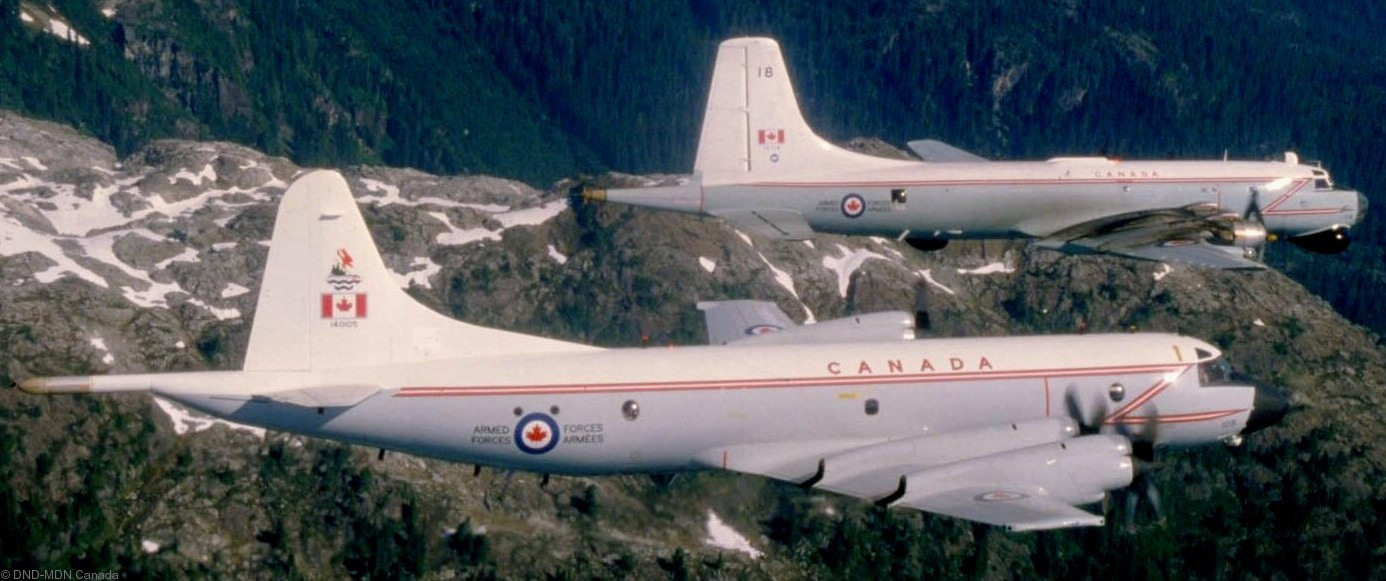

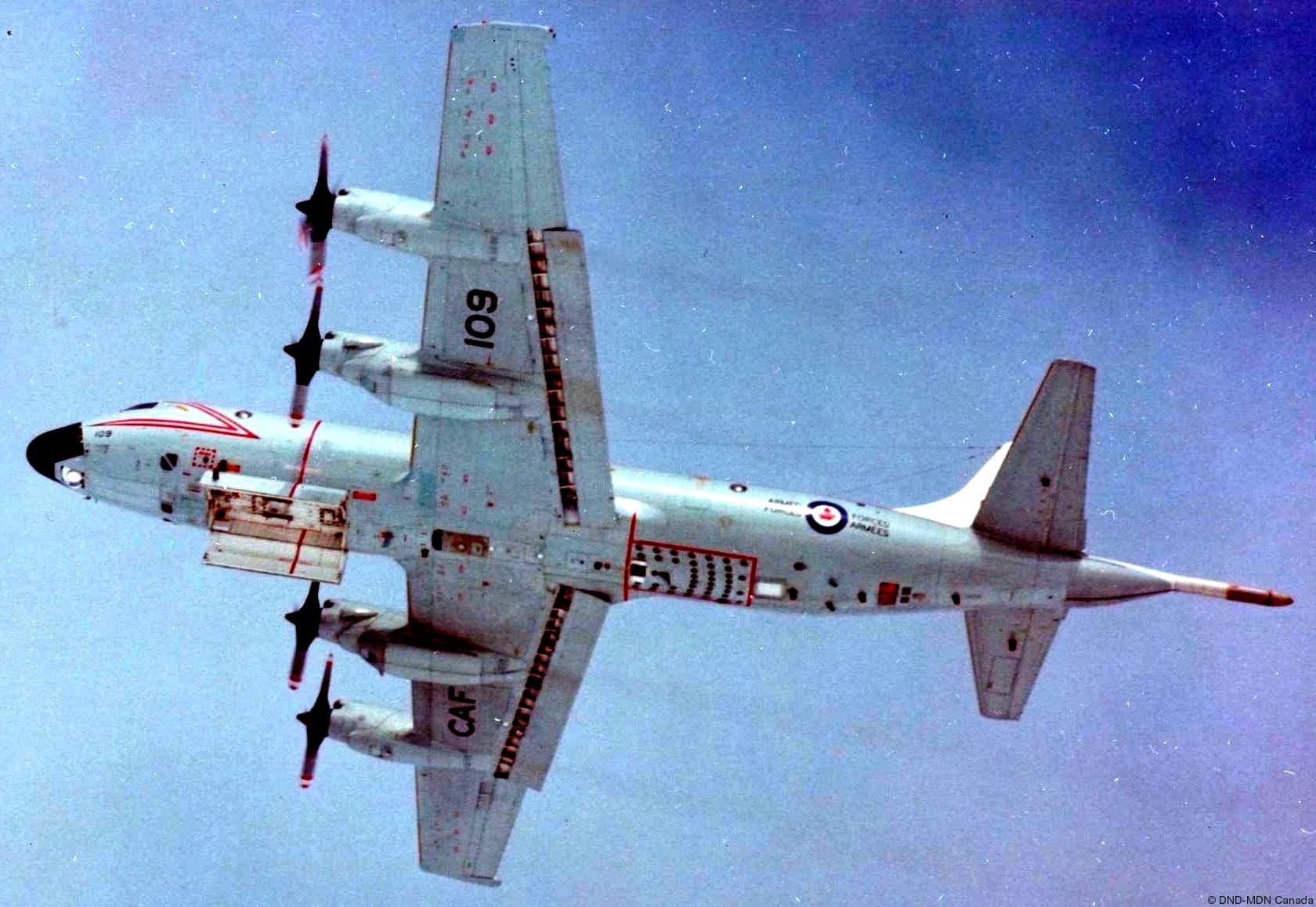

Specs:
General characteristics
Manufacturer: Lockheed Aircraft Corporation
Crew: Two pilots, one flight engineer, four navigators, four AES OPs
Power Plant: Four Allison T-56-A-14 turbine engines
Service ceiling: 35,000 ft (10,668 m) Range: 5,000 NM (9,266 km)
Endurance: 17 hr
Weights: Empty: 61,491 lb (27,892 kg) Gross: 142,000 lb (64,410 kg)
Dimensions: Span: 99 ft 8 in (30.37 m) Length: 116 ft 10 in (35.61 m)
Height: 33 ft 9 in (10.30 m) Wing area: 1,300 sq ft (120.7 sq m)
Original Cost: Can$24,905,000
Affiliated Units: MPEU, ASDU / 14 SES, Nos. 404, 405, 407, 415
Serial Numbers: CP-140: 140101–140118 and CP-140A: 114119–140121
Speed: 732 km/h (455 mph)
Armament:
Ordnance: 8 hardpoints weapons bay; 10 under-wing from 611 to 2,450 lb (277 to 1,111 kg) capacity with a capacity of 4,800 lb (2,177 kg) total
Rockets: Air-to-surface rockets can be fitted after a minor retrofit.
Torpedos: Mk 46 Mod V torpedoes
Bombs: Conventional bombs
Other: signal chargers, smoke markers, illumination flares
Avionics:
Univac AN/AYK-502 nav/attack computer
Digital magnetic tape units and video recorders
AN/APS-116 search radar
OR-5004/AA (modified) FLIR
AN/ASN505 dual INS
AN/APN-510 Doppler
AN/ARN-511 Omega nav system
HF/UHF/VHF comms
Airways navaids
AN/ASW-502 AFCS
AN/ASQ-502 MAD
KA-501A day/night camera with night illuminator
Sonobuoys
Wescam MX-20 Electro-Optical/Infrared (EO/IR) suite
Electronic Support Measures (ESM)
Applanix DSS-439 Digital Mapping Camera (DSS)
hand-held digital camera
gyro-stabilized binoculars
3 AN/ARC-210 V/UHF Radios
1 AN/ARC-234 V/UHF SATCOM Radio.
Sources
Lockheed CP-140 Aurora - Wikipedia
https://www.canada.ca/en/air-force/services/aircraft/cp-140.html
https://www.youtube.com/watch?v=mDdpJUosPuQ
https://thecanadianencyclopedia.ca/en/article/cp-140-aurora
CP-140 Aurora - NAFMC
Lockheed CP-140 Aurora Royal Canadian Navy Air Force Patrol
Mission Complete: Final CP-140 Aurora Modernization Delivery Showcases Sovereign Capability and Export Potential - General Dynamics Mission Systems—Canada
CP-140 Aurora - Canadian Defence Review - RCAF Aircraft
Today in Aviation History: First Flight of the Lockheed CP-140 Aurora - Vintage Aviation News
100 objects for 100 years : a history for the Royal Canadian Air Force centennial / Mike Bechthold, Richard Mayne, Brad St.Croix.: D2-658/2024E-PDF - Government of Canada Publications - Canada.ca