- Yes
- No
Hello everyone and welcome to this new suggestion.
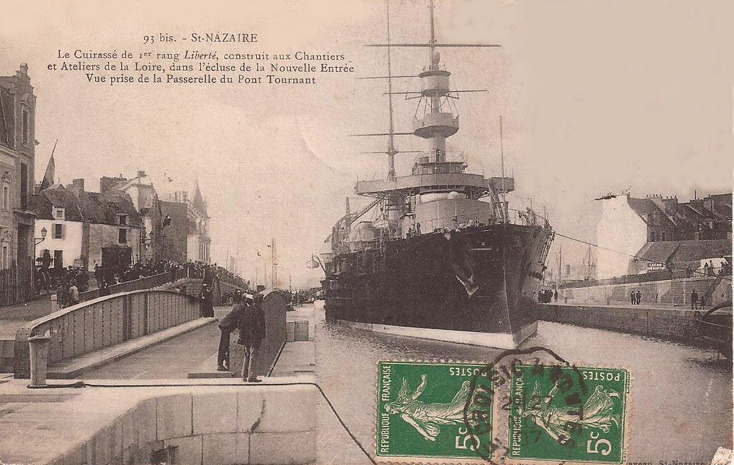
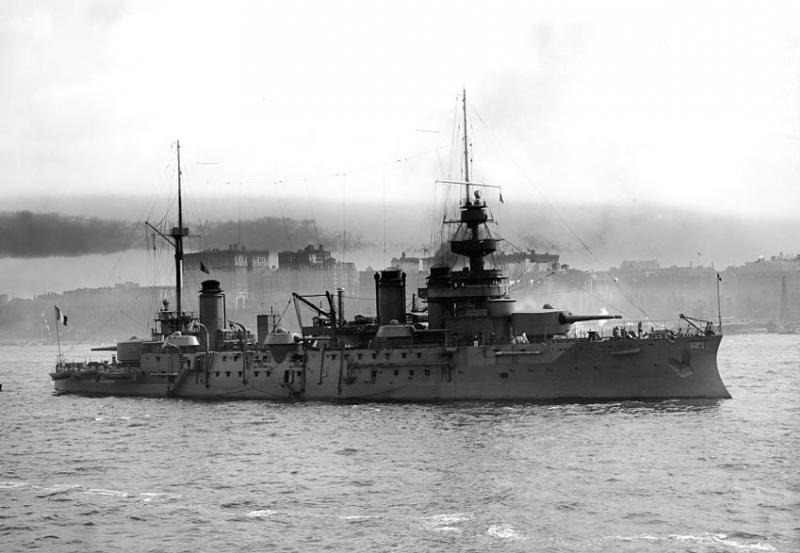
Today I’m presenting a new class of French warship, the Liberté class. And to begin, here is the first ship of the class, the Liberté.
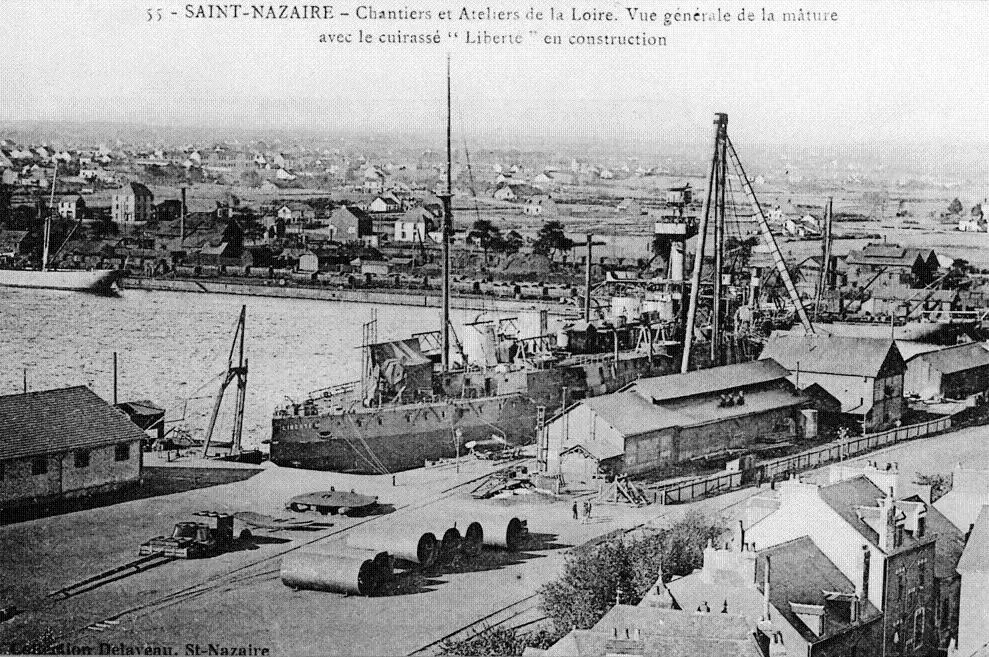
The first ship of the class to which it would lend its name, the Liberté was originally a pre-dreadnought intended to join the ranks of the République class. However, due to the rapid evolution of naval weaponry technologies at the time, the ship and subsequent vessels were modified and integrated into this new class.
Designed starting in 1902 and commissioned in 1908, the ship was a modern vessel with improved armament compared to its predecessors. Assigned to the Mediterranean Squadron and based in the port of Toulon, the Liberté conducted various exercises in the area and even participated in a celebration in the United States.
Unfortunately, the ship’s career was short-lived. On September 25, 1911, while moored in the port of Toulon, a fire broke out in the powder magazine, leading to an explosion that destroyed the vessel. This explosion killed a large part of the crew and damaged several ships moored nearby. Powder accidents aboard French battleships of this era were linked to the instability of “B powder,” a propellant used for artillery charges, whose chemical decomposition could lead to spontaneous combustion if stored for extended periods. The explosion of the Liberté remains one of the most significant tragedies in the history of the French Navy before the First World War. Completely destroyed by the explosion, the Liberté remained sunk in the Toulon harbor for several years after the accident. It was finally refloated in 1925, and its wreck was demolished on site, definitively ending the ship’s story. The loss of the Liberté influenced ammunition handling practices and safety standards in the French fleet, highlighting the risks inherent in the early smokeless powders used in the heavy artillery of the time.
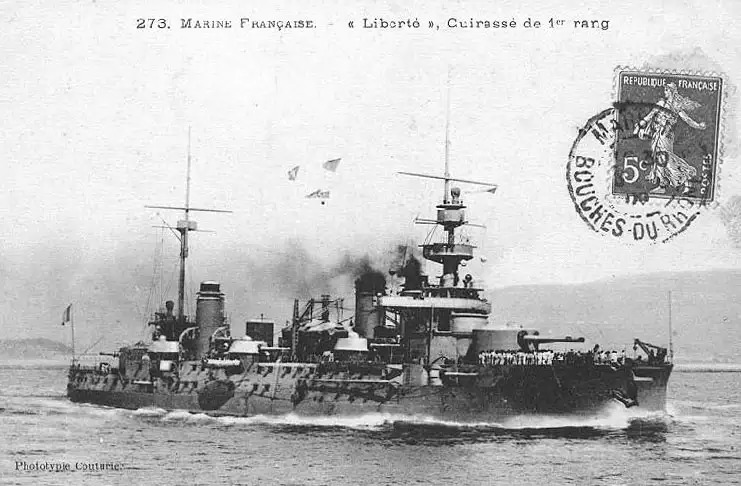
Characteristics
Length : 133.8 m
Width : 24.3 m
Draft : 8.4 m
Mass : 14,900 tons
The ship is powered by 3 steam engines supplied by 24 boilers, providing a total power of 18,000 hp. Its maximum speed is 19 knots and its range is 8,400 nautical miles at a speed of 10 knots. The crew consists of 742 sailors.
Weapons
The ship possesses armament enabling it to engage most targets of its era, including:
Guns :
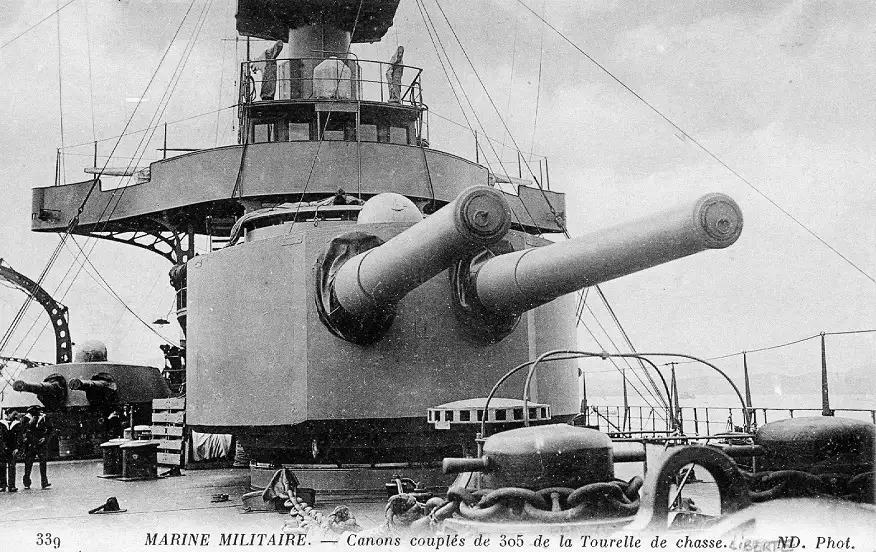
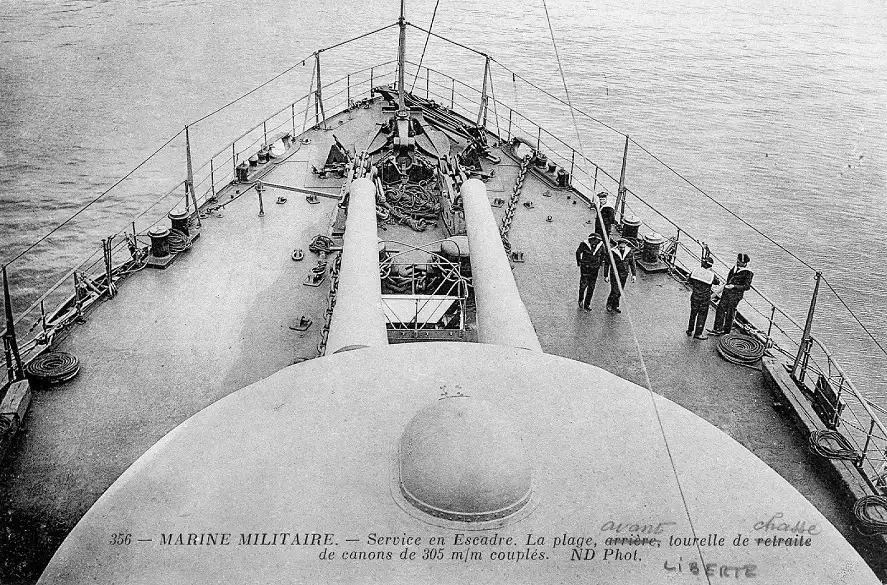
- 2 x 2 305mm Mle1893/96
- 10 x 194mm Mle1902
- 13 x 65mm Mle1902
- 10 x 47mm Mle1886
Torpedo :
- 5 x 450mm Torpedo Tube
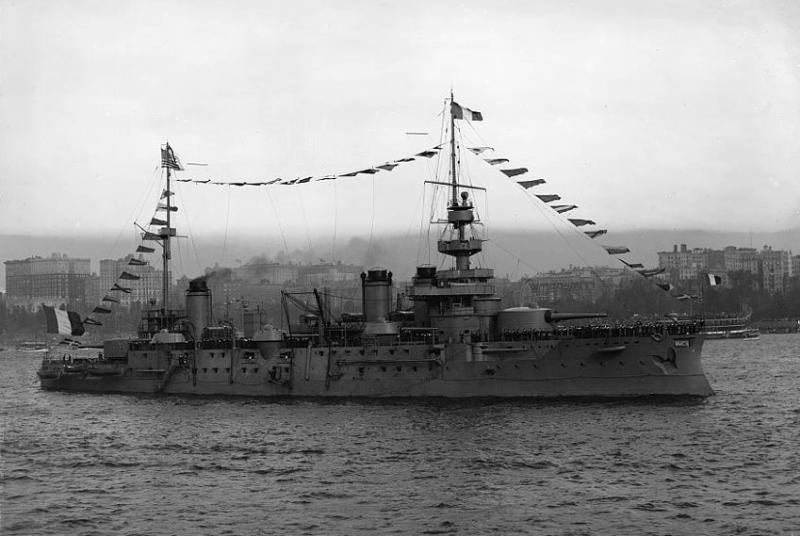
Armor
The armor of this ship was designed to withstand shells from ships of its time; however, it quickly became obsolete, unable to withstand the fire of more modern vessels.
- Belt: 180-280mm
- Turret: 360mm
- Conning Tower: 266mm
- Deck:
- Upper: 54mm
- Lower: 51mm
In the game, this ship would be particularly interesting, providing a moderately armed combat vessel for France and thus complementing the French high seas naval tree in an interesting way.
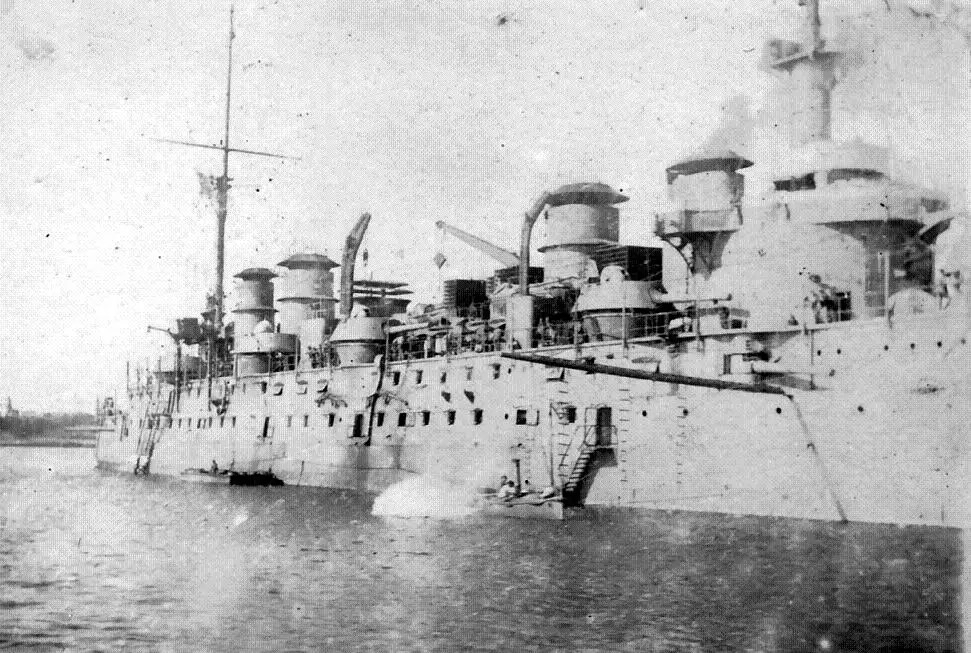
Pictures
Sources
- Making sure you're not a bot!
- https://francearchives.gouv.fr/fr/facomponent/9a5fda267be8a78fa9821450970a1d5c552afa95
- Obsèques [des victimes du cuirassé] "Liberté" [Toulon, le 3 octobre 1911, le président Fallières sort de la préfecture maritime pour se rendre sur la place d'Armes] : [photographie de presse] / [Agence Rol] | Gallica
- l'epave du cuirasse liberte en rade de toulon apres explosion
- La catastrophe du cuirassé Liberté, un drame national et breton
- Mémorial national des marins morts pour la France - Liberté
- http://seynoise.free.fr/seyne_ancienne_et_moderne/filet_du_pecheur/2011/120.pdf
- 25 septembre 1911 explosion du cuirassé LIBERTE - Net-Marine - www.netmarine.net
- Tragédie du Cuirasse Liberté