- Yes
- No
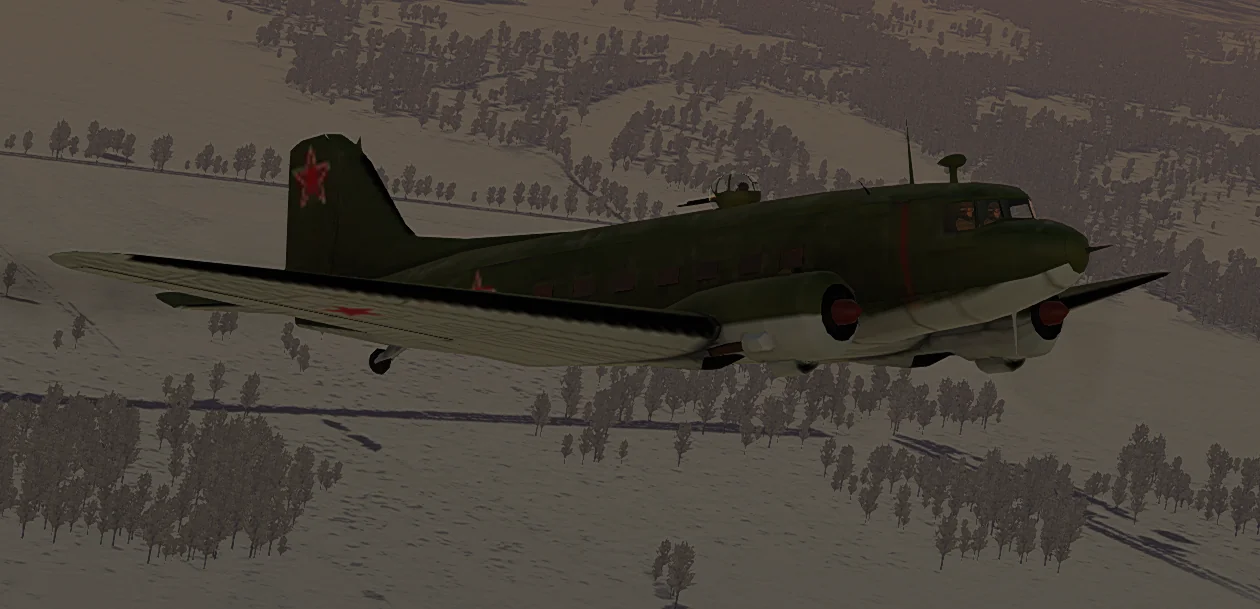
 Li-2VV - DC-3’s armed Soviet Brother
History
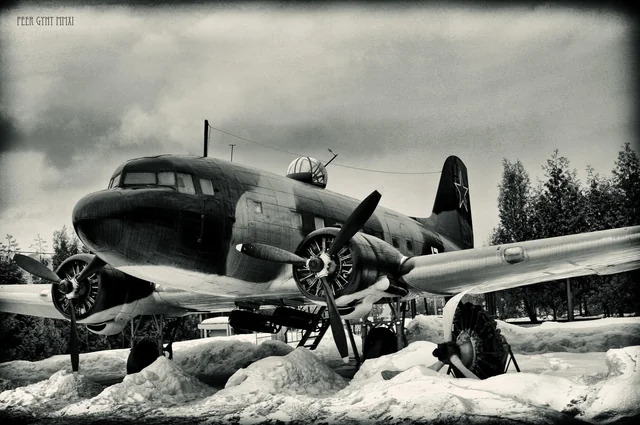
When most people think of the Lisunov Li-2, they picture a transport aircraft hauling troops, supplies, or wounded soldiers across the vast battlefields of the Eastern Front. What many don’t realize is that this humble transport eventually evolved into a bomber capable of carrying out combat missions deep behind enemy lines. The Li-2VV was not originally designed as a bomber, but like many wartime aircraft, necessity forced it into a role its designers never intended.
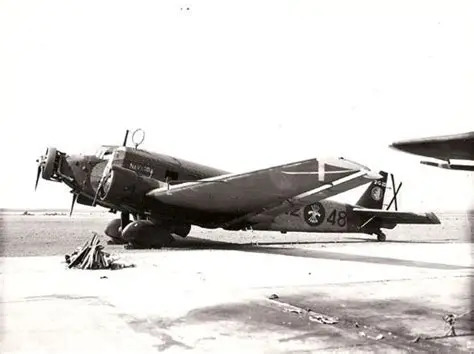
The Li-2’s story actually begins in the United States. During the 1930s, the Soviet Union was searching for a modern transport aircraft that could support both civilian and military operations. After evaluating several designs, Soviet officials became interested in the Douglas DC-3, one of the most advanced airliners of its time. A licensing agreement was reached, allowing the aircraft to be built in the Soviet Union.
Bringing the aircraft into Soviet production was far more complicated than simply copying American blueprints. Soviet engineers had to convert every measurement from inches to metric units, redesign parts to fit Soviet manufacturing standards, and substitute materials that were more readily available domestically. Thousands of small changes were made throughout the process. While the finished aircraft looked very similar to the DC-3, it had effectively become a Soviet aircraft in its own right.
The new transport entered service as the PS-84 and quickly proved itself to be reliable and versatile. Before the war, it spent most of its time carrying passengers and cargo for Aeroflot. However, everything changed in June 1941 when Germany launched Operation Barbarossa and invaded the Soviet Union.
As the Red Army struggled to halt the German advance, every available aircraft was pressed into military service. The PS-84 was no exception. Civilian transports were suddenly being used to move troops, deliver supplies, evacuate wounded personnel, and support isolated units. The aircraft’s ability to operate from rough airfields and carry significant loads made it invaluable during the chaotic first months of the war.
As losses mounted, the Soviet Air Force faced a growing shortage of combat aircraft. Bombers in particular were being lost faster than they could be replaced. Soviet commanders needed a solution, and they needed it quickly. The answer was to modify aircraft that were already available.
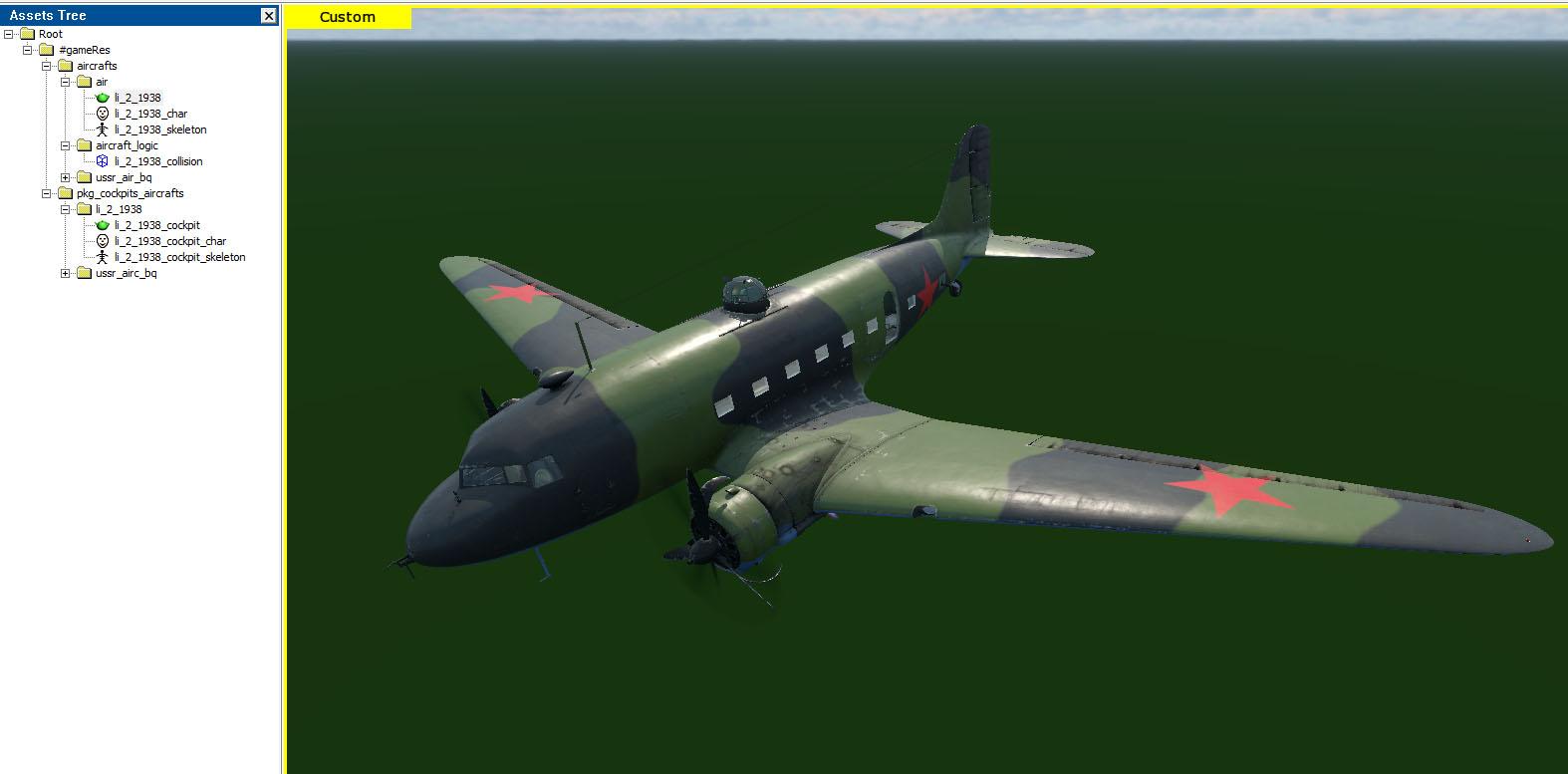
The transport version of the Li-2 offered an excellent starting point. It had a strong airframe, a respectable payload capacity, and enough range to reach targets far behind the front lines. Engineers began fitting military equipment to the aircraft, initially focusing on defensive armament. Machine guns were added to protect the aircraft from enemy fighters, including a dorsal turret that significantly improved its survivability.
These modifications gradually transformed the aircraft from a simple transport into a military workhorse. In 1942, the aircraft received the designation Li-2, named after engineer Boris Lisunov, who had overseen its development.
The next step was even more ambitious.
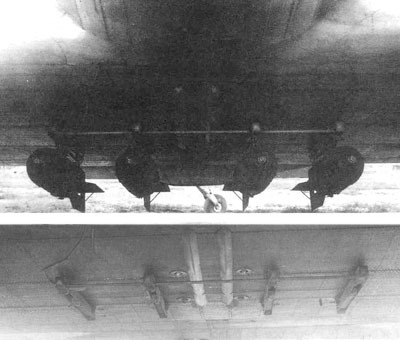
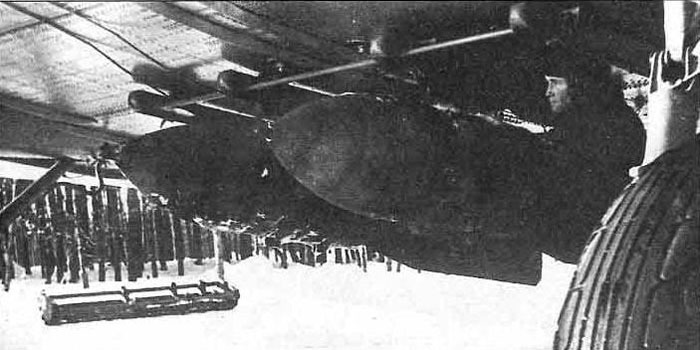
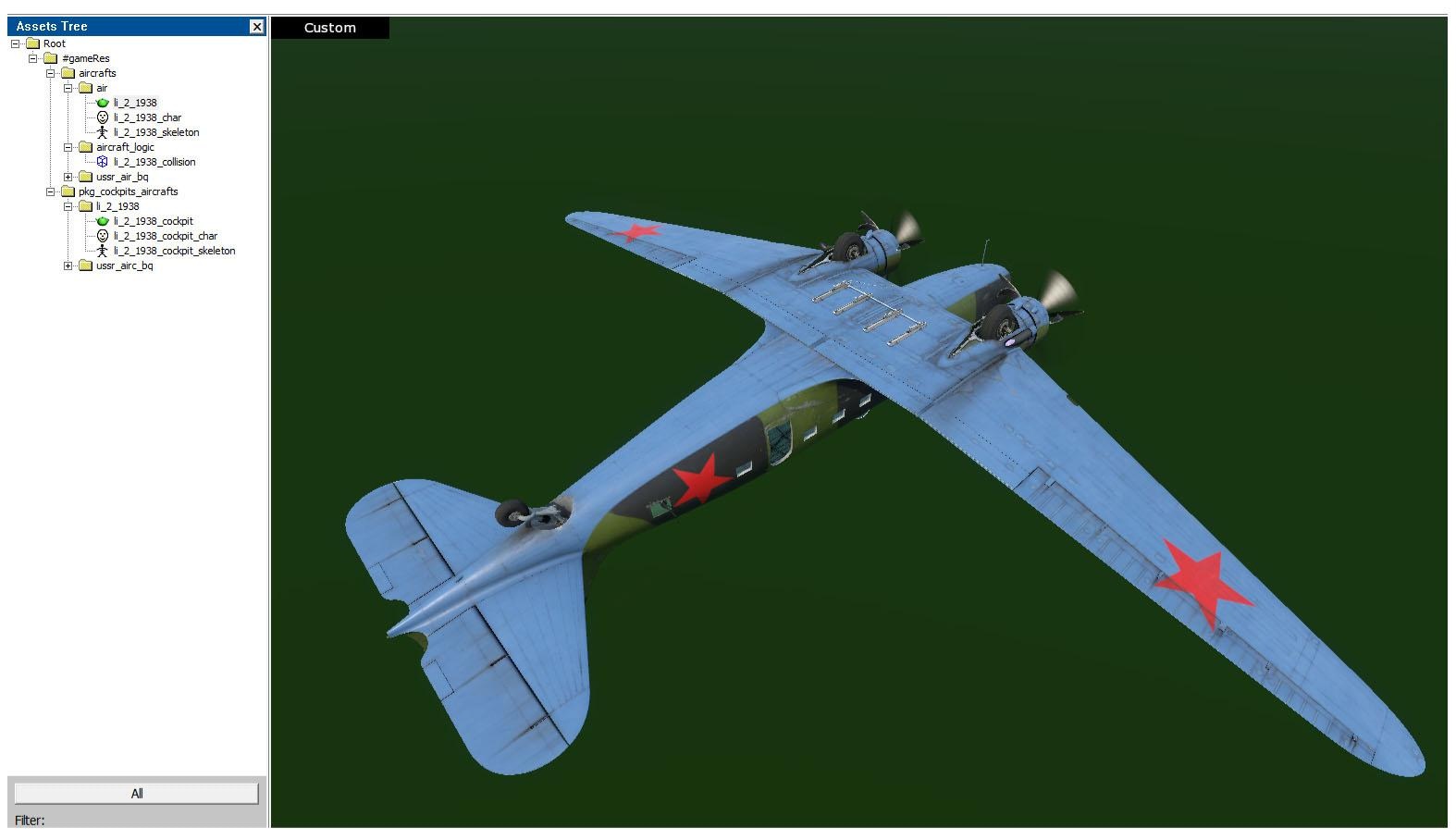
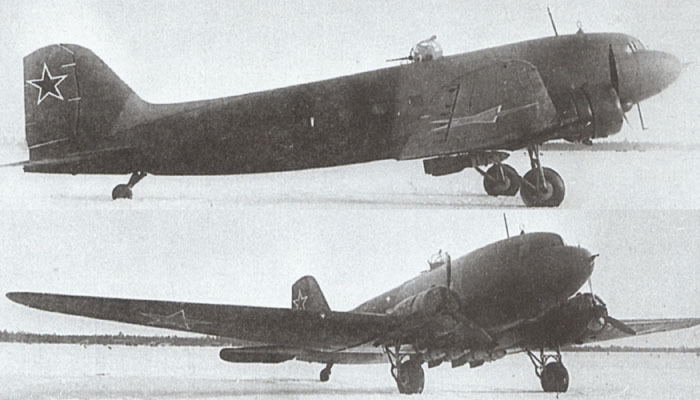
Soviet engineers realized that the aircraft could be adapted to carry bombs. External bomb racks were installed beneath the wings and fuselage, allowing the aircraft to carry up to four FAB-250 bombs or two FAB-500 bombs. This gave the Li-2 a standard bomb load of 1,000 kilograms, enough to make it a useful light bomber despite its origins as a civilian transport.
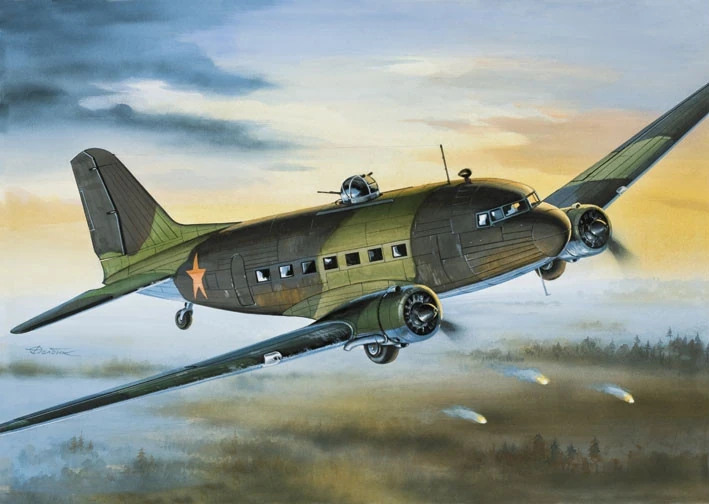
Additional defensive armament was also installed. Some versions received a machine gun position in the nose, while the dorsal turret remained in place to protect the aircraft during combat operations. These modifications resulted in what became known as the Li-2VV, the military bomber variant of the Li-2.
The aircraft was never intended to compete with dedicated bombers like the Pe-2 or Il-4. Instead, it found its place as a night bomber. Operating under the cover of darkness, Li-2VV crews attacked rail yards, supply depots, troop concentrations, and transportation networks. Their missions were often flown at low altitude and in poor weather conditions, where enemy fighters and anti-aircraft guns were less effective.
Some crews became remarkably creative in how they employed the aircraft. In addition to bombs carried on external racks, smaller bombs could be loaded inside the cabin and manually pushed out through the cargo door during bombing runs. It was hardly a sophisticated system, but wartime conditions often rewarded practicality over elegance.
The Li-2VV also played an important role in supporting partisan forces operating behind German lines. The same aircraft that dropped bombs one night might deliver ammunition, medical supplies, or reinforcements to resistance fighters the next. Few aircraft of the war demonstrated such flexibility.
By 1943 and 1944, Li-2 bomber units were conducting regular combat operations across the Eastern Front. They participated in attacks against German logistics networks, disrupted troop movements, and supported major Soviet offensives. While they rarely received the attention given to more famous Soviet bombers, their contribution was significant.
Perhaps the most impressive aspect of the Li-2VV was how effectively it performed a role it was never designed for. What started life as a licensed American passenger aircraft became a transport, cargo hauler, paratroop carrier, ambulance aircraft, partisan supply plane, and bomber all in one. It was a perfect example of Soviet wartime adaptability taking an available aircraft and finding every possible use for it.
When the war finally ended, the Li-2 had earned a reputation as one of the Soviet Union’s most dependable aircraft. The bomber variant may not have been glamorous, and it certainly wasn’t fast, but it proved that with enough ingenuity, even a civilian airliner could become a capable combat aircraft. The Li-2VV remains a fascinating chapter in the history of Soviet aviation and a reminder that some of the most successful wartime aircraft were not always the ones originally designed for battle.
The Bomb Bay & Ordnance Capacity
To turn the Li-2 into a bomber, engineers cut a functional bomb bay into the belly of the fuselage, just beneath the center section of the wing. For heavier loads, they installed sturdy external bomb racks under the wing roots.
A standard military Li-2VV could comfortably carry an ordnance load ranging from 1,000 kg to 2,000 kg (2,200 to 4,400 lbs). It was incredibly versatile and could be loaded with a wide variety of standard Soviet munitions:
- High-Explosive Bombs: It routinely carried four standard Soviet FAB-250 (250 kg) general-purpose bombs. On heavy strike missions, it could even carry a pair of massive FAB-500 (500 kg) bombs on its external racks.
The Machine Guns
A standard American C-47 transport went into harm’s way completely unarmed, relying on fighter escort. The Soviets knew they couldn’t count on that, so they gave the Li-2 some teeth to fight off the Luftwaffe.
A fully combat-ready Li-2VV bristled with up to four machine guns:
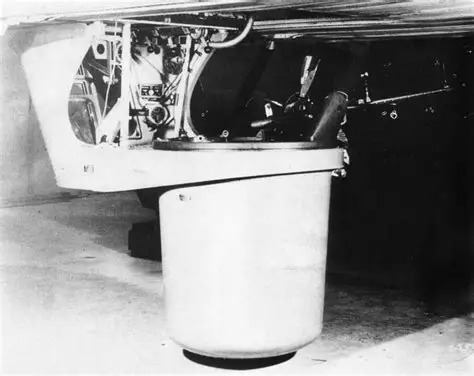
- The Dorsal Turret (The Main Defense): Cut directly into the upper fuselage roof, just behind the wings, was a manually operated UTK-1 turret housing a single 12.7 mm Berezin UBT heavy machine gun. This gave the dorsal gunner a wide field of fire to protect the aircraft from bouncing fighters.
- The Waist Guns (The Flank Defense):Two hatches were cut into the left and right sides of the rear fuselage. Swivel mounts were installed, each holding a 7.62 mm ShKAS machine gun. These rapid-fire guns were used to spray any enemy aircraft attempting a side-angle strafing run.
- The Fixed Nose Gun (The Offensive Deterrent): In some variants, a single fixed, forward-firing 7.62 mm ShKAS was mounted inside the nose cone, operated by the pilot to clear out ground targets or deter a head-on attack.
Specifications
General Characteristics
- Origin: USSR (License Produced DC-3)
- Crew: 5-6
Flight Performance
- Max Speed: 320 km/h (198 mph) at 2,500 m
- Service Ceiling: 5,600 m (18,370 ft)
- Rate of Climb: 4.2 m/s
- Turn Time: 26.5 seconds
Engine Specifications
- Engines: 2x Shvetsov ASh-62IR 9-cylinder air-cooled radial engines
- Horsepower: 1,000 hp each (2,000 hp total at takeoff)
Armament
Offensive Weaponry
- 1x 7.62mm ShKAS machine gun (Fixed, forward-firing in the nose cone; 500 rounds)
Defensive Weaponry
- 1x 12.7mm Berezin UBT heavy machine gun in a UTK-1 dorsal turret (360° rotation)
-
- (200 rounds)
- 2x 7.62mm ShKAS machine guns in left and right waist hatches
-
- (Flexible mounts; 500 rounds per gun)
Bombs
- 4x FAB-250 (250 kg) high-explosive bombs
- 2x FAB-500 (500 kg) high-explosive bombs (Mounted externally on wing roots)